2024-08-05 11:16
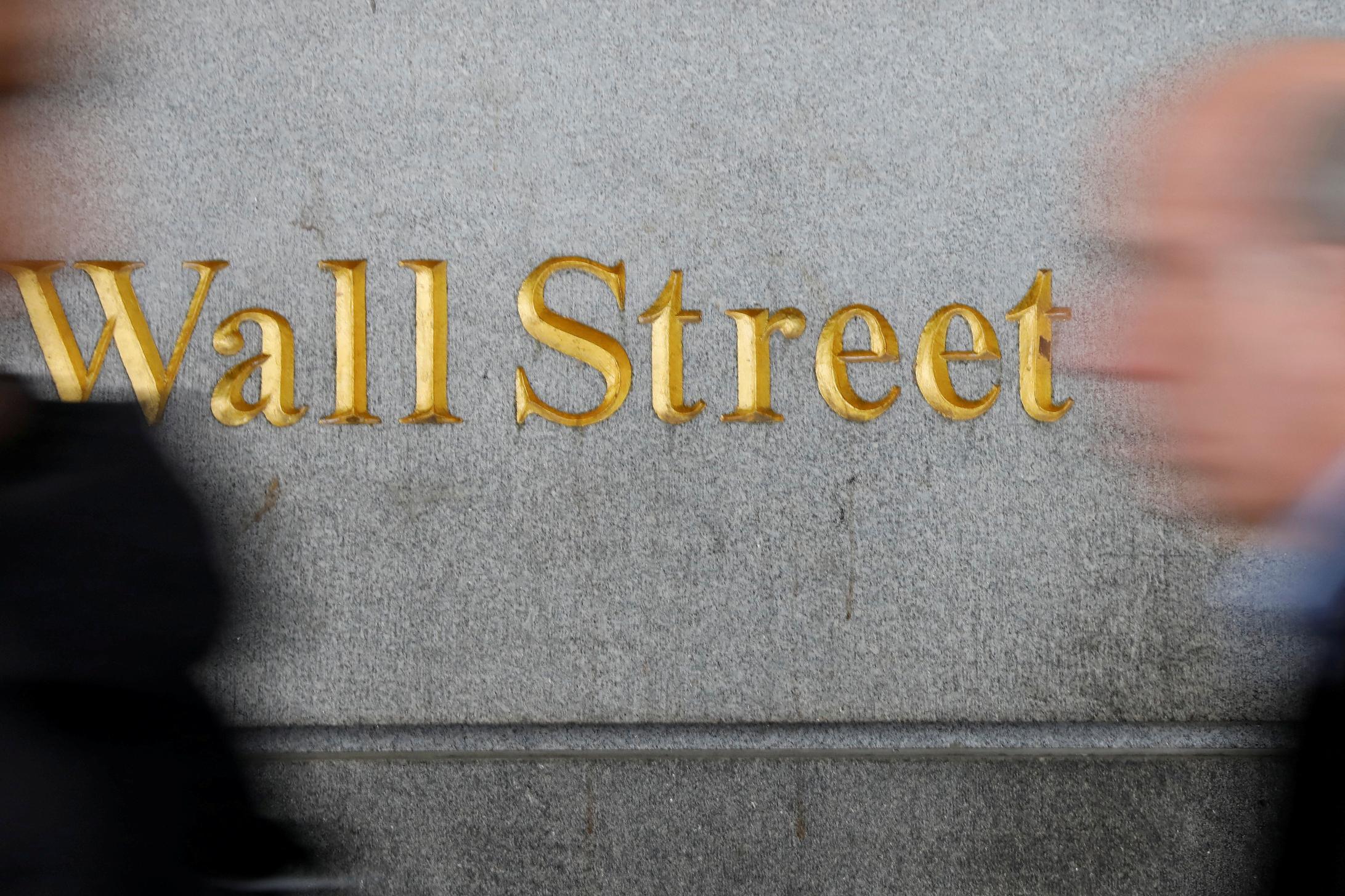
CHICAGO, Aug 5 (Reuters) - A spike in bargain-basement crop sales by U.S. farmers needing to make room in storage bins for autumn harvests could boost profitability at grain handlers such as Archer-Daniels-Midland (ADM.N) , opens new tab and Bunge Global (BG.N) , opens new tab. Both companies, which trade and process soybeans and corn and benefit from geographic differences in supply, recently flagged slow farmer selling as a drag on second-quarter earnings. Eight farmers in the key Midwestern crop-growing states of Iowa, Indiana, Illinois and Ohio told Reuters they are emptying storage bins of corn and soybeans harvested in 2023 after holding tight to supplies all year, as favorable weather for crop development finally dashes their hopes for higher prices. Farmers earlier resisted sales as corn and soy futures prices sank to 2020 lows this year under pressure from large supplies. Low prices are also driving some to use less crop chemicals, which could create a short-term pinch for agribusinesses like Corteva Inc (CTVA.N) , opens new tab and Syngenta, analysts said. Increased sales should result in cheaper soybean ownership for ADM and Bunge, which process the crop into soybean oil and meal used for livestock feed, said Heather Jones, founder of Heather Jones Research. More farmer selling also helps ADM and Bunge obtain supplies to use any excess manufacturing capacity, said Arun Sundaram, senior equity analyst at CFRA Research. "Agribusinesses operate with a lot of overhead and have high fixed costs, so running manufacturing plants at or near capacity is key to preserving efficiencies and margins," he said. 'HAUL OF SHAME' Growers, who are projected to suffer the largest ever year-to-year dollar drop in farm income in 2024, previously hoped that poor weather or geopolitical disruption would spark a rally. "I'm throwing in the towel and making room for the new crop," said Ron Heck, a farmer in Perry, Iowa. Farmers start harvesting what the U.S. government expects to be the third largest corn crop and second largest soybean crop in September. Heck said he recently hauled corn as fast as he could to a local plant owned by POET LLC, the world's largest ethanol producer, that offered to pay cash prices 42 cents per bushel, or about 10%, higher than futures. Selling accelerated in the Midwest in late July as forecasts for hot, dry weather lifted futures to two-week highs, grain dealers said. The gains were short lived, as markets again collapsed to 2020 lows last week. "We didn't get the hot, dry predicted weather, and there was no point in waiting for a weather rally," Heck said. One grower in Illinois described farmers taking grain to local facilities for sale as the "haul of shame" because they should have sold earlier when prices were higher. SELLING AT A LOSS Justin Campbell, who farms outside Terre Haute, Indiana, is among those who booked sales last week as corn prices declined. "I thought, 'We haven't found a bottom yet in prices,' so I wanted to get some of it priced," Campbell said. Another Indiana farmer, who requested anonymity because he does not want neighbors to know about his sales, said he recently finished selling last year's corn to an ADM elevator for $3.54 per bushel, below his cost of production. He needed cash to make a payment that was coming due on an equipment loan. Bunge, the world's largest oilseed processor, expects more farmer sales after its profit margins suffered in the April-June quarter from slow selling in North and South America, CEO Greg Heckman said last week. Bunge raised its full-year outlook, citing improving processing margins, following a 56% decline in adjusted second-quarter agribusiness earnings from a year earlier. "The weather, it looks good," Heckman told analysts on an earnings call. "I think as you see that North American crop develop, we'll see some more marketing there." Without making much money from farming, some growers said they are buying less fungicide, insecticide, fertilizer and equipment. Chris Gibbs, who farms about 375 acres in Ohio, said he was not going to buy and pay for fungicide to be applied across all his fields to prevent plant disease as he normally does. "I'm going back to walking the beans and corn rows, looking for problems in the field and only treating areas that absolutely need the help," Gibbs said. Illinois farmer Dave Kestel said he is spraying fungicide on less than half his corn fields, cutting his use of a Corteva product called Aproach. Corteva on Wednesday cut its annual sales and operating earnings forecasts due to tighter farmer margins. Still, farmers tend to pay up for seeds that promise to produce hefty yields, said Seth Goldstein, strategist at Morningstar Research Services. And deciding to cut back on chemicals can be tricky because growers want to produce big harvests to make the most money they can at low prices. "Even in a down market, you still have to protect the crop," said Kristen Owen, executive director of equity research at Oppenheimer & Co. Sign up here. https://www.reuters.com/markets/commodities/bunge-adm-benefit-us-farmers-sell-cheap-crops-haul-shame-2024-08-05/
2024-08-05 11:11
Turkey to hold talks with Instagram over access ban Ban costing $11.5 mln a day to Turkish economy, Netblocks says Turkey claims Instagram blocked condolences posts for Hamas leader Meta says it will do all it can to restore services ISTANBUL, Aug 5 (Reuters) - Turkey's government will hold talks with Instagram officials on Monday after blocking access to the social media platform last week, Transport and Infrastructure Minister Abdulkadir Uraloglu said in a post on X. The move came after a senior Turkish official accused Instagram of blocking condolence posts following the assassination of Ismail Haniyeh, leader of the Palestinian militant group Hamas. Uraloglu said Turkey had expressed certain sensitivities regarding compliance with Turkish laws in a previous meeting with representatives of Instagram last week. “As a result of the block to Instagram in Türkiye, millions of people are being deprived of their everyday ways of connecting with family and friends, and businesses are no longer able to reach their customers in the same way," a spokesperson for Meta (META.O) , opens new tab, which owns the social media platform, said. "We will continue to do everything we can to restore our services.” Turkey's Head of Communications Fahrettin Altun on Wednesday criticised Instagram for alleged "censorship, pure and simple," over what he called its decision to bar condolence posts for Haniyeh after his killing in Iran's capital Tehran on July 31. Iran and Hamas have accused Israel of carrying out the strike that killed Haniyeh hours after he attended the inauguration of Iran's new president. Israel has not claimed responsibility. Turkey ranks fifth in the world in terms of Instagram usage, with more than 57 million users, following India, the U.S., Brazil and Indonesia, according to data platform Statista. Thousands of people on X protested the access ban, with Turkish hashtags that translate as "accessban, bringinstagramback, ecommercehalted" on the top trending list in Turkey since the ban. Among those unhappy with the ban was 34-year-old Basak, who runs a handmade jewelry design account on Instagram with more than 30,000 followers, saying it had disrupted her business. "Some of my customers contacted me by accessing Instagram through VPN and other social media platforms, but my chance of accessing new people and potential customers stopped immediately," she said. "My sales dropped. If this (access ban) continues, it is not possible for me to get by, as I cannot reach a wider audience." Internet monitor NetBlocks estimates the Instagram access ban cost some $11.5 million daily to the Turkish economy. Turkish e-commerce businesses association ETID estimates that Turkish businesses generate some 900 million lira ($27 million) in revenue from Instagram daily, vice chairman Emre Ekmekci said. If the ban continues, there will be a gradual shift in both sellers and users to other platforms, he said. "We are hopeful the meeting will be positive and the parties will be able to find a solution. This is not just a political issue, there is also a commercial impact." ($1 = 33.3390 liras) Sign up here. https://www.reuters.com/world/middle-east/turkey-meet-instagram-officials-after-access-ban-minister-says-2024-08-05/

2024-08-05 10:48
Unwinding carry trade weighs on dollar, boosts yen Indian rupee, Mexican peso tumble against the dollar Circuit breakers triggered for multiple bourses Turkish annual inflation falls to 61.78% in July Aug 5 (Reuters) - Emerging market equities around the world tumbled on Monday, as fears of a recession in the United States sparked a global selloff and sent investors running for safer assets like the Japanese yen. MSCI's index of global emerging market stocks (.MSCIEF) , opens new tab lost 4.1%, as a free fall in Japanese stocks spilled over across Asia, while worries about technology sector earnings weighed on bourses in Taiwan (.TWII) , opens new tab and South Korea (.KS11) , opens new tab. The risk-off mood continued from Friday, when a weaker-than-expected U.S. jobs data triggered worries of recession in the world's largest economy. This compounded concerns for emerging markets over worries in China, a spate of poor tech sector earnings, and geopolitical tensions in the Middle East. Traders are now pricing in a 50 basis points interest rate cut by the Federal Reserve's September meeting, compared to a more typical 25 bps cut expected last week. "The overnight moves in Asia caused some panic selling, and in August we're in really thin liquidity, nobody really knows which pebble caused the avalanche," said Patrick Reid, co-founder of FX consultancy The Adamis Principle. South Korean stocks notched their worst session since the global financial crisis of 2008, triggering circuit breakers for the first time since March 2020. The selloff continued on emerging market bourses in Europe and the Middle East. Trading on Turkey's BIST-100 index (.XU100) , opens new tab was halted twice on Monday after heavy premarket losses. The index was last down 3.8% with an index of bank stocks (.XBANK) , opens new tab slipping 4.2% as the lira dropped to record low against the dollar. Meanwhile, the yen leapt to a seven-month high against the dollar while crowded carry trades unwound, pressuring high-yielding emerging market currencies. A rebound in the yen, the most favored funding currency for carry trades, weighed on the U.S. dollar and lifted emerging market funding currencies like China's yuan . "You had it really good while it lasted, but now we're getting clusters of risk-off unwinds in carry (trades), I see that to continue at least into Q4," Reid said. Malaysia's ringgit also continued its strong run, touching its highest to the dollar since April 2023. A 0.5% loss in the dollar helped lift MSCI's emerging market currency index (.MIEM00000CUS) , opens new tab 0.3%, with European emerging market currencies , also regaining ground against the greenback. On the other hand, high-yielding EM currencies lost ground, with the Indian rupee becoming the worst-performing Asian currency this year, while the Mexican peso touched its lowest since October 2022. On the data front, Turkish annual inflation fell to 61.78% in July, just below expectations, while Czech retail sales rose 4.4%. HIGHLIGHTS: ** Purchasing Managers' Index data from a number of countries including Kenya, South Africa and Russia. ** Bangladesh PM Hasina taken to 'safe shelter', minister says situation volatile ** EXCLUSIVE-China asks large state financial institutions to drop auditor PwC, say sources For TOP NEWS across emerging markets For CENTRAL EUROPE market report, see For TURKISH market report, see For RUSSIAN market report, see Sign up here. https://www.reuters.com/markets/em-equities-slump-us-recession-fears-spark-global-selloff-2024-08-05/
2024-08-05 10:34
NEW YORK, Aug 5 (Reuters) - As JPMorgan Chase (JPM.N) , opens new tab investors puzzle over who will eventually replace Jamie Dimon as CEO, two of the contenders say they are more focused on winning market share and developing the bank's future leaders. "The competitive landscape is remarkably intense," Jennifer Piepszak, co-CEO of the commercial and investment bank at JPMorgan, told Reuters in a joint interview with co-CEO Troy Rohrbaugh. He concurred, citing challengers from all sides. "We have big global competitors going toe to toe with us," Rohrbaugh said. "We have regional competitors on the banking side and also non-bank competitors in e-trading, lending, private credit." Under the two executives, revenue from JPMorgan's newly merged commercial and investment banking unit rose to a record $35.5 billion in the first half. In particular, investment banking revenue grew 46% to $2.5 billion in the second quarter versus a sluggish period a year earlier. The pipeline for investment banking deals is promising for the third quarter, although it is too soon to tell how the market will evolve, Rohrbaugh said. "Debt capital markets has done well," Rohrbaugh said. "While the equity capital markets are opening up and there are more advisory assignments, the overall market is still not that incredibly robust with lots of IPOs or mergers." While the looming Nov. 5 U.S. presidential election could spur some clients to finalize business before the outcome is settled, it has not led to a flurry of activity so far. "Everybody is very interested in talking about the election," and discussing scenarios for markets and business decisions, but those conversations have not spurred major actions yet, Rohrbaugh said. The co-CEOs expressed guarded optimism for JPMorgan's trading business in the second half of the year. After losing some market share in fixed income, currencies and commodities (FICC) and equity capital markets, the bank is trying to close gaps with rivals by deepening client relationships and serving more middle-market companies, executives told investors in May. The bank will also have to fend off competition from senior JPMorgan alumni who have joined rivals in recent months. Viswas Raghavan took over Citigroup's (C.N) , opens new tab banking division in June after holding a similar role at JPMorgan. Fernando Rivas joined Wells Fargo as co-CEO of corporate and investment banking. And Carsten Woehrn was appointed Goldman Sachs' co-head of mergers and acquisitions in Europe, the Middle East and Africa (EMEA). Despite JPMorgan's position atop the U.S. banking industry, Piepszak and Rohrbaugh said they remained vigilant for competitive threats. They warned against complacency at a time when rivals have particular insight into JPMorgan's inner workings. "If you dropped in on a business review at this company, you would never guess that you were inside JPMorgan," Piepszak said. The executives are also focused on building the next generations of talent in their unit. Dimon this year told investors that his timeline for stepping down was less than five years. The other potential CEO candidates are Marianne Lake, CEO of consumer and community banking, and Mary Erdoes, who leads asset and wealth management. Sign up here. https://www.reuters.com/business/finance/jpmorgan-ceo-contenders-cite-intense-competition-during-market-revival-2024-08-05/

2024-08-05 10:17
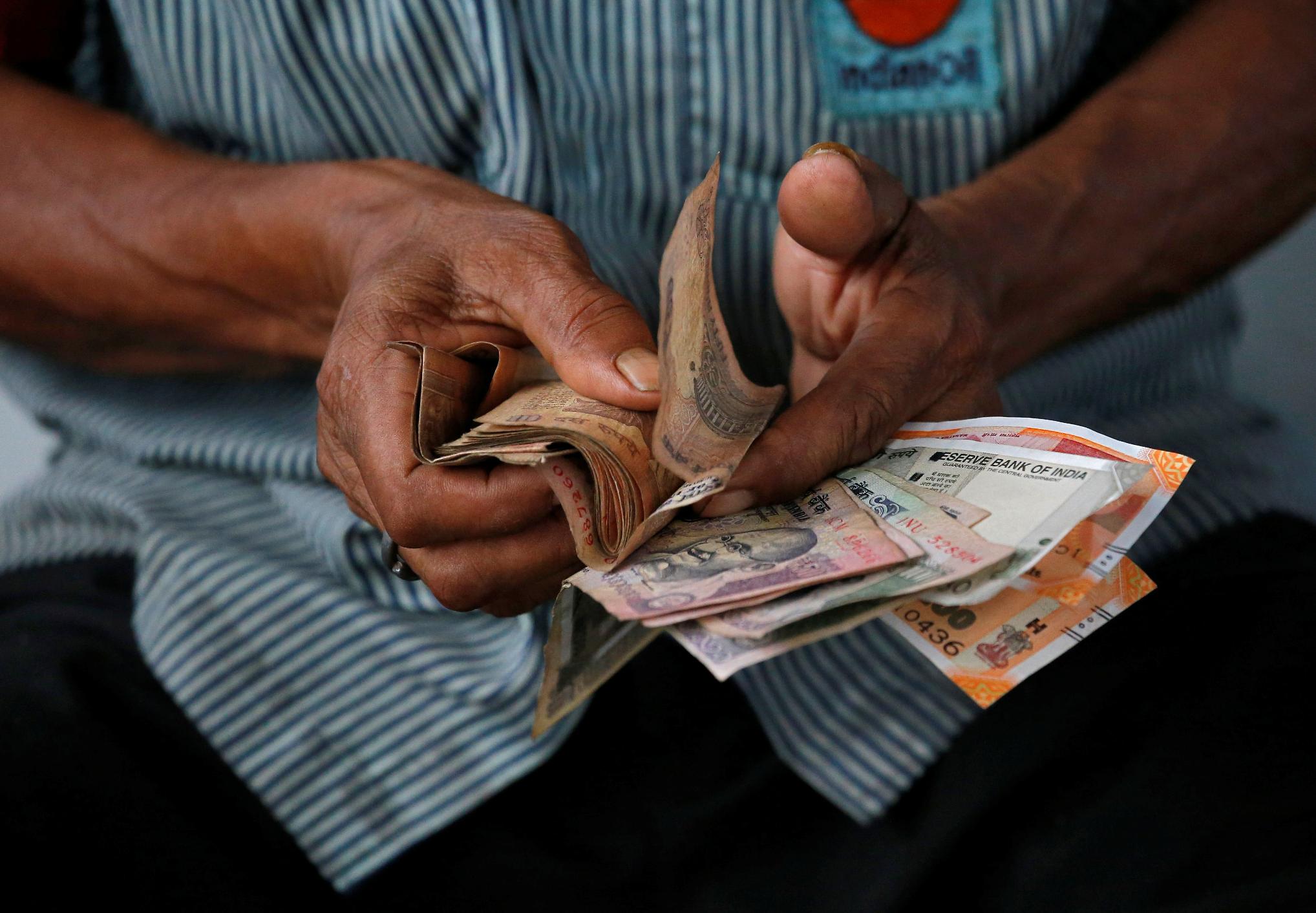
MUMBAI, Aug 5 (Reuters) - The Indian rupee closed at its weakest level on record on Monday pressured by likely outflows from local equities and the unwinding of carry trades as fears of an economic slowdown in the United States roiled markets. The rupee ended at its all-time low of 83.8450, down 0.1% from its close at 83.8025 in the previous session. Benchmark Indian equity indices, the BSE Sensex (.BSESN) , opens new tab and the Nifty 50 (.NSEI) , opens new tab, closed lower by about 2.7% each, their worst single day decline in over two months. Aggressive dollar bids from foreign banks, likely on behalf of custodial clients, pressured the rupee through the day's session, a foreign exchange trader at a state-run bank said. But intervention from the Reserve Bank of India helped limit the rupee's losses, traders said. The RBI "for now is protecting (the rupee) near 83.85 levels but it's quite likely that it moves to 84 this week if the pressure continues," a trader at a foreign bank said. The dollar index fell about 0.5% to 102.6, its lowest since March, while Asian currencies were up 0.1% to 1.7% with the offshore Chinese yuan touching its strongest level since January. The rupee diverged from its Asian peers hurt by the unwinding of carry trades which used the Chinese yuan to fund long bets on the local currency. Going forward, the dollar-rupee pair "may face resistance around 84 and find support at 83.65," Dilip Parmar, a foreign exchange research analyst at HDFC Securities said, adding that he expects the RBI to intervene aggressively near the 84 handle. Investors now await U.S. services PMI data due later in the day wherein a weaker-than-expected reading could compound worries about a potential recession in the United States. Sign up here. https://www.reuters.com/markets/currencies/rupee-ends-record-low-us-growth-worries-spill-over-spur-outflows-2024-08-05/
2024-08-05 10:14
A look at the day ahead in U.S. and global markets from Mike Dolan Whether the prospect of a U.S. recession is real or imagined, the mere return of the discussion has been enough to send world stocks and bond yields reeling just as AI doubts and a Japan-led volatility spike have barreled into holiday-thinned August. And like many global selloffs before it, there's the risk of a self-feeding spiral amid a frantic search for "safe" bonds as speculation about hurried and dramatic interest rate cuts mounts. Weekend news that Warren Buffett's Berkshire Hathaway (BRKa.N) , opens new tab appears to have soured on stocks, letting cash soar to nearly $277 billion and selling about half its stake in Apple (AAPL.O) , opens new tab, suggests the 93-year-old revered investor has grown wary of the broader U.S. economy and stock market valuations. Shares in both Apple and AI-bellwether Nvidia (.NVDA.O) , opens new tab were down almost 10% ahead of Monday's bell. And as Japanese stocks were one of Buffett's top plays of the past year, that has alarmed an already nervy Tokyo market. After a torrid week last week, Monday saw the most withering stock rout in Japan since the 1987 crash, as the benchmark Nikkei (.N225) , opens new tab dropped more than 12%. Japan has its own very particular story of course - one of the most favoured stock markets of the past year, but one goosed by a plummeting yen that the authorities have spent several months trying to shore up. And in a classic case of "be careful what you wish for", months of official intervention to buy yen and last week's second Bank of Japan interest rate rise of the year have finally succeeded - but it bowled over the stock market in spectacular fashion in the process. And the yen swings have seeded turbulence around the world. As interest rate "carry trades" funded by cheap yen borrowing were a lucrative bet among speculative funds for the past two years, the sudden yen surge - which hit its best levels of a year on Monday - and the related volatility spike have sent a shockwave through this and other "risk" trades. The anxiety spilled out across world markets again on Monday - with South Korea (.KS11) , opens new tab and Taiwan (.TWII) , opens new tab both down 8% and European benchmarks down more 2%. And it's going to be a rough open on Wall St. With the Nasdaq now already in correction territory after last week's swoon, futures are pointing to further losses of about 4% on Monday and S&P500 futures are down 2.5% ahead of the bell. The VIX "fear index" of U.S. equity volatility (.VIX) , opens new tab soared - topping 40 for the first time since the 2020 pandemic lockdowns. A reflection of a reversal of risky bets, Bitcoin plunged 15% from Friday's levels, the Swiss franc surged to its best level of the year - but gold fell, curiously. U.S. stocks' eye-watering retreat last week came in the thick of a noisy and somewhat disappointing Big Tech earnings season, with fears about an overspend in artificial intelligence and the lack of an end result yet gnawing at investors. But the return of U.S. recession worries to a market overwhelmingly priced for a "soft landing" of the economy was the biggest game changer - following a series of weak manufacturing and labor market updates. If past precedents on the pace at which the U.S. jobless rate is rising are applicable - and many think persistent post-pandemic labor market distortions mean they are not - then a triggering of the so-called "Sahm rule" recession flag on Friday was a moment. Even though the rule's author, former Federal Reserve economist Claudia Sahm, played down the warning this time around, the calculus of a half-point rise in the three-month average jobless rate above the low of the past year stands as a warning nonetheless. So much so, interest rate markets have scrambled. Fed futures markets now see a half-point cut in Fed rates as soon as next month and as much as 125 basis points of cuts by yearend. JPMorgan Now expects the Fed to cut rates by 50 bps at both September and November meetings, followed by 25-bps cuts at every meeting thereafter. With U.S. 3-, 10- and 30-year auctions this week, Treasury yields and the dollar have plummeted. Ten-year U.S. yields fell below 3.7% for the first time in more than a year, and have tumbled about 50bps this month already. Two-year yields fell as low as 3.69% and the two-to-10-yield curve steepened to within a whisker of positive territory for the first time in over two years - seen by some as a warning sign of recession ahead after two years of inversion. Riffing over pumped-up Fed easing talk, the dollar index (.DXY) , opens new tab touched its lowest since March. Critical now will be readings from the U.S. service sector later today, a reality check from Fed speakers and also the release of the Fed's quarterly senior loan officer survey. Key developments that should provide more direction to U.S. markets later on Monday: * U.S. July service sector surveys from ISM and S&P Global. Fed's quarterly senior loan officer survey * San Francisco Federal Reserve President Mary Daly speaks * U.S. corporate earnings: Tyson Foods, CSX, ONEOK, Diamondback Energy, Realty Income, Simon Property, Williams * U.S. Treasury sells 3-, 6-month bills Sign up here. https://www.reuters.com/markets/us/global-markets-view-usa-pix-2024-08-05/