2024-08-05 03:46
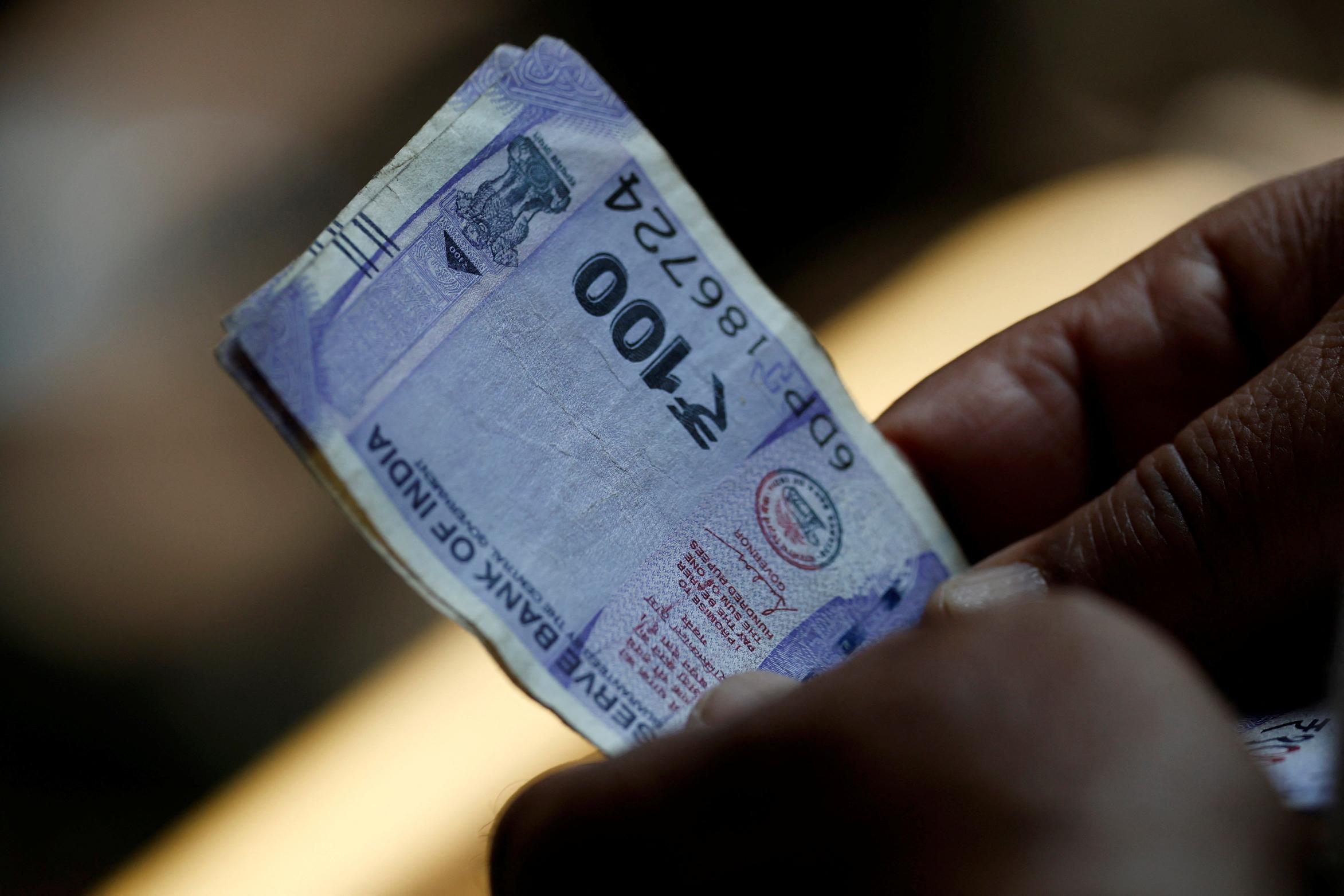
MUMBAI, Aug 5 (Reuters) - The Indian rupee fell to an all-time low at the open on Monday, on worries that the risk off prompted by U.S. recession worries could lead to foreign outflows. The rupee opened at 83.78 to the U.S. dollar compared to its previous close of 83.75, and slipping past the lifetime low of 83.7525 hit on Friday. The selloff in U.S. and Asian equities following a disappointing jobs report spurred worries of foreign outflows from India and other emerging markets. The sharp selloff may prompt the Reserve Bank of India to let USD/INR move higher to 83.90, a trader at a public sector bank said. Sign up here. https://www.reuters.com/markets/currencies/indian-rupee-drops-lifetime-low-outflow-worries-2024-08-05/
2024-08-05 00:48
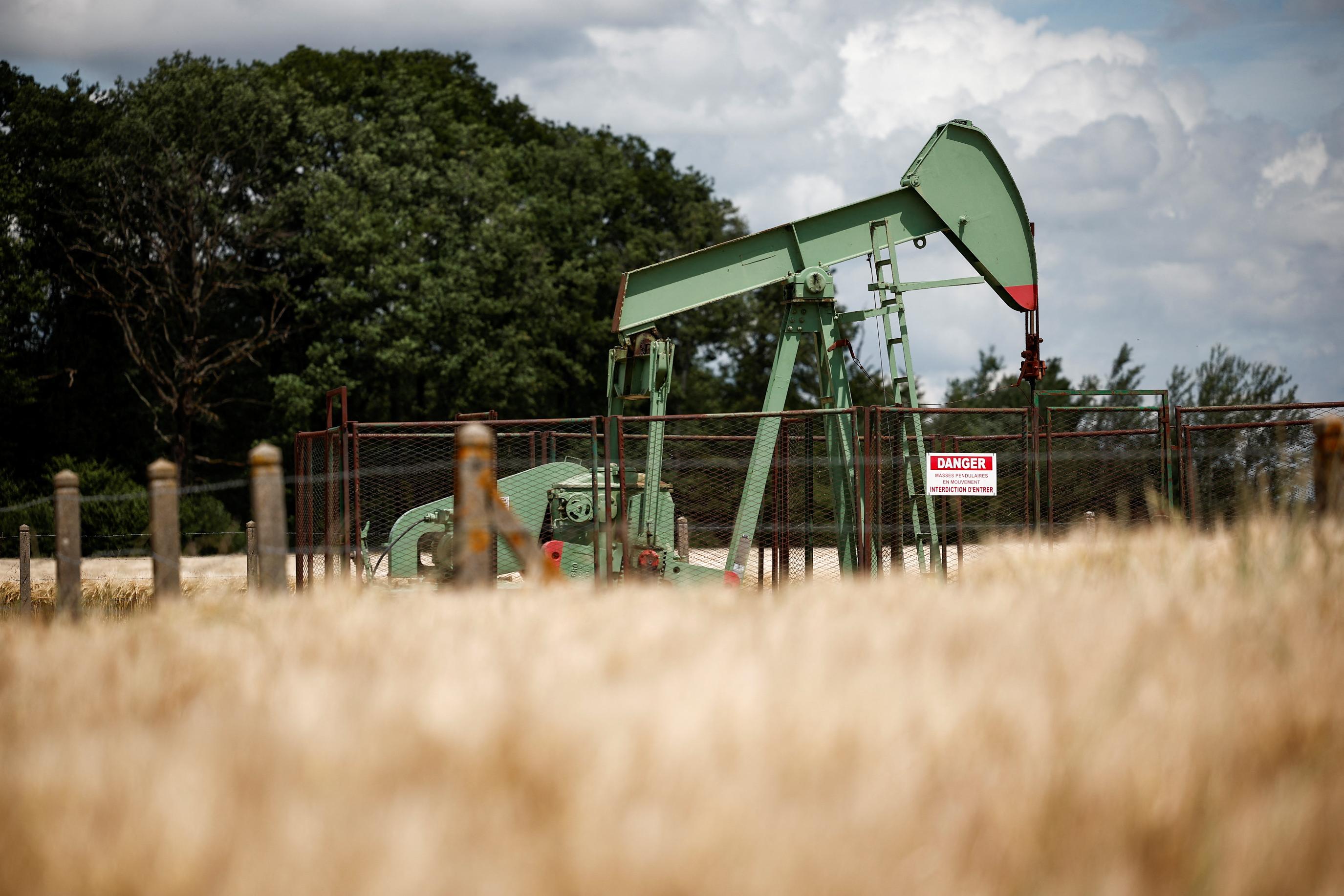
Demand concerns rise after weak U.S. jobs report Risk of wider Middle East conflict limits oil's decline HOUSTON, Aug 5 (Reuters) - Oil fell in volatile trade on Monday as a selloff continued on global stock markets, but the slide was limited by fears Iran's retaliation for the assassination of a Hamas leader in Tehran may lead to a wider war in the Middle East. Brent crude futures settled down 51 cents, or 0.66%, at $76.30 a barrel, with prices earlier trading around their lowest levels since January. U.S. West Texas Intermediate crude was down 58 cents, or 0.79%, at $72.94. Equities markets tumbled from Asia to North America as investors fled riskier assets while wagering that rapid interest rate cuts by the Federal Reserve will be needed to drive U.S. economic growth. "The stock market was falling as the (Friday) jobs report has the market convinced that the Fed once again fell behind the curve," Phil Flynn, senior analyst with Price Futures Group, wrote in a morning note. Worries over further possible supply disruptions from a wider Middle East war limited oil's losses throughout the day. Israel and the U.S. are bracing for a serious escalation in the region after Iran and its allies Hamas and Hezbollah pledged to retaliate against Israel for the killings of Hamas leader Ismail Haniyeh and a top Hezbollah military commander last week. Oil traders are expecting Iran's response to be short in duration, making crude futures more vulnerable to fears of a U.S. recession like those that roiled markets on Monday, said John Kilduff, founding partner of Again Capital LLC. "If this passes quickly, crude oil prices will join this enormous dour party and prices will spiral out of control," Kilduff said. Slumping diesel consumption in China, the world's biggest contributor to oil demand growth, is also weighing on oil. Sign up here. https://www.reuters.com/business/energy/oil-hovers-8-month-lows-us-recession-fears-offset-mideast-tensions-2024-08-05/
2024-08-05 00:46
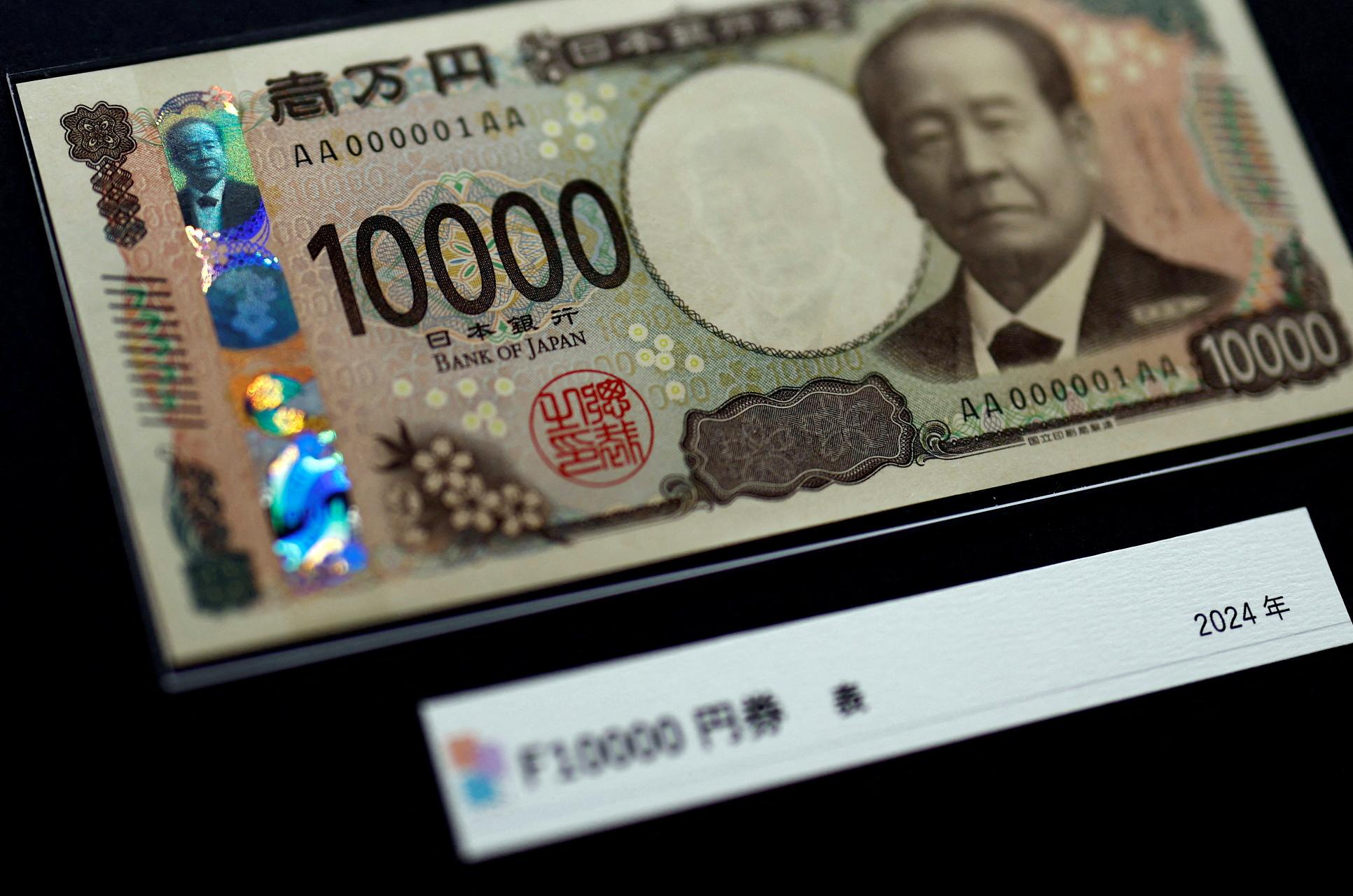
Yen jumps to 7-month highs vs the dollar Dollar broadly weaker Carry trade unwind in focus NEW YORK, Aug 5 (Reuters) - A surge in the yen to a seven-month high led a broad dollar fall, as a slew of economic data last week raised the prospect of a U.S. economic downturn and bigger interest rate cuts from the Federal Reserve. The dollar index , which tracks the U.S. currency against a basket of six others, was down 0.46% to 102.68, after sinking as low as 102.15, its weakest since January 12. Against the yen, the dollar fell 2.04% to 143.5, close to the weakest level for the year. The euro was up 0.37% to $1.095, after rising as high as $1.1009, its strongest since Jan. 2. Weaker-than-expected U.S. jobs data, along with disappointing earnings reports from large technology firms and heightened concerns over the Chinese economy, have sparked a global sell-off in stocks, oil and high-yielding currencies in the past week as investors sought the safety of cash. The selling continued on Monday, with U.S. Treasury yields falling further, stock indexes in the red, bitcoin dumped and the dollar losing ground. "When you zoom out and look at the big picture, whenever there's a crisis in markets, it's clear that there's far too much leverage and everyone is crowded into the same trades," said Adam Button, chief currency analyst at ForexLive. Treasury yields have been falling sharply since last week, when the Fed kept the policy rate in its current 5.25% to 5.50% range while Fed Chair Jerome Powell opened the possibility of a rate cut in September. But by Friday, after data showed the unemployment rate had jumped, expectations for rate cuts rose. "Friday's (non-farm payrolls) report was a bit of a shock to the global system, and markets are very worried that the U.S. may no longer be a viable driver of global growth," said Helen Given, FX trader at Monex USA in Washington. The Japanese yen's surge comes as traders aggressively unwound carry trades. So-called carry trades, where investors borrow in money from economies with low interest rates such as Japan or Switzerland to fund investments in higher-yielding assets elsewhere, have been popular in recent years. "Whenever there's trouble, the rush to the exit is so dramatic that it creates these incredible waves in markets that swamp related markets," said Button. "You never know how much money is piled into the carry trade until it unwinds." On Monday, Fed fund futures reflected traders pricing a near 100% chance of a 50 basis point cut at the central bank's September meeting, according to CME FedWatch. "The Japanese equity sell-off during Asian trading spooked markets in a big way, coupled with the yen's resurgence, and we may be seeing the so-called 'panic spiral' that many have been concerned about," Monex's Given said. Meanwhile, the Swiss franc , another popular carry trade funding currency, was 0.83% higher at 0.85 to the dollar. The franc, a traditional safe haven, was also trading near a seven-month high. The dollar found some relief against the British pound as the marked deterioration in global investor risk sentiment sapped demand for riskier currencies. The depreciation of Mexico's peso extended into its third day on Monday, and the U.S. dollar rose 1.64% to 19.48 pesos, on investor risk aversion. In cryptocurrencies, bitcoin and ether plunged on Monday to multi-month lows as investors a rushed out of risky assets. Bitcoin was down 15.11% to $53,094, heading for its largest one-day fall since November 2022. Ether was last down 21.25% at $2,374.70. Sign up here. https://www.reuters.com/markets/currencies/yen-rises-7-month-highs-us-slowdown-fears-carry-over-2024-08-05/
2024-08-04 23:37
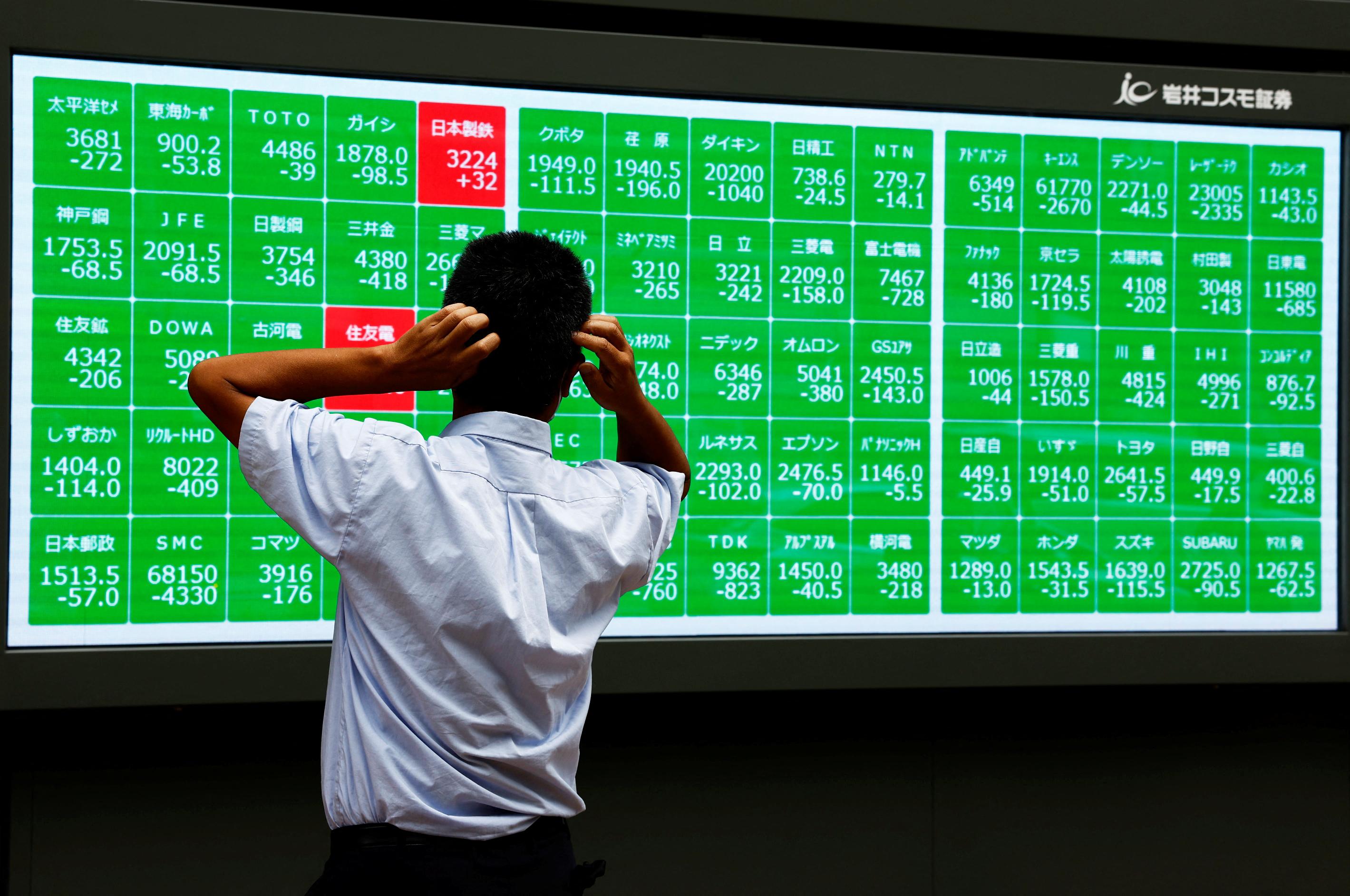
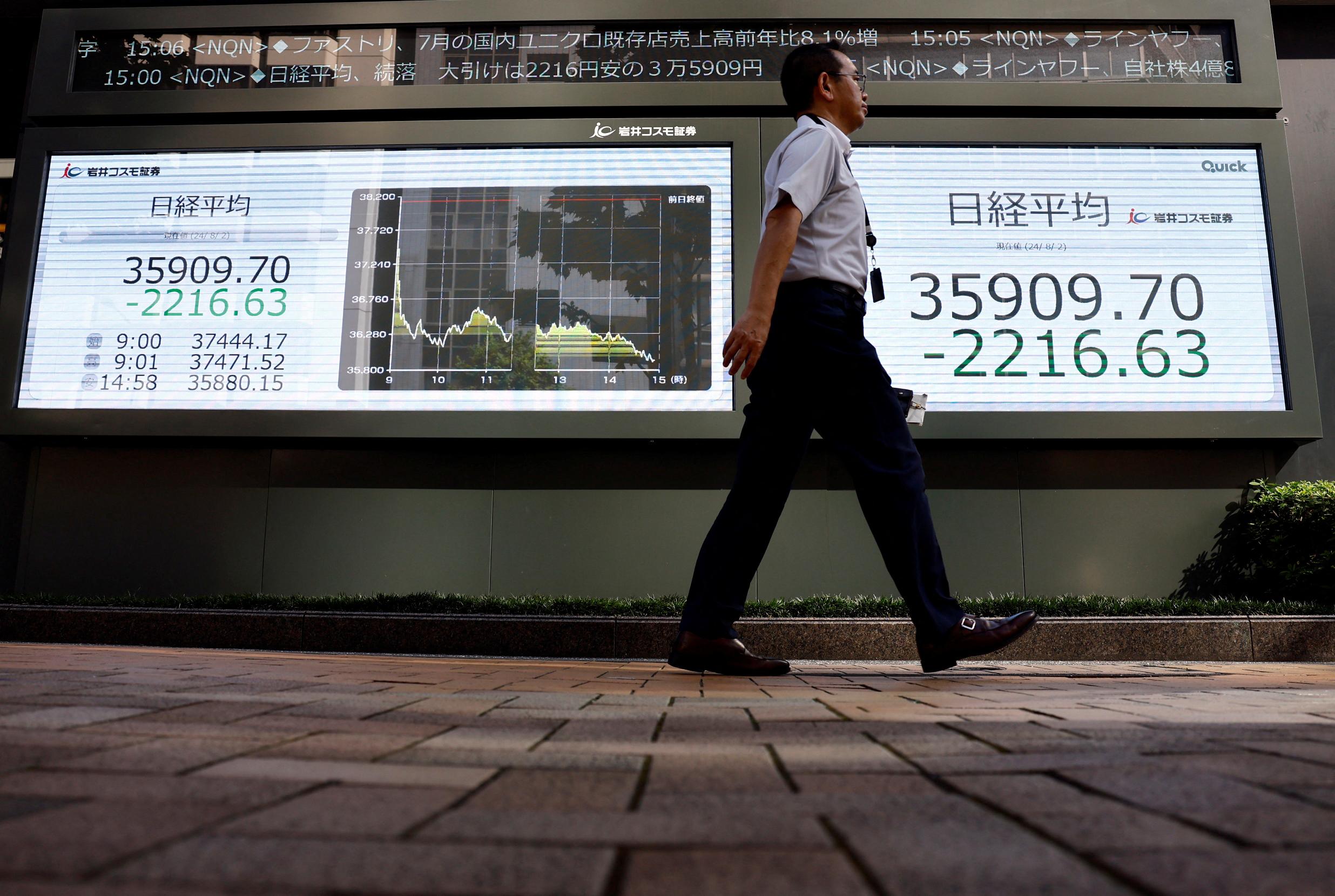
U.S. indexes close sharply lower European stocks tumble 2%, Nikkei closes down 13% Safe haven yen surges, volatility index soars NEW YORK/LONDON, Aug 5 (Reuters) - Equities suffered heavy losses around the globe on Monday as Wall Street added to a rout that started in Japan, while the dollar tumbled against the yen and nervous investors looked for signs of a recession in the United States. U.S. Treasury yields however regained ground after solid U.S. services sector activity eased recession fears, having earlier Monday fallen to their lowest level in more than a year. Chicago Federal Reserve Bank President Austan Goolsbee boosted sentiment when he said Friday's weak July jobs report did not signal a recession. Still oil prices settled lower on Monday, as recession fears led to demand concerns, but declines were buffered by worries that escalating Middle East conflict could hit crude supplies. Earlier Japan's benchmark Nikkei average (.N225) , opens new tab had closed down 12.40% for its largest one-day fall since October 1987 as the yen surged against the backdrop of Japan's decision last week to raise interest rates to levels unseen in 15 years. The yen rallied sharply against the dollar on Monday due to aggressive unwinds of so-called carry trades, where investors borrow money from economies with low interest rates such as Japan to fund investments in higher-yielding assets elsewhere. "The fact that there was such a strong unwind in the dollar/yen, in turn forced investors to take some profits where they've been hiding out this year, which has been mostly big tech," said Kevin Gordon, senior investment strategist at Schwab. "It's become the biggest target because it was the best performer and that's probably the easiest spot for traders to take their profits." A weaker than expected U.S. payrolls report for July had already started a Wall Street sell-off on Friday when investor bets for a Federal Reserve September rate cut suddenly doubled to 50 basis points. The jobs data had followed disappointing earnings updates from some megacap U.S. technology companies. However U.S. stocks pared losses somewhat after the Institute for Supply Management (ISM) said on Monday that services sector activity rebounded from a four-year low in July with rising orders and employment, easing recession fears. Its non-manufacturing purchasing managers (PMI) index rose to 51.4 from 48.8 in June, ahead of economist expectations for 51.0. A PMI reading above 50 indicates growth in services, which accounts for more than two-thirds of the U.S. economy. On Wall Street, the Dow Jones Industrial Average (.DJI) , opens new tab fell 1,033.99 points, or 2.60%, to 38,703.27, the S&P 500 (.SPX) , opens new tab lost 160.23 points, or 3.00%, to 5,186.33 and the Nasdaq Composite (.IXIC) , opens new tab lost 576.08 points, or 3.43%, to 16,200.08. MSCI's gauge of stocks across the globe (.MIWD00000PUS) , opens new tab fell 25.58 points, or 3.25%, to 761.63 for its biggest one-day percentage drop since September 2022. Europe's STOXX 600 (.STOXX) , opens new tab index earlier finished down 2.17%. And CBOE's volatility index (.VIX) , opens new tab, known as Wall Street's fear gauge, logged its largest intraday jump before ending the day at 38.57 points for its highest close since October 2020. In currencies, the Japanese yen surged to seven-month highs against the dollar as traders interpreted last week's U.S. economic data as raising the prospects for a U.S. recession and steeper than previously expected Fed rate cuts. The dollar index , which measures the greenback against a basket of currencies including the yen and the euro, fell 0.46% to 102.68. Against the Japanese yen , the dollar weakened 1.77% to 143.94 while the euro was up 0.45% at $1.0957. As for U.S. Treasuries, James Knightley, chief international economist, U.S. at ING said Monday services data was a key factor for yields rebound along with Goolsbee's comments. Knightly said Goolsbee is "notably the most dovish member for quite some time at the Fed and he didn't suggest that there was any real alarm." The yield on benchmark U.S. 10-year notes fell 1.1 basis points to 3.785%, from 3.796% late on Friday while the 30-year bond yield fell 3.5 basis points to 4.0763%. The 2-year note yield, which typically moves in step with interest rate expectations, rose 3 basis points to 3.9017%, from 3.872% late on Friday. The market's aversion to risk was also seen in tighter spreads on U.S. interest rate swaps, futures on the Secured Overnight Financing Rate (SOFR) and the Federal funds rate along with surging U.S. junk bond spreads. In energy markets, U.S. crude settled down 0.79% at $72.94 a barrel and Brent finished at $76.30 per barrel, down 0.66% on the day. In precious metals, gold appeared to lose some of its safe haven appeal. Spot gold lost 1.52% to $2,406.16 an ounce. U.S. gold futures fell 0.74% to $2,407.70 an ounce. Sign up here. https://www.reuters.com/markets/global-markets-wrapup-1-2024-08-04/
2024-08-04 21:51
Aug 5 (Reuters) - A look at the day ahead in Asian markets. Asian markets on Monday get their first chance to react to the extraordinary market moves on Friday that saw stocks and bond yields tumble, and volatility and rate cut expectations soar following an unexpectedly soft U.S. employment report. That 'risk off' sentiment and momentum is sure to spill over into Asia, which was already wobbling last week after the Bank of Japan's hawkish policy tilt, yet more sluggish Chinese economic data and some weak U.S. tech earnings. The MSCI Asia ex-Japan stock index slumped 2.5% on Friday, its biggest fall in over two years, and Japan's Nikkei 225 index tanked 5.8% for its biggest fall since March 2020. Japan's broader Topix's 6.1% slide marked its worst day since 2016. Given Friday's U.S. payrolls-fueled selling on Wall Street, a sharp selloff in Asia early Monday is likely. Friday's market gyrations may prove to be excessive, but they are worth noting. The two-year U.S. Treasury yield plunged 30 basis points, its steepest one-day fall since the U.S. regional banking shock of March last year. Its weekly fall of 50 bps is in line with those seen in the COVID-19, Lehman, 9/11 and Black Monday crises. In equities, the VIX volatility index at one point on Friday had doubled from the previous day. The stampede to unwind carry trades helped push the yen up nearly 5% against the dollar last week - the Japanese currency has only had three better weeks in the past 25 years. Plunging U.S. bond yields may ease financial conditions - Goldman Sachs's emerging market financial conditions index on Friday fell to its lowest since March - but they're loosening for 'bad' reasons, namely recession fears. Hopes for the much-vaunted U.S. economic 'soft landing' appear to have completely evaporated, replaced by fears of a 'hard landing'. Traders are now attaching a 70% chance to the Fed cutting rates by half a percentage point next month, and are pricing in 115 basis points of easing by the end of the year and over 200 bps by next June. High yield corporate debt markets will be worth watching closely. This is where the first signs of a 'credit event' usually appear, heralding wider retrenchment across businesses, rising unemployment and ultimately recession. High yield U.S. debt spreads over Treasuries jumped on Friday to the widest of the year of more than 370 bps, but that was mostly due to the slump in government bond yields rather than investors dumping corporate debt. If that dynamic changes, hold onto your hats. Monday's economic and events calendar in Asia includes service sector purchasing managers index data from across the continent including China, inflation figures from Thailand, GDP numbers from Indonesia and some Japanese earnings. Here are key developments that could provide more direction to markets on Monday: - China 'unofficial' services PMI (July) - Thailand consumer price inflation (July) - Indonesia GDP (Q2) Sign up here. https://www.reuters.com/markets/asia/global-markets-view-asia-graphic-pix-2024-08-04/
2024-08-04 20:58
Aramco raises Sept light crude prices for Asia by 10-20 c/bbl Sept Arab Medium, Arab Heavy crude OSPs for Asia unchanged Cuts prices for U.S., NW Europe and Mediterranean Aug 4 (Reuters) - Top oil exporter Saudi Arabia raised the price for the flagship Arab light crude it sells to Asia in September for the first time in three months, while cutting prices to the other regions. The official selling price for Arab Light crude to Asia rose by 20 cents to $2 a barrel above the Oman/Dubai average in September, Saudi Aramco said in a statement on Sunday. The price was a two-month high, but the hike was less than the market had expected. The producer also raised prices for other light grades sold to Asia but kept Arab Medium and Arab Heavy crude prices unchanged. Refining sources in Asia had expected Saudi Aramco to raise prices for all crude grades by at least 50 cents a barrel in September from August to track gains in Middle East benchmark Dubai last month, according to a Reuters survey. The smaller-than expected price hikes were likely due to weak refining margins in Asia and as negotiations for annual term supplies are approaching, a Singapore-based trader said. Meanwhile, Saudi Arabia cut prices for other regions, with deep reductions of $2.75 a barrel across all of its crude grades for Northwest Europe and the Mediterranean. A meeting of top OPEC+ ministers on Thursday kept the oil exporting group's output policy unchanged, including a plan to start unwinding one layer of output cuts from October, and repeated that the move could be paused or reversed if needed. OPEC+ is currently cutting output by a total of 5.86 million barrels per day, or about 5.7% of global demand, in a series of steps agreed since 2022 to bolster the market amid uncertainty over global demand and rising supply outside the group. State-owned Aramco sets its crude prices based on recommendations from customers and after calculating the change in the value of its oil over the past month, based on yields and product prices. Sign up here. https://www.reuters.com/markets/commodities/saudi-arabia-increases-september-price-arab-light-crude-asia-2024-08-04/