2024-08-02 04:08
HOUSTON, Aug 2 (Reuters) - (This Aug. 2 story has been corrected to indicate it was Brent that settled at a 7-month low in the headline and paragraph 1) Oil prices fell on Friday, with Brent settling at its lowest since January, after data showed the U.S. economy added fewer jobs than expected last month and weak Chinese economic data added pressure. Brent crude futures settled down $2.71, or 3.41%, to $76.81 a barrel. U.S. West Texas Intermediate crude futures settled down $2.79, or 3.66%, at $73.52. At their session lows, both benchmarks fell by more than $3 per barrel. U.S. job growth slowed more than expected in July and unemployment increased to 4.3%, pointing to raising fears of a possible recession. "We moved from a demand-driven market to a geopolitical one for maybe two days then we absolutely nosedived on all this economic data," said Tim Snyder, chief economist at Matador Economics. Economic data from top oil importer China and surveys showing weaker manufacturing activity across Asia, Europe and the U.S. raised the risk of a sluggish global economic recovery that would weigh on oil consumption. Falling manufacturing activity in China also inhibited prices, adding to concerns about demand growth after June data showed imports and refinery activity lower than a year earlier. Asia's crude imports in July fell to their lowest in two years, sapped by weak demand in China and India, data from LSEG Oil Research showed. Meanwhile, OPEC oil output rose in July, a Reuters survey found, as a rebound in Saudi Arabian supply and small increases elsewhere offset the impact of ongoing voluntary supply cuts by other members and the wider OPEC+ alliance. The Organization of the Petroleum Exporting Countries pumped 26.70 million barrels per day (bpd) last month, up 100,000 bpd from June, according to the survey based on shipping data and information from industry sources. An OPEC+ meeting on Thursday had left the group's oil output policy unchanged, including a plan to start unwinding one layer of production cuts from October. Oil investors are also watching the Middle East, where Lebanon's Iran-backed group Hezbollah said its conflict with Israel had entered a new phase. Still, analysts noted no material disruption of oil supplies from the region as prices slumped to multi-week lows days after the killing of senior leaders of Iran-aligned militant groups Hamas and Hezbollah stoked fears of all-out war. “Oil has been pumped up on just extraordinary jitters over the Middle East situation but here we are several days after a significant event,” said John Kilduff, partner at Again Capital in New York. Sign up here. https://www.reuters.com/business/energy/oil-set-fall-fourth-week-demand-concerns-weigh-sentiment-2024-08-02/
2024-08-02 04:03
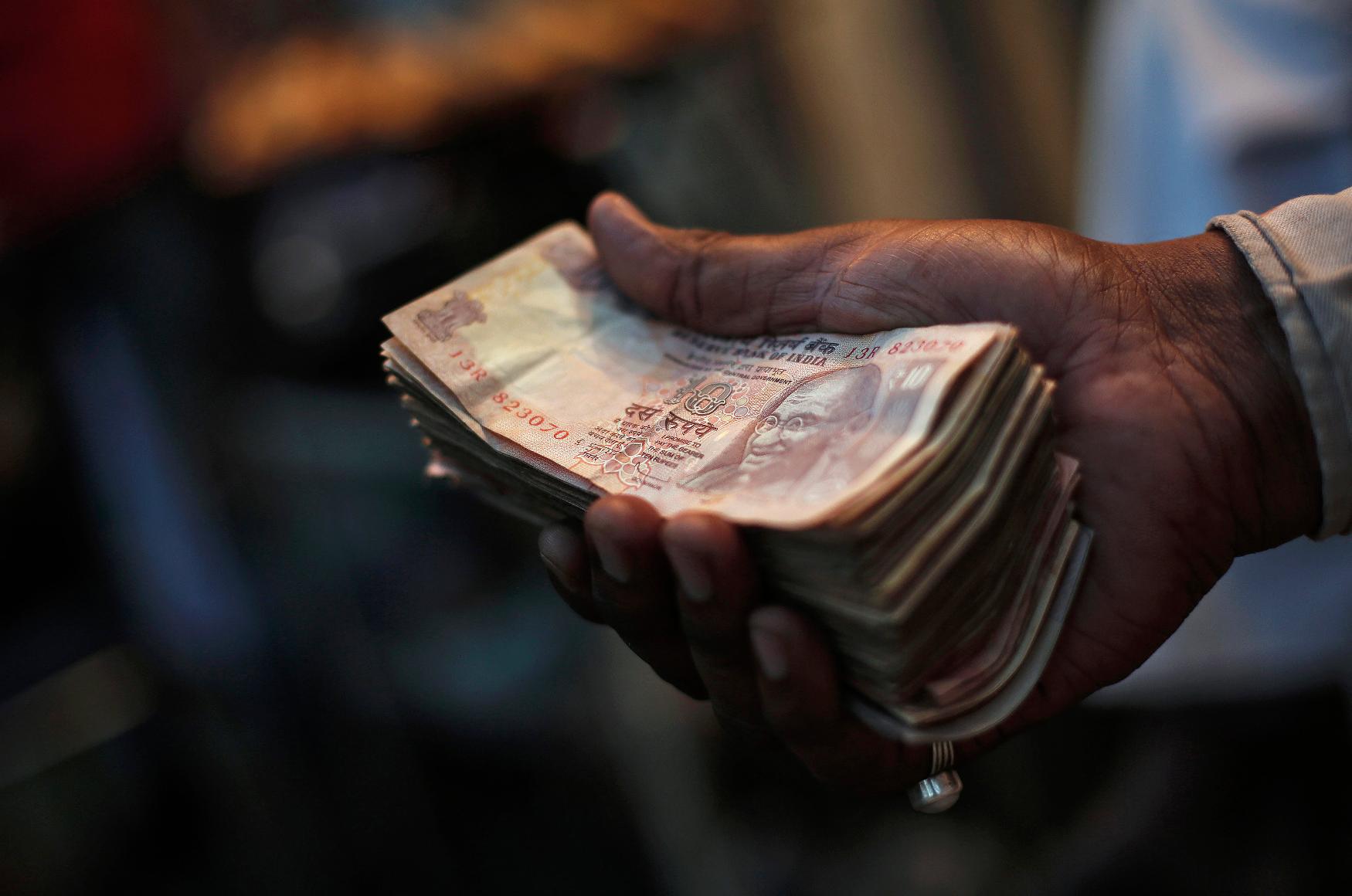
MUMBAI, Aug 2 (Reuters) - The Indian central bank was likely selling dollars to support the rupee on Friday as the currency was pinned near its record low, four traders told Reuters. The rupee was at 83.73 against the dollar as of 09:20 a.m. IST, just shy of its record low of 83.7450 hit on Wednesday. Broad risk aversion and strong dollar bids from large foreign banks, likely on behalf of custodial clients, pressured the rupee on Friday, traders said. The Reserve Bank of India was selling dollars "heavily" via state-run banks near 83.74 levels, a trader at a mid-sized foreign bank said. The dollar index was at 104.3 while Asian currencies were mixed. Benchmark Indian equity indexes, the BSE Sensex (.BSESN) , opens new tab and Nifty 50 (.NSEI) , opens new tab, were down about 0.7% each, tracking losses in global equities. Sign up here. https://www.reuters.com/markets/currencies/indian-cenbank-likely-selling-dollars-prevent-rupee-hitting-record-low-traders-2024-08-02/
2024-08-02 03:51
SYDNEY, Aug 2 (Reuters) - The Australian dollar was pinned near three-month lows on Friday as weak U.S. data fuelled fears of a sharp slowdown in the world's largest economy, sending investors to the embrace of the safe-haven yen and Swiss franc. The Aussie held at $0.6501 , having fallen 0.5% overnight to just above a three-month low of $0.6480 hit on Wednesday. More support lies around $0.6466, with resistance at $0.6580. For the week, it is down 0.6%, the third consecutive week of decline, partly due to the unwinding of the popular carry trade where investors borrowed the low-yielding yen to invest in higher-yield currencies. Against the yen , the Aussie hit a six-month low of 96.59 yen on Friday, which brought the weekly loss to a hefty 3.4%. It also scaled a six-month trough on the Swiss franc, fetching 0.5654 francs . The New Zealand dollar had better luck and was holding at $0.5943, having finished Thursday little changed. For the week, the kiwi is up 1.0%, largely due to gains against the Aussie as markets swung to price out any chance of an interest rate rise from the Reserve Bank of Australia following favourable inflation data. Still, against the Japanese currency, it touched a 2023 low of 88.33 yen Overnight, data showed U.S. manufacturing activity contracted at the fastest pace in eight months in July, while a gauge for employment fell sharply, indicating risk to the key payrolls report due on Friday are to the downside. That slammed Wall Street and boosted bonds, prompting traders to bet there is even a 30% chance that the U.S. Federal Reserve could cut rates by 50 basis points in September as the economy slows. For all of 2024, more than three cuts have been priced in. "With the market firmly moving to a mantra that bad news is bad news for risky assets and sentiment, where swaps are pricing an element of more emergency cuts, poor U.S. job numbers will not be digested well at all," said Chris Weston, head of research at Pepperstone. The shift has been echoed in Australia where investors are pricing in a 90% probability that the current 4.35% cash rate could be cut in December. Swaps also imply a total easing of 80 basis points by the end of 2025, more than doubling in a week. Bonds, however, have had a good week due to the prospect of early rate cuts. Three-year bond futures rallied 7 ticks to 96.37, the highest since early April. That brought their weekly gain to a whopping 31 ticks, the biggest rise since July 2023. Ten-year bonds also rose 6 ticks to a four-month top of 95.97, with the weekly gain at 28 ticks. Sign up here. https://www.reuters.com/markets/currencies/australia-nz-dollars-grapple-with-risk-aversion-us-growth-fears-weigh-2024-08-02/
2024-08-02 03:00
Aug 2 (Reuters) - Authorities in the Russian-controlled city of Sevastopol in Crimea are evacuating a nine-storey residential building after it was hit by a fragment of an ATACMS missile, the Russian-appointed governor of the city said on Friday. Governor Mikhail Razvozhayev said no one had been hurt in the incident and warned locals not to approach other fragments of missiles intercepted by air defences in what he described as a "massive" overnight attack on the city. Sign up here. https://www.reuters.com/world/europe/crimea-building-evacuated-after-being-hit-by-atacms-russian-official-says-2024-08-02/

2024-08-02 02:57
MUMBAI, Aug 2 (Reuters) - The Indian rupee is likely to hover near its all-time low at open on Friday, unable to benefit from a drop in U.S. bond yields, with traders expecting intervention from the Reserve Bank of India to continue limiting the currency's losses. Non-deliverable forwards indicate rupee will open at around 83.73-83.74 against the U.S. dollar, marginally weaker than its close at 83.7175 in the previous session. The rupee had declined to its all-time low of 83.7450 on Wednesday. The local currency has stayed under pressure for the majority of the last two weeks due to equity-related outflows and a prevailing bias towards steady depreciation. The decline came despite positive cues such as the Federal Reserve's signalling a likely interest rate cut in September. The dollar index was at 104.39 after rising nearly 0.3% on Thursday, as concerns about geopolitical tensions gave it a safe-haven boost and also helped drive U.S. bond yields lower. The 10-year U.S. Treasury yield declined to a six-month low of 3.94% in Asia trading with a surprise weakness in U.S. manufacturing data sparking concern that the economy could be on course for a hard landing. The rupee appears to be "headed lower steadily," with a strong local appetite to buy dollars limiting gains while the Reserve Bank of India's interventions keep sharp declines at bay, a foreign exchange trader at a state-run bank said. "We expect the (Indian) central bank to continue to intervene and hence keep FX volatility at decadal lows," MUFG Bank said in a note. Asian currencies were mixed on Friday, with the Korean won down nearly 0.5%, while the offshore Chinese yuan and the Thai baht gained slightly. Investors will pay close attention to a key U.S. jobs report due later on Friday alongside remarks from Fed policymakers. KEY INDICATORS: ** One-month non-deliverable rupee forward at 83.82; onshore one-month forward premium at 7.75 paisa ** Dollar index at 104.39 ** Brent crude futures up 0.4% at $79.83 per barrel ** Ten-year U.S. note yield at 3.95% ** As per NSDL data, foreign investors sold a net $340.78 million of Indian shares on July 31 ** NSDL data shows foreign investors bought a net $203.9mln worth of Indian bonds on July 31 Sign up here. https://www.reuters.com/markets/currencies/rupee-hover-near-record-low-cenbank-counted-support-2024-08-02/
2024-08-02 00:40
NEW YORK, Aug 2 (Reuters) - The U.S. dollar dropped to a four-month low on Friday after a weaker-than-expected employment report for July raised expectations that the Federal Reserve will cut interest rates by 50 basis points in September as the economy sours. Employers added 114,000 jobs, below expectations for an increase of 175,000. The unemployment rate rose to 4.3%, above economists expectations that it would be unchanged on the month at 4.1%. Traders are now pricing in a 71% probability that the Fed will cut rates by 50 basis points in September, up from 31% before the data was released and from 22% on Thursday, according to the CME Group's FedWatch Tool. A cut of at least 25 basis points is fully priced in for September and 116 basis points of easing is now expected by year-end. "This is what a growth scare looks like. The market is now realizing that the economy is indeed slowing," said Wasif Latif, president and chief investment officer at Sarmaya Partners in Princeton, New Jersey. The dollar index was last down 1.1% at 103.21 and got as low as 103.12, the lowest since March 14. It is the largest one-day percentage drop since November. Treasury yields also tumbled, with interest rate sensitive two-year yields dropping as low as 3.845%, the lowest since May 2023, and benchmark 10-year yields reaching a low of 3.79% for the first time since Dec. 27. The U.S. Labor Department said that Hurricane Beryl, which made landfall in Texas on July 8, had "no discernible effect" , opens new tab on the jobs data, discounting one theory that may have explained the weakness. "There's no silver lining anywhere as far as I can tell. They say they didn't have any kind of hurricane effects, and if they did, it's not enough to offset the degree of softness that we're seeing," said Steve Englander, head of global G10 FX research at Standard Chartered's New York Branch. Some economists, however, were not convinced that Beryl had no impact, and saw some spots of brightness in Friday's jobs data. The Fed kept interest rates unchanged at the conclusion of its two-day meeting on Wednesday and Fed Chair Jerome Powell said that interest rates could be cut as soon as September if the U.S. economy follows its expected path. Chicago Fed President Austan Goolsbee said on Friday the U.S. central bank should move in a "steady" way, a mild pushback against the market pricing for rate cuts. Softer jobs data, a weak manufacturing report and some disappointing corporate outlooks in recent days have increased fears that the economy is worsening at a faster pace. But despite Friday's weak jobs report, Englander notes that "most of the other indicators are not consistent with a really sharp slowdown at the moment... Everything is soft, but nothing is catastrophically soft." New economic releases will now be even more closely watched for confirmation on whether the growth outlook is as bad as feared. The greenback weakened 1.84% to 146.62 Japanese yen and got as low as 146.42, the lowest since Feb. 2. The yen has gained since hitting a 38-year low of 161.96 against the dollar on July 3, boosted by interventions by Japanese authorities and traders unwinding carry trades in which they were short the yen and long U.S. dollar assets. It got an extra lift on Wednesday when the Bank of Japan hiked rates to 0.25%, the highest since 2008. The Japanese yen and Swiss franc were also boosted by safe haven demand amid the stocks selloff and geopolitical concerns. The funeral of Hamas leader Ismail Haniyeh took place in Qatar on Friday following his assassination two days ago in Iran's capital Tehran, which investors worry may lead to a widening conflict in the Middle East. The dollar weakened 1.58% to 0.859 Swiss franc , the lowest since Feb. 2. The euro gained 1.12% to $1.0912 and reached $1.0927, the highest since July 18. Sterling strengthened 0.53% to $1.2807, bouncing back from a one-month low after the Bank of England on Thursday cut interest rates from a 16-year high. In cryptocurrencies, bitcoin fell 2.74% to $62,878. Sign up here. https://www.reuters.com/markets/currencies/safe-haven-yen-swiss-franc-soar-us-slowdown-fears-flare-2024-08-02/