2024-08-01 11:59
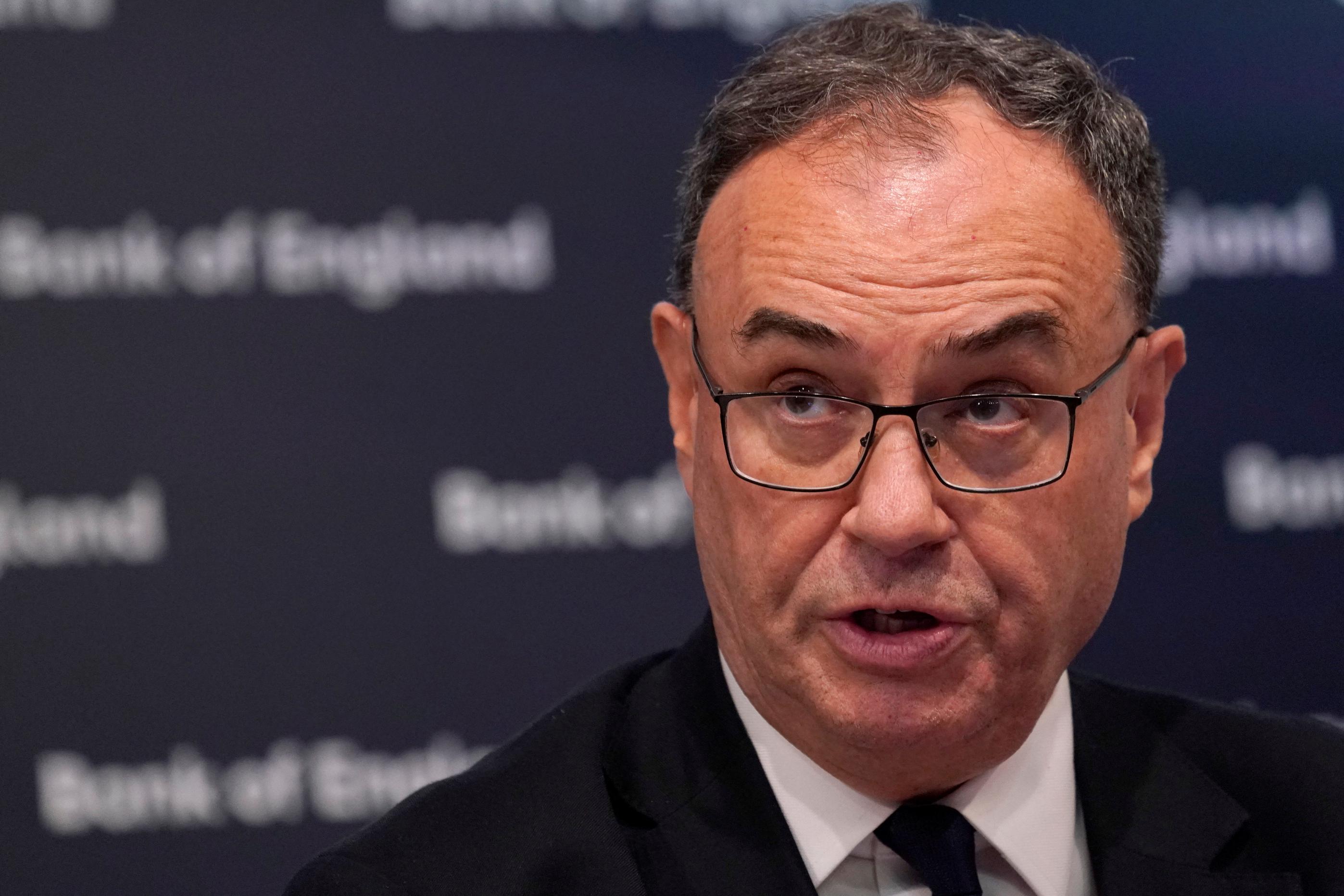
LONDON, Aug 1 (Reuters) - The Bank of England cut interest rates from a 16-year high on Thursday after a narrow vote in favour from policymakers divided over whether inflation pressures had eased sufficiently, which initially dented the pound. Thursday's decision was in line with the forecast in a Reuters poll of economists but financial markets had only seen just over a 60% chance of a cut. Governor Andrew Bailey - who led the 5-4 decision to lower rates by a quarter-point to 5% - said the BoE's Monetary Policy Committee would move cautiously going forward. "We need to make sure make sure inflation stays low, and be careful not to cut interest rates too quickly or by too much," he said in a statement alongside the decision. MARKET REACTION: STOCKS: The domestically focussed FTSE 250 midcap index (.FTMC) , opens new tab gained 0.3%%, having hit its highest in over two years. The blue chip index (.FTSE) , opens new tab pared gains, trading unchanged on the day. FOREX: Sterling fell to a session low of $1.2752 immediately after the decision, before reversing some of those losses to trade at $1.2787, down 0.54% on the day. It also pared some of its losses against the euro, which was up 0.23% at 84.39 pence, off a session high of 84.57. BONDS: Benchmark 10-year gilt yields were last down 3.9 basis points on the day at 3.936%, unchanged compared to before the decision. Two-year gilt yields , which are more sensitive to shifts in monetary policy, were down 5 bps at 3.762%, around 15-month lows. COMMENTS: LAURA FOLL, UK EQUITIES MANAGER, JANUS HENDERSON, LONDON: “The market was struggling to price ahead this decision because of the absence of smoke signals from Threadneedle Street during the election campaign. But there was a growing consensus in the City over the past couple of days that a cut was coming. The Bank of England is still being cautious - it was a close decision and the message is clear – don't expect rate cuts at every meeting. But peak interest rates are, for now, behind us. And that might be sufficient to nudge consumers sitting on savings to stop postponing those big decisions on house moves, renovations and big-ticket spending." HARRY RICHARDS, PORTFOLIO MANAGER, FIXED INCOME, JUPITER ASSET MANAGEMENT, LONDON: “The BoE is entirely justified in starting to cut rates now. The economy has evolved to such an extent that the level of extreme monetary policy was simply no longer required and, instead, dialling-back the degree of restrictiveness makes ample sense. In our view, the BOE should loosen policy much more aggressively as we move into 2025 so as to avoid doing irreparable harm to the labour market and risk sparking the hard landing concerns once more." "On the more positive side, the election result has delivered an air of relative political stability to the UK which we believe may entice international investors to look favourably upon UK fixed income markets. Importantly, however, the new government’s recent acknowledgement that taxes will need to rise is likely to act as a further brake on economic growth, increasing the pressure on the BoE to lower rates in the medium term.” PHILIP SHAW, CHIEF ECONOMIST, INVESTEC, LONDON: “The bigger picture is the MPC feels sufficiently relaxed about the risk of inflation persistence to cut the bank rate for the first time in over four years. The various signs of loosening in the labour market appear to be a big factor in the decision today and that’s outweighed the recent stuff on services inflation, which held at 5.7% in June. The question is where do we go now? We do think MPC will bring rates down again this year. The common thread with central banks is the Committee is in data-dependent mode and I think we’re going to see that phrase uttered a lot, not just in the UK but in other developed markets.” COLIN ASHER, ECONOMIST, MIZUHO, LONDON: "If you look at the headlines that Bailey produced: caution on cutting too quickly or by too much, it implies to me that they're looking at a steady quarterly pace of reductions. So I would probably expect the next cut to come in November, assuming that the macro economic developments unfold as they expect." "Generally speaking, I would expect sterling to gradually strengthen. I think you might be able to term this a hawkish cut, as in, you have guidance from Bailey suggesting not to go too far or too fast. And then in contrast from (Chair Jerome) Powell, you have the Federal Reserve looking reasonably dovish and to me that suggests upside for sterling in the medium term." DANIELE ANTONUCCI, CHIEF INVESTMENT OFFICER, QUINTET PRIVATE BANK, LUXEMBOURG: "Keeping rates too high for too long would have caused unwarranted economic weakness and therefore, an undershoot of the Bank’s inflation mandate to the downside. Even though it makes sense to proceed at a moderate pace, beginning to soften the degree of monetary tightening looks like the most sensible approach. We’ve increased our exposure to short-dated gilts. This is because short-dated bonds are most sensitive to central bank rate changes. With the Bank of England having just cut rates and likely to continue to do so, one-to-three-year gilts could benefit." DEAN TURNER, CHIEF EUROZONE AND UK ECONOMIST, UBS GLOBAL WEALTH MANAGEMENT, LONDON: "In our view, further easing is likely in the coming months as the disinflationary trends continue into the new year. The prospect of lower interest rates should continue to favour taking exposure to high-quality corporate and government bonds." "As for sterling, it has struggled to build on its recent gains, but we see potential for upward momentum to resume when the Fed joins the interest-cutting cycle, which we expect it to do when it meets in September.” JEREMY BATSTONE-CARR, STRATEGIST, RAYMOND JAMES, FRANCE: "The UK’s economic performance has been stronger than expected in recent months, moving past the residual effects of earlier inflation and providing an economic boost for the newly installed Labour government. However, real interest rates remain high and there has been a stronger-than-expected strengthening in demand over potential supply constraints, notably in the labour market. Despite this, the Committee has taken a leap of faith in cutting rates, hoping to stimulate consumers with lower borrowing costs and increased spending power." NEIL BIRRELL, CHIEF INVESTMENT OFFICER, PREMIER MITON INVESTORS, LONDON: "Falling UK interest rates have arrived at last. The Bank of England has moved from worrying about inflation to worrying about economic growth, although they are bound to be cautious about further cuts and can’t lead the bond market to expect too much too soon. But, it is an important move, with only the U.S. not joining the global rate cutting party to date. We could see financial markets further reflect the turn in the cycle, at aggregate level, but probably more so within asset classes." JASON SIMPSON, SENIOR FIXED INCOME STRATEGIST, STATE STREET, LONDON: "If there's a perception of fiscal loosening then the market will see a lot more gilt supply coming into the market that has to be absorbed and a bit of an inflationary impact so that shine on gilts might fade." JULIUS BENDIKAS, EUROPEAN HEAD OF ECONOMICS AND DYNAMIC ASSET ALLOCATION, MERCER, LONDON: "We viewed this decision as a surprise, especially given elevated wage growth. Having said that, we expect 1 to 2 more rate cuts in 2024 with more to come in 2025. The economy has normalised, so should the interest rates." MICHAEL BROWN, MARKET STRATEGIST, PEPPERSTONE, LONDON: "Looking ahead, a relatively gradual quarterly pace of cuts seems most plausible for the (Bank of England), with further normalisation likely to coincide with meetings at which a Monetary Policy Report is published, leaving the base case as just one more cut this year, at the November meeting. Such a pace would be broadly in line with that priced by markets, and that likely to be delivered by other G10 central banks, potentially limiting any prolonged sterling downside on the back of today's decision." Sign up here. https://www.reuters.com/markets/europe/view-bank-england-cuts-rates-16-year-high-2024-08-01/

2024-08-01 11:57
LONDON, Aug 1 (Reuters) - Britain's decision to increase a windfall tax on oil and gas producers to help pay for its push to grow renewables will lead to a sharp drop in revenue and accelerate the ageing basin's decline, North Sea drillers said. The new Labour government announced , opens new tab on Monday it will increase the Energy Profits Levy (EPL) by 3% to 38% starting Nov. 1, bringing the headline rate of tax on oil and gas activities to 78%, among the highest in the world. It will also scrap the levy's 29% investment allowance, which allows companies to offset tax from capital that is re-invested. Its duration was also extended to March 2030. The measures will "ensure oil and gas companies contribute more towards our clean energy transition," a Treasury spokesperson told Reuters. The government has set up a state-backed power company GB Energy to help to sharply grow its renewables capacity and decarbonise the power sector by 2030. Francesco Mazzagatti, CEO of oil producer Viaro Energy, said that the new proposal are not conducive to the stated net-zero goals. "Industry reports overwhelmingly prove that a reliance on oil and gas will be required in the decades to come, and the imports are significantly more emissions-intensive than the local supply," Mazzagatti said. Consultancy Wood Mackenzie said the EPL could raise 1.2 billion pounds ($1.54 billion) per year, or 6 billion pounds over the next parliament, but warned it would also lead to a "premature slowdown of investments" in the sector. Company executives said the measures will dry up investment in the basin. "I hope the government do something sensible rather than cast a wrecking ball across the North Sea," David Latin, chairman of North Sea producer Serica Energy (SQZ.L) , opens new tab, told Reuters. "The risk is that they will try to reduce capital allowance and that will mean we won't invest. As the basin stops investing, output starts declining much faster and revenue drops," Latin said. The first 25% windfall tax was imposed in 2022 after a surge in energy prices that followed Russia's invasion of Ukraine. It was later raised to 35%. The windfall levy wiped out most profit for producers last year. Producers, including Serica, Ithaca Energy (ITH.L) , opens new tab and Harbour Energy (HBR.L) , opens new tab, the basin's largest producer, are also seeking to shift operations overseas. Britain's North Sea output stands at about 1.3 million barrels of oil equivalent per day (boed), according to the North Sea Transition Authority (NSTA) regulator. That is down from about 4.4 million boed - more than OPEC heavyweight Iraq - at the start of the millennium. Output is projected to decline to less than 200,000 boed by 2050, the NSTA says. The new government measures will increase Britain's reliance on imports of oil and gas, Mazzagatti added. "Sooner or later, the government will be forced to address the very serious concern for the energy security of the UK, as they do not appear to be factoring in the energy risks they are exposing the country to," Mazzagatti said in a statement to Reuters. Viaro announced on Tuesday it would buy oilfields and assets in the southern North Sea from Shell (SHEL.L) , opens new tab and Exxon Mobil (XOM.N) , opens new tab. Shell (SHEL.L) , opens new tab CEO Wael Sawan said that fiscal stability was crucial for the government to meet its energy transition targets. David Whitehouse, head of industry group Offshore Energies UK criticised the government for not consulting the sector prior to its announcement. "This is not partnership working between government and industry. These announcements have been made without meaningful engagement with this sector," he said. Sign up here. https://www.reuters.com/business/energy/north-sea-oil-gas-producers-say-uk-windfall-tax-is-wrecking-ball-2024-08-01/

2024-08-01 11:55
LONDON, Aug 1 (Reuters) - Bank of England Governor Andrew Bailey on Thursday said it was still not clear if elements of persistent inflation were consistent with maintaining the rate of rising prices at the bank's 2% target. "Is the decline of persistence now almost baked in, as the global shocks that drove up inflation unwind, or, we'd also require a period with economic slack in the UK economy, or are we experiencing a more permanent change to wage and price setting which would require monetary policy to remain tighter for longer?" he said at a press conference "These have become important questions in the MPC's policy deliberations." Sign up here. https://www.reuters.com/world/uk/boes-bailey-still-unclear-if-persistent-inflation-elements-consistent-with-2024-08-01/
2024-08-01 11:54
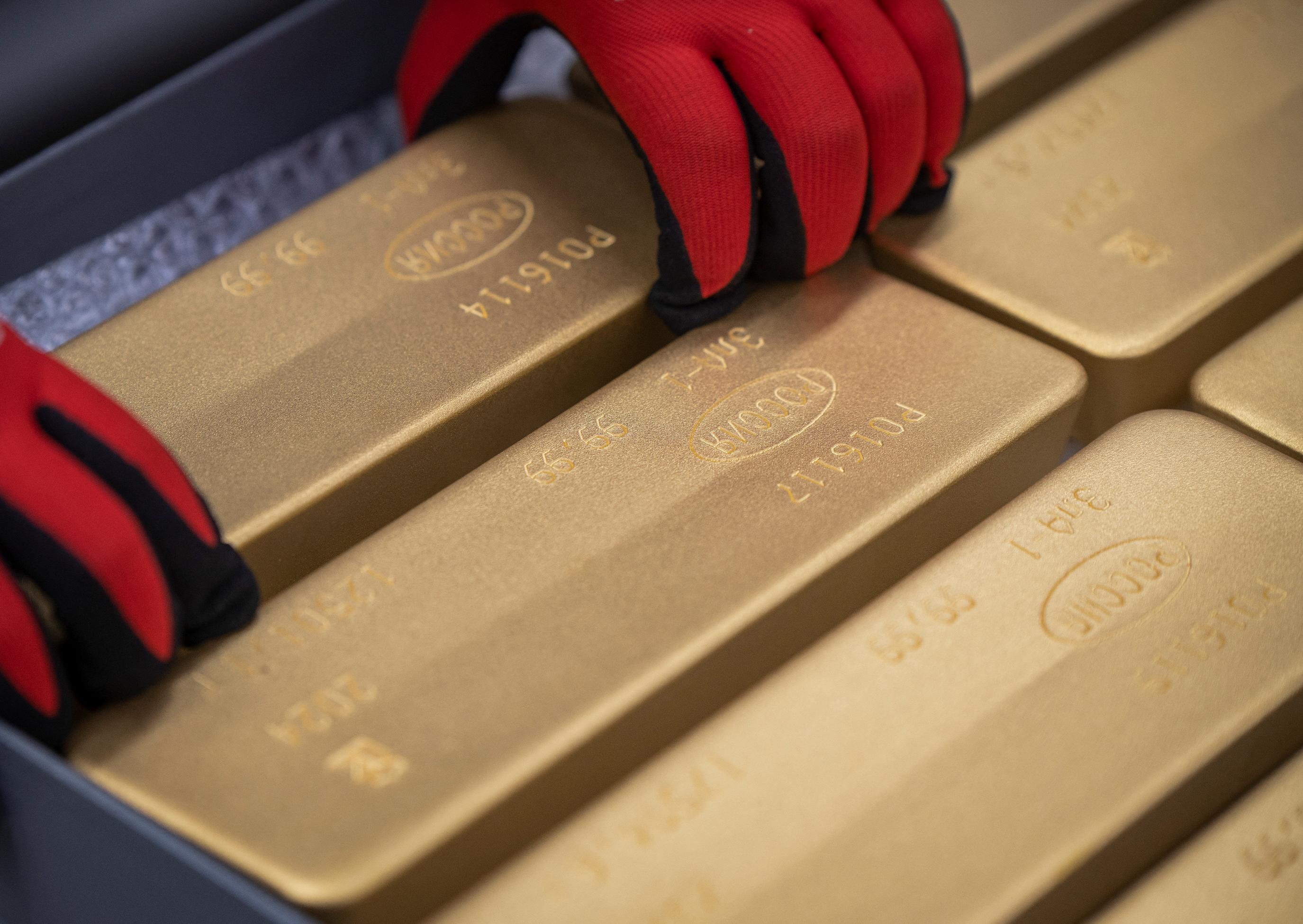
US payrolls data due on Friday Central bank gold demand should stay high in 2024/2025 - Citi Geopolitics increasingly more supportive for gold - analyst Aug 1(Reuters) - Gold prices dipped as the dollar rebounded on Thursday, after bullion hit two-week highs earlier in the session on Federal Reserve Chair Jerome Powell's indications that a September interest rate cut might be considered. Spot gold was down 0.5% at $2,436.74 per ounce, as of 1141 GMT, having hit its highest since July 18 earlier in the session. Prices were just $47 shy of the record high of $2,483.60 scaled on July 17. U.S. gold futures firmed 0.3% to $2,481.00. Powell said on Wednesday rates could be cut as soon as September, putting the central bank near the end of a more than two-year battle against inflation. "Powell putting a possible rate cut in September on the table is supportive for gold. But on the other hand, you now have a slightly firmer U.S. dollar and weaker euro, and that is a negative effect," said Quantitative Commodity Research analyst Peter Fertig. Market focus now shifts to Friday's U.S. payrolls report. If July job growth exceeds expectations, doubts may arise about a September Fed rate cut, Fertig added. "A reminder to not be short gold near range lows, and cognizant that geopolitics is increasingly more supportive in the medium-long-term," Nicky Shiels, head of metals strategy at MKS PAMP SA, wrote in a note. Bullion, traditionally known for its stability as a favoured hedge against geopolitical and economic risks, thrives in a low-interest rate environment. "Central bank gold demand should stay high in 2024/2025 despite the recent absence of 'reported' PBOC gold purchases in May and June," analysts at Citi wrote in a note. "But that seems unlikely to reverse a broader EM CB (emerging central bank) trend of increasing gold holdings due to de-dollarization, reserve diversification, and alt-fiat demand," they added. Elsewhere, spot silver fell 0.4% to $28.91, platinum lost 0.6% to $970.52 and palladium edged up 0.2% to $927.07. Sign up here. https://www.reuters.com/markets/commodities/gold-scales-2-week-high-fed-nods-likely-sept-rate-cut-2024-08-01/
2024-08-01 11:48
MOSCOW, Aug 1 (Reuters) - The Kremlin said on Thursday that Russian forces would shoot down U.S.-built F-16 fighter jets sent to Ukraine, and that the F-16s would have no significant impact on the course of the war. Lithuanian and U.S. officials confirmed on Wednesday that Ukraine had received the first order of long-awaited jets, which are equipped with a 20mm cannon and can carry bombs, rockets and missiles. Asked about the F-16s, Kremlin spokesman Dmitry Peskov said: "If I'm not mistaken, rewards (for Russian forces to shoot them down) have already been offered." He predicted the planes would not be a "magic pill" for Kyiv's forces. "These planes will appear and gradually their number will decrease; they will be shot down and destroyed," he said. "These deliveries will not be able to significantly influence the dynamics of events at the front." Sign up here. https://www.reuters.com/world/europe/kremlin-says-russia-will-shoot-down-ukraines-f-16-fighter-jets-2024-08-01/

2024-08-01 11:47
Aug 1 (Reuters) - Pipeline operator TC Energy (TRP.TO) , opens new tab on Thursday beat second-quarter profit estimates, helped by higher volumes of natural gas transported through its system. Extremely hot weather prompted consumers to increase their usage of air conditioners and refrigerators, creating demand for natural gas. The NOVA Gas Transmission system received 14.2 billions of cubic feet per day (Bcfpd) of gas on an average in the reported quarter, up 5% from a year earlier and U.S. natural gas pipelines' transport was up 3% at 26.2 Bcfpd. Quarterly earnings from the company's Canadian natural gas pipelines business came in at C$514 million ($371.79 million), compared to a loss of C$394 million in the year-ago period. Earnings from its Mexico pipelines were up 46.2% at C$266 million. Earnings from its liquids pipelines business fell 1.1% to C$270 million, from a year earlier. Calgary-based TC Energy, best known for its Keystone oil pipeline, is undergoing an overhaul and is in the process of spinning off its oil business to focus on transporting natural gas. TC Energy is grappling with long-term debt of about C$49.15 billion as of June 30, as well as high costs at its Coastal GasLink pipeline in British Columbia, which was completed at the cost of C$14.5 billion, more than double its original budget. Earlier this week, TC Energy said it will sell a minority stake in its Canadian natural gas pipeline system to Indigenous communities for C$1 billion as part of its plan to reduce debt and fund investments. The company has announced C$2.6 billion of asset sales up till Thursday, of the C$3 billion asset divestiture target by the end of the year. TC Energy reported an adjusted profit of 94 Canadian cents per share for the quarter ended June 30, compared with analysts' average estimate of 91 Canadian cents per share, according to LSEG data. ($1 = 1.3825 Canadian dollars) Sign up here. https://www.reuters.com/business/energy/tc-energy-beats-second-quarter-profit-estimates-2024-08-01/