2024-07-29 20:20
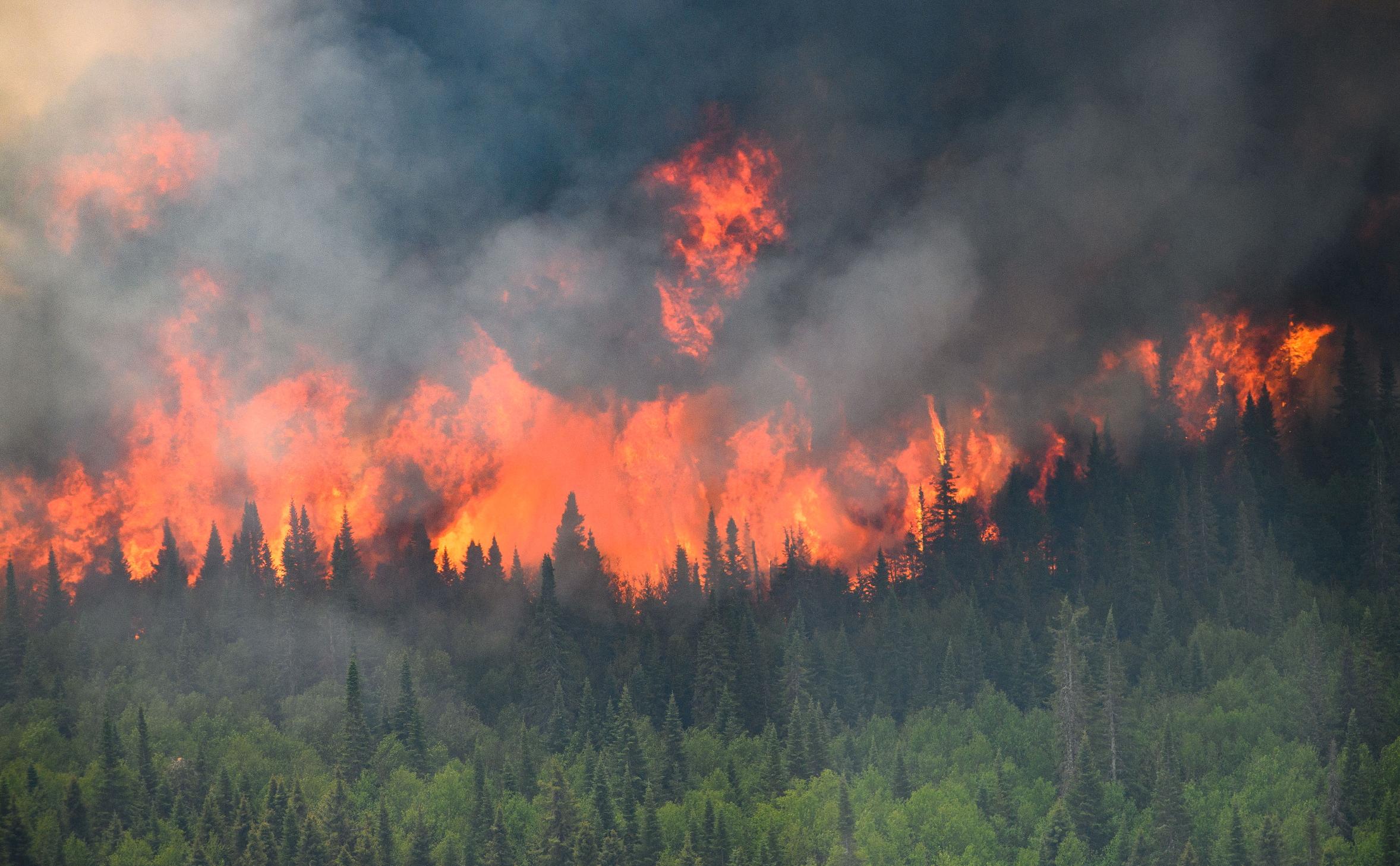
SAO PAULO, July 29 (Reuters) - Forests and other land ecosystems failed to curb climate change in 2023 as intense drought in the Amazon rainforest and record wildfires in Canada hampered their natural ability to absorb carbon dioxide, according to a study presented on Monday. That means a record amount of carbon dioxide entered Earth's atmosphere last year, further feeding global warming, the researchers said. Plant life helps to slow climate change by taking in huge amounts of carbon dioxide, the main greenhouse gas driving global warming. Forests and other land ecosystems on average absorb nearly a third of annual emissions from fossil fuels, industry and other human causes. But in 2023, that carbon sink collapsed, according to study co-author Philippe Ciais of the Laboratory for Climate and Environmental Sciences (LSCE), a French research organization. "The sink is a pump, and we are pumping less carbon from the atmosphere into the land," Ciais said in an interview. "Suddenly the pump is choking, and it's pumping less." As a result, the growth rate of carbon dioxide in the atmosphere jumped 86% in 2023 compared to 2022, the researchers said. Scientists at Tsinghua University in China, the University of Exeter in England and LSCE led the research into what caused the shift. Their study was presented at the International Carbon Dioxide Conference in Manaus, Brazil. A major driver was record high temperatures globally that dried out vegetation in the Amazon and other rainforests, preventing them from taking up more carbon while also fueling record fires in Canada, the study found. "Imagine your plants at home: If you don't water them, they're not very productive, they don't grow, they don't take up carbon," said Stephen Sitch, a study co-author and carbon expert at the University of Exeter. "Put that on a big scale like the Amazon forest," Sitch told Reuters on the sidelines of the conference The study is still in the process of peer review with an academic journal, but three scientists who were not involved in the research told Reuters that its conclusions were sound. They said that dips in land carbon sinks tend to happen in years affected by the El Nino climate phenomenon, like 2023. But the record high temperatures being driven by climate change made last year's dip particularly extreme. Also, the consequences of the dip are more severe than in the past because humans are now causing the emission of more carbon dioxide than ever before. The scientists cautioned that Earth's carbon sink varies widely year to year, and a single year alone will not spell doom. But it would be alarming if what was observed in 2023 becomes a trend, they added. "This is a warning," said Richard Birdsey of Woodwell Climate Research Center in the United States, who was not involved in the study. "There's a good chance that years like 2023 are going to be more common." The less carbon the land ecosystems absorb, the less fossil fuels the world can burn before humankind blows past global climate targets, said Anthony Walker, an ecosystem modeler at the Oak Ridge National Laboratory in the United States who was not involved in the study. "We cannot count on ecosystems to bail us out in the future," said Trevor Keenan, an ecosystem scientist at University of California, Berkeley who was not involved in the study. Sign up here. https://www.reuters.com/business/environment/worlds-forests-failed-curb-2023-climate-emissions-study-finds-2024-07-29/
2024-07-29 20:15
TEAHUPO'O, Tahiti, July 29 (Reuters) - Brazil's Gabriel Medina powered through a giant blue barrel for the highest score of the Olympic surfing competition so far, but Tahiti's Teahupo'o stole the show on Monday with some of the most incredible waves ever seen in competition. The decision to hold the surfing event at the perfect reef pass of Teahupo'o proved inspired as a solid southwest swell rose and a forecasted storm held off just long enough to complete the men's third round. Teahupo'o, which loosely translates as "Wall of Skulls" after a gruesome local legend, really bared its teeth after two days of more user-friendly conditions. Time after time, surfers paddled hard and threw themselves into the waves, which sucked below sea-level as they hit the reef. Those that got it right were spat out of the fearsome tubes, shrouded in firehose blasts of spray. Horrendous wipeouts, broken boards and jetski rescues followed for those that got it wrong. Brazil's Gabriel Medina got the wave of the event so far in his round five heat against Japan's Tokyo Olympic silver medallist Kanoa Igarashi, a 9.90 out of 10 that was if anything, underscored. Taking off deep, Medina pumped through an enormous tube and signalled to the judges that he thought it was worth a 10 before flying into the channel. Most of those on the flotilla of boats and jetskis watching metres away screamed in agreement. Medina backed it up with a 7.5 for a 17.4 points total to cement him as a favourite to win gold. "I never imagined we could get waves like this in the Olympics," said Medina. "I'm comfortable when the waves are good and as long as it's like this, it's good for everyone ... Today was a good day for sure." FLORENCE OUT One heavyweight clash, John John Florence of the United States taking on Australia's Jack Robinson, was brutal and tense rather than spectacular as both tube-riding maestros struggled to get the right waves. "We didn't get it easy. At the start of the heat, I got dragged over the bottom and then almost had a two-wave hold down," said Robinson, who had been able to snatch a quick breath just before the next wave smashed him. Robinson agreed surfing might be the most dangerous sport in the Olympics in conditions like these. "Every other sport is in a court or a stadium, and we're in the ocean, which is the biggest, most powerful source of life that we have on this planet," he said. "The wave is just so powerful. It doesn't relate to any other sport, you know what I mean? Maybe an avalanche or something coming down on your head on a mountain. That's similar ... It's so dangerous." 'JUST INSANE' Earlier, Tahiti's Kauli Vaast, surfing for host nation France, eliminated American Griffin Colapinto. "It was just perfect," said Vaast, who has had more than his share of jaw-dropping waves at "The End of the Road" as Teahupo'o is also known. "There are some 10-foot, perfect 10-foot (waves) coming up, offshore wind, two guys out, beautiful sunny days - just insane." Countryman Joan Duru, a veteran known for charging heavy waves, scored two 9-point rides to notch up the highest heat score of the competition so far, 18.13 out of 20. Japan's Reo Inaba knocked out Brazil's two-time world champion Filipe Toledo, whose countryman Joao Chianca triumphed over Morocco's Ramzi Boukhiam in the round's highest combined scoring heat - 18.10 to 17.80. "I'm really upset because I know that I could have brought gold for Morocco in these types of waves," Boukhiam said. "It was possible, because I love this shit, man." Chianca almost died after a brutal beat-down in Hawaii last December, dragged unconscious from the water and missing this year's professional tour. "Joao is one of my really good friends and I'm really happy he's alive and that we're doing this," Boukhiam said. "And now look at us, fighting for a spot in the quarters, but in pumping waves, who would have thought? So that was really emotional. And I'm happy for the kid, you know, I'm happy for him." The women's round three was scheduled to follow the men's, but conditions quickly turned with howling winds and pouring rains lashing the lineup, forcing the competition on hold, probably for a couple of days. Sign up here. https://www.reuters.com/sports/olympics/surfing-florence-robinson-meet-heavyweight-round-three-clash-2024-07-29/

2024-07-29 19:35
KYIV, July 29 (Reuters) - Ukrainian President Volodymyr Zelenskiy said on Monday he had travelled to the frontline area of Vovchansk in the northeastern Kharkiv region near the Russian border, where Moscow's forces have been trying to break through. Russian troops opened a new front in the north of the region in May, rapidly making inroads up to 10 km (6 miles). Ukraine's military later halted the offensive, one of the main thrusts of which had pushed towards the town of Vovchansk. "Kharkiv front. The forward command post of the Special Operations Forces of the Armed Forces of Ukraine, in the area of Vovchansk," Zelenskiy wrote on the Telegram messaging app. He was shown presenting state awards to soldiers and shaking their hands in a video posted alongside the statement. In video clips posted online, Zelenskiy later said authorities had already begun strengthening air defence systems in Kharkiv region, where frequent Russian air attacks have eased to some extent recently. "In terms of security, and without going into too many details, we have already begun strengthening the airspace around Kharkiv," Zelenskiy told enterpreneurs in neighbouring Poltava region. Supplies of Western anti-aircraft systems have begun flowing faster into Ukraine after an interruption of U.S. supplies for months because of disagreements in the U.S. Congress. Zelenskiy said such systems would be introduced more quickly "where the number of attacks is greater". The Ukrainian General Staff said Russia continued to conduct air strikes in the region's border areas and that in the last 24 hours Kyiv's forces had repelled six assaults near Vovchansk and the village of Hlyboke more than 30 km (19 miles) to the west. Though Russia's attacks in the eastern Donetsk region remain Moscow's main offensive thrust, the assault into Kharkiv region has stretched Ukraine's outmanned defenders and forced Kyiv to send in reinforcements. Ukraine then successfully lobbied allies to allow it to use Western weapons for some strikes across the border from Kharkiv region. Kyiv says this has helped it to fend off advances by Russian forces, which are now more than 29 months into their full-scale invasion of Ukraine. Kyiv is now pressing its allies to lift restrictions preventing it from using Western weapons for strikes deep inside Russia on targets such as military airfields. On his trip to the Kharkiv region, Zelenskiy also visited the town of Derhachi, about 15 km (nine miles) from the regional capital Kharkiv, his statement said. Both settlements have been frequently targeted by Russian missile and guided bomb attacks. Sign up here. https://www.reuters.com/world/europe/ukraines-zelenskiy-visits-frontline-area-kharkiv-region-2024-07-29/

2024-07-29 19:24
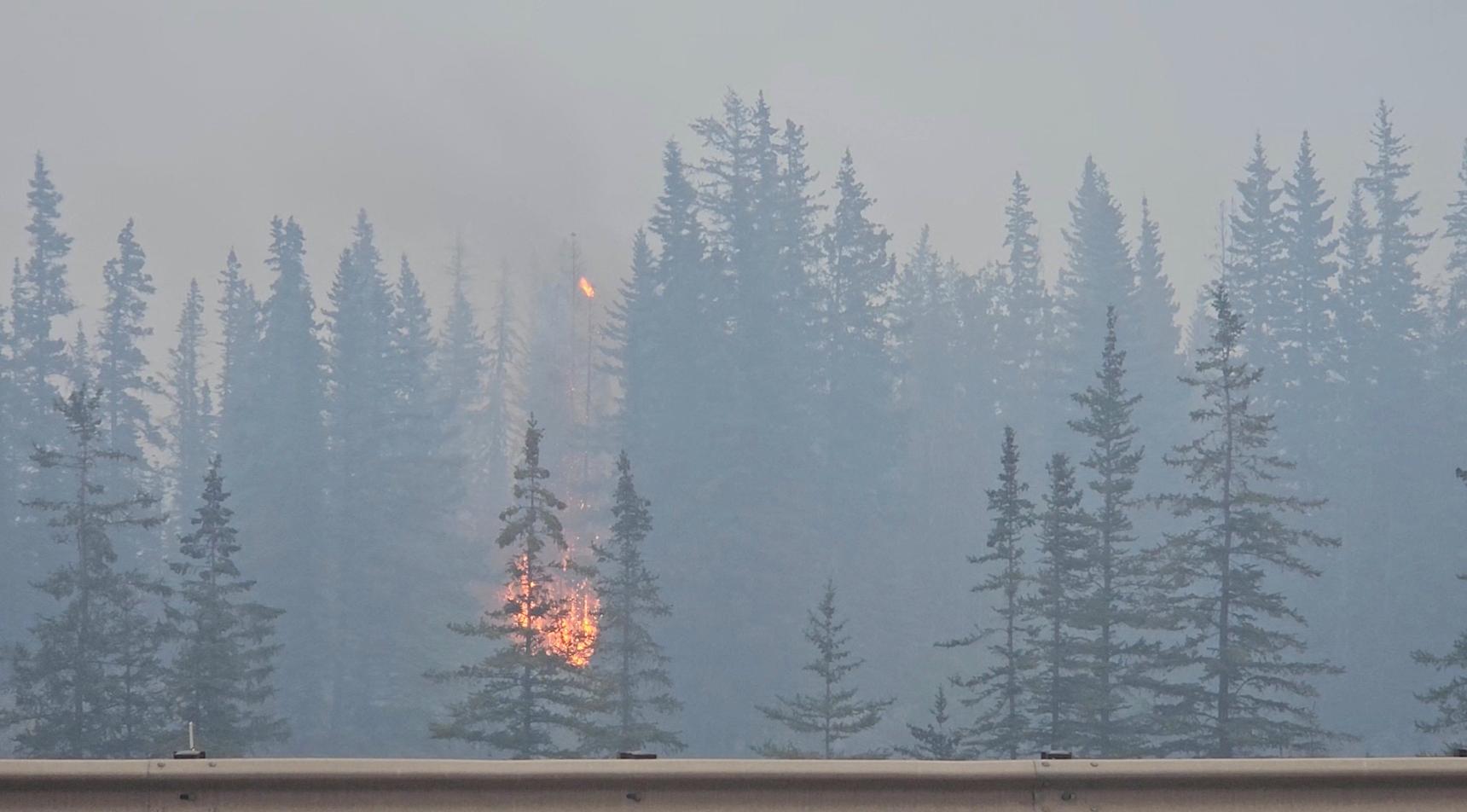
July 29 (Reuters) - Parks Canada, the federal agency managing the country's national parks, on Monday rejected criticism that it left the town of Jasper vulnerable to wildfires by not removing more trees killed by decades of mountain pine beetle infestation. Nearly a third of Jasper's structures were destroyed when a massive wildfire, with flames burning 100 meters (330 feet) high, hit the popular Alberta tourist town last week. Canadian Environment Minister Steven Guilbeault said on Monday all fires in the town are now extinguished, but blazes continue to burn throughout Jasper National Park and there is still no timeline for when residents can return home. Like much of western Canada the park has been ravaged by an ongoing outbreak of mountain pine beetle that started in British Columbia in the early 1990s and has affected more than 18 million hectares (44.5 million acres) of Canadian forest. Some forestry experts have criticized Parks Canada for being too focused on preserving natural forest ecosystems and not doing more to remove beetle-affected trees around Jasper. Head of the agency Ron Hallman said pine beetle was a factor in the wildfire, but Parks Canada had done everything it reasonably could to reduce the risk over many decades. "Pine beetle is through hundreds of thousands of hectares of forest and short of bulldozing all of that, or burning all of it or mechanically removing all of it, we work to minimize risk to towns," Hallman told a news conference. The agency has spent hundreds of millions of dollars since the 1990s on measures including controlled burns, when an area of forest is deliberately cleared by fire, installing sprinkler systems and mechanically removing trees and underbrush, he added. "I reject the premise of the question that Parks Canada puts nature before people," Hallman said. The devastation suffered by Jasper has fueled concerns about the risk wildfires pose to other Canadian mountain towns such as Banff. Milder winters and drier summers due to climate change have enabled the beetle, which leaves dead, highly flammable trees in its wake, to migrate further across western Canada. Jasper Mayor Richard Ireland said the valley in which the town sits was "absolutely full" of dead pine beetle trees, but the reason 70% of structures had not burned was because of steps taken by Parks Canada to protect the community. "When the attack happened those defenses worked. We suffered casualties, absolutely, and it is so incredibly hurtful, but we did hold our ground," Ireland said. Sign up here. https://www.reuters.com/business/environment/jasper-town-fires-extinguished-canadian-officials-defend-forest-management-2024-07-29/
2024-07-29 18:46
July 29 (Reuters) - Ukraine's military said its forces launched fresh waves of strikes on southern Russia's Kursk region on Monday, and said the strikes were targeting power substations in addition to earlier attacks on an oil depot. "In particular, there have now been attacks on several of the Russian invaders' power substations in Kursk region," the General Staff said in a report on the Telegram messaging app. "According to available information, the enemy's air defence systems have been in operation and explosions have occurred around at least four stations." Power cuts, it said, had been noted in three districts. Reuters could not independently verify the report. Overnight, Russian officials said Kyiv had launched more than two dozen drones on Kursk in attacks that started on Saturday night and damaged an oil depot. Nineteen drones launched from Ukraine were destroyed by Russia's air defence systems overnight, Russia's defence ministry said. That followed 19 drones that Andrei Smirnov, Kursk's governor, said defence systems destroyed on Sunday. Neither Smirnov nor the Russian defence ministry said how many drones in total Ukraine had launched. Smirnov said firefighters were still battling the blaze late on Sunday. The attacks caused minor damage to residential buildings. Russian officials rarely disclose the full extent of damage inflicted by Ukrainian attacks. The Russian defence ministry said that in total, its air defence systems destroyed 39 drones launched by Ukraine overnight. Nine drones were destroyed over Belgorod region, five over Bryansk region, and three each over the Voronezh and Leningrad regions, all in Russia's west. The ministry did not list the Oryol region, where according to the governor of the southwestern Russian region, a power plant was damaged in a Ukraine-launched drone attack overnight. Ukraine has been targeting transport, energy and military infrastructure to disrupt the Kremlin's ability to fund the war, which Russia launched with a full-scale invasion in 2022. Sign up here. https://www.reuters.com/world/europe/ukraine-keeps-pounding-russias-kursk-region-with-drones-russian-official-says-2024-07-28/

2024-07-29 18:39
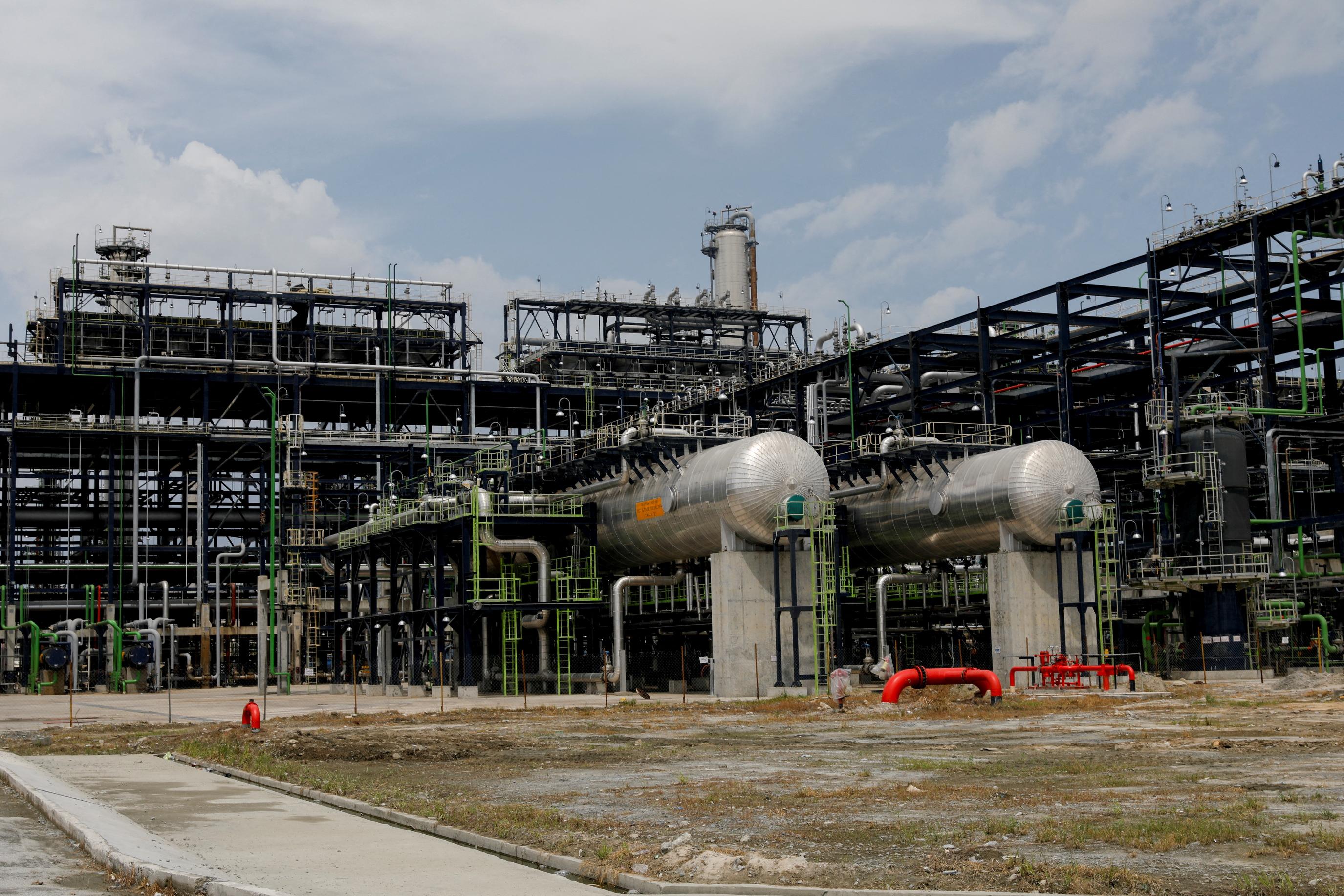
ABUJA, July 29 (Reuters) - Nigeria's government gave approval on Monday for state oil company NNPC Ltd to sell crude in the naira currency to the mega Dangote refinery effective immediately to help ease foreign exchange pressure. The $20 billion Dangote refinery, Nigeria's main oil refinery and billed to be the largest in Africa at full throttle, started production in January but has struggled to secure enough crude to meet its 650,000-barrel-per-day capacity. Dangote previously had to buy oil on the international market, but it filed a complaint saying oil majors were blocking its access to locally produced crude by selling it above market price or claiming it was unavailable, forcing the refinery to rely on expensive imports. The cabinet gave the nod for NNPC Ltd to start selling crude to Dangote and other local refineries immediately in naira to ease pressure on foreign exchange, Zacch Adedeji, a cabinet member who is chairman of Nigeria's Federal Inland Revenue Service (FIRS), told reporters. The refineries will also be able to sell refined fuels to local marketers in naira, he said. "By this decision, the pressure on foreign exchange rates today will be reduced," Adedeji said. He explained that the previous scenario exerted a burden of $660 million in demand on foreign exchange per month, amounting to $7.92 billion annually. The new arrangement is projected to reduce this amount to around $50 million per month, or $600 million annually, leading to annual savings of $7.32 billion, Adedeji said. Africa's most populous country has suffered chronic dollar shortages that have forced authorities to devalue the naira twice within the past year. Analysts say the decision to approve the crude sales in naira could reduce the need for the refineries to seek new loans from foreign lenders and help lower transportation costs. "It is essentially a policy choice between substantial naira transactions versus Nigeria's need for foreign currency," said Ayodele Oni, energy lawyer and partner at Bloomfield, a Lagos-based law firm. Local fuel marketers had been worried they would be unable to pay for supplies from the Dangote refinery when it starts pumping gasoline next month if priced in dollars. Earlier this month, Nigeria's oil regulator struck a deal with producers to allow sales of crude oil to domestic refiners at market prices as it sought to end a supply dispute that had strained relations with the oil majors. Sign up here. https://www.reuters.com/business/energy/nigeria-allows-nnpc-sell-oil-directly-dangote-refinery-cabinet-member-says-2024-07-29/