2024-07-26 11:31
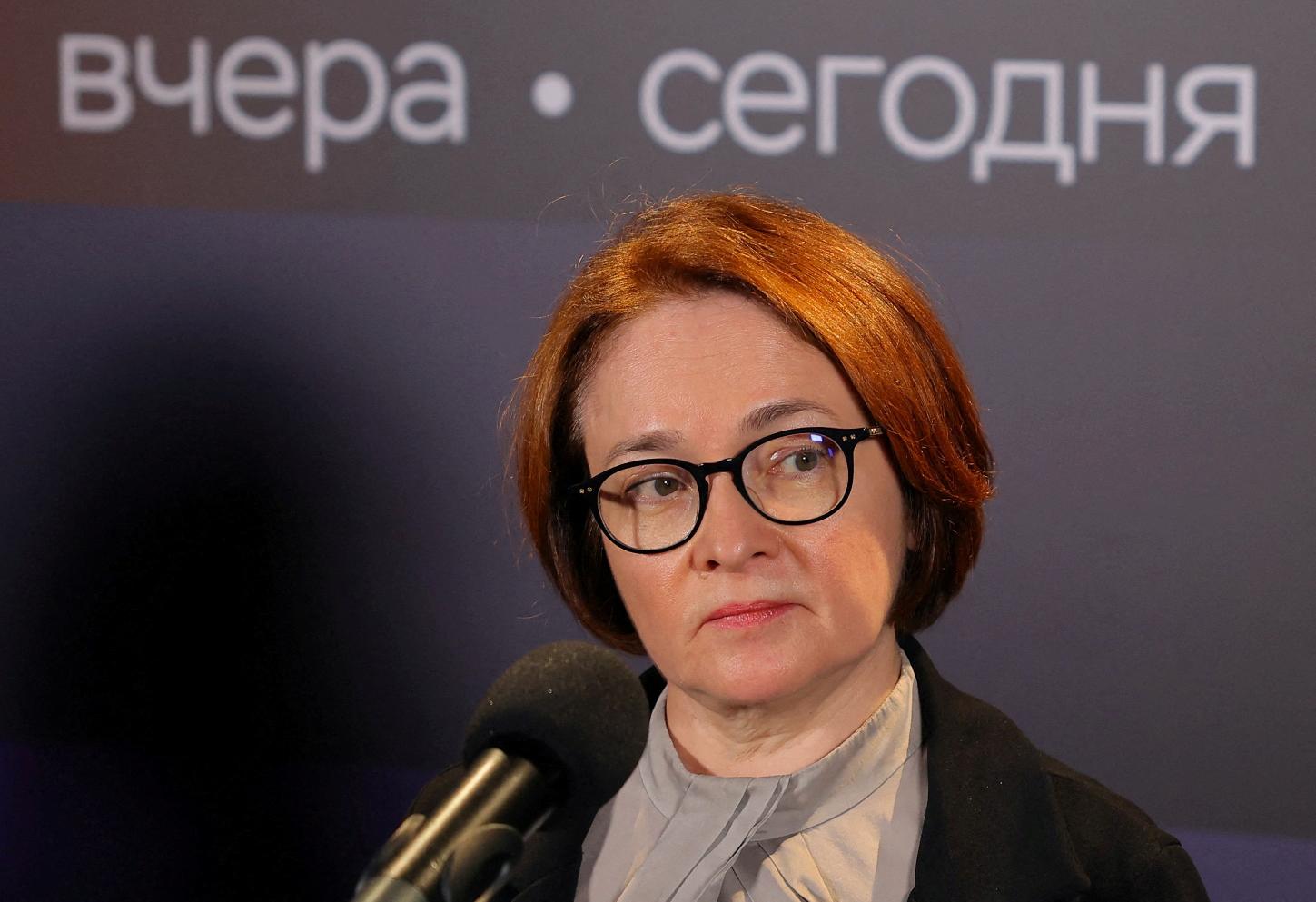
MOSCOW, July 26 (Reuters) - Russia's central bank hiked its key interest rate by 200 basis points to 18% on Friday, the highest level in more than two years, and vowed to continue tightening until inflation rates in an overheated economy come down. The bank also raised its inflation forecast for 2024 to 6.5–7.0%, well above its 4% target. It sees annual price growth declining to 4.0–4.5% in 2025. The market was expecting the hike, a Reuters poll of economists showed, though some dissenting voices in the Russian elite had favoured a more dovish approach, criticising the bank for stifling economic growth. The key rate is now at its highest since April 2022. The Bank of Russia raised rates to 20% in an emergency move soon after the Kremlin sent Russian troops into Ukraine in February 2022. "For inflation to begin decreasing again, monetary policy needs to be tightened further," the bank said in a statement. Its next rate-setting meeting is due on Sept. 13. Annual inflation, the bank's main area of concern, grew to 9.0% as of 22 July from 8.6% in June, the bank said. Inflation stood at 7.4% in 2023, compared with 11.9% in 2022. "Returning inflation to the target requires considerably tighter monetary conditions than presumed earlier," the bank said. "The Bank of Russia will consider the necessity of further key rate increase at its upcoming meetings." SUBSTANTIALLY OVERHEATED Central bank governor Elvira Nabiullina said the economy remained "substantially overheated", while noting a broad consensus among board members regarding the rate decision, with some even suggesting a more significant hike. Nabiullina dismissed an earlier suggestion from Igor Sechin, CEO of oil giant Rosneft, to take cues from the People's Bank of China, which embarked on an easing cycle this week. She emphasised that economic conditions in Russia and China were different. "Currently, China is balancing around zero inflation, they are pursuing a policy diametrically opposed to ours because our task is to reduce inflation, while their task is to avoid deflation," she said. Nabiullina said she expected monthly inflation rates to start coming down in July but it would take longer to achieve a sustainable decline in price growth, noting that the central bank underestimated the impact of budget spending on inflation in the first half of the year. The central bank noted an "upward deviation of the Russian economy from a balanced growth path" and pointed to labour shortages and the continued expansion of retail and corporate lending as key factors behind high inflation. The bank raised its forecast for GDP growth in 2024 to 3.5%-4.0% from 2.5%-3.5%. President Vladimir Putin has estimated that the Russian economy grew by over 5% in the first half of this year. Just before the rate announcement, the Kremlin said there were "various views regarding the overheating of the economy". It added that "necessary measures are being taken". The Bank of Russia raised rates by 850 basis points in the second half of 2023, including an unscheduled emergency hike in August as the rouble tumbled past 100 to the dollar and the Kremlin called for tighter monetary policy. Sign up here. https://www.reuters.com/markets/rates-bonds/russian-central-bank-hikes-rates-by-200-bps-18-highest-more-than-two-years-2024-07-26/
2024-07-26 11:30
July 26 (Reuters) - It's a big week for central banks, with policymakers in the United States, Japan and Britain all due to reconsider lending rates and markets on edge over more earnings from U.S. tech giants. In Venezuela, voters went to the polls to elect a president. Here's your look at what's happening in markets in the coming week, from Kevin Buckland in Tokyo, Ira Iosebashvili and Rodrigo Campos in New York and Amanda Cooper in London. 1/SEPTEMBER QUESTION The steep selloff in markets in recent days is shining a spotlight on the Federal Reserve, which concludes its July monetary policy meeting on Wednesday. Signs of economic concern from the Fed could give investors - already unnerved by turbulence in U.S. tech stocks - yet another reason to worry. As it is, investors believe the time to ease monetary policy is swiftly approaching: futures tied to the Fed funds rate show investors pricing in a more than 90% chance of a September rate cut amid evidence of cooling inflation and a nascent downshift in the jobs market. U.S. employment data due Aug. 2 will give investors the opportunity to assess whether the gradual signs of slowing that bolstered rate cut expectations have continued in July. Economists polled by Reuters expect the U.S. to have created 185,000 jobs in July, compared with 206,000 in the prior month. 2/TECH TANTRUMS Spooked investors also face a minefield of Big Tech earnings, with misses threatening to further upend a market roiled by worries over stretched stock valuations. Microsoft is scheduled to report earnings on Tuesday, followed by Facebook-parent Meta on Wednesday and Apple and Amazon on Thursday. Disappointing numbers could re-ignite the worries that caused a crushing selloff in U.S. stocks on Wednesday, when both the S&P 500 and Nasdaq suffered their worst day since late 2022. The huge run-up in tech stocks may have set a high bar for their results. Google-parent Alphabet, whose earnings were one of the triggers for the recent selloff, actually reported better-than-expected revenue, but investors grew wary that rising spending on AI infrastructure could squeeze margins, sending the shares 5% lower. 3/HIKES AND SPIKES Speculation is growing that the Bank of Japan could hike rates on Wednesday after high-profile politicians - including the prime minister - hinted at the need for near-term policy normalisation. It's not the need to end decades of extraordinary stimulus, per se, that is at the heart of their arguments. Rather, the weak yen's choking effect on households and businesses that looks to be turning the exchange rate into a central issue for the ruling Liberal Democratic Party's leadership convention in September. The fact that the currency has rebounded by a staggering 10 yen per dollar from three-decade lows at the start of the month hasn't deterred some from predicting a July hike. They argue the BOJ can get the most bang for its buck by hiking into a rallying yen. Others worry a fragile economy and weak consumer sentiment couldn't weather higher borrowing costs, with slowing U.S. growth set to have a knock-on effect already. 4/STICKY ISSUES The Bank of England meets on Thursday and right now, markets see a roughly 48% chance that rates will fall for the first time since March 2020 . Growth is modest and consumer inflation has returned to 2%. Yet wage growth and service-sector inflation are proving sticky and running hotter than a number of policy-setters at the Old Lady of Threadneedle Street, as the Bank of England is known, would like. Clare Lombardelli, the new deputy governor, may hold the deciding vote, as the other eight Monetary Policy Committee members are split evenly on whether to hold or cut. British consumers might be feeling the pinch of interest rates at more than 14-year highs, but banks have certainly reaped the benefits. Markets will watch results from HSBC (HSBA.L) , opens new tab, Barclays (BARC.L) , opens new tab and Standard Chartered (STAN.L) , opens new tab to get a sense of how well they are likely to fare when borrowing costs, and the profit they make on them, start to fall. 5/A MULTI-BILLION QUESTION Venezuelan President Nicolas Maduro and his opposition rival Edmundo Gonzalez each claimed victory in a presidential election on Monday morning, after a vote marked by accusations of underhand tactics and isolated incidents of violence. The electoral authority said just after midnight on Monday that Maduro had won a third term with 51% of the vote, despite multiple exit polls pointing to an opposition win. The authority said opposition candidate Gonzalez won 44% of the vote, though the opposition had earlier said it had "reasons to celebrate" and asked supporters to continue monitoring vote counts. Venezuela had suffered six-digit hyperinflation for about four years, with the indicator reaching a heady 130,000%, eroding savings and making basic supplies scarce. But annual inflation fell to around 50% over the last year as the government restricted credit, held the exchange rate steady and curbed public spending. The results and handling of the vote are one half of the puzzle determining future U.S. sanctions on Venezuela - the battle for the White House is, of course, yet to come in November. Current curbs include a ban on buying bonds directly from Venezuela's government. That precludes, for now, a restructuring of some $60 billion in international bonds owed by the government and state-owned oil firm PDVSA. Venezuela's and PDVSA'S defaulted bonds trade at deeply distressed levels of 13-22 cents, but have rallied sharply from late last year's single-digits. Investors are watching Maduro's handling of the election very closely. Sign up here. https://www.reuters.com/business/take-five/global-markets-themes-graphic-2024-07-26/

2024-07-26 11:22
Operators snap up generators and batteries to maintain coverage President orders review of mobile providers' activities Operators advise clients to limit mobile usage during blackouts KYIV, July 26 (Reuters) - When Russia attacks Ukraine's energy system, it not only knocks out electricity and running water - but also, often, phone signals. Moscow's renewed assault on power grids and transmission lines in the last three months has knocked out about half Ukraine's available generation capacity, causing daily blackouts of up to 12 hours in major cities including the capital Kyiv. Once winter boosts energy use, the situation will only get worse. As the big mobile operators struggle to keep their base stations running, official pressure is growing; President Volodymyr Zelenskiy has ordered a review of their activities and the regulator says that, by February, they must be able to cover an outage of up to 10 hours - rather than four, as now. All are rushing to buy more generators and batteries for Ukraine's tens of thousands of stations but say that the longer the blackout, the more complicated the job of maintaining full coverage. Analysts say the review may reflect Zelenskiy's desire to show that he understands the critical need for good communication during challenging times, rather than any big failings on the operators' part. But the review may also call for further investments. Early in the war, the mobile providers set up national roaming to switch calls to another operator if the subscriber's one was unavailable. Now, despite the investments in resilience, they are advising clients to limit usage and stick to simple communications like text messages to save bandwidth when others may have more pressing needs. "Maybe if you avoid watching TikTok during the blackout, your neighbours will be able to call an ambulance in a critical situation," Vodafone, one of three major mobile providers contacted by Reuters, said in a message to users. BATTERIES AND GENERATORS HELP KEEP COMMUNICATIONS GOING The sector has already had to deal with a major cyber attack as well as damage to its equipment during the war with Russia, now nearly 30 months old. Three companies accounting for the majority of users - Vodafone, Kyivstar and Lifecell - have planned to invest 2.7 billion hryvnias ($66 million) to mitigate the impact of Russian drone and missile strikes on the power sector. They have already installed tens of thousands of new accumulators and bought hundreds of generators to boost their networks' resilience. Kostyantyn Sotnikov, who heads network maintenance at Lifecell, said more than half its base stations across Ukraine had been fitted with new lithium batteries since 2022, and hundreds were being connected to generators. Two other operators - Kyivstar and Vodafone - said they had made similar improvements. Kyivstar is the largest Ukrainian operator with about 24 million subscribers, and is owned by Amsterdam-listed Veon (VON.AS) , opens new tab. After spending over a billion hryvnias on network resilience, it says it has more than 2,300 generators and plans to buy another 848 soon. Vodafone Ukraine, the second biggest operator with about 16 million clients, said it planned to channel 438 million hryvnias into energy equipment. Sign up here. https://www.reuters.com/business/media-telecom/ukraines-stressed-mobile-providers-prepare-more-longer-power-cuts-2024-07-26/

2024-07-26 11:04
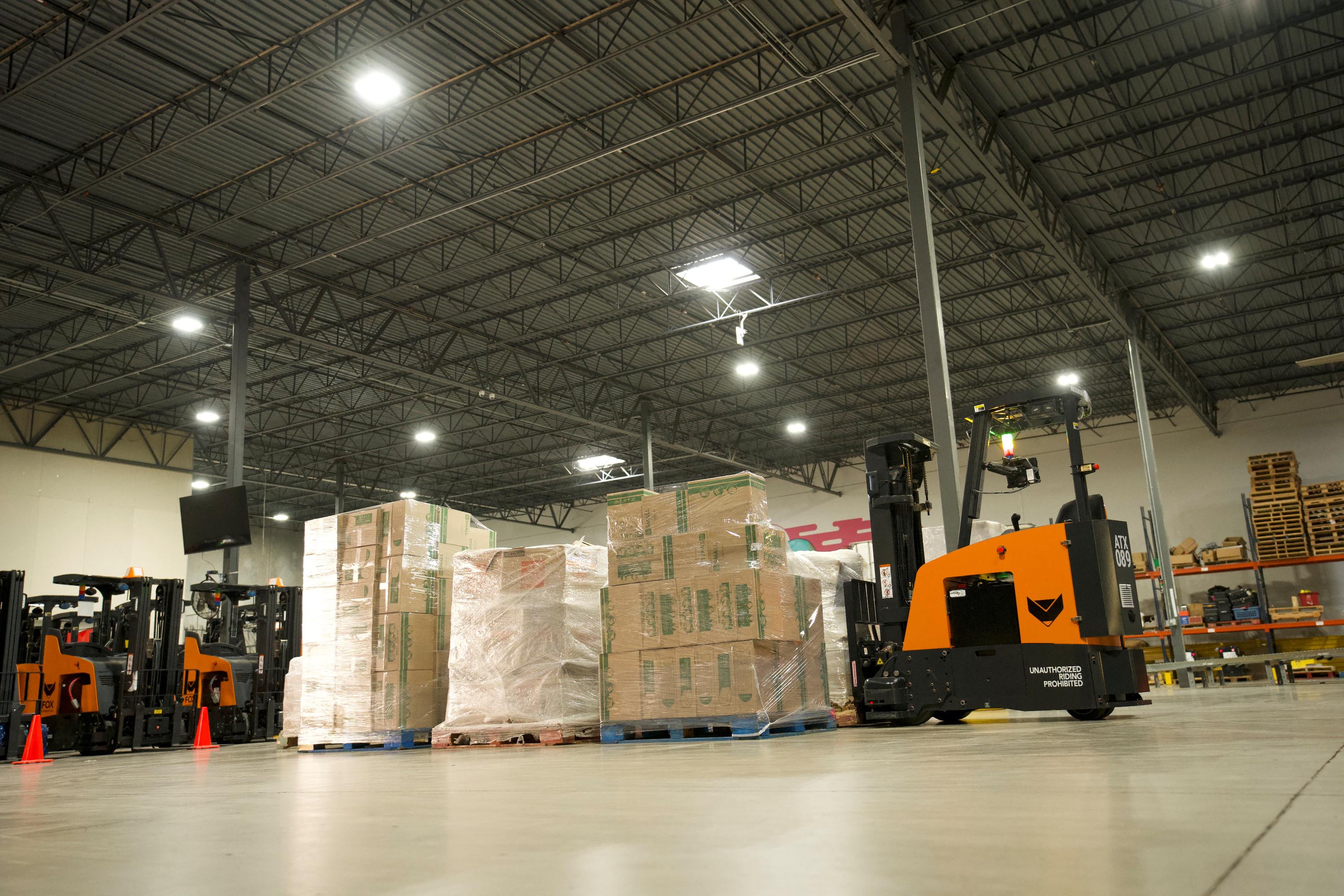
NEW YORK, July 26 (Reuters) - Walmart (WMT.N) , opens new tab has plans to potentially spend $200 million on self-driving forklifts as part of broader efforts to automate more warehouse operations, according to three people familiar with the matter. The world's largest retailer wants autonomous forklifts to move pallets of goods in its distribution centers, which replenish Walmart stores. It has intended to buy possibly hundreds from Fox Robotics and invested $25 million in the Austin-based startup, the sources said. The rollout, which Walmart could stop at any time, would occur in stages over several years and hinges on the retailer's satisfaction with the "FoxBots," said the people, who were not authorized to discuss the plans publicly. Details about Walmart's investment and rollout have not been reported before. They underscore the company's strategy for warehouse automation, which aims to grow profit and help it compete with retailers like Amazon.com (AMZN.O) , opens new tab. Camille Dunn, a Walmart spokesperson, declined to comment on the $200 million spending plans. She referred Reuters to an April announcement that said Walmart had piloted the technology and would add at least 19 FoxBots to four facilities, noting that deployments are "an evolving process" from proof of concept to rollout. "We evaluate the performance at each phase to determine if the technology meets our ability to better serve customers," she said in an email. "Some initiatives we scale, some initiatives we don't." Fox Robotics said its customer deals are confidential. In recent years, Walmart has focused increasingly on robotics to help it replenish stores, manage costs and keep the price of goods low. Analysts from Jefferies estimated the company could add $20 billion to its profit before interest and taxes by fiscal 2029, thanks to its efforts in automation and artificial intelligence. Arun Sundaram of CFRA Research added: "Expect more and larger deals in the future." As one example, Walmart announced a deal in 2022 with the robotics vendor Symbotic (SYM.O) , opens new tab to implement automation in 42 distribution centers. Walmart owned more than 13% of Symbotic stock as of a January securities filing. Now, Walmart has taken a stake in Fox Robotics and has warrants to invest more, the people familiar with the matter told Reuters. The Fox and Symbotic deals are similar in that they restrict use of their technology by Walmart's biggest competitors, the sources said. Exclusive deals with suppliers are not uncommon in retail. The Symbotic agreement states that key employees would be bound by non-competes and receive competitive pay, while Symbotic would be barred from selling its technology in certain non-Walmart warehouses. Details were redacted in a securities filing. Walmart declined to comment on its contractual agreements with the robotics vendors. Symbotic said it does not comment on its customers' business strategies. STEMMING TURNOVER Tested for more than a year, the FoxBots unload pallets and help put them into Symbotic's automated system, which catalogues and stores goods, Walmart has said in press releases. A single human operator can manage up to six of the autonomous forklifts at a time, saving as much as 40% on labor costs, Fox Robotics said on its website. A worker is still needed to open warehouse doors for instance, but the goal is for Walmart to depend less on labor in the long run, the sources said. Dunn said, "People will always be part of our warehouse operations." Finding workers to staff warehouse and other blue-collar jobs can be challenging, two of the sources said. Employers might pay little for onerous work, and sometimes staffers do not show up, one of them said. "There's a younger generation of people that just don't want to do these jobs," the source said. At Walmart, a freight handler at its Coldwater, Michigan distribution center might "lift up to 40 to 60 pounds repetitively for extended periods of time," according to a job posting on Glassdoor. Another ad asked if a candidate had proficiency in operating equipment such as a forklift and would work 12-hour or overnight shifts, for $19.30 to $24.80 an hour. For David Guggina, executive vice president of supply chain operations at Walmart U.S., automation has meant new technical roles for associates and other employment opportunities, not job cuts. It reduces physically demanding work, giving Walmart "substantially low turnover," he said. "A reduction in turnover absolutely drives savings," Guggina told Reuters. "You improve your productivity because you have less folks that are sitting in what I call (the) learning curve." Asked how much Walmart was spending on automation overall, Guggina said Walmart was investing billions of dollars into its supply chain network. In spite of their promise, robotics have not always paid off for the company, which pulled the plug on shelf-scanning units in its stores years ago. Their long-term feasibility can be uncertain, depending on significant adjustments and a controlled environment, whereas humans can adapt faster, said Katie Driggs-Campbell, a professor the University of Illinois’ Grainger College of Engineering. "We are still far away from the robotics replacing humans in the retail industry," she said. Sign up here. https://www.reuters.com/business/retail-consumer/walmart-looks-bet-200-mln-autonomous-forklifts-sources-2024-07-26/
2024-07-26 10:57
BEIJING, July 26 (Reuters) - China will enhance support for small and medium-sized technology enterprises through its national financing guarantee fund, the finance ministry said on Friday, in a bid to leverage more funding for the technology and innovation sector. Beijing is working towards achieving technological self-reliance and is fostering innovation in key industries. For tech-innovative small and medium-sized enterprises (SMEs), the risk-sharing ratio of the National Financing Guarantee Fund will increase from 20% to a maximum of 40%, according to a statement on the finance ministry's website. That means the fund can now cover up to 40% of a loan's value in the event of a default, providing a stronger safety net for lenders. The move aims to ease financing difficulties faced by smaller tech companies that lack effective collateral and struggle to meet banks' lending requirements, the statement said. It would guide banks to increase financing support for such enterprises, leverage more financial resources to invest in technological innovation, and provide strong support for achieving high-level technological self-reliance, it added. The fund was set up in 2018 by the finance ministry and 20 financial institutions with an initial registered capital of 66.1 billion yuan ($9.12 billion). It aims to offer financing guarantee support to SMEs, agricultural and innovative enterprises, according to the fund's website. ($1 = 7.2508 Chinese yuan renminbi) Sign up here. https://www.reuters.com/markets/asia/chinese-state-fund-increase-risk-sharing-with-smaller-tech-firms-2024-07-26/

2024-07-26 10:40
MADRID, July 26 (Reuters) - Spanish police said on Friday they had seized four metric tons of cocaine hidden in rice sacks at Barcelona's port, breaking up a crime ring that operated in Spain, Paraguay and Britain. The drug smugglers processed the drugs into powder in Asuncion, Paraguay, and then put them plastic bags which were hidden inside sacks of rice sewn by hand before shipping them to Europe, the statement said. The containers arrived at Barcelona's port earlier this year but the haul of cocaine was only discovered in July when the smugglers moved the containers, police said. Authorities in Paraguay and Britain seized another five tons of cocaine smuggled by the same criminal organisation in two different raids in recent months. Three tons of cocaine were seized in Paraguay before the drugs could be shipped to Belgium in October 2023, while in March British police seized two tons of cocaine at the port of Southampton that were bound for a Spanish company under investigation, which is based in Toledo. Police arrested eight people in Spain, while two people were arrested in Paraguay, the statement said. Sign up here. https://www.reuters.com/world/europe/spanish-police-seize-4-tons-cocaine-hidden-rice-sacks-2024-07-26/