2024-07-26 10:23
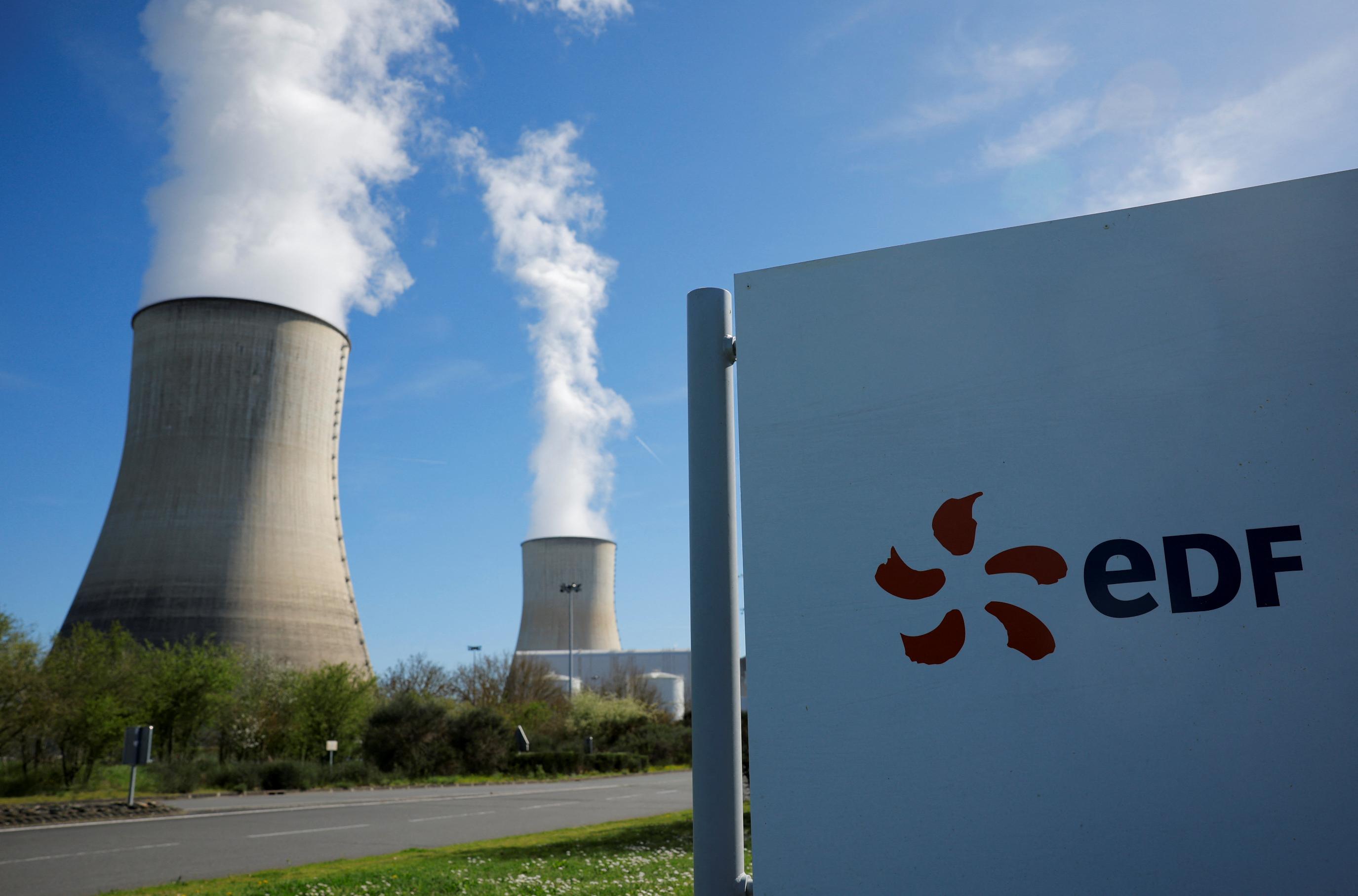
PARIS, July 26 (Reuters) - France's EDF saw first-half profit jump by fifth as it boosted electricity production, but the state-owned utility warned that declines in market prices would weigh on second-half earnings. Although the world's largest nuclear power plant operator has grappled with a range of problems at its nuclear plants that have hurt output, it was renationalised a year ago and has been able to return a good chunk of its reactors to operation. It has also added renewable capacity and boosted performance at hyropower projects. Net income surged to 7 billion euros ($7.6 billion) while earnings before interest, tax, debt and amortisation (EBITDA) climbed 16.1% to 18.7 billion euros. EDF's electricity production for the first half totalled 259 terawatt-hours (TWh), an increase of 12% from a year earlier. Output from nuclear also rose 12%, to 177.4 TWh. Nuclear power output in France, excluding output from the new Flamanville 3 reactor, is expected to be at the high end of a range of 314 to 345 TWh for the full year, EDF said. The company is close to starting the first nuclear reaction at Flamanville 3, and the unit will begin producing power a few weeks later, it added. The reactor has been delayed by more than a decade with costs soaring from a planned 3 billion euros to 13.2 billion euros as of end-2022. EDF noted that regional market prices have fallen and warned EBITDA in the second half would decline year on year. In Britain, EDF is continuing discussions with the newly elected Labour government regarding its Hinkley Point C (HPC) and Sizewell C nuclear projects, CEO Luc Remont told reporters, adding it is "a bit early" to give a date for a final investment decision on Sizewell. There is still a risk of delays to the HPC schedule, it said, adding that it is exploring financial solutions for the project. ($1 = 0.9216 euros) Sign up here. https://www.reuters.com/business/energy/frances-edf-logs-20-surge-first-half-profit-warns-about-price-declines-2024-07-26/
2024-07-26 10:20
LONDON, July 26 (Reuters) - Most regions saw equity inflows in the week to Wednesday, led by emerging markets and the U.S., Bank of America Global Research said, as investors brought forward expectations for Federal Reserve rate cuts due to softer data. There were $22.2 billion of equities inflows in the latest week, BofA said in its weekly round-up of flows in and out of world markets. Emerging markets drew $11.1 billion of inflows, the largest weekly figure since February, and the U.S. had $7.9 billion. The inflows from investors tracked by EPFR in the five sessions to Wednesday came even as equity markets around the world have been under pressure, driven by disappointing earnings and political and economic uncertainty. The S&P 500 (.SPX) , opens new tab has dropped almost 2% since Monday, while most major benchmarks in Asia have also declined. European markets have fared better, with the pan-European STOXX 600 index (.STOXX) , opens new tab broadly unchanged for the week. The BofA data did not include Thursday's fall, and analysts have also pointed to stretched positioning as being behind this week's selloff, something reinforced by the flow data. When investors collectively have large overweight positions in an asset, there are few left to increase allocations and plenty that can reduce them. Markets have since steadied, providing some hope for investors holding stocks. "Bulls say correction healthy as big levels holding," BofA investment strategist Michael Hartnett said. Bond funds saw $16.1 billion of inflows, while gold funds had $1.3 billion of inflows, notching their biggest two-week inflows since March 2022, BofA said. There were $42.3 billion of cash outflows, the largest in three months, as traders added to bets for rate cuts from the Federal Reserve that would typically lead to lower yields on super short-dated government bonds held by cash-equivalent money market funds. Futures markets are now fully pricing a rate cut at the Fed's September meeting due to signs inflation is heading back towards target and signals of slowing growth and a loosening labour market. BofA's bull & bear indicator, a measure of market sentiment, jumped to 6.9 from 6.5, its highest level since May 2021. Meanwhile, Barclays, citing the same EPFR data, noted UK equities saw their first weekly inflow since November 2023. For the year, cumulative fixed income flows of $358 million overtook cash in the latest week, Barclays said. Sign up here. https://www.reuters.com/markets/global-markets-flows-bofa-update-1-2024-07-26/

2024-07-26 10:18
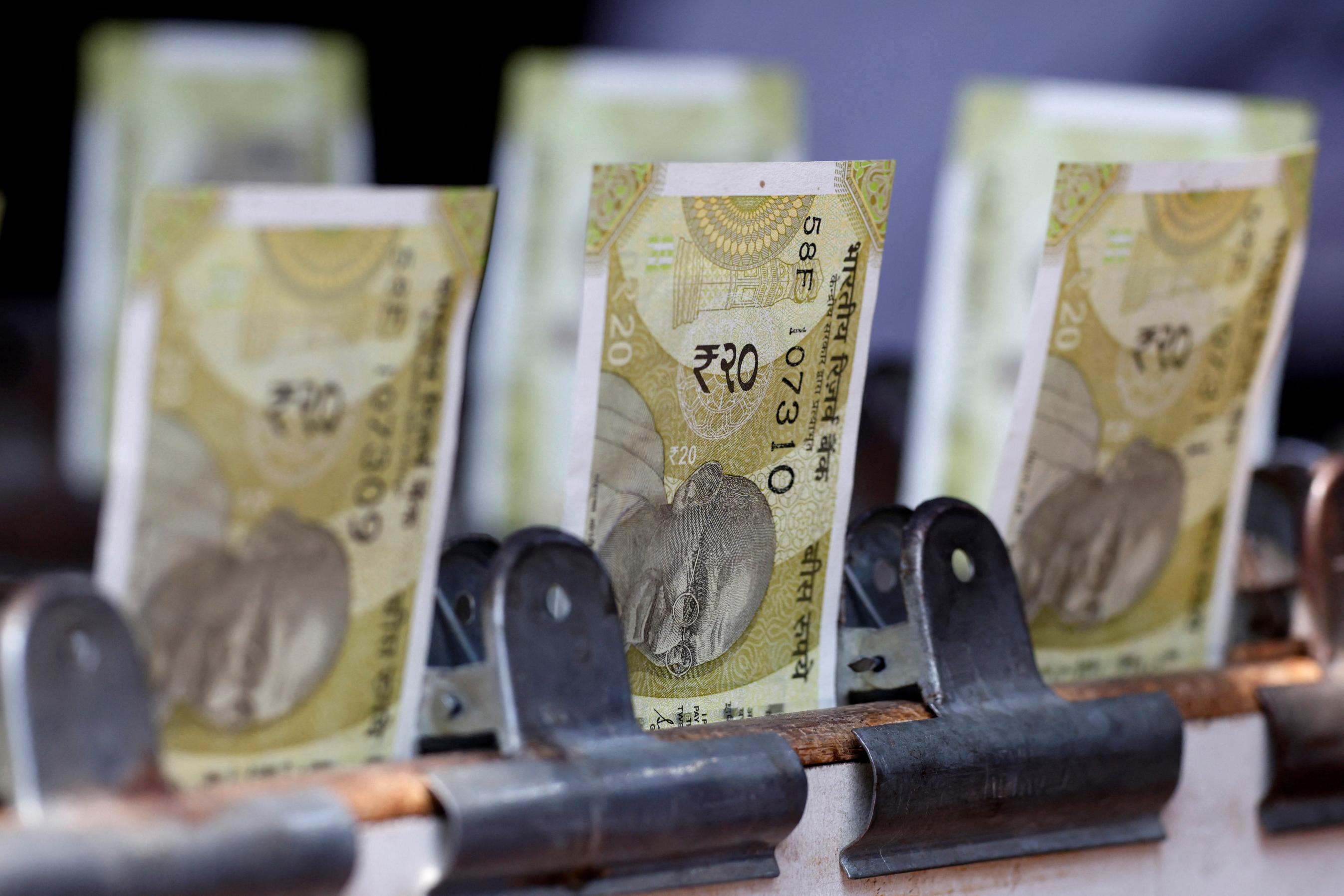
MUMBAI, July 26 (Reuters) - The Indian rupee closed at an all-time low on Friday, pressured by strong dollar demand from local oil companies, likely related to month-end payments. The rupee closed at 83.7275 against the U.S. dollar, compared to its previous close of 83.6975. The currency was down about 0.1% week-on-week, extending its losing streak to the fourth straight week. Volatility in the Chinese yuan, outflows from local equities following a hike in capital gains taxes on equities in the budget, and tepid risk appetite hurt the rupee this week, dragging it to record lows for four out of five trading sessions. Given the recent a price action, a "buy on dips" bias is likely to persist on the dollar-rupee pair, a foreign exchange trader at a large private bank said. The trader expects the rupee to weaken to 83.80 over the next week. Oil companies were "quite active on bid (on USD/INR)," but mild offers from state run banks were also present, a trader at a private bank said. The dollar index was steady near 104.3. Asian currencies were mixed, with the yuan declining 0.3% while the Thai baht and Philippine peso gained. Investors now await the release of U.S. personal consumption expenditure (PCE) price index data. Economists polled by Reuters forecast that the core PCE, was unchanged at 0.1% month-on-month in June. "As we stand, (U.S.) inflation still needs to show more signs of moderation. If it doesn't, the markets may have to re-adjust their pricing of the pace of further rate cuts," analysts at Societe Generale said in a note. Sign up here. https://www.reuters.com/world/india/rupee-ends-record-low-logs-fourth-consecutive-weekly-decline-2024-07-26/
2024-07-26 10:17
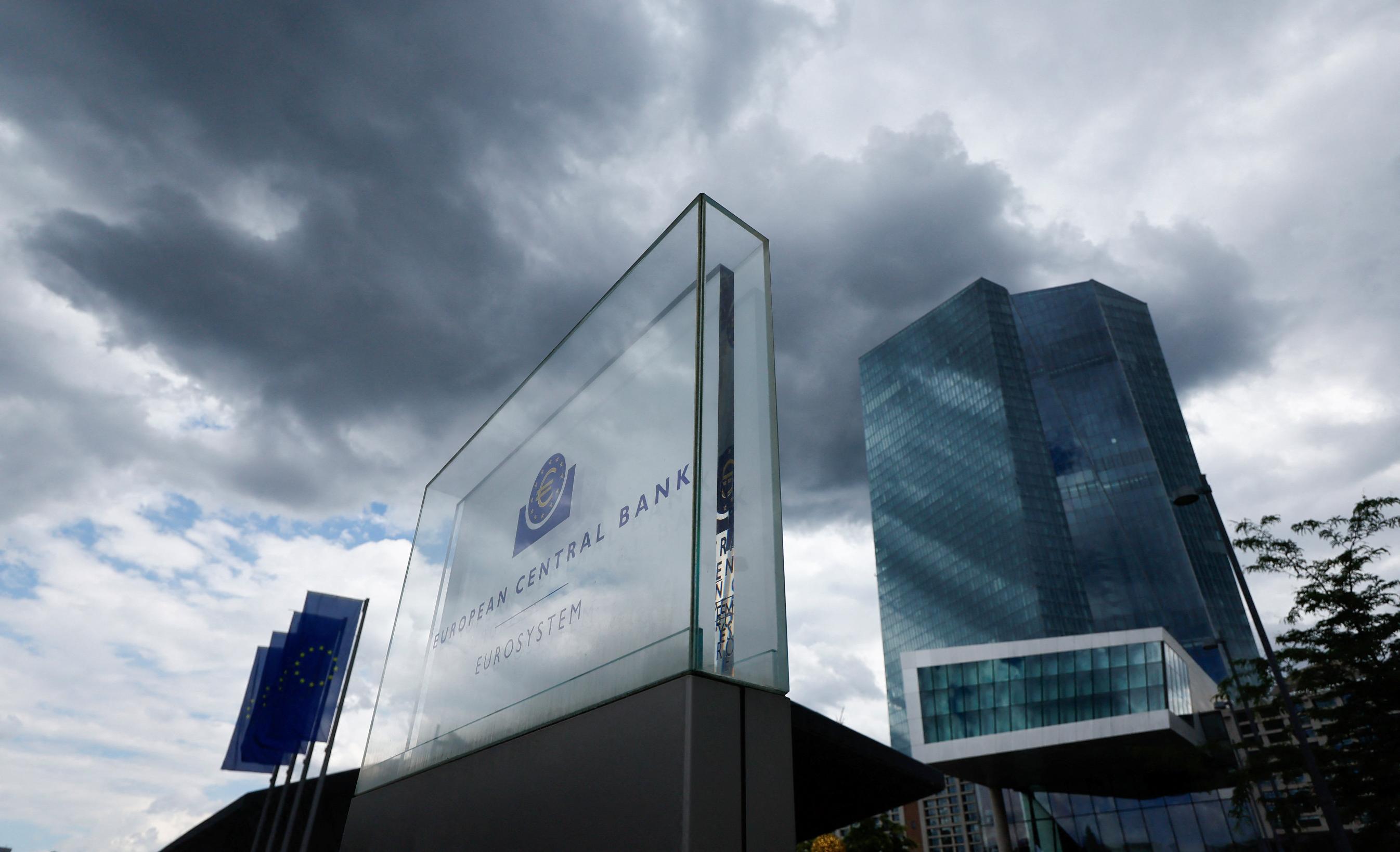
July 26 (Reuters) - A September interest rate cut by the European Central Bank is "very possible", though its future policy will remain data-dependent, a former deputy governor of the Irish central bank said. Stefan Gerlach, deputy governor at the Central Bank of Ireland between 2011 and 2015, said he expected euro zone inflation pressures to abate further which, along with a "natural weakness" in economic activity, will allow the ECB to continue reducing rates. "The likelihood of a rate cut in September is material," Gerlach, currently chief economist at EFG Bank in Zurich, told the Reuters Global Markets Forum , opens new tab. Money markets have priced in 64% odds for a 25-basis-point rate cut by the ECB when it meets next on Sept. 12, which would be its second this year. Traders see a less than 10% chance of a third easing by the ECB in 2024. The upcoming U.S. elections have the potential to lead to major changes in American economic policies that will unavoidably spill over to other countries, a big concern for the European economy, he said. "I'm certainly concerned, as I know many other observers are, about how economic (and) other policies in the U.S. could change following the November elections," Gerlach said. (Join GMF, a chat room hosted on LSEG Messenger, for live interviews: https://lseg.group/3TN7SHH , opens new tab) Sign up here. https://www.reuters.com/markets/europe/ecb-likely-cut-rates-september-former-central-banker-says-2024-07-26/
2024-07-26 10:13
A look at the day ahead in U.S. and global markets from Mike Dolan The end of a hair-raising week for the stock market has left more questions than answers, with Thursday's bumper U.S. growth data goosing a blistering rotation to small cap stocks as traders brace for three major central bank decisions next week. Before the Federal Reserve's latest policy decision on Wednesday, the central bank gets an update on its favored inflation gauge later today. Core PCE prices are expected to have risen just 0.1% last month, with the annual rate slipping to a three-year low of 2.5% - a halving of that rate of inflation in 18 months. Even though former New York Fed boss Bill Dudley this week called for an immediate rate cut to get across a weakening jobs market, futures remain nailed on for a first move in September. Whether due to those easing bets or post-election trades or both, this month's switch to U.S. small cap stocks (.RUT) , opens new tab from pricey Big Tech megacaps seems to have survived the jarring mid-week market swoon that questioned the whole complex. Even though the S&P500 (.SPX) , opens new tab failed to sustain Thursday's attempted early bounce, the Russell 2000 small cap benchmark closed more than 1% higher and futures have it extending those gains by a further 2% ahead of Friday's bell - putting it back in sight of 2-year highs. Small caps have now outperformed megacap indexes (.NYFANG) , opens new tab by a whopping 15% since the start of this month. Handily absorbing another $183 billion of new coupon sales this week, Treasury yields stayed focussed on Fed easing prospects too - with two-year yields clinging on to 4.40% after hitting 5-month lows below that level on Thursday. The steepening yield curve calmed down a bit. Wild swings in the stock market this week were almost matched in the currency market too, with the yen's JPY= surge to near three-month highs spurred by speculation the Bank of Japan may lift interest rates there on the same day as the Fed decides policy next week. The yen stepped back a bit on Friday, however, with the dollar/yen pairing recapturing 154 after a Tokyo inflation update that saw core price gains remaining well below the BOJ's target. The battered Nikkei (.N225) , opens new tab, which has now lost more than 10% since July 11, failed to catch a break and ended lower on Friday again. China's yuan also fell back from Thursday's peaks as markets tried to figure out whether this week's surprising spate of easing from People's Bank of China would be followed up by more stimulus from Beijing to buoy the flagging economy. Concerns about China's economy linger even after authorities said on Thursday they would allocate 300 billion yuan ($41.4 billion) in ultra-long treasury bonds to support a programme of equipment upgrades and consumer goods trade-ins. Benchmark Chinese stocks (.CSI300) , opens new tab eked out a small gain on Friday. The other major central bank meeting next week is the Bank of England. Even though a majority of economists polled think the BoE will cut as soon as August 1, money markets think it's in the balance and still only ascribe a 50-50 chance. The pound , caught a toehold after retreating to two-week lows yesterday. Back on Wall Street, Friday's earnings calendar thins a bit but next week brings another round of Big Tech megacap reports to test growing concerns about valuations and big capex spends on artificial intelligence. Even though the overall profit growth picture remains buoyant, some single stock earnings day moves continued to be eye-catching. Ford Motor's (F.N) , opens new tab shares tumbled over 13% to a near six-month low on Thursday after the automaker missed estimates as it struggles with quality-related costs and stiff competition in its EV business. Elsewhere, NatWest (NWG.L) , opens new tab gained 8% after the British bank said it would buy Metro Bank's mortgage portfolio for 2.4 billion pounds. Key developments that should provide more direction to U.S. markets later on Friday: * US June PCE inflation gauge, personal income and consumption. University of Michigan's final July sentiment survey * US corporate earnings: Aon, T Rowe Price, 3m, Bristol-Myers Squibb, Centene, Charter Communications, Colgate-Palmolive, Franklin Resources Sign up here. https://www.reuters.com/markets/us/global-markets-view-usa-2024-07-26/

2024-07-26 10:12
ISTANBUL, July 26 (Reuters) - The European Bank for Reconstruction and Development's exposure to war-ravaged Ukraine does not pose a threat to its prized triple-A credit rating despite previous warnings from the likes of Fitch, its vice president told Reuters on Friday. WHAT DID EBRD SAY? Matteo Patrone, the EBRD's Vice President for Banking said the bank was "absolutely not" concerned that Ukraine exposure could threaten the bank's rating. He said that last year's increase of the bank's capital was "exactly to allow us to increase our exposure in Ukraine and continue supporting the real economy to the tune of 1.5 billion euros per year". The EBRD plans to scale that up to 2.5 billion and 3 billion euros per year going forward as well. WHAT IS THE ISSUE? Ratings agency Fitch warned last year that if Ukraine wasn't able to pay back its international development loans, it would likely cost top multilateral lenders including the EBRD and the World Bank's International European Bank for Reconstruction and Development their triple-A credit scores. WHY IT MATTERS? The loss of the top rating would make it more expensive for the EBRD itself to borrow money, undermining its whole business model. The EBRD is one of the top lenders to Ukraine's private sector, and its continued support to the country is key to helping it withstand, and recover from, Russian attacks. THE NUMBERS Multilateral lending to Ukraine has jumped since Russia's 2022 invasion, exceeding a combined 25 billion euros at the end of 2022. Fitch's warning last year put the EBRD's net exposure to Ukraine at a hefty 12.8% ratio of its shareholder equity. In December, however, the EBRD's board approved a 4 billion euro capital increase, bringing its capital base up to to 34 billion euros. Sign up here. https://www.reuters.com/markets/europe/ebrd-says-ukraine-exposure-absolutely-not-threat-credit-rating-2024-07-26/