2024-07-25 20:16
NASHVILLE, July 25 (Reuters) - U.S. cryptocurrency exchange Coinbase has added three new members to its board of directors, including an executive from ChatGPT-maker OpenAI, as the company steps up its efforts to sway U.S. crypto policy, Coinbase told Reuters on Thursday. The new members are Chris Lehane, a member of the executive team at OpenAI; Paul Clement, former U.S. Solicitor General under President George W. Bush; and Christa Davies, chief financial officer for Aon and a board member for Stripe and Workday. The additions will expand the board from seven to 10. Coinbase's move to expand its board comes as the company and cryptocurrency industry more broadly aims to make the industry a major political force in this year's presidential election. The industry's fortunes could shift if Republican nominee and former president Donald Trump wins back the White House in November. Clement will advise Coinbase's efforts to "to push back against the SEC's (U.S. Securities and Exchange Commission's) overreach and fight for clear rules of the road for digital assets." Lehane, former policy chief for Airbnb (ABNB.O) , opens new tab who was also a member of the Clinton White House, will provide strategic counsel, Coinbase said. Davies will focus on Coinbase's "financial and operational excellence on a global scale." Coinbase said the three members all hold different political philosophies. "For crypto to succeed, it needs to be bipartisan," Lehane told Reuters in an interview on Thursday. Coinbase-backed Stand With Crypto, an advocacy organization for voters who own crypto, has amassed 1.3 million members. Meanwhile, three major pro-crypto super political action committees - Fairshake, Defend American Jobs, and Protect Progress, all of which did not exist until this cycle - have raised over $230 million to support friendly candidates. Sign up here. https://www.reuters.com/technology/us-crypto-exchange-coinbase-adds-three-board-members-including-openai-executive-2024-07-25/

2024-07-25 20:15
July 25 (Reuters) - The Colorado Department of Public Health and Environment on Thursday announced three additional human cases of bird flu among poultry farm workers, bringing the total number of confirmed human cases in the U.S. this year to 13. The three new cases involved poultry farm workers who were killing infected chickens at a Weld County egg farm, the health department said. The workers are experiencing mild illness and have been offered antiviral drugs, said the U.S. Centers for Disease Control and Prevention in a statement. Neither the state health department nor CDC provided the name of the egg farm. The bird flu outbreak has infected poultry in nearly every U.S. state since early 2022. Since March, the virus has been circulating among dairy cattle and has infected more than 170 herds in 13 states, according to the U.S. Department of Agriculture. Since April, four dairy farm workers and nine poultry farm workers have been infected with the virus in Colorado, Michigan and Texas. The CDC said the risk to the general public from bird flu remains low, but that farm workers exposed to infected animals should use personal protective equipment (PPE). Six workers culling infected chickens at a different Colorado chicken farm earlier this month were working without effective PPE, according to the CDC. A CDC field team is deployed in Colorado to support its ongoing outbreak response, the agency said. Sign up here. https://www.reuters.com/business/healthcare-pharmaceuticals/bird-flu-infects-three-more-colorado-poultry-farm-workers-2024-07-25/

2024-07-25 20:14
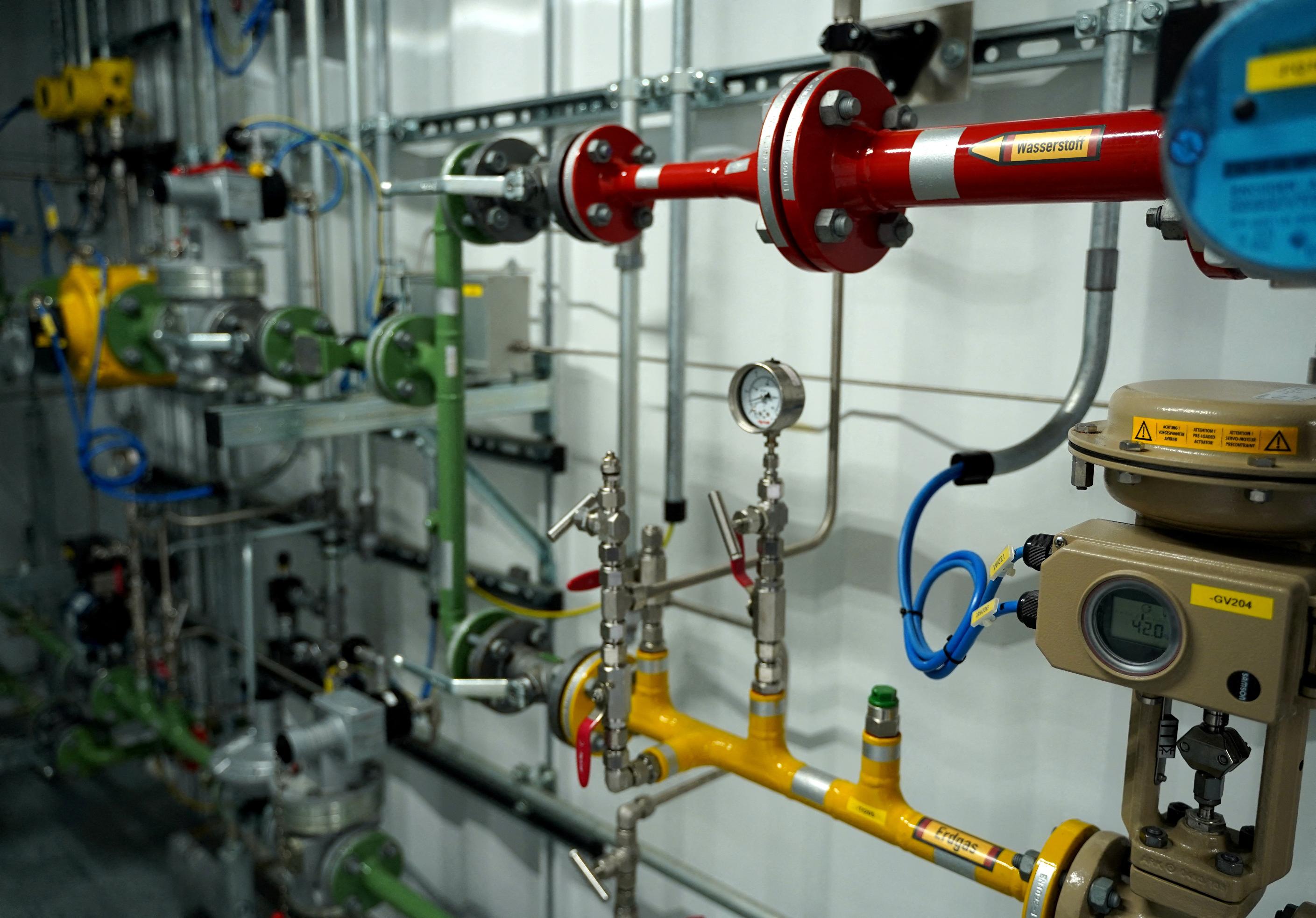
FRANKFURT, July 25 (Reuters) - German utility EnBW (EBKG.DE) , opens new tab this week pledged 1 billion euros ($1.08 billion) to build pipelines to carry clean hydrogen as part of a plan for a nationwide grid that will start commercial operations by 2032. Germany is betting on green hydrogen, produced through electrolysis driven by wind and solar power, as an alternative to fossil fuels. For some, it is a gamble, for others a world-leading example. The following outlines the progress so far. WHY IS GERMANY CENTRAL TO EU HYDROGEN PLANS? Germany is spearheading the European Union's shift towards cleaner energy because it is the bloc's biggest economy and exporter, with a reliance on industry for a third of its gross national product. Advocates of the fuel say it will enable German products, such as cars or steel, to compete more effectively as pressure mounts from some consumers and investors for goods with greatly reduced carbon footprints. The energy transition in Germany became urgent after its supplies of relatively inexpensive gas from Russia ended following the Ukraine war. The country's research and development has produced many patents for hydrogen over the last decade. WHAT ARE THE WIDER USES? The transport grid is just one element in a strategy that spans 10 gigawatts (GW) of domestic production capacity and an import strategy that will draw on supplies from elsewhere in Europe and overseas. New gas-to-power generation plants that can switch to hydrogen will be put to tender by the end of 2024 or early next year. Industry players in steelmaking and chemicals have plans to replace coal- and gas-based hydrogen with green hydrogen and utilities are adding electrolysis and import facilities to their investment portfolios. WHO ARE THE PROTAGONISTS? Some of the biggest players are steelmakers Thyssenkrupp (TKAG.DE) , opens new tab, Salzgitter (SZGG.DE) , opens new tab and ArcelorMittal, which plan to invest billions of euros in decarbonising steel production, betting on hydrogen's availability. Utilities are also among the leaders. RWE (RWEG.DE) , opens new tab plans 2 GW of electrolysis and 3 GW of hydrogen ready gas-to-power capacity by the end of 2030. Of its total investments of 55 billion euros by that date, 25% are for hydrogen, batteries and flexible power production. Uniper (UN0k.DE) , opens new tab has a deal with Salzgitter to provide it with hydrogen from an ammonia cracker at Wilhelmshaven. WHAT ARE THE COSTS FOR CONSUMERS AND TAXPAYERS? The total cost for the hydrogen network, including 9,666 kilometers of pipelines, is estimated at around 19.7 billion euros. Including that and adding electrolysis plants and renewable capacity to feed electrolysers and storage, PwC gave a total of 65-80 billion euros of costs up to 2030 in calculations provided for Reuters. Much of the money will have to come from utility companies' balance sheets, from network usage fees borne by consumers, and from tax revenues as private financiers have so far proved reluctant. "The business case for German hydrogen projects is not easy. The banks are asking for customers and secure returns," said Dirk Niemeier, a director and Lead for Clean Hydrogen and Alternative Fuels at PwC in Germany. "If there is no prospect, investments cannot be made." WHY THE RELIANCE ON IMPORTS? Germany, with a lack of its own fossil reserves, has traditionally been an energy importer and has already a network of partners. For hydrogen, it can draw on existing trade relationships with Britain, Norway and the Netherlands and is building new alliances with southern Europe and North Africa, as well as Australia, Canada and Chile. McKinsey made data available to Reuters showing that hydrogen production costs in Germany could be $10 a kilogram in 2030, higher than the cost of $3-8/kg for imports as countries with cheap renewable power and low labour costs can make green hydrogen relatively cheaply. Grey hydrogen made from gas of which Germany uses some 42 TWh each year, costs around $3/kg, indices show. WHAT ARE OTHER COUNTRIES DOING? Britain, Denmark and Norway are expected to supply Germany with green or blue hydrogen. The latter is produced using natural gas in a process where the CO2 released in production is captured and stored. Italy, Spain and the Netherlands have elaborate strategies for their own and neighbouring markets. The U.S. is investing billions of dollars and so is China. ($1 = 0.9219 euros) Sign up here. https://www.reuters.com/sustainability/climate-energy/how-germanys-hydrogen-economy-could-transform-energy-use-2024-07-25/
2024-07-25 20:14
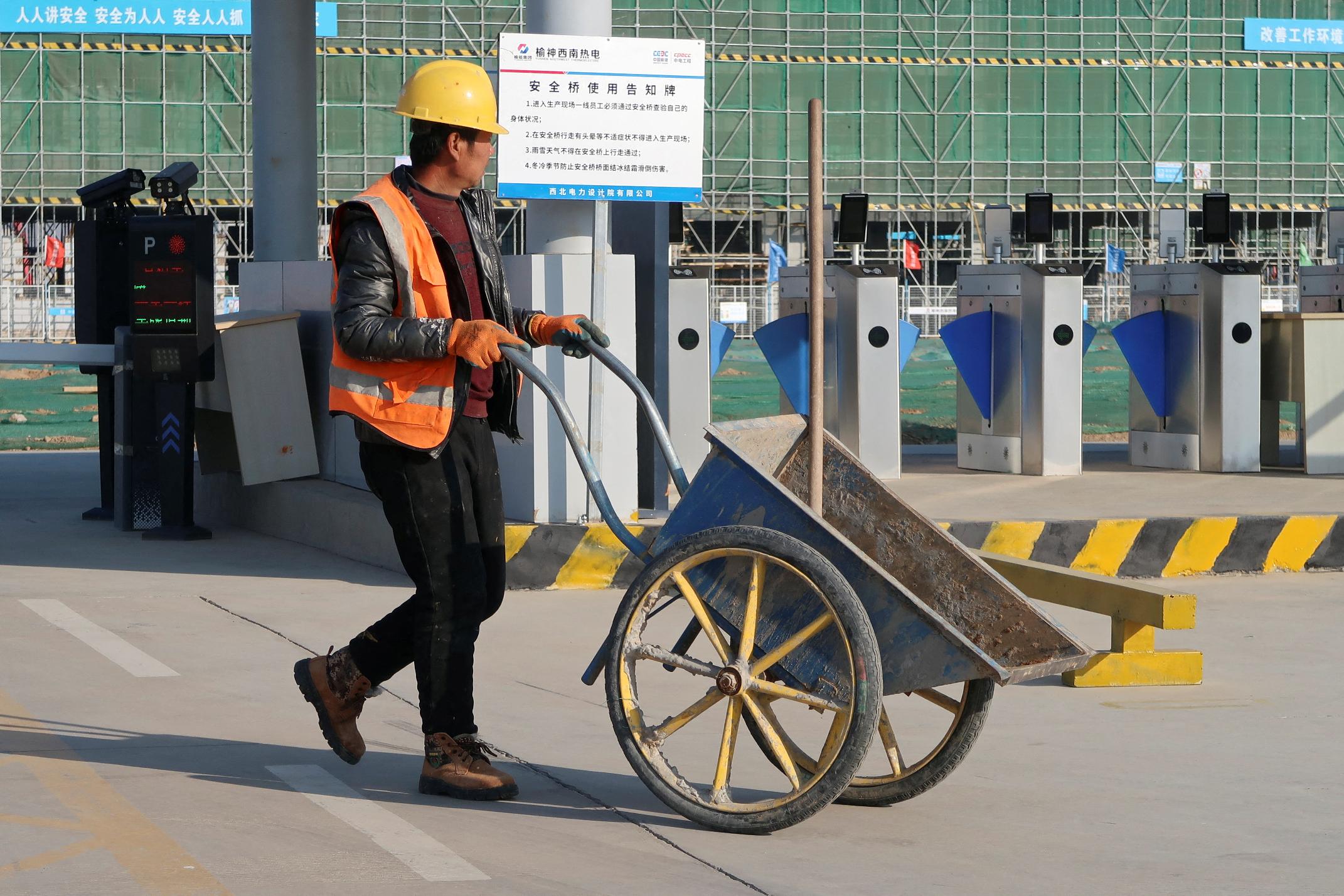
LAUNCESTON, Australia, July 25 (Reuters) - One of the standout commodity stories so far this year has been China's demand for thermal coal, with the world's largest importer seeing record shipments arriving in the first half. China's imports of thermal coal from the seaborne market, used mainly to generate electricity, were 168.73 million metric tons in the first six months of the year, up 8.5% from 155.51 million in the same period in 2023, according to data compiled by commodity analysts Kpler. This was the strongest first half in China's history and puts the world's second-biggest economy on track for another record year for coal imports in 2024. But there are some signs that China's appetite for seaborne thermal coal may be easing, raising the possibility that the second half of 2024 will be weaker than the first. July's seaborne imports of thermal coal are forecast by Kpler to be 29.66 million tons, slightly higher than June's 29.44 million, but weaker by 2.5% on a per day basis. The growth rate for the first seven months of the year is expected to slip to 7.1% from the 8.5% seen in the first half. The question becomes what are the factors that may drive a moderation in China's demand for seaborne thermal coal. The main driver is a recovery in China's domestic output, which had been softening amid ongoing mine safety inspections in key coal-producing regions. China's coal production rebounded in June, with output of all grades of the fuel jumping to a six-month high of 405.38 million tons, which was also 3.6% above the same month in 2023, according to official data released on July 15. The soft start to 2024 meant year-on-year production was still down 1.7% in the first half, but this was an improvement on the 3.0% drop recorded in the first five months of the year over the same period in 2023. Another factor is that coal's share in China's electricity production is slipping, with official data showing thermal generation fell for a second straight month in June, dropping 7.4%, adding to the 4.3% decline in May. Thermal generation does include some small amounts of natural gas-fired power, but it is mainly coal. Coal's share in China's electricity mix is being eroded by hydropower, which is rebounding from a weak, drought-affected 2023, and also by rising output from renewables such as wind and solar. Hydropower rose 44.5% in June following an increase of 21.4% in May, while wind output gained 10.4% in the first half of 2024 from the same period a year earlier and solar jumped 39.4% over the same period. If hydropower can maintain its recent strength and renewable deployment continues at pace, it increases the likelihood of coal-fired generation declining in the second half of the year. This in turn means China may be less reliant on imported thermal coal, especially if domestic output continues its upward trend. PRICE TREND Going one step further, the question becomes whether lower Chinese demand will result in significantly softer prices for Asia's main seaborne thermal coal grades. The answer is not necessarily, as any coal not taken by China tends to be bought by other countries, especially if there is some retreat in prices. Indonesia is China's biggest supplier of thermal coal, and the popular 4,200 kilocalories per kg grade , as assessed by commodity price reporting agency Argus, has been in a declining trend in recent weeks. It ended at $52.72 a ton in the week to July 19, which was marginally up from the prior week's $52.70, but that was the lowest price since September last year, and the grade is down 9.4% from its peak so far this year of $58.17 in early March. The softer price, which has been mirrored in competing Australian coals, has led to other Asian countries ramping up imports of seaborne thermal coal. Vietnam's imports for the first seven months of 2024 were 26.48 million tons, up 44% from the same period last year, according to Kpler data. India, the world's second-biggest coal importer, saw arrivals of thermal coal of 104.81 million tons in the first seven months of this year, up 14.9% from the same period last year. Japan, the third-biggest buyer, saw thermal coal imports leap in July to 10.89 million tons, up from June's 7.05 million and the highest since January, according to Kpler. The opinions expressed here are those of the author, a columnist for Reuters. Sign up here. https://www.reuters.com/markets/commodities/chinas-run-robust-thermal-coal-imports-may-ease-russell-2024-07-25/
2024-07-25 20:05
July 25 (Reuters) - Slovakia called on the European Commission on Thursday not to delay a decision in a request by it and Hungary for mediating a consultation procedure with Ukraine over disrupted oil flows from Russia. Slovakia and Hungary have increased pressure after they said last week they had stopped receiving oil from Russian group Lukoil (LKOH.MM) , opens new tab via Ukraine due to Kyiv placing the company on a sanctions list. On Monday, they asked the Commission to use an association agreement based on which they said Ukraine could not block oil transits. The Commission was seeking more information in the dispute, a spokesperson told Reuters on Wednesday. "I call on the European Commission not to drag out time and to take the side of its member states and especially its citizens as soon as possible," Slovak Foreign Minister Juraj Blanar said in an emailed statement. He said he rejected "gambling" with Slovakia's energy security, and he asked whether motorists first had to queue for petrol and diesel, or pay higher prices before the issue was taken up. "We don't have time, because ill-considered sanctions and irresponsible actions of our neighbouring state can very quickly bring negative consequences to Slovakia," he said in the emailed reply to Reuters questions. Blanar reiterated Slovakia had become a "hostage" at the hands of Ukraine and the European Commission in the dispute. The country has criticised sanctions imposed on Russia for its invasion of Ukraine and say they hurt European Union states more than Russia. Hungarian Foreign Minister Peter Szijjarto had said on Monday the Commission had three days to respond to the countries' request for a consultation procedure, after which the countries would take the issue to court. The EU imposed sanctions on Russian oil in 2022 although Slovakia, Hungary and the Czech Republic gained exemptions due their reliance. Sign up here. https://www.reuters.com/business/energy/slovakia-calls-eu-step-over-disrupted-oil-flows-through-ukraine-2024-07-25/

2024-07-25 19:57
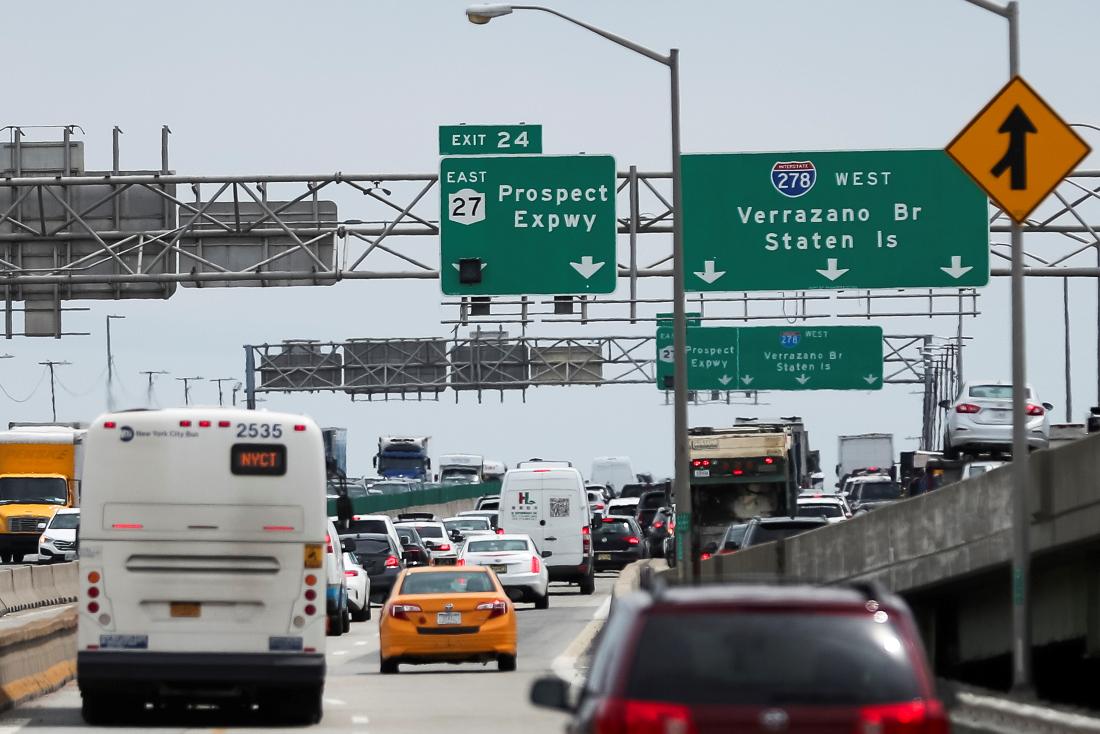
NEW YORK, July 25 (Reuters) - Two lawsuits accusing New York Governor Kathy Hochul of violating state law with her decision to halt the implementation of a congestion charge to drive into parts of Manhattan were filed on Thursday by commuter and environmental advocacy groups. Hochul, a Democrat who had previously advocated for the congestion charge, announced in June that she would "indefinitely pause" the charge, just weeks before it was due to come into effect. She said the charge would place economic stress on some middle-class households. Most New York City residents do not own private vehicles, and nearly 90% of people who commute into the Manhattan central business district for work do so using public transit or by bike or on foot, according to state data. One of the lawsuits , opens new tab, filed by the City Club of New York and two Manhattan residents alleges that Hochul does not have the authority to "single-handedly" block the implementation of New York's 2019 MTA Reform and Traffic Mobility Act, which mandated a tolling program to enter New York City's central business district. "Governor Hochul's purported 'pause' of the (congestion charge) is, quite literally, lawless," the plaintiffs said in their lawsuit filed in the New York Supreme Court in Manhattan. They said Hochul's "decision to upend years of work has caused widespread chaos." Under the plan developed by the state-controlled Metropolitan Transportation Authority, drivers would have to pay up to $15 to drive into Manhattan below 60th Street; a return trip on the New York City subway or bus system costs about $6. The plan was modeled on similar charges in force for years in London, Singapore and other cities, and would have been the first of its kind in the U.S. "Get in line," Maggie Halley, a spokesperson for Hochul, said in a statement in response to the lawsuits. "There are now 11 separate congestion pricing lawsuits filed by groups trying to weaponize the judicial system to score political points, but Governor Hochul remains focused on what matters: funding transit, reducing congestion, and protecting working New Yorkers." She did not respond to questions about the lawsuits' contention that Hochul's decision had violated state laws. The MTA did not respond to a request for comment. The congestion charge was expected to reduce vehicle traffic and air pollution and generate $16.5 billion for the MTA's capital plan to maintain and upgrade the city's aging subway system. Last month, the MTA said it was forced to suspend its capital maintenance and upgrade plans until the state found a replacement source of funding, which Hochul has said she is trying to do. The second of the lawsuits, which was filed by the advocacy groups Riders Alliance, the Sierra Club and the New York City Environmental Justice Alliance, accuses Hochul of violating New Yorkers' right to clean air established by the Climate Leadership and Community Protection Act and a state constitutional amendment made in 2021. "If her action is not reversed, hard-working New Yorkers on their way home after a long day, will experience increasing service cuts, gridlock, air quality alerts, and inaccessible stations," New York City Comptroller Brad Lander, a Democrat who helped organize the lawsuits, said in a statement. Sign up here. https://www.reuters.com/legal/civic-environmental-groups-sue-new-york-governor-halting-congestion-charge-2024-07-25/