2024-07-25 06:44
July 24 (Reuters) - A wildfire reached the Canadian town of Jasper, Alberta on Wednesday, one of hundreds ravaging the western provinces of Alberta and British Columbia, as firefighters battled to save key facilities such as the Trans Mountain Pipeline, authorities said. Wildfires burning uncontrolled across the region include 433 in British Columbia and 176 in Alberta, more than a dozen of them in the area of Fort McMurray, an oil sands hub. The pipeline, which can carry 890,000 barrels per day (bpd) of oil from Edmonton to Vancouver, runs through a national park in the Canadian Rockies near the picturesque tourist town, from which about 25,000 people were forced to evacuate on Tuesday. "Firefighters ... are working to save as many structures as possible and protect critical infrastructure, including the wastewater treatment plant, communications facilities, the Trans Mountain Pipeline," Parks Canada said in a post on Facebook. The pipeline operator did not immediately respond to a Reuters request for comment, but said earlier it was safely operating the pipeline and had deployed sprinkler protection as a preventive measure. In the day's last update, Jasper National Park said it could not report on the extent of damage to specific locations or neighbourhoods, and that it would provide further updates on Thursday. Canadian Prime Minister Justin Trudeau said his government approved Alberta's request for federal assistance. "We're deploying Canadian Armed Forces resources, evacuations support, and more emergency wildfire resources to the province immediately - and we're coordinating firefighting and airlift assistance. Alberta, we're with you." The town, and the park, which draws more than two million tourists a year, were evacuated on Monday night, at a time when officials estimated there were 15,000 visitors in the park. Deteriorating air quality forced firefighters and others lacking breathing equipment to evacuate to the town of Hinton, about 100 km (62 miles) away, park authorities said on Facebook on Wednesday evening. Officials of Parks Canada earlier said they expected rain to arrive overnight. Sign up here. https://www.reuters.com/business/environment/canada-wildfire-reaches-jasper-firefighters-work-protect-trans-mountain-oil-2024-07-25/

2024-07-25 06:39
LONDON, July 25 (Reuters) - Anglo American (AAL.L) , opens new tab on Thursday took a further $1.6 billion writedown on its costly fertiliser project in Britain as it takes more steps to cut costs after making a loss of $672 million in the first half. CEO Duncan Wanblad is under pressure to boost returns to investors and demonstrate he can deliver on his May 14 plan to radically trim and refocus the company on copper and iron ore, after fighting off a $49 billion takeover attempt from bigger rival BHP Group (BHP.AX) , opens new tab. While Wanblad pinned his approach on getting an early start with selling Anglo's coking coal assets in Australia, a fire at its Grosvenor mine has set back the timing with a likely hit to the deal's valuation. "Our process to divest that business is well under way with continued strong interest from a large number of potential new owners," Wanblad said in a statement. The company declared an interim dividend of 0.42 per share, down from $0.55 a year earlier and far below record levels of 2021. It posted underlying earnings before interest, tax, depreciation and amortisation (EBITDA) of $5 billion for the six months to June 30, down from $5.1 billion a year earlier but above the $4.6 billion seen in an analysts' consensus estimate. Sign up here. https://www.reuters.com/markets/commodities/anglo-american-takes-16-billion-impairment-woodsmith-mine-2024-07-25/
2024-07-25 06:39
July 25 (Reuters) - Oil prices fell on Thursday as demand signals from lacklustre Chinese consumption outweighed the previous day's data showing large draws on U.S. inventories. Brent crude futures for September fell $1.01, or 1.2%, to $80.70 a barrel by 1117 GMT. U.S. West Texas Intermediate crude for September slid $1.2, or 1%, to $76.67. Both benchmarks rose on Wednesday, snapping consecutive sessions of declines after the Energy Information Administration said U.S. crude inventories fell by more than expected to 3.7 million barrels last week. U.S. gasoline stocks dropped by 5.6 million barrels, against analyst expectations of a 400,000 draw. "Despite draws in U.S. crude and gasoline stocks, investors remained wary about weakening demand in China and expectations of advancing ceasefire talks between Israel and Hamas added to pressure," said Hiroyuki Kikukawa, president of NS Trading, owned by Nissan Securities. China's oil imports and refinery runs this year have trended lower than in 2023 on weaker fuel demand amid sluggish economic growth, government data shows. "Growing concerns over the strength of oil demand in the short to medium term have acquired a strong grip on market sentiment," said Vandana Hari, founder of oil market analysis provider Vanda Insight. In the Middle East, efforts to reach a ceasefire deal to end the war in Gaza between Israel and militant group Hamas have gained momentum over the past month. A breakthrough could erode lingering threats to supply and send prices lower. The U.S. Federal Reserve, meanwhile, is expected to cut interest rates only twice this year, in September and December, according to a Reuters poll of economists, with resilient U.S. consumer demand prompting a cautious approach despite easing inflation. Lower interest rates should spur economic growth, leading to more oil consumption. In Canada, hundreds of wildfires are burning in the western provinces of British Columbia and Alberta, including in the area of oil sands hub Fort McMurray. Sign up here. https://www.reuters.com/business/energy/oil-prices-ease-concerns-over-weak-china-demand-mideast-ceasefire-talks-2024-07-25/

2024-07-25 06:36
LONDON, July 25 (Reuters) - Britain's new state backed power company GB Energy will work with the Crown Estate to boost investment in and help develop clean energy projects, the government said on Thursday. Under the terms of the agreement the Crown Estate will create a new division to work with GB energy and for the first time help develop new offshore wind farms, which the government says has the potential to attract between 30 to 60 billion pounds ($77.48 billion) of private investment. The Crown Estate estimates the partnership will lead to up to 20-30 gigawatts of new offshore wind developments reaching seabed lease stage by 2030, enough power for the equivalent of almost 20 million homes. "The agreement with the Crown Estate will lead to more investment, cleaner power ... and is a statement of intent that it will be a permanent and transformative institution for our country," said Ed Miliband, the minister for Energy Security and Net Zero said in a statement. The new Labour government has a target to decarbonise the electricity sector by 2030 which will require a huge and rapid ramp up of renewable power capacity such as wind and solar. The government will on Thursday put forward legislation to enable the creation of GB Energy, which will be its main tool drive investment in energy, backed by 8.3 billion pounds ($10.73 billion). The Crown Estate, which comprises of tracts of land and most of Britain's sea bed and is an independently run, commercial business, whose profits go to the Treasury. It has auctioned leases for sea beds to host offshore wind projects but has not previously been involved in their development. Profit from the Crown Estate are also used as the benchmark for the level of public funding for the Royal Family, currently set at 12%. Britain is already the world's second largest offshore wind market by capacity, after China, but the sector has been hit by spiralling costs amid high inflation and bottlenecks in the supply chain. Last week the government proposed changing rules to allow the Crown Estate to borrow money to invest which the Estate said would give it greater flexibility in the way it supports renewable projects. The Crown Estate on Wednesday reported record profit due to revenue from offshore wind sea bed leases. ($1 = 0.7744 pounds) Sign up here. https://www.reuters.com/business/energy/britains-gb-energy-work-with-crown-estate-clean-energy-projects-2024-07-25/

2024-07-25 06:05
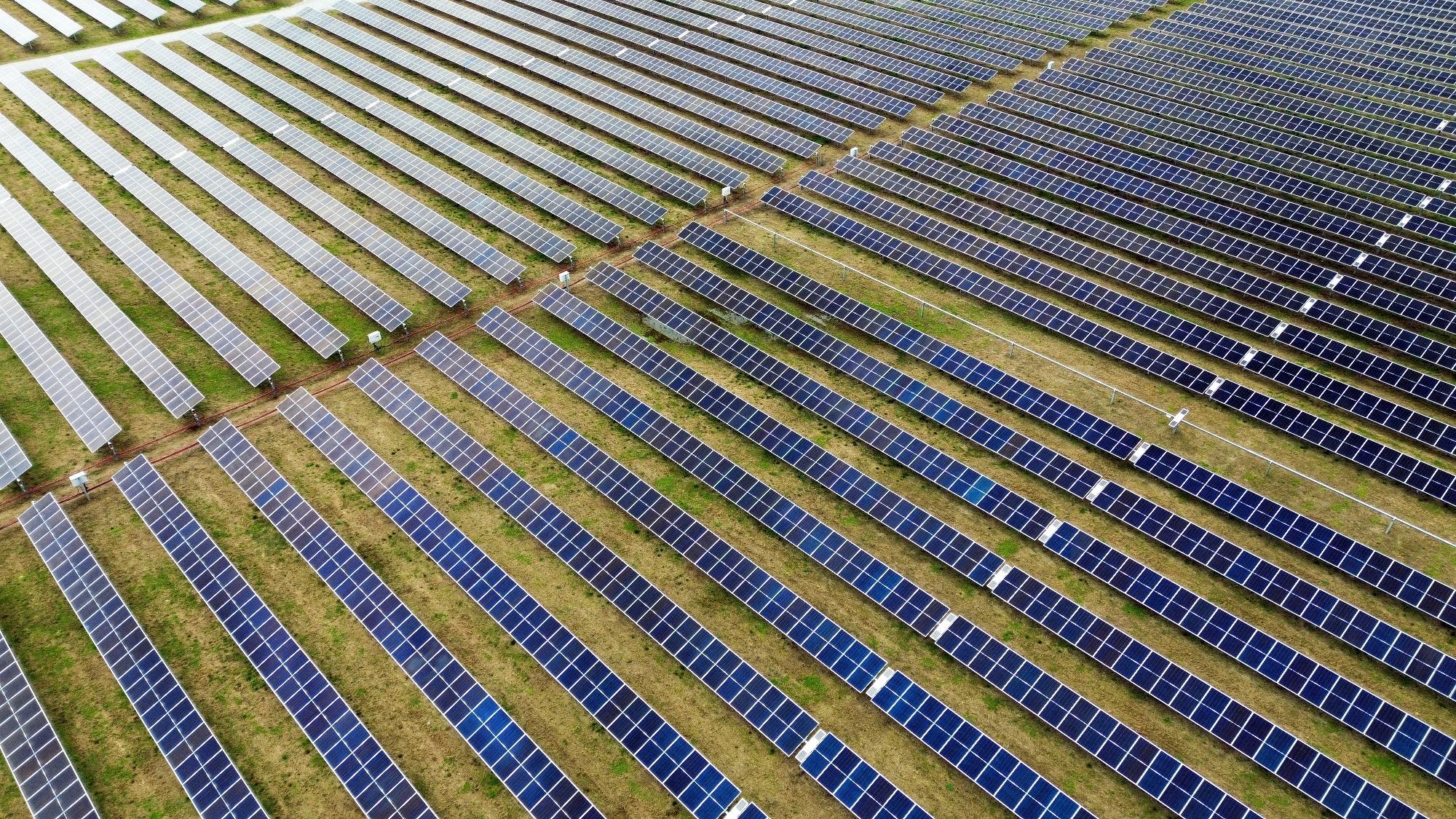
LITTLETON, Colorado, July 25 (Reuters) - California and Texas are the two largest producers of electricity from renewable power, and dominate most discussions about renewable energy generation in the United States. But several other states have developed far larger shares of renewable capacity within their utility-scale generation systems, and so draw a greater proportion of clean power in state energy systems. By ranking the amount of renewable capacity within utility generation systems, it is clear that several other states beyond California and Texas are helping to drive energy transition efforts across the United States. CLEAN CAPACITY In terms of total renewable energy capacity at the utility level, Iowa and New Mexico come out on top and are the only states that boast more than 50% of utility-scale generation capacity from renewable sources. In total, 55.43% of Iowa's utility generation capacity comes from renewables (54.1% from wind and 1.3% from solar), according to energy data platform Cleanview and the United States Energy Administration (EIA). In New Mexico, renewables account for 50.78% of utility capacity, with wind accounting for 37.1% of total capacity and solar 13.7%. South Dakota, Kansas and North Dakota round out the top five spots in terms of renewable capacity within utility-scale generation systems, and all boast renewable shares of roughly 44%. SOLAR VARIATION A key feature among the states with the largest renewable generation capacity is the high reliance on wind power, which accounts for an average 80% of the total installed renewable capacity within the top 10 states. New Mexico and Vermont have notably larger solar capacity shares than the other high ranking states, but even so rely on wind for 73% and 51% of installed renewable capacity respectively, Cleanview data shows. Outside of the 10 largest states with renewable capacity, solar power plays a greater role in utility-scale capacity. Nevada, California, Utah, Arizona and North Carolina all have far larger shares of renewable capacity from solar plants than for wind farms, in large part because those areas enjoy more sunshine than northern states. But recent rapid declines in the cost of utility-scale solar systems have also played a key role in boosting renewable generation capacity in those and other states. A combination of government tax breaks and manufacturer rebates have encouraged utilities to build out solar capacity faster that any other power source over the past five years, even in areas with relatively less solar generation potential compared to the desert areas of the southwest U.S. In Iowa, for instance, solar generation capacity jumped by 2,238% from 2019 to 2024, compared to a 30% rise in wind generation capacity over the same period. Similarly steep jumps in solar capacity have also been recorded in Illinois, Ohio, Wisconsin and Maine over the 2019 to 2024 window, EIA data shows. WIND WOES? Wind generation capacity has also registered widespread growth over the past five years, but at a notably slower pace. At a national level, utility-scale wind generation capacity has grown by 46% since 2019, compared to 171% growth in solar capacity over that period. A key drag on wind capacity growth has been far longer development schedules for wind farms than for solar parks, in part due to tougher permitting requirements and more fervent local opposition compared to solar projects. Wind developers have also faced supply chain disruptions to key wind turbine components, which have lifted installation costs and spurred potential customers to opt for alternative sources for capacity growth in recent years. Solar has been the main alternative to wind in recent years, especially for utilities looking to build up generation capacity within tight deadlines. Utilities with longer development timelines will likely remain reliant on wind for a large share of clean capacity growth, as wind farms have greater round-the clock generation potential whereas solar parks stop producing at night. And along with the continued construction of battery capacity, which can store surplus renewable power for later use, utilities look set to continue to expand renewable power's share of total generation capacity to make further progress against energy transition goals. Sign up here. https://www.reuters.com/sustainability/top-us-states-renewable-power-generation-capacity-maguire-2024-07-25/
2024-07-25 06:04
MUMBAI, July 25 (Reuters) - The Reserve Bank of India may allow the rupee to weaken slightly to unwind the slightly elevated real effective exchange rate and keep the South Asian currency "competitive," BofA Securities said in a note on Thursday. "It supports the government's ambitions for attracting large-scale manufacturing investments," the Wall Street firm said, adding it expects the rupee to decline to 84 to the U.S. dollar by the end of the year. The rupee was quoting at 83.7075 as of 10:54 a.m. IST, holding near the all-time low of 83.72 hit on Wednesday. The currency's trading range has slightly weakened to 83.40-83.70 this month, from the 83.0-83.5 range it held for a large part of the first half of the year, BofA pointed out. The RBI has been holding the rupee in a narrow range via a two-sided intervention -- by absorbing inflows to boost forex reserves and, as it did this week, selling dollars to support the currency. "We see no sign of change in (the) RBI's pursuit of a higher reserves buffer, which would limit the appreciation potential for INR," BofA said. The RBI's dual-sided intervention has kept the rupee's volatility in check relative to historical levels. "Over the medium term, it would be prudent for the RBI to allow higher volatility in INR. Along with the policy of building a large reserves buffer, that could create more asymmetric risks for trend INR depreciation," BofA said. Sign up here. https://www.reuters.com/markets/currencies/india-cenbank-may-prefer-mild-rupee-weakness-correct-overvaluation-bofa-says-2024-07-25/