2024-07-25 01:23
Shares slump 12% after disappointing results EV deliveries down for second straight quarter Auto margins decline on competition July 24 (Reuters) - Tesla (TSLA.O) , opens new tab shares tumbled 12% on Wednesday, evaporating almost $100 billion in stock market value after CEO Elon Musk's talk of humanoid robots and driverless taxis failed to comfort investors worried about the electric car maker's shrinking profit margins. Tesla posted its lowest quarterly profit margin in five years late on Tuesday, with earnings per share missing estimates for the fourth consecutive quarter. It was the biggest one-day percentage drop in Tesla's stock since 2020, and it left Tesla's market capitalization at just under $700 billion, down from over $1 trillion in 2021. Still the world's most valuable car maker, Tesla's valuation relies on investor expectations of big future profits driven by yet-to-launch products such as its promised robotaxis and robots. "All of Musk's enthusiasm on the call, outside of (energy) storage, were for products that don't exist," said TD Cowen's Jeff Osborne. Tesla's weak results, along with a report from Alphabet (GOOGL.O) , opens new tab in which it flagged higher capital expenses, amounted to a poor start to second-quarter reports for Wall Street's most valuable companies. Google parent Alphabet's stock fell almost 5%, and the losses in its shares and Tesla's sent Wall Street into a deep sell-off as investors worried about pricey valuations. Tesla's EV deliveries have fallen for two straight quarters, and it has not introduced a lower-cost model that many expected, causing buyers to turn to rival EV makers. China's BYD (002494.SZ) , opens new tab, for instance, widened its sales lead over Tesla in Singapore in the first half of 2024. Tesla has been forced to cut prices and boost incentives to drum up sales of its aging vehicle line-up. Musk said rivals "have discounted their EVs very substantially, which has made it a bit more difficult for Tesla". The company said the cheaper models it expects to bring out in the first half of 2025 would result in less cost reduction than previously expected, while delaying a widely awaited event for its robotaxi to October. "Tesla is not being priced on auto, but autonomy and AI ... We believe any payoff from (Tesla's AI) initiatives (is) further out," wrote UBS analyst Joseph Spak, reiterating a "sell" rating on the stock. AI INVESTMENT Tesla's stock has recently traded at 85 times its 12-month forward earnings estimates, compared to 7 for legacy automaker Ford Motor (F.N) , opens new tab. Musk said on Tuesday Tesla's Optimus humanoid robot had begun performing tasks autonomously in one of its facilities and that he would be shocked if there were no self-driving Tesla vehicles without human supervision next year. In 2019, Musk told investors that Tesla would be operating a network of robotaxis by 2020. He also launched a poll , opens new tab asking users on X if Tesla should invest $5 billion in his AI startup xAI - a quarter of which he planned to keep for investors in X. The value of X, formerly Twitter, has plunged since his $44 billion purchase of the platform. Nearly 1 million people had participated with 68% voting in favour of the investment. Wall Street analysts questioned whether Tesla will be able to overcome technical and regulatory hurdles to deploy robotaxis within the next few years. Musk said on Tuesday that Tesla pushed back the unveiling of Tesla's robotaxi to Oct. 10 from Aug. 8. It may take Tesla until the end of the decade, if then, to reach a point where its cars can drive themselves without any human intervention, said TD's Osborne. The company's price cuts and incentives pushed automotive gross margins, excluding regulatory credits, down to 14.6% in the second quarter. One of the 50 analysts covering the stock cut their rating, while there were three price target increases and two decreases, according to LSEG data. Analysts, on average, rate the stock a "hold," with a median price target of $212.50, the data shows. Sign up here. https://www.reuters.com/business/autos-transportation/tesla-slides-bleak-profit-margins-exposes-need-affordable-evs-2024-07-24/

2024-07-25 01:08
Ford operating profit misses analysts' expectations Ford maintains full-year outlook Investors express frustration with Ford's progress despite management's optimism July 24 (Reuters) - Ford Motor(F.N) , opens new tab reported a dip in second-quarter adjusted profit on Wednesday as the automaker continues to battle costly quality issues and an EV business that is weighing on its bottom line, sending shares tumbling 11% in after-hours trading. The Detroit automaker earned an adjusted profit of 47 cents per share, significantly missing analysts' expectations of 68 cents, according to LSEG data. Executives emphasized that Ford is continuing to root out structural inefficiencies and transform its gas-engine and EV operations, but Wall Street was not convinced. "You said that Ford's a different company from what it was three years ago, but the stock market really doesn't seem to agree with you at all on that," Morgan Stanley analyst Adam Jonas said to Ford CEO Jim Farley on the company's conference call. The Ford chief has made fixing the automaker's quality problems a priority since he took the helm in October 2020. Since then, Ford has hired a new executive director of quality and transformed some of its production practices to avoid errors, but has still topped the industry in number of recalls. Warranty expenses went up $800 million in the second quarter compared with the previous quarter, Ford Finance Chief John Lawler told reporters. Lawler said most of these warranty expenses were related to older vehicles launched in 2021 or earlier. He said field service actions in the quarter were a one-time cost increase for the older vehicles and Ford expects the second half of the year to match its warranty cost expectations. The carmaker maintained its projected annual guidance of $10 billion to $12 billion in earnings before interest and taxes. 'GROWING PAINS' "We can't read this quarter as that the year is coming off tracks. It's not," said Lawler. "We're very confident in where we're at this year. The plan's working. In this transformation, it's not going to be a straight line up. We're going to have bumps as we're reshaping things." Legacy automakers have scaled down their EV ambitions amid easing demand, a shift to hybrids and stiff competition from Tesla (TSLA.O) , opens new tab and Chinese EV makers in global markets. Earlier this month, Ford shifted plans for a Canadian assembly plant that was expected to build a three-row EV, instead saying it would produce Ford's flagship F-150 pickups. Farley said the company was struggling to meet soaring demand for the gas guzzlers. "Overall, the EV journey has been humbling, but it has forced us to get even more fit as a company, including applying it to our (traditional gas-engine) business, and that will pay off in the long run," said Farley. "The remaking of Ford is not without growing pains." On the battery-powered front, Farley is focusing the company's efforts on expanding its global hybrid portfolio by 40% this year as well as developing a platform for a lineup of affordable, smaller electric vehicles, which Ford is doing out of its California-based "skunk works" team. Ford recorded a $1.1 billion operating loss for its electric-vehicle and software division in the second quarter, adding to its $1.3 billion loss from the first quarter. Executives expect this section of the company to sustain a pretax loss of up to $5.5 billion for the year. 'LOSING PATIENCE' The company's repeated messaging on weeding out structural costs is falling flat with some on Wall Street. "Investors may be losing patience with the story despite management's insistence that it is laying the foundation for profitable, long-term growth," said CFRA Research analyst Garrett Nelson in a note. Meanwhile, Ford's commercial vehicle business, which Farley has called its "secret weapon," continued to drive the company's overall profit. The segment posted an operating profit of $2.6 billion for the quarter and operating margins of 15%. Crosstown rival General Motors (GM.N) , opens new tab reported second-quarter profit and revenue on Tuesday that beat Wall Street's expectations, buoyed by strong pricing and demand for gas-powered trucks. The company raised its annual forecast for the second time this year. Still, its stock slipped about 6% on Tuesday, on analysts' concerns that the auto industry's resiliency may not hold for much longer. Sign up here. https://www.reuters.com/business/autos-transportation/fords-q2-adjusted-profit-falls-ev-hit-2024-07-24/
2024-07-25 01:00
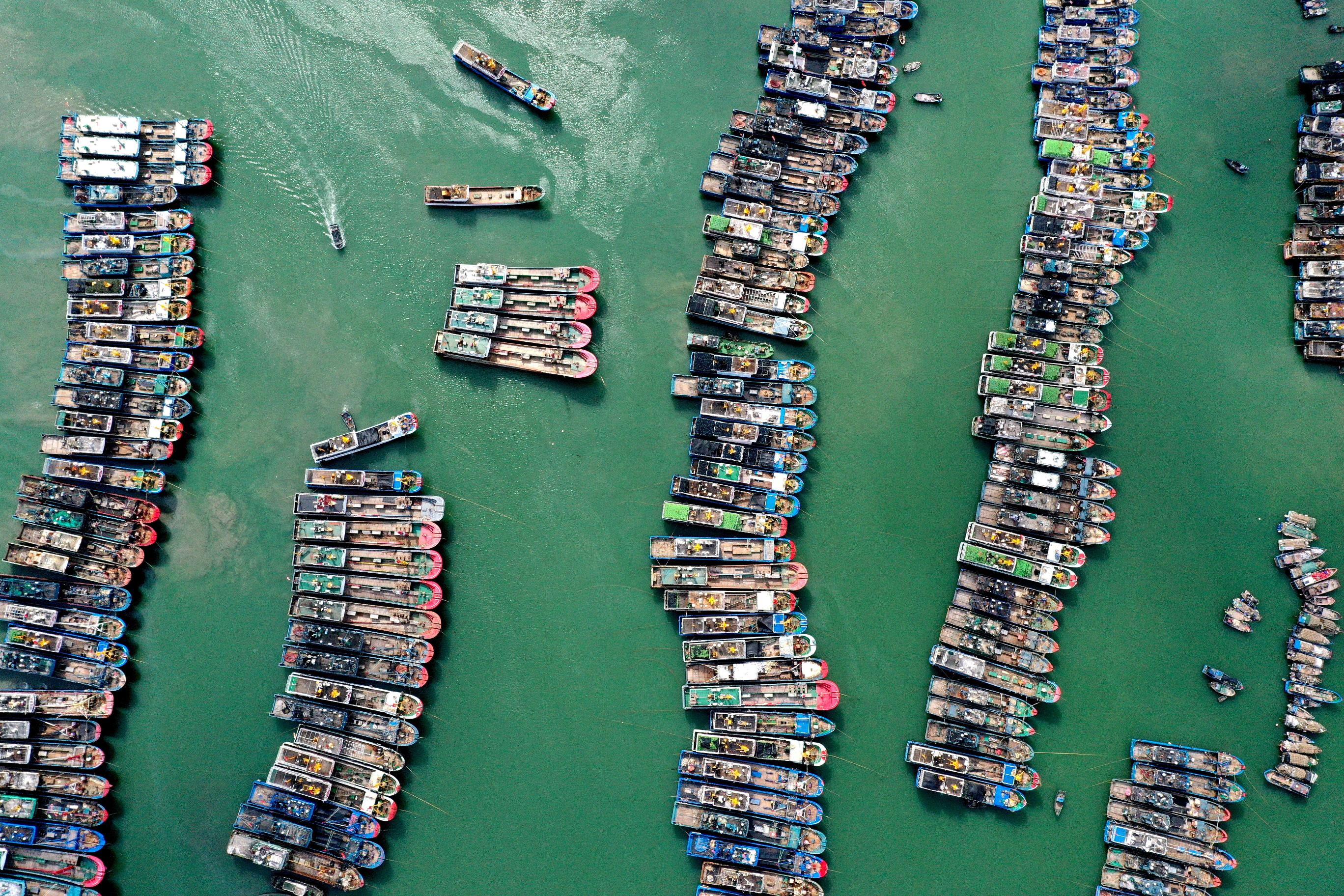
China hit by its most powerful typhoon this year Authorities warn of swelling rivers, flash floods At least 10 inland provinces may be affected in coming days BEIJING/TAIPEI, July 25 (Reuters) - Typhoon Gaemi roared into southeastern China on Thursday after churning across the Taiwan Strait, prompting warnings of swelling rivers, flash floods and waterlogging in cities and provinces that were hit by extreme rains just several weeks ago. Gaemi, the third and most powerful typhoon to hit China's eastern seaboard this year, made landfall in Fujian province at 7:50 p.m. (1150 GMT) after whipping Taiwan with gusts of up to 227 kph (141 mph), some of the strongest winds recorded in the Western Pacific Ocean. Ahead of its arrival, 240,800 people in Fujian were evacuated. Despite slightly weakening since its landfall in Fujian's Putian, a city of over 3 million, Gaemi and its giant cloud-bands are forecast to unleash intense rainfall in at least 10 Chinese provinces in the coming days. The arrival of Gaemi has drawn comparisons with Typhoon Doksuri last year, which triggered historic flooding as far north as Beijing and caused nationwide losses of nearly $30 billion. Authorities said water levels in the lower reaches of the Yangtze River as well as the vast freshwater lakes of Poyang and Dongting in central China could rise, returning to dangerous levels seen in early July after intense summer rains. Due to its high vapour content, Beijing cautioned that Gaemi could spawn strong rainfall in the Chinese capital, about 2,000 km (1,242 miles) north of Putian, even as the storm weakens into a tropical depression. Gaemi's rains could cause flash floods and waterlogging particularly in parts of northern China where the soil remains saturated after being lashed by a passing system of storms earlier this week, authorities warned. 'STRONGEST IN YEARS' In Taiwan, Gaemi killed three people, triggered flooding and sank a freighter after the strongest typhoon to hit the island in eight years made landfall on Wednesday night. Some parts of southern Taiwan are expected to have recorded rainfall of 2,200 mm (87 inches) since Tuesday. The storm cut power to around half a million households, though most are now back online, utility Taipower said. Apart from the three fatalities, 380 were injured by the typhoon in Taiwan, the government said. Taiwan's fire department said a Tanzania-flagged freighter with nine Myanmar nationals on board had sunk off the coast of the southern port city of Kaohsiung. Three of them have since been found alive on the shoreline, Taiwan's coast guard said. Taiwanese television stations showed pictures of flooded streets in cities and counties across the island. Li Li-chuan, 55, saw the roof of her restaurant blow off in the northeastern Taiwanese city of Suao. "I was frightened," she told Reuters. "It was the strongest in years. I was worried that the roof would hit other people." Offices and schools as well as the financial markets closed for a second day on Thursday, while trains were stopped until 3 p.m. (0700 GMT) and all domestic flights and 195 international flights were cancelled. Sign up here. https://www.reuters.com/world/asia-pacific/typhoon-gaemi-passes-over-taiwan-heads-chinese-coast-2024-07-25/
2024-07-25 00:14
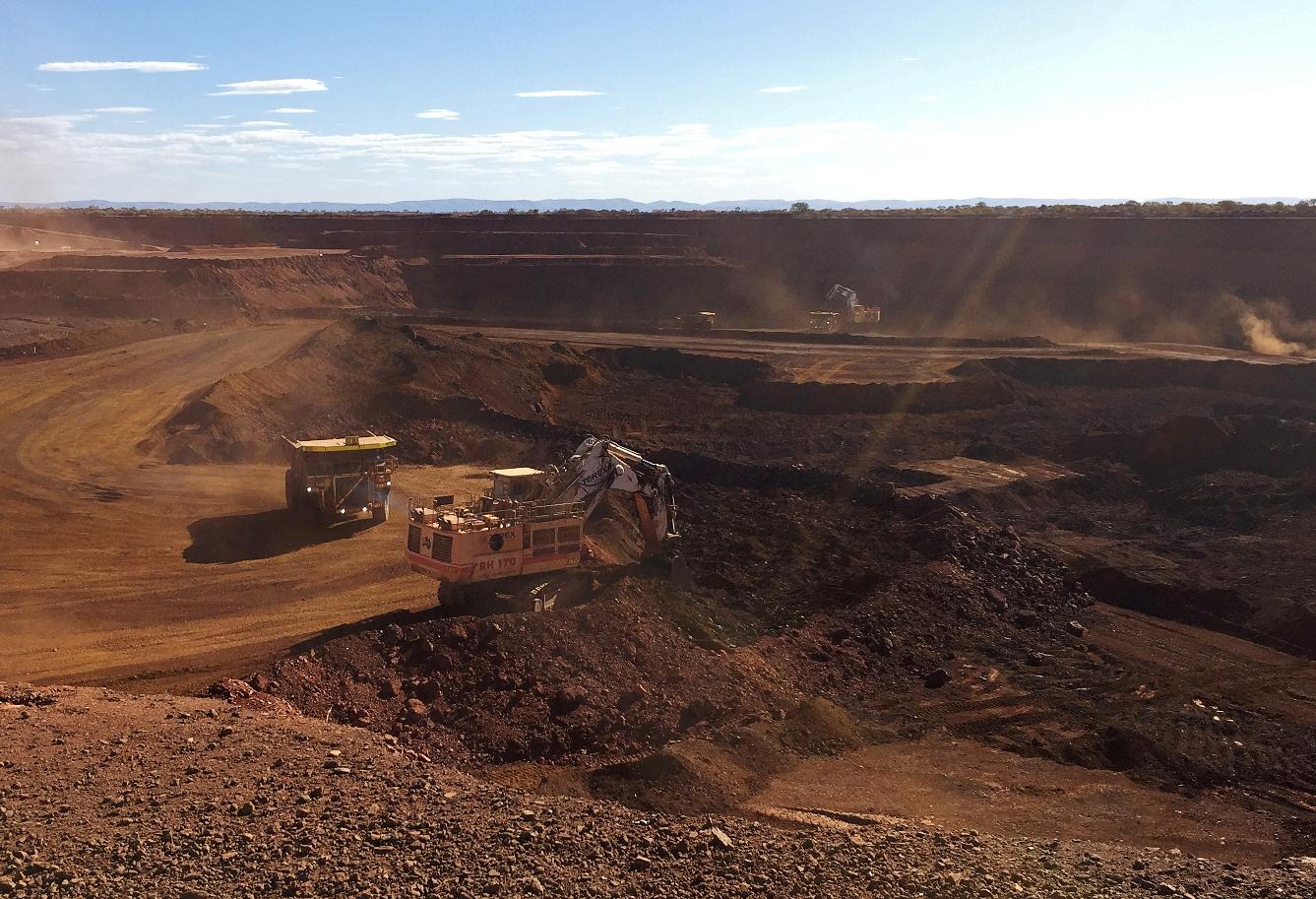
MELBOURNE, July 25 (Reuters) - Australia's Fortescue (FMG.AX) , opens new tab said on Thursday it will step up spending on its energy division to advance several new green hydrogen projects next year, as it beat expectations on record quarterly iron ore production from its mainstay business. The world's fourth largest iron ore miner has put its green energy and metals business back together after splitting it into separate divisions a year ago amid an exodus of senior management. Last week, Fortescue said it was unlikely to meet 2030 targets for green hydrogen production due to high power costs in Australia, and announced it would shed up to 4.5% of its global workforce. But on Thursday, it reaffirmed its commitment to the division, focusing initially on four green hydrogen projects in Australia, the United States, Norway and Brazil. Additional projects in Morocco, Oman, Egypt and Jordan are set to follow next, the company said. Fortescue plans to boost capital expenditure at its energy division to $500 million and its net operating expenditure to around $700 million next year, up from $300 million and $400-$500 million, respectively, that it had anticipated for 2024. The miner forecast higher iron ore shipments for fiscal 2025 and posted a 24% sequential rise to record shipments in the fourth quarter. It now expects to ship between 190 million metric tons (Mt) and 200 Mt of the steel-making commodity in fiscal 2025, up from 191.6 Mt shipped in fiscal 2024. That compares with Visible Alpha's consensus estimate of 201 Mt shipments, according to a note from Goldman Sachs. Production in the quarter recovered after a train derailment and weather disruptions in the prior quarter. Fortescue said it shipped 53.7 million tons (mt) of iron ore in the three months ended June 30, compared with 43.3 Mt in the previous quarter, beating a Visible Alpha's consensus estimate of 51.4 Mt, according to a Morgan Stanley note. The ramp up to full production capacity at its new Iron Bridge magnetite project is still expected in the September quarter of fiscal 2025, the company said. Sign up here. https://www.reuters.com/markets/commodities/fortescue-step-up-energy-spending-beats-with-quarterly-record-iron-ore-output-2024-07-25/
2024-07-24 23:55
RIO DE JANEIRO, July 24 (Reuters) - Japanese Finance Minister Shunichi Suzuki and top currency diplomat Masato Kanda both refrained from commenting on foreign exchange on Wednesday, as the yen surged to its highest level against the dollar in more than two months. Asked about the yen's recent sharp rise, Suzuki said he would refrain from making any comment, noting that "could give unforeseen effects on the market." Kanda, the vice finance minister for international affairs, repeated Suzuki's comment about unforeseen effects when asked whether speculative moves that he had previously blamed for the yen's weakness had waned. The yen rose more than 1% on Wednesday to its highest level since May, as investors unwound short-yen positions ahead of next week's Bank of Japan policy review when policymakers are expected to discuss a rate increase. Suzuki and Kanda spoke to reporters in Rio de Janeiro after a meeting of finance leaders from the Group of Seven (G7) nations, which took place on the sidelines of a G20 finance leaders' meeting. The silence contrasted with their repeated warnings of action against excessive volatility earlier this month, when Tokyo was suspected to have spent nearly 6 trillion yen ($39.22 billion) intervening in the market to lift a currency that has languished at 38-year lows below 160 per dollar. Kanda said foreign exchange was not on the G7 agenda on Wednesday. "But we as G7 discuss the topic on a routine basis," he said. Sources familiar with the matter have said Japan would seek reaffirmation at the G20 meeting of previously agreed commitments that exchange rates reflect underlying economic fundamentals. Some politicians have called on the Bank of Japan to offer more clarity on its rate hike plan partly to prevent the yen from testing fresh lows against the dollar, adding to the pressure on the central bank. While a weak yen gives exports a boost, it has become a source of concern for policymakers by pushing up the cost of imports and hurting consumption. Kanda told reporters that Wednesday's G7 meeting took up the issues of China's growing excess industrial capacity, but declined to comment further. He also said G7 finance leaders made "significant progress" in talks on harnessing the earnings from frozen Russian sovereign assets to back a $50 billion loan to Ukraine, without elaborating on details. ($1 = 152.9700 yen) Sign up here. https://www.reuters.com/markets/asia/japan-top-currency-diplomat-kanda-refrains-commenting-forex-2024-07-24/

2024-07-24 23:16
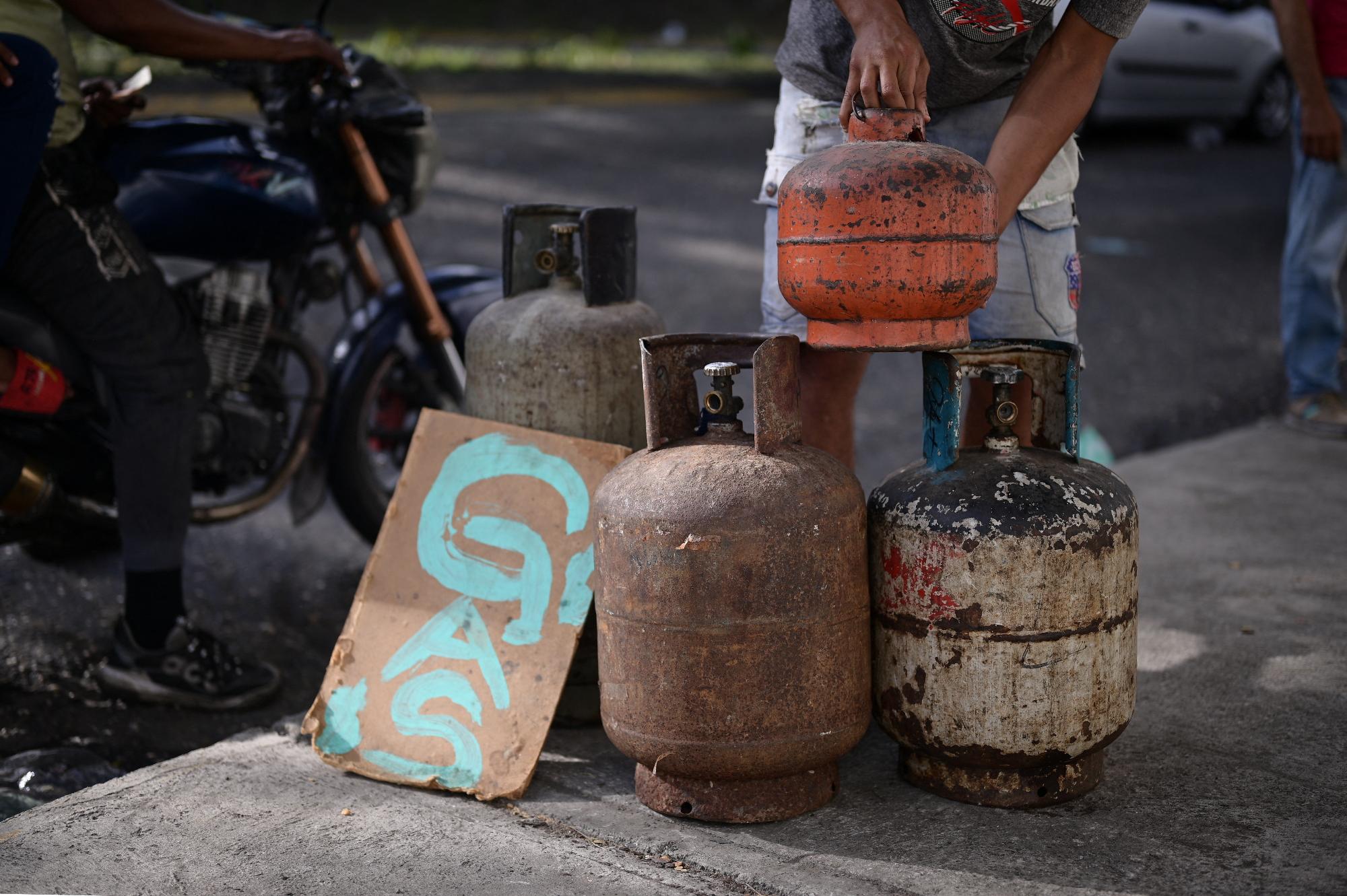
Gas production fell to 4 bcfd from 8 bcfd in 2016, per Gas Energy Latin America Opposition proposes expanding private sector's role and restructuring $150-billion debt Maduro's government offers gas projects to foreign companies but faces unpaid debts and sanctions CARACAS/MARACAY, July 24 (Reuters) - Griselda Ascanio keeps an improvised wood-burning stove ready in her backyard in Maracay, 120 kilometers (75 miles) from Venezuela's capital, for the frequent gas-supply interruptions that make it difficult to cook. "We cannot just cry about it," said the 44-year-old administrator, who collects branches that fall from trees. "So we have learned to solve problems ourselves." While it sits atop the world's eighth-largest natural gas reserves and the biggest in Latin America, Venezuela ranked last year as the 25th-largest global producer, according to the Energy Institute's Statistical Review of World Energy. The South American country's output fell to 4 billion cubic feet per day (bcfd) this year from almost 8 bcfd in 2016, data from consultancy Gas Energy Latin America shows. A production revival is urgent not only because it would assure more reliable domestic supply, but also because it could ease shortages emerging in neighboring countries while bringing Venezuela much-needed hard-currency revenue. The gas problem is a key issue as a presidential election approaches on July 28. Whoever wins faces the daunting task of securing investment in the OPEC member's gas industry. President Nicolas Maduro's administration has doubled down on offering gas projects to foreign companies since last year, but longstanding unpaid debts to many of the companies, U.S. sanctions and the enormous investments required have limited progress. The main opposition coalition, represented by Edmundo Gonzalez in the voting, has proposed radically expanding the private sector's role, while restructuring the country's $150-billion debt, something analysts say would take years. "Nobody is going to massively produce gas in Venezuela in these conditions, but where there is immediate interest is in small-scale midstream projects," said Antero Alvarado, managing partner of Gas Energy Latin America, referring to pipelines and systems to better capture and distribute gas. Venezuela's problems have hampered development, leading to frequent scarcity of the fuel essential for cooking, generating power and feeding petrochemical plants and factories. The gas Ascanio intermittently receives at her home arrives in cylinders whose distribution is controlled by government-supported groups. That subsidized propane is among the most expensive fuels PDVSA's refineries produce. Sometimes, the state-owned company even resorts to importing that gas. Neighbors from Colombia to Brazil and Trinidad and Tobago, and many European nations, are hopeful that Venezuela's production could eventually ease their own gas shortfalls. They have pressured the Biden administration to grant gas projects exemptions from sanctions, company executives and government officials have said. PDVSA and its gas subsidiary did not reply to requests for comment. FLARING THE GAS AWAY Venezuela's almost 200 trillion cubic feet (tcf) of proven gas reserves are mostly untapped. "Venezuela's natural-gas production has historically been limited in comparison to its potential," the U.S. Energy Information Administration said in a February report, attributing the situation to a poor investment climate, lack of infrastructure and inability to develop projects. Some 80% of Venezuela's gas output is associated with crude production. In the last five years, unprocessed gas flared into the atmosphere during oil production has surpassed volumes sold commercially, turning the country into one of the world's largest natural-gas flarers, according to the EIA. Maduro's socialist government has held inconclusive talks with European companies including Repsol (REP.MC) , opens new tab, Eni (ENI.MI) , opens new tab and Shell (SHEL.L) , opens new tab, about a capital-intensive project to recapture up to 1.5 tcf of flared gas for the domestic market and exports. Offshore, large gas exploration and production projects remain mostly stalled, especially the massive 12-tcf Mariscal Sucre. Only one of its four fields is in active negotiation between the government and energy firms Shell and Trinidad and Tobago's NGC (NGCTT.UL) for a joint development that could see first output late next year. Helped by a flexible law that requires less red tape for gas projects than for oil projects, Venezuela's government has begun internal talks to offer a second field, Rio Caribe, for foreign investment, according to sources familiar with the plan. A 20-year Venezuelan license to develop a 1-tcf gas field that extends into Trinidad's waters, involving BP (BP.L) , opens new tab and Trinidad's NGC, was granted on Wednesday following a U.S. authorization for the project in May. "We are making a monumental step in the right direction," said President Nicolas Maduro during the signing ceremony, broadcast by state television station VTV. Oil Minister Pedro Tellechea has said doors are open to foreign investors following individual licenses Washington recently resumed issuing for specific developments in Venezuela. But many gas producers in Venezuela no longer have the means to ramp up production unless PDVSA first repays debts, company executives said. ANOTHER WAY In what would be a policy U-turn, the opposition wants to reopen the energy industry to foreign investment through privatization while limiting PDVSA's role and restructuring debts, including paying some creditors with oil. The strategy would break with two decades of nationalization that has concentrated almost all production, transportation, processing and sales in the state's hands, creating a long chain of debts among state-owned companies. "The country will need more electricity, hence, more gas," Alvarado said. "If a privatization in the power sector happens, there will be economic incentives to produce gas for domestic sales, while larger offshore projects could focus on exports even through LNG (liquefied natural gas)." Sign up here. https://www.reuters.com/world/americas/gas-rich-venezuela-next-president-faces-problem-producing-it-2024-07-24/