2024-07-23 05:50
LAUNCESTON, Australia, July 23 (Reuters) - China's first cut to major short- and long-term interest rates in 11 months drew a distinctly ho-hum reaction from the commodities that usually would be expected to be the biggest beneficiaries. The People's Bank of China said on Monday it would cut the seven-day reverse repo rate to 1.7% from 1.8%, and minutes after that announcement benchmark lending rates were lowered by the same margin at the monthly fixing. But the first broad reduction in interest rates since last August sparked little buying interest in iron ore and copper, the two commodities viewed as having the biggest exposure to the major parts of China's economy, namely construction and manufacturing. Benchmark iron ore futures on the Singapore Exchange dipped 0.4% to end at $106.79 a metric ton, while China's main domestic contract on the Dalian Commodity Exchange ended daytime trade 0.3% lower at 798.5 yuan ($109.79) a ton. London-traded copper futures closed down 1.0% at $9,216.50 a ton, the weakest finish since April 8, while Shanghai copper contracts ended at 76,220 yuan, down 0.86% and also the lowest close since April 8. The lacklustre price response to the interest rate cuts follows the prevailing view that China's policymakers aren't really pulling out all the stops to boost the world's second-biggest economy. The twice a decade political event known as the plenum, held last week failed to inspire confidence that Beijing is on track to lift flagging economic growth by sparking a recovery in the residential property sector. The risk that Donald Trump wins the U.S. presidential election in November and delivers on his promise to increase trade tariffs on China and others is also leading market watchers to be cautious about China's economic prospects. However, the worries over China are largely limited to sentiment where commodities are concerned, with both iron ore and copper showing trade patterns more related to pricing dynamics. STRONG IRON ORE IMPORTS China's iron ore imports are expected to remain robust in July, with commodity analysts Kpler tracking arrivals of around 111 million tons. If the customs number comes in close to the Kpler estimate, it would represent a strong gain on the official 97.61 million tons reported in June. China's iron ore imports have been fairly strong so far this year, with customs data showing arrivals of 611.18 million tons in the first half, up 35.05 million, or 6.2% from the same period in 2023. But much of the increase has ended up going toward rebuilding stockpiles, with port inventories monitored by consultants SteelHome rising 35.1 million tons since the end of last year to 149.6 million in the week to July 24. Steel mills and traders have been taking advantage of the declining trend in iron ore prices so far this year to boost inventory levels, which had dropped to a seven-year low in October of last year. Copper imports and exports also appear to be responding to market dynamics, with China's arrivals of unwrought metal dropping sharply in June to 436,000 tons, a 15.6% slide from May's 514,000. This was in response to copper prices rising sharply, with London contracts reaching a record high of $11,104.50 a ton on May 20. The higher prices effectively closed the arbitrage window for China's traders, and instead of buying copper to add to inventories as they did earlier this year, they have started selling into the global market. China's exports of refined copper surged to a record high of 157,751 tons in June, more than double May's level and 55% higher than the previous high from 12 years ago. Copper stockpiles monitored by the Shanghai Futures Exchange have started easing from four-year highs, dropping to 309,182 tons in the week to July 19, having declined from the 51-month high of 339,964 in the week to June 7. The overall message from China's iron ore and copper markets is that traders are more responsive to global pricing and market dynamics than policy moves. While lower interest rates and other stimulus measures may eventually translate into higher physical demand, for now China's demand for iron ore and copper is better explained by price moves. The opinions expressed here are those of the author, a columnist for Reuters. Sign up here. https://www.reuters.com/markets/commodities/chinas-rate-cuts-fail-revive-iron-ore-copper-russell-2024-07-23/

2024-07-23 05:43
Wall Street indexes close lower U.S. yields fall Crude prices settle down 2% Dollar index strengthens Gold edges up NEW YORK, July 23 (Reuters) - Global stocks edged lower after paring early gains while U.S. bond yields dropped on Tuesday as markets awaited economic data and a plethora of corporate earnings, moving past U.S. President Joe Biden's decision to end his reelection bid. Alphabet (GOOGL.O) , opens new tab reported better-than-expected results after the closing bell, while Tesla (TSLA.O) , opens new tab saw its profit sink 45% on waning electric vehicle demand. Their results kicked off quarterly earnings season for the so-called Magnificent Seven technology megacaps that have driven recent market gains. The U.S core personal consumption expenditures index, the Federal Reserve's preferred inflation measure, will be released on Friday. The yield on benchmark U.S. 10-year notes fell 0.9 basis points to 4.251%. "The market is in the show-me-the-money stage where it's about the earnings being delivered," said Wasif Latif, chief investment officer at Sarmaya Partners. MSCI's gauge of stocks across the globe (.MIWD00000PUS) , opens new tab fell 0.06% to 816.37. On Wall Street, all three major indexes pared early sessions gains and finished lower, dragged down by energy and utilities stocks. The pan-European STOXX 600 index (.STOXX) , opens new tab gained 0.13%, helped by a technology-related rally. Overnight in Asia, MSCI's broadest index of Asia-Pacific shares outside Japan (.MIAPJ0000PUS) , opens new tab closed 0.30% higher at 566.92. "We've had a strong run-up so far this year and a lot of the good news up until now is baked in, whether it's earnings related or rate-cut related," Latif added. U.S. Vice President Kamala Harris will campaign in the battleground state of Wisconsin on Tuesday after securing support from a majority of delegates to the Democratic National Convention, making her the party's presumptive nominee. The Dow Jones Industrial Average (.DJI) , opens new tab fell 0.14% to 40,358.09, the S&P 500 (.SPX) , opens new tab lost 0.16% to 5,555.74 and the Nasdaq Composite (.IXIC) , opens new tab lost 0.06% to 17,997.35. The dollar strengthened overall, while the yen rose for a second straight day against the greenback. The dollar index , which measures the greenback against a basket of currencies, gained 0.14% at 104.45, with the euro down 0.37% at $1.0849. The yen strengthened 0.9% against the greenback at 155.63 per dollar. Crude oil prices fell about 2% to a six-week low on rising expectations of a ceasefire in Gaza and growing concerns about demand in China. Brent futures 1.7% to settle at $81.01 a barrel, while U.S. West Texas Intermediate crude (WTI) closed 1.8% lower at $76.96. Gold prices edged up, with spot gold added 0.43% to $2,407.87 an ounce. U.S. gold futures gained 0.43% to $2,402.40 an ounce. Bitcoin , which had risen on bets that a potential Trump administration would take a light-touch approach to cryptocurrency regulation, fell 3.60% at $65,698. Ethereum declined 0.48% at $3,473. Sign up here. https://www.reuters.com/markets/global-markets-wrapup-1-2024-07-23/
2024-07-23 05:20
July 23 (Reuters) - It may take a little more time for ether to edge out of bitcoin's shadow. Investors are more cautious and divided ahead of the U.S. launch of exchange-traded funds tied to ether's spot price on Tuesday, presenting a contrast to the general euphoria that preceded the arrival of ETFs linked to bitcoin . "It will be less of an event than people are making it seem to be," said Nathan Gauvin, CEO of asset manager Gray Digital and $2 billion hedge fund Blackridge Investment Management. Trading in the ETFs issued by nine asset managers led by BlackRock (BLK.N) , opens new tab, VanEck, and Franklin Templeton (BEN.N) , opens new tab on U.S. trading platforms comes six months after bitcoin ETFs debuted in January. The consensus forecast is for ether ETFs to attract about 25% of bitcoin's flows, though Steven McClurg, head of U.S. asset management at CoinShares estimated it at just 10%. A major issue for some investors is the SEC's exclusion of the "staking" mechanism, a key feature on the Ethereum blockchain which releases ether, the world's second-largest cryptocurrency after bitcoin. Staking allows Ethereum users to earn rewards by locking up their ether to help secure the network. The rewards or yield come in the form of freshly-minted ether tokens and parts of network transaction fees. The annual percentage yield on staking Ethereum was around 3.12% as of July 22, according to StakingRewards.com. Staking is appealing because it enhances returns. As currently constructed, the SEC will only allow the ETFs to hold regular, unstaked ether. "An institutional investor looking at ether knows that there are yields to be had," said CoinShares' McClurg. "It's like a bond manager saying I will buy the bond, but I don't want the coupon, which is counter to what you're doing when you're buying bonds." The SEC believes staking in exchange for tokens is considered an investment contract, which requires disclosures and safeguards under U.S. securities laws. McClurg believes investors will continue to stake ether outside an ETF and earn a yield as opposed to paying fees and holding it in an ETF. He said CoinShares, which oversees more than $6 billion in assets, is going to wait and see how this all pans out. "We made a conscious decision not to get involved in this round for an ETF that's not staked." Gray Digital's Gauvin thinks staking will eventually be included in the ETF sometime next year. "But this is a midpoint to get there." The firm is also not participating in this launch, but will watch it closely. 'LIKE A STOCK WITH NO DIVIDEND' Chanchal Samadder, ETC Group's head of product, echoed comments from CoinShares' McClurg, saying holding the ETF without the staking yield is "like owning a stock and not having the right to the dividend." ETC, with $1.4 billion in assets, is Germany's first issuer of crypto exchange-traded products (ETP), which are similar to ETFs. It has both staked and unstaked ether ETPs totaling $150 million. Demand for staked ether ETPs is higher than the unstaked ones, Samadder said, with the staked fund getting $51 million in inflows so far this year, while the unstaked saw outflows of $95 million. Samadder did point out, though, that illiquidity is a risk when staking ether with validators or stakers having to queue to withdraw their staked ether. The processing time to complete the exit queue could sometimes take eight to nine days, he said. "With unstaked, the ether is unlocked and available at all times." Nana Murugesan, president of Matter Labs, a research and development company that helps scale Ethereum, said the ether ETFs launch was less about staking, but more a "watershed moment" in crypto. The more important thing, Murugesan said, is investors' access to a blockchain underpinning multiple applications. "As Ethereum and its adoption grow, the ETF's value also grows with all the network effects." Overall, investors agree that ether flows are unlikely to come close to those bitcoin ETFs captured in the first week of trading, given ether's smaller market capitalization of $424 billion, compared with bitcoin's $1.4 trillion. Bitcoin ETFs drew nearly $7 billion in assets in their first three weeks of trading, Morningstar Direct data showed. As of end-June, the ETFs had attracted a net $33.1 billion in inflows. Sign up here. https://www.reuters.com/technology/cryptoverse-like-bond-with-no-yield-investors-split-ether-etfs-2024-07-23/

2024-07-23 05:14
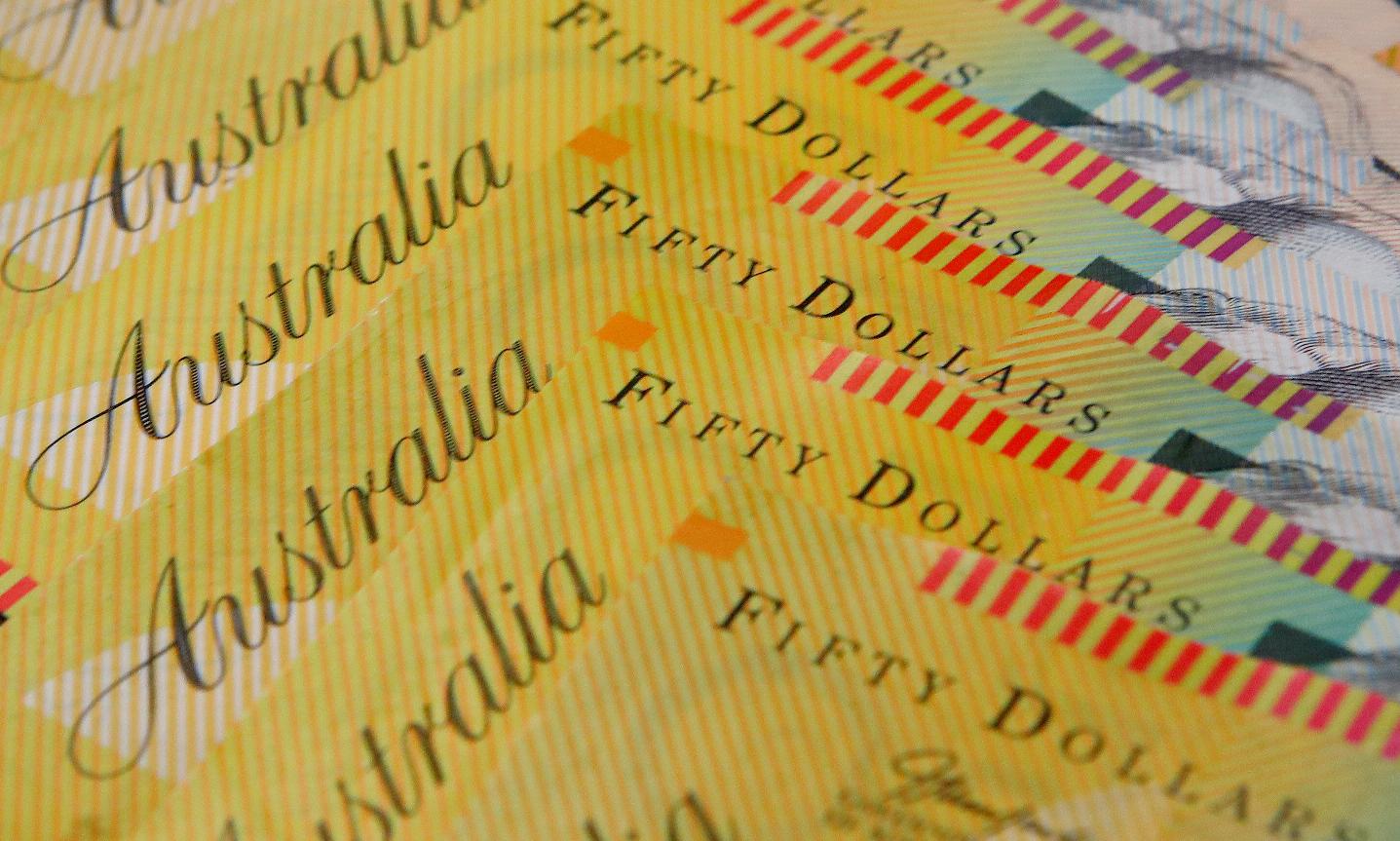
Japanese politician says BOJ should resolve to normalize policy Poll shows BOJ holding rates steady at next week's meeting U.S. home sales drop in June Ether, bitcoin down after launch of ether ETF trading NEW YORK, July 23 (Reuters) - The yen rose for a second straight session against the dollar on Tuesday, boosted by comments from a senior Japanese politician about normalizing monetary policy, adding pressure on the Bank of Japan to continue hiking interest rates to boost the currency. The U.S. dollar overall was higher as traders waited for inflation data later in the week, while the Australian and New Zealand dollars continued to struggle after China's surprise interest rate cuts. The Aussie dollar is viewed as a proxy for China risks. The U.S. dollar was last down 0.9% against the Japanese yen at 155.625. It earlier fell to a five-week low of 155.375 on Thursday. Senior ruling party official Toshimitsu Motegi said overnight that the Bank of Japan should more clearly indicate its resolve to normalize monetary policy, including through steady interest rate hikes. The BOJ next sets rates on July 31. Most economists polled by Reuters expect the BOJ to keep rates on hold at the meeting. It last raised rates in March to a range of 0%-0.1% from -0.1%. "Obviously, the market is positioning itself for the BOJ decision and the Federal Reserve meeting is also coming up," said Eugene Epstein, head of structured products, North America at Moneycorp. "But there was no specific news at the moment. If I could gather anything, I would say it's a continued squeeze. The hawks -- all the people who are looking to short the yen -- were circling so to speak." The yen has found some support on the back of Tokyo's recent bouts of intervention to prop up the currency and as traders looked to the BOJ's decision. In afternoon trading, the dollar index , which tracks the U.S. currency against six peers, rose 0.1% to 104.45, after earlier climbing to a two-week high. It recovered from a four-month low of 103.64 last week. The dollar reacted little to data showing U.S. existing home sales fell more than expected in June as the median house price set another record high. Home sales dropped 5.4% last month to a seasonally adjusted annual rate of 3.89 million units, the lowest since December, data showed. Meanwhile, the median existing home price soared 4.1% from a year earlier to an all-time high of $426,900, the second straight month it touched a record peak. In other currencies, the euro was down 0.4% against the dollar at $1.0851, after falling to a two-week trough earlier in the session. Sterling was 0.2% lower against the dollar at $1.2903. The Australian and New Zealand dollars struggled to regain their footing on Tuesday after China's move to cut several key interest rates. China surprised markets on Monday by cutting major short and long-term interest rates in its first such broad move since last August, signalling intent to boost growth in the world's second-largest economy. The Australian dollar fell to a three-week low of US$0.6612, while the New Zealand dollar hit its weakest since early May at US$0.5951. "We have seen a sell-off in commodities overnight and the worry is whether or not China will be able to dig its way out of its slow growth period," said Thierry Albert Wizman, global FX and rate strategist at Macquarie in New York. "Some people are seeing the interest rate cuts as a sign of desperation for policymakers, creating a bit of a haven trade for the U.S. dollar." Trading was relatively subdued in a week with little in the way of economic data until the release of U.S. personal consumption expenditure (PCE) inflation figures for June on Friday. In addition, the market's reaction to U.S. President Joe Biden's decision to bow out of the election race was muted, though there was some unwinding of the so-called Trump trade, which saw the dollar and U.S. Treasury yields ease a touch. In cryptocurrencies, the first U.S. exchange-traded funds (ETFs) tied to the price of ether, the world's second-largest cryptocurrency after bitcoin, began trading on Tuesday. Ether was last down 0.3% at $3,479 , while bitcoin also fell, down 3.2% at $65,985 . Sign up here. https://www.reuters.com/markets/currencies/aussie-kiwi-dollars-struggle-chinas-rate-cuts-dollar-adrift-2024-07-23/
2024-07-23 04:33
A look at the day ahead in European and global markets from Tom Westbrook Markets mostly took Joe Biden's withdrawal from the U.S. presidential race in their stride, flicking the switch from politics back to focus on earnings and interest rates. In the U.S., a September rate cut is all but locked in to prices, and in Europe a 25 basis-point cut is expected in October. Euro zone consumer confidence figures and U.S. existing home sales, both due on Tuesday, are unlikely to shift that outlook. Rather, as stock markets stabilise following a sharp selloff in chipmaking companies' shares, traders are expected to take cues from earnings due after the market close for Tesla (TSLA.O) , opens new tab and Alphabet (GOOGL.O) , opens new tab, the first of the "Magnificent Seven" stocks to report. Tesla's profit margins are expected to have fallen while Alphabet is expected to report a fourth straight quarter of double-digit revenue growth on an uptick in the advertising market. Google on Monday scrapped plans to remove user-tracking cookies from its Chrome browser, under pressure from advertisers who use cookies' data to target advertisements. Also reporting after market in the U.S. are Texas Instruments (TXN.O) , opens new tab and Visa (V.N) , opens new tab, while Coca-Cola (KO.N) , opens new tab, General Electric (GE.N) , opens new tab, General Motors (GM.N) , opens new tab and UPS (UPS.N) , opens new tab report before trade begins. In Europe, defence firm Thales (TCFP.PA) , opens new tab reports in the Paris morning, while Louis Vuitton (LVMH.PA) , opens new tab earnings due after the market will help investors to gauge the pulse of Chinese demand. Luxury stocks gained after surprise rate cuts in China on Monday but the sector has been suffering from a prolonged downturn in spending in the world's second-biggest economy. Profit warnings from Burberry (BRBY.L) , opens new tab and Hugo Boss (BOSSn.DE) , opens new tab, combined with a 27% drop in quarterly sales in greater China at Richemont (CFR.S) , opens new tab last week, have dashed hopes for a better second half. Asian markets steadied in a quiet session, where chipmaker stocks tracked a rebound on Wall Street. Key developments that could influence markets on Tuesday: Economics: Europe consumer confidence, U.S. existing home sales, Richmond Fed manufacturing index Earnings: LVMH, Thales, Coca-Cola, General Electric, General Motors, UPS, Tesla, Google Sign up here. https://www.reuters.com/markets/europe/global-markets-view-europe-2024-07-23/

2024-07-23 04:13
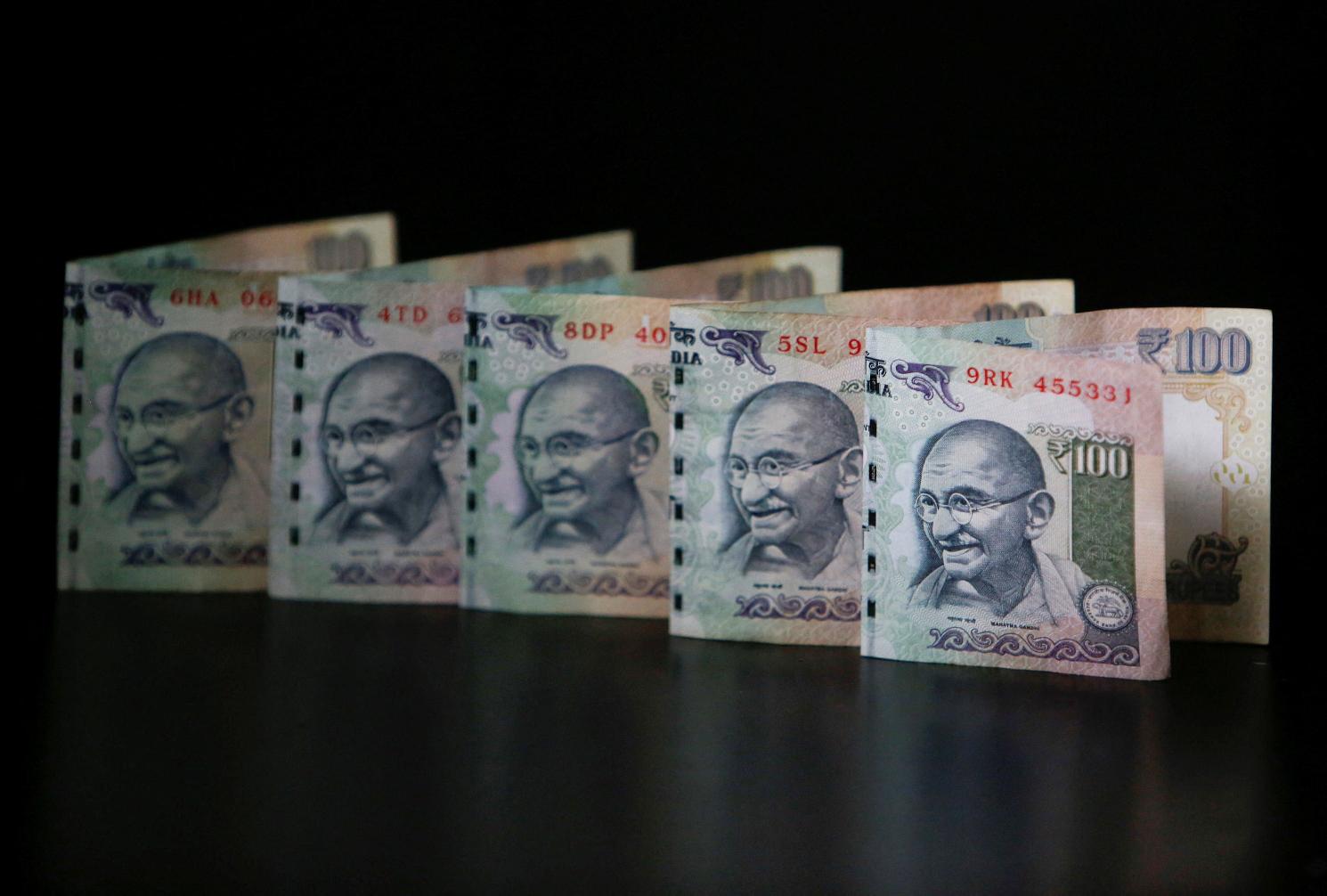
MUMBAI, July 23 (Reuters) - The Indian rupee marginally rose on Tuesday, tracking a rise in most of its Asian peers and as investors awaited the presentation of India's budget later in the day. The rupee was at 83.6250 against the U.S. dollar as of 09:30 a.m. IST, up slightly from its close of 83.6575 in the previous session. The local currency had slipped to its weakest level on record on Monday as sustained dollar demand from local importers weighed in recent sessions, while the Reserve Bank of India's absorption of dollar inflows curbed room for appreciation. Asian currencies were mostly stronger, with the Korean won up 0.3% and leading gains. The dollar index was little changed at 104.2. Investors will keep their focus on Indian Prime Minister Narendra Modi's first post-election budget, due at 11:00 a.m. IST. The budget is expected to lay out an economic vision that balances fiscal prudence with the expectations of disgruntled voters and the demands of his coalition partners. The government's fiscal deficit target and gross market borrowing estimates for financial year will be among the key numbers investors pay close attention to. Median forecasts in a Reuters poll showed the fiscal deficit target at 5.1%, matching February's interim budget. Broadly, the rupee is "anticipated to stabilise within the range of 83.40-83.70," Amit Pabari, managing director at FX advisory firm CR Forex said. Meanwhile, dollar-rupee forward premiums slipped, with the 1-year implied yield down 1 basis point at 1.74%. Forward premiums are likely decline by another 2-4 basis points if the government lowers its gross borrowing estimate and fiscal deficit target, a foreign exchange trader at a state-run bank said. Sign up here. https://www.reuters.com/markets/currencies/rupee-nudges-higher-tracking-asian-peers-india-budget-awaited-2024-07-23/