2024-07-22 11:04
RIO DE JANEIRO, July 22 (Reuters) - Brazilian chemical company Unigel is demanding compensation from state-run Petrobras (PETR4.SA) , opens new tab for losses on two leased fertilizer plants, a legal letter seen by Reuters showed, marking another setback in negotiations to reopen the plants. The two plants, a key part of President Luiz Inacio Lula da Silva's plan to ease Brazil's dependency on imported fertilizer, have halted operations since the second half of last year. In December, the two firms inked a "tolling" contract in which Petrobras would supply natural gas in return for fertilizer, letting Unigel restart production without concern about fuel prices. The deal fell through in June without taking effect after Brazil's federal audit court (TCU) said it could cause a loss of 487 million reais ($87 million) to Petrobras. In the previously unreported letter from Unigel lawyers, dated June 20, the chemical firm complained that the deal had made its financial situation even more critical. "The delay in implementing the Tolling Contract is resulting in significant losses" to Unigel, the lawyers told Petrobras a week before the state-run firm ended the agreement. The lawyers added that Unigel must be "reimbursed in full" by Petrobras for losses since the tolling deal was signed. In a statement, Unigel said the total losses run into the "hundreds of millions" of reais. Petrobras did not answer questions about the demands in the Unigel letter. Both firms continue to work on a solution to resume production, they told Reuters in separate statements. However, the letter shows that as of last month the firms - currently in arbitration - were far from a deal and relations were strained, with Unigel calling Petrobras' actions "abusive." Boosting fertilizer production is a priority for Lula's government. Since he took office in 2023, Petrobras has reversed course on its divestments from fertilizers, announcing in June that it would resume operations on one of its plants. As an agricultural powerhouse, Brazil is among the world's top consumers of fertilizers, more than 80% of which it imports. Under a plan unveiled in 2022, Brazil plans to cut fertilizer imports to 45% by 2050. Yet the two plants in Sergipe and Bahia states that Unigel has been leasing from Petrobras since 2019 have remained idle this year. When operational, the plants made Unigel the largest Brazilian producer of nitrogen fertilizers. Unigel is spending around 13 million reais ($2.4 million) per month on the plants, said the lawyers, worsening the firm's financial situation as it seeks to restructure 4.1 billion reais of debt with bondholders. Up until March, when it fired the plants' employees, Unigel was spending 35 million reais per month, its lawyers said, adding that the firm had kept them employed at the request of Petrobras. Still, the firm does not want to let go of the assets, it told Reuters in a statement, as it aims to resume operations when they become economically viable. Without a deal, Petrobras and Unigel have been in a confidential arbitration process since December over clauses in their gas supply contract. Arbitration processes often take around two years to reach a conclusion, but some can last up to five years, said Marcelo Godke, an expert in corporate law at Godke Advogados. ($1 = 5.5864 reais) Sign up here. https://www.reuters.com/legal/unigel-demands-petrobras-pay-losses-brazil-fertilizer-plants-letter-shows-2024-07-22/

2024-07-22 10:29
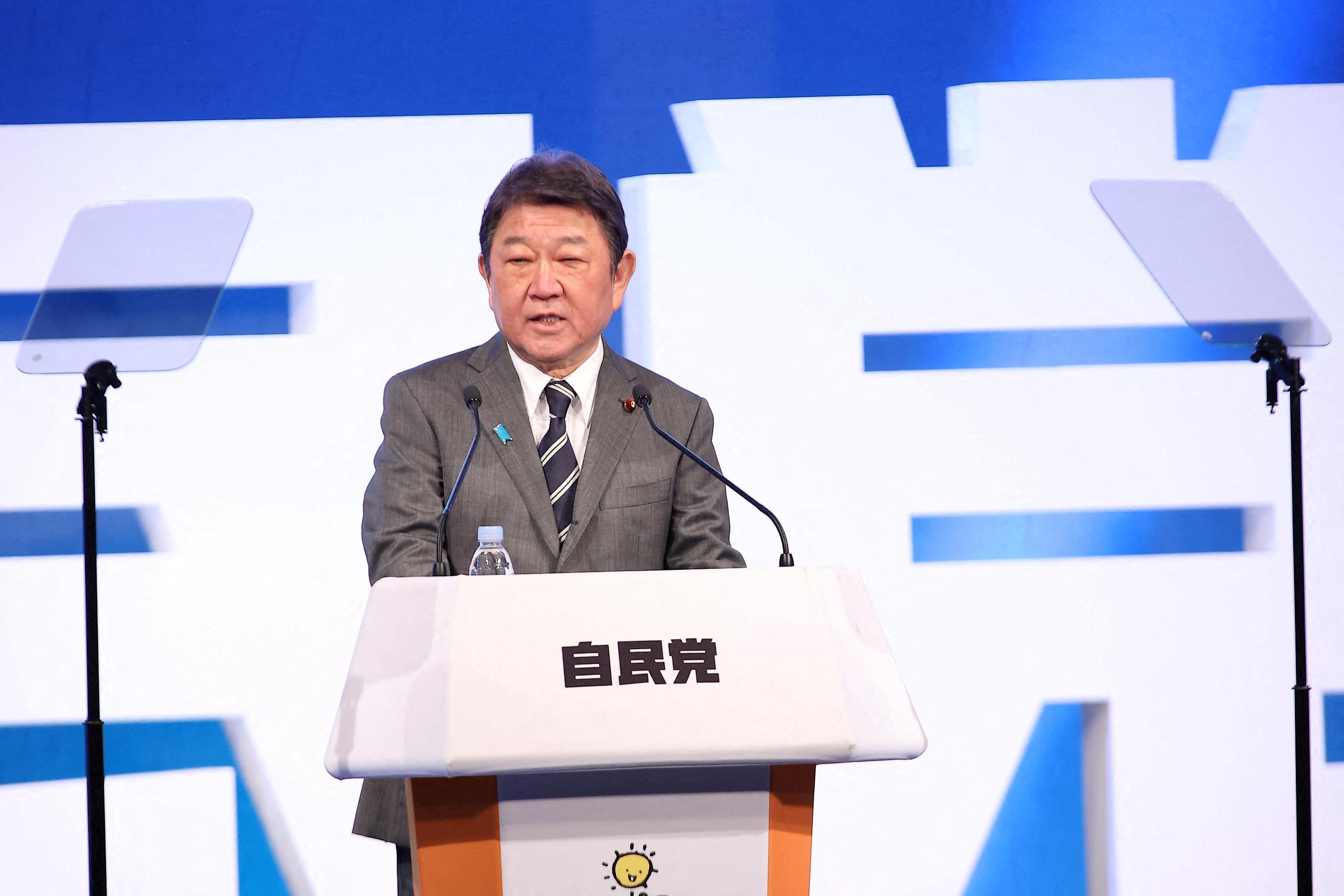
TOKYO, July 22 (Reuters) - The Bank of Japan should more clearly indicate its resolve to normalise monetary policy, including through steady interest rate hikes, senior ruling party official Toshimitsu Motegi was quoted as saying by the Nikkei newspaper on Monday. "Excessive yen declines are clearly negative for Japan's economy," Motegi, who is secretary-general of the ruling Liberal Democratic Party, was cited as saying by Nikkei. To arrest such unwelcome yen falls, the BOJ should clearly communicate its intention to shift away from massive stimulus, Motegi said. He also said Japanese firms can probably swallow the impact of tighter monetary policy, Nikkei reported. The remarks came ahead of the BOJ's two-day policy meeting that ends on July 31, when the board will likely debate whether to raise interest rates from current near-zero levels. They also follow last week's comments by Prime Minister Fumio Kishida that the BOJ's policy normalisation would support Japan's transition to a growth-driven economy. Many economists expect the BOJ to hike interest rates to 0.25% this year, though they are divided on whether that will happen this month or later. At the July meeting, the BOJ is scheduled to announce a detailed plan for tapering its huge bond buying and scaling back a $5 trillion balance sheet. A rate hike in July could cause a huge market reaction if accompanied by a big taper plan, analysts say. The weak yen has been a headache for Japanese policymakers as it hurts consumption by pushing up the cost of raw materials and fuel imports. The government is suspected of having intervened in the currency market to prop up the yen this month, which could pile pressure on the BOJ to do its part to slow the currency's fall, such as by dropping more hawkish signals, some analysts say. The BOJ ended negative interest rates and bond yield control in March, a landmark shift away from a decade-long radical stimulus programme. But the decision has failed to reverse the yen's downtrend, as markets are focusing on the still-wide interest rate differential between Japan and the United States. Sign up here. https://www.reuters.com/markets/rates-bonds/japan-ruling-party-executive-urges-boj-clarify-rate-hike-resolve-nikkei-says-2024-07-22/
2024-07-22 10:16
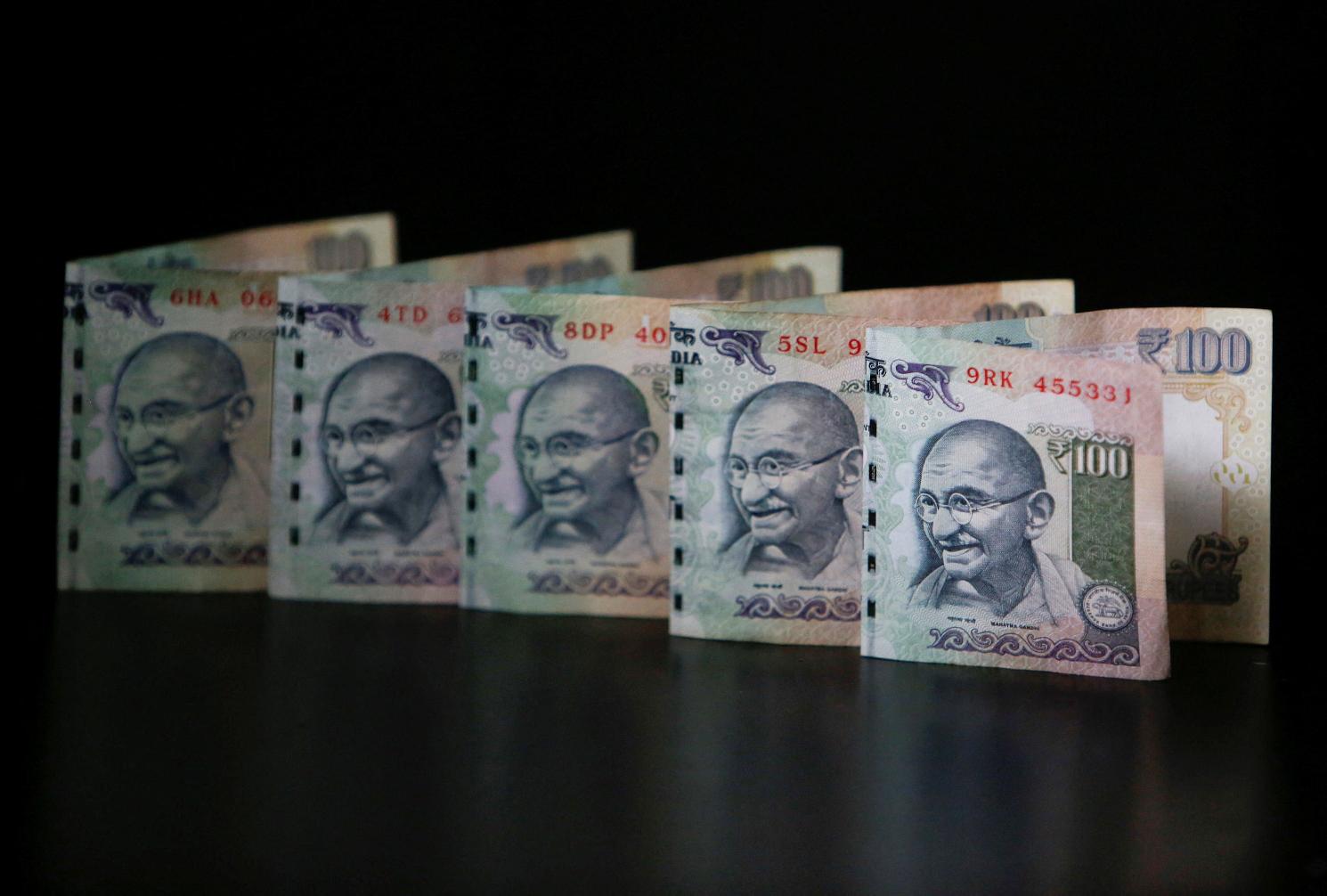
MUMBAI, July 22 (Reuters) - The Indian rupee closed nearly flat on Monday after slipping to its weakest level on record earlier in the session amid a decline in the Chinese yuan, although dollar sales by state-run banks helped cap further losses in the domestic currency. The rupee ended at 83.6575 against the U.S. dollar, nearly unchanged from its close at 83.6625 in the previous session. The currency hit an all-time low of 83.6775 earlier on Monday. Despite healthy portfolio inflows, the rupee has remained under pressure in recent trading sessions. Foreign investors have poured $5 billion into Indian equities and debt so far this month, per NSDL data, but the Reserve Bank of India likely absorbed a large part of the inflows, spurring a jump in foreign exchange reserves to a record high of $667 billion. The RBI's absorption of dollar inflows alongside heightened dollar demand from local importers, including oil companies, has kept the currency under pressure. The central bank's routine two-sided interventions have ensured that volatility remains muted while also capping gains in the currency, which by one measure is the most overvalued in six-and-a-half years. Asian currencies were mostly weaker on Monday, with the offshore Chinese yuan down 0.1% at 7.29 after the country's central bank unexpectedly cut interest rates. "China's clear bias for more stimulative policy is keeping the entire Asian FX complex on the back foot ... we think the market will be focusing on whether USD/CNH trades above 7.30 again," ING Bank said in a note. The dollar index and U.S. bond yields were largely steady on Monday, signalling a muted market reaction after U.S. President Joe Biden abandoned his reelection bid on Sunday. Investors now await the announcement of India's budget on Tuesday and will focus on the government's fiscal deficit target and gross market borrowing estimates. Sign up here. https://www.reuters.com/markets/currencies/rupee-ends-little-changed-after-touching-record-low-budget-focus-2024-07-22/
2024-07-22 10:09
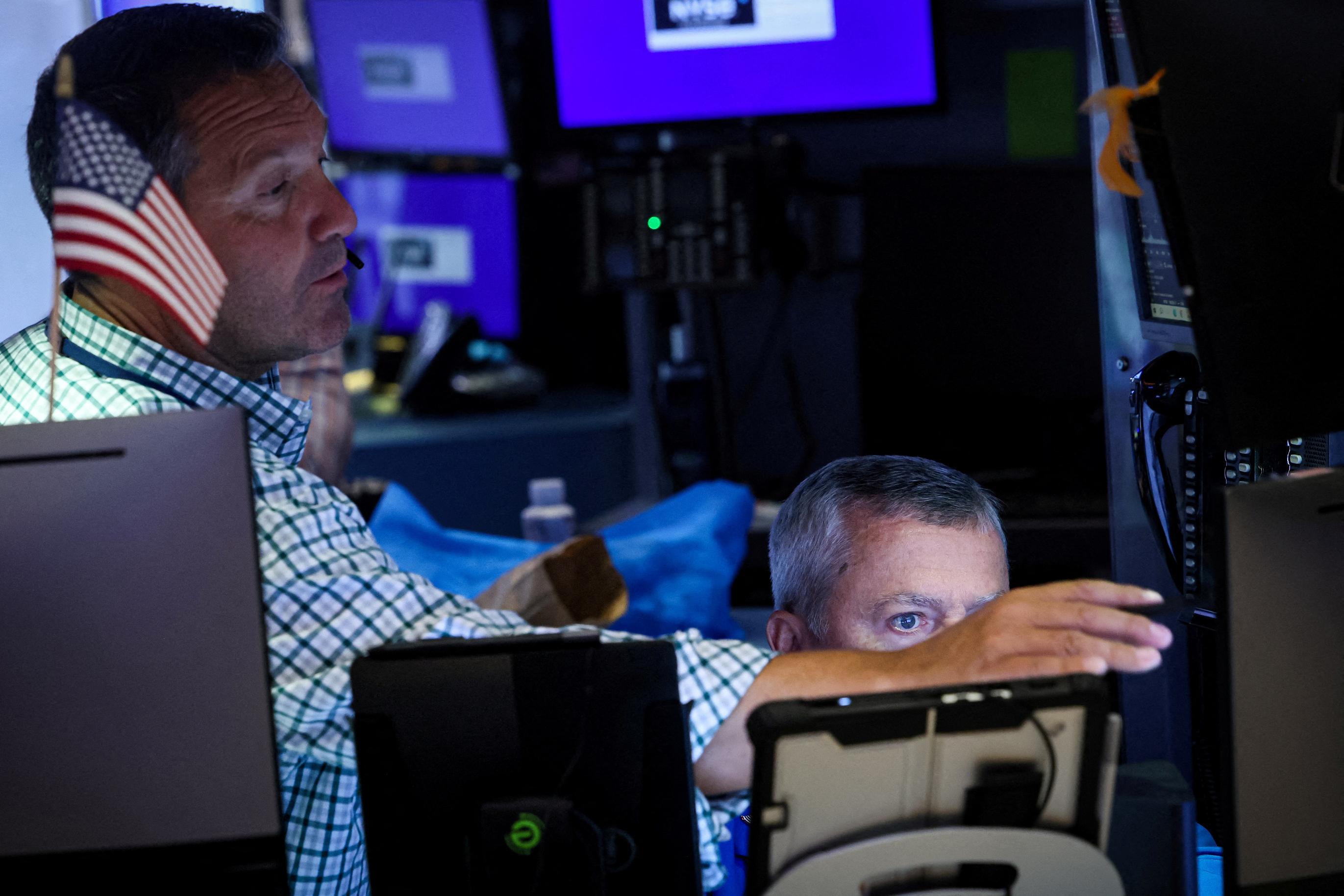
NEW YORK/SINGAPORE, July 22 (Reuters) - Politics has toppled global markets from record peaks and over a turbulent few weeks stepped to the fore as investors confront the prospect of an increasingly fractious Europe, isolationist America and a slowdown in the pulse of world trade. Geopolitics topped the risk list of sovereign money managers this year and, after a roaring rally, money is rushing out of potential flashpoints - such as Taiwan's stock market - and into havens such as gold, which hit an all-time high last week. The line of thinking is that a period of peace and free trade is finished and the next one looks less profitable. Nearly half the globe votes this year and results so far underpin the shift in mood: Taiwan elected a president detested in Beijing, voters lurched to the right in France and installed the largest left-wing majority in Britain for a generation. Over just eight days, the U.S. campaign trail created shock waves: frontrunner Donald Trump was grazed by a bullet and Joe Biden quit with less than four months to go until polling day. Markets are tuning in and the news has pulled geopolitical concerns to the front of investors' minds. "It is definitely one of the more important considerations we have been working into our process all year," said Erik Knutzen, multi-asset chief investment officer at Neuberger Berman, which manages $481 billion in assets. "The high-level way that that is being manifested is by assessing our overall portfolio risk levels," he said. "An environment of elevated geopolitical risk would lead you to turn that risk dial down." That has already been evident in prices as markets immediately focus on two potential pitfalls likely to be heightened by a Trump victory: inflation and restrictions or disruptions to semiconductor sales, particularly for Taiwan. Gold , considered an inflation hedge and a beneficiary of demand from central banks in a climate of mistrust, shot to a record high above $2,450 an ounce in the days after the attempt on Trump's life, an event that has galvanised his supporters. "All of Trump's policies are likely to be inflationary - be it tax cuts, immigration, or re-shoring, and hence dollar bearish...so the dollar is likely to depreciate against gold," said Prashant Kothaari, CEO at Alpha Alternatives. At the same time more than $100 billion has been wiped from the market value of Taiwan Semiconductor Manufacturing Co (2330.TW) , opens new tab in less than a week after Trump sounded equivocal about his commitment to Taiwan's protection and chip industry. Goldman Sachs' cross-strait risk indicator, which analyses news, is below peaks but has rebounded over the past week. Taiwan's currency slumped to its lowest in more than eight years on Monday as investors fled the island which is at the forefront of chipmaking technology and the front line of U.S.-China tension. "The return of this geopolitical risk has effectively blunted enthusiasm for the AI hardware trade," said Norman Villamin, chief strategist at Union Bancaire Privée. TAIL RISK As money managers have become more certain of U.S. rate cuts in September and of a Republican White House, geopolitical concerns are seeping in to longer-term thinking about the globe's economic potential and risks building in the background. High interest rates are starting to bite and China's growth is slowing. There are wars in the Middle East and the fringe of Europe where major powers are lined up on opposite sides. "We see tensions remaining high and stemming policy consequences that will likely last the decade," said David Bianco, Americas chief investment officer at DWS. He mentioned energy and defence stocks and commodities including copper and uranium as being on the investing radar. French stocks (.FXHI) , opens new tab have lagged Europe (.STOXXE) , opens new tab and sovereign debt hit its steepest discount on Germany in a dozen years on concerns a divided government will be euro-sceptic and struggle to repair the balance sheet. "We are underweight on France and Italian bonds as we think there will be political noise as they negotiate a lower budget deficit," said David Zahn, head of European fixed income at Franklin Templeton. To be sure, there is no sense of panic in the selling which has pushed the S&P 500 only some 3% from an all-time high, something many market participants see as a healthy pullback - rather a re-consideration of how to trade political risks. For now U.S. equities volatility, measured by the VIX index (.VIX) , opens new tab, is rising but low by historical standards and, as of early last week, there have been no dramatic flows into so called "tail-risk funds" designed to profit in a downturn. "Geopolitics is never the main focus of financial markets, which particularly for the equity market is always on interest rates and earnings growth," said Matt Sherwood, head of multi- asset investment strategy at Perpetual in Sydney. "But geopolitics is one of those issues that if it's triggered it can be a large left tail event," he said. "And so what an investor would need is a low-cost diversification strategy, which gives downside protection and upside potential." Presently, six-month options on wild moves in the market, such as a big drop in stocks or sudden shift in the dollar trade cheaply, suggesting they are unwanted. But there has been some recent buying and - as the lacklustre performance of Chinese equities attests - an ebbing in the optimism that has driven returns in previous cycles. Pankaj Agarwal, a portfolio manager at Singapore-based family office AT Capital, is hedging his bets by reducing cash equity exposures and buying call spreads on the index, a strategy which can cap gains but limit losses. Others are re-calibrating expectations for a more miserly future. "For thirty years, investors have benefitted from the greatest era of globalisation and geopolitical stability the world has seen," said Michael Rosen, chief investment officer of Angeles Investments in Santa Monica. "A new, riskier era has begun." Sign up here. https://www.reuters.com/markets/geopolitics-is-back-break-markets-stride-2024-07-22/
2024-07-22 10:05
FRANKFURT, July 22 (Reuters) - Strong wage growth is making it harder to bring down inflation in the euro zone, the German central bank said on Monday, calling for a careful approach to further interest rate cuts. The European Central Bank (ECB) left rates on hold last week but President Christine Lagarde said its next meeting in September was "wide open", with several policymakers openly considering more cuts as inflationary pressures ease. The Bundesbank said a strong labour market, coupled with the risk of disruptions to supply, may get in the way of achieving the ECB's 2% inflation goal. "Some of the factors supporting the economy are making it more difficult to achieve the inflation targets," the Bundesbank said in its monthly report. "The labour markets are still operating at high capacity, wage growth is brisk and prices are rising strongly, particularly in the service sector. Inflationary risks also predominate on the supply side." It said services inflation was likely to decline only modestly in the coming months and expected the overall price index to fluctuate around current levels. "Possible further interest rate cuts should therefore be carefully considered in light of current data," the Bundesbank concluded. On the flipside, the Bundesbank noted that German economic output likely grew a little more slowly than expected in the second quarter and that hopes of an imminent industrial rebound had been dampened. Sign up here. https://www.reuters.com/markets/europe/bundesbank-flags-risks-bringing-down-inflation-2024-07-22/

2024-07-22 10:03
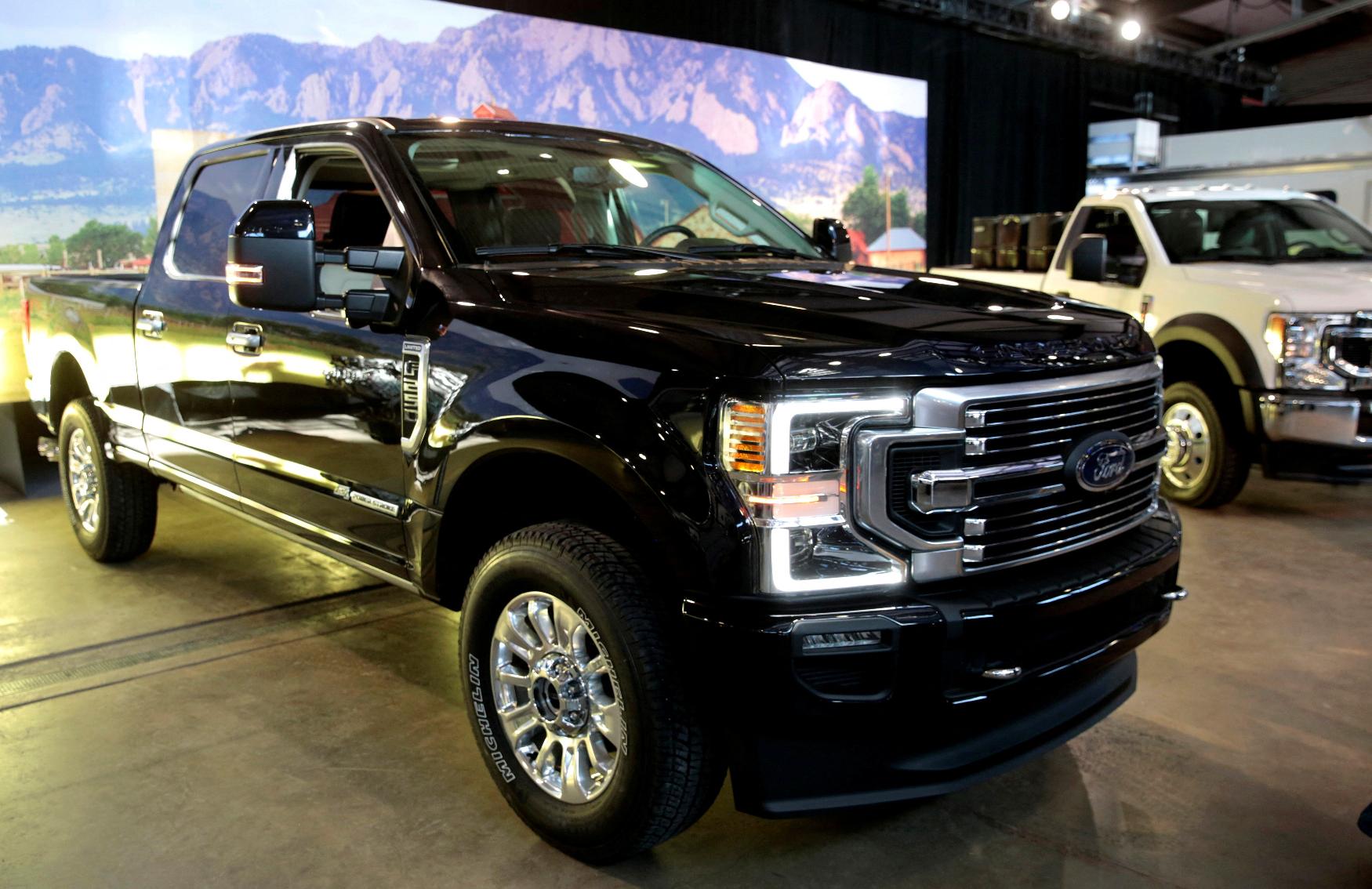
July 22 (Reuters) - General Motors (GM.N) , opens new tab and Ford (F.N) , opens new tab may post lower profit when they report quarterly results this week, as the industry's high-stakes bet on EVs fails to pay off, while a cyberattack on a crucial computer network used by dealerships disrupted sales. GM is expected to report a 7.7% drop in second-quarter net income, while Ford is expected to post a 10% drop in profit, according to data from LSEG. GM is scheduled to report its results on Tuesday and Ford the following day. The cyberattack-induced outage at CDK forced the retail technology provider to shut down a key software system used at more than 15,000 U.S. car dealerships in June, a major sales month in the industry. Dealers are estimated to collectively lose about $1 billion because of the outage, according to consultancy firm Anderson Economic Group. A slowdown in growth of EV sales is also making it harder for automakers such as GM and Ford to boost volumes to levels where they can drive down costs and hit profitability sooner. "It can't be expected that established vehicle manufacturers, who need to make similar investments that a start-up would in vehicle design and manufacturing facilities, could turn a profit immediately," said Sam Fiorani, vice president at research firm AutoForecast Solutions. Legacy American carmakers are also seeing their EV ambitions being throttled by cutthroat competition from Chinese EV makers and Tesla (TSLA.O) , opens new tab, which have triggered a price war globally. GM last week declined to reiterate its previously announced forecast that it would have one million units of EV production capacity in North America by the end of 2025. Ford had also outlined plans to use a Canadian plant it had earmarked for a future electric vehicle to instead build larger, gasoline-powered versions of its flagship F-Series pickup truck. Ford previously said it would delay the launch of its new three-row EVs that would be built at its assembly complex in Oakville, Ontario to 2027 from 2025. Both Detroit automakers also reported slower sales growth for the quarter earlier this month. Evercore ISI analysts said they remain positive on GM, particularly over Ford, and expect the Detroit automaker to guide towards the upper end of their prior full-year forecast. Investors will look for more details on EV plans as both automakers have cited consumer demand as a cause for pushing out forecasts for those vehicles, as well as comments on the impact of outage at CDK. Sign up here. https://www.reuters.com/business/autos-transportation/gm-ford-profit-may-take-hit-cooling-ev-demand-us-dealer-software-outage-2024-07-22/