2024-07-22 05:32
CANBERRA, July 22 (Reuters) - A small dairy in Tasmania is stocking supermarket shelves with what it says is the world's first branded milk produced by cows fed with a seaweed that makes them emit lower levels of environmentally damaging methane gas. The livestock industry accounts for around 30% of global methane emissions, according to the United Nations. Seaweed and other feed additives for cattle could reduce these greenhouse gas emissions but have yet to be widely adopted due to cost. Since February, family-owned Tasmanian dairy producer Ashgrove has been feeding around 500 cows - a fifth of its total - an oil containing a seaweed extract that reduces the methane released by a cow's digestion, said co-owner Richard Bennett. The cows produce around 10,000 litres of milk a day, a portion of which is bottled as "Eco-Milk" and sold across Tasmania including at Woolworths (WOW.AX) , opens new tab, Australia's largest supermarket chain. "We're getting about 25% reduction in methane," Bennett said. Eco-Milk is a test of whether consumers will pay extra for dairy products that have a lower environmental impact. A two-litre bottle sells for A$5.50 ($3.67), twenty-five cents more than normal full cream milk, Bennett said, adding that sales were going well but the company had yet to decide on whether to expand the project. Producers of feed additives that inhibit the release of methane by microbes digesting plant matter in cows' stomachs have invested hundreds of millions of dollars to produce enough to feed millions of animals. French cheese maker Bel Group said last year it would feed an additive to around 10,000 dairy cows in Slovakia. Other firms including JBS (JBSS3.SA) , opens new tab, Danone (DANO.PA) , opens new tab and Fonterra (FCG.NZ) , opens new tab have dabbled with additives but not rolled them out at scale. The additive used by Ashgrove is supplied by a Tasmanian company called Sea Forest. Its CEO Sam Elsom said he hoped Eco-Milk would be popular. "If these products aren't supported, things will go back to usual," he said. "And the pace of decarbonisation will be much slower." ($1 = 1.5006 Australian dollars) Sign up here. https://www.reuters.com/business/environment/tasmanian-eco-milk-tests-shoppers-thirst-climate-friendly-dairy-2024-07-22/

2024-07-22 05:29
Focus on US PCE data due on Friday Gold hit all-time high of $2,483.60/oz last week July 22 (Reuters) - Gold prices fell to a more than one-week low on Monday as the dollar firmed, while traders awaited more U.S. economic data and comments from Federal Reserve officials this week for clarity on the timeline for interest rate cuts. Spot gold fell 0.2% to $2,394.18 per ounce, as of 1837 GMT. U.S. gold futures settled 0.1% lower at $2,394.70. The dollar rose, making gold more expensive for other currency holders. "We're seeing a quiet market today for gold" as "they're waiting to see what exactly the change in the democratic party’s candidacy means for the election and for the country and the world overall," said Jeffrey Christian, managing partner of CPM Group. Joe Biden on Sunday announced he was exiting the U.S. presidential race, and endorsed Vice President Kamala Harris as the Democratic candidate in the November election. "It's far too early for any strategic positions ... longer-term is probably more favourable for gold if Trump is in the White House," said StoneX analyst Rhona O'Connell in a note. "Trump would be inflationary and potentially incendiary in geopolitical terms, while Harris' foreign affairs policy is as yet undefined so that favours gold for now, but not possibly in the longer term." The market is now looking out for U.S. gross domestic product data for the second quarter on Thursday, as well as the personal consumption expenditure (PCE) data on Friday. Money markets are fully pricing in a 25-basis-point Fed rate cut by September, according to CME's FedWatch data. Lower interest rates reduce the opportunity cost of holding non-yielding bullion. Gold prices scaled an all-time high of $2,483.60 per ounce last week on increased chances of U.S. interest rate cuts this year. Spot silver fell about 0.6% to $29.09 after falling nearly 5% last week. Platinum slipped 1.5% to $947.88, while palladium rose 0.1% to $909.50. Sign up here. https://www.reuters.com/markets/commodities/gold-edges-higher-softer-dollar-fed-rate-cut-bets-2024-07-22/

2024-07-22 04:41
A look at the day ahead in European and global markets from Wayne Cole. The day began with the, not unexpected, news of President Joe Biden dropping out of the race and the market reaction so far has been measured. Wall Street futures are a shade firmer, bond yields down a tick and the dollar little changed overall. Biden backed his VP Kamala Harris for the job, putting her in pole position for the nomination which is officially scheduled for the Democratic convention on Aug. 19-22. It is also possible the party will consider a virtual nomination ahead of the convention. Online betting site PredictIT showed pricing for a victory by Donald Trump had fallen 5 cents to 59 cents, while Harris climbed 13 cents to 40 cents. California Governor Gavin Newsom, another possible Democratic challenger, trailed at 3 cents. Goldman Sachs in a note said they did not expect the Democrats' fiscal and trade policy agenda to shift meaningfully in the event that Harris is the nominee. The other main event was a surprise rate cut from China's central bank, which trimmed its seven-day repo rate by 10 basis points. That saw longer-term borrowing costs decline by a similar amount, while bond yields dipped across the curve despite recent efforts by the PBOC to push them higher. The yuan also eased, though the move was modest. Analysts had thought the PBOC was reluctant to ease as that might put downward pressure on the currency. As so often with Beijing's policy changes, investors seemed underwhelmed with the move in part because it merely underlines how anaemic the recovery has been. Chinese blue chips retreated around 0.6%, having enjoyed a rare bounce last week. Much of Asia was also in the red, with Taiwan taking a beating amid worries about U.S. restrictions on chip sales and the risk a Trump administration would slap tariffs on a host of imports, possibly triggering a global trade war. Tech stocks saw notable rotation out to smaller caps and banks last week, erasing about $900 billion from the S&P 500 technology sector. A pullback was no surprise given Alphabet (GOOGL.O) , opens new tab, Tesla (TSLA.O) , opens new tab, Amazon.com (AMZN.O) , opens new tab, Microsoft (MSFT.O) , opens new tab, Meta Platforms (META.O) , opens new tab, Apple (AAPL.O) , opens new tab and Nvidia (NVDA.O) , opens new tab have accounted for around 60% of the S&P 500's gains this year. That set the stage for a host of second-quarter earnings this week, with Tesla and Google-parent Alphabet starring for the "Magnificent Seven" megacap group. Expectations are high with annual earnings seen climbing 17% for tech and 22% for communications. Key developments that could influence markets on Monday: - Bank of England Executive Director Victoria Saporta speech - Federal Reserve Bank of Chicago issues National Activity Index for June - Company earnings include Verizon (VZ.N) , opens new tab, Nucor (NUE.N) , opens new tab and Brown & Brown (BRO.N) , opens new tab Sign up here. https://www.reuters.com/markets/europe/global-markets-view-europe-2024-07-22/
2024-07-22 04:23
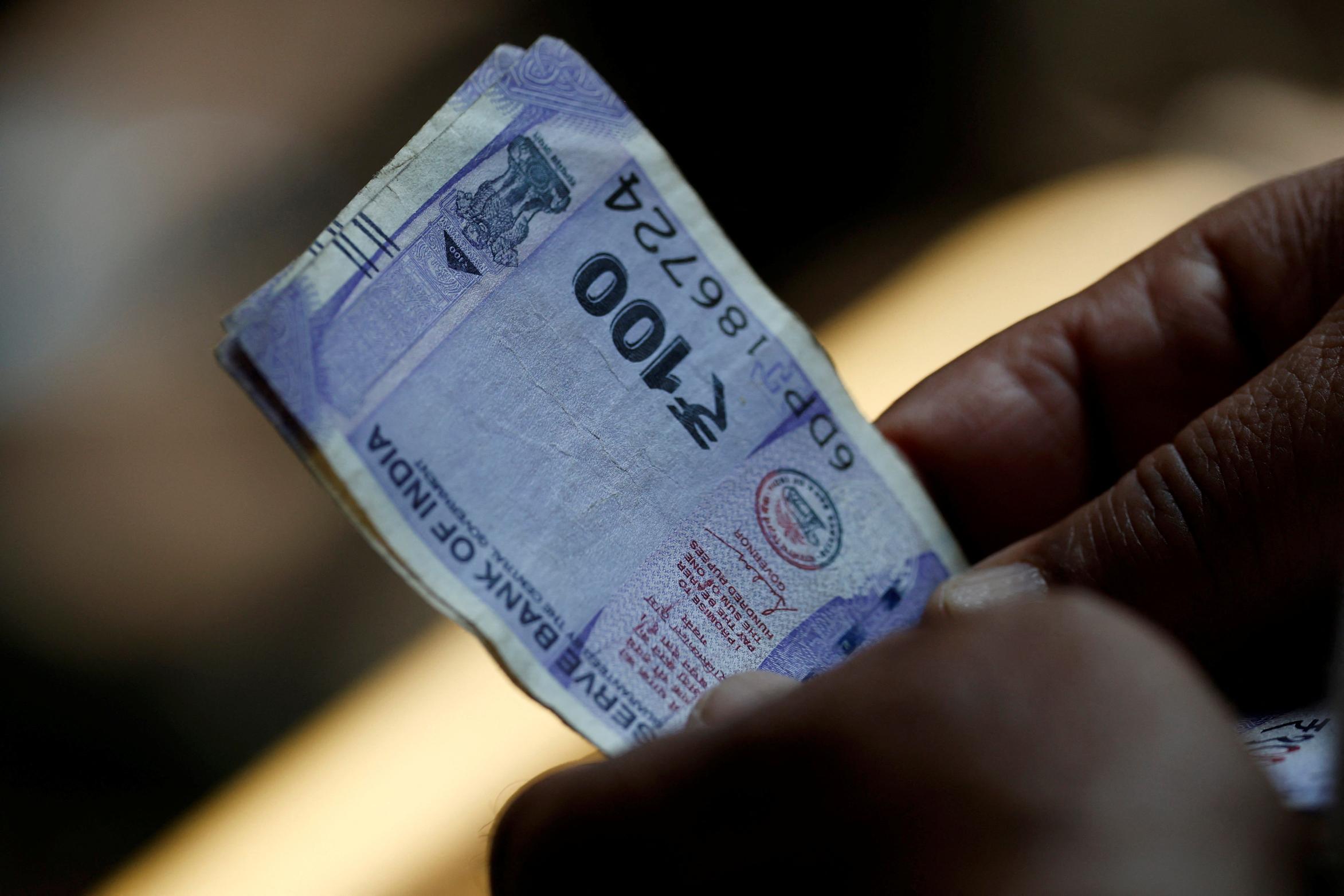
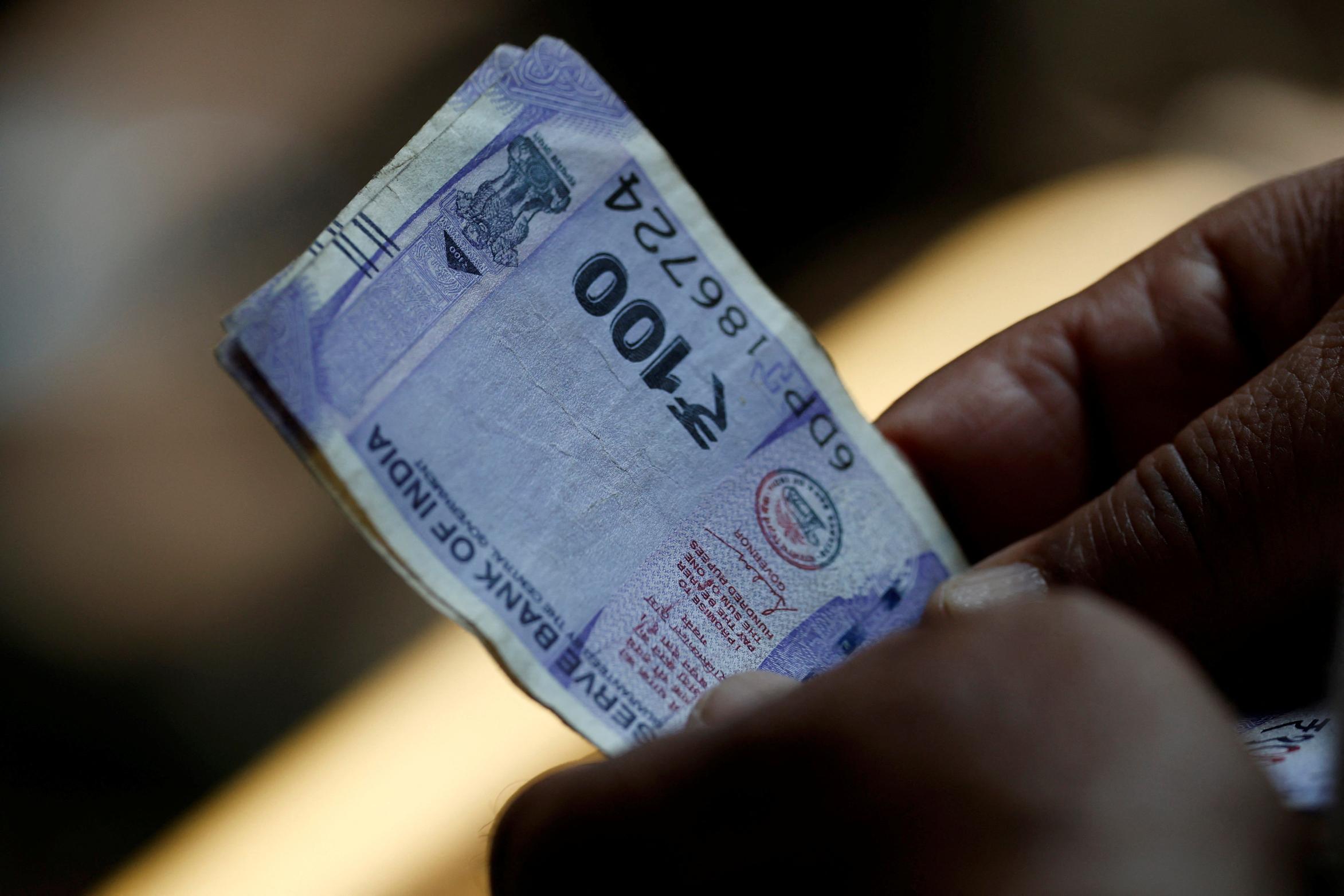
MUMBAI, July 22 (Reuters) - The Indian rupee was pinned near its record low on Monday, amid weakness in most Asian currencies, with dollar sales from state-run banks helping the South Asian currency avert a decline. The rupee was at 83.6525 against the U.S. dollar as of 09:40 a.m. IST, nearly unchanged from its previous close at 83.6625 in the previous session. The rupee had hit its all-time low of 83.6660 on June 20. Asian currencies were mostly weaker, with the Thai baht down 0.5% and leading losses, while the offshore Chinese yuan also weakened past 7.29 after the country's central bank unexpectedly cut policy rates. The rupee is "unlikely to weaken past 83.75 even if it does make an all-time low today," a foreign exchange trader at a state-run bank said. Traders broadly expect the Reserve Bank of India to curtail any sharp decline in the rupee. The consistently strong demand for dollars related to corporate payments has hurt the rupee in recent sessions, traders said. The dollar index was a tad higher at 104.3, while US bond yields were largely steady after U.S. President Joe Biden abandoned his reelection bid on Sunday. Meanwhile, India's foreign exchange reserves jumped by $9.7 billion to hit a record high of $666.85 billion in the week ended July 12. "This increase suggests that the RBI is actively preventing the rupee from strengthening, even in the face of significant inflows into the equity and debt markets," said Amit Pabari, managing director at FX advisory firm CR Forex. Overseas investors have bought nearly $5 billion of local equities and debt, on a net basis, so far in July, according to stock depository data. Investors now await India's budget announcement on Tuesday and will focus on the government's fiscal deficit target and gross market borrowing estimates. Sign up here. https://www.reuters.com/markets/currencies/rupee-holds-just-above-all-time-low-state-run-banks-dollar-sales-support-2024-07-22/
2024-07-22 03:26
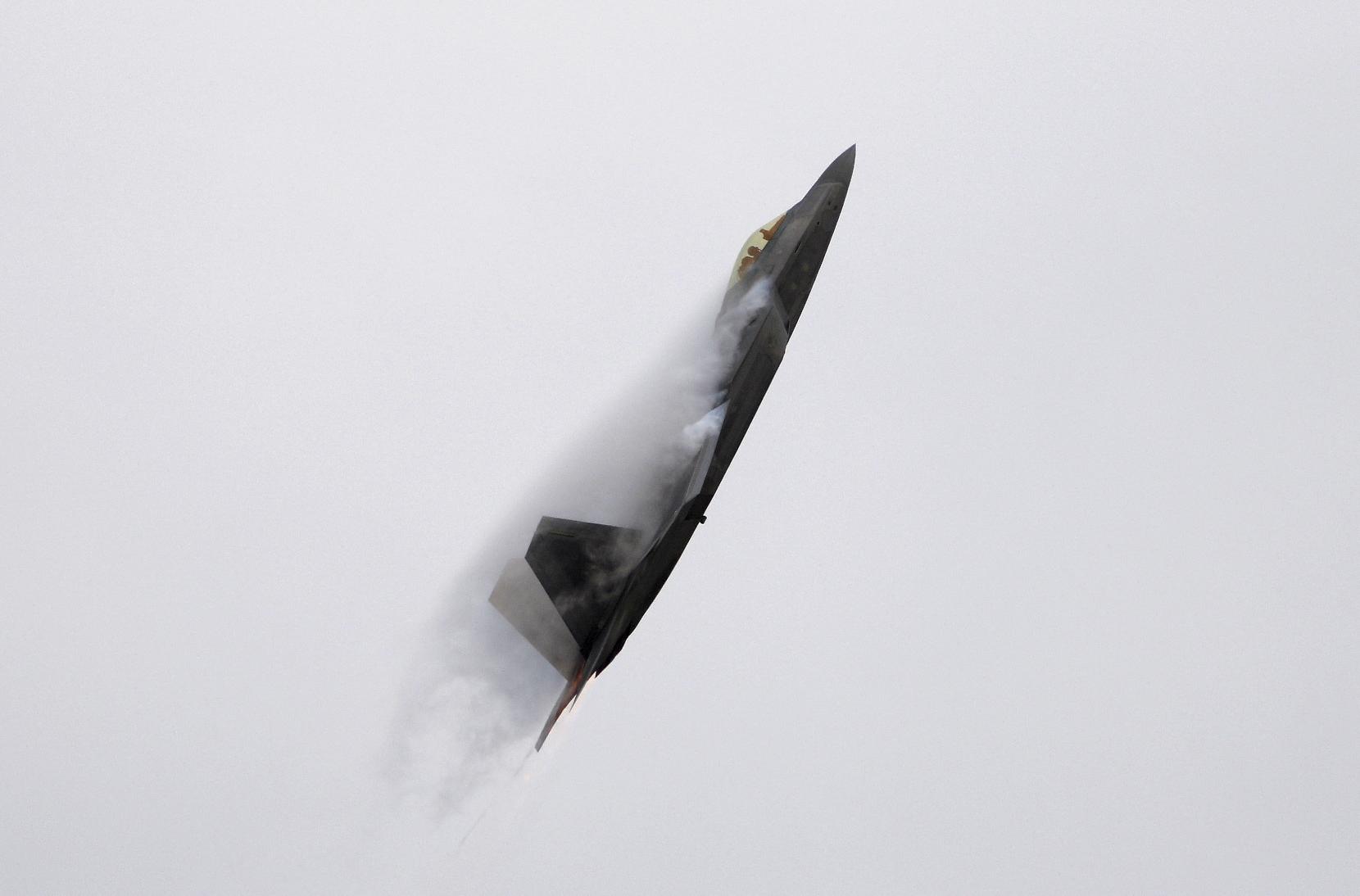
Next-gen jet fighter program budget of $28.5 billion over five years may be spread out or scaled back Cost overruns in other programs force Air Force to reassess spending priorities Air Force reconsiders fundamental design elements of next jet WASHINGTON, July 21 (Reuters) - The U.S. Air Force's ambitious next-generation fighter jet program, envisioned as a revolutionary leap in technology, could become less ambitious as budget pressure, competing priorities and changing goals compel a rethink, defense officials and industry executives said. Initially conceived as a "family of systems" centered around a sixth-generation fighter jet, the Next Generation Air Dominance (NGAD) program is meant to replace the F-22 Raptor and give the United States the most powerful weaponry in the sky well into the mid-21st century. When it was first proposed, expectations were high, including an unmatched stealth capability to keep it invisible from even the most sophisticated radar, laser weapons and onboard artificial intelligence to process masses of data coming from the latest in sensor technology. However, sources said the current development budget of $28.5 billion over five years ending in 2029 could be spread out over more time or scaled-back as the Pentagon searches for a cost-effective solution. Sources briefed on the Air Force's internal budget deliberations said the anticipated 2026 fiscal-year NGAD budget of $3.1 billion would be slashed as funding shrinks, with one source adding that diminishing funds could stretch development by two more years. While it is unclear how much the overall program will cost, it could eventually total well over $100 billion if 200 aircraft are produced, including initial costs - plus maintenance and upgrades over time. There are currently 185 F-22s in service - the plane NGAD is meant to replace. The Air Force is also reviewing the concept for the jet - perhaps moving to a larger single-engine jet, from what is believed to be a two-engine design, or even shifting more funding to a less expensive unmanned drone to best address future air superiority needs given the potential budget cuts, industry experts said. "NGAD was conceived before a number of things: before the threat became so severe, before CCAs (drone program) were introduced into the equation and before we had some issues with affordability that we are currently facing," Air Force Secretary Frank Kendall said on Saturday at Britain's Royal International Air Tattoo, the world's largest military air show. "Before we commit to the 2026 budget, we want to be sure we are on the right path," he added on a program that will be a popular talking point at the Farnborough International Airshow this week. The shift in focus comes as the Air Force grapples with substantial cost overruns in several vital, and expensive, programs. For example, its Sentinel intercontinental ballistic missile (ICBM) program, which is set to replace the aging Minuteman III missiles, has ballooned 81% over budget, to around $141 billion. Budget pressure has forced the Air Force to reassess its spending priorities across various modernization efforts which also include increasing production of the new B-21 bomber made by Northrop Grumman (NOC.N) , opens new tab. U.S. aerospace and defense companies Lockheed Martin (LMT.N) , opens new tab and Boeing (BA.N) , opens new tab have responded to the Air Force's request for proposal for the NGAD system, sources told Reuters. While defense firms are not exactly desperate for orders with conflicts in Ukraine and Israel driving already-strong demand, NGAD was one of several potentially giant programs many hoped would feed the bottom line in the years ahead. An Air Force spokesperson told Reuters the department is currently building its fiscal 2026 budget which will be released early next year. Representatives for Boeing did not return requests for comment. Lockheed would not comment on NGAD. "The part that seems to be getting stalled and re-evaluated is the air vehicle itself, the central platform," said J.J. Gertler, a senior analyst at aerospace and defense analysis firm the Teal Group. "The Air Force is now making sure that that's what they actually want and possibly changing their mind," he added. Possible new configurations might be shifting to a single engine for the jet to save on up-front cost and long-term maintenance. Twin-engine jets are much more expensive to buy and operate, but they are more dependable and faster, therefore more deadly in a dogfight than their single-engine foes. Another key component emerging from this restructuring is the possibility of shifting funds toward the unmanned fighter drone known as the Collaborative Combat Aircraft initiative. Development of the less expensive drone platforms, designed to operate alongside the main jet, does not face budget changes. (This story has been refiled to correct the dateline) Sign up here. https://www.reuters.com/business/aerospace-defense/next-generation-us-jet-fighter-program-may-get-hit-by-budget-woes-2024-07-22/
2024-07-22 02:55
MUMBAI, July 22 (Reuters) - The Indian rupee is poised to drop to a lifetime low against the U.S. dollar at open on Monday amid a decline in most Asian peers, unless, like in the past, the Reserve Bank of India intervenes. Non-deliverable forwards indicate the rupee will open at 83.68-83.70 to the U.S. dollar, down from 83.6625 in the previous session and past the all-time low of 83.6650 hit in June. The rupee was expected to open at a new low on Friday, but avoided it on likely RBI intervention in the non-deliverable forward market. "The RBI will dictate how today's session plays. If they intervene (in NDF) prior to market open and we have a soft opening, then expect a narrow 4-6 paisa range kind of session," a currency trader at a bank said. "And if we do get to 83.70 at open, it will be a much more interesting day." In recent days, the rupee has been persistently pressed due to dollar demand from public sector banks, which traders have said is likely related to oil and defence payments. BIDEN QUITS U.S. PRESIDENTIAL RACE Asian currencies were mostly weaker, with the offshore Chinese yuan dipping past 7.2900 to the dollar after the country cut benchmark lending rates at a monthly fixing on Monday. Asian currencies largely shrugged off U.S. President Joe Biden's decision to drop out of the presidential race. The odds of a win for Republican nominee are off the highs hit following the assassination attempt. The question many are asking at the beginning of the trading week whether there will be any impact on many of the so-called ‘Trump Trades’ that have already been expressed, Chris Weston, head research at broker Pepperstone, said in a note. KEY INDICATORS: ** One-month non-deliverable rupee forward at 83.77; onshore one-month forward premium at 7 paisa ** Dollar index up at 104.29 ** Brent crude futures up 0.4% at $82.9 per barrel ** Ten-year U.S. note yield at 4.23% ** As per NSDL data, foreign investors bought a net $604.1mln worth of Indian shares on Jul. 18 ** NSDL data shows foreign investors bought a net $350.5mln worth of Indian bonds on Jul. 18 Sign up here. https://www.reuters.com/markets/currencies/rupee-counts-cenbank-help-avert-all-time-low-2024-07-22/