2024-07-19 06:52
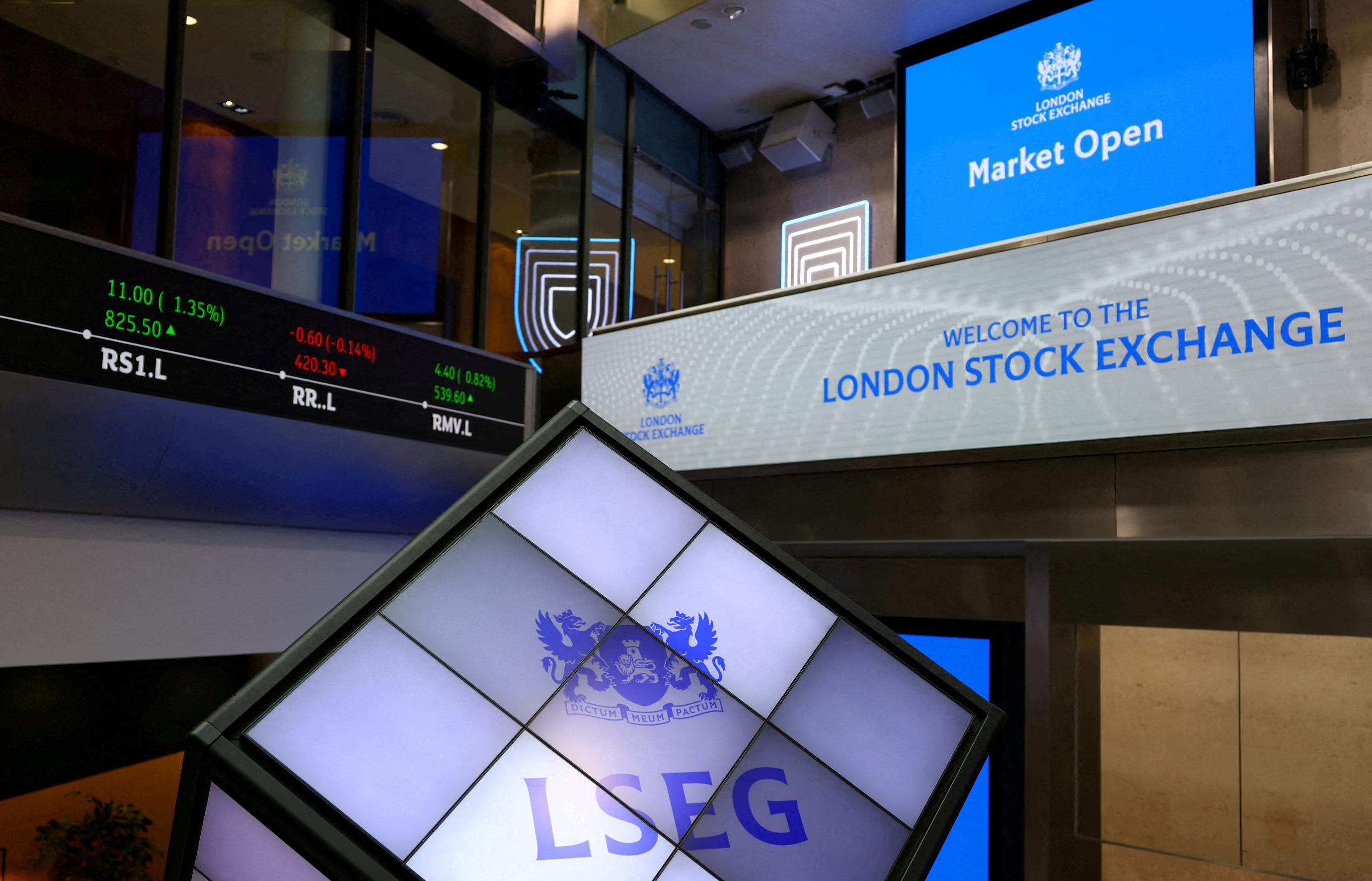
LONDON, July 19 (Reuters) - LSEG Group's (LSEG.L) , opens new tab data and services were back up and running on Friday after suffering an outage earlier in the day that caused some disruption across financial markets. A global tech outage on Friday disrupted operations in multiple industries, with airlines halting flights, some broadcasters going off-air and everything from banking to healthcare hit by system problems. LSEG, which provides financial market data and analytics to banks and other financial institutions, said a technical problem that had impacted its spot and forward rates on currencies had now been resolved and services restored. "We’re currently working through the backlog of data," the company told clients in a memo seen by Reuters. LSEG's Regulatory News Service, which publishes company updates, also resumed, while prices and news for a range of assets were available on its Workspace platform. Both had been disrupted earlier in the day. A spokesperson for LSEG said earlier on Friday that the firm was experiencing a third-party global technical issue that was impacting some services. Securities trading on the London Stock Exchange was not affected, the spokesperson added. Reuters contacted several of the world’s biggest banks to check the status of their trading activities, including JPMorgan, HSBC, Goldman Sachs and Barclays, which between them trade billions of dollars in securities daily. There were no confirmed reports of trading difficulties as a result of the outage, but there were some signs of disruptions at smaller financial institutions, with one London-based trader saying several multilateral trading facilities were being affected, leaving some clients unable to trade. Some banks and financial services firms said employees and customers had problems accessing their systems. Barclays (BARC.L) , opens new tab reported that customers were unable to manage their accounts on its digital investing platform Smart Investor, while Germany's Allianz (ALVG.DE) , opens new tab said the outage affected the ability of employees to log on to their computers. LSEG first announced the issues during Asia trading hours. The company's shares were last trading 0.6% lower. Reuters provides news for LSEG's Workspace platform. A global cyber outage on Friday appeared to be triggered by an update to a product offered by global cybersecurity firm CrowdStrike (CRWD.O) , opens new tab and affecting customers using Microsoft's (MSFT.O) , opens new tab Windows Operating System. Microsoft said later on Friday the issue had been fixed. (This story has been refiled to fix a typo in paragraph 14) Sign up here. https://www.reuters.com/technology/lsegs-workspace-platform-suffers-outage-market-sources-say-2024-07-19/
2024-07-19 06:30
SINGAPORE, July 19 (Reuters) - Two large oil tankers were on fire on Friday in waters near Singapore, the world's biggest refuelling port, with two crew members airlifted to hospital and others rescued from liferafts, authorities said. The Maritime and Port Authority of Singapore (MPA) said it was alerted to a fire on Friday at 6:15 a.m. (2215 GMT) onboard both a Singapore-flagged tanker, Hafnia Nile, and a Sao Tome and Principe-flagged tanker, Ceres I. The vessels were about 55 km (34 miles) northeast of the Singaporean island of Pedra Branca on the eastern approach to the Singapore Straits. A helicopter had evacuated two crew members to Singapore General Hospital, MPA said, without elaborating. In a statement on social media, Singapore Navy said the frigate RSS Supreme had rescued the crews from the vessels and was providing medical assistance. It did not immediately give details. Photographs released by the Navy showed thick black smoke billowing from one tanker and crew being rescued from liferafts and flown to hospital. The cause of the fires was not immediately clear. Malaysia's maritime enforcement agency said in a statement it initiated a search and rescue operation at the location of the oil tankers. Malaysia's department of environment has also been informed to prepare for further action in case of oil spills, it added. The 74,000 deadweight-tons capacity Panamax tanker Hafnia Nile (IMO 9766217) was carrying about 300,000 barrels of naphtha, according to ship-tracking data from Kpler and LSEG. It was not immediately clear what fuel Ceres I (IMO 9229439) was carrying. The tanker is a very-large-crude-carrier (VLCC) of 300,000 deadweight-tons capacity and was last marked as carrying Iranian crude between March to April, ship-tracking data showed. The Ceres I tanker has been involved in transporting Iranian oil and also Venezuelan oil to China in recent years, shipping sources said. Its China-based owner could not immediately be reached for comment on Friday. Singapore is Asia's biggest oil trading hub and the world's largest bunkering port and surrounding waters are vital trade waterways between Asia and Europe and the Middle East. Sign up here. https://www.reuters.com/world/asia-pacific/singapore-sends-rescue-teams-help-crew-oil-tankers-fire-2024-07-19/

2024-07-19 06:07
LONDON, July 19 (Reuters) - First to hike, first to hit its inflation target - and the last to cut? It may be unwise to read too much into volatile and marginal interest rate bets in financial markets, but right now that's how they sketch the Bank of England's (BoE) policy trajectory against its major economy peers. The pound - enthused by an expected but decisive UK election result this month - is lapping up that rate sequence most of all. And that's perhaps one reason the BoE may be tempted to jump the market gun next month, even though there's still only a 50% chance of that baked into the money curve. Sterling topped $1.30 for the first time in a year this week, hit a two-year high against the euro and notched a 16-year high against Japan's ailing yen. The BoE's own trade-weighted sterling index is at its highest since 2016's Brexit referendum - appreciating some 13% from the nadir of 2022's jarring government budget farce. Might the sheer strength of the pound be enough to force its hand? Debate on the extent of so-called "exchange rate pass-through" to inflation has raged for years - with many different opinions on what underlying conditions make it impactful. The clear counter-point is that BoE's main problem right now is less about import prices or dollar-denominated energy than that it is about still-spiky domestic price inflation. But in a split decision, the pound may nudge things along - not least if there's concern that UK financial conditions more broadly don't over-tighten at the wrong moment. UK economic surprises are unusually positive right now, but global equivalents have turned sour at midyear and the exchange rate could well come into play if that presages a wider international slowdown. FIRST IN, LAST OUT Japan's peculiar cycle aside, the BoE was the first of the rest of G7 to start lifting borrowing costs into the post-pandemic inflation spike in late 2021 - hiking twice before the U.S. Federal Reserve started three months later and piling 5 percentage points onto a near zero policy rate in 20 months. Although it remains irked by annual wage gains and services price growth in excess of 5%, the BoE has this year become the first of its peer group to hit its headline 2% inflation target - where it's been held for two months now. And yet the jittery world of money markets still expect it to be the last of the six to execute its first cut - following not only the European Central Bank (ECB) and Canada in the G7, but the Swiss and Swedish central banks to boot. Markets even reckon the ECB, Canada and Sweden will likely have cut a second time before Threadneedle Street will be ready to budge. To be sure, the BoE may only lag the Fed by a day in September if it matches those rate bets. But, even then, there's still a marginal doubt in money markets that it pulls the trigger in two month's time, while futures are comfortable fully pricing a Fed move. Why the caution, and does the UK really need to bookend both sides of the global cycle? KNIFE EDGE For decades, Britain was seen as an inflation outlier - due in part to instability in sterling and its effect on such an open economy, its poor productivity record and political control of interest rates until 1997. BoE independence shifted the dial. But the UK's outsize exposure to the banking crash of 2008 and then the trade and investment disruption from Brexit pummeled the pound - even if that was likely masked in domestic prices by subdued global inflation more generally. That all changed with the post-COVID global inflation surge - and UK annual price rises topped 11% at one point, higher than the peaks in other countries. The government budget missteps of 2022 added fiscal risk perceptions and fears for joined-up thinking between Treasury and the central bank on inflation control - compounding as it did UK vulnerability to the Ukraine-related energy shock. Some of that has been painfully repaired since, with this month's change of government seen by many overseas investors as a clean break. Whether the BoE can breathe easier is now the question. For a start, public inflation expectations fell to their lowest this month since before the pandemic, possibly assuaging some BoE concerns about "persistence" in wage and services inflation. Sterling's rally apart, the dissipation of that latest risk factor can be seen most clearly in UK government bond markets, where the 150 basis point yield premium on five-year gilts over German equivalents is a full percentage point lower than it was at the height of the 2022 budget blowout. Yet on the flipside, if BoE concern shifts to the dangers of staying too tight for too long, then the sight of an inflation-adjusted "real" five-year gap with Germany at its highest in 20 years may be food for thought. With the pound now comfortably feeding off that premium rather than balking at it, the BoE might view it as a window. A month or two may not matter greatly in the wider scheme of things, of course. But despite hesitant money market pricing, there are plenty of economists who still expect the BoE to beat the Fed to the punch - with the likes of Barclays and Deutsche Bank tipping a rate cut next month as the central bank uses new forecasts in its latest Monetary Policy Report to explain. "August's Bank Rate call is on a knife-edge," said AXA Investment Managers' G7 economist Gabriella Dickens, adding she expects a 5-4 policymaker vote to cut. The opinions expressed here are those of the author, a columnist for Reuters. Sign up here. https://www.reuters.com/world/uk/first-hike-last-cut-boe-caution-cossets-pound-mike-dolan-2024-07-19/
2024-07-19 06:06
NEW YORK, July 19 (Reuters) - The dollar climbed on Friday and was set to snap a two-week streak of declines as a worldwide cyber outage that affected banks, airlines and broadcasters unnerved investors, although volatility in the currency markets was largely contained. A software update by global cybersecurity firm CrowdStrike (CRWD.O) , opens new tab crippled industries from travel to finance before services started coming back online after hours of disruption, highlighting the risks of a global shift towards digital, interconnected technologies. The dollar index was on track for its second straight daily advance, its first in two weeks, to put the greenback on pace for its first weekly gain in three, bouncing back on recent U.S. economic data and concerns about the technology outage. "It's perhaps a result of the selling pressure earlier in the week, and at the tail end of last week, seeming rather over-done, particularly when one considers that U.S. economic growth remains firm, and that while the Fed are set to cut in September, easing will still be relatively synchronized across G10 central banks," said Michael Brown, market analyst at Pepperstone in London. "Of course, the earlier tech issues may have sparked a bit of a flight to safety too, causing some knee-jerk dollar buying earlier in the day, with that strength then continuing into the afternoon session." The dollar index , which measures the greenback against a basket of currencies, gained 0.24% at 104.39 and was up 0.3% on the week. The Federal Reserve is scheduled for its next policy announcement at the end of July. Markets expect only a slight chance for a cut of at least 25 basis points (bps), while almost completely pricing in a cut at its September meeting, according to CME's FedWatch Tool , opens new tab. The yen, however, was up for the week against the greenback after suspected official buying last week from Japanese authorities, and another suspected intervention from the Bank of Japan (BOJ) earlier this week. Against the yen , the dollar strengthened 0.07% at 157.48 on the session, oscillating between gains and losses on the session after data showed inflation in Japan picked up for a second month. The greenback was off 0.24% on the week against the Japanese currency. The yen has fallen more than 10% against the dollar this year, largely due to the wide difference in interest rates between the U.S. and Japan, and hit 38-year lows at the beginning of the month, spurring action from Tokyo. The euro was down 0.16% at $1.0878 and set to snap a two-week win streak, a day after the European Central Bank kept rates steady, as was widely expected and gave no insight into its next move. Sterling weakened 0.25% at $1.2909, retreating further from a one-year high hit earlier this week, after data showed UK retail sales fell more than expected in June, as cooler weather deterred shoppers. For the week, the pound is off 0.6% and set to snap a three-week streak of gains. In cryptocurrencies, bitcoin gained 4.86% at $66,924.00. Ethereum rose 2.79% at $3,508.90. Sign up here. https://www.reuters.com/markets/dollar-set-eke-out-weekly-gain-traders-weigh-us-rates-yen-wobbles-2024-07-19/
2024-07-19 06:04
Europe has painful memories of Chinese solar panels German government said it was monitoring Mingyang deal RWE visited Mingyang production in China China exploring production in Europe BERLIN/FRANKFURT/LONDON, July 19 (Reuters) - Chinese wind turbine-makers this month clinched their first order in Germany, as they build momentum in the European market and add to concern in the EU industry that it faces an existential threat. Tensions are high between Beijing and Brussels, the world's two biggest wind markets, as the European Commission, the EU executive, has launched an investigation into whether Chinese players enjoy unfair subsidies. Europe is scarred by the experience of its solar industry more than a decade ago when policymakers took limited action to curb Chinese imports and many European manufacturers collapsed. Chinese manufacturers Goldwind (002202.SZ) , opens new tab, Mingyang Smart Energy (601615.SS) , opens new tab and Windey (300772.SZ) , opens new tab so far account for less than 1% of Europe's wind capacity, but their orders amounted to 1.2 gigawatts (GW) in 2023 alone, WindEurope data shows. It previously took them a decade to install that volume. So far this year, European orders for Chinese-made turbines have reached 546 megawatts (MW). That includes an order at the start of this month from project firm Luxcara in Germany with Mingyang for wind turbines with a total capacity of 296 MW. It was the first order for Chinese-made turbines from Europe's biggest economy and the German government said it would examine the decision closely. European industry officials say China could be in Europe to stay. "Once you open the door you can't close it again," said Wolfram Axthelm, managing director of Germany's wind power association BWE, adding that overcapacity meant Chinese rivals were seeking to flood the European market. None of the companies would comment on claims by European industry representatives that Chinese manufacturers offer incentives, such as deferred payments, and prices that are up to 50% lower those of than European rivals. According to the Global Wind Energy Council, China has production capacity of around 82 GW, more than the domestic market was able to absorb last year and nearly four times Europe's capacity. The Chinese Wind Energy Association said Europe needed to buy equipment from China, and that failing to do so would put EU expansion targets at risk "in the face of Europe's wind power production capacity gap". VISIT TO CHINA Major wind project developers such as EnBW (EBKG.DE) , opens new tab and BayWa (BYWGnx.DE) , opens new tab have so far avoided the use of Chinese turbines. In a LinkedIn post in early July, RWE's (RWEG.DE) , opens new tab head of offshore wind Sven Utermoehlen said he had visited Mingyang's production facilities to get a better understanding of its products. The visit took place at the end of June. RWE, the world's second-biggest offshore wind farm developer, told Reuters it wanted to keep working with established firms. However, strong market growth meant it needed to understand whether Asian suppliers "can meet our requirements in terms of technology, quality, safety and cost-effectiveness". Mingyang was the only company that would guarantee delivery of an 18.5 MW model by 2028, Luxcara said. An 18 MW offshore turbine can produce enough power to supply more than 30,000 households. The ambition of the Chinese companies is apparent in the size of their output. Mingyang makes offshore turbines with rotor diameters of 260 metres, among the biggest in the industry. WILL CHINA START PRODUCING IN EUROPE? Despite the challenge of shipping gigantic equipment, Mingyang and most other Chinese turbine makers have no production facilities in Europe. Vensys, a division of Goldwind is an exception. It plans to produce an 86-metre wind turbine blade model at its factory in Ferreira, Spain, it told Reuters in June, without providing further details. Zhenshi Holding Group in March acquired an Airbus (AIR.PA) , opens new tab factory in Spain to manufacture wind turbine blades, according to real estate firm Colliers, which advised on the transaction. Evgenia Golysheva, VP Strategy and Operations at ONYX Insight, a renewable technology firm that helps to service wind turbines, said the companies would need local production. Without it, they would struggle to maintain equipment without shipping parts huge distances. Chinese wind turbine maker Sany (600031.SS) , opens new tab said last year it was weighing the construction of a turbine plant in Europe. It has hired former executives from Siemens Gamesa and Nordex (NDXG.DE) , opens new tab to strengthen its local team, updated LinkedIn profiles showed. Sany was not available for comment for this story and Goldwind and Zhenshi declined to comment. Mingyang said Chinese competition was beneficial to Europe, although it understood not everyone would welcome it. "Some competitors ... don't want us to be in Europe. It can be understandable," Zhang Qiying, chief technology officer of Mingyang, told Reuters. "If the West demands our turbines, then we will be there." ($1 = 0.9173 euros) Sign up here. https://www.reuters.com/sustainability/climate-energy/chinese-wind-turbine-makers-move-into-europe-trade-tensions-flare-2024-07-19/
2024-07-19 05:42
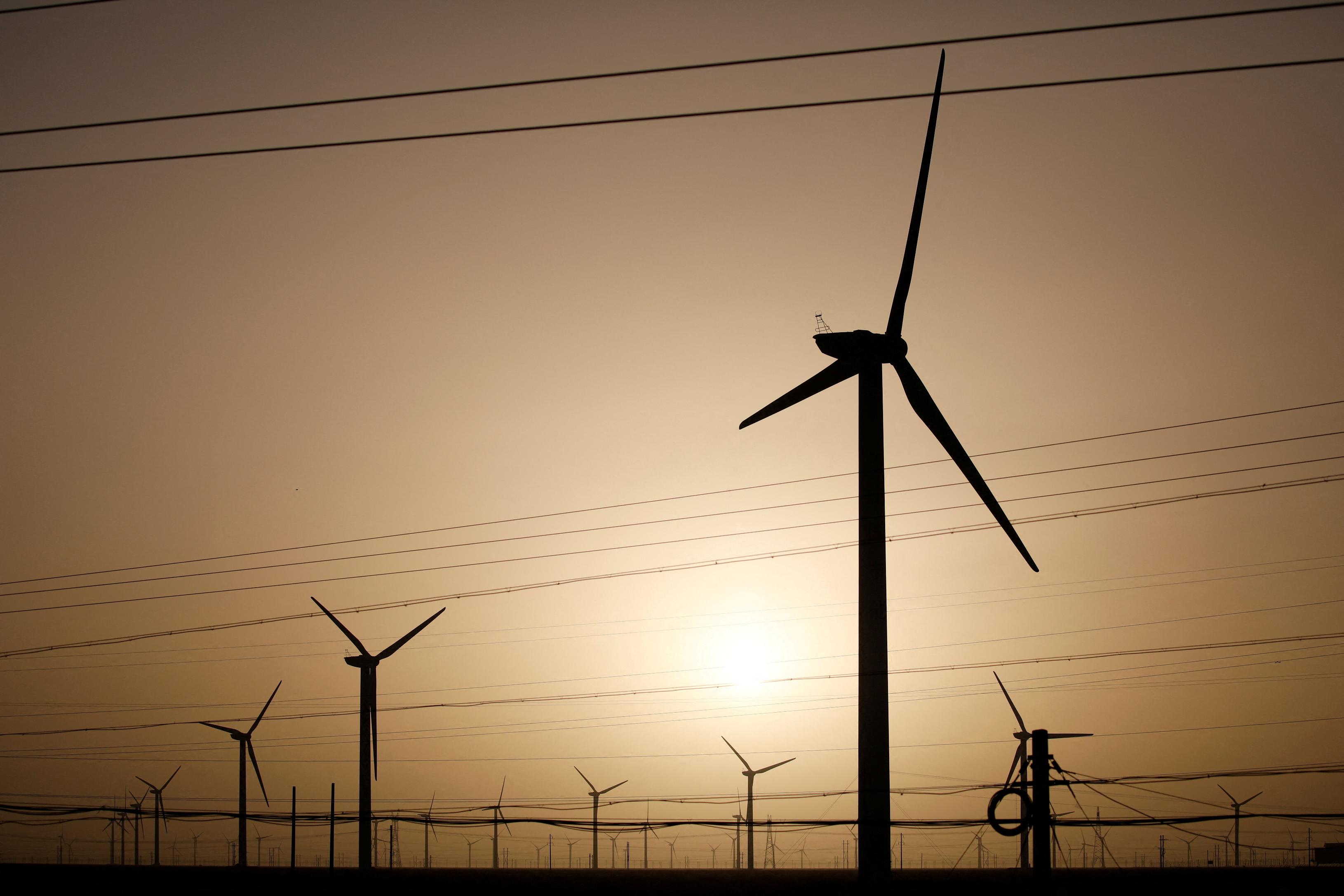
PARIS, July 19 (Reuters) - Global electricity demand is set to grow at its fastest pace in nearly 20 years this year, spurred by increasing demand for air conditioning as temperatures rise, the International Energy Agency (IEA) said in a report on Friday. The trend, expected to continue into 2025, will support ongoing use of coal power, even as renewable energy production increases, it predicted. The increase in air conditioning use is expected to continue as the primary driver of demand growth, following a year of record global temperatures and severe heatwaves pushing grids to maintain a reliable but dirtier baseload supply from sources like coal. "Growth in global electricity demand this year and next is set to be among the fastest in the past two decades, highlighting the growing role of electricity in our economies as well as the impacts of severe heatwaves," said Keisuke Sadamori, IEA Director of Energy Markets and Security. Rising electricity demand from artificial intelligence (AI) is also drawing attention to demand patterns from data centers, raising questions about deployment, demand projections, and energy efficiency, among others, the IEA said. Global power consumption is expected to grow by around 4% in 2024, which would be the largest growth rate since 2007, with the trend expected to continue at the same pace in 2025, compared to a 2.5% demand increase in 2023, IEA data showed. India is expected to lead in demand growth over the coming year, up some 8% in 2024 while China is expected to register a 6% growth rate on the year, down 1% from 2023 as the Chinese economy continues to restructure, IEA data showed. The European Union is expected to rebound from two years of contraction by growing 1.7%, but uncertainty remains around how the pace will continue, while the United States should also bounce back by 3% after declining in 2023 on mild weather. Renewable energy production is also supposed to rise over the coming years, with the source's total share of global supply seen at 35% in 2025, up 5% from 2023, which is expected to push solar and wind past hydropower's share in the global mix. Total renewable generation is forecast to also overtake coal-fired electricity output in 2025, but the more polluting resource is expected to remain resilient in 2024, adding less than 1% depending on hydropower output, especially in China. As a result, carbon emissions from the global power sector are plateauing, with slight growth expected this year before falling back in 2025, the IEA said. Sign up here. https://www.reuters.com/business/energy/rising-cooling-demand-keep-coal-plants-online-this-year-iea-says-2024-07-19/