2024-07-18 19:10
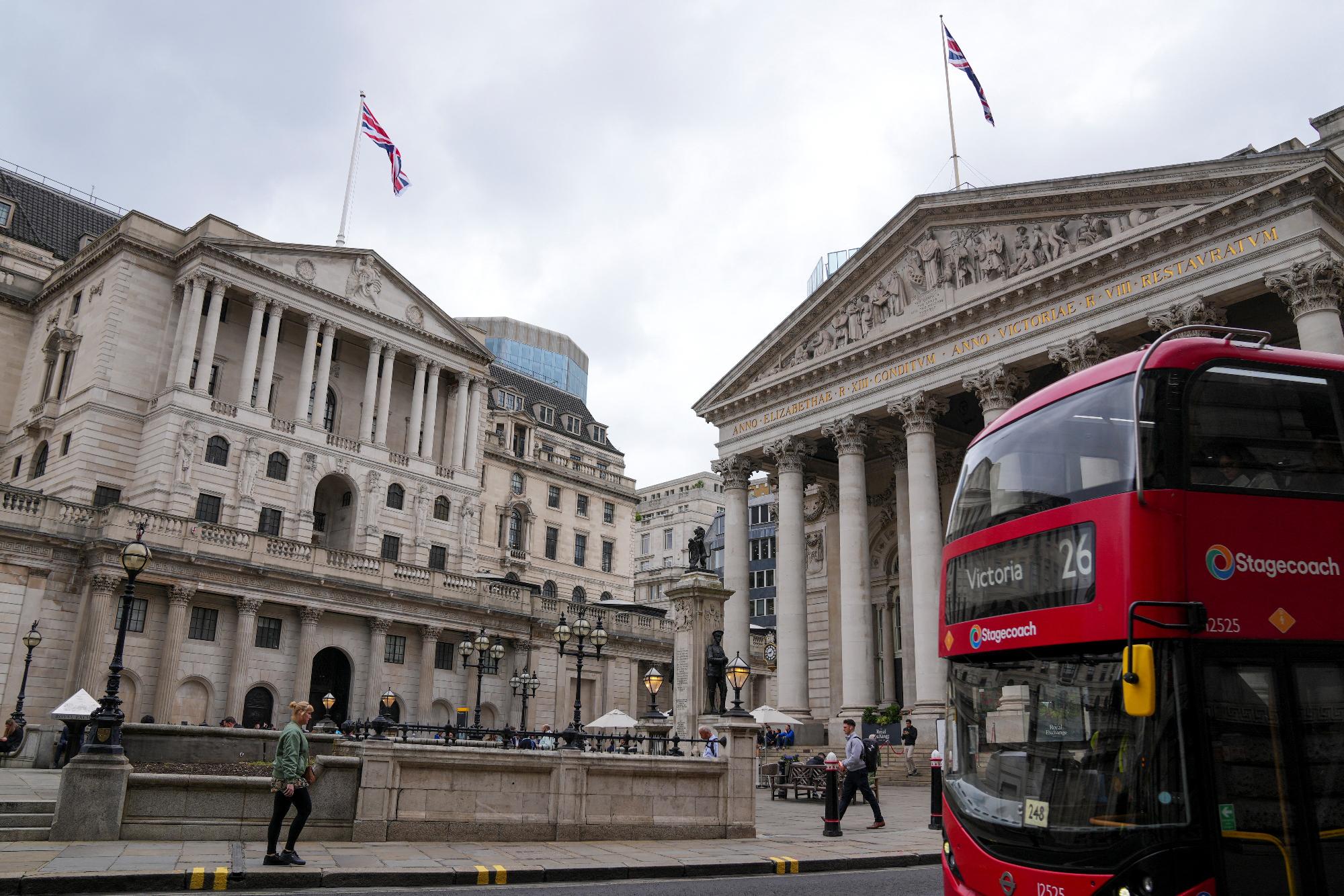
LONDON, July 18 (Reuters) - The Bank of England said on Thursday it had suffered a temporary outage to its CHAPS interbank payment system, which handles more than 360 billion pounds ($467 billion) on an average day, but expected all transactions to be settled by the end of the day. The failure in the high-value payment system related to a problem at Swift, the Belgium-based organisation which banks use to send secure messages internationally. "We are pleased to confirm that the third party supplier has restored service following their earlier issues, and CHAPS payments are settling as normal," the BoE said. Retail payment systems, including debit cards and cash machines, had been unaffected, it added. Most Britons only come across CHAPS if they make a high-value payment like a house purchase and a prolonged outage can potentially leave home-movers stranded. But CHAPS accounts for more than 90% of total sterling payments by value as banks use it to settle sterling money market and foreign exchange transactions, and large businesses use it for time-sensitive payments to suppliers and tax authorities. The CHAPS system has suffered technical problems before, including in August last year and in 2014 when the BoE's Real-Time Gross Settlement system, which underpins CHAPS, did not work normally for several hours. Swift said Thursday's problem had been caused by an operational incident which delayed the processing of services it provided to customers, including those who operated financial market infrastructure like CHAPS. "This incident was not cyber-related, and our technical teams have successfully restored impacted services," Swift said in a statement. The BoE has previously warned the banks which it regulates not to be overly reliant on third-party infrastructure. ($1 = 0.7709 pounds) Sign up here. https://www.reuters.com/business/finance/bank-england-reports-problems-with-chaps-payments-system-2024-07-18/
2024-07-18 18:50
Canadian dollar loses 0.2% against the greenback Touches its weakest since July 2 at 1.3715 Price of copper falls 3% 10-year yield rebounds from earlier 3-week low TORONTO, July 18 (Reuters) - The Canadian dollar weakened to a more-than two-week low against its U.S. counterpart on Thursday as the greenback notched broad-based gains and ahead of domestic retail sales data that could guide expectations for Bank of Canada interest rate cuts. The loonie was trading 0.2% lower at 1.3715 to the U.S. dollar, or 72.91 U.S. cents, its weakest level since July 2. Economists expect Canadian retail sales data, due on Friday, to show a decline of 0.6% in May from April. "Tomorrow's retail sales could have an influence on short-term direction but the market is looking ahead to next week's Bank of Canada meeting now," said Amo Sahota, director at Klarity FX in San Francisco. "I think inflation coming down is helping to justify a faster rate cut progression." Data on Tuesday showed Canada's annual rate of inflation slowing to 2.7% in June from 2.9% in May. Investors see an 85% chance the BoC would cut its benchmark rate at a policy decision on July 24, swaps market data shows. Last month, the BoC became the first G7 central bank to ease policy, lowering its benchmark rate by 25 basis points to 4.75%. The U.S. dollar (.DXY) , opens new tab clawed back some recent losses against a basket of major currencies, including the euro, as the European Central Bank held interest rates steady as was widely expected. U.S. crude oil futures were little changed at $82.88 a barrel but copper was down 3%, hitting a three-month low. Canada is a major producer of commodities, including copper and oil. Canadian bond yields edged higher across the curve as U.S. Treasury yields climbed. The 10-year yield was up nearly 1 basis point at 3.356%, after earlier touching its lowest level since June 25 at 3.317%. Sign up here. https://www.reuters.com/markets/currencies/canadian-dollar-hits-2-week-low-potential-rate-cut-looms-2024-07-18/
2024-07-18 16:19
ECB holds rate steady after June rate cut Euro sticks near four-month highs vs dollar Investors say French fiscal showdown remains a risk LONDON, July 18 (Reuters) - Traders on Thursday kept the euro on course for a strong comeback as prospects for the European Central Bank turning cautious after an expected second rate cut in September swept anxiety about French politics out of the currency's path. With global markets lined up for quick-fire U.S. rate cuts, the ECB signalled heightened concerns about volatile inflation, helping to sustain an upward shift for the euro that is near four-month highs after being shaken by French government turmoil in June. The ECB left its deposit rate unchanged at 3.75% after lowering it from 4% in June for the first time in five years and president Christine Lagarde stressed it was not committed to a particular rate path. By contrast, Federal Reserve chief Jerome Powell on Monday said he felt more confident U.S. inflation truly had moderated. That has helped, at least temporarily, to bolster the euro, boosting the currency more than 2% against the dollar so far this month after a roughly 1% drop in June. The euro was trading at around $1.093 on Thursday, down a touch on the day but still heading for its biggest monthly jump since November. "Extreme scenarios around French political risk are abating and markets are convinced the Fed will be cutting rates soon and we've started to see softness for the dollar against most currencies," said Lombard Odier macro strategist Bill Papadakis. But the euro has slipped against the Swiss franc and sterling this month. And investors warned that the euro was not a straight bet should Donald Trump win U.S. presidential elections in November. Trump has proposed import tariffs that could hurt the euro zone economy, revive U.S. inflation and send U.S. rates and the dollar higher. "We expect the euro zone-to U.S. interest rate differential to shrink which should lead to some dollar depreciation," said Amelie Derambure, a multi-asset portfolio manager at Amundi. "But markets see a Trump victory as a dollar-bullish event and so until the election the depreciation will be limited." CURRENCY COMEBACK ASSURED? Money markets are pricing in more than two rate cuts from the Fed by year-end and just under two for the ECB. The dollar has stood tall over most of its rivals for most of the past year, but is seeing its crown slip as interest rate support fades. The index that measures the dollar against major peers is 2% lower in July so far. The euro, meanwhile, has recovered from a fall in June, when it hit two-month lows against the dollar, as French President Emmanuel Macron's snap parliamentary election created political instability at the heart of the euro zone and pulled France's deep budget deficit into focus. Prospects of euro zone members wrangling over a French fiscal emergency in June revived memories of past euro sovereign debt crises pulling the common currency project close to the brink of collapse. That fear is fading, with the extra income yield traders demand to hold French 10-year bonds over their German equivalents now about 65 bps, after surging briefly in June to a 14-year high of 85 bps. "Our view is that (the ECB) will cut in September and again in the fourth quarter, but they are in a slow rate cutting cycle," said David Zahn, head of European fixed income at Franklin Templeton. SLOWDOWN RISKS Lagarde on Thursday hinted she was concerned about euro zone growth in the context of potential global trade wars. Trump's pledge to hike import tariffs was a serious risk for the currency bloc's export-focused economy, Edmond de Rothschild Asset Management CIO Benjamin Melman said. "China is at the forefront because this has more political impact but Europe can also be an easy target," he said. Melman, who expects the ECB deposit rate to be no higher than 2.5% by end-2025, is positive on short-term government bonds, which benefit from rate cut expectations. Konstantin Veit, a portfolio manager at bond fund PIMCO, said he did not see big moves in the euro against the dollar from here. "They (ECB policymakers) are not in a mad rush." Sign up here. https://www.reuters.com/markets/currencies/wait-and-see-ecb-boosts-euro-comeback-king-dollars-crown-slips-2024-07-18/
2024-07-18 13:39
July 17 (Reuters) - Johnson & Johnson(JNJ.N) , opens new tab beat estimates for second-quarter profit and revenue on Wednesday, driven by strong sales of its drugs, including cancer treatment Darzalex and blockbuster psoriasis drug Stelara. Stelara has long been a key driver of revenue growth for J&J, with analysts forecasting sales of over $10 billion this year. But this could fall to about $7 billion in 2025 when as many as six close copies of the drug are due to launch in the U.S. Shares of the drug and medical device maker were up nearly 3% at $155.4 in morning trading. J&J Chief Financial Officer Joe Wolk said he expected to finalize contracts within the next three months that would determine U.S. insurance coverage for Stelara in 2025. "I'll remind you that we are still calling for growth in our pharmaceutical business despite the biosimilar competition that we intend to encounter next year," he said. In the second-quarter, Stelara sales rose 3.1% to $2.89 billion, topping analysts' estimate of $2.77 billion according to LSEG data. Sales of blood cancer drug Darzalex rose 18.4% to $2.88 billion, edging past LSEG estimates of $2.86 billion. Wolk said on a post-earnings conference call that sales growth for the company's pharmaceuticals business will be lower in the second half of this year as Stelara biosimilars enter the Europe market later this month. Total revenue of $22.4 billion surpassed the consensus estimate of $22.3 billion, according to LSEG data. Adjusted earnings of $2.82 per share beat analysts' expectations of $2.70 per share. The New Jersey-based drugmaker said it now expected total 2024 sales of $89.2 billion to $89.6 billion, compared with its prior forecast of $88.7 billion to $89.1 billion. J&J also lowered its annual per-share forecast to a range of $10 to $10.10 from $10.60 to $10.75, which includes a 68-cent hit from costs related to deals including its $13 billion purchase of cardiac medical device company Shockwave. That was among J&J's several deals this year, including its May purchase of experimental skin disorder drugs in two acquisitions worth $2.1 billion. TALC OVERHANG, SOFTNESS IN MEDICAL DEVICES UNIT J&J shares also lifted stocks of other device manufacturers, with Abbott (ABT.N) , opens new tab, Stryker (SYK.N) , opens new tab and Medtronic (MDT.N) , opens new tab rising about 3% each on Wednesday. Sales for its medical technology business rose 2.2% to $7.96 billion from $7.79 billion a year earlier, but fell short of analysts' estimate of $8.17 billion as sales of its surgical devices declined from last year. "We'd like to see MedTech grow a bit faster than that," said James Harlow, senior vice president at Novare Capital Management, which owns about 138,000 shares of J&J. J&J said sales of devices used in surgeries was hurt by competition and supply constraints, as well as lower demand for bariatric procedures. Finance chief Wolk said on the conference call that sales from its vision business and in China were lower than expected. "China ... right now is a very volatile market," he said, adding that negotiations with China over bulk buying of medical devices could be a "short-term pain" for J&J. J&J investors have also been waiting for a decision on lawsuits that the company has been facing related to its talc products. J&J still faces tens of thousands of lawsuits alleging that its talc-based products caused cancer. Several claimants face a July 26 deadline to vote on J&J’s third attempt of a bankruptcy maneuver for a subsidiary that would limit the drugmaker's liability and set up a fund to pay victims. J&J's Wolk said the company in recent weeks had got endorsements for the settlement from three major law firms representing claimants. "It's going to be hard for the stock to get going until we get some kind of resolution on talc and a little bit more certainty on the contours of that (sales) erosion on Stelara," said Harlow. (This July 17 story has been corrected to clarify that the CFO did not suggest that pending Stelara insurance contracts would be 'favorable,' in paragraph 4) Sign up here. https://www.reuters.com/business/healthcare-pharmaceuticals/jj-beats-wall-street-estimates-strong-drug-sales-2024-07-17/

2024-07-18 13:05
LONDON, July 18 (Reuters) - The move to ease monetary policy among major central banks is proving much slower than the race to jack up interest rates from late 2021 to curtail surging inflation. The European Central Bank left rates steady on Thursday, after delivering a first cut in June. The U.S. Federal Reserve -- which has so far resisted the urge to ease -- could move in September. Here's where leading central banks stand and what they are expected to do next: 1/ SWITZERLAND The Swiss National Bank (SNB), which in March implemented the first rate cut among Western economies of this cycle, lowered borrowing costs again to 1.25% in June and is tilting towards another in September. Swiss inflation has moderated to 1.3% year-on-year, firmly within the SNB's target range. 2/ SWEDEN Sweden's Riksbank kicked off its easing cycle in May and minutes of its last policy meeting signaled two or three more rate cuts were likely this year. The annual rate of Swedish inflation was last recorded at 1.3%, comfortably below benchmark borrowing costs of 3.75%. 3/ CANADA Traders widely expect a swift second rate cut from the Bank of Canada on July 24 after it lowered borrowing costs by 25 bps to 4.75% in June and businesses reported weak demand. Canadian inflation has cooled to 2.7% year-on-year, although economists have warned that further currency weakness in a nation reliant on U.S. imports could drive price growth higher. 4/ EURO ZONE The ECB kept rates unchanged as expected on Thursday and gave no hints about its next move, arguing that domestic price pressures remain high and inflation will be above its target well into next year. Money markets now price in a roughly 64% chance of a September rate cut, versus around a 75% chance earlier in the day. 5/ BRITAIN Data on Wednesday showing stubbornly high services inflation pressure prompted traders to dial back bets for Bank of England rate cut on August 1. Markets now price a roughly 44% chance of a 25 bps reduction, having seen a 50-50 chance last week. The BoE held rates at a 16-year high of 5.25% in June. Last week, rate-setters Huw Pill and Catherine Mann expressed concerns about rising wages and service sector prices. 6/ UNITED STATES A step down in U.S. inflation has convinced traders the Fed will cut rates by 25 bps in September after holding them in the 5.25% to 5.5% range for almost a year, and as prices, jobs and wages appeared to move back into balance. Futures markets fully price in a September cut and 63% odds of another days after the November presidential election, with conviction fading beyond that as chances of Donald Trump retaking the White House blur the economic outlook. 7/ NEW ZEALAND The Reserve Bank of New Zealand held its cash rate steady at 5.5% at last week's meeting but opened the door to possible easing if inflation slows. Data on Wednesday showed annual inflation slowed to a three-year low in the second quarter to 3.3% from 4% in the first. Traders price just over a 50% chance of a 25 bps cut in August and fully price in a move by October. 8/ NORWAY Norway's annual core inflation, which strips out energy prices and taxes, eased to 3.6% in June - falling faster-than-anticipated. That's good news for Norges Bank, which last month kept rates at a 16-year high of 4.50% and pushed back its prediction for a rate cut to 2025 from September. Still, after last week's inflation numbers, markets reckon there's a roughly 45% chance of a move by year-end. 9/ AUSTRALIA The Reserve Bank of Australia is not ready to join the dovish camp just yet. In fact, the RBA pondered whether another rate increase was needed to contain inflation, minutes from its June meeting show. Australia's key rate stands at 4.35%, while inflation is running at 4% - well above its 2-3% target band. No surprise, markets do not price in a strong chance of easing until well into 2025. 10/ JAPAN The Bank of Japan is the outlier, raising rates out of negative territory in March in its first hike in 17 years. It meets on July 30-31 and recent data showing wage hikes are broadening across the economy bolsters the case for another increase soon. Markets price a roughly 43% chance of a 10 bps hike in July, and fully prices in a move by September. A surprise July hike could give the yen another boost after a bout of suspected intervention to bolster the weak currency. Sign up here. https://www.reuters.com/business/finance/big-central-banks-are-starting-cut-rates-slowly-2024-07-18/
2024-07-18 12:56
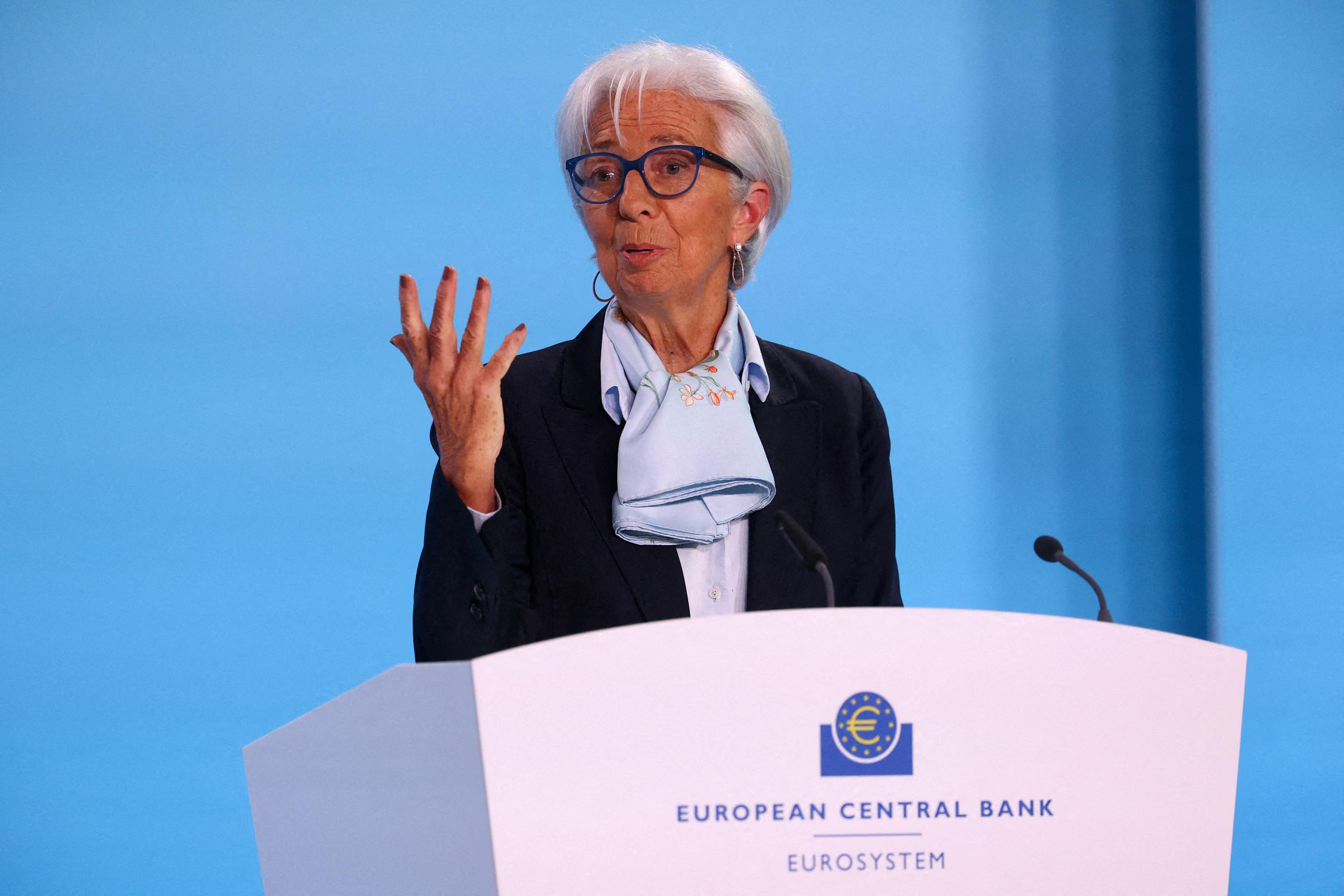
LONDON, July 18 (Reuters) - The European Central Bank kept interest rates unchanged on Thursday, and gave no hints as to what investors might expect at its next meeting, saying September was "wide open" and arguing inflation would stay above its target well into next year. The euro dipped to $1.09208, from $1.0933 before Lagarde started speaking . Government bond yields across the euro area pulled back slightly , , while Europe's broad STOXX 600 share index (.STOXX) , opens new tab extended gains modestly -- last up 0.6% on the day. ECB President Christine Lagarde said the monetary policy decision had been unanimous and reiterated the central bank's determination to be dependent on data, rather than on any single data point. "The question of September and what we do in September is wide open," she said at the press conference. COMMENTS: SEEMA SHAH, CHIEF GLOBAL STRATEGIST, PRINCIPAL ASSET MANAGEMENT, LONDON: "The ECB may have disappointed market observers who were hoping the central bank would lay out a clear policy path. But their refusal to pre-commit is a sound decision. Although inflation has come down significantly, there are some segments of price pressures that continue to look sticky and stubborn. "Moreover, with the economy showing signs of a cyclical upturn, the euro area is not in dire need of aggressive, back-to-back rate cuts. The ECB has afforded itself the luxury of a more gradual, cautious approach to monetary easing." STEFAN GERLACH, CHIEF ECONOMIST, EFG BANK, ZURICH: "After the communications failure at the June meeting – before which Governing Board members signalled that rates would be cut, only to have incoming data suggest that it would be better to leave policy unchanged – the press release avoided commenting on the outlook for interest rates. That was helpful." "The ECB is finding a balance between sticky inflation and concerns about wage increases, which speak against cuts, and a worsening economic outlook which calls for lower rates. Political uncertainty in France is also not helpful." "A weaker economy will slow inflation, setting the stage for lower rates. In central banking, there is safety in numbers. With the Fed likely to cut rates in September, the Governing Council will do so too. I expect another cut in December, or January." SAMUEL ADAMS, EUROPEAN ECONOMIST, UBS GLOBAL WEALTH MANAGEMENT, LONDON: "Today’s lack of action does not mean, however, that the easing cycle has come to a halt. With signs that the economic recovery is already underway, the ECB can afford to accumulate more evidence that disinflation remains on track before lowering policy rates further. "And while the recent inflation data is unlikely to have strengthened the Governing Council’s confidence much further, it remains consistent with a gradual easing of price pressures. This trend should allow the ECB to resume rate cuts in September and at a quarterly pace thereafter, in our view. "Current returns on cash, while attractive, will not be around for much longer. We favour reducing holdings of cash and cash-like investments in favour of those that can offer more durable returns, such as a portfolio of quality bonds." KYLE CHAPMAN, FX MARKETS ANALYST, BALLINGER GROUP, LONDON: "The pause itself surprised no-one, of course, with markets having priced it at a near certainty. Data in the inter-meeting period had not supported the case for further cuts at this stage, with the renewed momentum in services inflation a good justification for caution. "This statement represents a dramatic shift from the heavy signalling prior to June, and the central theme now is non-commitment." "The picture will be much clearer by September, where a new set of projections should arm policymakers with enough confidence in the outlook to cut again." MARK WALL, CHIEF EUROPEAN ECONOMIST, DEUTSCHE BANK RESEARCH, LONDON: "The ECB remains on course for a second rate cut in September. Despite some recent inflation data being less friendly, the ECB has excused some as one-offs and others as absorbed in profit margins. The ECB is taking comfort from the trends and looking through the noise, consistent with being ‘data dependent, not data-point dependent’." YAEL SELFIN, CHIEF ECONOMIST, KPMG, LONDON: "Today’s statement was largely unchanged from last month, with the ECB striking a cautious tone and opting to limit any forward guidance. This will give the Governing Council flexibility in line with their data dependent approach ahead of the September meeting, in contrast to last month, when the ECB largely pre-committed to a cut. "Limited data since the last meeting, alongside elevated short-term domestic inflationary pressures, made a pause today highly likely. Market pricing implied less than a 10% probability of a cut ahead of the meeting today. Nonetheless, the ECB will be wary of keeping rates in restrictive territory for too long, particularly with recent survey data signalling a slowdown in euro zone economic activity." MARCHEL ALEXANDROVICH, ECONOMIST, SALTMARSH ECONOMICS, LONDON: "The ECB is being more cautions than expected. In April, it prepared the markets for a 25-bp cut at the June meeting. "However, there was no such explicit guidance for another move in September in today’s announcement." "Let’s see if Lagarde keeps the door open to a move for a rate cut in September during the press conference. But this is clearly on the hawkish side." JAN VON GERICH, CHIEF MARKET STRATEGIST, NORDEA, HELSINKI: "They (ECB policymakers) have been vague about what will happen going forward. "Their base line is that there will be a cut in September and I think that's what we'll see if the data confirms the baseline they set out in June. "I wouldn't expect any big signals at the press conference as we have a lot of data ahead of September." ARNE PETIMEZAS, SENIOR ANALYST, AFS GROUP, AMSTERDAM "As expected, the ECB simply repeated its assessment for inflation and growth from the June meeting. Furthermore, they still don't pre-commit to further rate cuts. However, as we’ve seen with the U.S. CPI release, the writing is on the wall. Inflation is in retreat, and disinflation will resume in the euro zone too. The Fed will cut in September, and I think the ECB will cut too. While during the presser Lagarde is unlikely to guide for a September cut, I think the undertones will. As such, a cut is likely that month." Sign up here. https://www.reuters.com/markets/rates-bonds/view-ecb-leaves-rates-unchanged-markets-look-ecbs-lagarde-clues-2024-07-18/