2024-07-18 05:27
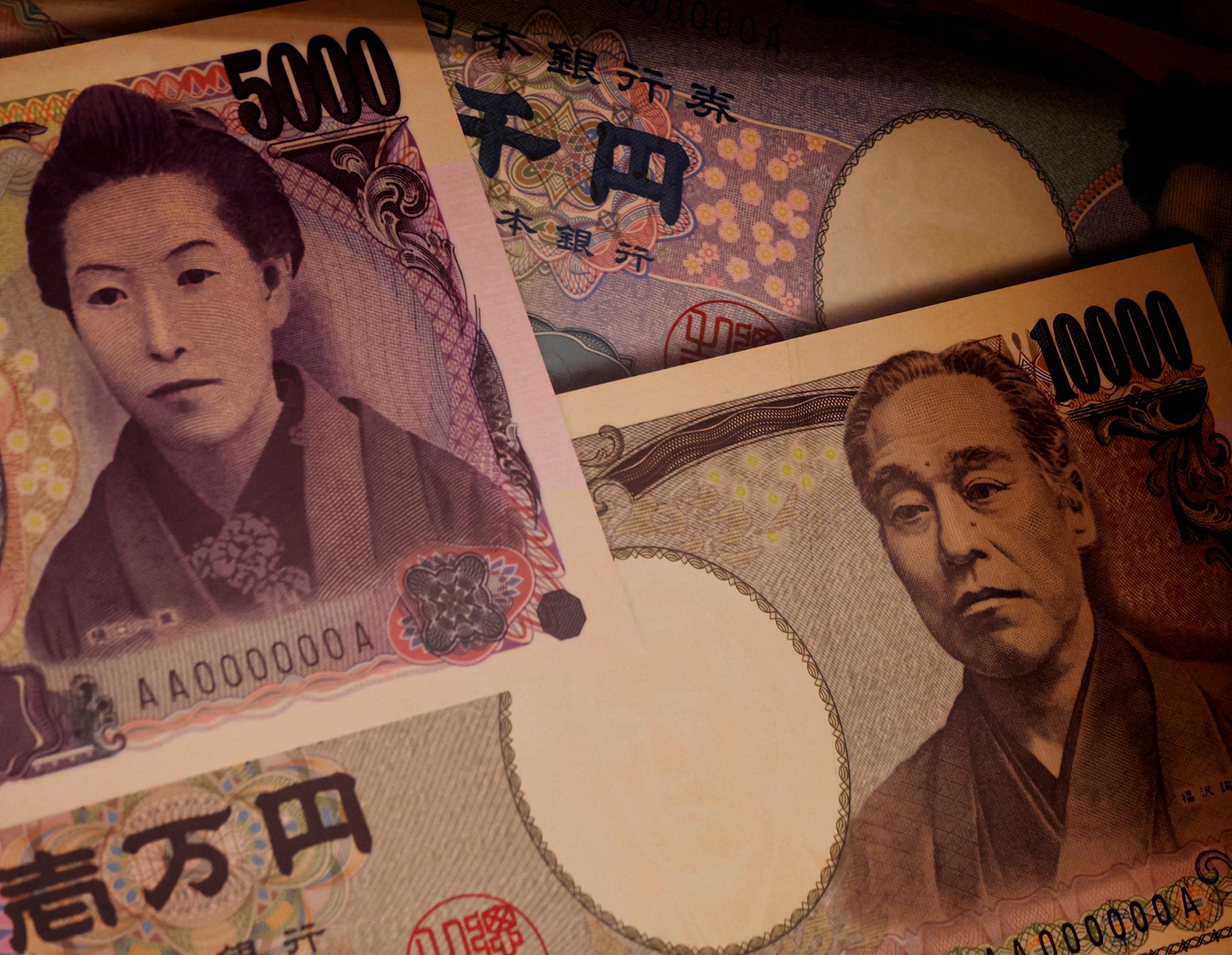
TOKYO, July 18 (Reuters) - Japan is suspected to have intervened in the foreign exchange market to prop up the yen on several occasions this month, underscoring its discomfort over the pain the currency's fall is inflicting on households because of costlier imports. While the authorities have not confirmed whether they stepped in, the following explains Tokyo's intervention tactics and what the move could mean for Japan's monetary policy: WHY DID THEY STEP IN? The yen had languished at 38-year lows past 160 per dollar before the suspected bout of intervention, making policymakers increasingly worried that higher import costs may hurt weak private consumption. The weak yen is already taking a toll on Prime Minister Fumio Kishida's approval ratings ahead of a ruling party leadership race expected in September. Leaving the yen's slide unattended would have risked giving markets the impression Tokyo will turn a blind eye to speculative moves that were out of line with fundamentals. WHAT'S DIFFERENT THIS TIME? Unlike past episodes of intervention that typically came in the midst of sharp declines in the yen, the suspected intervention on July 11 came when the dollar was already sliding in reaction to weak U.S. inflation data. This suggests Tokyo attempted to seize the moment when the market's tide was already moving in favour of the yen. Rising prospects of a near-term U.S. interest rate cut would also allow Japan to argue that further yen falls against the dollar did not reflect fundamentals, and justify intervening. Some analysts say the change in tactics may have been aimed at keeping markets guessing as to when the authorities could step in again. Top currency diplomat Masato Kanda said there was no set time period over which to judge if yen moves were excessive. A media report that Japan conducted rate checks against the euro/yen also spooked markets, as it is rare for Tokyo to conduct intervention against the single European currency. WHERE IS THE LINE-IN-THE-SAND? Authorities say they have no specific levels in mind. But traders estimate 160 yen per dollar as Japan's line-in-the-sand that heightens the chance of intervention. For example, Tokyo spent 9.8 trillion yen ($62.7 billion) intervening in the foreign exchange market at the end of April and early May, after the Japanese currency hit a 34-year low of 160.245 per dollar on April 29. The yen has since fallen to a 38-year low of 161.96 per dollar on July 3, before last week's suspected bout of intervention pushed it back below the 160 line. WHAT ELSE COULD TRIGGER MORE INTERVENTION? Rising import costs from a weak yen threaten to derail the administration's efforts to turn inflation-adjusted wage growth positive, and give households more purchasing power. If public anger over the inflationary impact from a weak yen heightens, that could raise political pressure on authorities to step in again to arrest the currency's declines. WILL TACTICS CHANGE UNDER NEW LEADERSHIP? Incumbent top currency diplomat Masato Kanda, who led massive bouts of yen-buying intervention in 2022 and 2024, has been known to aggressively warn markets against pushing down the yen. Kanda will see his term end in July and will be succeeded by Atsushi Mimura, a financial regulation veteran whose views on currency policy are little known. Japan's exchange-rate policy is likely to remain broadly unchanged under a new currency chief. The communication style may differ, though, as some diplomats tend to offer more explicit warnings to markets than others. HOW COULD LATEST INTERVENTION AFFECT BOJ POLICY? Markets are divided on how Tokyo's latest foray into the market could affect the Bank of Japan's decision on whether to raise interest rates at its policy meeting on July 30-31. The BOJ could feel pressured to cooperate with the government's efforts to slow the yen's declines by deploying a double hawkish surprise of quantitative tightening and a rate hike. But doing so could give markets the impression that yen moves are key drivers of its rate decision. That is something the BOJ wants to avoid, as it would go against central bank protocol not to use monetary policy as a tool to directly control currency moves. If the latest bout of intervention succeeds in reversing the market's weak-yen tide, that may give the BOJ more flexibility in timing the next rate hike, analysts say. In Japan, the finance ministry decides whether to intervene in the currency market with the central bank acting as its agent. ($1 = 156.3200 yen) Sign up here. https://www.reuters.com/markets/asia/what-are-japans-tactics-based-latest-suspected-intervention-2024-07-18/
2024-07-18 05:21
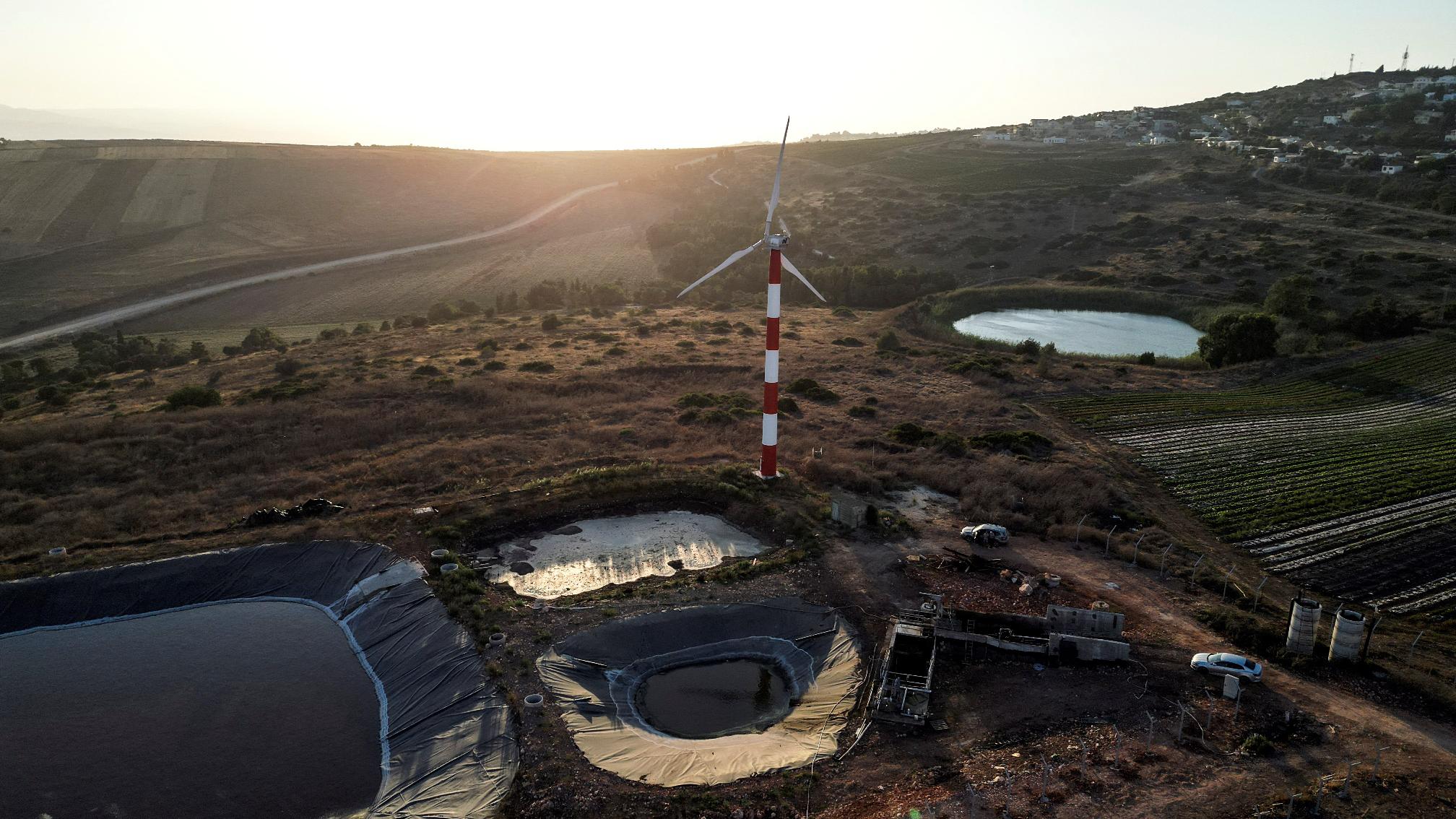
Israel's energy grid a likely target in any regional war Micro-grids can act as a backup during blackouts Private companies stand to benefit from new plan The war is a catalyst for quick adaptation, expert says MAALE GILBOA, Israel, July 18 (Reuters) - Maale Gilboa, a remote kibbutz on a rocky hilltop in northern Israel, was an unlikely spot to build a farming community let alone the future of Israel's energy supply. But its experience in adopting renewable energy and building energy storage solutions has put it at the forefront of Israel's ambition to create a more resilient and decentralized electricity grid that might better cope in times of war. "We chose the toughest place to build, where others said 'no way'," said Dovi Miller, who helped establish the kibbutz in the 1960s and now heads its energy operations. His job is to make the kibbutz Israel's first "island of energy", a micro-grid which can isolate itself from the national power network if necessary and operate independently. "We are building a system that allows our batteries to receive the electricity produced so it will continue to work if the grid fails. We will disconnect and become an energy island," Miller said. Its array of renewable energy, including wind turbines, solar and a huge dome storing biogas, made Maale Gilboa a natural choice for the pilot program. Israel's energy transition plan has been in the works for years but took on greater urgency when war broke out on several fronts following deadly Hamas attacks in southern Israel on Oct. 7. Power lines were damaged that day causing blackouts. Israel was forced to temporarily shut its main energy source, the offshore Tamar natural gas field. There are thousands of micro-grid projects already up and running around the world from Asia Pacific, North America, the Middle East and Africa in schools, hospitals, jails and whole communities but they often depend on public funding. The World Bank in 2022 said solar micro-grids could help half a billion people access power by 2030 but added that more action needs to be taken to identify opportunities, drive down costs and overcome barriers to finance. NEED TO DECENTRALIZE Israel's micro-grid pilot, which will be complete sometime in the next year or two, will run in parallel to the large stockpiles of diesel, coal and generators that it has been collecting. The Energy Ministry's plan is meant as a backup, not a replacement, to the major plants that power the country using natural gas from offshore fields. "In the event of thousands of rockets falling, it's clear there will be problems of blackouts," said Ron Eifer, head of the ministry's Sustainable Energy Division. Most of the national grid is above ground and will be a likely target should fighting with Iran-backed Hezbollah in Lebanon escalate into a broader conflict. Eifer said Israel needs to decentralize electricity distribution to reduce the risks. The goal is to create expanding circles, each with its own energy source and storage ability, starting from individual households and community emergency zones and extending to entire villages or city neighborhoods. It will start with the rebuilding of communities along the borders of Gaza and Lebanon that have been damaged or destroyed. The ministry aims to have five gigawatts of renewable energy in the reconstructed area around Gaza by 2030, helping it reach a goal of generating 30% of power from renewables by that time. By the end of 2023 about 13% of the country's energy needs came from renewables. Most of the micro-grids will use solar energy from rooftop or land-based fields that can be stored in batteries for use at night. Extra energy generated can be sold to the national grid. If a solar field is hit, it may lose some panels but can continue to generate, Eifer said. The government is waiving the need for permits and subsidizing installations, Eifer said. A market is already growing around the push for standalone storage facilities and solar fields. Israel will this month begin allowing companies other than state-owned Israel Electric Corp (IEC) to supply electricity to households. Telecom groups like Bezeq (BEZQ.TA) , opens new tab and Cellcom (CEL.TA) , opens new tab intend to compete with IEC, and standalone installations will be a natural source for them to use, industry officials say. The energy ministry expects about 12 billion shekels ($3.3 billion) to flow into the private sector with the reform. Energy conglomerate Delek Group (DLEKG.TA) , opens new tab announced on Tuesday it was joining a venture to build 500 megawatts of dual-purpose solar energy fields on farmland, similar to those used by kibbutz Maale Gilboa. This shift to micro-grids likely would have occurred at some point, but only farther down the line, said Amit Mor, CEO of Eco Energy Financial & Strategic Consulting and a senior lecturer at Reichman University. "The war is a catalyst. There is a necessity for self-sustained energy because of strategic energy security, war and environmental risks," Mor said. "In this respect Israel can serve as a model, as a microcosm for quick adaption of this technology for other countries facing similar challenges." ($1 = 3.6220 shekels) Sign up here. https://www.reuters.com/world/middle-east/how-energy-islands-could-help-israel-build-resilience-wartime-2024-07-18/
2024-07-18 05:14
SINGAPORE, July 18 (Reuters) - Singapore's full-year economic growth will come in closer to its potential rate of 2% to 3% and core inflation is expected to ease more significantly in the final quarter of the year, the head of its central bank said on Thursday. Monetary Authority of Singapore (MAS) managing director Chia Der Jiun, speaking at the release of the central bank's annual report, said growth across major sectors of the city-state's economy was expected to gradually return to pre-pandemic rates. The GDP growth forecast is in the upper half of the Trade Ministry's forecast range of 1% to 3% for the year, and compared with growth of 1.1% in 2023. Chia told the media briefing that the MAS made a net profit of S$3.8 billion ($2.8 billion) in the 2023/24 financial year. Assets under management in Singapore's asset management industry grew 10% in 2023 to S$5.41 trillion, Chia said, noting that private markets had grown significantly. "The wealth management industry has also grown in line with the asset management industry," he said, adding that recent money laundering case had not changed the growth trajectory. "Singapore continues to welcome legitimate wealth and will ensure that our processes and regime are supportive, whilst upholding high regulatory standards," he said. Chia also announced the MAS will commit an additional S$100 million to support financial institutions in building capabilities in quantum and artificial intelligence technologies. ($1 = 1.3407 Singapore dollars) Sign up here. https://www.reuters.com/markets/asia/singapore-cbank-expects-2024-growth-closer-potential-rate-2-3-2024-07-18/
2024-07-18 04:53
LAUNCESTON, Australia, July 18 (Reuters) - The opinions expressed here are those of the author, a columnist for Reuters. China's imports of major commodities are often viewed through the prism of the performance of, and outlook for, the world's second-biggest economy. But it's probably more important to look at price trends when assessing the world's biggest commodity importer's inbound shipments of crude oil, liquefied natural gas (LNG), copper, iron ore and coal. The diverging fortunes of imports of these commodities in the first half of 2024 align more closely with price movements than it does with economic performance. This is especially the case for iron ore, the key raw material used to make steel, and a commodity that on the surface should have struggled given China's well-documented, ongoing struggles to boost its ailing property sector. Instead, iron ore imports have risen a robust 6.8% in the first half compared to the same period in 2023, reaching 611.18 million metric tons, up 35.05 million from the first half last year. The rise in imports hasn't been used to make much more steel, rather it's been used to rebuild inventories. Data from consultancy SteelHome shows port stockpiles have risen 35.7 million tons from the end of December to the two-year high of 150.2 million in the week to July 12. It's no coincidence that the gain in inventories almost exactly matches the increase in imports, but the question remains as to why China's iron ore traders and steel mills have chosen to lift stockpiles at a time of uncertainty for steel demand. The answer lies in the price, with Singapore Exchange contracts spending the first quarter of 2024 trending weaker, before consolidating at lower levels in the second quarter. Iron ore contracts reached $143.08 a ton on Jan. 3 - its highest level so far this year - before sliding to the low of $98.36 on April 4. Since then, the price has moved in a relatively narrow band and ended at $107.48 a ton on Wednesday. In contrast to iron ore, crude oil imports have been weak, defying predictions from industry groups including the Organization of the Petroleum Exporting Countries (OPEC) and the International Energy Agency that strong Chinese demand will lead global growth this year. The world's top crude importer saw arrivals of 11.05 million barrels per day (bpd) in the first half of 2024, down 2.9% from the 11.38 million bpd over the same period last year. The decline in crude imports came amid a rising price trend, with global benchmark Brent futures rising from $77.05 a barrel at the end of December to a high of $92.18 on April 12, as OPEC and its allies in the OPEC+ group deepened output cuts. Since the April high, Brent trended weaker to a low of $78.09 a barrel on June 3, but has since recovered to end at $85.08 on Wednesday. The decline in China's oil imports also stands in contrast to the rise in natural gas imports, both via pipeline and as LNG. Total natural gas imports jumped 14.3% to 64.65 million tons, according to customs data, with much of the increase coming from LNG, given pipeline capacity constraints. The rise in LNG imports came as the spot price of the fuel for delivery to north Asia fell sharply from the fourth quarter of 2023, before stabilising at lower levels. The price dropped from a high of $17.90 per million British thermal units (mmBtu) to a low of $8.30 on March 1. It has then staged a rally to end at $12.10 per mmBtu in the week to July 12, however, there are already signs that the recent rise in prices is starting to crimp demand. Natural gas imports were 10.43 million tons in June, down 7.9% from May's 11.33 million, according to customs data. COPPER, COAL Copper imports also show a relationship to price, having increased when prices were modest and declined after they rose. Imports of unwrought copper rose 6.8% in the first half of 2024 to 2.763 million tons, which seems a relatively strong performance. But what's worth noting is that June's imports were 436,000 tons, down 15.2% from May's 514,000 and the weakest since February. The weak June imports came after global benchmark London copper prices climbed to a record high of $11,104.50 a ton on May 20. The price spent the first quarter in a relatively narrow range anchored around $8,300 a ton before surging to the May high. Given the lag between price movements and the physical arrival of cargoes, it appears that Chinese copper buyers lifted imports during the period of modest prices, but have pulled back since the strong rally to the May high. The final major commodity showing a correlation to prices is coal, with China's imports rising a strong 12.5% in the first half to 249.57 million tons. While strong power demand and struggling domestic output have boosted import demand, it's worth noting that seaborne thermal coal prices have been trending weaker. Indonesian coal with an energy content of 4,200 kilocalories per kilogram , a grade popular with Chinese utilities, ended at $52.70 a ton in the week to July 12, down 9.2% so far this year, according to assessments by commodity price reporting agency Argus. The overall message from China's commodity imports is that price is likely the most important driver of volumes, with economic conditions a secondary factor. The opinions expressed here are those of the author, a columnist for Reuters. Sign up here. https://www.reuters.com/markets/commodities/chinas-commodity-import-trend-driven-by-prices-not-economy-russell-2024-07-18/

2024-07-18 04:41
A look at the day ahead in European and global markets from Ankur Banerjee This week's tech share sell-off gained momentum after a report that the United States was considering tighter curbs on chip exports to China, adding to comments on Taiwan by Donald Trump that stirred geopolitical concerns over the sector. The dour mood looks set to prevail during European hours. The technology index for pan-European STOXX 600 (.SX8P) , opens new tab will once again be centre stage after clocking its biggest one-day percentage drop since December 2022 on Wednesday, mainly dragged lower by ASML (ASML.AS) , opens new tab. Chip investors have been wary of Washington's more protective stance in recent years towards the U.S. semiconductor manufacturing industry, which U.S. political leaders view as strategically important for competing against China. Bloomberg news reported on Wednesday that the U.S. had told allies it is considering using the most severe trade curbs available if companies continue giving China access to advanced semiconductor technology. That, along with Republican presidential candidate Trump saying Taiwan should pay the U.S. for its defence, has triggered a sharp dive in chip stocks that has wiped away more than $500 billion in market value. Chip stocks had fuelled this year's global share rally, taking the Nasdaq (.IXIC) , opens new tab and S&P 500 (.SPX) , opens new tab to record highs, and some analysts attribute the recent moves to investors adjusting their positions. In Asia, the focus will be on TSMC (2330.TW) , opens new tab, which is due to report earnings later on Thursday. Its shares have lost more than 6% over two days. Meanwhile, the European Central Bank policy meeting will take the spotlight later in the day when the central bank is expected to stand pat on rates, with a focus on comments by officials that may offer clues on the next rate cut. Those comments will likely sway the euro , which touched a four-month high on Wednesday as traders fully priced in a 25 basis-point rate cut by the Federal Reserve in September, after comments from officials. The yen was choppy after hitting its highest in six weeks on Thursday, with traders still spooked by suspected intervention by Tokyo last week that Bank of Japan data suggests could have totalled nearly 6 trillion yen ($38.4 billion). Official data on the spending is expected at the end of the month. Key developments that could influence markets on Thursday: Economic events: ECB meeting, UK wage data, UK Gfk July consumer confidence data ($1 = 156.3900 yen) Sign up here. https://www.reuters.com/markets/global-markets-view-europe-2024-07-18/

2024-07-18 02:28
SYDNEY, July 18 (Reuters) - Australian employment jumped well beyond expectations in June, yet the jobless rate still ticked higher as more people went looking for work, a mixed report that leaves open the question of whether interest rates need to rise further. The data shifted investors' expectations slightly towards a rate hike from the Reserve Bank of Australia in August, with swaps implying a 20% probability from 12% before. The three-year bond yield rose 4 basis points to 4.019%, while the Australian dollar ticked up to $0.6735 although it was last flat on the day. Figures from the Australian Bureau of Statistics on Thursday showed net employment climbed 50,200 in June from May, topping market forecasts for 20,000. Full-time employment rose 43,300 for a second month of strong gains. The jobless rate still edged up to 4.1%, from 4.0%, compared to forecasts of a steady outcome. The participation rate rose to near an all-time high at 66.9%, while hours worked bounced 0.8% as fewer workers than usual took holidays in the month. "The labour market is slackening, with the upward drift in the unemployment rate becoming more entrenched. But the market remains is a very tight position," said Sean Langcake, head of macroeconomic forecasting for Oxford Economics Australia. "The current pace of employment growth suggests demand is resilient and cost pressures will remain. We think the RBA will stay the course and keep rates on hold, but August is certainly a live meeting." The RBA has held interest rates steady for five straight meetings now, but policymakers were pondering whether the current policy rate of 4.35% is restrictive enough as inflation remained high at 4% in the last quarter, above its target band of 2-3%. Much will depend on the second-quarter consumer price report due on July 31, where inflation is expected to edge higher and come in above the central bank's own forecasts. Globally, central banks have already started cutting or signalling their intention to do so. The European Central Bank cut in June, the Federal Reserve is seen almost certain to cut in September, while the Reserve Bank of New Zealand opened the door to easing just this month. As a result, swaps have scaled back their bets of another hike from the RBA this year, although the first easing is not likely until mid next year as interest rates here have not risen as much as in other countries. Also, the bar to hike is high especially given the RBA's worries of a sharp slowdown in the labour market. Job vacancies continued to fall from elevated levels, an employment gauge in a closely watched business survey showed no growth, and wage growth clearly peaked. Sign up here. https://www.reuters.com/markets/asia/australia-june-jobs-jump-50200-unemployment-still-up-2024-07-18/