2024-07-16 08:13
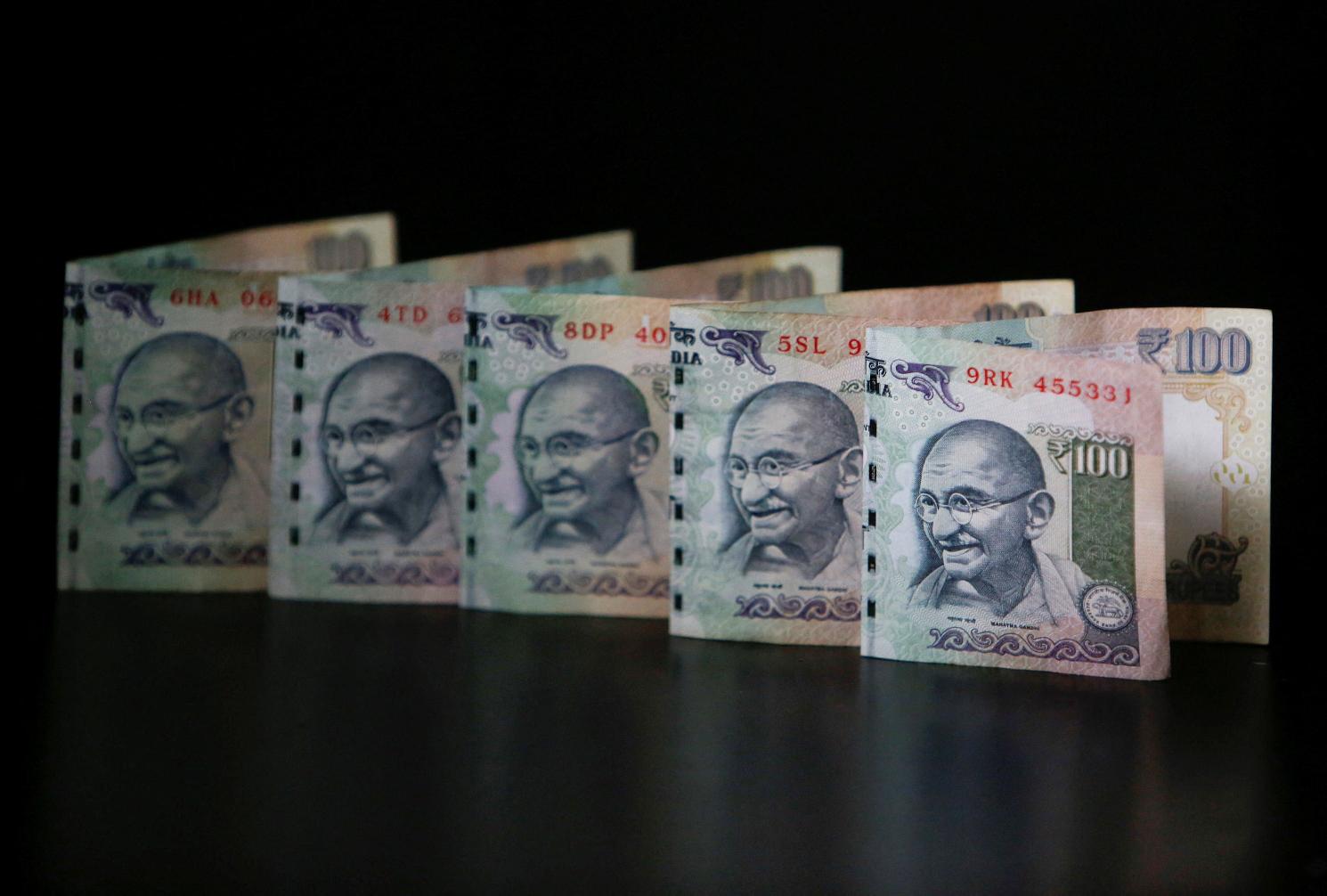
MUMBAI, July 16 (Reuters) - A lack of arbitrage opportunities and narrow price action are prompting bankers to scale back on their activities in the Indian rupee forwards market, leading to a drop in volumes. Volumes between banks in the dollar-rupee forward market dropped 36% in the April-June period from the previous quarter, according to CCIL data. Volumes were marginally up in the same period last year. The dollar-rupee forward premium market is used by companies to hedge their future foreign currency receivables and payments. Banks have dedicated desks to manage the risk passed on by companies. The scant arbitrage opportunities between the local over-the-counter market and non-deliverable forwards amid a rangebound rupee and muted volatility in forwards are largely responsible for the drop in volumes, bankers said. "There is no juice in the market and client flows have reduced considerably (amid rangebound spot and forwards)," said Apurva Swarup, vice president at Shinhan Bank India. The 1-year implied yield on the dollar-rupee forward was in a 15-basis points (bps) range in the April-June period, compared with about a 40-bps band in each of the previous two quarters. "When there is this little movement, the risk appetite of banks increases. This leads to client flows being absorbed by them instead of being sent to the market," a senior banker at a mid-sized foreign lender said. Trading in the forwards market has moved away from "constant volumes" to "pockets of action" during the day, with market participants raising the size of their positions to capture profits, he said. The bid-offer spread on forward premium quotes has narrowed amid the subdued price action. The current low volatility period in rupee forwards is setting it up for a large breakout, which may have implications for the dollar-rupee spot rate, a swap trader at a bank said. Trading activity may pick up once the Federal Reserve begins cutting rates later this year, Swarup said. Investors currently expect the U.S. central bank to start easing rates in September. (This story has been refiled to correct a spelling error in paragraph 13) Sign up here. https://www.reuters.com/markets/currencies/indian-rupee-forward-volumes-drop-lack-arbitrage-listless-price-action-2024-07-16/
2024-07-16 06:12
U.S. stocks end higher Treasury yields ease U.S. oil prices settle lower NEW YORK July 16 (Reuters) - World stock indexes mostly rose and the U.S. dollar gained against the yen on Tuesday after solid U.S. retail sales data was taken as supporting prospects the Federal Reserve will ease rates to rein in inflation while aiming to avoid a recession. Data showed retail sales unchanged in June from a May reading that was higher than initially estimated. Echoing comments from Fed Chair Jerome Powell on Monday, Fed Governor Adriana Kugler said recent data suggests inflation is returning to the central bank's 2% target. Investors are pricing in a cut of at least 25 basis points (bps) at the U.S. central bank's September meeting, according to CME's FedWatch Tool. The retail sales data suggest consumers are still spending, "so the market definitely saw that as a favorable data point," said Dustin Thackeray, chief investment officer at Crewe Advisors in Salt Lake City. MSCI's gauge of stocks across the globe (.MIWD00000PUS) , opens new tab rose 3.00 points, or 0.36%, to 831.73. The Dow Jones Industrial Average reached an all-time closing high of 40,954.48. Investors kept pondering the implications of a possible Donald Trump victory in the upcoming U.S. presidential election following the attempted assassination on Trump on Saturday. The Republican former president has indicated support for policies traditionally seen as friendly to domestic businesses, such as loosening regulation, increasing tariffs on some foreign imports and cutting taxes. The S&P 500 (.SPX) , opens new tab gained 35.98 points, or 0.64%, to 5,667.20 and the Nasdaq Composite (.IXIC) , opens new tab gained 36.77 points, or 0.20%, to 18,509.34. "Obviously the market liked the boost in his ratings and the potential for a Trump presidency... we know what we're getting with Trump," Thackeray said. Boosting the Dow and S&P 500 was UnitedHealth Group (UNH.N) , opens new tab, which gained more than 6% after strong results. In Europe, the STOXX 600 (.STOXX) , opens new tab fell 0.28%. A CLOSE RACE Opinion polls show a close race between Trump and President Joe Biden, though Trump leads in several states that are likely to decide the November election. Trump's nomination on Monday of his onetime critic, Ohio Sen. J.D. Vance, as his vice presidential running mate, also reverberated in financial markets. "Vance is particularly tough on China, so that’s one of the reasons for the weakness in Chinese assets today," said Colin Asher, economist at Mizuho. Shares of Trump Media & Technology Group (DJT.O) , opens new tab gave back some of the large gains racked up on Monday, falling 9.1% on the day. The dollar index , which measures the greenback against a basket of currencies, was near flat at 104.22 after giving up earlier gains, with the euro up 0.05% at $1.0899. Against the Japanese yen , the dollar strengthened 0.22% to 158.37. Investors are still closely watching the yen after Tokyo's suspected intervention last week disrupted the popular carry trade. Japanese officials also issued fresh warnings of possible measures. Data on Tuesday showed the Bank of Japan likely intervened a second time on July 12 to the tune of 2.14 trillion yen ($13.50 billion) to support the currency, following some $22.43 billion apparently spent on intervention the previous day. The yield on benchmark U.S. 10-year notes hit a four-month low on rate cut expectations, falling 6.6 basis points to 4.163%, from 4.229% late on Monday. Oil prices racked up their third straight day of losses. Brent futures closed down 1.3%, to $83.73 a barrel, while U.S. West Texas Intermediate (WTI) crude fell 1.4%, to $80.76. Sign up here. https://www.reuters.com/markets/global-markets-wrapup-1-2024-07-16/
2024-07-16 06:05
BEIJING, July 16 (Reuters) - A small town in China's Henan was lashed by almost a year's worth of rain in one day as the extreme storms that battered the south this summer shift to the central and northern provinces. As of 8 a.m. (0000 GMT) on Tuesday, 606.7mm (24 inches) of rainfall had been logged in Dafengying over a 24 hour-period, the most anywhere in China, according to national weather forecasters. That compares with the average annual rainfall of 800mm in the area. Dafengying lies within the city limits of Nanyang, which is renowned for its mild and temperate weather. Authorities in central Henan province put in place the most severe flood control measures for the city early on Tuesday. Record rainfall had pounded southern China in April to June, while in the north, dry weather parched fields and threatened crops. As the summer advanced, the seasonal rain belt swung north, drenching provinces that grappled with drought-like conditions just a month ago. The vast region where Henan, Shandong and Anhui provinces meet will see particularly heavy rainfall through late Tuesday, according to forecasts. Early on Tuesday, Beijing temporarily shut numerous train lines in suburban areas after issuing an early warning for thunderstorms and flash floods. Authorities have also placed the northern region on high alert for heavy rains since late Monday and agencies have taken measures to counter the impact of heavy rainfall. In China's northwestern province of Gansu, Kang county flagged a red alert for rain and warnings of mountain torrents and urban flooding. A resurgence of floodwater along the middle and lower reaches of the Yangtze, China's longest river, has also pushed its drainage basin into a critical period of flood control on Tuesday, Xinhua said. Authorities have been monitoring and adjusting water discharge from the Three Gorges Dam, which sits on the Yangtze, to help reduce the flood control pressures in Hubei, Hunan, Jiangxi and other provinces in the middle and lower reaches of the river. Sign up here. https://www.reuters.com/world/china/beijing-shuts-train-lines-rain-arrives-chinas-north-2024-07-16/

2024-07-16 05:50
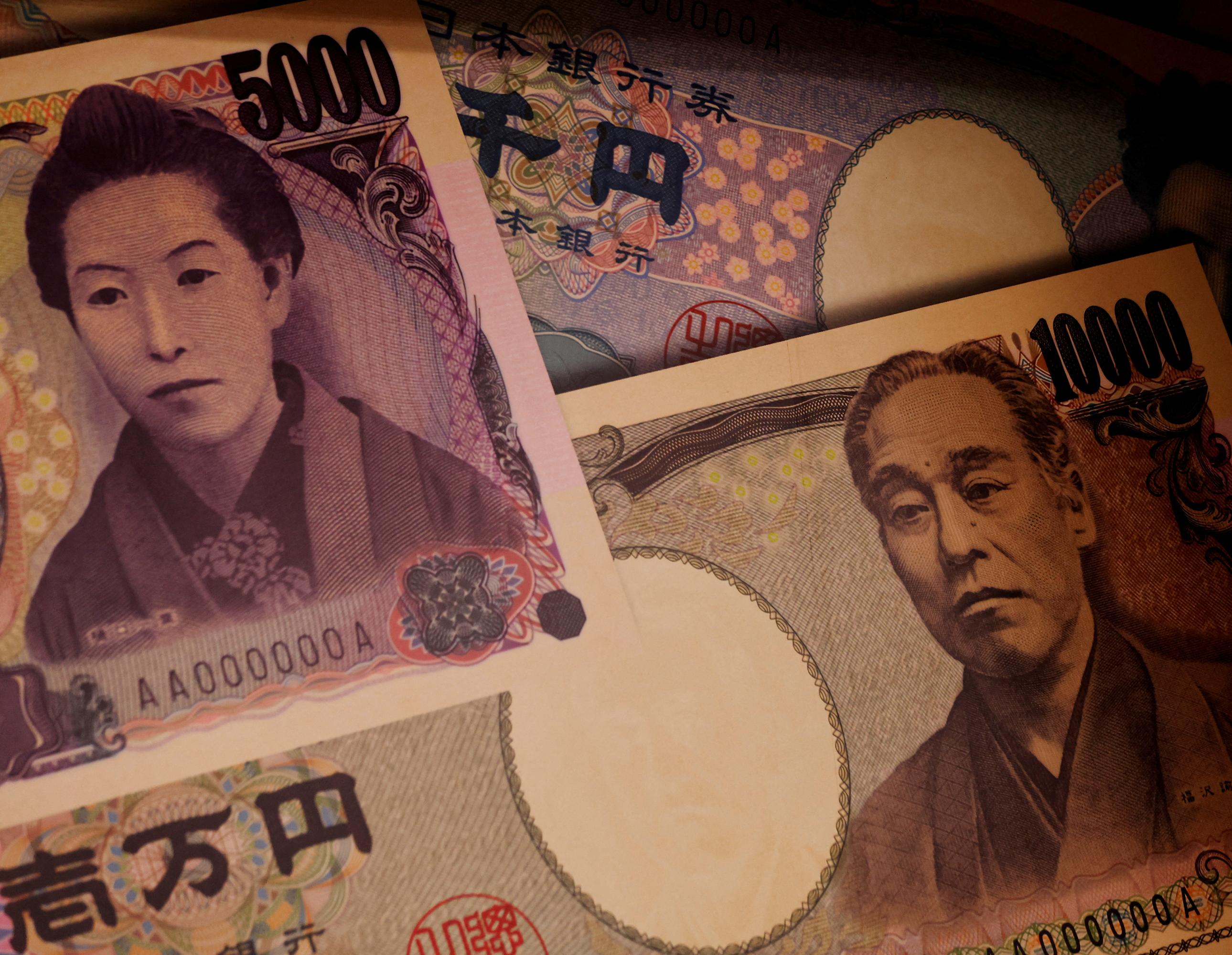
Chief cabinet secretary warns against excessive yen volatility Data shows Japan may have spent $13.5 bln in intervention Friday Japan may have bought 6 trln yen in 2-day intervention last week Analysts see similarities to suspected May 1 yen intervention TOKYO, July 16 (Reuters) - Japan stands ready to take all possible measures to counter excessively volatile currency moves, Chief Cabinet Secretary Yoshimasa Hayashi said on Tuesday, keeping markets on alert over the chance of renewed intervention to prop up the yen. Bank of Japan data released on Tuesday suggested Tokyo may have spent 2.14 trillion yen ($13.5 billion) intervening on Friday last week. Combined with the estimated amount spent on Thursday, Japan is suspected to have bought nearly 6 trillion yen via intervention last week. "It is important for currency rates to move stably reflecting fundamentals. Excessive volatility is undesirable," Hayashi told a regular news conference before the release of the BOJ data. "We will closely watch exchange-rate developments and stand ready to take all possible measures," he said. Hayashi declined to comment when asked whether Tokyo intervened in the currency market to prop up the yen for two straight days last week. Japanese authorities have recently made it standard practice to not confirm whether they have intervened in the currency market or not. But traders suspect Tokyo intervened in the market to lift a currency that has languished at 38-year lows, once on Thursday after cooler-than-expected U.S. inflation report triggered a jump in the yen, and again on Friday. The yen jumped 3% against the dollar to 157.40 after Thursday's suspected intervention. But it lost most of its ground and stood at 158.45 on Tuesday, not far off the 160 mark seen as Japanese authorities' line-in-the-sand for currency intervention. Some analysts see similarities between last week's suspected intervention and that on May 1, when dovish comments from Federal Reserve Chair Jerome Powell weighed on the dollar. In both cases, Tokyo likely intervened when the dollar was already on the back foot against the yen, said Masafumi Yamamoto, chief currency strategist at Mizuho Securities. "This time, intervention came when the dollar/yen wasn't necessarily rising sharply," he said. "This suggests authorities were worried more about the level of the yen, at below 160 (to the dollar), rather the speed of its falls." While a weak yen gives exporters a boost, it has become a source of concern for Japanese policymakers as it hurts consumption by inflating the cost of fuel and food imports. Markets are turning their attention to the Bank of Japan's two-day policy meeting concluding on July 31, with some traders betting it could raise interest rates from current near-zero levels to help slow the yen's declines. ($1 = 158.4400 yen) Sign up here. https://www.reuters.com/markets/currencies/japan-keeps-up-warnings-against-sharp-yen-falls-2024-07-16/
2024-07-16 05:28
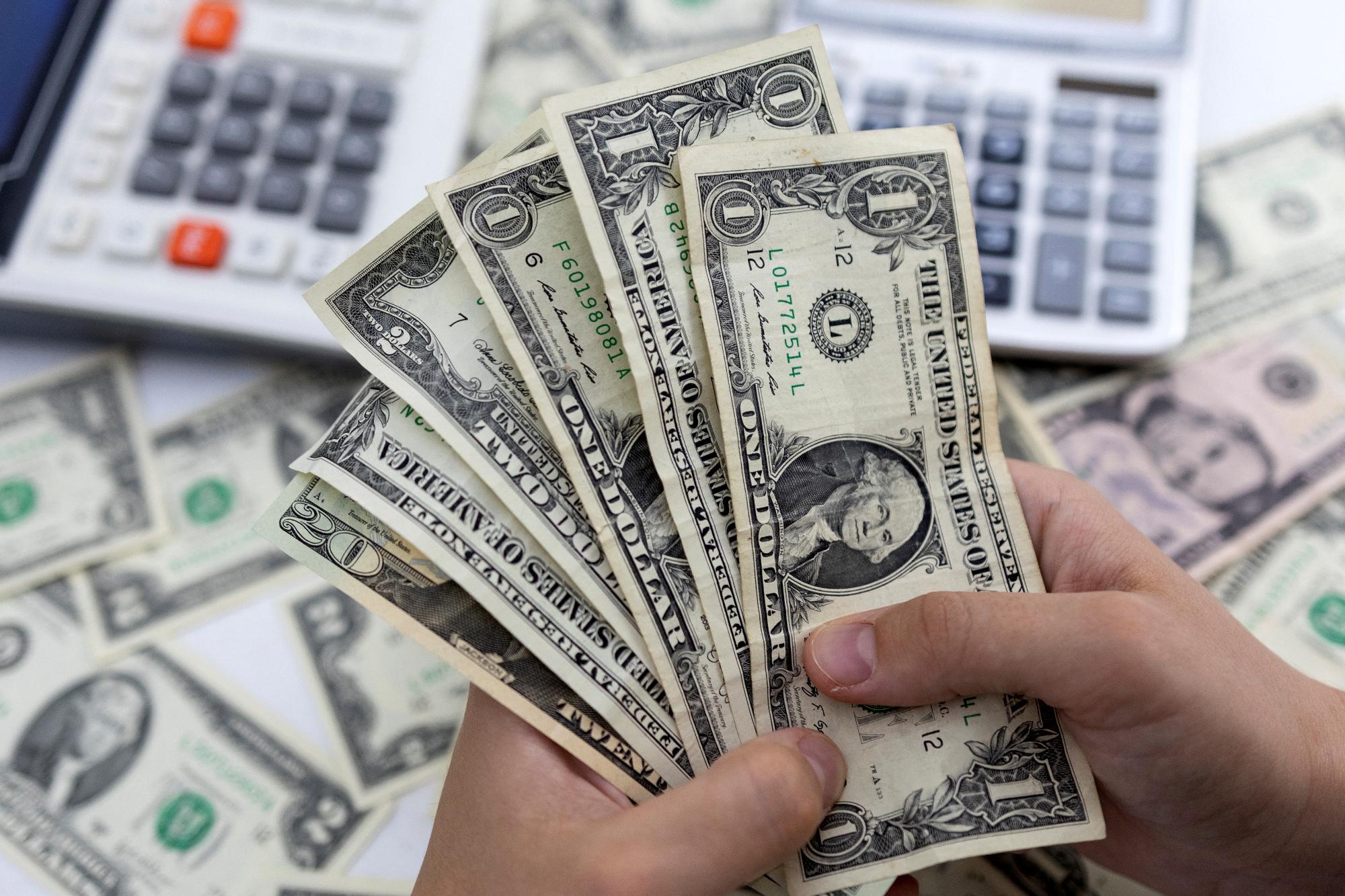
NEW YORK, July 16 (Reuters) - The dollar rose on Tuesday, on track for a second straight daily gain, after a reading of retail sales proved to be firmer than expected, but was still soft enough to keep expectations intact for a rate cut from the Federal Reserve this year. U.S. retail sales were unchanged in June, topping expectations of economists polled by Reuters for a decline of 0.3%, as a drop in receipts at auto dealerships was offset by strength elsewhere, a show of consumer resilience that boosts economic growth prospects for the second quarter. "It isn't so much the overall number, but it's the ex-autos number, which was up considerably more than expected," said Joseph Trevisani, senior analyst at FX Street in New York. "The auto sales are being depressed by interest rates so aside from that and of course the housing market, it looks like the consumer's still doing pretty well and we all know that's the base of the U.S. economy." Other data showed import prices were unchanged in June, as a rebound in the price of food was offset by lower energy prices, giving the Fed cushion to cut interest rates this year. The dollar index , which measures the greenback against a basket of currencies, gained 0.07% at 104.31, but was off its earlier high of 104.51. Against the Japanese yen , the dollar strengthened 0.28% at 158.46. While markets only see a slim chance for a rate cut of at least 25 basis points (bps) by the Fed at its July meeting, a cut is being fully priced in for the September meeting, according to CME's FedWatch Tool , opens new tab. Sterling weakened 0.07% at $1.2957 ahead of British inflation data due on Wednesday while the euro shed 0.03% at $1.0891 ahead of a European Central Bank (ECB) policy meeting scheduled for Thursday. The ECB is largely expected to keep rates steady, putting the focus on comments from President Christine Lagarde for clues on the timing of the next rate cut following a 25 bps reduction in June. On Monday, Federal Reserve Chair Jerome Powell said the second quarter's three U.S. inflation readings "add somewhat to confidence" that the pace of price increases is returning to the Fed's target in a sustainable way. The Canadian dollar strengthened 0.03% versus the greenback at 1.37 per dollar, bouncing back from a drop of as much as 0.21%, after the country's slower-than-expected rise in consumer prices in June bolstered expectations that yet another rate cut by the Bank of Canada may be in the offing next week. Cryptocurrencies rose modestly following a rally in the prior session, along with shares of companies that could benefit from a Trump presidency, after an assassination bid on the Republican candidate boosted expectations that he would win the November election. Bitcoin gained 1.58% at $64,780.28 while ethereum rose 0.83% at $3463.60. Sign up here. https://www.reuters.com/markets/currencies/dollar-drifts-powell-comments-bring-september-rate-cut-focus-2024-07-16/
2024-07-16 05:21
BEIJING, July 16 (Reuters) - China aims to cut carbon emission from its coal-fired power industry by launching low-carbon upgrades and applying new power generation technologies, according to a government plan. China, the world's top energy consumer, relies largely on coal which is the most carbon-intensive source of energy. In an action plan jointly issued by the National Development and Reform Commission (NDRC) and the National Energy Administration on Monday, the authorities set the carbon emission level from power generated from natural gas as the benchmark for the coal power sector. It also listed three low-carbon power generation technologies that it planned to apply: biomass blending, green ammonia blending and carbon capture, utilisation and storage. By 2025, the first low-carbon projects will start operating using some of the low-carbon power generation technologies. Average emission by those projects will be 20% lower compared to their 2023 level, the plan said. By 2027, China aims to expand low-carbon projects and lower their operating costs, as well as cut their average carbon emissions by 50% from 2023 levels. The plan also encouraged local government to support and subsidise the launch of those low-carbon projects. However, due to the instability of renewable energy, coal power will remain a mainstay for energy security, a spokesperson from NDRC told in a Q&A session on Tuesday. Sign up here. https://www.reuters.com/world/china/china-plans-low-carbon-upgrades-coal-power-sector-2024-07-16/