
2024-07-15 12:46
Ghana looks to delay up to half its bean sales to 2025 -sources Traders forced to liquidate big chunk of short positions Physical and futures cocoa markets drying up, traders say Traders seen passing on costs to chocolate makers LONDON/ACCRA, July 15 (Reuters) - Trading houses face losses of at least $1 billion on cocoa derivatives after major producer Ghana failed to deliver beans this year, forcing traders to liquidate short positions in a rallying market, six industry sources told Reuters. Global cocoa prices soared this year after bad weather, bean disease, smuggling and illegal gold mining reduced production and the volume of beans available in Ghana, the world's No.2 producer. Chocolate prices also rose globally and chocolate makers have reduced the size of products such as bars as a result of the huge cocoa price increase. Ghanaian authorities, who sell all of the country's beans, want to delay delivery of up to 350,000 metric tons this season - nearly half of the cocoa beans they sold - due to Ghana's devastated crop, five sources told Reuters last month. Ghana's cocoa regulator said the country was looking to roll over "some volumes, but not in those quantities". A delay of 350,000 tons means cocoa traders and processors could face losses of about $4,000 per ton on cocoa futures they had bought to hedge their physical bean purchases, or around $1.4 billion combined, the sources said. Trade houses like Cargill [RIC:RIC:CARG.UL], Olam (OLAG.SI) New Tab, opens new tab and Barry Callebaut (BARN.S) New Tab, opens new tab use the futures market to hedge or lock in a price for cocoa they have not yet sold on to chocolate makers. "We're sitting staring at our screens, barely trading," said the head cocoa trader at a global trading house specialising in agricultural commodities, speaking on condition of anonymity because he was not authorised to talk to the media. He said trading in the global cocoa physical and futures market has just about ground to a halt as a result of the deep losses and uncertainty. Much of Ghana's cocoa is bought by large, diversified trade houses with deep pockets, including Sucden, Olam, Barry Callebaut (BARN.S) New Tab, opens new tab, Cargill, Touton and Ecom. Traders typically sign deals to buy beans - like any other commodity - months in advance in the hope of reselling later at a profit. By doing so they take a so called long position in the physical market. As they wait for the physical commodity to be delivered for weeks or months they need to protect themselves against possible price falls. They typically do this by taking short positions in the futures market to protect against losses on a long position. Short trading bets on price falls so when the physical commodity arrives, long and short positions cancel each other out, guaranteeing a fixed price. The strategy unravels, however, if physical delivery - in this case cocoa beans - is delayed in a rallying market. If this happens, traders are forced to liquidate short positions for the month they had expected the commodity to arrive and take a new short position for the month of a new expected delivery. Doing so in April 2024 - after the market realised Ghana would delay bean delivery to 2025 - would have been costly, according to the traders. The six sources said last year traders who bought physical beans for May 2024 delivery would have taken equivalent short positions in May 2024 futures at around $3,000 a ton. With the market rallying in April 2024, those traders had to liquidate May 2024 shorts - or buy the futures back - at $11,000 a ton, facing losses of $8,000 a ton. As traders still hope to get the cocoa and need to protect themselves in the physical market, they had to take on new short positions for May 2025 delivery, which in April 2024 traded around $7,000 a ton. That means that if and when traders get their physical cocoa next May at $3,000 a ton, they will still face an aggregate loss of $4,000 per ton. The cocoa market is facing a third successive year of deficit and prices have roughly doubled this year. Traders will try to recoup at least some of their losses by charging chocolate makers like Hershey (HSY.N) New Tab, opens new tab and Mondelez (MDLZ.O) New Tab, opens new tab higher prices for products like cocoa powder and butter, said a top trader at a global agri-commodity trade house. Chocolate firms will likely struggle to pass on these costs to cash-strapped consumers who are already buying less chocolate New Tab, opens new tab in response to price rises. Market liquidity has also decreased because of exchanges asking traders to post more cash as collateral to cover their hedges, one of the traders said. This liquidity crunch has fuelled price fluctuations or volatility, he added. The collateral, known as a margin call, is set by the futures exchange as a down payment that covers a portion of the potential losses traders might face on their futures position. The higher the futures price, the higher the margin calls. Sign up here. https://www.reuters.com/markets/commodities/traders-face-1-bln-loss-faltering-ghana-cocoa-supply-sources-say-2024-07-15/

2024-07-15 12:30
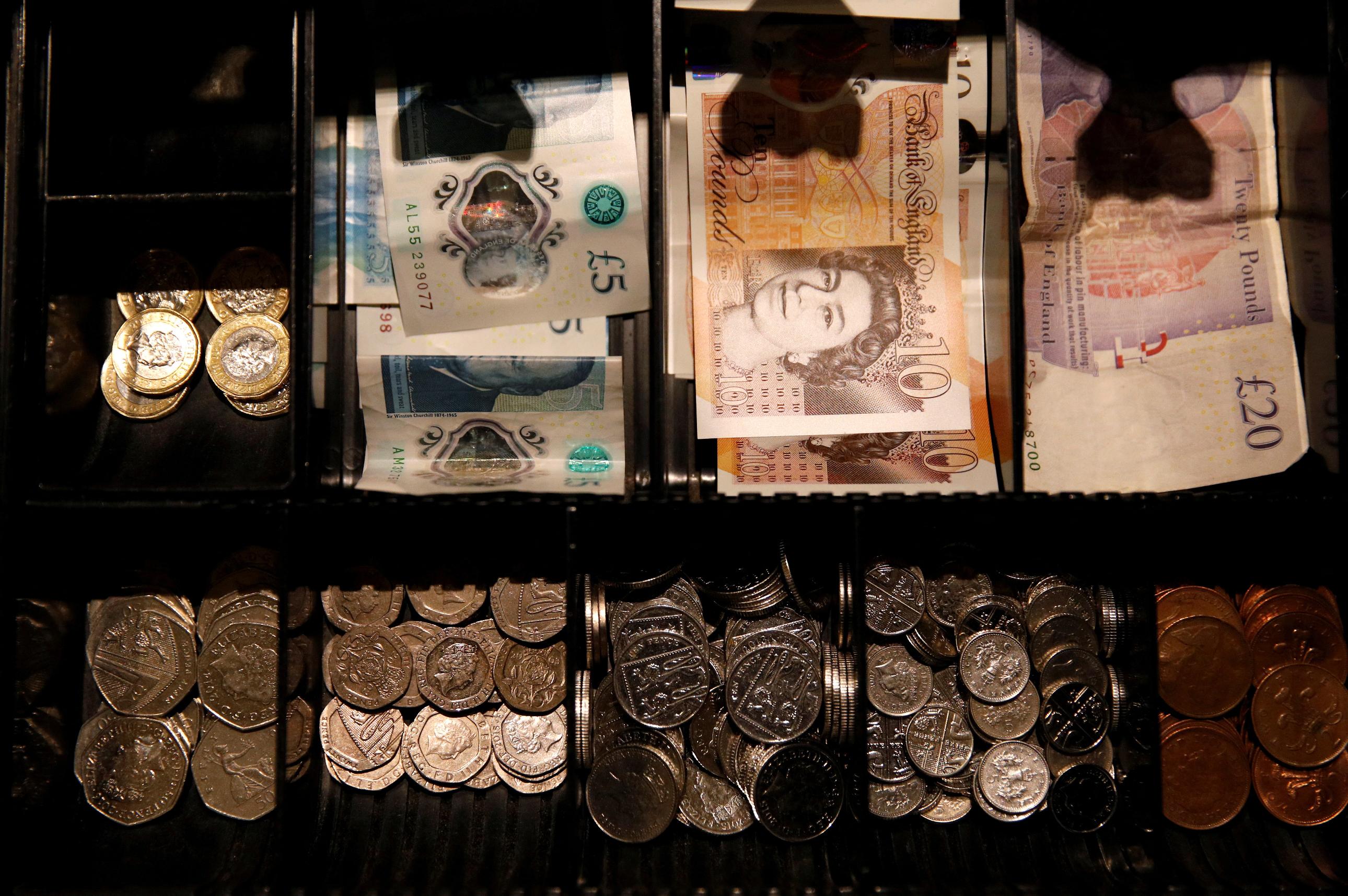
LONDON, July 15 (Reuters) - Sterling steadied against the dollar on Monday after its biggest weekly jump since May last week as markets tempered expectations for an August rate cut from the Bank of England. Traders were now awaiting UK inflation data on Wednesday for more clues on interest rate policy. The pound was last down 0.1% against the dollar at $1.2979. It rose 1.4% last week, its biggest one-week jump since early March on upbeat growth data and commentary from BoE policymakers. BoE Chief Economist Huw Pill said it was still an "open question" on the timing of the first interest rate cut. Money market traders have priced in around 12.5 basis points (bps) of easing by the August meeting, implying around a 50% chance the BoE will cut its bank rate by a quarter point next month. The futures market puts around a 90% chance that the BoE makes a 25 bp move by September. "There's a question mark over whether the Bank of England can cut rates in August," Rabobank senior FX strategist Jane Foley said. "Inflation data could be seen by the market as the decisive factor as to whether they do or don't." Britain's Office for National Statistics releases its consumer price data on Wednesday. Economists polled by Reuters expect headline annual inflation to hold steady at 2%. "The June CPI report on Wednesday can tilt the balance for a Bank of England rate cut on 1 August," said ING FX strategist Francesco Pesole. "Given that no BoE speakers are scheduled before the 1 August meeting, there are no strong reasons to expect a major loss of momentum for the pound this week, unless CPI data surprises on the downside," Pesole added. The pound was down less than 0.1% at 84.08 pence per euro . Sign up here. https://www.reuters.com/markets/currencies/sterling-steadies-after-biggest-weekly-jump-2-months-eyes-cpi-2024-07-15/
2024-07-15 12:13
BELGRADE, July 15 (Reuters) - North Macedonia and Bosnia's Serb Republic asked Serbia for firefighting helicopters on Monday to combat forest fires triggered by a heatwave that has affected much of eastern and southern Europe. The Serbian interior minister Ivica Dacic said Belgrade had received a telephone request for help from North Macedonia, whose government on Sunday declared a state of emergency for a month due to fires. "I think we have enough capacity to help two countries," Dacic said in a statement on Monday. Temperatures were sizzling across the Balkans last week as a prolonged heatwave continued, and most of the countries in the region were baking from temperatures exceeding 39 degrees Celsius (102 Fahrenheit). North Macedonia's firefighters are battling 17 wildfires in arid and mountainous regions in central and southern parts of the country, Prime Minister Hristijan Mickoski wrote on his Facebook page. "Help will soon arrive from Slovenia, Turkey, Serbia and Montenegro," Mickoski said. Bosnia's Serb Republic also asked Belgrade for a firefighting helicopter to help it contain a major fire near Gacko in the south of the country, near neighboring Montenegro. Serbia's military and police currently operate around a dozen helicopters that can be used for firefighting, including two specialised Russian Ka-32s. In other parts of Europe, Italy is also expected to face blistering heat, with temperatures seen reaching 45 C. Searing temperatures have also impacted countries like Greece, France, Spain, Poland and Ukraine. Sign up here. https://www.reuters.com/world/europe/amid-heatwave-north-macedonia-bosnia-seek-serbian-help-fight-wildfires-2024-07-15/

2024-07-15 12:08
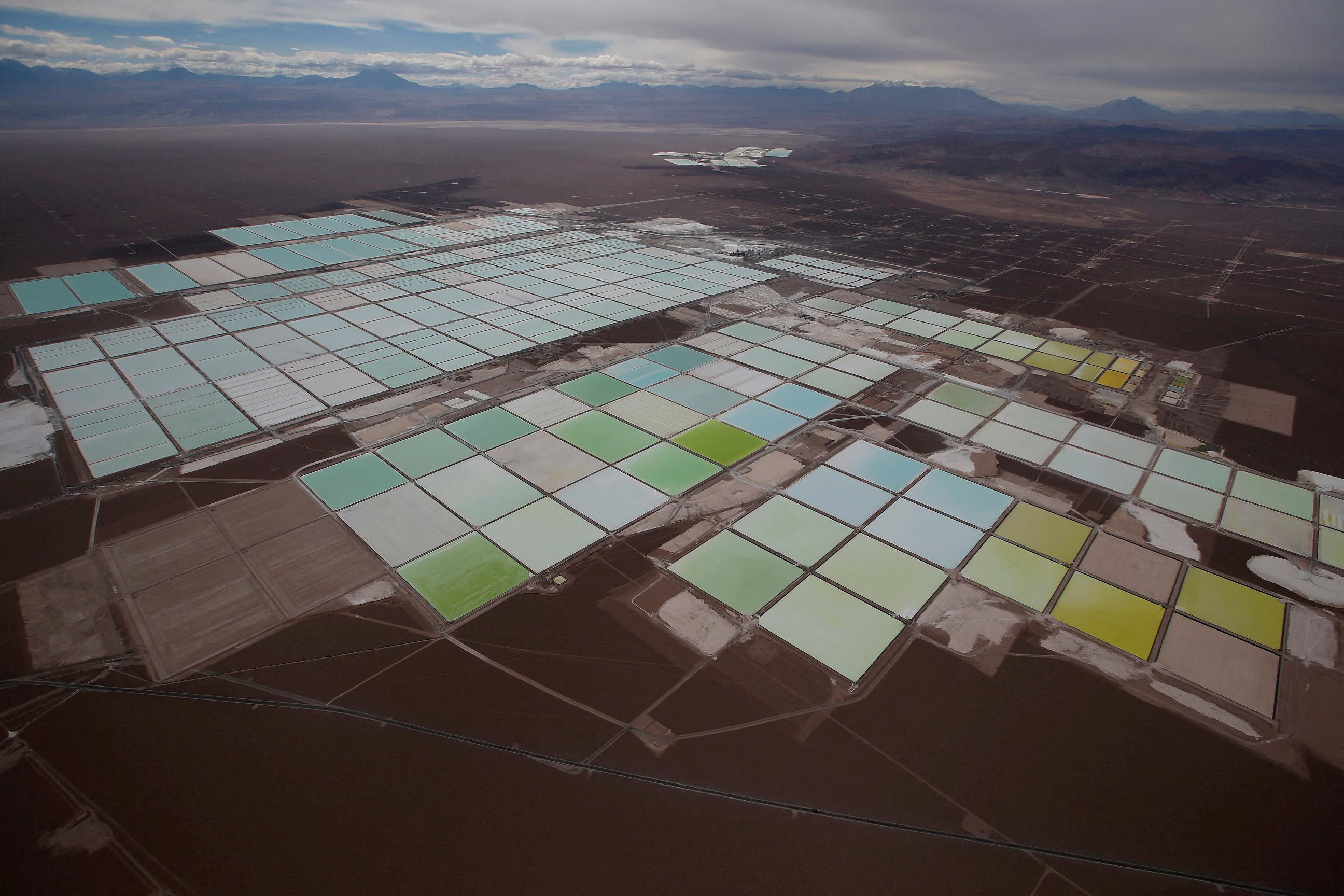
PARIS, July 15 (Reuters) - Europe needs a system to set prices for critical minerals needed for the energy transition that is not dependent on China, which dominates much of the global sector, the head of an EU-funded group said. Oversupply and weak prices of materials such as lithium, cobalt and rare earths are dampening cash flows of Western start-ups, making it difficult to compete with China, companies have said. "Europe should have a critical materials platform that has a price-building mechanism that reflects the supply and demand situation in Europe," Bernd Schaefer, CEO of EIT RawMaterials, told Reuters. "Sometimes an administrative decision in China can turn the pricing needle, eroding all assumptions that somebody has made for investing in raw materials. This must change," he said in an interview on the sidelines of last week's World Materials Forum in Paris. Schaefer also called for an exploration fund to boost mining of critical minerals in Europe. "This should not be just a couple of million (euros), it should be a billion, it must be a big number." EIT RawMaterials leads an alliance of more than 300 companies, academics and others involved in the sector, helping to implement an EU plan to provide raw materials needed to meet the bloc's target of net zero greenhouse gas emissions by 2050. The EU Critical Raw Materials Act, which entered into force in May, sets targets for the bloc to mine, recycle and process minerals including lithium and copper by 2030. There was a risk that political uncertainty could delay taking the next steps to meet those targets, Schaefer said. "This discussion is in limbo. We are in a period of transition within the Commission and within Europe," he said, referring to recent elections in France and for the European Parliament plus political instability in Germany. "We might be losing time, but we cannot afford to lose time." As a neutral, non-political agency, EIT RawMaterials could play a key role in helping to drive the changes that are needed, Schaefer added. Sign up here. https://www.reuters.com/markets/commodities/europe-needs-way-price-critical-minerals-independently-china-group-says-2024-07-15/
2024-07-15 12:06
July 15 (Reuters) - Shoppers are likely to spend roughly $14 billion during Amazon's Prime Day two-day shopping event this week, according to projections from Adobe Analytics, a firm that studies e-commerce transaction data. Spending at Amazon (AMZN.O) New Tab, opens new tab on Tuesday and Wednesday could rise 10.5% from Prime Day 2023, Adobe said. The online retailer began holding Prime Day a decade ago, typically in July. Prime Day accounts for 1% to 2% of Amazon's net global sales, according to CFRA Research. Amazon started advertising pre-Prime Day deals in early July on clothes, back-to-school gear, wellness products and electronics, though it moved Prime Day back by five days on the calendar this year. Amazon said that Day 1 of its two-day Prime Day 2023 earned its biggest sales day ever, although it doesn't disclose total sales for Prime Day. The $12.7 billion shoppers spent at Amazon last year during Prime Day was 6.1% more than what they spent during the 2022 event, according to Adobe. WHY IS IT IMPORTANT? Amazon's Prime Day has turned July, an otherwise slow time for retailers, into a season when shoppers look for bargains, especially on back-to-school clothing, electronics, uniforms, backpacks, dorm decorations and supplies. Rivals Walmart (WMT.N) New Tab, opens new tab and Target (TGT.N) New Tab, opens new tab are also launching July discounts and marketing events in a bid to beat Amazon at its own game, and capture some of the $38.8 billion that the National Retail Federation trade group projects Americans will spend on back-to-school merchandise this summer. Following years of high inflation, shoppers have delayed purchases of non-essential goods and retailers are tempting shoppers to break that habit with aggressive July discounting. KEY QUOTES "We are expecting really strong momentum for back-to-school," said Vivek Pandya, Adobe's lead insights analyst. Shoppers are now more willing to spend and have started to use Prime Day as a back-to-school shopping opportunity, he said. BY THE NUMBERS Shoppers could spend $7.1 billion at Amazon on Tuesday alone, up 11.3% from a year earlier, Adobe said. Day 2 is expected to bring $6.9 billion in online sales, up 9.2% from a year earlier, it said. Adobe expects Amazon to dangle discounts of 22% on electronics, 20% on clothing, 17% on home goods and furniture and 11% on sporting goods. Adobe's projections are based on its analysis of data measuring transactions from previous Prime Days. Sign up here. https://www.reuters.com/business/retail-consumer/amazon-prime-day-sales-hit-record-14-billion-data-firm-says-2024-07-15/

2024-07-15 11:57
NEW DELHI, July 15 (Reuters) - India is exploring ways to boost its exports to Russia, including by encouraging rupee-rouble trade and pushing Moscow to lift non-tariff barriers, New Delhi said on Monday, in the wake of Prime Minister Narendra Modi's visit to Moscow. Old partners India and Russia have stepped up trade since Russia invaded Ukraine in early 2022, but the increase has been overwhelmingly one-way, dominated by India buying Russian oil shunned by traditional customers in Europe. Surging Russian exports to India accounted for $61.43 billion of the $65.7 billion in trade between the two countries in the last fiscal year that ended in March. While trade between the two countries was up a third on the year before, India's exports of pharmaceuticals, machinery and other goods to Russia have barely budged. In a news conference, Indian trade secretary Sunil Barthwal said the government had asked Russia to consider changes to some non-tariff barriers on Indian exports of marine food products. New Delhi is also encouraging rupee-rouble trade that has failed to take off, and would send a trade delegation, he said, without giving further details. "When we are looking at Russia, we are looking at how both the countries can gain by better trade relationships," he told the press conference. "We are looking at various sets of commodities for example electronics, engineering goods and other items where there can be exports." New Delhi and Moscow have been trying to settle more trade in roubles and rupees since the war led to sanctions on Russian entities. But such settlements have not taken off because the Indian currency is not among the most transacted in the world and Russia does not want to amass it. During Modi's visit to Russia last week, which coincided with a missile strike on a children's hospital in the Ukrainian capital Kyiv that killed dozens, the Indian leader told Russian President Vladimir Putin that the death of innocent children was painful and terrifying. Russia has denied responsibility. Russia and India also outlined nine key areas for closer cooperation, ranging from nuclear energy to medicine, and said they aimed to boost bilateral trade to hit $100 billion by 2030. Washington has criticised New Delhi for maintaining close ties with Moscow. A U.S. State Department spokesperson said: "we have made quite clear directly with India our concerns about their relationship with Russia". Sign up here. https://www.reuters.com/world/india/india-seeks-boost-exports-russia-after-modi-trip-2024-07-15/


