2024-07-13 02:46
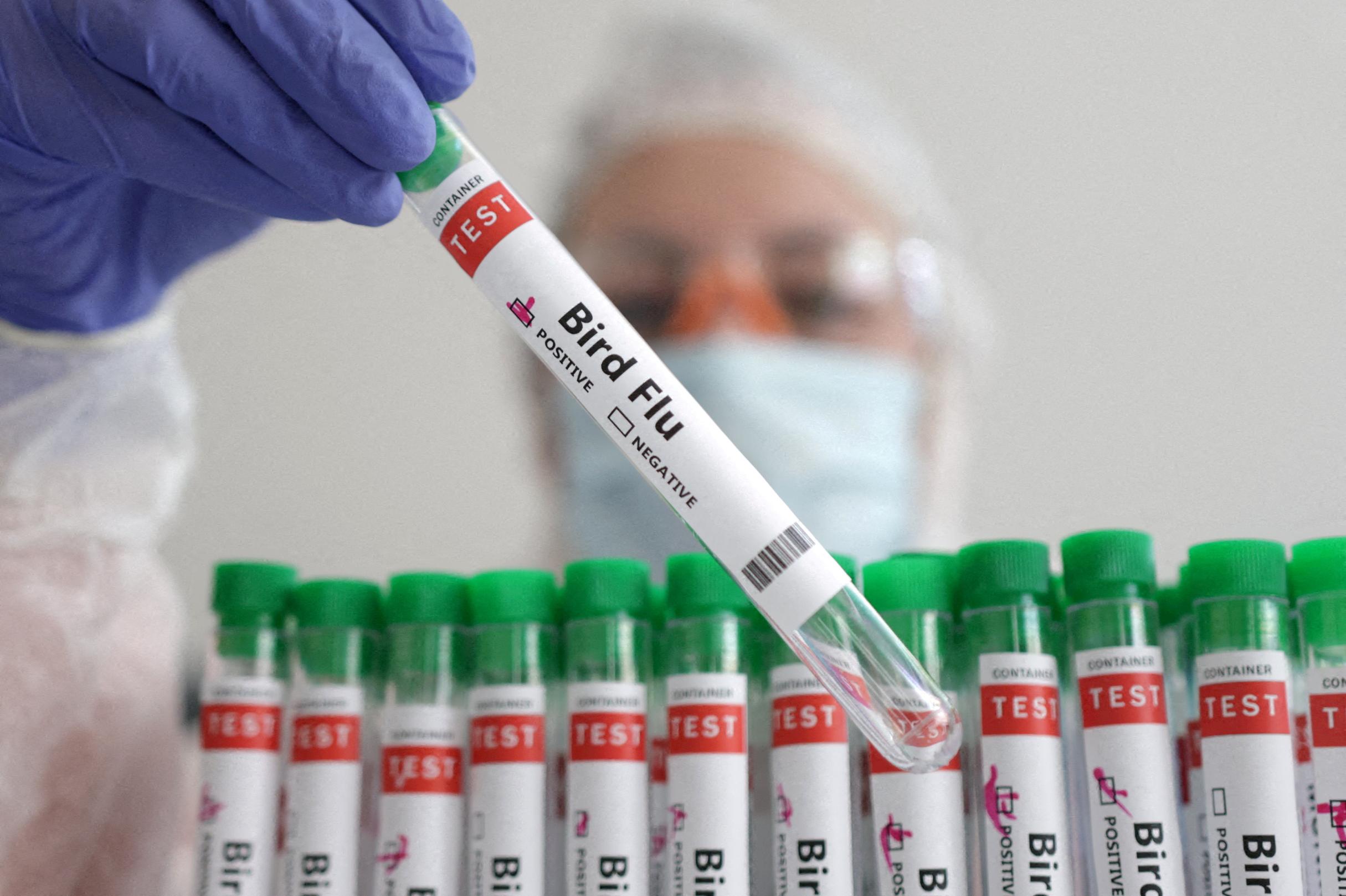
July 12 (Reuters) - Colorado has reported three presumptive cases of H5 bird flu virus infection in poultry workers, the Centers for Disease Control and Prevention (CDC) said on Friday. The three people experienced mild symptoms, the CDC said in a statement. The infections occurred in workers who were culling infected animals at a poultry facility that was experiencing an outbreak of H5N1 bird flu, it said. The symptoms included conjunctivitis, or pink eye, and common respiratory infection symptoms, Colorado officials said in a statement, adding that none of the people were hospitalized. State epidemiologists said the infections appear to have occurred through contact with infected poultry. The CDC said it is sending a team to Colorado to support an investigation and that the risk to the general public remains low. Human infections with H5N1 avian flu are concerning because of the potential to cause severe disease and possibly spark a pandemic if the virus were to change and acquire the ability to spread easily from person to person, the CDC said. The cases are part of a far-reaching outbreak of H5N1 bird flu that has been spreading globally in wild birds, infecting poultry and various species of mammals and causing an outbreak in U.S. dairy cows. "There are no signs of unexpected increases in flu activity otherwise in Colorado, or in other states affected by H5 bird flu outbreaks in cows and poultry," the CDC said. Preliminary testing by Colorado officials showed the three were infected with a novel type of influenza and are presumed to have bird flu. Samples have been sent to the CDC for confirmatory testing. If positive, they would represent the fourth case of bird flu in Colorado and the seventh U.S. case of the virus since March. The CDC said findings from their investigation will inform whether guidance changes are needed. An analysis of the virus sequences from this outbreak also will be important to determine if a change in the risk assessment is warranted. The CDC said its recommendations with regard to H5N1 remain unchanged and urged people to avoid close, prolonged or unprotected exposure to sick or dead animals, including wild birds, poultry, other domesticated birds, and other wild or domesticated animals, including cows. People should also avoid unprotected exposures to animal feces, litter, unpasteurized or raw milk, or materials that have been near or touched by animals with suspected or confirmed bird flu, it said. Sign up here. https://www.reuters.com/business/healthcare-pharmaceuticals/colorado-reports-three-presumptive-human-bird-flu-cases-cdc-says-2024-07-13/
2024-07-12 23:37
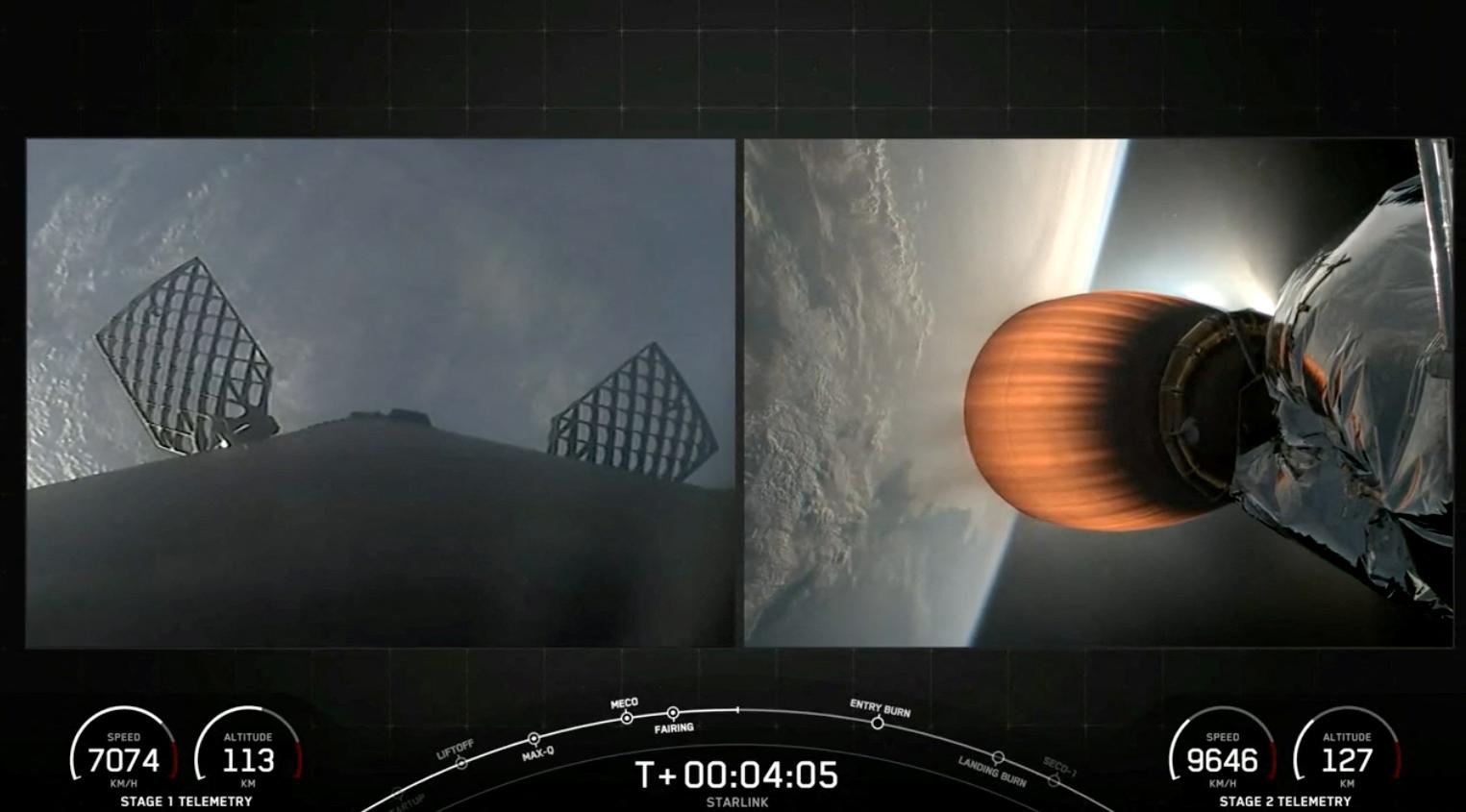
WASHINGTON, July 12 (Reuters) - SpaceX's workhorse Falcon 9 rocket was grounded by the U.S. Federal Aviation Administration (FAA) on Friday after one broke apart in space and doomed its payload of Starlink satellites, the first failure in more than seven years of a rocket relied upon by the global space industry. Roughly an hour after Falcon 9 lifted off from the Vandenberg Space Force Base in California on Thursday night, the rocket's second stage failed to reignite and deployed its 20 Starlink satellites on a shallow orbital path where they will reenter Earth's atmosphere and burn up. The attempt to reignite the engine "resulted in an engine RUD for reasons currently unknown," SpaceX CEO Elon Musk wrote early on Friday on his social media platform X, using initials for the industry term Rapid Unscheduled Disassembly that usually means explosion. The Falcon 9 will be grounded until SpaceX investigates the cause of the failure, fixes the rocket and receives the FAA's approval, the agency said in a statement. That process could take several weeks or months, depending on the issue's complexity and SpaceX's plan to fix it. The botched mission of the world's most active rocket ended a success streak of more than 300 straight missions during which SpaceX has maintained its dominance of the launch industry. Many countries and space companies rely on privately owned SpaceX, valued at roughly $200 billion, to send their satellites and astronauts into space. Musk said SpaceX was updating the software of the Starlink satellites to force their on-board thrusters to fire harder than usual to avoid a fiery atmospheric re-entry. "Unlike a Star Trek episode, this will probably not work, but it's worth a shot," Musk said. The satellites pose no threat to the public, SpaceX wrote on Friday evening on X. The company did not estimate when they would make their reentry, which would appear as streaks of light across the sky. "Shooting stars," Musk said, replying the SpaceX post. Their altitude is so shallow that Earth's gravity is pulling them 3 miles (5 km) closer toward the atmosphere with each orbit, SpaceX said earlier in the day, confirming they would "re-enter Earth's atmosphere and fully demise." NASA said in a statement on Friday it monitors all of SpaceX's Falcon 9 missions. "SpaceX has been forthcoming with information and is including NASA in the company's ongoing anomaly investigation to understand the issue and path forward," a U.S. space agency spokesperson said. SpaceX said the second stage's failure occurred after engineers detected a leak of liquid oxygen, a propellant. 'INCREDIBLE RUN' The mishap occurred on Falcon 9's 354th mission. It was the first Falcon 9 failure since 2016, when a rocket exploded on a launch pad in Florida and destroyed its customer payload, an Israeli communications satellite. "We knew this incredible run had to come to an end at some point," Tom Mueller, SpaceX's former vice president of propulsion who designed Falcon 9's engines, replied to Musk on X. "... The team will fix the problem and start the cycle again." The failure will likely stymie SpaceX's intensifying Falcon 9 launch pace. The rocket's 96 launches last year were its most to date and exceeded the annual launch total in any country. By comparison, China, a space rival to the United States, launched 67 missions to space in 2023 using various rockets. "It is extremely rare for Falcon to fail. They have a much better rate than almost any other rocket developed in terms of the success of their mission," said Will Whitehorn, chair of the venture capital firm Seraphim Space Investment Trust. Although Thursday night's Falcon 9 flight was an in-house mission, the rocket's grounding is likely to impact upcoming SpaceX customer missions. Falcon 9 is the only U.S. rocket capable of sending NASA crews to the International Space Station. NASA was expecting to launch its next astronaut mission in August, with SpaceX's Crew Dragon astronaut capsule launching atop the rocket. NASA has been trying to help fix unrelated problems with Boeing's (BA.N) New Tab, opens new tab Starliner spacecraft, which is in the midst of a test mission to prove it can become NASA's second astronaut ride to orbit alongside Crew Dragon. SpaceX was poised to launch as early as July 31 its Polaris Dawn Crew Dragon mission sending four private astronauts into orbit for a few days to conduct the first commercial spacewalk using the company's newly designed spacesuits. Jared Isaacman, head of the Polaris program and a mission crew member, said he expects SpaceX to quickly recover from the failure. "As for Polaris Dawn, we will fly whenever SpaceX is ready and with complete confidence in the rocket, spaceship and operations," Isaacman wrote on X. Musk replied that "we will investigate the issue and look for any other potential near-misses." SpaceX has launched about 7,000 Starlink satellites of various designs into space since 2018 for its global broadband internet network. Industry analysts have said the satellites on Thursday's mission could be worth at least $10 million combined. Sign up here. https://www.reuters.com/technology/space/spacex-falcon-9-suffers-rare-failure-space-imperiling-starlink-mission-2024-07-12/
2024-07-12 23:33
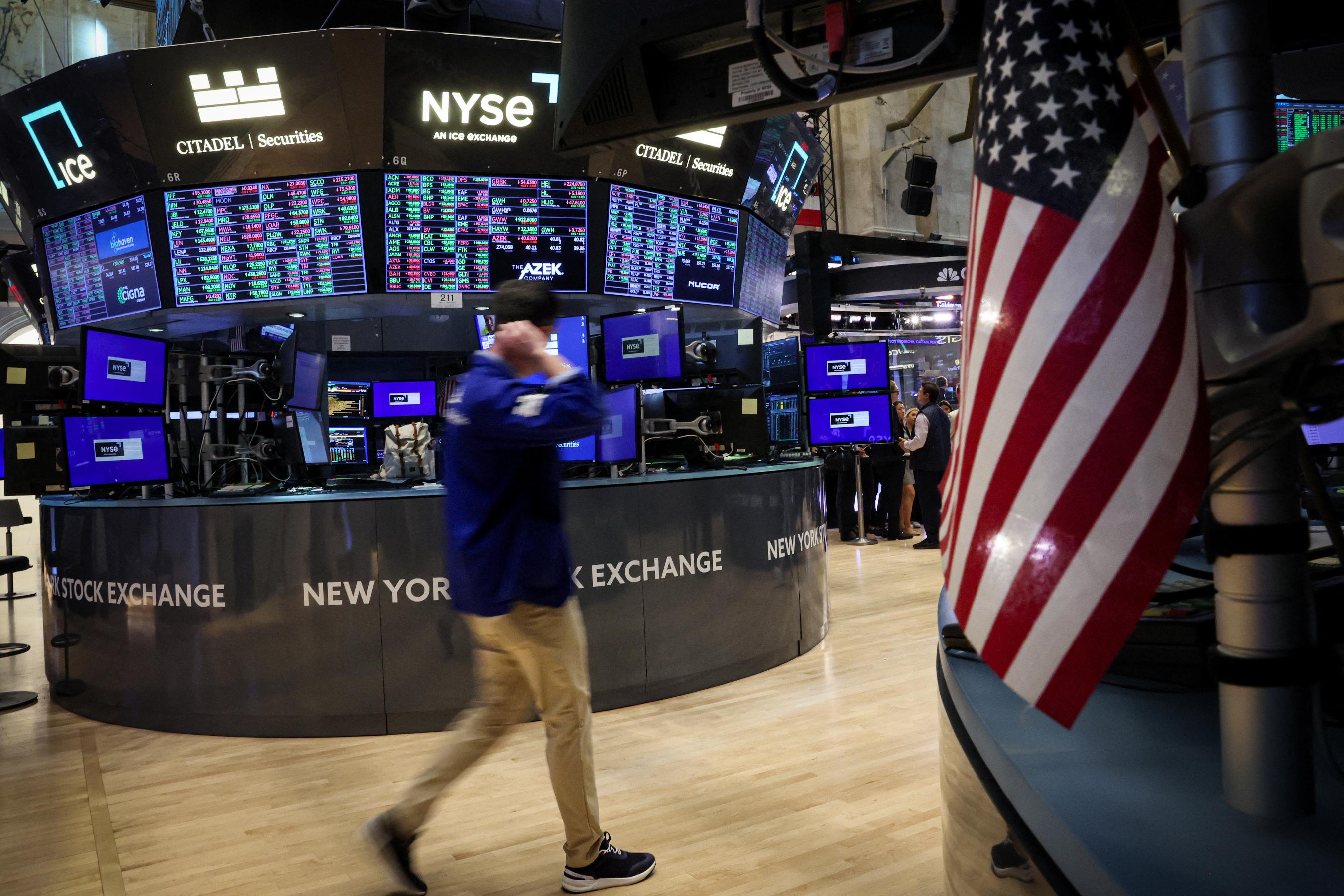
JPMorgan, Citi, Wells Fargo drop after results Small-cap stocks surge U.S. producer prices rise marginally in June S&P 500 +0.55%, Nasdaq +0.63%, Dow +0.62% July 12 (Reuters) - Wall Street closed higher on Friday, with the S&P 500 and Dow Jones Industrial Average hitting intraday record highs, on bets that the U.S. Federal Reserve will cut interest rates in September, while big banks fell after reporting mixed results. Some of the market's most valuable companies bounced back after dipping in the previous session. Apple (AAPL.O) New Tab, opens new tab and Nvidia (NVDA.O) New Tab, opens new tab each climbed more than 1%. The S&P 500 and Dow surged to all-time highs before giving up much of those gains by the close. JPMorgan Chase's (JPM.N) New Tab, opens new tab second-quarter profit was lifted by rising investment banking fees. However, shares of the world's largest bank dipped 1.2%. Wells Fargo (WFC.N) New Tab, opens new tab tumbled 6% after the lender missed estimates for quarterly interest income, while Citigroup (C.N) New Tab, opens new tab fell 1.8% despite reporting a surge in investment banking revenue. The S&P 500 banks index (.SPXBK) New Tab, opens new tab lost 1.5%. The small-cap Russell 2000 (.RUT) New Tab, opens new tab rallied for a third straight day, gaining 1.1% and reaching its highest since 2022, while the S&P 400 Mid Cap index (.IDX) New Tab, opens new tab rose 0.9%. The two indexes have lagged the S&P 500 this year. "That rotation into small- and mid-caps is still continuing and that's a positive sign overall," said Ryan Detrick, chief market strategist at Carson Group. The most traded stock in the S&P 500 was Tesla (TSLA.O) New Tab, opens new tab, with $38 billion worth of shares exchanged during the session. The electric car maker jumped 3%. The S&P 500 climbed 0.55% to end the session at 5,615.35 points. The Nasdaq gained 0.63% at 18,398.45 points, while Dow Jones Industrial Average rose 0.62% to 40,000.90 points. For the week, the S&P 500 rose 0.9%, the Nasdaq added 0.2% and the Dow rose 1.6%. With stock indexes trading around record highs, investors are betting on strong profit growth from companies beyond Nvidia (NVDA.O) New Tab, opens new tab and other heavyweights that have benefited from explosive growth in artificial intelligence computing. Analysts expect second-quarter earnings for S&P 500 firms to jump 9.6%, with strong growth from technology companies but declining earnings in real estate, industrials and materials, LSEG IBES data showed. "The thematic appeal of the AI story is still very much there," said Zachary Hill, head of portfolio management at Horizon Investments in Charlotte, North Carolina. "We just need to see an inflection in earnings growth coming from the rest of the market, and that's something that we're going to be watching for quite intently over the next couple weeks." Data showed producer prices were slightly hotter-than-expected in June but that did little to change bets on the first rate cut in September. The report follows data showing a surprise fall in U.S. consumer prices on Thursday. Traders are betting on a 94% chance of a rate cut by September, up from 78% a week ago, according to CME Group's FedWatch. Advancing issues outnumbered falling ones within the S&P 500 (.AD.SPX) New Tab, opens new tab by a 4.1-to-one ratio. The S&P 500 posted 62 new highs and no new lows; the Nasdaq recorded 170 new highs and 36 new lows. Volume on U.S. exchanges was relatively light, with 11.3 billion shares traded, compared to an average of 11.6 billion shares over the previous 20 sessions. Sign up here. https://www.reuters.com/markets/us/futures-stall-big-banks-set-kick-earnings-into-high-gear-2024-07-12/
2024-07-12 23:00
LONDON, July 11 (Reuters) - Lithium boom has turned to lithium bust over the last two years as a wave of new supply overwhelms weaker-than-expected demand for electric vehicle (EV) batteries. The CME contract for lithium hydroxide has collapsed from a 2022 high of $85,000 per metric ton to $11,930. The CME carbonate contract was above $40,000 when it began trading in July 2023 and has since slumped to $12,850. Lithium has been here before. There was a similar boom-bust cycle in 2016-2017 but the difference this time is that no-one seems to be expecting a speedy recovery. The short-term outlook is for prices to trundle along at the lows as the market digests surplus material. The longer-term picture is more positive as governments force the transition to electric vehicles but there will be no return to the giddy heights of 2022 in the next 10 years, according to analysts at BMI, a Fitch Solutions company. Don't be too quick to write off either lithium or the electric vehicle sector, though. The current price bust has been exacerbated by one-offs on both the supply and demand sides of the equation. TOO MUCH SUPPLY Lithium producers view their product as a bespoke chemical tailored to battery-makers' tight specifications rather than as a generic commodity. Yet lithium's price behaviour is that of any other commodity, periods of high pricing encouraging over-production which must then be weeded out by periods of low pricing. That pattern is currently playing out as producers trim output and defer expansion plans in reaction to the new much lower price reality. One little-discussed element of the current glut, however, is the surge in artisanal mining (ASM) in Africa, particularly in Nigeria and Zimbabwe. Research house CRU estimates that artisanal miners accounted for almost two-thirds of African lithium supply in 2023 with volumes nearly equivalent to the global market surplus last year. African shipments of ore and low-grade concentrates accounted for a quarter of China's total lithium imports in the first quarter of this year on a metal contained basis, according to CRU. Chinese entities are heavily involved in formalising artisanal supply which is centred on previous tin and tantalum mining areas. However, ASM is particularly price sensitive. The current wave of independent production began when the price of spodumene ore was still above $6,000 per ton at the start of 2023. It is now closer to $1,000, challenging the economic viability of all but the richest of deposits. More formalisation may result but as the cobalt market has learnt, ASM can be a very significant and very fast-moving swing component of the overall supply picture. TOO LITTLE DEMAND Compounding lithium's price weakness has been a downgrade in expectations for EV sales as the Chinese market matures and the Western market loses some of its recent momentum. The EV revolution has hit a slow patch but is far from going into reverse. BNP Paribas, for example, is still expecting global sales growth of 23% this year, equivalent to over 18.7 million vehicles. What has changed, however, is the product mix. Sales of pure battery vehicles are flat-lining, while sales of hybrid gas-electric vehicles are booming, even in China. Chinese sales of plug-in hybrids jumped by 90% year-on-year in April and May, while those of pure electric vehicles rose by a comparatively modest 10%, according to BNP. This may be good news for the broader energy transition but it's not so good for lithium since many hybrids use a nickel hydride battery with no lithium, the bank notes. Hybrids, once viewed as a mere stepping stone on the journey from internal combustion to fully electric engines are proving remarkably popular with consumers worried about charging infrastructure and the relatively high cost of pure battery vehicles. Automakers are responding. Stellantis (STLAM.MI) New Tab, opens new tab, which saw hybrid sales grow by 41% year-on-year in Europe in the first half of the year, plans to expand its line of affordable hybrid vehicles to 36 models in Europe by 2026. So too are governments. The Joe Biden administration has rowed back on its target of converting two-thirds of new vehicles to battery electric vehicles by 2032, allowing auto-makers to step up production of hybrids instead. FULL CHARGE AHEAD The automotive energy transition is still in full swing but is not matching the exuberant forecasts made a couple of years ago. There is now too much lithium supply and too much battery capacity relative to consumer demand for electric vehicles. The slowdown could easily reverse. One critical facilitator will be the build-out of EV charging infrastructure, a sector which has attracted far less investment than battery manufacturing. Car buyers in Europe and the United States are choosing hybrids because of range anxiety and they will continue to do so until they see more charging points. The second key factor is price, with electric vehicles still more expensive than traditional cars everywhere outside of China. Just as high lithium prices were good news for producers but not battery-makers, current low prices are bad news for the lithium sector but very good news for consumers in the form of lower battery prices. Lithium-ion battery packs registered a 7% increase in price between 2021 and 2022, breaking a long-running downtrend, according to the International Energy Agency. High lithium prices were matched by bull markets in other battery inputs such as cobalt, nickel and graphite. Battery prices are now tumbling as prices for lithium and other materials fall. The average Asian nickel-cobalt-manganese battery cell price fell to $90 per kilowatt hour in May, according to analysts at Benchmark Mineral Intelligence. That was the lowest since 2021 and a long way off the March 2022 peak of $166. The seeds of the next lithium upswing are already being sown in the current low-price environment. It will likely not match the spectacular boom of 2022 but lithium's history of price volatility isn't over yet. The opinions expressed here are those of the author, a columnist for Reuters. Sign up here. https://www.reuters.com/markets/commodities/after-another-boom-bust-where-next-lithium-andy-home-2024-07-11/

2024-07-12 22:16
July 12 (Reuters) - Hydrogen energy firm Huture said on Tuesday it has agreed to go public in the U.S. through a merger with a blank-check firm Aquaron Acquisition Corp (AQU.O) New Tab, opens new tab in a deal that would value the combined company at $1 billion. The SPAC market has soured over the last two years due to poor financial performance and a regulatory crackdown by the U.S. securities regulator. In past year, high profile SPAC investors William Ackman and Chamath Palihapitiya have said they will return money to shareholders after they failed to find suitable merger targets. Huture is a China-based hydrogen-powered vehicle manufacturing company founded in 2020. It plans to trade on the Nasdaq following the merger, which is expected to be completed later this year. The current shareholders of Huture will retain a majority in the combined company. Sign up here. https://www.reuters.com/business/energy/hydrogen-energy-firm-huture-go-public-1-bln-spac-deal-2024-07-12/

2024-07-12 21:23
July 12 - ChatGPT maker OpenAI is working on a novel approach to its artificial intelligence models in a project code-named “Strawberry,” according to a person familiar with the matter and internal documentation reviewed by Reuters. The project, details of which have not been previously reported, comes as the Microsoft-backed startup races to show that the types of models it offers are capable of delivering advanced reasoning capabilities. Teams inside OpenAI are working on Strawberry, according to a copy of a recent internal OpenAI document seen by Reuters in May. Reuters could not ascertain the precise date of the document, which details a plan for how OpenAI intends to use Strawberry to perform research. The source described the plan to Reuters as a work in progress. The news agency could not establish how close Strawberry is to being publicly available. How Strawberry works is a tightly kept secret even within OpenAI, the person said. The document describes a project that uses Strawberry models with the aim of enabling the company’s AI to not just generate answers to queries but to plan ahead enough to navigate the internet autonomously and reliably to perform what OpenAI terms “deep research,” according to the source. This is something that has eluded AI models to date, according to interviews with more than a dozen AI researchers. Asked about Strawberry and the details reported in this story, an OpenAI company spokesperson said in a statement: “We want our AI models to see and understand the world more like we do. Continuous research into new AI capabilities is a common practice in the industry, with a shared belief that these systems will improve in reasoning over time.” The spokesperson did not directly address questions about Strawberry. The Strawberry project was formerly known as Q*, which Reuters reported last year was already seen inside the company as a breakthrough. Two sources described viewing earlier this year what OpenAI staffers told them were Q* demos, capable of answering tricky science and math questions out of reach of today’s commercially-available models. A different source briefed on the matter said OpenAI has tested AI internally that scored over 90% on a MATH dataset, a benchmark of championship math problems. Reuters could not determine if this was the "Strawberry" project. On Tuesday at an internal all-hands meeting, OpenAI showed a demo of a research project that it claimed had new human-like reasoning skills, according to Bloomberg New Tab, opens new tab. An OpenAI spokesperson confirmed the meeting but declined to give details of the contents. Reuters could not determine if the project demonstrated was Strawberry. OpenAI hopes the innovation will improve its AI models’ reasoning capabilities dramatically, the person familiar with it said, adding that Strawberry involves a specialized way of processing an AI model after it has been pre-trained on very large datasets. Researchers Reuters interviewed say that reasoning is key to AI achieving human or super-human-level intelligence. While large language models can already summarize dense texts and compose elegant prose far more quickly than any human, the technology often falls short on common sense problems whose solutions seem intuitive to people, like recognizing logical fallacies and playing tic-tac-toe. When the model encounters these kinds of problems, it often “hallucinates” bogus information. AI researchers interviewed by Reuters generally agree that reasoning, in the context of AI, involves the formation of a model that enables AI to plan ahead, reflect how the physical world functions, and work through challenging multi-step problems reliably. Improving reasoning in AI models is seen as the key to unlocking the ability for the models to do everything from making major scientific discoveries to planning and building new software applications. OpenAI CEO Sam Altman said earlier this year New Tab, opens new tab that in AI “the most important areas of progress will be around reasoning ability.” Other companies like Google, Meta and Microsoft are likewise experimenting with different techniques to improve reasoning in AI models, as are most academic labs that perform AI research. Researchers differ, however, on whether large language models (LLMs) are capable of incorporating ideas and long-term planning into how they do prediction. For instance, one of the pioneers of modern AI, Yann LeCun, who works at Meta, has frequently said that LLMs are not capable of humanlike reasoning. AI CHALLENGES Strawberry is a key component of OpenAI’s plan to overcome those challenges, the source familiar with the matter said. The document seen by Reuters described what Strawberry aims to enable, but not how. In recent months, the company has privately been signaling to developers and other outside parties that it is on the cusp of releasing technology with significantly more advanced reasoning capabilities, according to four people who have heard the company’s pitches. They declined to be identified because they are not authorized to speak about private matters. Strawberry includes a specialized way of what is known as “post-training” OpenAI’s generative AI models, or adapting the base models to hone their performance in specific ways after they have already been “trained” on reams of generalized data, one of the sources said. The post-training phase of developing a model involves methods like “fine-tuning,” a process used on nearly all language models today that comes in many flavors, such as having humans give feedback to the model based on its responses and feeding it examples of good and bad answers. Strawberry has similarities to a method developed at Stanford in 2022 called "Self-Taught Reasoner” or “STaR”, one of the sources with knowledge of the matter said. STaR enables AI models to “bootstrap” themselves into higher intelligence levels via iteratively creating their own training data, and in theory could be used to get language models to transcend human-level intelligence, one of its creators, Stanford professor Noah Goodman, told Reuters. “I think that is both exciting and terrifying…if things keep going in that direction we have some serious things to think about as humans,” Goodman said. Goodman is not affiliated with OpenAI and is not familiar with Strawberry. Among the capabilities OpenAI is aiming Strawberry at is performing long-horizon tasks (LHT), the document says, referring to complex tasks that require a model to plan ahead and perform a series of actions over an extended period of time, the first source explained. To do so, OpenAI is creating, training and evaluating the models on what the company calls a “deep-research” dataset, according to the OpenAI internal documentation. Reuters was unable to determine what is in that dataset or how long an extended period would mean. OpenAI specifically wants its models to use these capabilities to conduct research by browsing the web autonomously with the assistance of a “CUA,” or a computer-using agent, that can take actions based on its findings, according to the document and one of the sources. OpenAI also plans to test its capabilities on doing the work of software and machine learning engineers. Sign up here. https://www.reuters.com/technology/artificial-intelligence/openai-working-new-reasoning-technology-under-code-name-strawberry-2024-07-12/