2024-07-12 05:01
KATHMANDU, July 12 (Reuters) - Landslides in Nepal swept two buses with at least 65 passengers on board into a river on Friday, while landslides elsewhere in the mountainous country killed at least 10 people, police said. Dozens have died in the Himalayan nation since the middle of June as torrential monsoon rains triggered landslides and flooding. On Friday, authorities mobilised the military and police to search for the 65 missing passengers swept into the Trishuli River in the early hours. The incident happened in Chitwan district, about 86 kilometres (53 miles) west of Kathmandu, police spokesman Dan Bahadur Karki said. "There were 41 people in the bus travelling from Kathmandu to Gaur, and 24 people in the bus travelling from Birgunj to Kathmandu. Both the buses and the passengers are missing in Trishuli River," he said. In Kaski district, 150 kilometres (93 miles) west of the capital, 10 people were killed when landslides washed away three houses, Karki added. Landslides and floods have killed at least 91 people in Nepal since mid-June. In a social media post on Friday, Prime Minister Pushpa Kamal Dahal expressed sadness over the disasters and instructed government agencies to conduct effective search and rescue operations. Sign up here. https://www.reuters.com/business/environment/nepal-landslides-sweep-two-buses-into-river-65-passengers-missing-2024-07-12/

2024-07-12 04:33
A look at the day ahead in European and global markets from Rae Wee Traders in Europe will be waking up to a nervy currency market on Friday - no doubt caused by the yen, as volatile moves in the Japanese currency across the board puzzled investors. The yen swung between gains and losses during the early Asian session, sometimes in a matter of minutes, though it's hard to say if Tokyo was pulling the strings on this one. Fear certainly had a part to play, though. The Nikkei newspaper reported that the Bank of Japan (BOJ) conducted rate checks with banks on the euro against the yen on Friday, and traders were still reeling from the aftermath of Thursday's suspected yen-buying intervention. Authorities were cagey about it as usual, but if anything, Tokyo has clearly shown the market that it knows when to best time an intervention. Thursday's spike in the yen came straight after data showed U.S. consumer inflation cooled more than expected in June, which initially led currency analysts and traders to think that the surge was probably triggered by options-related activity. Yet, the scale and speed of the move eventually put markets on alert to the possibility of a Japanese intervention and local media similarly attributed it as such. Given that effects of any intervention have proven short-lived in recent history, Thursday's move probably provided the best bang for Tokyo's buck. Authorities' absence from the currency market after the April-May intervention bout had at some point raised questions about their restraint as the yen continued to plumb fresh 38-year lows. But after Thursday's developments, traders are once again on the edge of their seats. How timely, too, that Japan has a national holiday on Monday, which would make for thin liquidity and perhaps another opportune time for Tokyo to strike. The chatter over the yen provided a bit of a break to the main story, which remained on rates, where a cut from the Federal Reserve in September is almost fully priced in. Even Fed Chair Jerome Powell in his two days of testimony before Congress this week appeared to edge the door open to an easing cycle beginning in September, saying that the U.S. economy was "no longer overheated". Over in U.S. politics, things aren't looking great for President Joe Biden, who mixed up the names of Vice President Kamala Harris and his Republican rival Donald Trump, just hours after he mistakenly referred to Ukrainian President Volodymyr Zelenskiy as Russian President Vladimir Putin before correcting himself at the NATO summit in Washington. Elsewhere, customs data showed on Friday that China's exports grew more than expected in June, though imports dropped 2.3%, as the world's second-largest economy continues to grapple with a bumpy recovery. Key developments that could influence markets on Friday: - Germany wholesale price index (June) - France CPI (EU Norm) final (June) Sign up here. https://www.reuters.com/markets/europe/global-markets-view-europe-2024-07-12/

2024-07-12 03:02
MUMBAI, July 12 (Reuters) - The Indian rupee is expected to see only marginal relief on Friday after a soft U.S. inflation print made it highly likely that the Federal Reserve will opt for an interest rate cut in September. Non-deliverable forwards indicate the rupee will open at 83.54-83.55 to the U.S. dollar, slightly higher than 83.56 in the previous session. It is "hardly surprising" that more "good data" on U.S. inflation is bringing only a bit of relief for the rupee, a currency trader at a bank said. "That is the nature of things now, in that we have become broadly indifferent to what the dollar does overall. The only time range breakouts happen is when there is a big flow and Reserve Bank of India (RBI) decides to allow it." The RBI has been holding the rupee in a narrow range via regular interventions, making it among the least volatile emerging market currencies. FED RATE CUT ODDS CLIMB Elevated odds of a Fed rate cut in September rose further following an unexpected decline in U.S. inflation. The U.S. consumer price index (CPI) dipped 0.1% last month against expectations that it would rise 0.1%. In the 12 months through June, the CPI rose 3% compared to 3.3% in May. U.S. Treasury yields and the dollar index dropped following the report. The U.S. inflation data has firmed up rate cut expectations, ANZ Bank said in a note. The odds of a Fed rate cut at the September meeting are now at nearly 90%, per the CME FedWatch Tool. "The US CPI number for June was better than May’s (lower). US CPI has settled down to rate-cut territory," ING Bank said in a note. KEY INDICATORS: ** One-month non-deliverable rupee forward at 83.6; onshore one-month forward premium at 7.25 paise ** Dollar index at 104.5 ** Brent crude futures up 0.4% at $85.8 per barrel ** Ten-year U.S. note yield at 4.23% ** As per NSDL data, foreign investors bought a net $261.6 million worth of Indian shares on July 10 ** NSDL data shows foreign investors bought a net $77.7 million worth of Indian bonds on July 10 Sign up here. https://www.reuters.com/markets/currencies/rupee-see-only-slight-relief-after-us-inflation-data-cements-fed-rate-cut-2024-07-12/

2024-07-12 00:56
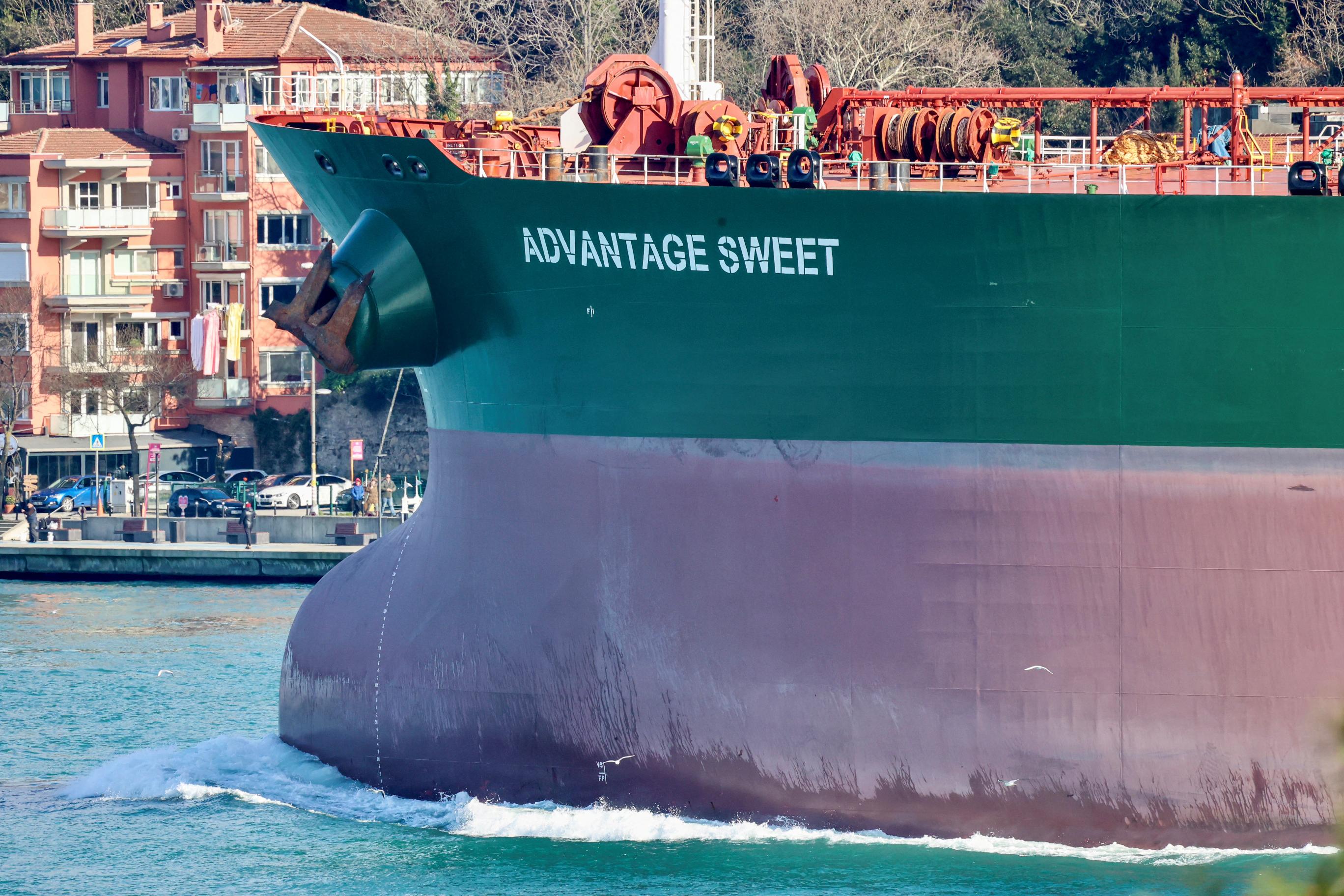
July 11 (Reuters) - A Chevron-chartered oil tanker that was seized by Iran more than a year ago was heading for international waters on Thursday, LSEG ship tracking data showed. The Marshall Islands-flagged Advantage Sweet was boarded by Iran's military in the Gulf of Oman in April 2023 after an alleged collision with an Iranian boat. The U.S. State Department welcomed reports that the vessel has been released and again condemned the Iranian regime's unlawful seizure of the vessel from international waters, an agency spokesperson said. The State Department in March had called for the immediate release of the tanker. There was no immediate comment from Chevron or Iranian officials on Thursday. The movement of the Advantage Sweet appeared to coincide with the reported conclusion of a court case that Iranian state-linked media have linked to the tanker. In March this year, an Iranian court found New Tab, opens new tab in favour of patients who had sued the U.S. government over sanctions which they said stopped Iran importing medicine for a rare skin disease, causing deaths and suffering. After the ruling, Iranian authorities said they would unload about $50 million worth of crude from the Advantage Sweet, the semi-official Fars news agency reported. The report did not specify whether Iran's seizure of the tanker's oil would contribute to any compensation for the patients. On Thursday, an Iranian court reached a final ruling in the case, ordering the U.S. government and officials to pay $6.8 billion over the sanctions, the Iranian judiciary's Mizan news agency reported. Sign up here. https://www.reuters.com/world/middle-east/oil-tanker-seized-by-iran-moving-international-waters-ship-tracking-data-2024-07-11/
2024-07-12 00:43
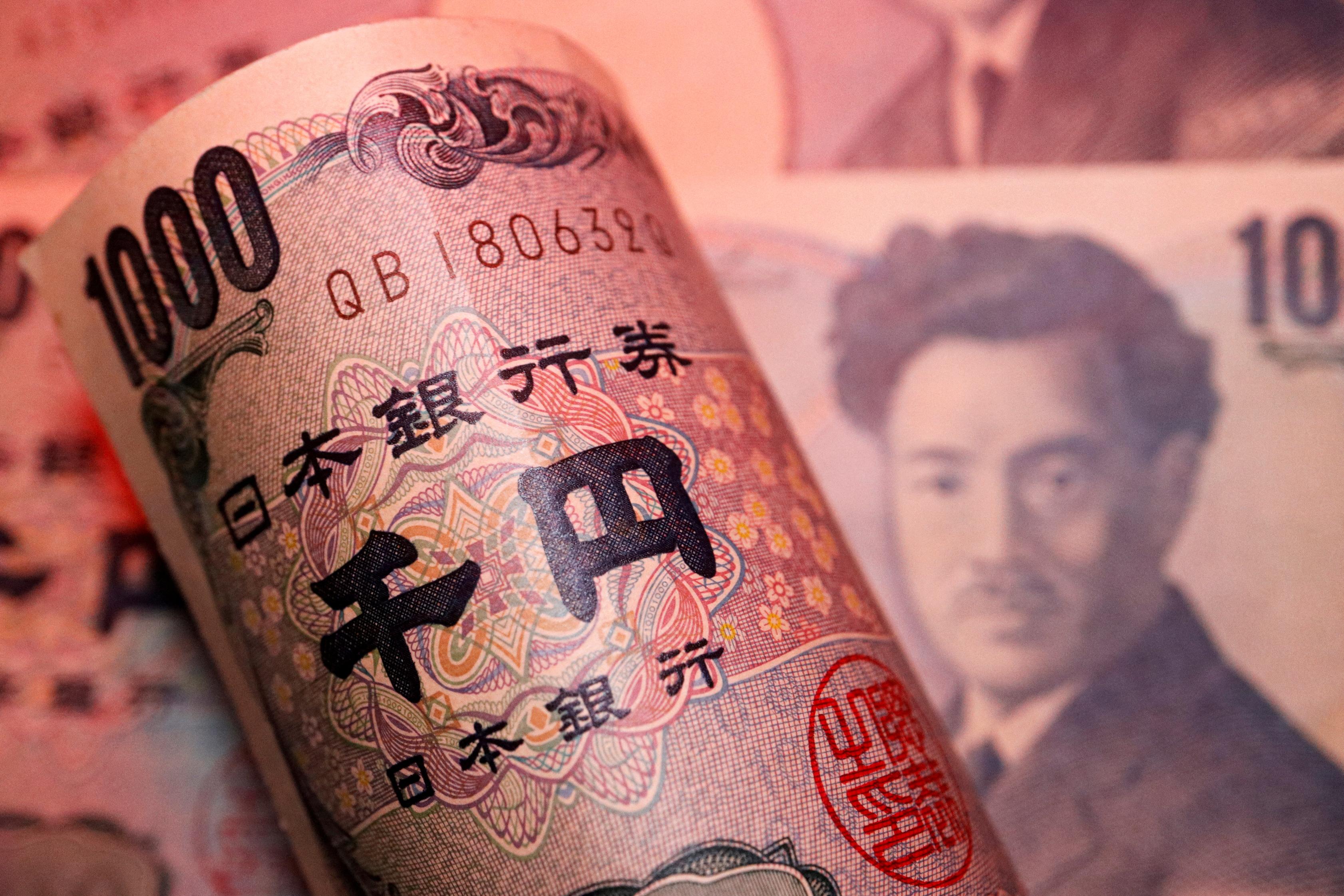
NEW YORK/LONDON, July 12 (Reuters) - The yen hit an almost four-week high against the U.S. dollar on Friday, raising speculation that Japanese authorities may have intervened for a second day to prop up the currency. The rally in the Japanese currency , which has been languishing at around 38-year lows, began on Thursday just after data showed U.S. consumer prices for June eased, boosting the odds of the Federal Reserve cutting rates as soon as September. On Friday, the move came after data showed that U.S. producer prices increased moderately in June. "If they intervened yesterday, it makes it likely that they intervened today. And I think it's good strategy to keep the market off balance," said Steve Englander, head of global G10 FX research and North American macro strategy at Standard Chartered Bank NY Branch. Englander added, however, that "it could also be stops", referring to the closure of positions betting against the yen, following losses. Daily operations data from the BOJ on Friday suggested the central bank had spent between 3.37 trillion and 3.57 trillion yen ($21.18 billion-$22 billion) on buying the yen on Thursday, less than three months after its last foray into the market. James Malcolm, head of FX strategy at UBS in London, said Friday's move may have been the result of an intervention or of rate checking. The Bank of Japan sometimes calls dealers to ask for rate levels, which can indicate a potential intervention and itself causes market moves. "They need to change tactics to keep the market on its toes and show they are serious. Looks like yesterday didn't cost them much. So this may ensure we close the week near the lows, which will put further technical pressure on the (dollar-yen) cross," he said. Lou Brien, market strategist at DRW trading in Chicago, said: "You don't even have to come in big. You just have to make a few phone calls to make sure that it's well-known." Tokyo's top currency diplomat, Masato Kanda, on Friday declined to comment on whether there was an intervention or rate checks, but said the fact that there had been a one-sided speculative move could not be ignored The dollar was last down 0.56% at 157.91 yen after earlier reaching 157.3, the lowest since June 17. The yen touched a 38-year low of 161.96 per dollar last week. Tokyo intervened at the end of April and in early May, spending roughly 9.8 trillion yen ($61.55 billion) to support the currency. There will be a month-end report from the ministry of finance that will confirm the amount spent on any intervention. The gap between U.S. and Japanese rates has created a highly lucrative trading opportunity, in which traders borrow the yen at low rates to invest in dollar-priced assets for a higher return, known as carry trade. A Fed rate cut would dent the appeal of this trade. "The Fed will lower interest rates in September, and together with the Bank of Japan's interest rate hike, the interest rate differential between Japan and the United States will narrow in both directions," said Takahide Kiuchi, executive economist at the Nomura Research Institute in Tokyo. "This is expected to reverse the trend of the yen's weakening. This currency intervention will likely be effective in buying time until then," he said. Traders are now pricing in a 94% chance of the Fed cutting rates in September, compared with 73% before the CPI reading, the CME Group's FedWatch Tool showed. In Japan, nearly 90% of households expect prices to rise a year from now, a quarterly central bank survey showed on Friday, a sign of heightening inflation expectations that could help make the case for a near-term interest-rate hike. The dollar index , which measures the U.S. currency against six others, fell 0.24% to 104.09 and reached 104.04, the lowest since June 7. A survey on Friday showed that U.S. consumer sentiment ebbed in July, but inflation expectations over the next year and beyond improved. The euro was up 0.36% at $1.0904 and reached $1.0911, the highest since June 4. Sterling strengthened 0.59% to $1.2985 and hit a one-year high of $1.299. In cryptocurrencies, bitcoin gained 1.33% to $58,324.00. Sign up here. https://www.reuters.com/markets/currencies/volatile-yen-keeps-currency-market-edge-2024-07-12/
2024-07-12 00:28
CAIRO, July 12 (Reuters) - British security firm Ambrey said early on Friday that a merchant vessel reported two explosions about 21 nautical miles (39 km) west of Yemen's Mocha. One "missile" impacted the water and another exploded in the air, the vessel reported to Ambrey, adding that both explosions occurred within 0.5 nautical miles of the vessel. "The vessel was withholding its automatic identification system transmissions at the time. Ambrey is investigating the vessel's affiliations with the Houthi target profile," the Ambrey advisory said. Yemen's Iran-aligned Houthi group has been launching drone and missile strikes in shipping lanes in the Red Sea and Gulf of Aden since November, saying that it acts in solidarity with Palestinians in Israel's war in Gaza. In dozens of attacks, the Houthis have sunk two vessels, seized another and killed at least three seafarers. Sign up here. https://www.reuters.com/world/middle-east/merchant-vessel-reports-two-explosions-west-yemens-mocha-ambrey-says-2024-07-12/