2024-07-11 10:02
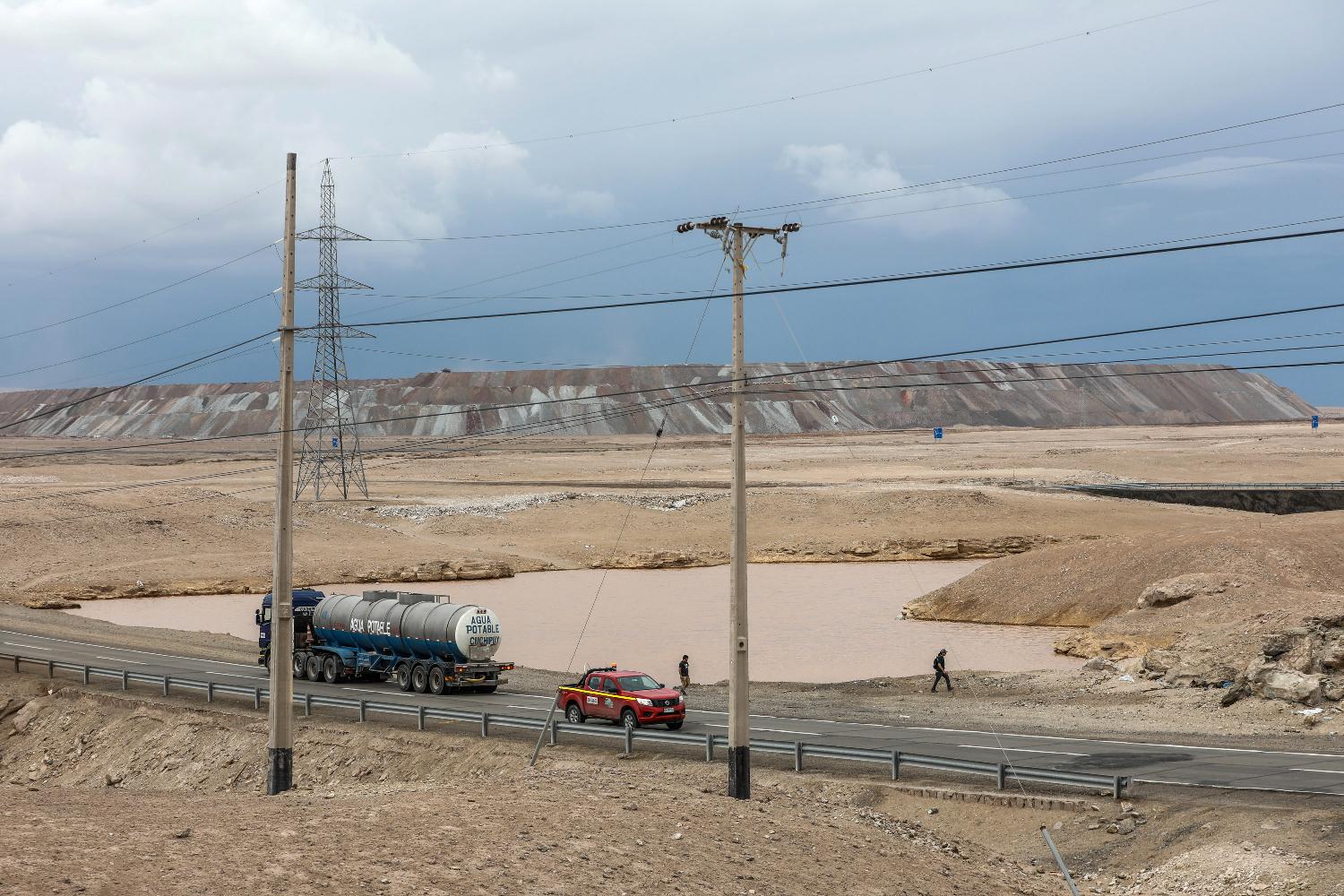
SANTIAGO, July 11 (Reuters) - Copper output at Chile state mining giant Codelco is still slumping after hitting a 25-year low last year, squeezing an already tight global market for the red metal that is in growing demand for electric vehicles and the green energy revolution. After years of sliding production at the world's top copper producer, Codelco is behind target for production in 2024, and analysts say it faces an uphill battle to make up lost ground with a second-half turnaround. Delays at key mines, accidents and management missteps were behind much of last year's slump that exacerbated a worldwide copper shortfall that pumped up global prices to a record high earlier this year. "We think that Codelco's copper production this year will be lower than in 2023 and that the trend up until now will be difficult to reverse in the remainder of 2024," said Juan Carlos Guajardo, head of local mining consultancy Plusmining. "Perhaps Codelco will try to bring forward some flows from 2025 to improve this year's numbers, but even so the production situation in 2024 does not look good." Chile is the world's dominant copper producer ahead of Peru and the Democratic Republic of the Congo, and Codelco is the Andean country's top single producer of the metal. It also faces rising debts and has been juggling a new mandate to drive Chile's state push into battery metal lithium. In a written response to questions from Reuters, Codelco said that while production had fallen in the first half of the 2024 from a year earlier, it aimed to "slightly exceed" last year's output in the second half. "We are working so output begins a long-term growth trend from 2024," the firm said, adding it had boosted "intensive" monitoring of operations and targeted improvements at key mines. A fatal accident at the Radomiro Tomic mine this year and delays to the start-up of the Rajo Inca project have hit output, which dropped year-on-year in the first half of 2024, chairman Máximo Pacheco revealed in a recent event. Longer-term issues have hit the major Chuquicamata and El Teniente mines. Pacheco ruled out adjusting Codelco's production forecast, now at 1.352 million metric tons, an internal document seen by Reuters showed, just above the 1.325 million tons in 2023. 'NO MARGIN FOR ERROR' César Pérez-Novoa, an analyst at BTG Pactual, noted that there had been some recent recovery in monthly production, but this needed to accelerate for Codelco to hit targets, which would depend on "higher operating rates and better ore grades." "This may be feasible, but at the same time there is no margin for error," he said. Codelco is launching its Rajo Inca project to extend the life of its small Salvador unit later this year, and starting partial operations at an expansion of its El Teniente underground mine. Codelco has also shaken up management as it tries to get back to annual copper production of 1.7 million tons by the end of the decade while also leading local development of lithium. Gustavo Lagos, professor in the mining department of the Catholic University in Santiago, doubted Codelco would be able to reverse the long output decline. "Production in the second semester is going to be higher than the production of the second half of 2023, but I don't know if the (annual) production of 2024 is going to be higher than that of 2023," he said. Sign up here. https://www.reuters.com/markets/commodities/chile-copper-miner-codelco-struggles-lift-output-off-25-year-low-hit-2023-2024-07-11/
2024-07-11 09:54
LONDON, July 11 (Reuters) - European fund giant DWS (DWSG.DE) New Tab, opens new tab has created a new company as part of its plans to launch the first German-regulated cryptocurrency next year, the firm's CEO told Reuters, as major financial companies jostle to launch new digital tokens. Deutsche Bank-owned DWS, which manages 941 billion euros ($1 trillion) globally, plans to go live with the first euro-denominated stablecoin to be regulated by Germany's BaFin watchdog in 2025, Stefan Hoops said. BaFin declined to comment. DWS had previously said the token would be launched by June next year. It declined to comment on whether the process was delayed. Stablecoins are digital tokens designed to keep a constant value and are backed by traditional currencies such as the U.S. dollar or euro. BaFin has yet to award an e-money licence for a stablecoin, and DWS has set its sights on being first. The company behind the token - AllUnity, a partnership between DWS and specialist firms Flow Traders and Galaxy - was incorporated in Frankfurt in June. Despite more firms showing interest in digital tokens, critics say their use cases remain unclear and untested, but Hoops said that DWS anticipated interest from different types of clients. "In the short term, we expect demand from investors in digital assets, but by the medium term we expect wider demand, for instance from industrial companies working with 'internet of things' continuous payments," Hoops said. Several major financial institutions, including PayPal (PYPL.O) New Tab, opens new tab and Societe Generale (SOGN.PA) New Tab, opens new tab, have tried issuing stablecoins, but the market remains dominated by one upstart issuer, Tether. Tether has $112 billion of its token in circulation, making up the bulk of the $162 billion stablecoin market, according to CoinGecko data. As rates have risen, Tether says it has generated billions of dollars worth of profits on its reserves, which include Treasuries, bitcoin and secured loans. Stablecoin issuers create, or "mint", the tokens and hold the underlying fiat currency in reserves, which they can then invest for yield. Regulators have expressed concerns that growing stablecoin reserves expose the broader financial system to bigger risks, because they act as a bridge between the crypto universe and mainstream financial markets. BaFin has generally been critical of cryptocurrencies and has previously called for global regulation of the industry, but it has said it views stablecoins differently. European Union rules requiring stablecoins to be regulated kicked in last month. Euro-pegged stablecoins have seen limited uptake so far compared to their dollar-linked peers. ($1 = 0.9242 euros) Sign up here. https://www.reuters.com/markets/currencies/dws-launches-jv-first-german-regulated-euro-stablecoin-2024-07-11/
2024-07-11 07:46
July 11 (Reuters) - Sibanye-Stillwater (SSWJ.J) New Tab, opens new tab said on Thursday that a cyberattack on its IT system since Monday morning has caused limited disruption to its global operations, but its core mining and processing business was operating normally. The Johannesburg-based precious metals producer said its been able to protect its data by "proactively isolating" the IT system and an investigation into the hack was on. The attack brought down its server and disrupted the system globally, James Wellsted, a company spokesperson told Reuters, adding that Sibanye has hired external experts to help identify the breach and bring the system back up. "Our global IT infrastructure was impacted since Monday morning, some things are working some are not," he said. "We are still trying to identify what's behind the attack." The company is still not aware who was behind the attack and there has not been any demands for payment, Wellsted said. Sibanye mines platinum and gold in home country South Africa. It also operates a palladium mine in Montana, U.S. and has lithium, nickel and zinc projects in Finland, France and Australia. "Our efforts remain focused on working towards the full remediation of the effects of this attack," the company said. Sign up here. https://www.reuters.com/technology/cybersecurity/platinum-giant-sibanye-says-its-system-has-been-hit-cyberattack-2024-07-11/
2024-07-11 07:30
Short bets on Thai baht, Singapore dollar lowest in 6 months Short position on Philippine peso ease to 3-month-low Bearish bets on Indonesian rupiah lowest since March July 11 (Reuters) - Short positions on most Asian currencies eased, as rising expectations of at least two rate cuts by the U.S. Federal Reserve this year and an easing dollar boosted risk sentiment, a Reuters poll found on Thursday. Bearish bets on the Singapore dollar and the Thai baht were at the lowest since early January, while those on the Indonesian rupiah eased to their lowest level since mid-March, according to a fortnightly poll of 11 analysts. Growing expectations of the Fed's two rate cuts this year after a slew of worse-than-expected economic data was the "main factor" in bearish bets easing, said Poon Panichpibool, a markets strategist at Krung Thai Bank. Fed Chair Jerome Powell has said "more good data" would build the case for the U.S. central bank to cut interest rates. Investors now await the release of June inflation data from the U.S., due later on Thursday, which is expected to show inflation cooling and make a case for a September rate cut. If the market remains certain on the Fed delivering two rate cuts this year, then high-yielding emerging market currencies such as the Indian rupee and the Indonesian rupiah could outperform low-yielding peers, Panichpibool added. The Indian rupee , the best performer in the region so far this year, was among the least-shorted currencies. Short bets on the Philippine peso was at the lowest level since early April. Philippine central bank governor said last week that it had more scope to cut interest rates at its next meeting in August after annual inflation slowed in June. The Chinese yuan remained among the most-shorted among Asian currencies. Data from China, the single biggest trading partner to many emerging Asian countries, showed that consumer price inflation came in below expectations while producer price deflation persisted, pointing to stubbornly weak demand. "Markets are anticipating further policy support for the economy and the housing sector, which could rejuvenate equity markets and support the RMB (yuan)," analysts at DBS wrote. Bearish bets on the South Korean won also eased. All responses were received before the Bank of Korea stood pat on its interest rates, saying it was time to prepare for a pivot to rate cuts. The Asian currency positioning poll is focused on what analysts and fund managers believe are the current market positions in nine Asian emerging market currencies: the Chinese yuan, South Korean won, Singapore dollar, Indonesian rupiah, Taiwan dollar, Indian rupee, Philippine peso, Malaysian ringgit and the Thai baht. The poll uses estimates of net long or short positions on a scale of minus 3 to plus 3. A score of plus 3 indicates the market is significantly long U.S. dollars. The figures include positions held through non-deliverable forwards (NDFs). The survey findings are provided below (positions in U.S. dollar versus each currency): ) Sign up here. https://www.reuters.com/markets/currencies/asian-fx-bears-ease-us-rate-cut-bets-solidify-2024-07-11/

2024-07-11 07:27
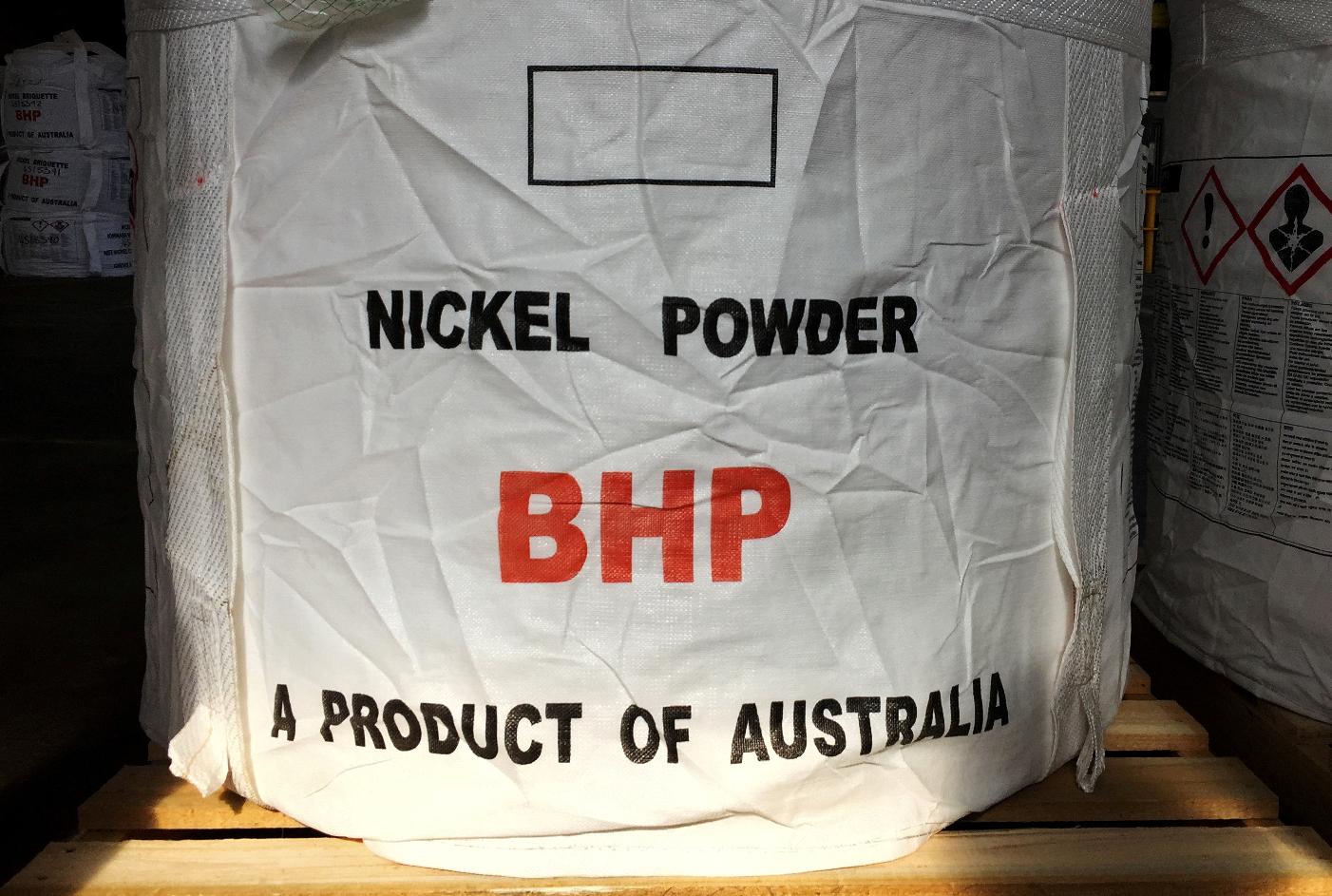
MELBOURNE, July 11 (Reuters) - Australia's BHP Group (BHP.AX) New Tab, opens new tab will temporarily suspend its Nickel West operations and West Musgrave project from October, the miner said on Thursday, as it reels from a plunge in metal prices and an oversupply in the global market. The world's largest listed miner intends to review its decision to temporarily suspend its Western Australia nickel operations by February 2027. "We have not been able to overcome the substantial economic challenges driven by a global oversupply of nickel," said Geraldine Slattery, BHP's Australia president. BHP will invest around $300 million every year after a transition period to support a possible re-start of the nickel business. Nickel prices have recovered from three year lows below $16,000 touched at the start of the year, but they are still down by more than a quarter from year ago levels. Global nickel producers have been squeezed by Indonesia's emergence as a supply powerhouse and by the move away from using nickel in batteries, which have contributed to a 40% price slump in the metal over the past year to around $16,800 a metric ton. Australia has been trying to develop a processing industry to add value to mineral resources like copper, nickel and rare earths that are key to the transition away from fossil fuels, including moving downstream into battery chemicals production. But producers are facing structural issues such as low prices and high construction and labour costs. Australian battery metals producer IGO (IGO.AX) New Tab, opens new tab also said on Thursday it has paused a study to develop a plant to make precursor materials for battery chemicals amid low nickel prices. BHP will release its quarterly production report next Wednesday. Sign up here. https://www.reuters.com/markets/commodities/bhp-temporarily-suspend-western-australia-nickel-operations-2024-07-11/
2024-07-11 07:26
NEW DELHI, July 11 (Reuters) - India's state-run refiners are jointly negotiating a long-term oil import deal with Russia, a government source aware of the development said on Thursday. India and Russia have yet to finalise terms, such as the payment currency, for the imports, the source said, declining to be named because of the sensitivity of the matter. "Joint negotiations of state refiners with Russia are already happening," the source said. Indian private refiners Nayara Energy and Reliance Industries (RELI.NS) New Tab, opens new tab have already signed term deals for Russian oil imports. Nayara is part-owned by Russian oil major Rosneft (ROSN.MM) New Tab, opens new tab. Indian private refiners may join the negotiations with their state-run peers later, the source said. Asia's third-largest economy needs "predictable and stable" oil supplies as it is expanding its refining capacity to meet rising fuel demand, the source said. Russia is the top oil supplier to India, the world's third biggest oil importer and consumer. India has emerged as the biggest buyer of Russian seaborne oil sold at a discount as Western entities have shunned purchases due to a raft of sanctions imposed on Russia over its February 2022 invasion of Ukraine. During Prime Minister Narendra Modi's visit to Russia this week, India had sought energy deals with Rosneft (ROSN.MM) New Tab, opens new tab and other leading Russian oil firms. Sign up here. https://www.reuters.com/markets/commodities/indian-state-refiners-talks-long-term-oil-import-deal-with-russia-government-2024-07-11/