2024-07-10 10:47
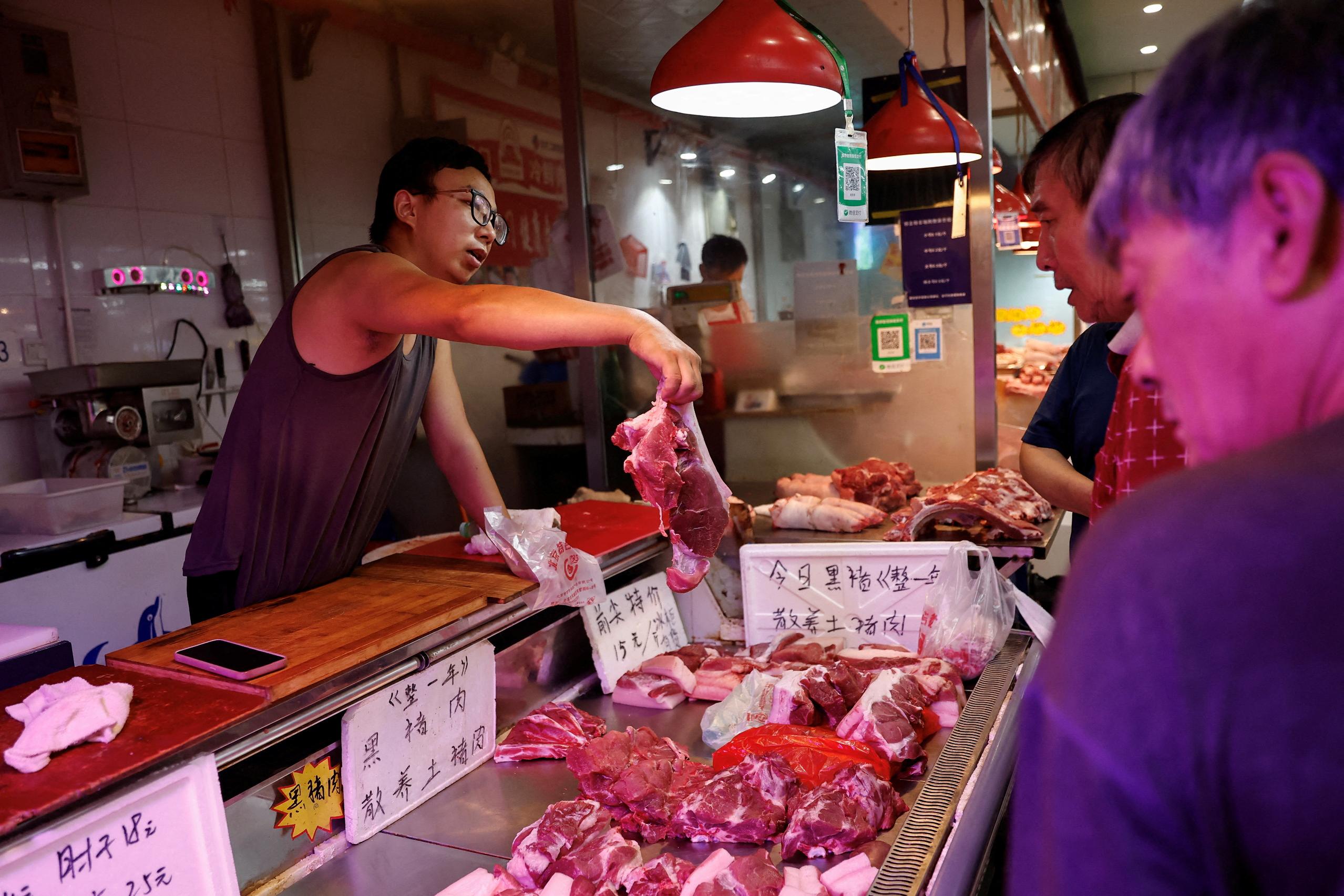
BOI committed to digital shekel plans Israel's central bank unlikely to launch ahead of ECB Deputy governor says BOI carrying out behavioural study BOI trying to gauge if public would accept digital shekel JERUSALEM, July 10 (Reuters) - The Bank of Israel (BOI) remains committed to plans for a digital shekel currency to improve Israel's payments system and foster innovation, but is unlikely to launch one ahead of other advanced economies. "We’re all waiting for the first western central bank to pull the trigger, which is almost certainly going to be the ECB. And then you may see a rush of countries going forward with it," Bank of Israel Deputy Governor Andrew Abir told Reuters. As of March, 134 countries representing 98% of the global economy were exploring digital versions of their currencies, which would eventually replace cash. Some countries, such as China, are in advanced stages of pilot programs, while the U.S. Federal Reserve is lagging. The BOI first began looking into a possible central bank digital currency (CBDC) in 2017 as a way of creating a more efficient payments system and stepped up its research and preparation in November 2020. The bank has been experimenting with a digital shekel along with its Hong Kong, Swedish and Norwegian counterparts, as well as the Bank for International Settlements. It has invited both fintech and traditional financial companies to participate in its project, known as the "Digital Shekel Challenge" to demonstrate possible use cases. Despite the planning and an increasingly digital global economy, the BOI still says it cannot be sure it will ultimately launch a digital shekel. Its experiment is considered an "action plan" to be ready when the bank deems appropriate and necessary. Similarly, the ECB has said it is likely, but not inevitable, that a digital euro would be introduced in Europe, which is dependent on cross-border payment services from elsewhere, particularly U.S. giants Visa and Mastercard. "The big question is whether the public will adopt a digital currency," Abir said, adding the BOI is doing a behavioural study on the subject. QUESTIONS OVER TAKE UP "There’s a big jump from some study to persuading people to use it. You have to have a good set of use cases." Abir wants an eventual digital currency to pay interest to create competition with bank deposits and provide an incentive for the public to hold it. Israel's banking system is highly concentrated, with two large banks dominating more than 60% of the market. "The main incentive for us is to create a level playing field for payment providers and allow them to compete with the banks," he said. "An advantage of a CBDC is that the payment provider does not hold your money so you don’t (have) a credit exposure to that company. This allows a lower level of supervision and capital requirement than a traditional payments provider that holds your money, even for brief moments in time." A digital shekel, Abir said, will allow the public to pay with the central bank's money "everywhere and in any transaction we choose." Should the BOI decide to launch a digital shekel, it would most likely need approval from the finance and justice ministries. "It will take time before it enters all of our lives if we decide to implement it," Abir said. "But it has the potential to be the next revolution in payment systems." Sign up here. https://www.reuters.com/markets/currencies/bank-israel-waiting-digital-euro-ahead-digital-shekel-launch-2024-07-10/
2024-07-10 10:34
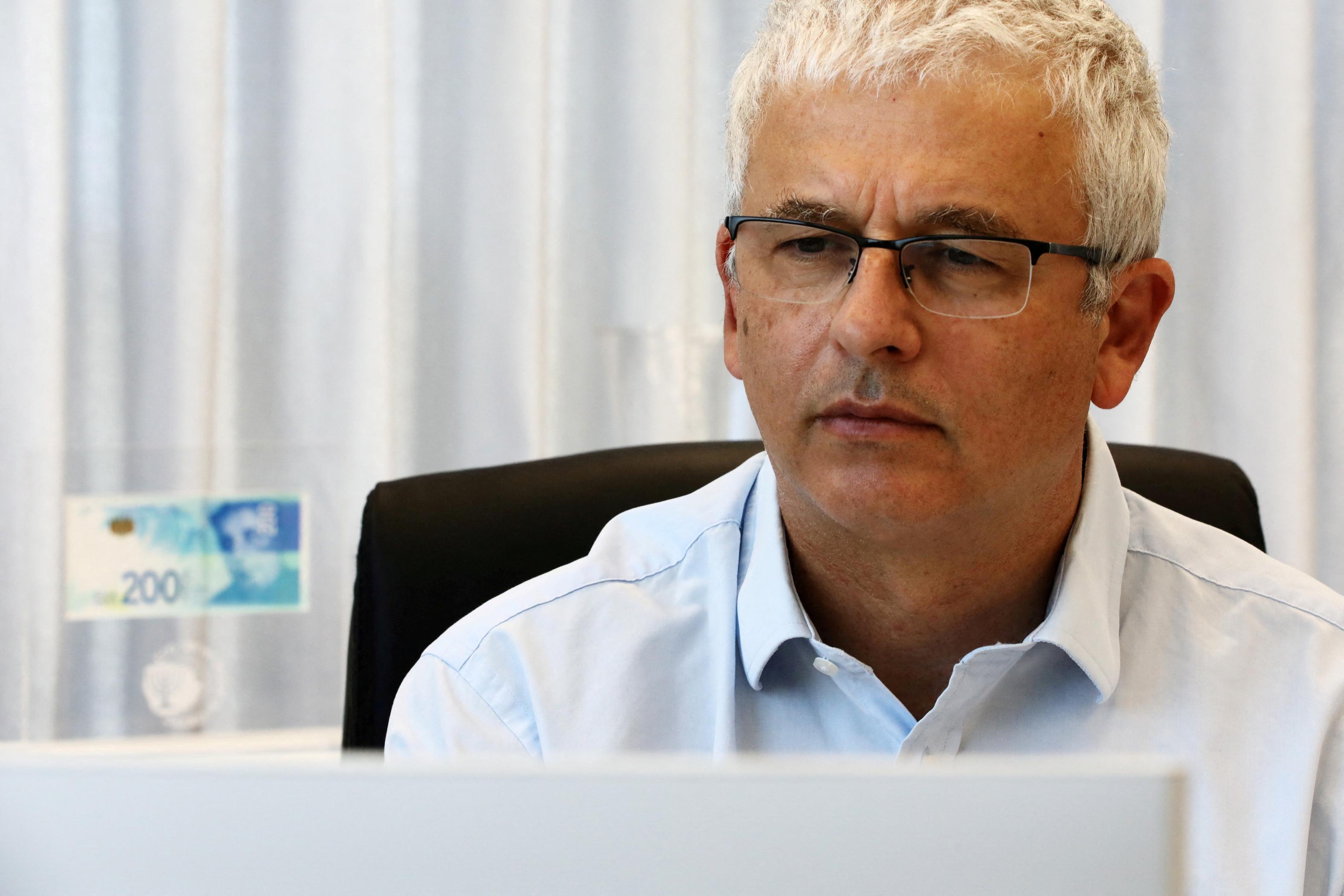
MUMBAI, July 10 (Reuters) - The Indian rupee ended marginally lower on Wednesday due to slight pressure from importers' dollar bids, but was stuck in a narrow range for most of the session amid mostly quiet price action in its Asian peers. The rupee closed at 83.52 against the U.S. dollar, slightly weaker than its close of 83.4850 in the previous session. The currency hovered between 83.4825 and 83.5225 during the day's session. Dollar bids from importers, including local oil companies, and foreign banks pressured the rupee slightly, a foreign exchange trader at a private bank said. Asian currencies were mostly rangebound, while the dollar index held above 105 after Federal Reserve Chair Jerome Powell struck a balanced tone in his remarks to US lawmakers on Tuesday. While the Fed chair said the labour market was better balanced and acknowledged progress on cooling inflation, he steered clear of signalling a timeline for potential rate cuts by the central bank. The odds of a rate cut in September have eased slightly to 73% from about 76% on Tuesday, according to CME's FedWatch tool. Meanwhile, dollar-rupee forward premiums slipped. The 1-year implied yield fell 1 basis point to 1.65%, with traders pointing to likely profit booking by paid positions. "Importers continue to maintain their pace of buying dollars due to elevated oil prices, which keeps downward pressure on the rupee," said Amit Pabari, managing director at FX advisory firm CR Forex. The focus now turns to remarks from other Fed policymakers later in the day, followed by the U.S. consumer inflation data on Thursday. Economists polled by Reuters expect month-on-month core U.S. CPI to have held steady at 0.2% in June. Sign up here. https://www.reuters.com/markets/currencies/rupee-ends-tad-lower-after-hovering-narrow-band-forward-premiums-slip-2024-07-10/

2024-07-10 10:25
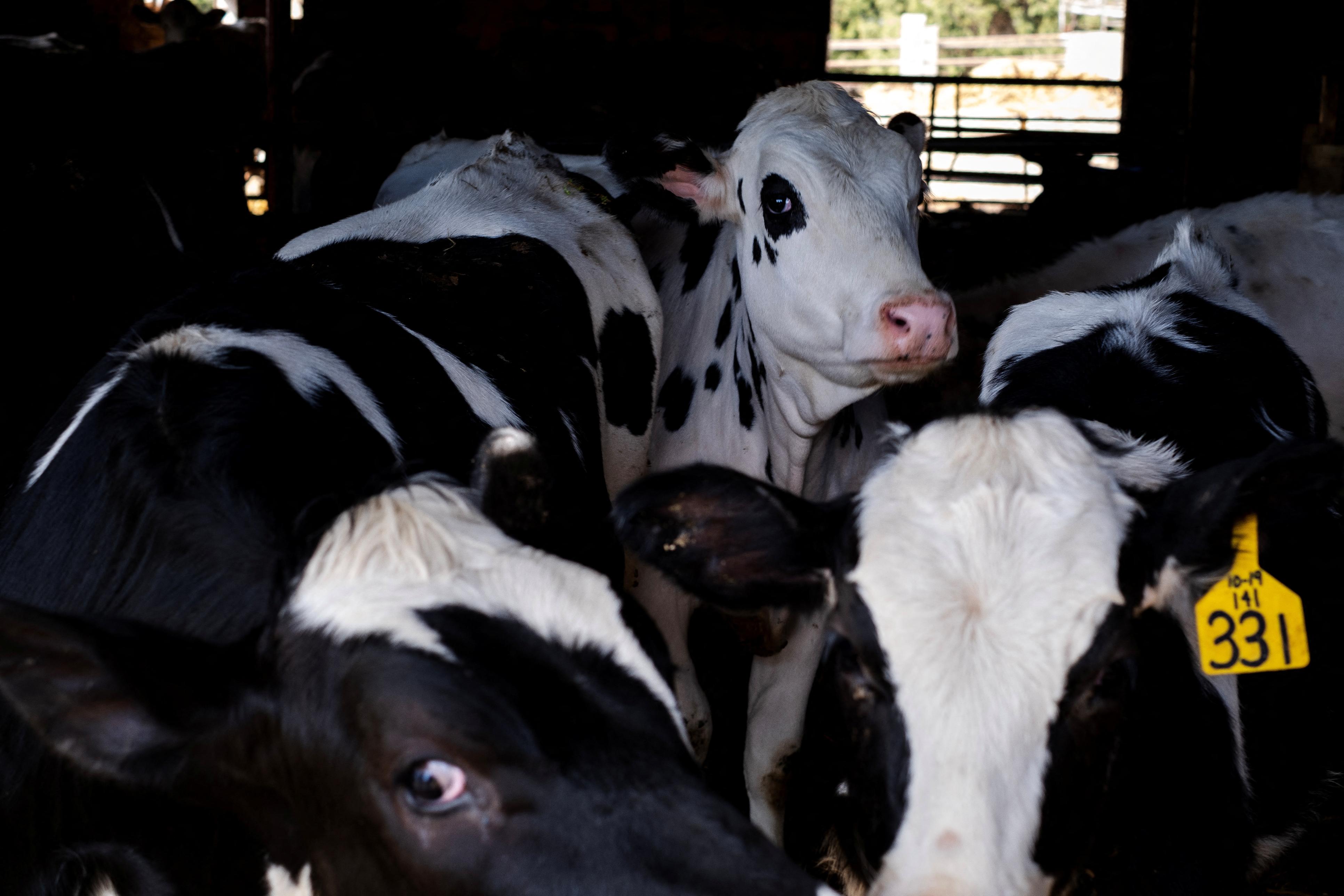
July 10 (Reuters) - States in the U.S. are playing a key role in the nation's response to a growing outbreak of avian flu among dairy cattle that has also infected a small number of humans. The states are chiefly responsible for testing cows and people for the virus, but they take different approaches. Scientists tracking bird flu are increasingly concerned that current surveillance efforts are not sufficient. Federal officials have warned that further spread of the virus among cows could heighten the risk of more human infections, though the risk to the general public remains low. As of July 9, bird flu had infected 139 dairy cow herds across 12 states since March, according to the U.S. Department of Agriculture. Four dairy workers have also been infected, the most recent in Colorado on July 3. Here is how the 12 U.S. states with bird flu cases in dairy herds are handling human and cattle testing: HUMAN TESTING As of early July, 99 people had been tested for bird flu in four states this year, according to state health officials: Michigan (56 people), Texas (20), Idaho (8), Colorado (8) and New Mexico (7). Officials in North Carolina, Ohio, South Dakota and Minnesota told Reuters they had not tested any people since the dairy outbreaks began. The states varied in their testing criteria, considering factors like whether a patient was exposed to sick animals or displayed symptoms. Health departments in Wyoming and Kansas did not respond to requests for their human testing figures. Iowa's health department said it is monitoring all people exposed to the virus for symptoms but did not provide a figure for any human tests. The Centers for Disease Control and Prevention has said at least 53 people have been tested for bird flu. The figures are different because the CDC is only reporting tests done on people exposed to sick dairy cattle, whereas states are also in some cases testing people exposed to other sick animals like cats, said CDC spokesperson Jason McDonald. The CDC advises clinicians to notify local and state health departments if they wish to test someone for bird flu. The doctor should then notify CDC immediately if the tests are positive or inconclusive. CATTLE TESTING States with bird flu in dairy herds are testing cattle at the behest of farmers who suspect infections, for research, or for other reasons, agriculture department officials said. Iowa is additionally requiring testing for dairy herds within a 20-kilometer (12.4-mile) radius of any poultry farms with bird flu infections, which is currently about 25 to 35 herds, said Don McDowell, communications director for the Iowa Department of Agriculture and Land Stewardship. Minnesota is testing farms with contact to infected herds, said Brian Hoefs, the state's chief veterinarian and executive director of the Minnesota Board of Animal Health, tracing suppliers, equipment and staffing that had access to an infected farm. The USDA in May began requiring states to test lactating dairy cows before they were shipped across state lines, the only national testing requirement the agency has issued. About 6,600 cows have been tested under that order, according to USDA data. A spokesperson for the USDA said the agency is committed to working with states on their efforts to contain and eliminate bird flu, including possible further testing requirements. Sign up here. https://www.reuters.com/business/healthcare-pharmaceuticals/how-us-states-are-testing-cattle-humans-bird-flu-2024-07-10/
2024-07-10 10:24
DUBAI, July 10 (Reuters) - Saudi Aramco (2223.SE) New Tab, opens new tab expects to raise $6 billion from its three-part bond sale on Wednesday, the oil giant's first foray into the debt markets in three years, a document showed. Final terms of the deal include $2 billion from a 10-year tranche at 105 basis points (bps) over U.S. Treasuries, $2 billion in 30-year notes at a 145 bps premium and $2 billion in 40-year paper at a 155 bps premium, the document from one of the banks arranging the sale showed. Demand for the three tranches topped $31.5 billion, drawing over $11 billion for each of the 10- and 30-year tranches and more than $9.5 billion for the 40-year bonds, the document showed. Saudi Arabia raised $12.35 billion from a much-anticipated secondary share sale in Aramco after increasing the offering, Merrill Lynch, which was in charge of the so-called greenshoe option, said on Wednesday. The bond sale was Aramco's first since it raised $6 billion from three-tranche sukuk, or Islamic bonds, in 2021, taking advantage of favorable market conditions. Aramco has long been a cash cow for Saudi Arabia, which is seeking funds to invest in new industries and wean its economy away from oil under its Vision 2030 plan. Aramco expects to pay out $124.3 billion in dividends for 2024, most of which goes to the government, which directly owns about 81.5% of the company. Its sovereign wealth Public Investment Fund owns another 16%. With the latest bond sale Aramco joined top firms and governments in the Gulf rushing to markets this year to fund investments. Proceeds will be used for general corporate purposes. The spreads have tightened from initial guidance of around 140 basis points (bps) over U.S. Treasuries (UST) for the 10-year paper, 180 bps over UST for the 30-year, and 195 bps for the 40-year, IFR reported. State-owned companies in emerging markets issued dollar-denominated bonds worth $21.4 billion in the first half of the year - up 22% from a year earlier, investment firm Tellimer said in a report. Saudi state-owned firms led the group with 23% of the overall issuance value, while the government raised $12 billion of dollar-denominated bonds in January and $5 billion in sukuk in May. Aramco last month was awarded $25 billion worth of contracts for its gas expansion plans. It also said it would buy 10% of Renault (RENA.PA) New Tab, opens new tab and Geely's (0175.HK) New Tab, opens new tab thermal engines joint venture Horse Powertrain, and announced a non-binding deal with U.S. energy firm Sempra to buy liquefied natural gas. Aramco had flagged in February it was likely to issue bonds this year. Its 40-year tranche will become its second-longest dated bonds after $2.25 billion of notes due in November 2070. Sign up here. https://www.reuters.com/business/energy/saudi-aramco-kicks-off-sale-three-part-bonds-ifr-reports-2024-07-10/
2024-07-10 10:22
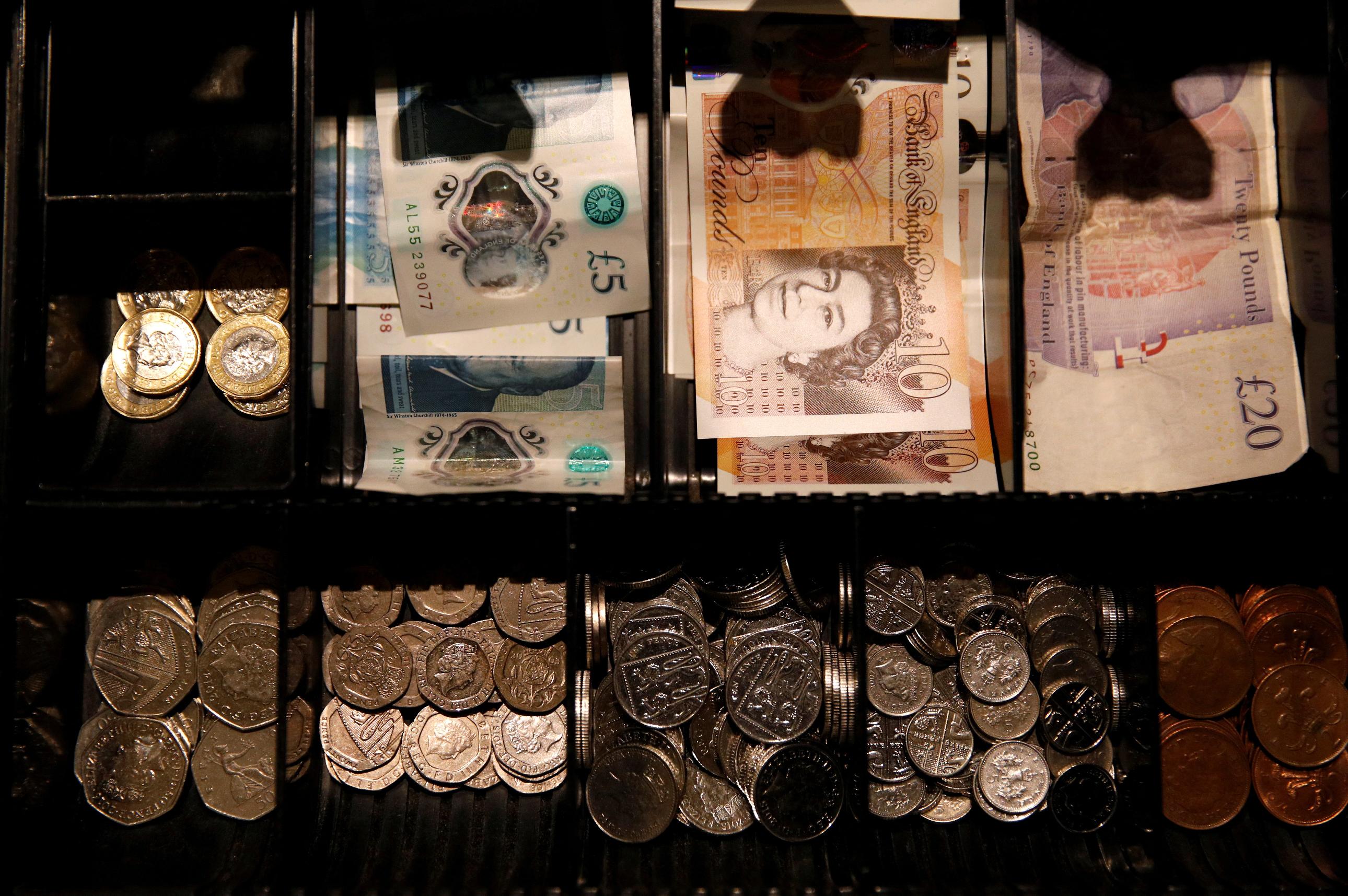
LONDON, July 10 (Reuters) - The pound held near one-month highs on Wednesday, supported by the belief among investors that U.S. interest rates are set to fall sooner than many had predicted, which dented the dollar. Two Bank of England policymakers speak later in the day, which may offer the pound more near-term direction. BoE chief economist Huw Pill and Monetary Policy Committee member Catherine Mann speak at separate events. The main driver for the sterling/dollar pair on Wednesday came from the dollar side, after Federal Reserve Chair Jerome Powell told lawmakers at his semi-annual testimony the day before that the U.S. is "no longer an overheated economy." Powell said he did not want to send any signals about the timing of a possible rate action, but investors took his remarks as a sign the central bank is edging closer to its first cut since 2020. Sterling was last up 0.16% at $1.2807, having hit a session peak of $1.28455 on Monday, its highest since June 12. It is up 0.4% week-on-week and has gained 1.2% so far in July. Futures markets show traders are placing a 60% chance of a rate cut at the Bank of England's meeting on Aug. 1, with a cut in September fully priced in. As far as sterling is concerned, following the Labour party's widely expected landslide victory in last week's general election, the focus is squarely back on monetary policy, rather than politics. Thursday's macro calendar includes a reading of economic growth for the three months to May, while next week brings the consumer price index for June. CPI hit the BoE's 2% target in May, thanks in large part to a drop in food prices. But a sub-component of service-sector inflation showed price pressures in that part of the economy are still running hot enough to make an August cut less of a done deal. "We may need to see next week's UK CPI data to obtain new intel, but the UK swaps market price 15 bps of cuts (60% implied) for the 1 August BoE meeting, and 47 bps, or almost two full 25-bp cuts, priced by December," Pepperstone head of research Chris Weston said in a note. Sign up here. https://www.reuters.com/markets/currencies/sterling-steady-one-month-highs-powell-remarks-dent-dollar-2024-07-10/
2024-07-10 10:08
A look at the day ahead in U.S. and global markets from Mike Dolan Even if U.S. inflation remains too irksome for the Federal Reserve to sound the all clear, there's much less trepidation overseas. Fed chair Jerome Powell gave little away in Tuesday's congressional testimony, remaining coy about the timing of a first interest rate cut as the price picture remains murky but also doffing his cap to a softening jobs market. Although he reprises the appearance to the House Financial Services Committee on Wednesday, nothing he said shifted the dial much. Exactly 50 basis points of Fed easing remains priced in futures for the rest of this year - twice what the Fed itself has indicated. Ten-year Treasuries seem stuck just under 4.3% as some $39 billion of paper goes under the hammer later and following a decent take-up of 3-year notes on Tuesday. But with Thursday's June U.S. consumer price update ensuring an eerie calm remains over world markets, leaving U.S. stock benchmarks (.SPX) New Tab, opens new tab, (.IXIC) New Tab, opens new tab to eke out another series of record highs yesterday, China's equivalent price report for last month showed how weak the global goods inflation pulse has become. China's consumer price growth barely managed to stay positive for a fifth month in June. At just 0.2%, it was half the annual rate expected and factory gate deflation persisted. Mainland Chinese stocks (.CSI300) New Tab, opens new tab resumed their relentless decline after Tuesday's brief bounce and are back in the red for the year - and, remarkably, 10% below the level they were five years ago. The yuan also edged lower. What's more, a typically hawkish Reserve Bank of New Zealand opened the door to monetary easing of its own even as it held policy rates steady on Wednesday. "There are signs inflation persistence will ease in line with the fall in capacity pressures and business pricing intentions," it said in what was read as a dovish commentary. The kiwi dollar fell 0.7% as markets priced an earlier start to rate cuts and it hit a 16-month low against the Australian dollar . Next up on Wednesday is Bank of England chief economist Huw Pill - likely a swing voter in the BoE's policymaking council. UK markets have grown slightly more confident of a first BoE rate cut as soon as next month now that last week's election is out of the way - and money markets see a 60% chance of a move on August 1. The pound was firmer against a steady dollar. French markets also steadied, with stocks (.FCHI) New Tab, opens new tab and bonds there rallying after a fresh post-election wobble on Tuesday when Moody's said the ensuing parliamentary gridlock was negative for the country's credit rating. Back on Wall Street, the sixth gain in a row for the S&P500 disguised a down day for most of the index's constituents and Big Tech megacaps again flattered the close. After Tesla's recent recovery, all seven of the so-called 'Magnificent 7' of top stocks are now back in positive territory for the year. And ahead of the second-quarter U.S. earnings season, the tech picture still looks generally rosy. TSMC (2330.TW) New Tab, opens new tab, the world's largest contract chipmaker, reported strong growth in second-quarter revenue that handily beat market forecasts on the back of booming demand for artificial intelligence (AI) applications. Its stock rose 0.5%. Key developments that should provide more direction to U.S. markets later on Wednesday: * Federal Reserve chair Jerome Powell reprises congressional testimony to the House Financial Services Committee; Chicago Fed President Austan Goolsbee, Fed Governor Lisa Cook and Fed Governor Michelle Bowman speak; Bank of England chief economist Huw Pill and BoE policymaker Catherine Mann speak * NATO Summit in Washington * US Treasury auctions $39 billion of 10-year notes Sign up here. https://www.reuters.com/markets/us/global-markets-view-usa-2024-07-10/