2024-07-05 10:08
GENEVA, July 5 (Reuters) - Hurricane Beryl caused devastating damage in several Caribbean islands, the International Federation of Red Cross and Red Crescent Societies (IFRC) said on Friday as the Category 3 storm churned towards Mexico's Yucatan Peninsula. Storms of a similar magnitude to the unusually fierce early season hurricane are expected to become more common due to the effects of climate change, said Rhea Pierre, the IFRC's disaster manager for the English and Dutch-speaking Caribbean. "The severity of damages in the aftermath of Hurricane Beryl are tangible and devastating," said Pierre, speaking to reporters in Geneva via video link from Port of Spain in Trinidad and Tobago. "Unfortunately, this new reality of unprecedented hurricanes is becoming the annual and ever present reality for the Caribbean countries who are facing the brunt of climate change," she said, adding that higher sea surface temperatures caused storms to "strengthen quickly into major hurricanes". The Office for the Coordination of Humanitarian Affairs (OCHA) said that humanitarian assessments were ongoing to get a better understanding of the extent of the damage caused by Beryl, which the World Meteorological Organization said was setting the tone for a very dangerous hurricane season. OCHA spokesperson Vanessa Huguenin said partners in Grenada had reported extreme damage to the islands of Carriacou and Petite Martinique, where 70% and 97% of buildings were damaged, respectively. In Saint Vincent and the Grenadines, 90% of homes on Union Island were affected, while nearly all buildings on the island of Canouan sustained damage, Huguenin said. "We are only at the beginning of the hurricane season. We still have a staggering five months to go," Pierre said. Sign up here. https://www.reuters.com/world/americas/hurricane-beryl-leaves-devastating-damage-caribbean-ifrc-says-2024-07-05/
2024-07-05 10:06
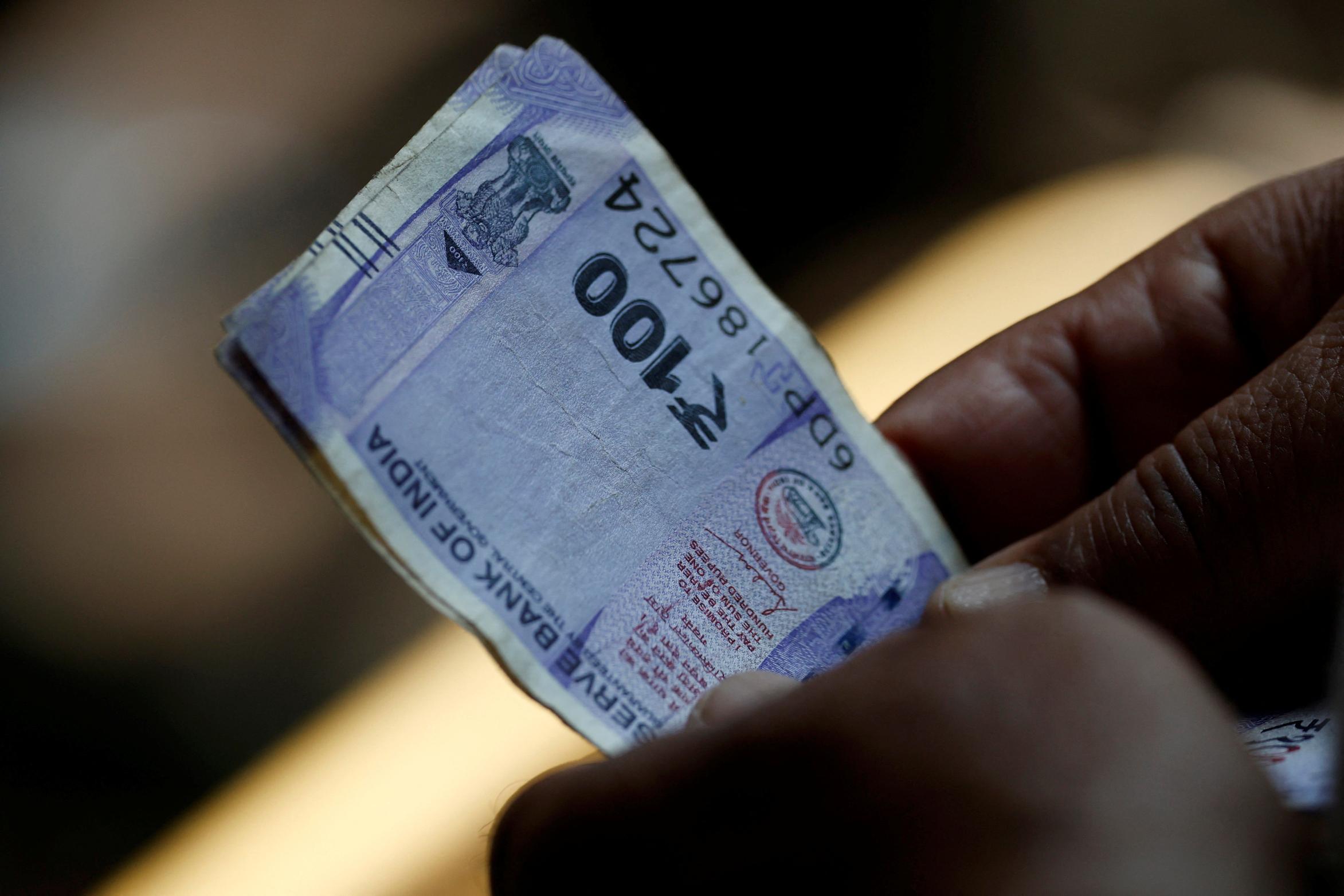
MUMBAI, July 5 (Reuters) - The Indian rupee closed nearly unchanged on Friday as importer dollar demand weighed on the currency, even though most of its Asian peers gained ahead of the release of closely watched U.S. jobs data later in the day. The rupee ended at 83.4850 against the U.S. dollar, barely changed from its close at 83.4925 in the previous session. The currency was down 0.1% week-on-week. Major Asian currencies rose between 0.1% to 0.3% but the rupee lingered in a tight band as dollar demand from local oil companies and importers capped gains, traders said. The dollar index fell 0.2% to hit its lowest in three weeks at 104.95, pressured by strength in the euro and the British pound. The rupee is expected to "continue trading sideways between 83.35 and 83.70," Dilip Parmar, a foreign exchange research analyst at HDFC Securities said. The currency's rangebound price action has also driven down near-term volatility expectations with the 1-month implied volatility dropping to 1.8%, the lowest since mid-March. Focus now turns to the U.S. non-farm payrolls report due later in the day, which is expected to influence expectations of when the Federal Reserve may begin to ease policy rates. Weakness in economic data released earlier in the week boosted odds of a Fed rate cut in September to 74%, up from about 66% a week earlier, according to the CME's FedWatch tool. Data due on Friday is expected to show that U.S. unemployment rate held steady at 4% in June while the economy added 190,000 jobs, down from 272,000 in the previous month, according to economists polled by Reuters. Sign up here. https://www.reuters.com/markets/currencies/rupee-closes-flat-logs-weekly-decline-us-jobs-data-focus-2024-07-05/
2024-07-05 10:05
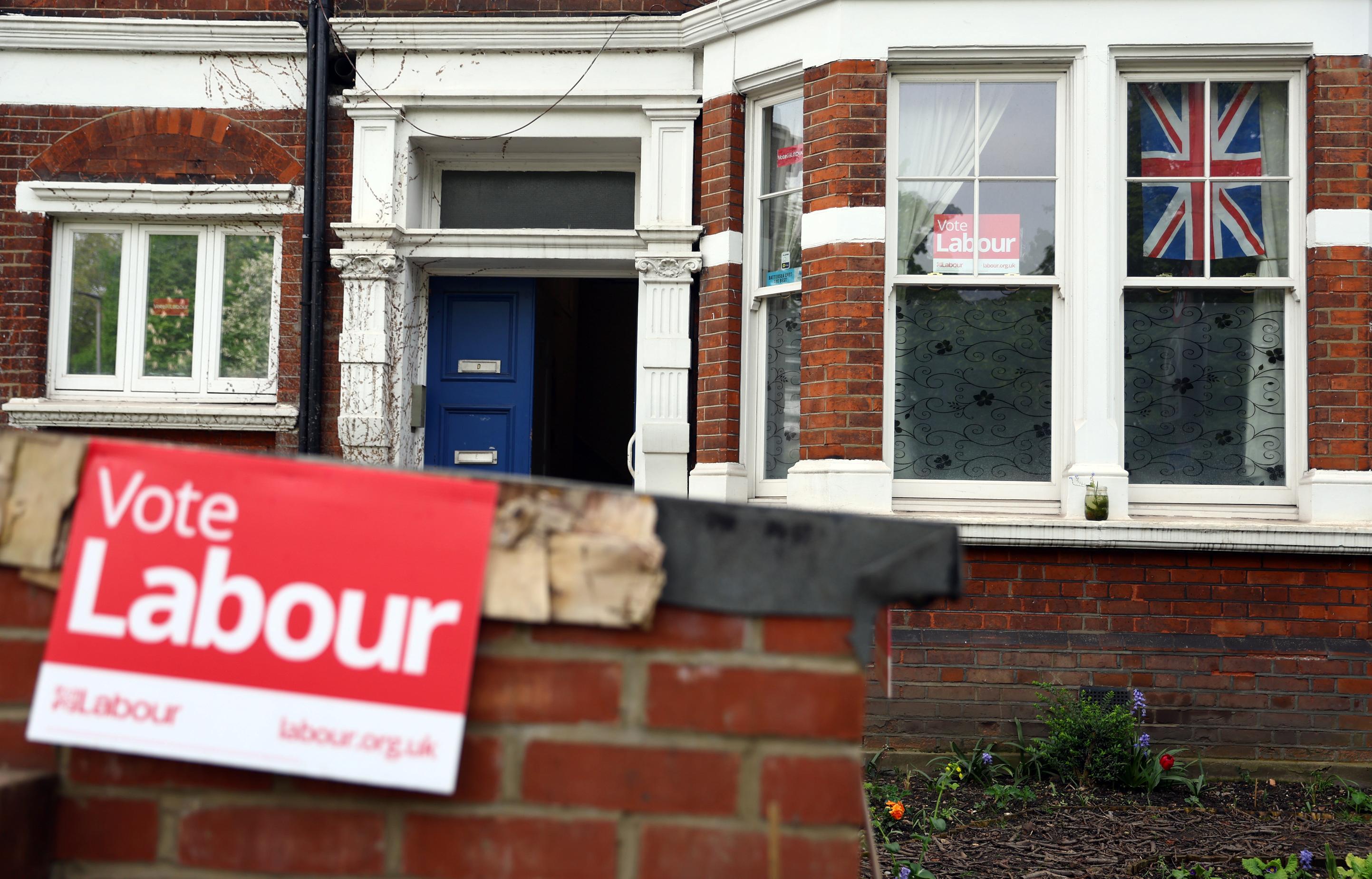
A look at the day ahead in U.S. and global markets from Mike Dolan While U.S. markets return from the Independence day holiday to assess significant cooling of the labor market stateside, British markets rallied on a long-forecast landslide for the UK's opposition Labour Party in Thursday's elections. The combination is weighing further on the dollar (.DXY) New Tab, opens new tab early on Friday, with the index down for the fourth straight day and hitting its lowest in three weeks ahead of the June national employment report. Sterling , close to its best levels since the Brexit vote in 2016 on a trade-weighted basis , hit its highest since June 13 against the dollar. A litany of soft labor market soundings from Wednesday - weekly jobless claims, layoffs and private sector hiring for last month all missed forecasts and colored in a picture of weakening growth into mid-year. The Atlanta Federal Reserve's "GDPNow" real time estimate is down to 1.5% and U.S. economic surprises are at their most negative in two years. U.S. payrolls growth is expected to have slowed to 190,000 in June - down more than 80,000 from May - and annual average earnings growth is expected to have eased to 3.9% from 4.1%. Although the unemployment rate is expected to hold steady at 4.0%, a tick higher to 4.1% would ring the so-called Sahm Rule - a formula developed by former Fed economist Claudia Sahm that suggests a half point rise in the rolling three month jobless rate average above the low of the prior year flags recession. Despite ongoing equivocation from Fed officials, markets are back almost fully priced for two rate cuts this year. That now sees an 80% chance of a first move in September, as unlikely as that seems just before divisive U.S. elections. Ten-year Treasury yields were fraction softer ahead of Friday's bell, with Wall St futures steady and looking to sustain record highs hit for the main indexes on Wednesday as second-quarter corporate earnings start to stream in next week. But the pound and UK stocks welcomed the expected landslide for the UK Labour Party, which returns to power after 14 years with what is estimated to be at least a whopping 170 seat majority. British mid-cap stocks captured by the FTSE 250 (.FTMC) New Tab, opens new tab index jumped almost 2% early on Friday and the spread on five-year UK gilt yields over German government bonds fell to its lowest in three weeks on hopes that the incoming government will provide a period of economic stability after an often tumultuous period of Conservative Party rule. British home building firms stood out, with an index tracking their shares up 2.3%. (.FTNMX402020) New Tab, opens new tab. Unlike France, where Marine Le Pen's National Rally party made historic gains in an election last Sunday, overall the British public has plumped largely for center or center-left parties. Countrywide, about 20 million people voted for Labour, Liberal Democrats, Green and Scottish Nationalists as opposed to about 10 million for Conservatives and the far right Reform UK Party. But French markets have rallied this week too, as tactical positioning and voting ahead of Sunday's second-round of assembly elections there look to prevent the far right getting an overall majority and pointing to a hung parliament there. French (.FCHI) New Tab, opens new tab and euro zone (.STOXXE) New Tab, opens new tab stocks and the euro currency were about 0.5% higher on Friday. The French 10-year government bond premium over Germany's was at its lowest in three weeks at 66 basis points. The big other currency mover this week has been Brazil's real , which strengthened another 1% on Thursday below 5.49 per dollar after Brazilian President Luiz Inacio Lula da Silva ordered his economic team to comply with the country's fiscal framework and approved suggestions of spending cuts, the country's finance minister said. Real weakness this year saw it drop more than 10% to more than two-year lows on concerns about fiscal sustainability in Latin America's biggest economy. Lula da Silva said on Tuesday he was worried about the recent weakness of the currency, adding that "something" needed to be done to tackle what he called "speculation". Elsewhere, the China stocks finished the week at a 4-1/2-month low, weighed down by financial and consumer shares. China's mainland index (.CSI300) New Tab, opens new tab has now wiped out all its gains for the year. Key developments that should provide more direction to U.S. markets later on Friday: * US June employment report * UK election results due * New York Federal Reserve President John Williams speaks in India; European Central Bank President Christine Lagarde speaks in France Sign up here. https://www.reuters.com/markets/us/global-markets-view-usa-2024-07-05/
2024-07-05 08:53
July 8 (Reuters) - Federal Reserve Chair Jerome Powell's testimony and U.S. inflation data top the agenda in the week to come, with U.S. banks reporting earnings and rate decisions due in New Zealand and South Korea. Meanwhile, the tectonic plates of politics continue shifting, with France's Sunday election following hot on the heels of the UK vote. Here is your look at what matters for markets in the coming week from Makhaila Gause and Lewis Krauskopf in New York, Kevin Buckland in Tokyo, Yoruk Bahceli in Amsterdam and Marc Jones in London. 1/INFLATION UPDATE Thursday's monthly U.S. consumer price index reading will shape views on whether the Fed could cut interest rates in the coming months. The June reading is expected to have climbed 0.1%, according to a Reuters poll, after being unexpectedly unchanged in May. Data late last month showed another inflation measure, the personal consumption expenditures price index, rose 2.6% on an annual basis - suggesting inflation is cooling, but the measure was above the Fed's target of 2%. That comes of course after Powell's testimony before Congress on Tuesday. He told a conference in Portugal this week that the U.S. is back on a "disinflationary path," but policymakers need more data before cutting interest rates. 2/BANK EARNINGS Higher interest rates and an uncertain economic environment are casting a cloud over U.S. bank earnings, with the second-quarter reporting season kicking off. JPMorgan Chase (JPM.N) New Tab, opens new tab, Citigroup (C.N) New Tab, opens new tab and Wells Fargo (WFC.N) New Tab, opens new tab will report second-quarter earnings on July 12. Bank of America (BAC.N) New Tab, opens new tab will release its results on July 16. The largest U.S. lender, JPMorgan, is expected to report earnings per share (EPS) of $4.69, according to LSEG estimates - below $4.75 a year earlier. Bank of America's EPS is forecast to slide to 79 cents from 88 cents a year earlier, though EPS at Citi and Wells Fargo are projected to climb. Executives' commentary on the path of interest rates will remain a key focus, especially after industry leaders cited improving conditions for investment banking, analysts said. 3/TAKE TWO France went back to the polls on Sunday for the second round of its snap election, with a leftist alliance unexpectedly emerging in the top spot but with no group winning a majority. Centrist President Emmanuel Macron has ended up with a hugely fragmented parliament, potentially weakening France's role in the European Union and elsewhere and making it hard for anyone to push through a domestic agenda. Market reaction on Monday was muted: French shares fell, the risk premium of French bonds over German ones rose, and the euro dipped on the prospect of tough negotiations on forming a government. What comes next is uncertain, and there is a risk of policy paralysis that could make it even harder to improve stretched finances in Europe's third-largest economy that have left Paris facing European Union disciplinary measures. 4/PONDERING POLICY PIVOTS Investors are hungry for clues on whether rate cuts are coming this year at the Reserve Bank of New Zealand and the Bank of Korea. Both central banks have taken a cautious stance amid stubbornly high inflation, and are widely expected to keep rates steady at 15-year highs at their meetings on Wednesday and Thursday, respectively In New Zealand in particular, policymakers even flagged the risk of another hike this year, with a cut not projected until late 2025. Markets are more optimistic, pricing for a single cut this year to come as early as October, as inflation cools, business sentiment deteriorates and domestic demand weakens. South Korea has had even more pronounced indications of prices coming under control, but the market consensus is still for no cut until the fourth quarter. Political pressure is mounting though, with President Yoon Suk Yeol calling cuts to keep in step with the U.S. Federal Reserve "unavoidable." 5/BAPTISM OF SEWAGE New governments face a baptism of fire, but for the UK's just-crowned Labour Party, it will be more of a baptism of sewage on Thursday. That's when water regulator, OFWAT, announces just how much water firms - most of whom have been relentlessly pumping untreated human effluent into UK rivers for years - can jack up customers' bills. It has the potential to turn nasty. Britain's biggest water company, Thames Water, which serves more than 16 million customers in and around London and has 15 billion pounds ($19.14 billion) of debt, faces nationalisation unless it can attract vast amounts of new capital to fix its woes. It has requested bill hikes of 59%, which OFWAT is unlikely to grant given the public mood. But it will need to be enough to convince reluctant investors, who have already started to bail out of Thames, to turn the taps on again. Sign up here. https://www.reuters.com/business/take-five/global-markets-themes-graphic-2024-07-05/

2024-07-05 08:35
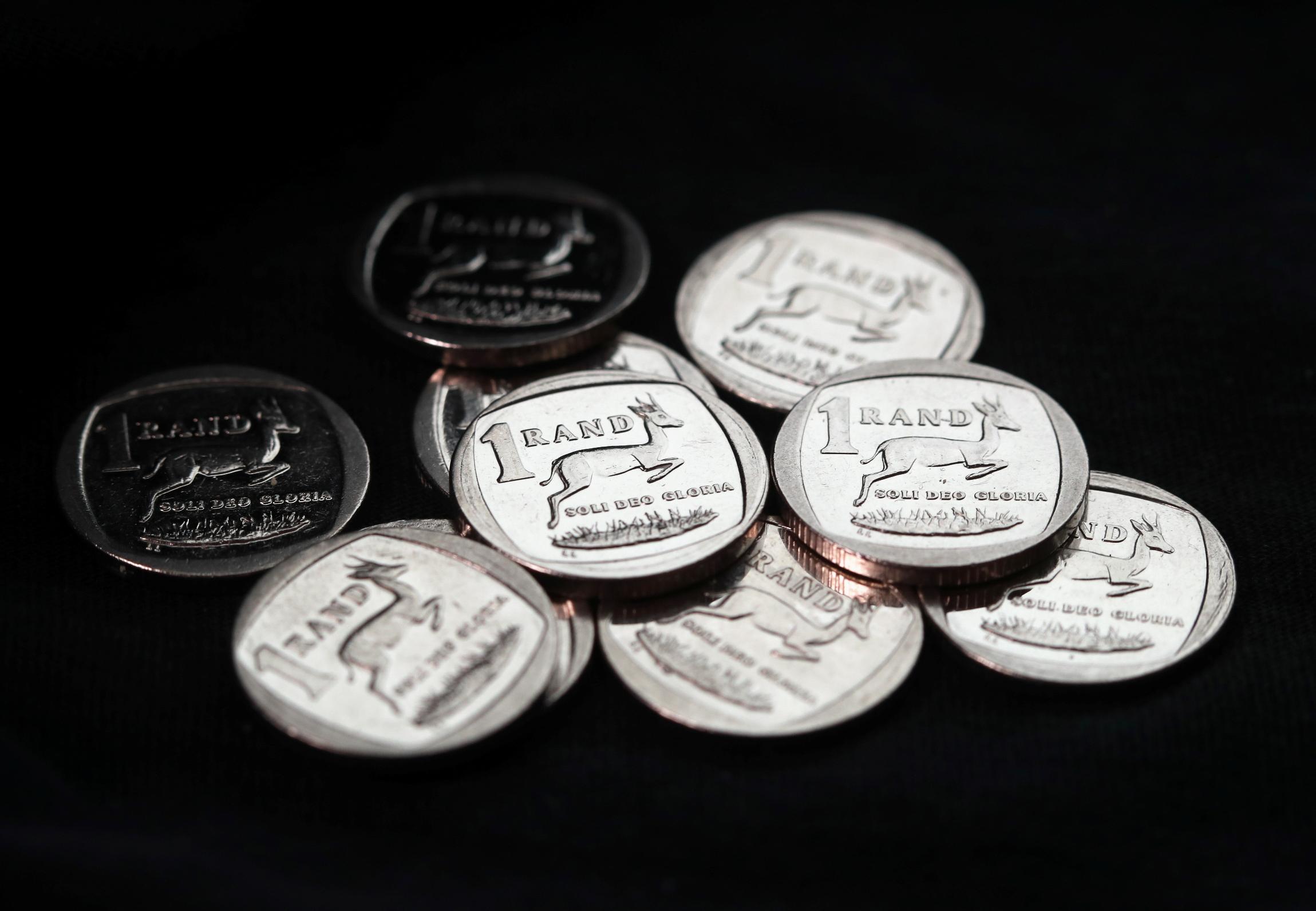
JOHANNESBURG, July 5 (Reuters) - South Africa's rand extended its gains against a weaker dollar on Friday, fuelled by expectations that the Federal Reserve will cut interest rates later this year. At 0823 GMT, the rand traded at 18.1975 against the dollar , 0.4% stronger than its previous close. The dollar index was last trading down 0.17% against a basket of currencies, after softer-than-expected U.S. economic data earlier in the week spurred hopes of an interest cut as early as September. The rand, like most emerging market currencies, takes its cue from global drivers such as U.S. monetary policy in addition to local events. "The rand is expected to closely follow the dollar as attention shifts away from government and cabinet news headlines," said Andre Cilliers, currency strategist at TreasuryONE. Ministers in the new South African government were sworn in on Wednesday after a historic election in May, which saw the African National Congress lose its majority for the first time since the end of apartheid 30 years ago. On the stock market, both the Top-40 (.JTOPI) New Tab, opens new tab index and the broader all-share (.JALSH) New Tab, opens new tab index were down around 0.1% in early trade. South Africa's benchmark 2030 government bond was stronger, with the yield down 4.5 basis points to 9.74%. Sign up here. https://www.reuters.com/markets/south-african-rand-extends-gains-dollar-slips-2024-07-05/
2024-07-05 07:50
JOHANNESBURG, July 5 (Reuters) - Canadian miner GoviEx Uranium (GXU.V) New Tab, opens new tab said its has been stripped of its right to develop a uranium project in Niger, just weeks after the West African country revoked a mining permit held by French firm Orano SA. GoviEx has been informed by Niger's mines ministry that it no longer holds the rights over the perimeter of the Madaouela mining permit, which is now in the public domain, the company said in a statement released on Thursday. The company said it "reserves the right to challenge the decision to withdraw the mining rights before the competent national or international jurisdictions". Orano said on June 20 that the Niger government, which came into power through a coup in 2023, had scrapped a mining permit for its subsidiary Imouraren. Niger possesses Africa's highest-grade uranium ores and is the world's seventh-largest uranium producer. The radioactive metal is the most widely used fuel for nuclear energy. It is also used in treating cancer, for naval propulsion, and in nuclear weapons. The setback for GoviEx comes as it was in the process of raising about $200 million through debt financing to fund the Madaouela project. Sign up here. https://www.reuters.com/markets/commodities/canadas-goviex-uraniums-stripped-niger-mining-rights-2024-07-05/