2024-07-04 11:09
BENI, Democratic Republic of Congo/BEIJING, July 4 (Reuters) - Militia fighters have attacked a Chinese-linked mining site in northeastern Democratic Republic of Congo, killing six Chinese nationals and at least two Congolese soldiers, local officials said on Thursday. China condemned the attack, which took place on Wednesday in Djugu territory in the gold-rich Ituri province. Djugu administrator Ruphin Mapela said it was carried out by the CODECO (Cooperative for the Development of the Congo) militia. It is mainly made up of fighters from the Lendu ethnic group, which they claim to defend. Six Chinese nationals and two Congolese soldiers guarding the site were killed, Mapela said. The Red Cross representative for Djugu, Dhekana Ernest, said the CODECO fighters had come across the Chinese digging for gold. "They entered their camp, killed six Chinese nationals and three soldiers. The victims were killed with bullets," he said, adding that the corpses were taken to the city of Bunia. A spokesperson for the army in the region confirmed the toll and added that a Congolese national and six militia fighters were killed. In Beijing, the Chinese foreign ministry said an attack on on a Chinese-funded private enterprise led to the death and disappearance of several Chinese citizens. China is in close communication with DRC authorities in the search for those missing, ministry spokesperson Mao Ning told a press briefing. "We urge the DRC to pursue and punish the perpetrators in accordance with the law as soon as possible," Mao said, while calling for measures to beef up security and protection for Chinese citizens and enterprises there. "Those already in high-risk areas should be evacuated as soon as possible," she said. The name of the mine and the company were not immediately available. In eastern Congo mining concessions, many private Chinese operators partner with local licence holders, sometimes providing funding and machinery to operate. They also bring in Chinese workers. Wednesday's was the latest deadly militia attack in a region where the violence is linked to long-running competition for influence and rich mineral resources. CODECO is one of a myriad of militias fighting over land and resources in east Congo. It has been accused in the past by the United Nations of attacks against other communities that could constitute war crimes and crimes against humanity. Sign up here. https://www.reuters.com/world/africa/china-condemns-militia-attack-democratic-republic-congo-that-killed-its-2024-07-04/

2024-07-04 11:08
ADDIS ABABA, July 4 (Reuters) - Ethiopia will receive $10.5 billion in support over the coming years if long-running negotiations with the International Monetary Fund and World Bank are successful, Prime Minister Abiy Ahmed said on Thursday. In December, East Africa's most populous country, struggling with high inflation and chronic foreign currency shortages, became the third on the continent in as many years to default on its debt. Sources familiar with the matter previously told Reuters that Ethiopia was seeking to borrow around $3.5 billion under a reform programme with the IMF, while a Western diplomat said it was also trying to secure $3.5 billion in budget support from the World Bank and find another $3.5 billion in savings through debt restructuring. Analysts say Ethiopia may need to agree to devalue its birr currency , which trades about 50% weaker than the official exchange rate on the black market, to secure IMF support. "We have been having a wide range of talks, negotiations and discussions with the IMF and World Bank. Because we were a bit tough with them and they were also tough with us, the (talks) took five years," Abiy told lawmakers. "Now with the support of some friendly countries, it seems like many of our ideas have been accepted. If this succeeds and we are able to agree on the reforms, Ethiopia will get $10.5 billion in the coming years," he said. Abiy added that there were some reforms the government was unwilling to undertake right away, without elaborating. "There are some areas we think should be reformed now, and there are things we think should stay as it is. If all these suggestions get accepted and we agree, there is an opportunity ahead of us. This reform agenda will play a huge impact in alleviating the debt burden," the prime minister said. Sign up here. https://www.reuters.com/world/africa/ethiopia-get-105-bln-if-imf-world-bank-talks-succeed-pm-says-2024-07-04/
2024-07-04 10:51
LONDON, July 4 (Reuters) - The London Metal Exchange (LME) Index (.LMEX) New Tab, opens new tab hit a two-year high in May when funds surged into base metals, chasing a narrative of manufacturing recovery, super-charged energy transition demand and constrained supply. Doctor Copper, investors' favourite barometer of industrial activity, soared to an all-time high, spurred by a ferocious squeeze on the CME contract. Both gold and silver markets also climbed as the metals complex returned to the investor spotlight after years of neglect. However, the base metals rally faltered over June as bullish expectations collided with the reality of high inventories and soft demand in China, the world's biggest metals user. The LME Index is 10% off its late May highs. Only one LME base metal has held firm in the broader price retreat. LME tin , trading around $33,250 per ton, is up by 31% on the start of the year, out-performing the others by a wide margin. While funds have focused on future supply constraints for metals such as copper, tin supply is disrupted in the here and now. FUNDS AND OPTICS Tin has been lifted by the broader rotation of speculative money into the base metal sector. Fund long positioning stretched to 3,781 contracts in April, the most bullish reading since the LME launched its Commitments of Traders Report in 2018. While funds were busy reducing long positions in other metals last month, they held those in tin. Investor long positions were a sizeable 3,726 contracts at the close of last week. Fund managers have no cause to sell. The price has been steady and LME stocks of the metal have fallen. Overall LME inventory rose from 1.16 million to 1.79 million metric tons in the first half of the year. Much of that increase was down to a dump of aluminium into the system in May but exchange stocks risen across the board. LME tin stocks, by contrast, fell by 38% to 4,750 tons over the first six months of 2024. True, stocks registered with the ShFE are higher at 15,127 tons but they too have been sliding and are 15% off their May peak. Exchange stocks are not always a reliable guide to fundamentals but bullish optics do no harm to a bullish market narrative. Just ask Doctor Copper! Copper bulls have been wrong-footed by a recent steady inflow of metal into LME warehouses and high Shanghai Futures Exchange (ShFE) inventory. Shanghai stocks have conspicuously failed to follow the seasonal pattern of rapid decline after the Lunar new year holidays. The optics are doubly negative, implying weak demand and plentiful availability of metal, undercutting a narrative of constrained supply and market deficit. SUPPLY CONSTRAINTS A lack of long-term supply growth is core to the bull case for metals such as copper, zinc and increasingly aluminium. Both copper and zinc show signs of tightness in the raw material segment of the supply chain, which helps to explain why they were second and third best performers in the first half of the year. Smelter treatment charges have collapsed in both markets as mine supply struggles to keep up with demand. However, a shortage of mined concentrates does not necessarily imply immediate tightness in the refined metal segment of the market, particularly if it is the result of increased smelter demand. New smelter capacity in the copper market and reactivated capacity in the zinc market have played as important a role in collapsed treatment charges as faltering mine output. Against such a backdrop, low treatment charges may translate into slower production growth rather than a fall in refined metal output. Tin, by contrast, has this year experienced both raw material and refined metal tightness. Shipments of refined tin from Indonesia, the world's largest exporter, have been severely disrupted by a backlog in issuing new licences. Outbound volumes slumped to 10,292 tons in January-May from 23,887 tons in the year-earlier period. Flows of raw material from the Wa State tin mines in Myanmar to Chinese smelters have slowed considerably since the authorities initiated a wide-ranging audit in August last year. China's imports from Myanmar have fallen by 27% year-on-year so far in 2024 with the slowdown particularly pronounced in April and May, The combination of reduced concentrate flows from Myanmar and refined metal flows from Indonesia that has served to force buyers to draw on exchange stocks both on the LME and in China. HITTING THE PAUSE BUTTON The second quarter rally in base metals looks like something of a false start. Investors have been left waiting for reality to catch up with their bullish expectations. While some of the speculation has froth has been blown off in June, plenty of investors have stayed with the broader bull story. Copper remains the top metallic play, judging by the mood New Tab, opens new tab at last week's LME Asia seminar. The take-away for bulls is that their case is stronger when there are tangible signs of a shortfall of metal in the form of declining visible inventories. Tin is the only market where stocks are falling in response to supply disruption, which is why it has so clearly out-performed the rest of the LME pack in the first part of 2024. The opinions expressed here are those of the author, a columnist for Reuters. Sign up here. https://www.reuters.com/markets/commodities/tin-outperforms-broader-base-metals-rally-falters-2024-07-04/

2024-07-04 10:51
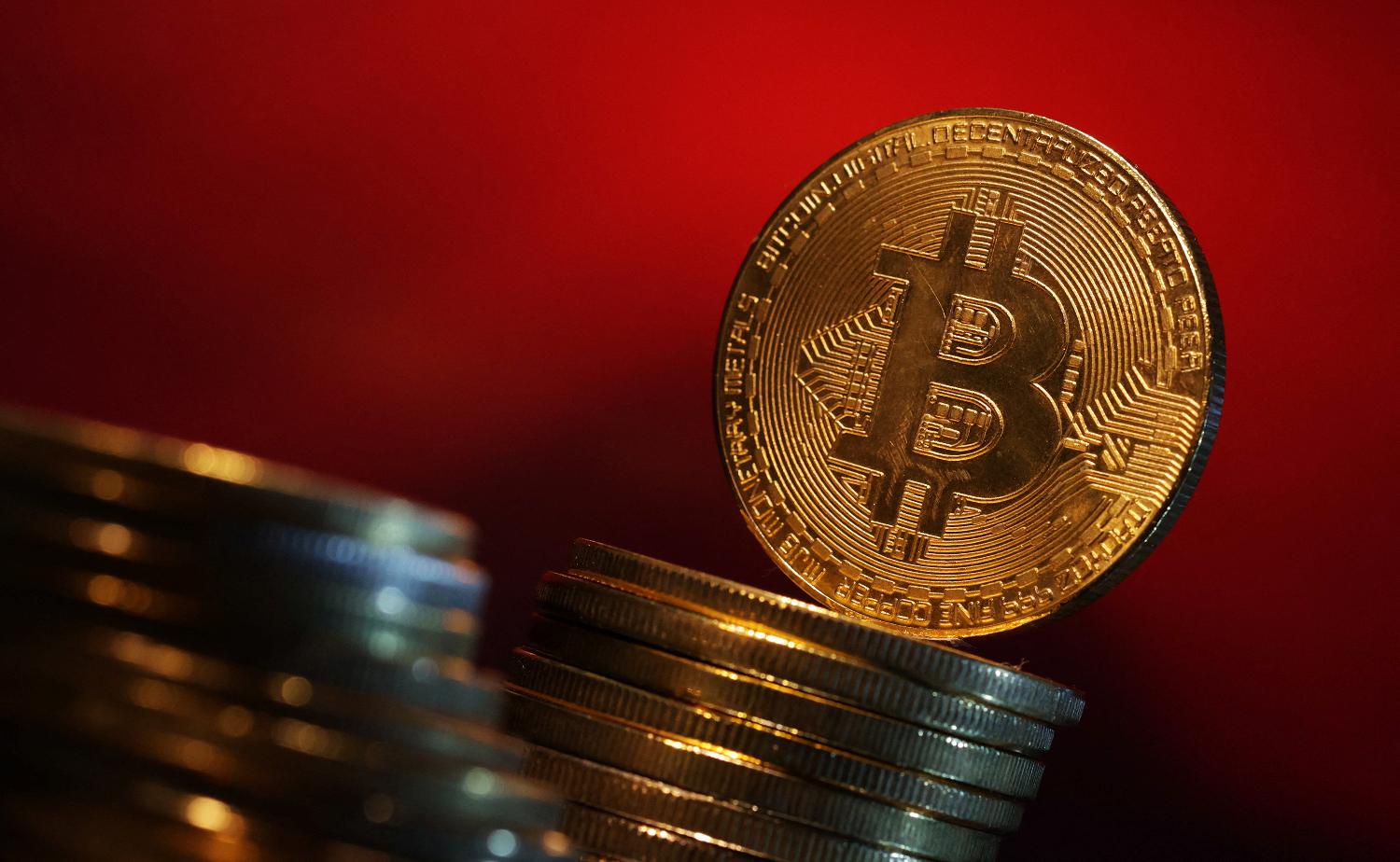
July 4 (Reuters) - Bitcoin slid to a two-month low on Thursday, extending a month-long fall, as uncertainty over U.S. presidential elections and reports of bitcoin supply from a defunct Tokyo-based crypto exchange weighed. Bitcoin fell more than 2% to $57,843, its lowest since May 2, and has lost more than 6% so far this week. The world's biggest cryptocurrency has been under pressure in recent months, its slide accelerating this week after the first debate between U.S. presidential candidates Joe Biden and Donald Trump raised the spectre of Biden being replaced as a candidate. "If he (Biden) is to be replaced, and there's a lot of conversation going on around that, that person may not be pro-crypto," Josh Gilbert, a market analyst at digital brokerage eToro, said. Bitcoin had a strong start to the year after the launch of exchange-traded funds in the U.S., propelling it to a record $73,803.25 in mid-March as investors poured in. However the rally has fizzled, with bitcoin losing more than 21% since then. A politically charged backdrop, with ongoing elections in France and Britain, is resulting in some risk reduction, analysts said, alongside the changing odds in the U.S. election campaign. Analysts also pointed to reports that Mt. Gox, the world's leading exchange for cryptocurrencies before it went defunct in 2014, is repaying its creditors, which could be dragging bitcoin lower if those creditors offload their tokens. "There is an anticipation that some of those original buyers of bitcoin will start to sell on the market, which is a fairly big chunk," Tony Sycamore, a market analyst at IG, said. Sycamore added however that while this was a period of consolidation for the cryptocurrency after strong gains earlier this year, it could retest the March highs and probably push up towards $80,000. Ether , another major cryptocurrency, was trading more than 1% lower at $3,213.0, and is down more than 22% from its mid-March highs. Sign up here. https://www.reuters.com/business/finance/bitcoin-hits-2-month-low-election-uncertainty-mt-gox-flows-2024-07-04/
2024-07-04 10:11
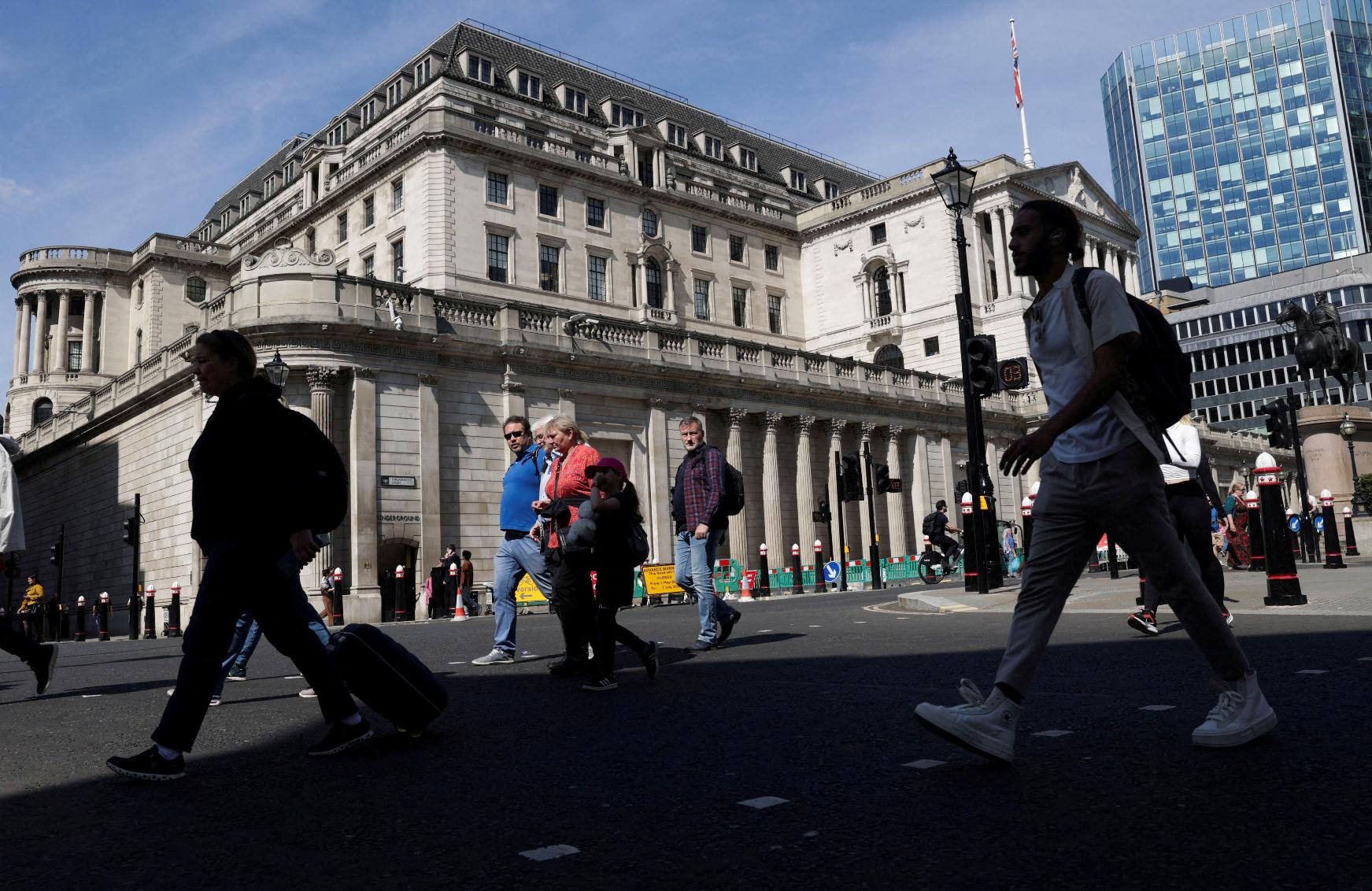
LONDON, July 4 (Reuters) - British employers expect their wage bills will grow more slowly over the coming 12 months, according to a survey that will give the Bank of England more confidence it can cut interest rates in the coming months. Watched closely by members of the Monetary Policy Committee, the BoE's own Decision Maker Panel survey showed expected year-ahead wage growth fell by 0.3 percentage points to 4.2% on a three-month moving-average basis in June. It was the lowest reading since the series started in May 2022. The official measure of earnings growth has been running too hot for most BoE rate-setters to cut interest rates, but Thursday's survey suggested it should cool markedly - something that could persuade more MPC members into loosening policy. With Britons voting on Thursday to elect the next government, the prospect of an interest rate cut in coming months may have come too late to help Prime Minister Rishi Sunak's campaign to return the Conservative Party to power. But it could be an early boost for an incoming government, which opinion polls suggest will be led by Keir Starmer's Labour Party in what looks set to be a landslide victory. "Annual wage growth was 6.0% in the three months to June, unchanged from the three months to May," the BoE said. "Firms therefore expect their wage growth to decline by 1.8 percentage points over the next 12 months based on three-month averages." Companies surveyed by the BoE also expected to raise their own selling prices at a slower pace in the year ahead, while expecting consumer price inflation to moderate. Adding to signs of cooling price pressures, a business survey this week from S&P Global showed cost pressures in the dominant services sector eased to their lowest since February 2021. Sign up here. https://www.reuters.com/world/uk/uk-employers-scale-back-expected-wage-growth-bank-england-says-2024-07-04/
2024-07-04 10:11
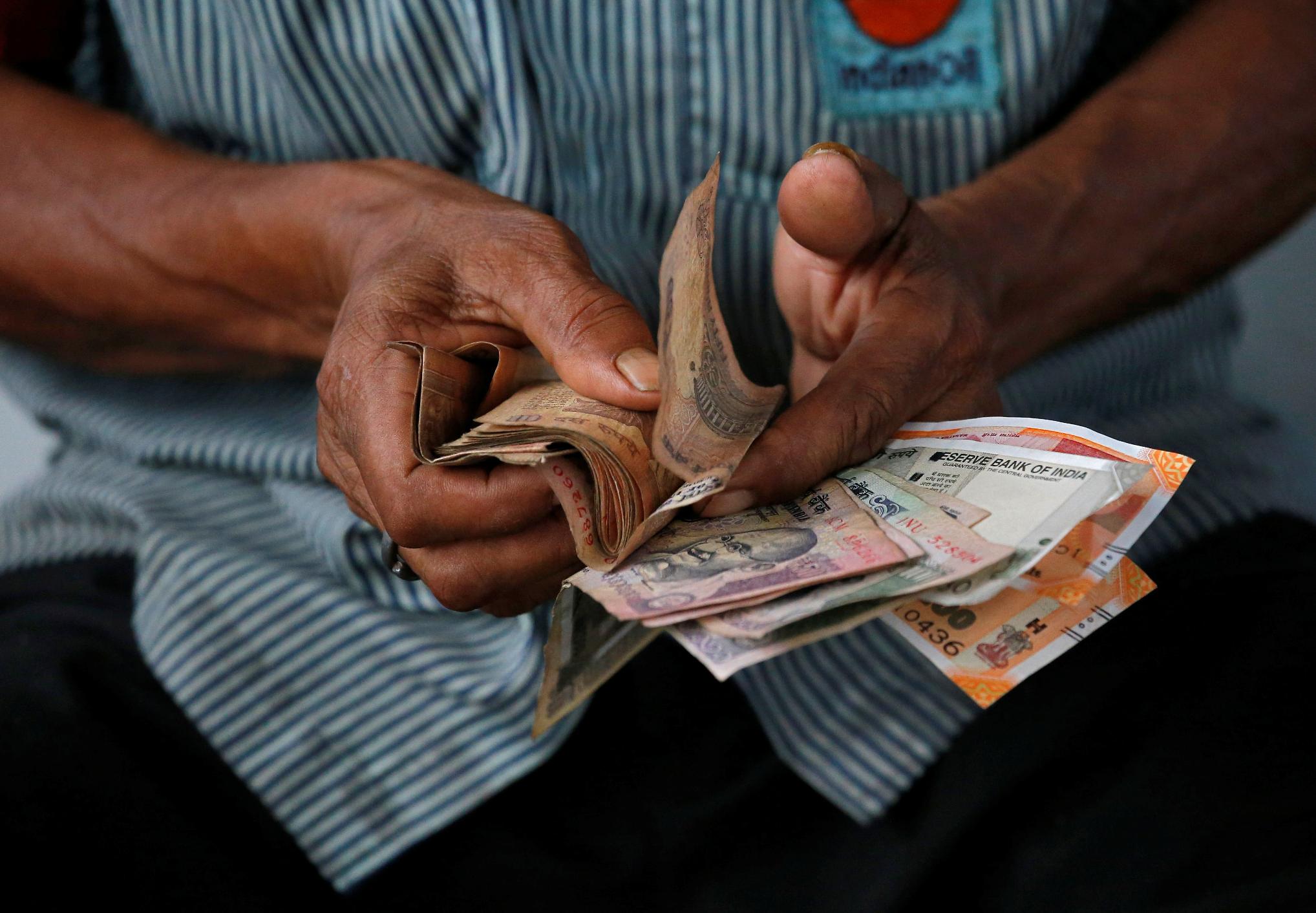
MUMBAI, July 4 (Reuters) - The Indian rupee ended slightly stronger on Thursday, tracking firmer Asian peers amid a decline in U.S. bond yields, although gains were curbed by local dollar demand. The rupee closed at 83.4925 against the U.S. dollar, slightly higher than its close at 83.53 in the previous session. The dollar index was at 105.2, while most Asian currencies rose with the Chinese yuan up about 0.1% and the Japanese yen nearly 0.3% higher. Pressure on the yen and yuan had kept Asian currencies on the defensive over recent trading sessions but soft U.S. economic data on Wednesday helped ease the depreciation pressure. Elevated demand to buy dollars at the Reserve Bank of India's daily reference rate, called the "daily fix", slightly weakened the rupee earlier in the session, traders said. The rupee ticked up after demand eased later in the session, with mild dollar sales from foreign banks also helping the currency, a foreign exchange trader at a state-run bank said. Meanwhile, dollar-rupee forward premiums rose with the 1-year implied yield up 2 basis points at 1.64% aided by a decline in U.S. bond yields. The 10-year U.S. Treasury yield fell 9 basis points on Wednesday after data signalled that the economy is cooling, which helped push the odds of a September interest rate cut above 70%, according to CME's FedWatch tool. U.S. markets are shut on Thursday due to the Independence Day holiday. The U.S. non-farm payrolls report, due Friday, is the next closely watched data point for cues on the Fed's policy rates trajectory. "As many indicators point at a weakening of U.S. labour markets, we continue to see three rate cuts this year in our baseline view as opposed to just the two priced in by markets," ING Bank said in a note. Sign up here. https://www.reuters.com/markets/currencies/rupee-nudges-up-lower-us-bond-yields-forward-premiums-rise-2024-07-04/