2024-07-04 10:05
YPFB seeks financing and partnerships to boost oil and gas production Bolivia pivots to cheaper oil purchases from OPEC producers via Botrading S.A. Russia aiding Bolivia with fuel supply issues amid domestic production decline LA PAZ, July 4 (Reuters) - Bolivian state energy firm YPFB is looking to improve conditions for investment in the country's flagging oil and gas sector and seeking help from Russia to overcome recent fuel shortages, the head of the company told Reuters. The landlocked South American nation is reeling from a foiled military coup against the government last week, which stemmed in part from a rising economic crisis linked to years of declining oil and gas production that have hit hard-currency reserves. In an interview in Bolivia just days after the failed June 26 coup attempt, YPFB President Armin Dorgathen conceded that political missteps in recent years had put off investors, harming output. Gas production has halved from a peak a decade ago, while oil output is its lowest since the 1990s. "We are working to attract financing from various sides and also looking for partners," Dorgathen told Reuters earlier this week. He cited issues with payments, legislation and regulation under the country's largely socialist leadership in recent years that made it tough for private firms - a situation that YPFB was now trying to change. "The sector was discouraged," he said. "We are now working also with the partners we already have here in Bolivia - Repsol (REP.MC) New Tab, opens new tab, TotalEnergies (TTEF.PA) New Tab, opens new tab, Petrobras (PETR4.SA) New Tab, opens new tab, so that additional investments can be made." The slide in domestic oil and gas output has been at the heart of Bolivia's recent economic and political woes. Once an important gas exporter to neighbors like Brazil, the production drop has hammered export revenue and left central-bank reserves almost depleted. Protests linked to the lack of dollars and long queues at gas stations have become increasingly common, stoking tensions and leading to in-fighting in the ruling socialist MAS party between President Luis Arce and former leader Evo Morales. Arce headed off an apparent coup attempt last week when a rogue general led units of armed soldiers to seize the central square in political capital La Paz, including ramming the door of the presidential palace with an armored vehicle. The general cited a deteriorating economy as partly behind his rebellion. Dorgathen said in the short-term the biggest energy issue was a gasoline shortage, which has put a spotlight on costly imports. Bolivia imports half of the gasoline needed to meet domestic demand, costing some $800 million annually. He told Reuters the country was pivoting toward more direct - and lower-cost - purchases from producers in the Organization of the Petroleum Exporting Countries and others via its new Botrading S.A. state energy trading firm. "Our objective through OPEC is to access cheaper fuel and improve supplies," Dorgathen said. The government was also seeking help from Russia, which is part of the so-called OPEC+ coalition, to ease fuel supplies. Russia has been hit by sanctions on energy exports due to its 2022 invasion of Ukraine. Russia's Lukoil (LKOH.MM) New Tab, opens new tab delivered 366,000 barrels of diesel on June 19 for YPFB from the Baltic Sea port of Vysotsk. Dorgathen attributed the sharp decline in gas production to a lack of investment in exploration but said that income from exports was "being maintained" and disputed that there was any issue with domestic gas supplies. He reiterated hopes for the announcement of a major new find later this year. "There is no internal supply problem," said Dorgathen. "We still produce almost three times more gas than we consume." Sign up here. https://www.reuters.com/business/energy/bolivia-seeks-oil-gas-investment-russias-help-solve-energy-crunch-2024-07-04/

2024-07-04 10:00
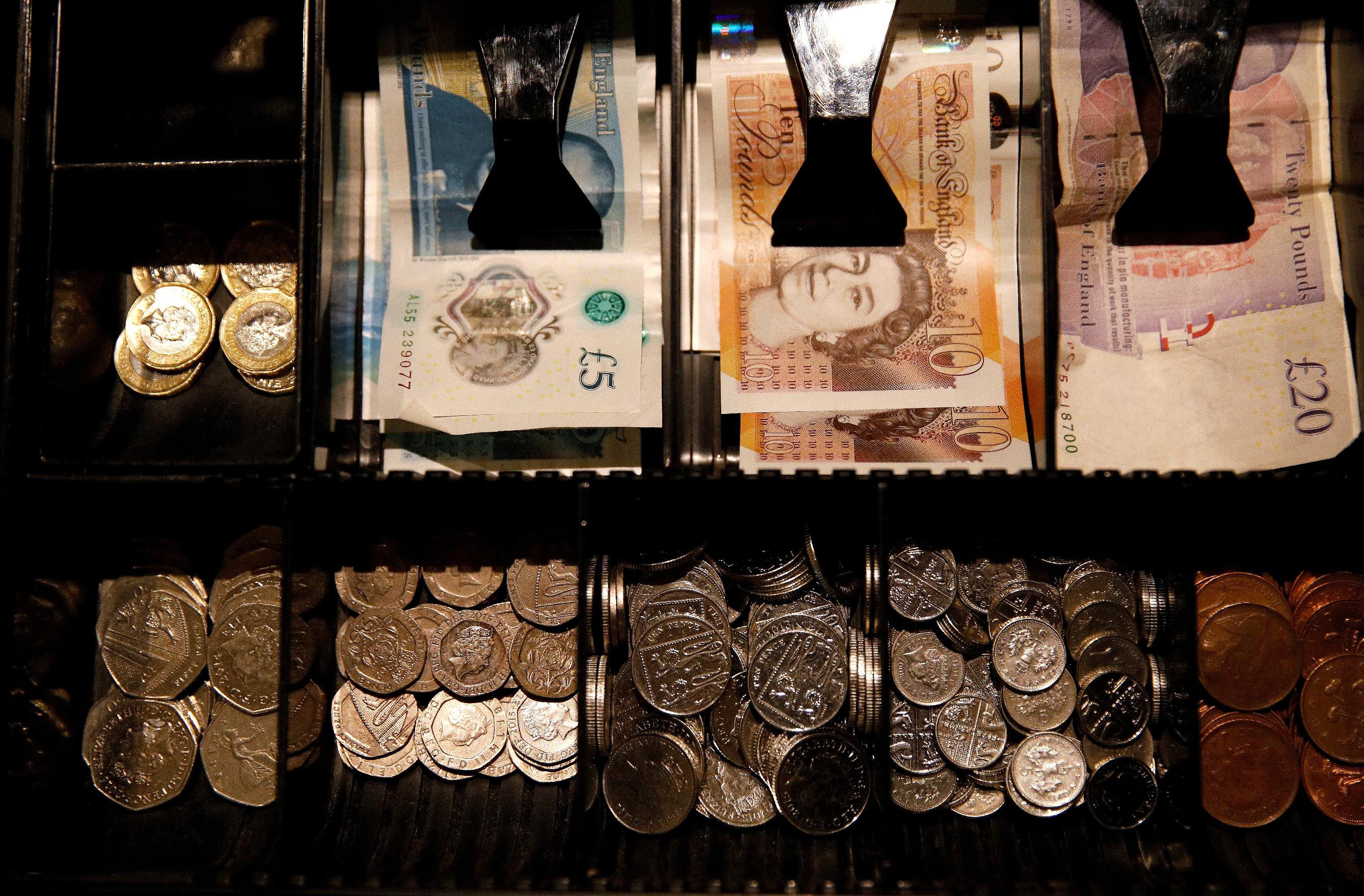
LONDON, July 4 (Reuters) - The pound gained on Thursday against a broadly weaker dollar which was hurt by soft U.S. economic data, as Britons voted in a parliamentary election that investors hope will bring some stability to British politics. Opinion polls show Keir Starmer's centre-left Labour Party on course for a landslide victory over Prime Minister Rishi Sunaks's Conservatives, who have led the country for 14 often turbulent years. The pound was up 0.1% against the dollar at $1.2755 on Thursday, having gained 0.46% Wednesday after soft U.S. economic data sent the dollar lower across the board. The pound has spent most of 2024 down slightly against the dollar - while outperforming other major currencies - though Wednesday's dollar weakness meant sterling was last up 0.23% against the dollar this year. "It was also the second best performing G10 currency last year, but you have to bear in mind that in September 2022 it was at its weakest ever, so if you look at sterling now it is not a strong currency but it has recovered from a very low base," said Jane Foley, head of FX strategy at Rabobank. The pound's recovery has been underpinned by Britain's better-than-feared economic performance, the Bank of England's cautious attitude to rate cuts relative to European peers, with hopes that a comfortable election win for Labour will usher in greater political and economic stability also in the mix. "If investors carry on believing that significant tax increases are not likely, that the Labour Party wants to stimulate growth by convincing investors to come back to the UK, we could see a moderate rally for the pound," said Foley. If Labour wins a very large majority, however, "there may be a little bit of concern pushing into markets" that this could bring "more left-wing policies to the fore with little opposition", she added. Versus the euro the pound was steady at 94.68 pence to the common currency. Sign up here. https://www.reuters.com/markets/currencies/pound-gains-dollar-britons-vote-national-election-2024-07-04/
2024-07-04 08:37
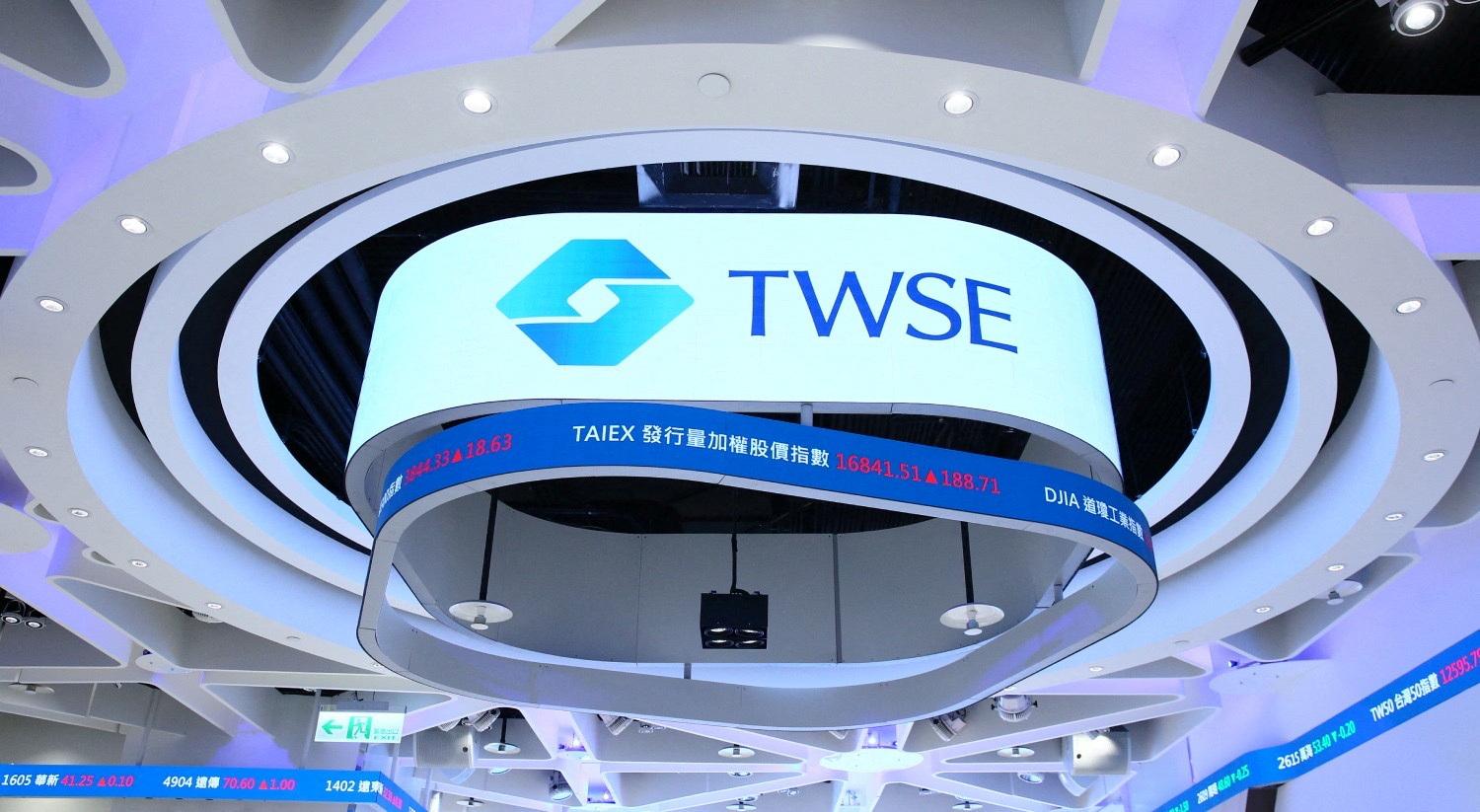
July 4 (Reuters) - Foreign investors channelled massive money into Asian equities in June, after two months of selling, as easing U.S. price pressures raised hopes that the Federal Reserve would cut interest rates this year. Market optimism was further fuelled by a surge in global AI-linked firms, enhancing demand for tech and semiconductor exports from Asia. Foreign investors bought a net $7.16 billion worth of regional equities, according to stock exchange data from South Korea, India, Taiwan, Indonesia, Vietnam, Thailand, and the Philippines. U.S. inflation held steady in May, aligning with economists' forecast, a Commerce Department report indicated last week. Fed Chair Jerome Powell said on Tuesday that the U.S. is back on a "disinflationary path", reinforcing expectations about forthcoming rate cuts. Technology exporters - South Korea and Taiwan - saw foreign purchases in equity markets last month worth $3.83 billion and $1.94 billion, respectively. "Both (South Korea and Taiwan) have served as major beneficiaries from the ramp-up in AI investments," said Yeap Jun Rong, a market strategist at IG. Propelled by the global tech rally, the MSCI Asia Pacific IT index (.dMIAP0IT00PUS) New Tab, opens new tab advanced nearly 10% in June, marking its best performance in seven months. Indian markets attracted $3.19 billion in foreign funds, a sharp contrast to the $3.06 billion net sell-off the previous month. "After (a very short) panic sell post the election, Indian equities have quickly picked up the upward trend as investors sees a policy continuity with the new government," said Minyue Liu, a investment specialist at BNP Paribas Asset Management. "We believe the Indian economy is at a cusp of a multi-year economic growth cycle backed by the "Production Linked Incentives (PLI)" schemes, favourable demographic structure and strong FDI." Still, stock markets in Thailand, Vietnam, the Philippines and Indonesia faced net outflows worth $936 million, $658 million, $104 million and $91 million, respectively. "We remain constructive on the outlook for Asian equities," BNP Paribas' Liu said. "Most regional central banks' rate-hiking cycles appear to have reached a turning point, which would be positive for Asian equities." Sign up here. https://www.reuters.com/markets/asia/asian-stocks-draw-robust-foreign-inflows-us-rate-outlook-tech-rally-2024-07-04/
2024-07-04 07:51
MOSCOW, July 4 (Reuters) - Russians were braving some of the hottest weather seen in more than a century on Thursday with Moscow breaking a 1917 record and cities across the world's biggest country sizzling in temperatures well above 35 degrees Celsius (95 Fahrenheit). In Moscow, where temperatures can fall to minus 40 degrees Celsius in the legendary Russian winter, the mercury rose to 32.7 degrees Celsius on July 3, breaking the 1917 record for that day by half a degree, the FOBOS weather centre said. Records were broken from Russia's Pacific coast and the wilds of Siberia to the European parts of Russia, FOBOS said. The hot weather triggered soaring demand for air conditioners and fans, while Muscovites guzzled record amounts of ice creams and downed cold beverages. Water was handed out to passengers in the metro and on many trains. Moscow Mayor Sergei Sobyanin urged the residents of the Moscow metropolitan area, which has a population of well above 20 million, to take precautions and avoid going outside at the hottest times of the day. "During the day, the air temperature will exceed the climatic norm and rise above 30 degrees again," Sobyanin said. He said thunderstorms were forecast for Friday and there was a possibility of hail. Sign up here. https://www.reuters.com/world/europe/russia-swelters-heat-wave-moscow-breaks-1917-record-early-july-2024-07-04/

2024-07-04 07:12
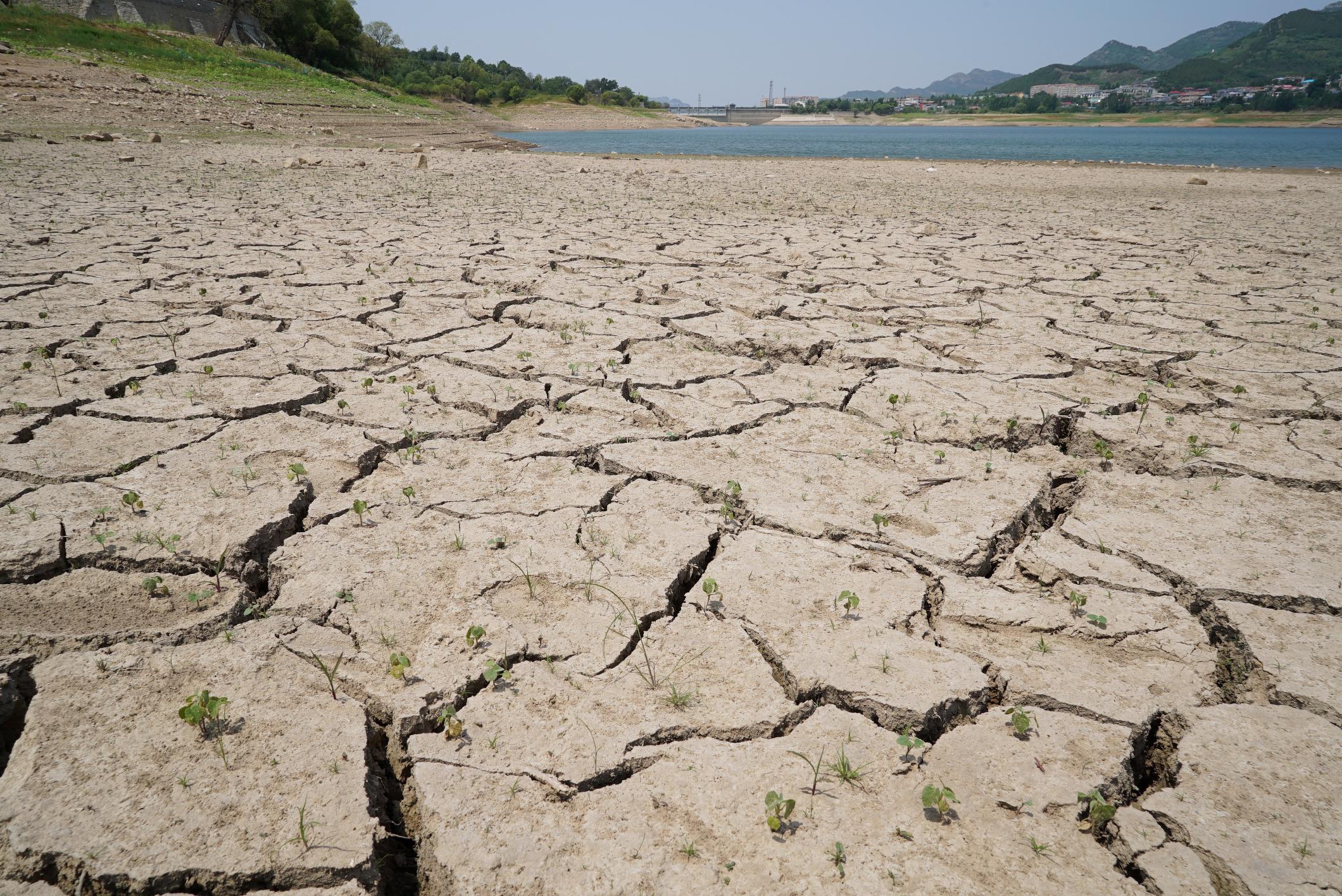
BEIJING, July 4 (Reuters) - China's weather bureau warned on Thursday that a prolonged heatwave forecast in the country's eastern, central and southern regions in July may hit production of rice and cotton, as extreme weather continues to threaten its food production. The China Meteorological Administration (CMA) said it expected temperatures in most areas across China to be relatively high over the next few months, signalling a second consecutive summer of extreme heat. "It is necessary to guard against the risk of yield reduction of cotton, early rice and late rice caused by high temperature and heat damage," Jia Xiaolong, the CMA's deputy director, said at a briefing. Summer temperatures in regions including Zhejiang, Jiangxi, Hunan, Fujian, Guangdong, Guangxi, Gansu and Ningxia are expected to be 1 to 2 degrees Celsius (1.8 to 3.6 degrees Fahrenheit) above normal, the CMA said. China is facing hotter and longer heatwaves, as well as more frequent and unpredictable heavy rain as a result of climate change, the weather bureau warned. Record-breaking temperatures last month have already broiled key grain producing provinces in the northwest and east, forcing corn farmers to delay planting, while torrential rain in other regions flooded soybean and rice fields. Extreme weather is hurting developing crops globally as the impact of climate change intensifies, with vast swathes of farmland in China, Russia, India and the United States experiencing extremely hot conditions and below-normal rainfall, squeezing world supplies and pushing prices higher. In its annual climate "Blue Book", the CMA warned that maximum temperatures across the country could rise by 1.7 to 2.8 degrees Celsius (3 to 5 degrees Fahrenheit) within 30 years, with eastern China and the northwestern region of Xinjiang set to suffer the most. The weather bureau also said two typhoons could make landfall in mainland China in July. The typhoons are expected to move in a west or northwest direction, authorities said. Sign up here. https://www.reuters.com/markets/commodities/china-warns-prolonged-heatwave-may-damage-rice-cotton-crops-2024-07-04/

2024-07-04 06:34
BEIJING/SINGAPORE, July 4 (Reuters) - China is facing hotter and longer heatwaves and more frequent and unpredictable heavy rain as a result of climate change, the weather bureau warned on Thursday, as the world's second-biggest economy braces for another scorching summer. In its annual climate "Blue Book", the China Meteorological Administration (CMA) warned that maximum temperatures across the country could rise by 1.7-2.8 degrees Celsius within 30 years, with eastern China and the northwestern region of Xinjiang set to suffer the most. Last year, average national temperatures hit a new high, leading to record levels of glacial retreat and melting permafrost in the northwest, the Blue Book said. China describes itself as one of the world's most climate-vulnerable countries, and it is coming under increasing pressure to adapt to rapidly changing weather patterns and sea levels that are rising faster than the global average. "China is a region that is sensitive to global climate change, a region where the impact will be significant," said Yuan Jiashuang, vice-director of the CMA's National Climate Centre, at a briefing. She warned that if emissions remained high, extreme heat events expected to occur once every fifty years in China could happen every other year by the end of the century, and rainfall could double and become more unpredictable. The weather bureau said on Thursday that it expects temperatures in most areas across China to be relatively high over the next few months, signalling a second consecutive summer of extreme heat. "The weather is going to be different from previous years and there is more extreme weather now," said Chen Yuhan, a resident of China's commercial hub Shanghai, which saw above-38 Celsius (100.4 Fahrenheit) temperatures on Thursday. "It surprises me every time I go out." Torrential rains and floods are already battering the south and temperatures have broken records in several parts of north and central China, threatening crops and putting pressure on electricity grids. Average temperatures from March to May hit their highest since records began in 1961, according to official data. Record-breaking temperatures last month broiled key grain producing provinces in the northwest and east, forcing corn farmers to delay planting, while torrential rain in other regions flooded soybean and rice fields. "It is necessary to guard against the risk of yield reduction of cotton, early rice and late rice caused by high temperature and heat damage," Jia Xiaolong, CMA's deputy director, said at the briefing. Summer temperatures in regions including Zhejiang, Jiangxi, Hunan, Fujian, Guangdong, Guangxi, Gansu and Ningxia are expected to be 1 to 2 degrees Celsius above normal, CMA said. The weather bureau also said that two typhoons could make landfall in mainland China in July. The typhoons are expected to move in a westward or northwestward direction, authorities said. Last year, two powerful typhoons – Doksuri and Haikui - made landfall, causing massive rains that broke records in some areas, unleashed flooding and prompted widespread evacuations. Sign up here. https://www.reuters.com/world/china/chinas-weather-authority-warns-high-summer-temperatures-2024-07-04/