2024-07-03 20:27
July 3 (Reuters) - General Motors (GM.N) New Tab, opens new tab will pay a $145.8 million penalty and forfeit credits worth hundreds of millions of dollars after a U.S. government investigation found excess emissions from approximately 5.9 million GM vehicles, government agencies said on Wednesday. The Environmental Protection Agency said GM has agreed to give up approximately 50 million metric tons in carbon allowances after the multi-year investigation found vehicles from the 2012-2018 model years were emitting more than 10% higher carbon dioxide on average than GM's initial compliance reports claimed. The National Highway Traffic Safety Administration separately said GM will pay a $145.8 million penalty for fuel economy compliance issues and cancel more than 30.6 million fuel economy credits for the 2008-2010 model years to resolve the issues identified by EPA's light-duty vehicle in-use testing program. GM earlier this year disclosed it was in discussions with the EPA and other regulators regarding adjustments to its credits, adding through 2023 its total costs expensed in connection with the issue was $450 million representing its "current best estimate of the probable loss." That would value the credits forfeited at about $300 million. GM said Wednesday that figure is "consistent with the costs of the final resolution of these matters with the federal government." In a statement, GM said it "has at all times complied with and adhered to all applicable laws and regulations in the certification and in-use testing of the vehicles in-question." GM has previously purchased 38 million emissions credits to meet EPA requirements. Reuters was first in reporting the settlement, citing sources. Unlike the 2015 Volkswagen (VOWG_p.DE) New Tab, opens new tab diesel emissions case, the EPA is not alleging GM used a device to intentionally reduce emissions in testing. 'STRONG POLLUTION RULES' Environmental advocates criticized the Detroit automaker soon after the announcement. “GM’s admission that they cheated on federal emissions and mileage rules shows why automakers can’t be trusted to protect our air and health, and why we need strong pollution rules,” said Dan Becker, director of the Center for Biological Diversity’s safe climate transport campaign. Guidehouse Insights analyst Sam Abuelsamid said the company's reputation might take a slight hit, but it likely won't be devastating. "Consumers seem to have a pretty short memory about these sorts of things," Abuelsamid said. The EPA is not seeking a recall of the GM vehicles that generated excess emissions. "EPA's vehicle standards depend on strong oversight in order to deliver public health benefits in the real world," EPA Administrator Michael Regan said in a statement. "Our investigation has achieved accountability and upholds an important program that's reducing air pollution and protecting communities across the country." The vehicles include 4.6 million 2012-2018 full size pickups and SUVs and approximately 1.3 million 2012-2018 midsize SUVs. In June 2023, NHTSA said GM paid $128.2 million in fuel economy penalties for not meeting requirements for 2016 and 2017. GM, which sells Chevrolet, Buick, GMC and Cadillac vehicles in the United States, had not previously paid a fine in the 40-year-old history of the fuel economy program. It had initially planned to use credits to meet its compliance shortfall but opted to pay penalties, NHTSA said. Last year, NHTSA had proposed hiking fuel economy standards from 2027 through 2032 that it estimated would cost GM $6.5 billion over the period. Under the final rule issued last month NHTSA said GM could face $906 million in penalties through 2031. “Any automaker failing its emissions limits should pay the price for its pollution," said Katherine García, director of Sierra Club’s clean transportation for all campaign. Sign up here. https://www.reuters.com/business/autos-transportation/gm-pay-1458-million-penalty-after-us-finds-excess-emissions-59-million-vehicles-2024-07-03/

2024-07-03 20:07
BEIJING, July 3 (Reuters) - Rising water levels in the Yangtze River following intense rains in southern China have prompted eastern regions downstream to prepare for possible flooding. Water levels in the Jiangsu section of China's longest river continued to rise on Wednesday as a result of the increased flow from its upper reaches as well as the persistent rainfall. Nanjing, the capital of China's eastern Jiangsu province issued its second highest flood warning and authorities banned various vessels, including passenger ferries, from entering or operating in the river's Jiangsu section, state media reported. China's Ministry of Water Resources had said on Tuesday that water levels in sections of the middle and lower courses of the Yangtze River exceeded the warning mark. Water levels at Poyang Lake in Jiangxi province, where authorities had activated a second-level response for flood control since Tuesday night, were also being closely watched. The country's largest freshwater lake logged its highest water level in July 2020 at 22.7 metres. Heavy rainfall pounded parts of central China's Hunan province earlier this week, causing the Miluo River in Pingjiang county to swell to its highest level in 70 years. Local authorities in Hunan activated the maximum emergency response level and state media showed large parts of its town waterlogged, as well as stranded people being rescued on boats. About 340,000 people in China were affected and businesses were hit. A factory producing spicy snacks said it would shut for five days affected by water outages, traffic blockages and disrupted communication lines. The rain is expected to begin dissipating from the southern regions, and forecasters said warmer temperatures could follow as rain clouds that kept areas cooler than normal drift away. The rain belt causing floods in areas around the middle and lower course of China's Yangtze River will begin to shift northwards from Wednesday night. Torrential rain is expected in provinces including Sichuan, Chongqing, and parts of Hubei, Henan and Shandong, China's National Meteorological Center said. The rainfall would be welcome in northern areas afflicted with drought, but continuous rains may cause secondary disasters, weather experts warned in the national forecast. (This story has been corrected to change Poyang Lake's record water level to 22.7 metres, not 22.6 metres, in paragraph 6) Sign up here. https://www.reuters.com/world/china/flood-fears-chinas-east-rain-swells-yangtze-river-levels-2024-07-03/

2024-07-03 19:49
July 3 (Reuters) - Public health officials in Colorado on Wednesday announced an adult man had tested positive for avian flu after reporting mild symptoms, including conjunctivitis, or pink eye. The man is an employee at a dairy farm who had exposure to infected cattle and recovered after antiviral treatment, officials said. It was the fourth human case of bird flu reported in the U.S. since avian flu was confirmed in cows in March. The prior three people to test positive were also dairy farm workers who recovered. The first two workers to contract the virus had mild pink eye. In the third case, the worker had mild respiratory symptoms. The Centers for Disease Control and Prevention confirmed the case in a statement and said the risk to the general public from bird flu remains low, although people with exposure to infected animals are at greater risk. The virus has infected cows at 139 farms in 12 U.S. states, according to the U.S. Department of Agriculture. Colorado has had 27 of those outbreaks. On Tuesday, Moderna (MRNA.O) New Tab, opens new tab was awarded a $176 million government contract to advance development of its human bird flu vaccine. The USDA is conducting its own research as well as soliciting information from about two dozen companies on a potential bird flu vaccine for cattle, although the agency has said it hopes to eliminate the virus from dairy herds without the use of a vaccine. Sign up here. https://www.reuters.com/world/americas/colorado-reports-human-case-bird-flu-2024-07-03/

2024-07-03 19:44
HOUSTON/LONDON, July 3 (Reuters) - U.S. crude shipments bound for Europe fell to a two-year low in June as European buyers bought cheaper regional and West African oil, traders and analysts told Reuters. Exports of U.S. crude to Europe slowed to 1.45 million barrels per day (bpd) last month, the lowest for any month since July 2022, according to data from ship tracking firm Kpler. That marks a 14% decline from May and down 27% from June 2023. The fall came as a result of a narrowing difference between the price of U.S. benchmark WTI crude and European benchmark Brent crude, as Brent futures fell at a faster pace on average through May than WTI, as North Sea crudes weakened. A narrow difference between the two makes it difficult to make a profit shipping U.S. crude to Europe. Total U.S. crude exports to all destinations were 3.94 million bpd last month, down from 4.21 million bpd in May. The bulk of the exports to Europe were WTI Midland crude, which has become a staple of European refineries' crude diets. The U.S. has become a major oil exporter due to the rapid rise in output that came with the shale revolution. Growing flows of WTI into Europe led to the grade's inclusion in the dated Brent oil price benchmark by pricing agency S&P Global Commodity Insights in 2023, meaning that fluctuating U.S. export volumes can have a wider significance on oil prices globally. FALL West African grades became cheaper in May because of an overhang of supply, as Africa's top crude exporter Nigeria was in April struggling to offload cargoes for May loading, driving some sellers to reduce offers. Nigerian Bonny Light differentials to Dated Brent have been on a downward trend the last couple months, said Gus Vasquez, Americas crude editor at price indexing agency, Argus Media. That made West African grades more attractive than U.S. crude, said Patricio Valdivieso, Rystad Energy's vice president of oil markets research. A narrower WTI-Brent spread makes it cheaper for European buyers to import dated-linked grades on shorter haul voyages rather than cargoes from the United States. "The Dated complex was fairly weak, limiting Brent's ability to price in marginal U.S. sweets," said Energy Aspects analyst Richard Price. In May, when June-loading cargoes would have traded, WTI's discount to Brent narrowed in 15 out of 23 sessions, and hit its narrowest since October at -$3.95 per barrel on May 30, LSEG data shows. Taking freight costs into account, the WTI-Brent spread typically needs to average -$5 to -$6 per barrel for transatlantic arbitrages to be profitable, said Gus Vasquez, Americas crude editor at pricing agency Argus Media. JULY REBOUND? Lower exports of WTI Midland and a flurry of buying by trading firms Gunvor and Trafigura tightened the European market in recent weeks. That is likely to lead to a recovery of exports from the United States to Europe in July and August. "The drop in U.S. crude exports has supported the value of Brent," veteran oil trader and director of Surrey Clean Energy Adi Imsirovic said. A stronger Dated Brent market has also coincided with a weakening of crude prices in Asia. "WTI Midland arbitrages are now workable to Europe but incredibly weak to Asia, which we expect to reroute WTI Midland exports towards Europe in July and August," Energy Aspects' Price said. Weaker prices for UAE crude Murban are pricing Brent-linked crudes and WTI out of Asia, according to Sparta Commodities analyst Neil Crosby. Increased Murban output has pressured prices for the grade, with its monthly average spot premium to benchmark Middle East Dubai quotes sinking to a one-year low of 83 cents a barrel for August-loading cargoes. Sign up here. https://www.reuters.com/markets/commodities/us-crude-exports-europe-hit-two-year-low-june-2024-07-03/
2024-07-03 19:22
Canadian dollar gains 0.3% against the greenback Touches its strongest since June 25 Canada posts third straight monthly trade deficit Bond yields fall across the curve TORONTO, July 3 (Reuters) - The Canadian dollar strengthened to its highest level in more than one week against its U.S. counterpart on Wednesday as oil prices rose and economic data added to recent evidence of a slowdown in U.S. activity. The loonie was trading 0.3% higher at 1.3636 to the U.S. dollar, or 73.34 U.S. cents, after touching its strongest intraday level since June 25 at 1.36175. "It is more of a U.S. story than a Canadian one," said Tony Valente, senior FX dealer at AscendantFX. "The USD is being pressured by recent U.S. data this morning and the CAD is taking advantage of this." The U.S. dollar (.DXY) New Tab, opens new tab fell against a basket of major currencies as a measure of U.S. services sector activity slumped to a four-year low in June. Federal Reserve officials at their last meeting acknowledged the U.S. economy appeared to be slowing and that "price pressures were diminishing," but still counseled a wait-and-see approach before committing to interest rate cuts. The Canadian dollar is set to strengthen over the coming year but its gains will be limited after the Bank of Canada began cutting interest rates ahead of the Fed and as the U.S. election fans economic uncertainty, a Reuters poll found. Canada recorded a bigger-than-expected trade deficit of C$1.93 billion ($1.41 billion) in May, the third consecutive monthly shortfall, as exports declined faster than imports, data showed on Wednesday. The price of oil, one of Canada's major exports, settled 1.3% higher at $83.88 a barrel after a larger-than-expected decline in U.S. crude stocks, while Canadian bond yields were down across the curve, tracking moves in U.S. Treasuries. The 10-year eased 5.4 basis points to 3.555%, pulling back from a one-month high at 3.659% which it touched during Tuesday's session. Sign up here. https://www.reuters.com/markets/currencies/c-climbs-8-day-high-us-data-pressures-greenback-2024-07-03/

2024-07-03 19:19
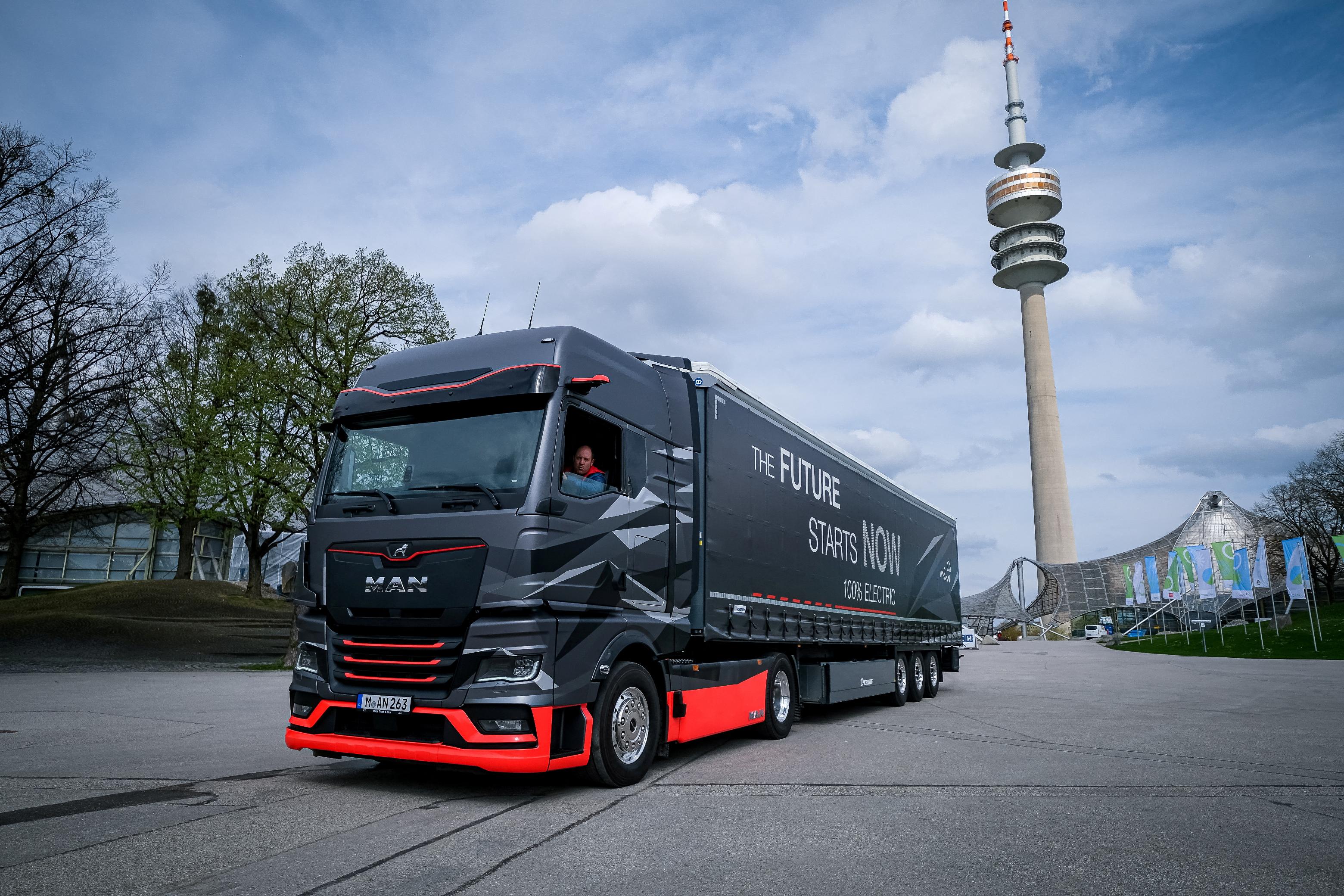
Berlin launches nationwide e-truck charging network Trucks make up one third of Germany's transport emissions E-trucks account for 2.1% of Germany's current fleet Charging network to cover 95% of German highways BERLIN, July 3 (Reuters) - The German government on Wednesday launched a project to build a nationwide fast-charging network for heavy-duty vehicles as Berlin aims to decarbonize the transport sector by 2045. Greenhouse emissions in Europe's biggest economy fell to the lowest level in 70 years in 2023, but the transport sector has consistently failed to meet its climate targets. Germany aims for about a third of its heavy road haulage to be powered by electricity or run on electrically produced fuels such as synthetic methane or hydrogen by 2030. According to federal road traffic authority KBA, electric vehicles made up just 2.1% of Germany's commercial truck fleet as of April. The initiative, dubbed "Power to the Road", aims to create a network of 350 fast-charging sites covering about 95% of Germany's federal highways. The country is also pushing to expand its electricity grid to absorb more renewable energy. "Our goal is to let trucks only run on green electricity," Economy Minister Robert Habeck said in a statement on Wednesday. Public tenders for some 130 planned locations will take place in the late summer, the economy and transport ministries said in a joint statement. "A powerful charging infrastructure forms the backbone of tomorrow's climate-friendly mobility and logistics. With the truck fast-charging network, we are launching a real mammoth project," Transport Minister Volker Wissing said. Commercial vehicles account for around a third of Germany's transport sector greenhouse gas emissions as heavy long-distance road haulage has been almost exclusively powered by diesel, data by Germany's Environment Agency (UBA) published in March showed. Trucks' carbon dioxide emissions per kilometre have dropped by almost by 8.4% since 1995 as engines became more efficient, but a rise in freight transport has boosted total CO2 emissions in the sector by 21%. The transport ministry said EU rules requiring most new heavy-duty vehicles to be emissions-free from 2040 would push truck manufacturers to make cleaner trucks in the future. "The market readiness of the battery truck is well advanced," a spokesperson for the ministry said. Urs Maier, an expert at think-tank Agora Verkehrswende, said large battery-electric semi-trailer tractors have only recently become available. "However, as with smaller trucks, rapid growth in sales figures can be expected in this segment too," Maier said. Although large electric trucks cost more than twice as much as diesel-powered equivalents, the total cost per km is lower, Maier said. They require only a third of energy and are exempt from road tolls which will accelerate their adoption in the market, he added. Sign up here. https://www.reuters.com/sustainability/germany-launches-electric-truck-charging-network-decarbonize-transport-2024-07-03/