2024-07-02 15:34
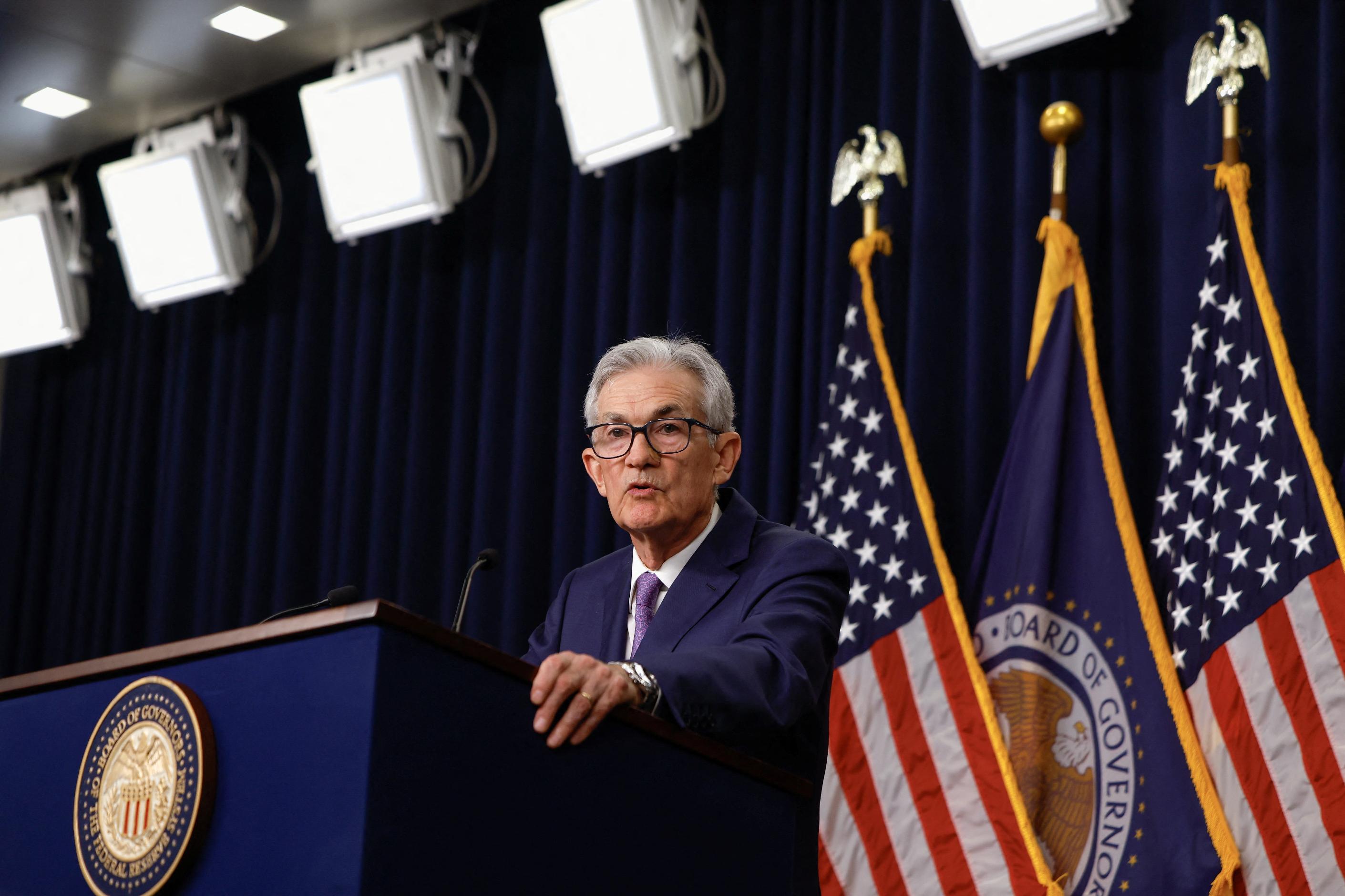
Lagarde says inflation heading 'in right direction' Policymakers see no chance of July rate cut SINTRA, Portugal, July 2 (Reuters) - European Central Bank President Christine Lagarde welcomed a small fall in inflation last month as a step in the right direction, even as data on Tuesday showed prices for services continued to rise nearly twice as fast as the headline figure. The ECB began undoing its steepest ever streak of interest rate hikes last month after a major fall in inflation over the past 1-1/2 years but is in no hurry to lower borrowing costs further as progress from here appears to be slower. Inflation in the 20 countries that share the euro slowed to 2.5% in June from 2.6% a month earlier. "It's heading in the right direction for the indicator that we use," Lagarde told the ECB Forum on Central Banking near Sintra, Portugal, after the data was released. She said the ECB was "very advanced" on the disinflationary path and predicted that inflation would be "in the low twos" in 12 months' time before hitting the ECB's 2% goal in the second half of next year. Economists are scrutinizing underlying price trends to gauge whether the ECB can achieve that aim, particularly services inflation, which came in at 4.1% for the second consecutive month in June. Lagarde acknowledged that services inflation hadn't "budged", saying this was in large part due to wages finally catching up with prices, but argued that was partly being compensated for by lower manufactured goods price inflation. "We don't need to have services at 2% because manufacturing goods are below 2% and at the end of the day it's going to be a balance," Lagarde said. Other policymakers, speaking anonymously on the sidelines of the event, said Tuesday's inflation data was a nail in the coffin for any rate cut in July, with no policy move now in prospect until September's meeting. Financial markets expect the ECB to cut rates on Sept. 12 and possibly again on Dec. 12. Sign up here. https://www.reuters.com/markets/europe/euro-zone-very-advanced-disinflationary-path-ecbs-lagarde-2024-07-02/
2024-07-02 15:04
July 2 (Reuters) - Robinhood Markets (HOOD.O) New Tab, opens new tab is considering offering cryptocurrency futures in the U.S. and Europe in the coming months, Bloomberg News reported on Tuesday, citing people familiar with the matter. The commission-free trading app is hoping to use the licenses of crypto exchange Bitstamp, which it agreed to buy last month in a $200 million deal, once the transaction closes next year, the report said. It also wants to launch CME-based futures in the U.S. for Bitcoin and Ether. "We have no imminent plans to launch these offerings," a spokesperson for the company said in a statement to Reuters. The company's crypto business is seeing rapid growth but is also facing regulatory hurdles in the U.S. Robinhood Crypto was the driving force behind a massive first-quarter earnings beat in May, but the same week it also disclosed that it received a so-called Wells notice from the U.S. securities regulator over tokens traded on its platform. The notice is issued when the regulator plans to bring enforcement action against a company. Sign up here. https://www.reuters.com/business/finance/robinhood-considering-offering-crypto-futures-us-europe-bloomberg-reports-2024-07-02/

2024-07-02 13:06
Bank of Russia seen hiking rates to 18% on July 26 Rouble seen at 97.5 vs dollar in 12 months Russia's GDP growth forecast at 3.1% in 2024 Inflation expected to end 2024 at 6.4% This content was produced in Russia where the law restricts coverage of Russian military operations in Ukraine MOSCOW, July 2 (Reuters) - The Russian central bank will hike rates by 200 basis points to 18% later this month as it tries to quell stubbornly high inflation that analysts now expect to end 2024 well above the bank's 4% target, a Reuters poll showed on Tuesday. The bank has become increasingly hawkish, promising high rates for a long time, as inflation has continued to quicken. The economy ministry reported annual consumer inflation at 8.61% as of June 24. Ten of 16 analysts and economists polled by Reuters in late June and early July predicted that the Bank of Russia would raise its key rate (RUCBIR=ECI) New Tab, opens new tab to 18% on July 26. Three analysts forecast a hike to 17.5% and three predicted the bank would limit its monetary tightening to a 100-basis-point increase. "Domestic demand, lending and inflation are not slowing down, despite the 16% key rate, so the Bank of Russia has to tighten monetary policy," said Mikhail Vasilyev, chief analyst at Sovcombank, predicting a 200 basis point hike. "In general, borrowers should be prepared for money in the economy to remain expensive for a long time, and likely get even more expensive." The consensus forecast showed that analysts expect rates to end the year at 17.75%, up from 16% in the previous poll. "The absence of explicit signs of slowing inflation is forcing the central bank to maintain a tight course," said BCS World of Investments analysts. Year-end inflation was forecast sharply higher at 6.4%, up from 5.6% in the previous poll and well above the central bank's target and expectation. Annual inflation stood at 7.4% in 2023, down from 11.9% in 2022. The poll showed that economists now expect Russia's gross domestic product to grow 3.1% this year, marginally higher than last month's poll. Analysts expect the rouble, currently trading at about 87 per dollar, to weaken to 97.5 over the next year. Sign up here. https://www.reuters.com/markets/rates-bonds/russia-seen-hiking-rates-by-200-bps-18-july-inflation-quickens-2024-07-02/

2024-07-02 12:54
July 2 (Reuters) - Spain generated almost 60% of its electricity from renewable energy sources in the first half of 2024 helped by new solar capacity and more output from hydropower plants, data from grid operator Redeia (REDE.MC) New Tab, opens new tab showed on Tuesday. Renewables accounted for 51% of the total a year earlier. Wind farms generated 24.4% of the total, up from 24.1% a year earlier, Redeia said in a statement. Solar plants generated 16.3% of the total, up from 13.8%, while hydropower dams accounted for 15.9%, up from 9.8%. Spain aims to generate four-fifths of its electricity from renewables by 2030 under a government plan published last year. Its main non-renewable source of electricity is nuclear, which produced 18.6% of its electricity in the first half, meaning close to 80% of Spain's power was carbon-free. Sign up here. https://www.reuters.com/business/energy/renewables-produce-almost-60-spains-electricity-2024-07-02/

2024-07-02 11:47
July 2 (Reuters) - The U.S. government has awarded $176 million to Moderna (MRNA.O) New Tab, opens new tab to advance development of its bird flu vaccine, the company said on Tuesday, as concerns rise over a multi-state outbreak of H5N1 virus in dairy cows and infections of three dairy workers since March. The funds from the U.S. Biomedical Advanced Research and Development Authority will be used to complete late-stage development and testing of a pre-pandemic mRNA-based vaccine against H5N1 avian influenza, the company said in a statement. The agreement also includes additional options to prepare and accelerate a response to future public health threats, the company said. In March, U.S. officials reported the first outbreak of the H5N1 virus in dairy cattle, which has since infected more than 130 herds in 12 states. Scientists are concerned that exposure to the virus in poultry and dairy operations could increase the risk that the virus will mutate and gain the ability to spread easily among people, touching off a pandemic. Last year, Moderna started a safety and immunogenicity study of its bird flu vaccine called mRNA-1018 in healthy adults aged 18 and older. That study included both the H5 subtype of bird flu that is currently circulating in dairy cattle, as well as the H7 bird flu subtype. Results of that study are expected this year and will be used to map out late-stage development plans, the company said. Moderna's vaccine uses mRNA, or messenger RNA, the technology in its COVID-19 shot. “mRNA vaccine technology offers advantages in efficacy, speed of development and production, scalability, and reliability in addressing infectious disease outbreaks, as demonstrated during the COVID-19 pandemic,” Moderna CEO Stephane Bancel said in a statement. Manufacturing of conventional flu vaccines using cell or egg-based technology can take four to six months. U.S. officials have said they were moving bulk vaccine from CSL Seqirus (CSL.AX) New Tab, opens new tab that closely matches the current virus into finished shots that could provide 4.8 million doses if needed. Those doses would potentially be used to inoculate farm workers and others at risk of exposure to the virus. For the general public, U.S. and global health officials say the risk from bird flu remains low. Sign up here. https://www.reuters.com/business/healthcare-pharmaceuticals/us-awards-moderna-176-million-produce-bird-flu-vaccine-2024-07-02/

2024-07-02 11:30
A look at the day ahead in U.S. and global markets from Mike Dolan Further signs of a cooling U.S. economy greet the second half of 2024, with politics dominating headlines on both sides of the Atlantic and Federal Reserve boss Jerome Powell due to speak later on Tuesday. Financial markets are grappling with a heady mix of critical elections and signs of slowing growth stateside - with France in the middle of a two-legged parliamentary election, Britain heading to the polls on Thursday and betting on the U.S. election going up a gear after last week's TV debate. While a fresh lift for U.S. technology stocks papered over the cracks again on Wall St on Monday, rumblings in the bond market and a steepening of long-term yield curves perhaps indicate more about the political concerns. The Institute for Supply Management's June survey showed U.S. manufacturing missed forecasts and contracted for a third straight month, with a measure of prices paid by factories for inputs dropping to a six-month low amid weak demand for goods. The U.S. economic surprise index is now registering its most negative reading in almost two years, while the Atlanta Fed's 'GDPNow' tracker has ebbed to just 1.7% - its lowest level of the year so far. While that should encourage hopes for Fed easing this year, there are still some doubts about whether the central bank will execute its first cut before November's election. Futures price less than a 70% chance of a first cut in September. Speaking at the European Central Bank's annual forum in Sintra, Portugal later on Tuesday, Powell may provide an additional steer. But in a big week for labor market updates, despite the Independence Day holiday on Thursday, May data on U.S. job openings may be as important later in the session. Bond markets, too, have other ideas, with President Joe Biden's poor showing in last week's presidential TV debate with Republican challenger Donald Trump and Monday's U.S. Supreme Court ruling on Trump's partial immunity from prosecution cutting the odds on a Trump victory in November. Political betting markets now show Trump as a clear favorite to return to the White House, along with his promises of more tax cuts and draconian hikes in tariffs. The fiscal implications of all that are starting to unnerve long-term Treasuries, with 10-year Treasury yields hitting their highest in a month on Monday and the inverted yield curve spread from 2 years to 10 years narrowing to lowest since early May. The 2-to-30 year yield curve is at its least inverted in almost five months. That fiscal concern and related curve steepening was also evident in Europe, with the outcome of the French election still in the balance ahead of Sunday's second round. Although French far right parties, who are also promising tax cuts, look to be shy of an overall majority in the assembly - and with tactical voting among other parties expected to stymie their chances - nerves about the outcome persist. French stocks (.FCHI) New Tab, opens new tab gave back about half of Monday's gains earlier and the French-German 10-year yield premium edged back up to 75 basis points from 72 bps early on Monday. Euro zone inflation eased last month but a crucial services component remained stubbornly high, likely fuelling concern among some ECB policymakers that domestic price pressures could stay at elevated levels. The euro slipped back from two-week highs to about 1.0710 on Tuesday. Elsewhere, the dollar (.DXY) New Tab, opens new tab was firmer in general - eking out another 38-year high against Japan's yen at 161.74, with no sign of a repeat of April's Japanese intervention to prop the ailing yen. Stock markets around the world were lower, including in China after a mixed bag of corporate surveys this week. Japan's Nikkei (.N225) New Tab, opens new tab bucked the trend on the back of the weak yen, gaining more than 1% and hitting the 40,000 level for the first time in three months on Tuesday. Wall St stock futures were down 0.4% ahead of the bell, and Treasury ticked back lower ahead of Tuesday's open. Key developments that should provide more direction to U.S. markets later on Tuesday: * US May JOLTS job openings * Federal Reserve Chair Jerome Powell (1330GMT), European Central Bank President Christine Lagarde and ECB board members Luis de Guindos and Isabel Schnabel all speak at ECB's annual forum in Sintra, Portugal Sign up here. https://www.reuters.com/markets/us/global-markets-view-usa-2024-07-02/