2024-07-01 04:55
MUMBAI, July 1 (Reuters) - The Indian rupee was weaker on Monday as a jump in U.S. bond yields put pressure on most Asian currencies. The rupee was at 83.46 against the U.S. dollar as of 10:15 a.m. IST, compared to its close at 83.3825 in the previous session. The offshore Chinese yuan slipped alongside most Asian currencies, while the dollar index was down 0.1% at 105.6. Weakness in the yuan and the Japanese yen has also added to the pressure on Asian currencies over the last two weeks, with traders expecting any further decline to trickle down to the rupee. The Chinese central bank's "fixing rate (for USD/CNY) has continued to drift higher ... signalling to markets that the authorities are willing to tolerate a weaker yuan," Lloyd Chan, a senior currency analyst at MUFG Bank, said in a note. The onshore spot yuan can only trade in a 2% range around the mid-point fixed by the People's Bank of China. While data released on Friday signalled that U.S. inflation is cooling, the chances of a second term for former U.S. President Donald Trump pushed up U.S. bond yields, with the 10-year yield last quoted 5 basis points (bps) higher at 4.39% on Friday. Meanwhile, India's inclusion in the JPMorgan emerging market debt index helped the rupee in the latter half of last week, but inflows of about $198 million on Friday, the day of the inclusion, were considerably lower than what bankers had expected. With inflows undershooting estimates and key U.S. data, including the non-farm payrolls report, expected this week, traders anticipate that the rupee will remain slightly on the backfoot. "We don't see much room on the lower side (on USD/INR) ... Expect 83.30 support to hold until we see further downside in the dollar index," a foreign exchange trader at a state-run bank said. Sign up here. https://www.reuters.com/markets/currencies/rupee-declines-uptick-us-bond-yields-squeezes-most-asian-peers-2024-07-01/

2024-07-01 04:36
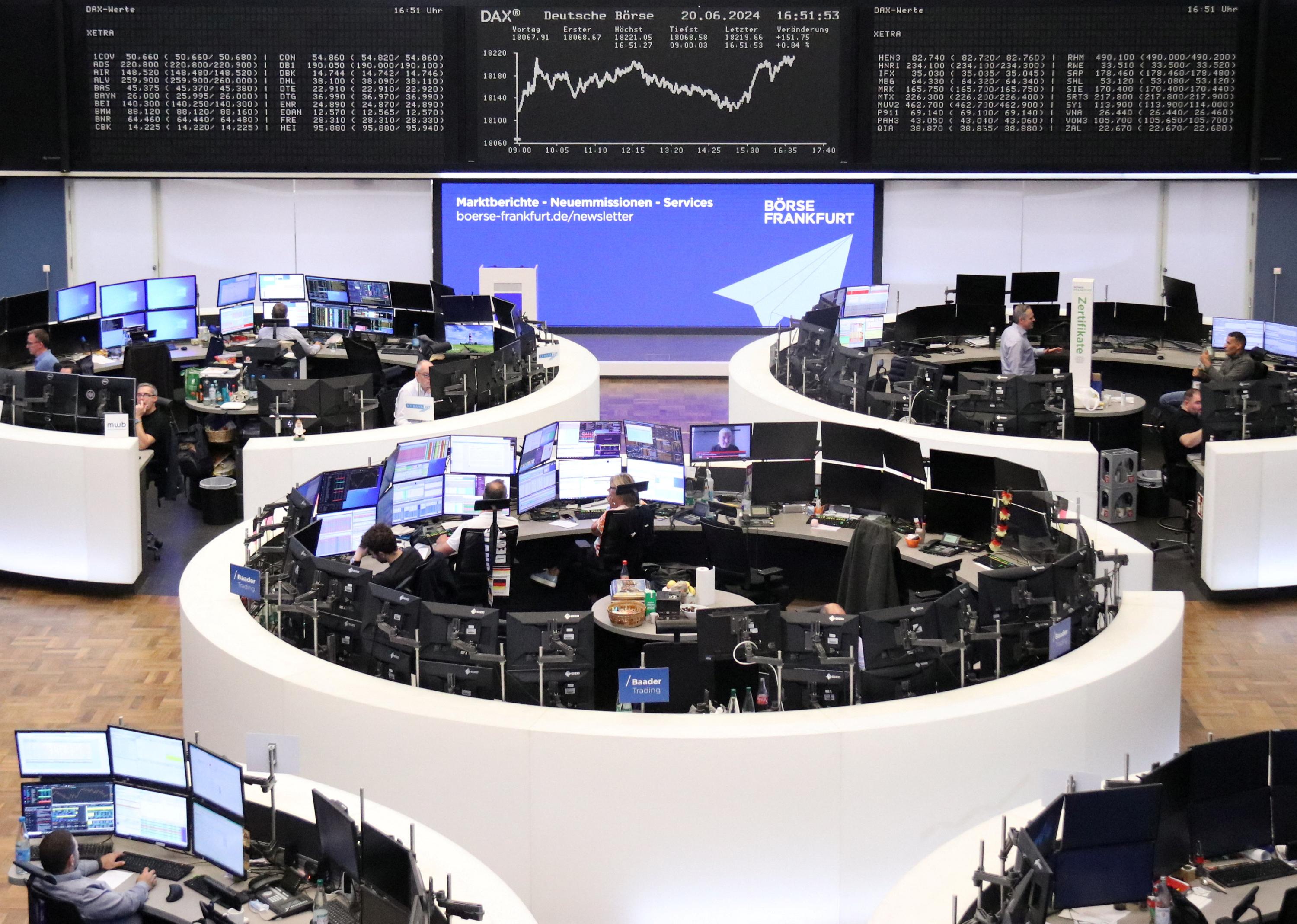
A look at the day ahead in European and global markets from Ankur Banerjee European markets are poised for a strong start to the second half of the year after the first round of voting in France put the far-right National Rally (RN) party ahead, but with a smaller share than some polls had projected, lifting the euro to a two-week high. Exit polls, which were in line with the opinion surveys, showed Marine Le Pen's RN party emerging ahead in the first round, winning around 34% of the vote, comfortably ahead of leftist and centrist rivals. The chances of eurosceptic, anti-immigrant RN winning power next week though remain uncertain, and will depend on the political dealmaking by its rivals over the coming days, with horse-trading already under way. The better-than-feared results lifted the euro, with the single currency touching a two-week peak of $1.076175, while stocks futures climbed 1% and French OAT (bond) futures gained 0.12%. The broader French market will likely get a boost, especially as the blue-chip CAC 40 index (.FCHI) New Tab, opens new tab has dropped 6% since French President Emmanuel Macron dissolved parliament. Analysts though point out that the week may still be volatile as the RN could gain a majority in next Sunday's runoff. Traders and markets are concerned that the far-right, as well as the left-wing alliance that came second on Sunday, have pledged big spending increases at a time when France's high budget deficit has prompted the EU to recommend disciplinary steps. Beyond France, the UK is also gearing up for the general elections on Thursday, with the opposition Labour Party expected to win in a landslide victory. While sterling has bounced around in June, dropping nearly 1% in the month, the currency's future depends on the next government convincing skittish investors that its plans to fix a stagnant economy are credible. Key developments that could influence markets on Monday: Economic events: Germany's June inflation, PMI data for June from euro zone and Germany Sign up here. https://www.reuters.com/markets/europe/global-markets-view-europe-2024-07-01/
2024-07-01 03:04
MUMBAI, July 1 (Reuters) - The Indian rupee is expected to open largely unchanged on Monday, mixed Asian peers were mixed, with the focus on important U.S. data due later in the week. Non-deliverable forwards indicated rupee will open barely changed from the previous session's close of 83.3825. Asian currencies were rangebound and lacked direction while the dollar index dipped. Last week was a choppy one for the rupee, with the inclusion of Indian bonds into the JPMorgan emerging market index and the expiry of the June currency futures. The local currency held a range of 83.36-83.61. Foreign investors purchased 16.54 billion rupees ($198.4 million) of Indian bonds on a net basis under the Fully Accessible Route on Friday, the day of the inclusion, considerably lower than what bankers had expected. "Now that the positions related to the inclusion are done, we move back to tracking the dollar and U.S. yields," a currency trader at a bank said. "Largely, I think we are in a 83.30-83.60 range with risks on the higher side (for dollar/rupee)." Key U.S. data is due this week, beginning with the U.S. ISM manufacturing numbers later in the day. The ISM Services data will be out on Wednesday and the June non-farm payrolls number will be put out on Friday. The non-farm payrolls, the most-watched indicator, will provide cues on the health of the U.S. labour market. Remarks from Federal Reserve Chair Jerome Powell are expected on Tuesday, followed by minutes from the Fed's latest policy meeting. The U.S. data will hold cues on whether the Fed will cut rates later this year. Hopes of a rate cut in September persisted, following a flat reading on the May U.S. personal consumption expenditures (PCE) price index. "The data support our view that the disinflation process remains in place," ANZ Bank said in a note. Fed Fund futures are pricing in a 3-in-4 chance of a September rate cut. KEY INDICATORS: ** One-month non-deliverable rupee forward at 83.45; onshore one-month forward premium at 6.75 paise ** Dollar index down at 105.62 ** Brent crude futures up 0.4% at $85.4 per barrel ** Ten-year U.S. note yield at 4.39% ** As per NSDL data, foreign investors bought a net $929.2mln worth of Indian shares on Jun. 27 ** NSDL data shows foreign investors bought a net $113.3mln worth of Indian bonds on Jun. 27 Sign up here. https://www.reuters.com/markets/currencies/rupee-focus-us-data-after-index-flows-underwhelm-2024-07-01/

2024-07-01 00:49
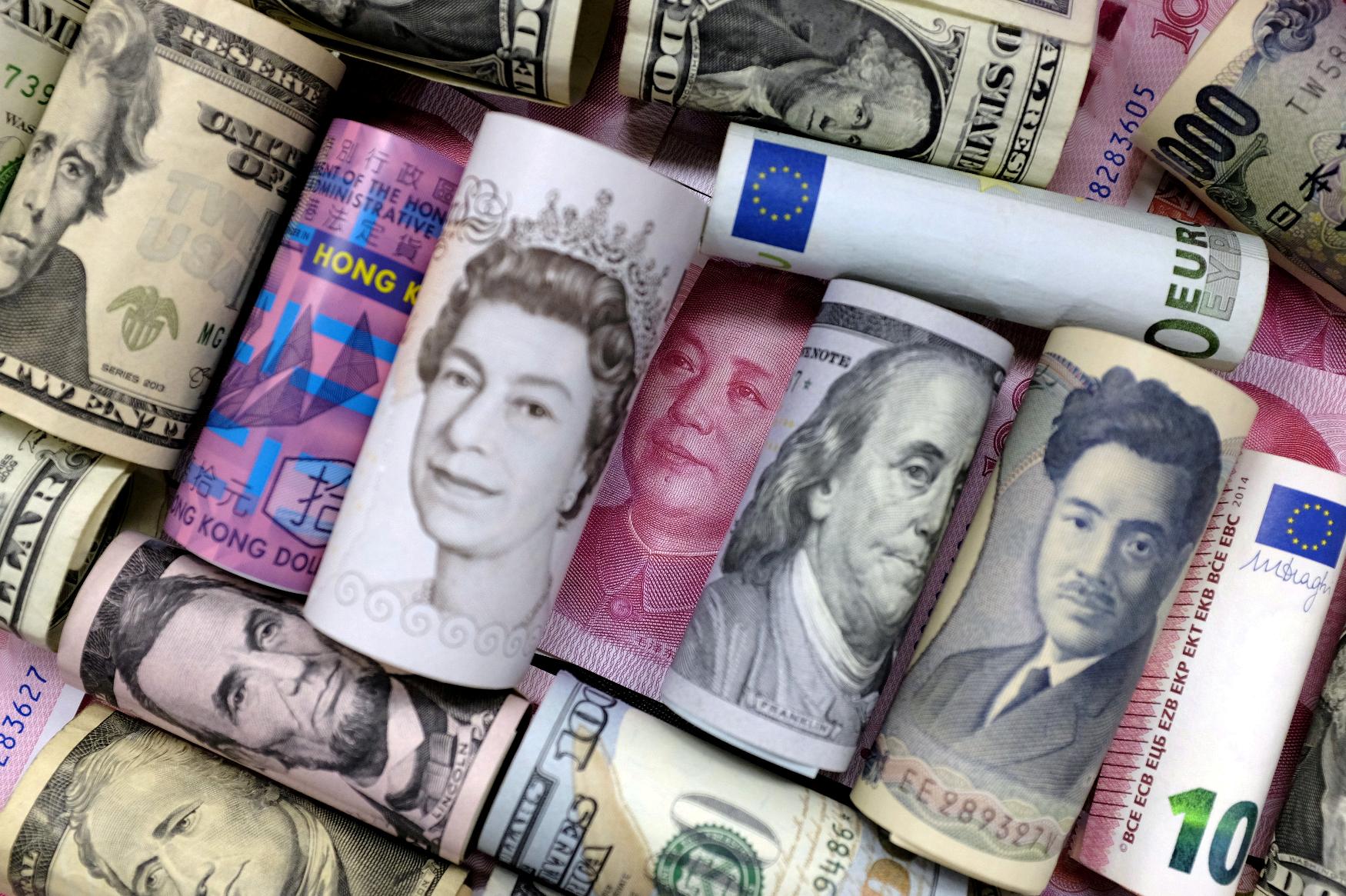
French election risk being unwound - analyst Yen slumps as Japan intervention risks grow U.S. manufacturing index comes in lower than expected U.S. construction spending falls NEW YORK, July 1 (Reuters) - The U.S. dollar surged to a fresh 38-year peak against the yen on Monday, as Treasury yields on the long end rose sharply, keeping investors on heightened alert for intervention from Japanese authorities to bolster the country's currency. The yen's weakness was exacerbated by data showing Japan's economy shrank more than initially reported in the first quarter. The euro, on the other hand, climbed on Monday after a convincing and historic win by the French far right in the first round of parliamentary elections fell slightly short of some expectations, leaving the final result dependent on party deals before a second round next weekend. In afternoon trading, the dollar soared to 161.72 yen , its strongest level since 1986. It was last up 0.4% at 161.48 yen. The yen has fallen more than 12% this year. "We're close to what would be defined as a one-way market, gains in 12 of the last 15 days, and five of the last six weeks," said Marc Chandler, chief market strategist, at Bannockburn Global Forex in New York. "People know that they are on thin ice on intervention. But they know that the weakness of the yen is related to the rise in Treasury yields and the slowness of Japan to raise rates. So even if Japan intervenes, the market will view intervention as an opportunity to buy dollars." Data showing weaker-than-expected economic growth added to the uncertainty about the Bank of Japan's next move in interest rates. The BoJ meets in late July and has hinted that it could raise borrowing costs, potentially helping close the yawning gap between Japanese and U.S. rates that has hammered the yen this year by causing investors to flock to the higher returns on U.S. bonds. Separate data on Monday showed the business mood in Japan's service-sector soured in June, offsetting a big lift in factory confidence. The yen's fall pushed the euro to a 32-year high of 173.68 yen . The euro was also higher against the dollar, up 0.2% at $1.0736 . EASING EURO RISKS? Marine Le Pen's far-right National Rally (RN) party won the first round of France's parliamentary elections on Sunday by a large margin, exit polls showed, although analysts noted it won a smaller share of the vote than some polls had initially projected, triggering a rally in stocks and bonds. The euro has lost around 1.3% since the French far right triumphed in European parliamentary elections in early June, prompting President Emmanuel Macron to call a snap domestic election. "It's an alleviation of risks. We're seeing a lot of hedges going into the French election getting unwound," said Simon Harvey, head of FX analysis, at Monex Europe in London. Investors have been concerned that the RN could come to power through "cohabitation" with Macron and push a high-spending and euro-sceptic agenda. The rise in the euro briefly sent the dollar a touch lower against a basket of currencies, though the greenback was on the back foot after data on Friday showed U.S. inflation cooled in May, cementing expectations the Federal Reserve will begin cutting interest rates later this year. The dollar index was last up 0.1% at 105.84. Against the dollar, sterling was flat at $1.2643, while the Aussie was down 0.2% at US$0.6654. The dollar briefly slipped after data showing a U.S. manufacturing index fell to 48.5 in June, lower than the forecast of 49.1. U.S. construction spending for May also came in weaker than expected, falling 0.1%, compared with expectations for a 0.2% rise. Market pricing now points to about a 63% chance of a Fed cut in September, as compared to a 55% chance a month ago, according to the CME FedWatch tool. Sign up here. https://www.reuters.com/markets/currencies/euro-rises-after-frances-first-round-vote-yen-struggles-2024-07-01/
2024-07-01 00:04
LAUNCESTON, Australia, July 1 (Reuters) - Asia's imports of crude oil ticked lower in the first half of 2024 from the same period last year, defying expectations that the top-consuming continent would lead global demand growth. Asia imported 27.16 million barrels per day (bpd) of crude in the January to June period, down a modest 130,000 bpd from the 27.29 million bpd in the same period in 2023, according to data compiled by LSEG Oil Research. The slightly weaker outcome was largely a result of lower arrivals in China, the world's biggest oil importer, with gains by Asia's number two buyer India not enough to offset China's softness. The lack of growth in Asia's imports of crude oil in the first half goes some way to undermining the 2024 demand forecasts from major industry groups such as the International Energy Agency (IEA) and the Organization of the Petroleum Exporting Countries (OPEC). Of course, imports are only one component of overall demand, others including domestic oil production and changes in inventory levels. But in Asia, imports are the key driver of demand given the region's reliance on oil arriving in tankers, or via pipelines from Russia and central Asia in the case of China. For the demand forecasts made by the IEA and OPEC, it's certain that Asia's imports are going to have to be strong in the second half, especially those for China. OPEC's June monthly oil market report forecast that China's oil demand would grow by 720,000 bpd in 2024 over 2023, while the IEA is expecting an expansion of 500,000 bpd. However, China's imports were about 11.08 million bpd in the first half, a figure calculated by using official customs data for the first five months and LSEG's forecast for June. This is down 300,000 bpd from the customs number of 11.38 million bpd for the first six months of 2023. With China's imports looking weak, it's worth looking at whether domestic output is making up the difference. Domestic production was 4.28 million bpd in the first five months of the year, up 1.8% or about 140,000 bpd from the same period in 2023. In other words, the rise in domestic output is just less than half of the loss in crude oil imports. INDIA'S DIM LIGHT If there is a somewhat brighter light in Asia, it's India, where crude imports were about 4.94 million bpd in the first half of 2024, according to calculations based on official and LSEG data. This is up about 90,000 bpd from the official figure of 4.85 million bpd for the first half of 2023. However, this relatively small gain in India's imports looks less impressive when the economic growth rate of 7.8% year-on-year in the first quarter is taken into account. It's also running at a rate below the OPEC forecast for India's demand to increase by 230,000 bpd for the whole of 2024, meaning that for the exporter group's estimate to be accurate, a strong second half will be needed. Overall, OPEC is expecting Asia's crude demand to rise by 1.3 million bpd in 2024 from the previous year, consisting of 720,000 bpd for China, 230,000 bpd for India and 350,000 bpd for the rest of the continent. The IEA expects Asia's demand to lift by 900,000 bpd in 2024, made up of 500,000 bpd in China and 400,000 bpd for the rest of the continent. But with imports actually dropping in the first half by 130,000, it leaves a mountain to climb in the second half. The question for the markets is whether there is confidence that China's economy will rebound in the second half, and that the rest of Asia will enjoy stronger economic growth as well. If the assumption is that OPEC and its allies in the broader OPEC+ group are successful in keeping oil prices above $80 a barrel, then it follows that only robust economic growth will lead to higher demand for crude. The opinions expressed here are those of the author, a columnist for Reuters. Sign up here. https://www.reuters.com/markets/commodities/asias-first-half-crude-oil-imports-slip-undermining-bullish-forecasts-russell-2024-07-01/

2024-06-30 23:03
LONDON, July 1 (Reuters) - Global property catastrophe reinsurance rates ranged from being unchanged to falling by "mid- to high-single-digit" percentages in July, reinsurance broker Guy Carpenter (MMC.N) New Tab, opens new tab said on Monday, following years of rising rates. Insurers tend to renew their reinsurance contracts on specific renewal dates, including on July 1. Reinsurance - insurance for insurers - in Florida, California and other areas prone to natural catastrophes like hurricanes and wildfires has risen sharply in recent years due to heavy losses, partly as a result of climate change. The high prices have boosted reinsurers' profitability, giving them scope to reduce rates this year, said Lara Mowery, global head of distribution at Guy Carpenter. "Pricing is adjusting to the new environment." Insurers often pass changes in reinsurance pricing onto their corporate and retail customers. The price reductions come despite nearly $50 billion in global catastrophe insured losses in the first half, 8% above the five-year inflation-adjusted average. U.S. severe convective storms were the main driver for the losses, Guy Carpenter said. Catastrophe bonds, a way for institutional investors to get exposure to catastrophe risk, had a record first half of $11.9 billion in issuance, Guy Carpenter said. Catastrophe bonds generally pay a good return but do not pay out if a specific catastrophe is triggered. Reinsurance broker Aon (AON.N) New Tab, opens new tab also said that property catastrophe reinsurance rates fell New Tab, opens new tab for U.S. national and Florida specialist insurers during the mid-year renewal season. Sign up here. https://www.reuters.com/business/finance/property-catastrophe-reinsurance-rates-fall-july-report-says-2024-06-30/