2024-06-28 17:08
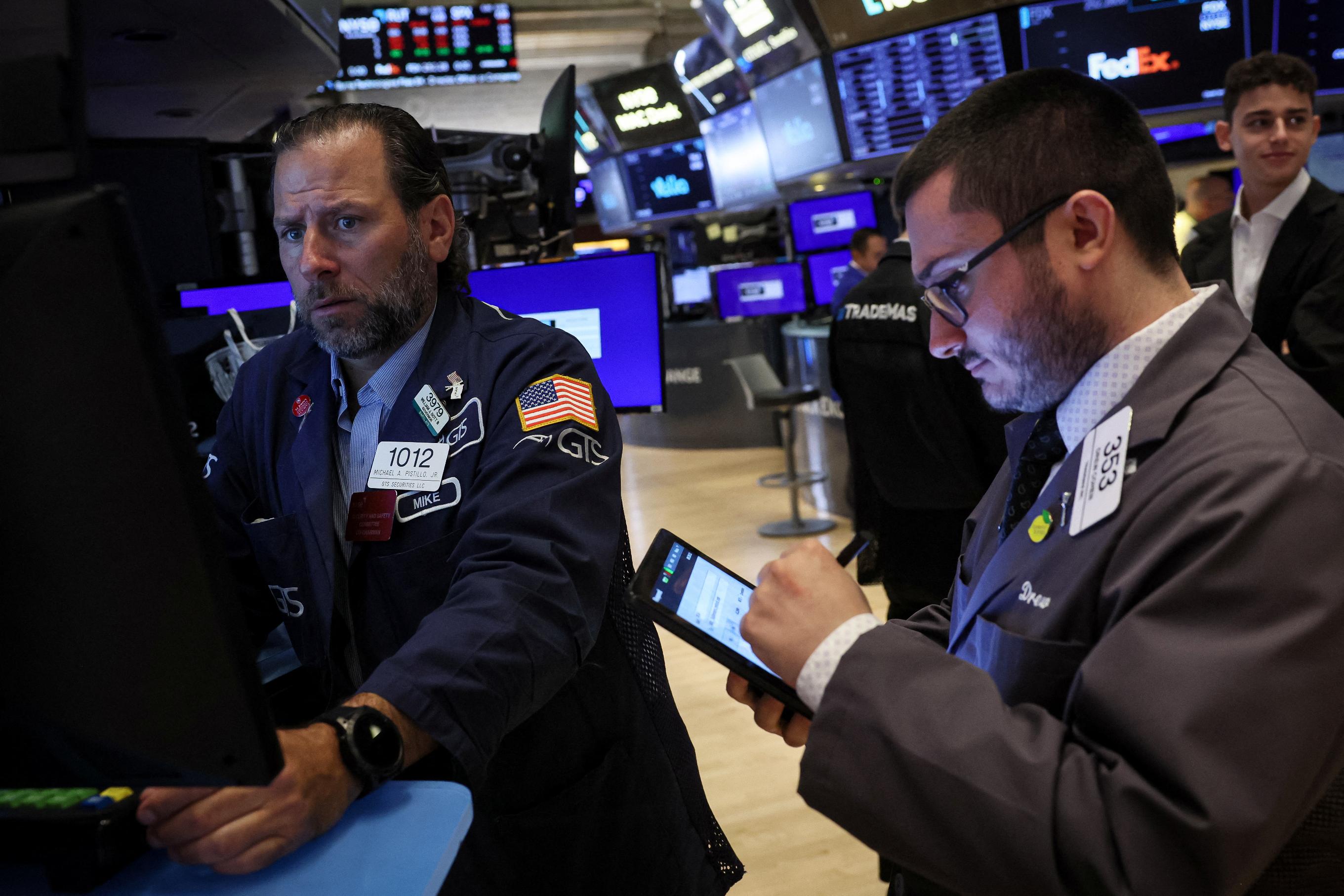
June 28 (Reuters) - U.S. Federal Reserve officials got encouraging data on Friday suggesting inflation is cooling, news that helped ease doubts over how well monetary policy is doing its job after stronger-than-expected price increases earlier in the year. But while progress on a month-to-month basis is increasingly clear, the road to the Fed's 2% inflation goal - measured in year-over-year terms - is likely to be long, complicating discussions about when to cut interest rates. "We are getting evidence that (policy) is tight enough," San Francisco Federal Reserve Bank President Mary Daly told CNBC in an interview just minutes after a Bureau of Economic Analysis report showed inflation did not rise at all from April to May. "It's really challenging to look anywhere and not see monetary policy working: we have growth slowing, spending slowing, the labor market slowing, inflation coming down." At the same time, Friday's inflation data shows there's still a lot more progress needed. From a year ago, the personal consumption expenditures price index rose 2.6%. The Fed's target is 2%. The Fed has kept its policy rate in the 5.25%-5.5% range since last July when it delivered what U.S. central bankers say will likely prove to be the last rate hike of an aggressive campaign begun in March 2022 to fight high inflation. The central bank has said no rate cuts will be appropriate until policymakers gain more confidence that inflation is on a sustainable path to their 2% goal. Traders on Friday bet that the latest inflation figures will firm up that confidence. Short-term interest-rate futures are now pricing in about a two-in-three chance that the Fed will deliver a first policy rate cut in September, with another one expected in December. "May's inflation print was well below the threshold the Fed needs to be comfortable and breaks the string of high inflation prints we've seen since the start of the year," wrote Natixis economist Christopher Hodge. But the optics for rate cuts could be challenging. Even if inflation as measured from month to month rises slightly so that, annualized, it is in line with the Fed's 2% target, the super-low inflation readings in the second-half of last year mean it would take until the end of the year to see progress in the year-over-year readings. That could force Fed officials into a difficult debate over how to decide just when the month-to-month numbers provide enough signal to light the fuse on rate cuts and stop referring to inflation as "elevated" in their policy statement. The Fed next meets on July 30-31. Daly on Friday reiterated that inflation is still too high, and said she expects year-over-year inflation to potentially remain above 2% through the end of 2025. Earlier this week Fed Governor Lisa Cook said she expects inflation to go "sideways" this year, and fall more sharply next year. Many Fed policymakers have lately stayed away from making clear pronouncements on when they may cut rates, referring instead to various scenarios that could mean a later, or an earlier, decision. So far the Fed has kept rates on hold for longer than several previous episodes. Atlanta Fed President Raphael Bostic is among the minority of U.S. central bankers who have been willing to put a time frame on a possible rate cut. "I continue to believe conditions will likely call for a cut in the federal funds rate in the fourth quarter of this year," he said on Thursday. PCE inflation peaked in June 2022 at 7.1%. “The big picture for me is that there has been tremendous progress but there is still a distance to travel," Bostic said, and the details of the inflation data will matter to the Fed's assessment of further progress. "There have been periods when one or a small number of items move the headline number. I want to look through that and see if there are other dimensions that give us confidence...Even if the topline stays where it is." One detail Bostic and other Fed policymakers have their eye on is the share of goods and services whose prices are increasing at 5% or more. That share has fallen recently. Fed Governor Michelle Bowman, among the more hawkish of U.S. central bankers, remains wary of reducing borrowing costs this year. Though central banks in other parts of the world have begun to reduce their policy rates, Bowman said the Fed would follow its own path. "We've got...really strong employment and a strong labor market at the moment, but we haven't quite reached our inflation goal, and we'll continue to work toward that on our own pace," she said on Friday. Sign up here. https://www.reuters.com/markets/us/feds-daly-good-news-inflation-data-adds-evidence-policy-is-tight-enough-2024-06-28/

2024-06-28 16:47
ORLANDO, Florida, June 28 (Reuters) - The only "winner" from a possible all-out trade war between the West and China will probably be the U.S. dollar. Uncertainty around global trade policy is the highest since 2018-2019 when clashes between former U.S. President Donald Trump's administration and Beijing reached fever pitch. It's nowhere near those peaks yet, but will be the focus of greater attention as the U.S. presidential election draws closer. Whoever wins in November, further tariffs on imports from China and likely retaliation seem inevitable. China already warns that a move by Europe to join the tariff train would constitute a "trade war." Trump's return to the White House would raise the stakes significantly. Rising protectionism and shrinking cross-border trade may dampen growth everywhere but the U.S. - the world's economic and currency superpower - has layers of protection that other countries don't. These include the relatively closed nature of the economy, the global importance of U.S. equity and bond markets, and the ubiquity of the dollar in international reserves. That's not to say the U.S. won't suffer - growth would slow and inflation might rise. But higher inflation delays or possibly eliminates Fed interest rate cuts, and growth in Europe and Asia would be more vulnerable than in the U.S. In short, the pain is likely to be felt more acutely in other currencies, none of which have the dollar's safe-haven status either. And in the world of exchange rates, everything is relative. THREE TIMES THE HIT Goldman Sachs economists attempted to quantify the risks to U.S. and euro zone growth by analyzing the 2018-2019 trade war and beyond through three lenses - U.S. and European company commentary on trade uncertainty, stock returns around tariff announcements and cross-country investment patterns. They found that a rise in trade policy uncertainty to 2018-2019 levels would likely lower U.S. GDP growth by three-tenths of a percentage point. The estimated hit to euro zone growth would be three times greater. For a region already expected to grow significantly slower than the U.S., at only 0.8% this year and 1.5% next year, according to the International Monetary Fund, that would be a major blow. Aggressive monetary easing from the European Central Bank could follow, undermining the euro. "Further increases in trade policy uncertainty pose meaningful downside risk to our global growth outlook in 2024H2 (second half of 2024) and 2025 ... with larger effects in economies where exports account for a larger share of GDP," Goldman's economists wrote on Tuesday. CLOSED OFF The U.S. economy is far less open than its European or Chinese counterparts, meaning disruption to trade should have a relatively limited impact. U.S. exports of goods and services accounted for 11.8% of GDP in 2022, according to the World Bank, compared with 20.7% in China. Eurostat data shows that euro zone goods exports last year were worth 20% of GDP. A persistent and deteriorating trade deficit for years was seen as a major drag on the dollar as the U.S. had to suck in huge amounts of foreign capital to plug the gap and prevent the dollar from falling. But the U.S. trade deficit last year was 2.8% of GDP, much smaller than the year before and half of what it was in the mid-2000s. Onshoring, energy self-sufficiency, and a push to revive domestic manufacturing all indicate the deficit will not be the drag on the dollar it once was. And that's before any tit-for-tat tariff escalation potentially shrinks U.S. imports further. EURO PARITY? China's domestic economic problems and geopolitical stance are enough to make foreigners wary of investing in the country. But it's no coincidence that foreign direct investment flows into China are plunging at their fastest pace in 15 years right as trade tensions percolate again. Chinese stocks are underperforming, barely in positive territory for this year and after a dire 2023. Beijing is struggling to hold up the yuan, which is at a seven-month low against the dollar. European stocks and the euro have not reacted favorably to recent headlines about the tariffs Brussels is slapping on certain imports from China. Given how close trade ties are now between the euro zone and China, this should be no surprise. The euro zone imports more goods from China than anywhere else in the world, and the yuan's weighting in the trade-weighted euro rivals that of the dollar. Trade tensions between China and Europe will hit the euro hard. And with the euro having a near-60% weighting in the broader dollar index, there is a naturally strong inverse correlation between the euro's fate and the dollar. Analysts at Deutsche Bank predict that the dollar will stay "stronger for longer" this year and into next year, although momentum may fade as the cycle gets longer in the tooth. A more belligerent stance on trade from whoever wins the White House in November, however, would be a major dollar-positive development and probably push the euro back down towards parity. "The dollar is under-pricing risks from U.S. protectionism," they wrote on Wednesday. (The opinions expressed here are those of the author, a columnist for Reuters.) Sign up here. https://www.reuters.com/markets/dollar-is-only-winner-china-west-trade-war-mcgeever-2024-06-28/

2024-06-28 16:39
SAO PAULO, June 28 (Reuters) - Brazilian President Luiz Inacio Lula da Silva on Friday renewed his criticism of the country's central bank, dubbing current borrowing costs "unreal," and saying the recent weakness of the local currency was related to "speculation." WHY IT'S IMPORTANT Lula, a leftist, has constantly bashed central bank chief Roberto Campos Neto, a nominee of far-right former President Jair Bolsonaro, for what he sees as excessively high interest rates. Campos Neto's term ends at the end of this year and Lula will appoint his successor. The central bank last week held its benchmark Selic interest rate at 10.50%, interrupting an easing cycle started in August. KEY QUOTES "I understand the interest rate is a tool to control inflation, but inflation is controlled and within the target range," Lula told a local radio station. "He is the central bank head of the previous government, and ideologically he thinks like the previous government," Lula said about Campos Neto. "Things will get better when I get to appoint a new head and we build a new philosophy." "Why is the dollar rising (against the Brazilian real)? Because there is speculation with derivatives ... The central bank has an obligation to investigate this." MARKET REACTION Brazil's real dropped more than 1% on Friday, weakening past 5.58 per U.S. dollar. William Jackson, chief emerging markets economist at Capital Economics, said Lula's "war of words" with the central bank has fueled concerns about politicization of monetary policy and contributed to the real's weakness this week. Sign up here. https://www.reuters.com/markets/brazils-lula-renews-criticism-central-bank-unreal-interest-rates-2024-06-28/

2024-06-28 14:05
Growth likely to be at 0.1% in May Markets bet 45% rate cut chance in July All eyes on next inflation, jobs data OTTAWA, June 28 (Reuters) - Canada's gross domestic product increased 0.3% in April, matching market expectations, as growth rebounded in sectors including wholesale trade and manufacturing, and the economy likely expanded further in May, data showed on Friday. Analysts polled by Reuters had forecast 0.3% GDP growth in the month, after growth stalled in March. The growth in April, fastest since the 0.5% clocked in January, was driven by rebounds in wholesale trade, mining, quarrying, and oil and gas extraction and manufacturing sectors, Statistics Canada said. In a preliminary estimate for May, Statscan said GDP was likely up 0.1%, as increases in manufacturing, real estate related activities, and finance and insurance were partially offset by decreases in retail trade and wholesale trade. This data could be revised when the next GDP numbers are announced on July 31. "The slowing in May GDP growth suggests that the reacceleration in the inflation... reflected supply issues or volatility in the data, rather than demand pressures," Andrew Grantham, senior economist at CIBC Capital Markets wrote in a note. Money markets, which were betting for almost a 75% chance of a rate cut earlier this week, trimmed the chances to around 40% after inflation data were released on Tuesday. After the GDP numbers were published, the bets slightly moved up to 45%. Friday's data puts the Canadian economy on track to exceed the Bank of Canada's second quarter annualized growth forecast of 1.5%. GDP rose 1.7% in the first quarter, falling short of the bank's 2.8% growth rate projection. Canada's inflation data showed consumer prices unexpectedly rose in May. The central bank's next rate announcement is on July 24, before which it will have the benefit of one more inflation reading, along with the jobs report for June. Economists said with the GDP not moving the needle much in terms of rate cut bets, the upcoming inflation and jobs numbers become critical. "If this trend (GDP) is repeated in the next jobs and inflation reports, data uncertainty alone could tip the BoC into holding," Simon Harvey, head of FX analysis at Monex, said, referring to a likely pause in rate cuts in July. The Canadian dollar pared early losses and firmed 0.11% to 1.3686 against the U.S. dollar, or 73.07 U.S. cents. In April, growth was recorded in 15 out of 20 sectors, the statistics agency said. Retail trade, helped by food and beverage retailers and gasoline stations, was another top contributor of growth in April after two consecutive monthly declines, it said. Construction and real estate and rental and leasing were among sectors that weighed on growth in the month. Overall, both goods-producing and services-producing industries grew by 0.3% in April. The central bank trimmed its key policy rate for the first time in more than four years earlier in June, and said more cuts were likely if inflation continued to show it was on a sustainable path back down to the 2% target. Sign up here. https://www.reuters.com/markets/canadas-economy-expands-03-april-another-gain-seen-may-2024-06-28/

2024-06-28 12:44
June 28 (Reuters) - Market bets rose on Friday that the Federal Reserve will cut interest rates by September and do so again in December after a government report showed a key measure of U.S. inflation weakened last month. Traders of futures contracts tied to the Fed policy rate now see about a 68% chance of a rate cut by the Fed's September meeting, up from about 64% earlier, after the data showed inflation by the personal consumption expenditures index did not rise at all from April to May. Sign up here. https://www.reuters.com/markets/us/traders-add-fed-rate-cut-bets-inflation-eases-2024-06-28/
2024-06-28 12:37
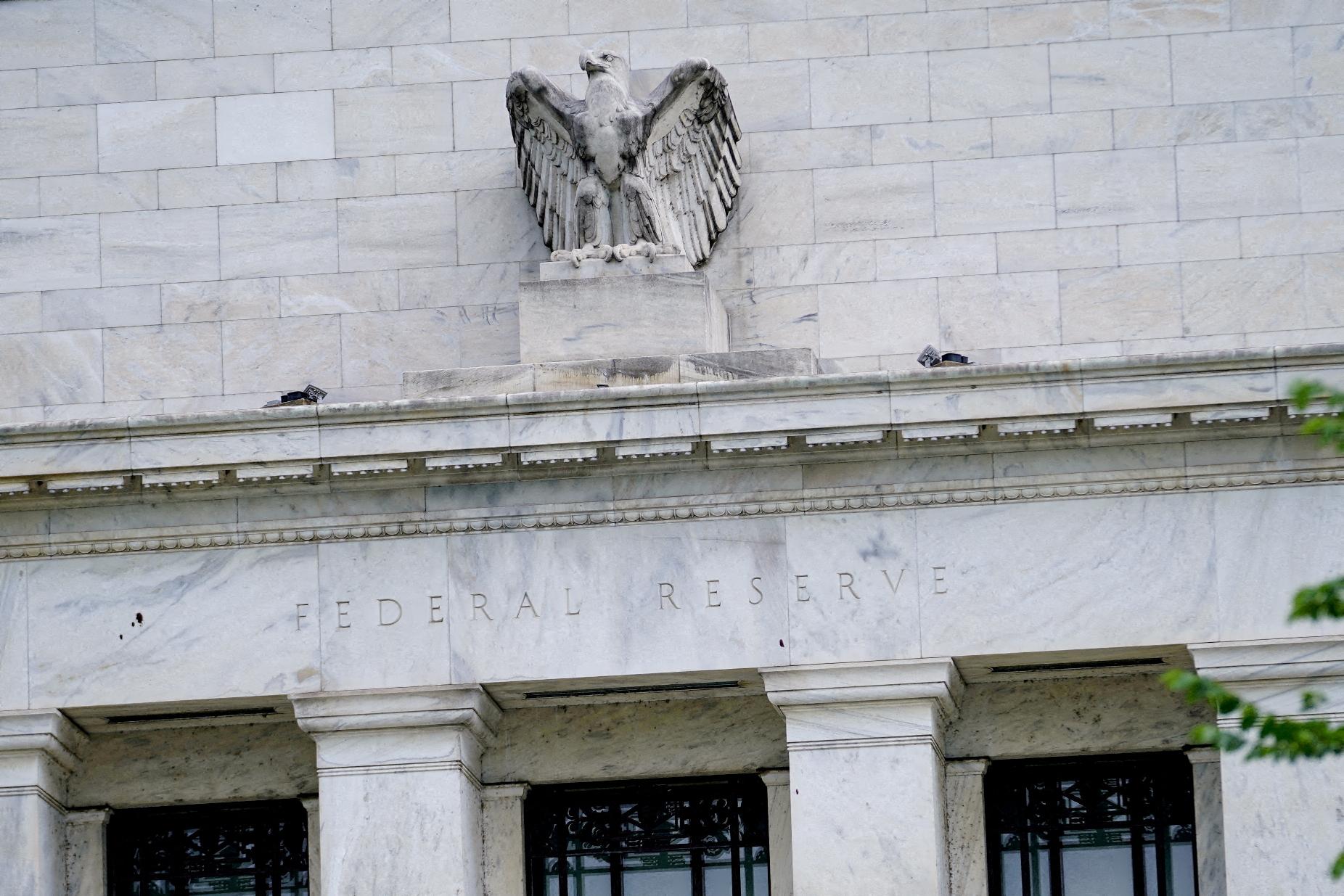
Traders add to Fed rate cut bets as inflation eases Nike slumps after results Infinera jumps after Nokia to buy company Indexes down: Dow 0.11%, S&P 0.41%, Nasdaq 0.71% June 28 (Reuters) - U.S. stocks ended weaker on Friday after an early rally fizzled as investors digested in-line inflation data and weighed political uncertainty after the U.S. presidential debate. Nike had its steepest one-day fall in over two decades after a gloomy forecast. "I don't think the inflation number changes much because the Federal Reserve has been pretty serious about their 2% target and remains disciplined," said Ann Miletti, Allspring's head of active equity. Data showed U.S. monthly inflation was unchanged in May, an encouraging development after strong price increases earlier this year raised doubts over the effectiveness of the Fed's monetary policy. The Commerce Department report also showed consumer spending rose marginally last month, fueling optimism that the U.S. central bank could engineer a much-desired "soft landing" for the economy. Bets on a rate cut in September rose to 66% after the personal consumption expenditures price index release, LSEG FedWatch data showed. Traders have maintained bets on two cuts despite Fed projections of just one this year, as they hope inflation will keep cooling. The first debate on Thursday between U.S. President Joe Biden and Republican rival Donald Trump also weighed on stocks, said Thomas Martin, senior portfolio manager at Globalt Investments, citing the incumbent's shaky performance. "People are trying to think about what's going to happen with the presidential election. So instead of uncertainty decreasing after the debate, it's increased," he said. Treasury yields reversed early losses to end higher, adding pressure on some megacap stocks. San Francisco Fed President Mary Daly acknowledged the cooling inflation, and noted that it is "good news that policy is working." Fed Governor Michelle Bowman said the central bank would follow its own path as its inflation goal has yet to be reached. The S&P 500 energy (.SPNY) New Tab, opens new tab and real estate (.SPLRCR) New Tab, opens new tab were the top performers, up 0.42% and 0.62%, while utilities (.SPLRCU) New Tab, opens new tab and communications services (.SPLRCL) New Tab, opens new tab fell 1.08% and 1.63%, respectively. Nike (NKE.N) New Tab, opens new tab slumped 19.98% after forecasting a surprise drop in fiscal 2025 revenue, weighing on the broader consumer discretionary sector (.SPLRCD) New Tab, opens new tab. The Dow Jones Industrial Average (.DJI) New Tab, opens new tab fell 41.12 points, or 0.11%, to 39,122.94. The S&P 500 (.SPX) New Tab, opens new tab lost 22.57 points, or 0.41%, at 5,460.30 and the Nasdaq Composite (.IXIC) New Tab, opens new tab dropped 126.08 points, or 0.71%, to 17,732.60. Volume surged toward the closing bell when the FTSE Russell finalized the reconstitution of its indexes. It was the second biggest daily volume of the year. The S&P 500 and the Nasdaq indexes registered quarterly gains of 3.9% and 8.3%, respectively. The Dow (.DJI) New Tab, opens new tab dropped 1.7%, highlighting the divergence between the more tech-heavy indexes and the rest of the market. Among individual stocks, optical networking gear maker Infinera (INFN.O) New Tab, opens new tab jumped 15.78% after Nokia (NOKIA.HE) New Tab, opens new tab said it would acquire the company in a $2.3 billion deal. Advancing issues outnumbered decliners by a 1.29-to-1 ratio on the NYSE, which had 271 new highs and 75 new lows. The S&P 500 posted 16 new 52-week highs and one new low while the Nasdaq Composite recorded 58 new highs and 139 new lows. Sign up here. https://www.reuters.com/markets/us/futures-rise-countdown-key-inflation-data-trump-media-spikes-2024-06-28/