2024-06-27 04:33
A look at the day ahead in European and global markets from Tom Westbrook So much for a week watching football and cricket while counting down to Friday's blockbuster U.S. personal consumption price index. The waiting has turned bumpy following unnerving inflation surprises in Canada and Australia, a slump in the yen and a negative reaction to solid results at Micron (MU.O) New Tab, opens new tab. Shares in the chipmaker, seen as an industry bellwether due to its exposure to varied chip types and customers, slid 8% in after-hours trade and dragged down Nasdaq futures . Australia's bond market has taken a kicking, with three-year government bond futures down 26 ticks in two sessions as the risk of another rate hike climbs. Aussie bank stocks dropped in anticipation of economic pain and bond proxies from utilities to real estate were punished beyond ex-dividend selling. The pace of expected rate cuts in Canada has pared back. The yen, meanwhile, skidded to lifetime lows on the euro and its lowest since 1986 at 160.88 per dollar on Wednesday, hovering near those levels in the Asia session while Japan's finance minister reiterated concern. The yen is down about 12% on the dollar this year, the biggest fall of any G10 currency, driven mostly by the wide gap between U.S. interest rates - above 5% at the short end - and Japanese rates which are around zero. Euro zone confidence, services and economic sentiment surveys are due on Thursday, as is final U.S. GDP data, though both are likely to be overshadowed by the PCE reading, the Federal Reserve's preferred inflation measure due on Friday. CNN also broadcasts the first U.S. presidential debate, where debt and the dollar are likely to feature in the discussion, though markets have thus far struggled to come to grips with the implications of November's election outcome. Joe Biden and Donald Trump will have their microphones muted when it is not their turn to talk. Voters see Republican candidate Trump as better for the economy but prefer his Democratic rival President Biden's approach on preserving democracy, a new Reuters/Ipsos poll found. In swing states, however, according to a Washington Post New Tab, opens new tab poll, more voters trust Trump to safeguard democracy. How do you price that in? Key developments that could influence markets on Thursday: Euro zone sentiment surveys U.S. GDP U.S. presidential debate Sign up here. https://www.reuters.com/markets/europe/global-markets-view-europe-2024-06-27/
2024-06-27 03:12
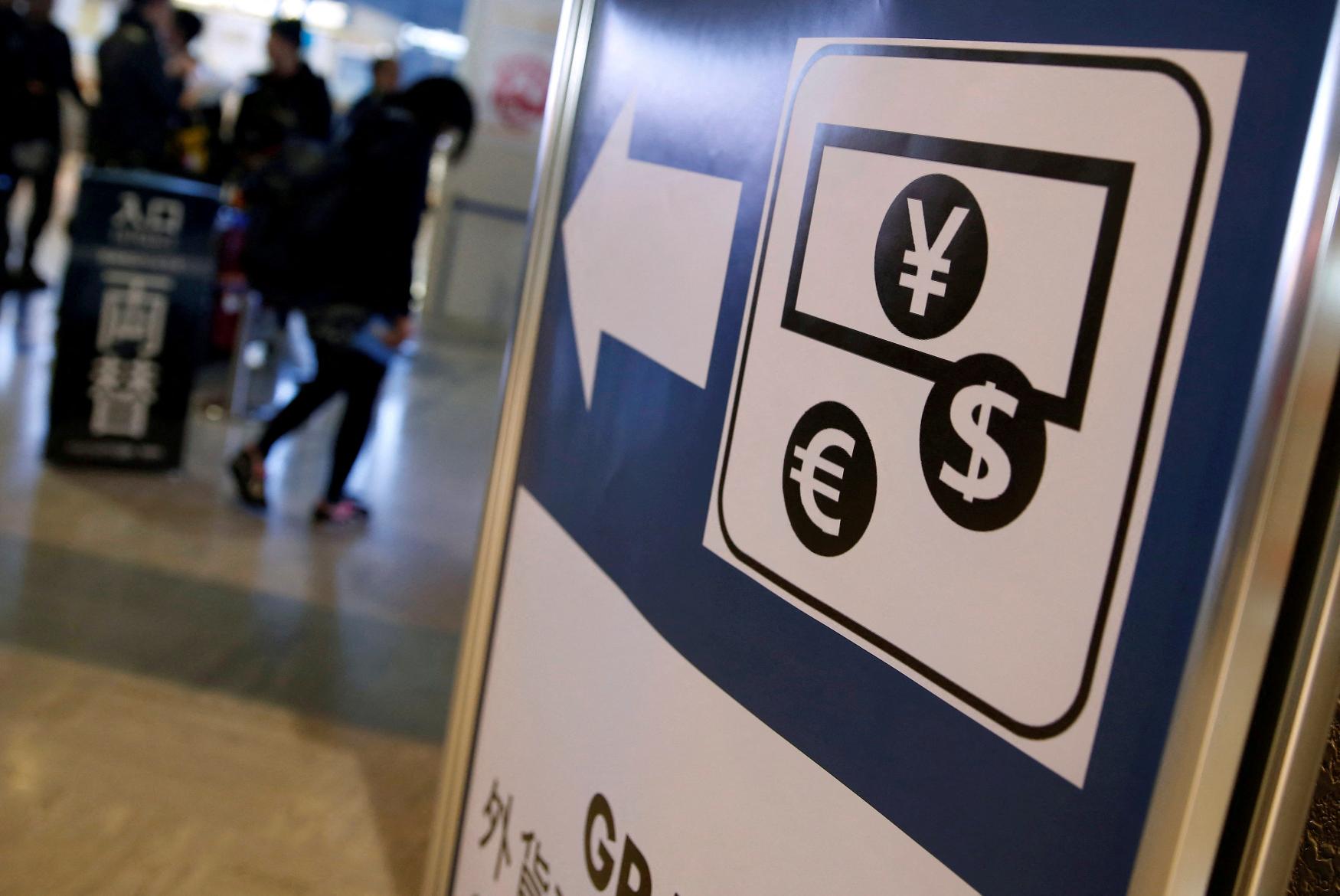
Finance minister says concerned over weak yen impact on economy Chief cabinet secretary says Tokyo to take 'appropriate' action Weak yen puts pressure on BOJ ahead of July policy meeting TOKYO, June 27 (Reuters) - Japanese authorities will take necessary actions on currencies, Finance Minister Shunichi Suzuki said on Thursday, signalling readiness to intervene in the exchange-rate market after the yen's slide to a fresh 38-year low against the dollar. "It's desirable for exchange rates to move stably. Rapid, one-sided moves are undesirable. In particular, we're deeply concerned about the effect on the economy," Suzuki told reporters. "We are watching moves with a high sense of urgency, analysing the factors behind the moves, and will take necessary actions," he said. Chief Cabinet Secretary Yoshimasa Hayashi also told a news conference on Thursday that Tokyo will take "appropriate" action against excessive currency moves. He declined to comment on yen levels and whether authorities would intervene. The yen stood at 160.52 per dollar on Thursday, remaining a fraction away from the 38-year low of 160.88 hit on Wednesday. Japanese authorities are facing renewed pressure to combat sharp declines in the yen, which has fallen 12% so far this year against the dollar as traders focus on the wide interest rate divergence between Japan and the United States. The yen's fast-pitch decline below the key 160-to-the-dollar level is heightening market alarm over the chance of imminent yen-buying intervention. "At this point, authorities are probably starting to worry not just about the speed but the level," Masafumi Yamamoto, chief currency strategist at Mizuho Securities, said in a research note. "Unless they intervene, there's a risk the yen will slide toward 162." But analysts doubt whether jawboning, and even intervention, can reverse the weak-yen tide that is driven mostly by uncertainty over how soon the U.S. Federal Reserve will start cutting interest rates. The Bank of Japan has dropped signals of an imminent interest rate hike, though any increase in the current near-zero short-term policy target will still keep Japan's borrowing costs very low. Still, the yen's slide could heighten pressure on the BOJ to accompany a scheduled announcement of a quantitative tightening (QT) plan with a rate hike at its next policy meeting on July 30-31, some analysts say. Speaking after a meeting to approve the government's monthly economic report, Economy Minister Yoshitaka Shindo said on Thursday that policymakers must be vigilant to the risk of a soft yen pushing up inflation through rising import costs. "A weak yen is among factors that push up inflation, so we will closely watch the currency's moves in guiding monetary policy," BOJ Deputy Governor Shinichi Uchida was quoted as saying at the meeting, according to a Cabinet Office official who briefed reporters on the discussions. Tokyo spent 9.8 trillion yen ($61 billion) intervening in the foreign exchange market at the end of April and early May, after the Japanese currency hit a 34-year low of 160.245 per dollar on April 29. ($1 = 160.4800 yen) Sign up here. https://www.reuters.com/markets/currencies/japan-finance-minister-suzuki-says-hes-ready-act-yens-decline-2024-06-27/
2024-06-27 00:30
Market still on high alert for yen intervention U.S. continuing jobless claims rise in latest week U.S. durables fall unexpectedly Final U.S. GDP number for Q1 down from Q4 Fed's Bostic says he sees one rate cut in 2024 NEW YORK, June 27 (Reuters) - The U.S. dollar drifted lower against most currencies on Thursday, pressured by softening data in the world's largest economy that backs expectations the Federal Reserve will start cutting interest rates this year. The yen edged up from a 38-year low against the greenback following the U.S. numbers, even as traders remained on high alert for any signs of Japanese intervention to prop up the currency. U.S. reports showed that jobless claims for state unemployment benefits dropped to 233,000 for the week ended June 22. However, the number of people receiving benefits after an initial week of aid increased 18,000 to 1.839 million during the week ending June 15. At the same time, new orders for key U.S.-manufactured capital goods unexpectedly fell in May, suggesting business spending on equipment weakened in the second quarter. Non-defense capital goods orders excluding aircraft dropped 0.6% last month, the data showed. Economists polled by Reuters had forecast core capital goods orders edging up 0.1%. More data showed that economic growth moderated sharply in the first quarter. Gross domestic product increased at a slightly upwardly revised 1.4% annualized rate last quarter, but down from the 3.4% registered in last three months of 2023. The GDP report also showed weak consumer spending. U.S. consumption growth was revised down to 1.5%, from the previous estimate of 2%. "It seems markets are focusing more on the personal consumption miss than anything else, definitely would constitute a sign of a slowdown in the U.S. economy," said Helen Given, FX trader at Monex USA in Washington. "Q1 GDP below the red hot readings is something to be expected, but such a downgrade in consumption shows there might be a further slowdown coming." YEN WOES In afternoon trading, the yen was slightly up against the greenback at 160.765 per dollar , having fallen to a low of 160.88 on Wednesday, its weakest since December 1986. The Japanese currency has fallen about 2.1% this month and 12% so far year against a resilient dollar, as it continues to be hammered by wide interest rate differentials between the U.S. and Japan. That has encouraged investors to use the yen as a funding currency for carry trades. In a carry trade, an investor borrows in a currency with low interest rates and invests the proceeds in higher-yielding assets. Still, the yen's latest slide past the key 160 per dollar level has kept traders nervous over possible intervention from Tokyo, after authorities spent 9.79 trillion yen ($60.94 billion) at the end of April and early May to push the yen up 5% from its then 34-year low of 160.245. Analysts said while the risk of intervention has increased, Japanese authorities could be holding out for Friday's release of the U.S. personal consumption expenditures (PCE) price index before entering the market. Still, any intervention would likely have a limited effect, they said. "The Bank of Japan has been known to act on Friday, but its best case scenario...would be a material slowdown in U.S. inflation to further support calls for a Federal Reserve rate cut this year," said Michael Boutros, senior FX analyst at Forex.com. Elsewhere, sterling rose 0.2% to $1.2643 while the euro rose 0.2% to $1.0704. The euro is on track to lose roughly 1.4% this month, weighed down by political turmoil in the euro zone ahead of France's snap election set to begin this weekend. The dollar index slipped 0.1% to 105.91, not far from a nearly two-month high of 106.13 on Wednesday. The U.S. currency's losses overall were limited, however, by comments from Atlanta Fed President Raphael Bostic, a voter at the Federal Open Market Committee (FOMC) this year. In an essay released on Thursday, Bostic said as things stand, "I continue to believe conditions will likely call for a cut in the federal funds rate in the fourth quarter of this year." In other developments, Wednesday was the last day that investors could trade currencies for the quarter, given that spot foreign exchange settlement takes two business days. Trading of U.S. stocks moved to a shorter settlement cycle last month, known as T+1. Sign up here. https://www.reuters.com/markets/currencies/battered-yen-pinned-near-multi-decade-low-amid-resilient-dollar-2024-06-27/

2024-06-27 00:28
LAS VEGAS, June 26 (Reuters) - Chilean miner SQM (SQMA.SN) New Tab, opens new tab plans to choose one or more direct lithium extraction (DLE) technologies by next year in order to quickly expand production of the electric vehicle battery metal in the Salar de Atacama, an executive said on Wednesday. The use of DLE technologies is a core part of SQM's long-awaited joint venture agreement with state-controlled Codelco, announced last month, as well as President Gabriel Boric's push to reduce his country's use of water-wasting evaporation ponds to produce the metal. Chile is the world's second-largest lithium producer after Australia, thanks to output from SQM and rival Albemarle (ALB.N) New Tab, opens new tab, which is planning its own use of DLE in the country. Boric's mandate has sparked a frenzy among DLE companies to operate in Chile, which has the world's largest lithium reserves. But to date, DLE technology has not worked at commercial scale without the use of ponds. Santiago-based SQM studied more than 70 DLE technologies before picking 12 for pilot testing, with two of those tests happening now, Carlos Diaz, head of SQM's lithium division, told Reuters on the sidelines of the Fastmarkets Lithium Supply and Battery Raw Materials Conference in Las Vegas. Given the large size and chemical complexity of the Atacama, SQM is likely to pick several DLE companies as it works to phase in the technologies to boost output to an annual range of 280,000 to 300,000 metric tons of lithium by 2060, up from an estimated 200,000 tons this year, he said. "We would like to have multiple (DLE) solutions," said Diaz, an engineer by training who joined SQM in 1996. "It's difficult to choose one that is going to fit and be suitable for all kinds of different chemicals that can be in different types of brine." Aurora Williams, Chile's mining minister, said in April she had no plans to mandate a specific type of DLE technology for use in the country. SQM earlier this year tested a DLE technology from France-based Adionics, in which it has an investment. Key considerations for SQM include DLE's higher electricity usage than evaporation ponds as well as the large freshwater use of some versions, Diaz said. The company is also concerned about how reinjection of brine after lithium is separated could affect aquifers, he said. "You have to be very careful with how you affect the environmental equilibrium" of the aquifers, he added. After the selection, SQM would have to apply for environmental permits with Chilean regulators, a process that could take up to three years, Diaz said. Elsewhere, SQM has been making international investments into hard rock lithium mining, including into Australia's Azure Minerals, part of a push that Diaz says aims to broaden the company's geographic focus. "We have been exploring different alternatives outside of Chile in order to diversify," Diaz said. "In order to keep increasing the production of lithium as demand is growing, we need to diversify and look for new resources." Sign up here. https://www.reuters.com/markets/commodities/chiles-sqm-plans-choose-lithium-extraction-technology-by-next-year-2024-06-27/

2024-06-27 00:10
RIO DE JANEIRO, June 26 (Reuters) - Recent exchange rate fluctuation Brazil is damaging the country's foreign trade predictability, said the foreign trade secretary Tatiana Prazeres on Wednesday. The Brazilian real closed Wednesday at about 5.52 per greenback, its lowest closing price since January 2022, amid high interest rates in the U.S and local fiscal uncertainties. "We need to wait and see where it stabilizes, the oscillation harms the predictability of business," Prazeres told journalists at the sidelines of an event in Rio de Janeiro. She, however, avoided comments on whether the 2024 trade balance could be worse than expected due to a rising U.S. dollar. In April, Brazil's Development, Industry, Trade and Services Ministry reduced its projection for the trade balance in 2024 to a $73.5 billion surplus, from a $94.9 billion surplus it had previously forecasted. Prazeres, who works at the ministry, also said that a Mercosur's trade agreement with the European Union is still viable, although there are still issues to be resolved in the talks. Sign up here. https://www.reuters.com/markets/currencies/brazilian-reals-volatility-undermines-foreign-trade-predictability-says-official-2024-06-27/

2024-06-26 23:56
June 26 (Reuters) - A New York transit agency voted on Wednesday to indefinitely halt congestion pricing in Manhattan that was set to start on June 30 after the state's governor directed the action. The Metropolitan Transportation Authority voted to halt the program and said it was putting $16.5 billion in capital projects on hold -- including major expansion projects such as extending the Second Avenue Subway, upgrading aging signal systems and train cars and purchasing 250 electric buses. New York State Comptroller Thomas DiNapoli said in a report on Tuesday the state had estimated $17 billion would need to be removed from the current $55.4 billion transit capital plan to address the loss of congestion pricing revenue. The MTA has already canceled contracts and halted work on one key subway expansion project and has said it could put federal grant funding at risk. "Whatever you think about congestion pricing, you cannot deny the harm that unchecked traffic does to New York's economy; not only that, but also to cities all over the country," said MTA CEO Janno Lieber. Governor Kathy Hochul cited high inflation and a desire to prevent commuters or tourists from opting not to visit because of the additional charge in her decision to halt implementation. Hochul said in a statement Wednesday she would work with the MTA "to further develop a comprehensive approach to fund" capital projects and work with the state legislature "to implement comprehensive solutions and ensure appropriate funding sources in next year’s budget." New York City's congestion pricing program, the first of its kind in the U.S., would have charged a toll of $15 during daytime hours for vehicles driving in Manhattan south of 60th Street. London implemented a similar charge in 2003. MTA has said the charge would cut traffic by 17%, improve air quality and increase mass transit use by 1% to 2%, as well as generating $1 billion to $1.5 billion a year and supporting $15 billion in debt financing for mass transit improvement. In 2019, state lawmakers approved the plan to help fund improvements in mass transit using tolls to manage New York City's traffic, the most congested of any U.S. city. Congestion pricing had been projected to start in 2021 but the federal government under former President Donald Trump took no action. New York says more than 900,000 vehicles enter the Manhattan Central Business District daily, which reduces travel speeds to around 7 miles per hour on average. Sign up here. https://www.reuters.com/world/us/new-york-transit-agency-votes-indefinitely-halt-manhattan-congestion-pricing-2024-06-26/