2024-06-25 23:43
June 25 (Reuters) - An assistant referee keeled over and fainted in the first half of Peru's Copa America Group A match against Canada, being played in hot and humid conditions at Children's Mercy Park in Kansas City on Tuesday. Humberto Panjoj collapsed during stoppage time in the first half, with Canada goalkeeper Maxime Crepeau attracting the attention of medical staff. The Guatemalan official was treated on the sidelines and briefly got back on his feet before being taken off on a stretcher. According to AccuWeather, the temperature in Kansas City is expected to reach a high of 34 degrees Celsius (93 degrees Fahrenheit) on Tuesday, with a humidity of 53%. The teams were tied at 0-0 at halftime. Argentina lead Group A with three points, while both Peru and Chile have a point each. Canada are bottom of the group after losing their opening match. Sign up here. https://www.reuters.com/sports/soccer/assistant-referee-faints-peru-v-canada-copa-america-clash-2024-06-25/

2024-06-25 23:13
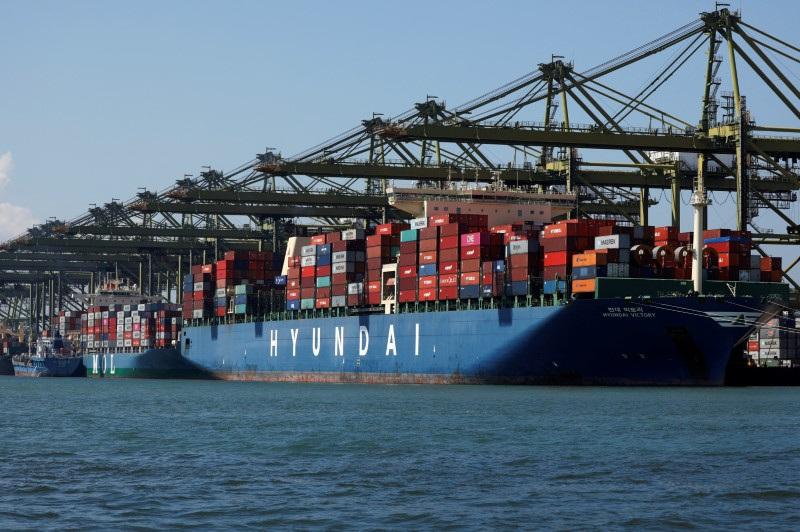
SEOUL/SINGAPORE, June 26 (Reuters) - (This June 25 story has been corrected to show 12% import volume increase is for all U.S. ports, not top 10 ports, and the China contribution to the monthly volume of imports is the highest, not the second-highest, since January 2023, in paragraph 22) Congestion at Singapore's container port is at its worst since the COVID-19 pandemic, a sign of how prolonged vessel re-routing to avoid Red Sea attacks has disrupted global ocean shipping - with bottlenecks also appearing in other Asian and European ports. Retailers, manufacturers and other industries that rely on massive box ships are again battling surging rates, port backups and shortages of empty containers, even as many consumer-oriented firms look to build inventories heading into the peak year-end shopping season. Global port congestion has reached an 18-month high, with 60% of ships waiting at anchor located in Asia, maritime data firm Linerlytica said this month. Ships with a total capacity of over 2.4 million twenty-foot equivalent container units (TEUs) were waiting at anchorages as of mid-June. But, unlike during the pandemic, it is not a buying flurry by house-bound consumers that is swamping ports. Rather, ship timetables are being disrupted with missed sailing schedules and fewer port calls, as vessels take longer routes around Africa to avoid the Red Sea, where Yemen's Houthi group has been attacking shipping since November. Ships are therefore offloading larger amounts at once at big transhipment hubs like Singapore, where cargoes are unloaded and reloaded on different ships for the final leg of their journey, and forgoing subsequent voyages to catch up on schedules. "(Shippers) are trying to manage the situation by dropping the boxes at transhipment hubs," said Jayendu Krishna, deputy head of Singapore-based consultancy Drewry Maritime Advisors. "Liners have been accumulating boxes in Singapore and other hubs." Average Singapore cargo offload volume jumped 22% between January and May, significantly impacting port productivity, Drewry said. SEVERE CONGESTION Singapore, the world's second-largest container port, has seen particularly severe congestion in recent weeks. The average wait time to berth a container ship was two to three days, Singapore's Maritime and Port Authority (MPA) said in end-May, while container trackers Linerlytica and PortCast said delays could last up to a week. Typically, berthing should take less than a day. Neighbouring ports are also backing up as some ships skip Singapore. The strain has shifted to Malaysia's Port Klang and Tanjung Pelepas, said Linerlytica, while wait times have also climbed at Chinese ports, with Shanghai and Qingdao seeing the longest delays. Drewry expects congestion at major transhipment ports to remain high, but anticipates some easing as carriers add capacity and restore schedules. Singapore's MPA has reopened older berths and yards at Keppel Terminal and will open more berths at Tuas Port to tackle extended waits. Maersk (MAERSKb.CO) New Tab, opens new tab, the world's second-largest container carrier, said this month it would skip two westbound sailings from China and South Korea in early July due to severe congestion in Asian and Mediterranean ports. PEAK SEASON The annual peak shipping season has also arrived earlier than expected, exacerbating port congestion, shippers and research firms said This seems to be driven by restocking activities, particularly in the U.S., and by customers shipping goods early in anticipation of stronger demand, said Niki Frank, CEO of DHL Global Forwarding Asia Pacific. Container rates, meanwhile, have surged, raising the risk of another spate of price increases for buyers like the post-pandemic inflation spike which central banks are still trying to tame. Rates had stabilised into April but in May "there was a significant increase in ocean freight exports of Chinese e-commerce, electric vehicles, and renewable energy-related goods," Asia-focussed freight forwarder Dimerco said. "The peak season, which traditionally starts in June, was advanced by a full month, causing ocean freight rates to soar." Container import volume at U.S. seaports in May rose almost 12%, fuelled by the highest monthly import volumes from China since January 2023, said data provider Descartes. "(U.S.) consumers are continuing to spend more than last year, and retailers are stocking up to meet demand," said Jonathan Gold, a National Retail Federation vice president. Ocean imports into Europe from Asia are also showing signs of a re-stocking season running into peak season - pushing rates to 2024 highs, Judah Levine of freight platform Freightos said. Container freight prices from Asia to the U.S. and Europe have tripled since early 2024. Rates from Asia and Singapore to the U.S. East Coast are at their highest since September 2022, while rates into the U.S. West Coast are highest since August 2022, freight platform Xeneta said. Some industry players think part of the reason for the bottlenecks at China ports is fuelled by U.S. importers rushing to buy Chinese goods such as steel and medical products that will be subject to steep tariff hikes from Aug. 1. But newly imposed U.S. tariffs would affect only about 4% of Chinese imports to the U.S., said Jared Bernstein, chair of the Council of Economic Advisers. Gene Seroka, executive director of the Port of Los Angeles, the largest U.S. gateway for Chinese ocean imports, also expects a limited impact. "We may see some of this cargo come in, but it is not going to be a deluge," he said. Concerns about possible strikes at U.S. ports this year could also be pulling the peak season forward, while DHL said German port strikes were adding to the gridlock. All of those disruptions will likely mean higher prices for consumers, experts warn. "These are huge financial hits for shippers to absorb," said Peter Sand, chief analyst at Xeneta. Sign up here. https://www.reuters.com/markets/commodities/singapore-port-congestion-shows-global-ripple-impact-red-sea-attacks-2024-06-25/
2024-06-25 23:12
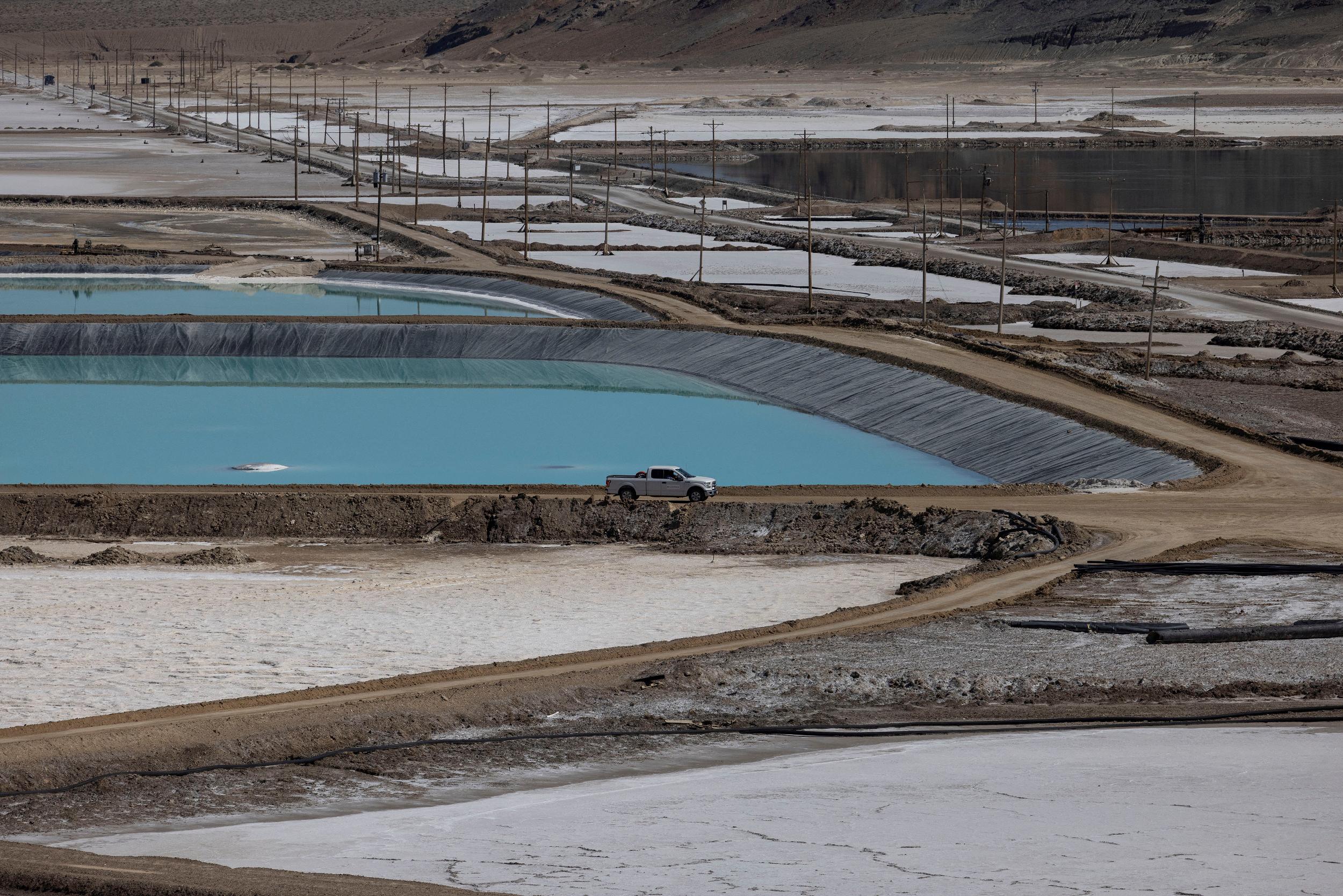
LAS VEGAS, June 25 (Reuters) - Albemarle (ALB.N) New Tab, opens new tab, the world's largest lithium producer, plans to hold more auctions for the metal used in electric vehicle batteries to boost price transparency and promote a better understanding of the opaque market, an executive said on Tuesday. The move is one of the most aggressive by an industry leader to clear up the widespread confusion about how lithium is priced. It would also help better underpin supply contracts with automakers hungry for fresh and consistent supply. "What we're trying to do is build trust," Eric Norris, head of Albemarle's energy storage business, told Reuters on the sidelines of the Fastmarkets Lithium Supply and Battery Raw Materials Conference in Las Vegas. While lithium has surged in popularity the past decade, confusing futures pricing from market leader China has made it unclear what a realistic global reference point for price should be. The struggle became especially acute after Chinese prices plunged last year and dragged down shares of Albemarle and other Western lithium producers. The London Metal Exchange has yet to launch a long-planned lithium futures contract and volumes on the CME Group (CME.O) New Tab, opens new tab lithium contract are dwarfed by those for copper and other critical minerals. In response to the price uncertainty, Albemarle auctioned some of its Australian lithium supplies in March, a practice it now plans to replicate globally, Norris said. "Our intent is to do more of them" in more parts of the world and for various types and grades of lithium, he added. Albemarle plans to provide its auction data to Fastmarkets and other pricing agencies to formulate into publicly available prices, he said, noting that many of the company's long-term contracts are linked to such data. Data sharing should also boost the use of hedging and other financial contracts to reduce risk, Norris said. "If we can create more volume, more liquidity ... that's going to benefit the entire industry." 'TAP THE POTENTIAL' In Chile's Salar de Atacama, where Albemarle produces lithium using evaporation ponds, the company has mapped an aggressive growth plan involving the use of direct lithium extraction technology, Norris said. However, Albemarle has no plans to bid to develop Chile's other lithium-rich salars, or salt flats, steps that rivals are taking. "We haven't fully even begun to tap the potential of what we have in the Atacama," Norris said. With the recent drop in lithium prices, now may be the right time for industry consolidation, Norris said, but Albemarle is focused on existing projects. "There should be bigger players with bigger balance sheets ... in this space in order to credibly support the growth going forward," he said. "We'd never rule out acquisitions, but our priority now is internal organic investments." Sign up here. https://www.reuters.com/markets/commodities/albemarle-concerned-about-lithium-prices-sees-strong-long-term-demand-2024-06-25/
2024-06-25 23:12
Climate City Capital Hub to help coordinate funding 112 EU, associated cities aiming to hit ambitious target Hub will help source capital from EIB, other investors LONDON/BRUSSELS, June 26 (Reuters) - A group of 112 cities aiming to eliminate their net greenhouse gas emissions by 2030 will need a combined 650 billion euros ($695.83 billion) in investments to deliver the pledge, a European Union initiative said on Wednesday. Part of the EU's "100 Climate Neutral and Smart Cities' Mission", the cities' net-zero emissions goal is more ambitious than that of most governments, with the 27-country EU and Britain both setting a 2050 deadline. After 377 cities applied to join the programme, 100 from the bloc and 12 from associated countries were chosen and are developing a climate plan with support from the EU and non-profit advisory firm Bankers without Boundaries (BwB). That plan is then turned into an investment blueprint assessed by the European Commission and independent experts before the city is given a label to affirm the fact. To date, 33 cities have had their plans signed off, including Lyon, Seville, Malmo, Lisbon and Florence, with more expected to be approved in October. Projects could include retrofitting buildings to be more energy-efficient and adapting infrastructure to withstand more extreme weather events. "Historically, cities have not been significant partners for the private sector, but progress can be much faster if private capital is more involved," said Allison Lobb, executive director of Bankers without Boundaries. To help raise the cash, the EU on Wednesday launched a "Climate City Capital Hub" that will leverage guarantees by national governments to attract private finance, and group small projects that would usually struggle to access funding individually. The public and private funding could take multiple forms, including setting up local investment funds or issuing bonds to fund certain projects. BwB said nearly 50 investors had already shown interest in investing once the pipeline is ready. The European Investment Bank is set to collaborate with the hub to provide financial and technical advice to cities to help them implement their respective plans. "EIB provides over a quarter of our lending to cities, and as Europe’s climate bank we are keen to work with cities to help them implement their climate-neutrality investments," said EIB Vice President Teresa Czerwinska. Cities are a major contributor to climate change, producing 70% of the world's CO2 emissions, according to the International Energy Agency, ranging from industries and energy consumption in buildings to fossil fuel-based transport systems. People living in cities are also highly exposed to climate change. Nearly half of Europe's city schools and hospitals are located in urban "heat islands", where dense clusters of buildings and roads absorb heat and hike temperatures more than in green areas, putting vulnerable people at greater risk of death from heat stress. ($1 = 0.9341 euros) Sign up here. https://www.reuters.com/sustainability/sustainable-finance-reporting/eu-backs-650-billion-euro-plan-help-cities-reach-net-zero-by-2030-2024-06-25/

2024-06-25 23:00
LONDON, June 25 (Reuters) - Copper stocks registered with the world's big three exchanges have risen above 500,000 metric tons for the first time since August 2021. London Metal Exchange (LME) inventory has surged by 56,850 tons so far this month and at 172,850 tons is the highest it has been since December last year. At least some of the recent inflow has come from China, where smelters have capitalised on LME copper's spike to a record nominal high of $11,104.50 per ton in May. China can afford to ship some units. Shanghai Futures Exchange (ShFE) stocks currently stand at 322,910 tons, down only slightly from a four-year high of almost 337,000 tons earlier in June. The one exception to this trend remains the CME's (CME.O) New Tab, opens new tab COMEX division, where inventory has shrunk to just 8,274 tons, the lowest since 2008. CME shorts have little option other than to roll positions forward, prolonging a running squeeze in the U.S market. COPPER, COPPER EVERYWHERE... Rising global exchange stocks of copper have damped bullish spirits, which is why the LME three-month price has fallen back below the $10,000-per ton level, last trading around $9,600. The growing mountain of metal also explains the wide contango structure on both London and Shanghai exchanges. The LME benchmark cash-to-three-months period stretched to a contango of $150 per ton early Tuesday, almost matching last month's record cash discount of $152.50. Chinese smelters have made no secret of their plans to deliver up to 100,000 tons of copper to LME warehouses. Sure enough, exports spiked to 73,829 tons in May, the highest monthly outbound volumes since 2016. It's likely no coincidence that the main points of arrival in the LME warehouse system this month have been those closest to mainland China. The Taiwanese port of Kaohsiung has received 29,325 tons and the Korean ports of Gwangyang and Busan have registered inflows of 20,400 and 9,675 tons respectively. Chinese refined metal imports have been robust this year but stubbornly high visible stocks explain why the country's producers are happy to sell physical metal into the Western market. ShFE stocks have conspicuously failed to draw after the lunar new year holidays, breaking a multi-year pattern of rapid early-year build followed by equally rapid depletion over the second quarter. Bonded warehouse stocks have risen from under 10,000 tons in January to a current 89,700 tons, according to local data provider Shanghai Metal Market. ...BUT NOT IN THE UNITED STATES While cumulative inventory on the LME and ShFE has more than doubled in the first half of the year, very little metal seems to have made its way to the United States. CME warehouses, all on home soil, have not seen any inflows since May and metal has been steadily trickling out of the system ever since. LME warehouses in Mobile and New Orleans hold a residual 1,375 tons, all but 725 tons of it awaiting physical load out. COMEX time-spreads have flared into backwardation again over the last couple of weeks as short-position holders move down the forward curve ahead of the expiration of the June contact. The squeeze has not been as vicious as that in May but it is a sign there are players who are still short and caught, whether in terms of outright price, spreads or a combination of the two. The disconnect with the London and Shanghai markets is stark and highly unusual. THE WAITING GAME Physical arbitrage will close the yawning gap between the United States and the rest of the world. But it has clearly has not yet happened. It does not help that most of what is stored in the LME system does not qualify as a good-delivery brand on the CME. Chinese and Russian metal accounted for 72% of on-warrant LME stocks at the end of May. The ratio is likely to have risen further in June given the burst of arrivals at LME ports close to China. Chinese brands are not deliverable against the CME copper contract. Neither are Russian brands, although it would not make any difference if they were since the Biden administration banned all Russian copper imports in its latest sanctions package. The CME's good-delivery list is weighted heavily towards domestic, South American and Japanese brands, limiting availability for anyone wanting to divert copper to the United States. This has become a waiting game as shorts shuffle down the forward curve with one eye on the horizon for signs of inbound shipments. Until they arrive, the COMEX market is going to remain a turbulent ride for copper bears. The opinions expressed here are those of the author, a columnist for Reuters. Sign up here. https://www.reuters.com/markets/commodities/copper-stocks-surge-offers-little-relief-cme-shorts-2024-06-25/

2024-06-25 22:39
LIMA, June 25 (Reuters) - Peru's state-run oil producer said on Tuesday it had detected an illegal hook-up that caused crude to leak out from its pipeline in the north of the country that runs from the Amazon to the Pacific. Petroperu did not specify how large the leak was. The firm, which is undergoing a financial crisis, recently restarted operations through the North Peruvian Oil Pipeline (ONP) following frequent damages due to people stealing crude and from remote communities demanding greater social investment from Petroperu in their area. The illegal connection point was found in the Olmos district in northwest Peru. "Petroperu requests the support of authorities to ensure the safety of the ONP and avoid these (issues) caused by third parties which threaten the integrity of this critical asset," the firm said in a statement. In 2022, Petroperu lost its investment grade rating from agencies in the wake of financial troubles caused by the $6.5 billion revamp of the Talara refinery funded through bonds, loans and government backing. Peru is now considering hiring a "private manager" as part of Petroperu's restructuring plan, which would also sell off non-operative assets and slash payroll. Sign up here. https://www.reuters.com/sustainability/climate-energy/peru-state-run-oil-firm-reports-crude-leak-illegal-connection-2024-06-25/