2024-06-25 22:23
WASHINGTON, June 25 (Reuters) - PetroChina International America, a unit of PetroChina (601857.SS) New Tab, opens new tab, has agreed to pay a fine and forfeiture totaling $14.5 million for violations of U.S. export law, the Justice Department said on Tuesday. Authorities discovered evidence the company had reported inaccurate information in an electronic database exporters use to declare international exports from the U.S., the U.S. attorney's office for the southern district of Texas said in a press release. PetroChina International America "misclassified more than $32 million of ultra-low-sulfur diesel fuel as mineral oil mix for certain export transactions to Mexico that took place in 2019 and 2020," the office said. The company has fully cooperated with the investigation into the violations and has enhanced its compliance program, the office added. PetroChina International America did not immediately respond to a request for comment. Sign up here. https://www.reuters.com/markets/commodities/petrochina-pay-145-million-fine-us-export-violations-doj-says-2024-06-25/
2024-06-25 22:07
WELLINGTON, June 26 (Reuters) - Heavy rains and big seas on the east coast of New Zealand's North Island have caused homes to be evacuated as rivers flood and waves cause coastal inundation. Local government authorities in the Hawke's Bay and Tairawhiti regions have stood up emergency centres and overnight flood warnings and evacuation notices were issued. Tairawhiti Civil Defence said in a Facebook post that while the high intensity rainfall had eased it had not stopped and was forecast to continue until Friday night. "Crews are out around the region assessing damage to roads, checking river levels and bridges so please be patient while this is done," the post said. Hawke's Bay and Tairawhiti were both severely impacted by flooding in early 2023 after being hit by Cyclone Gabrielle. Sign up here. https://www.reuters.com/world/asia-pacific/new-zealands-east-coast-hit-by-floods-some-residents-evacuated-2024-06-25/

2024-06-25 21:49
June 26 (Reuters) - A look at the day ahead in Asian markets. The first definition that appears in an online search for the meaning of "resilience" is "the capacity to withstand or to recover quickly from difficulties; toughness." In global markets right now, one word probably suffices: "Nasdaq" or "Nvidia." Shares in the world's AI and chip darling roared back 6.8% on Tuesday for their best day in a month, enough to recover the previous day's slump, narrow the recent correction, and set the tone for a tech-led rise in U.S. and global equities. There was no fresh news or impetus behind the move, which probably has as much to do with investors' book-squaring and position adjustments as the end of the quarter and half-year point draws into view as any thing else. In that light, the direction Asian markets are liable to take on Wednesday is hard to call. Will Tuesday's tech and mega cap rebound spark a flurry of buying, or will investors still be minded to limit risk exposure ahead of quarter-end on Friday? There doesn't appear much from Tuesday's U.S. session, other than tech's bounce, to give a signal either way - the dollar rose a bit, Treasury yields were flat, and the tone from remarks by two Fed governors probably leaned on the hawkish side. Broader concerns about the weakness of the yen and potential intervention from Japanese authorities, and the Chinese yuan's steady depreciation, still hang heavily over Asian markets. The lack of fresh news or developments on either front is unlikely to change that going into Wednesday. The regional economic data calendar is extremely light on Wednesday, with only Australian inflation and manufacturing data from Singapore set for release. Reserve Bank of Australia assistant governor Christopher Kent is scheduled to speak, while Thailand's central bank releases the minutes of its June 12 policy meeting, and later hosts an analyst meeting on the economy and monetary policy. Inflation in Australia is proving to be much stickier than previously envisaged. This explains why rates traders reckon the RBA will be the most hawkish G10 central banks this year apart from the Bank of Japan, and are only pricing in a one-in-four chance of any rate cut this year. The Aussie dollar is reacting accordingly - it is the second best performing G10 currency against the U.S. dollar this year behind sterling. Economists polled by Reuters expect the annual rate of weighted consumer inflation in May accelerated to 3.8% from 3.6% in April. That would be the highest this year and the second consecutive rise - not the RBA's preferred direction of travel. Here are key developments that could provide more direction to markets on Wednesday: - Australia inflation (May) - RBA assistant governor Kent speaks - Singapore manufacturing production (May) Sign up here. https://www.reuters.com/markets/asia/global-markets-view-asia-graphic-pix-2024-06-25/

2024-06-25 21:26
CAIRO, June 25 (Reuters) - Yemen's Houthis said on Tuesday that they used a new ballistic missile to hit the MSC Sarah V vessel in the Arabian Sea, claiming responsibility for an attack reported a day earlier. The Red Sea and Gulf of Aden Joint Maritime Information Center on Monday said the Liberian-flagged vessel was targeted by a missile in the Arabian Sea, but was not hit. It said it was likely attacked due to perceived Israeli association. Yahya Sarea, the Yemeni group's spokesperson, claimed a "accurate and direct" hit on the ship, describing the vessel as "Israeli." The United Kingdom Maritime Trade Operations has said the crew were reported safe and that the vessel, which was sailing 246 nautical miles off Yemen's Nishtun when it was targeted, was heading to its next port of call. Yemen's Iran-aligned Houthi group has been launching drone and missile strikes in shipping lanes since November, saying they are in solidarity with Palestinians in Gaza. In dozens of attacks, the Houthis have sunk two vessels, seized another and killed at least three seafarers. Sign up here. https://www.reuters.com/world/middle-east/yemens-houthis-say-they-targeted-msc-sarah-v-vessel-arabian-sea-2024-06-25/

2024-06-25 21:11
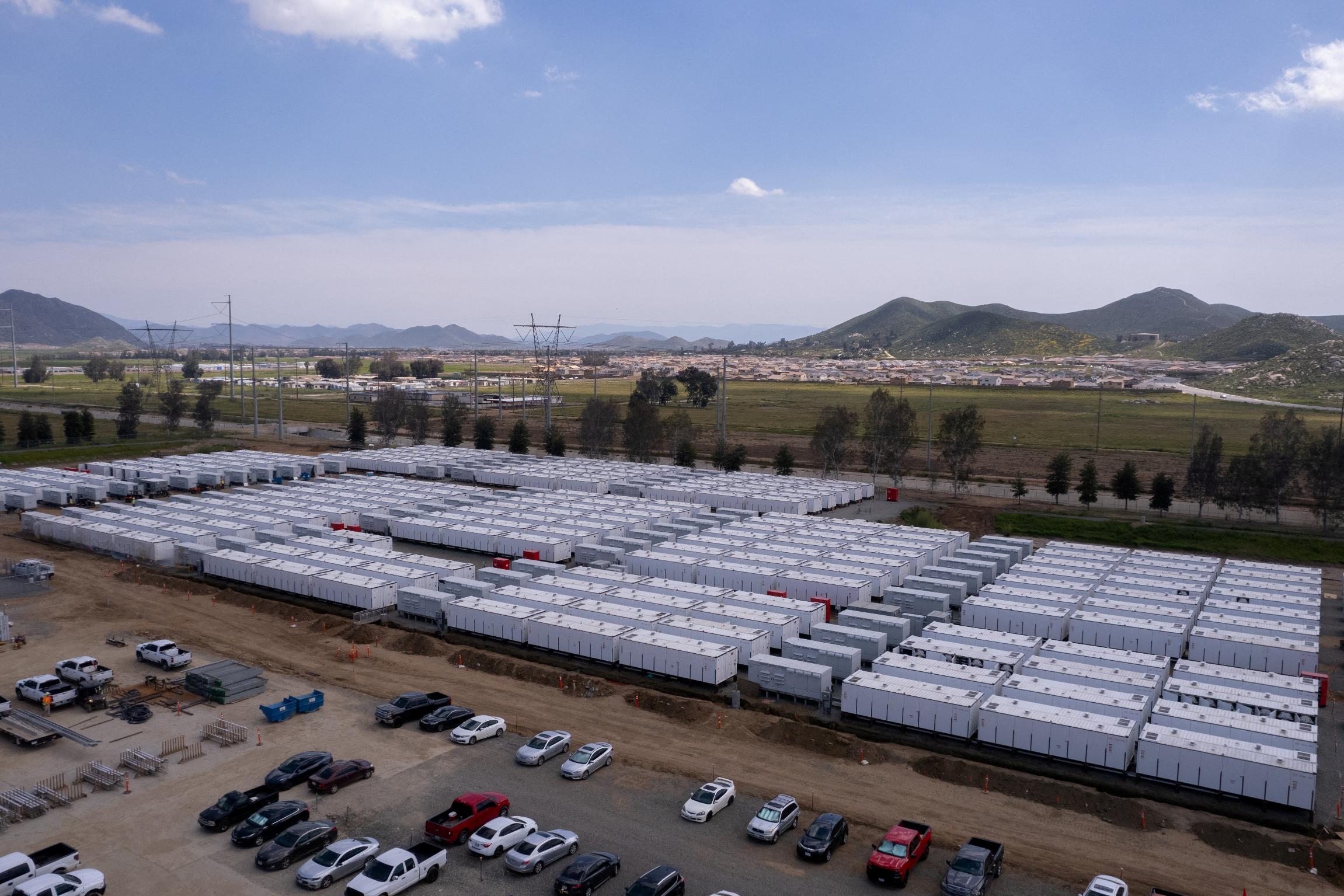
June 25 (Reuters) - Electric utilities in the U.S. are increasingly turning to batteries to shift power from periods of low prices to high-priced ones, according to an analysis from the U.S. Energy Information Administration. The strategy, referred to as arbitrage, involves utilities charging batteries by buying electricity during low-cost periods and then selling that electricity when electricity prices increase. Arbitrage is now the primary use case for 10,487 MW of battery capacity in the U.S., the EIA said. Energy storage technologies like batteries allow electric utilities to store power for later use, manage supply and demand in real time, and help prevent blackouts, among other use cases. Utilities are also using batteries to bolster electric-grid reliability, the analysis found. Other instances of battery use include dealing with excess wind and solar power on the grid. Electric utilities in the U.S. were operating 575 batteries, reflecting a total capacity of 15,814 MW, at the end of 2023 -- a figure that the EIA expects will more than triple by the end of 2028, with another 35,953 MW of battery storage added to the grid. In California, for instance, battery storage on the grid has ramped up dramatically after the state experienced rolling blackouts during a heat wave in 2020. In 2022, batteries accounted for 2.4% of generation during the evening hours of another heat wave, the California Independent System Operator reported. Earlier this month, Entergy (ETR.N) New Tab, opens new tab and a unit of NextEra Energy (NEE.N) New Tab, opens new tab signed an agreement to develop up to 4.5 gigawatts (GW )of new solar and energy storage projects, expected to provide renewable energy to more than 3 million customers in Arkansas, Louisiana, Mississippi and Texas. Sign up here. https://www.reuters.com/business/energy/us-electric-utilities-turn-batteries-shift-power-low-price-high-price-periods-2024-06-25/
2024-06-25 21:11
June 25 (Reuters) - The Iowa Utilities Board said on Tuesday it has approved Summit Carbon Solutions' application New Tab, opens new tab for a construction permit for its proposed carbon dioxide pipeline through the state. Summit is trying to build the biggest carbon dioxide capture pipeline in the world to transport greenhouse gases from Midwest ethanol refineries and bury them underground. The line would cross five states and capture emissions from 57 ethanol plants. "After weighing numerous factors for and against Summit Carbon’s petition, the Board found that the service to be provided by Summit Carbon will promote the public convenience and necessity," the IUB said in its decision. The ethanol industry wants Summit to sequester its carbon to drive down its carbon intensity and draw lucrative tax credits from state and federal clean fuel programs. Some landowners along the pipeline's route and environmental groups have opposed the project due to concerns about potential carbon dioxide leaks and doubts over whether sequestering and storing carbon is an effective tool to address climate change. "While Summit stands to make billions, it is our climate and communities that lose out," said Jim Walsh, policy director of environmental group Food & Water Watch, in a statement. The permit approval from the IUB means Summit will be able to use eminent domain in the state if needed to access its pipeline route. The company has acquired land easements from landowners along 75% of its Iowa route, the company said in a press release. Summit must still get permits approved in North and South Dakota, which both rejected its initial permit applications last year, and in Minnesota. There is no carbon dioxide pipeline approval process in Nebraska, the fifth state Summit's line would cross. Summit wants to break ground next year and begin operations in 2026. Sign up here. https://www.reuters.com/sustainability/iowa-regulators-approve-construction-permit-summit-carbon-pipeline-2024-06-25/