2024-06-25 11:10
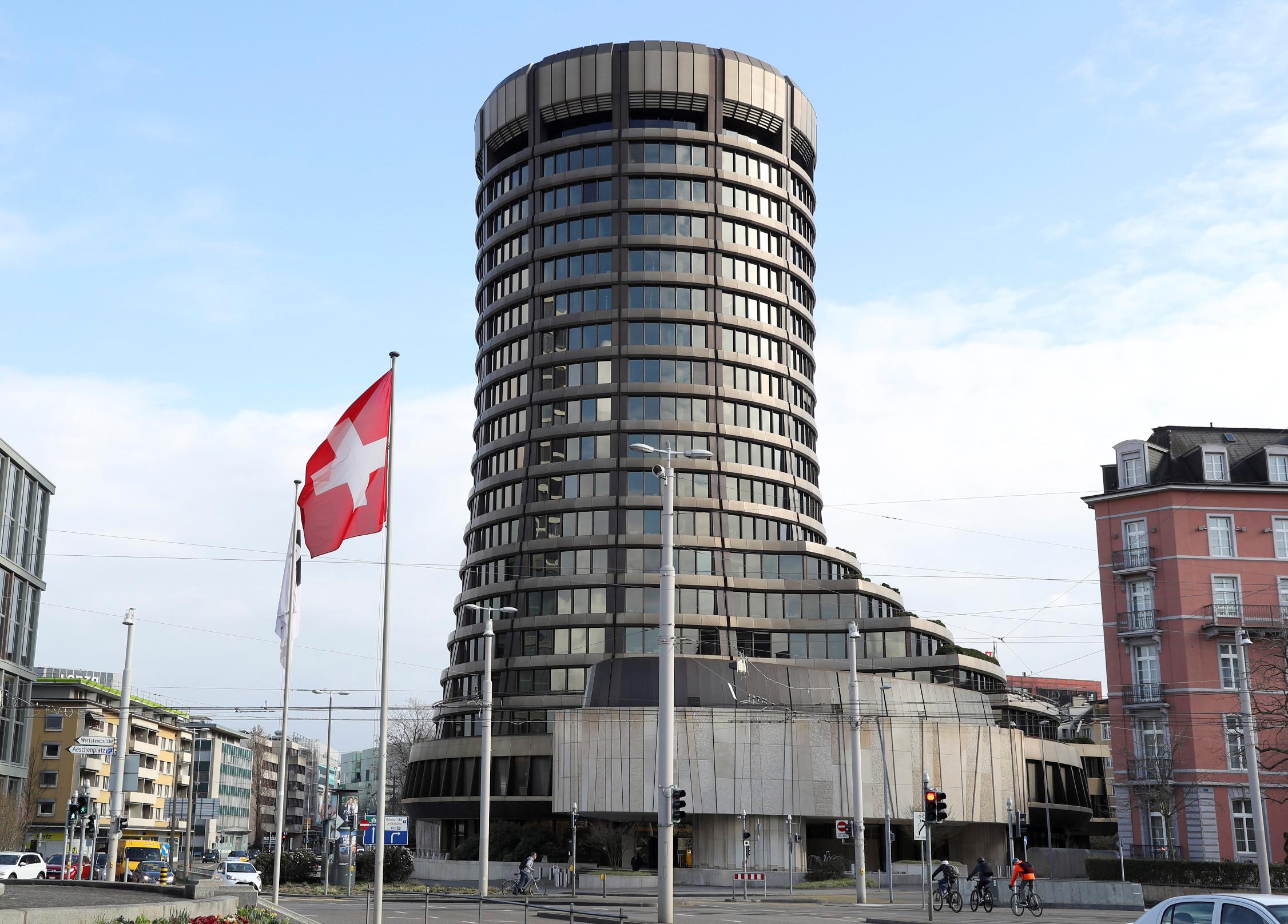
LONDON, June 25 (Reuters) - Central banks should embrace the benefits of artificial intelligence (AI) the Bank for International Settlements (BIS)has said, but stressed the technology should not replace humans when it comes to setting interest rates. In its first major report into the rapidly advancing world of AI, the central banking umbrella group said policymakers need to harness its immense power to monitor data in real time in order to "sharpen" their inflation-predicting abilities. That was something found badly wanting in the wake of COVID-19 and Russia's invasion of Ukraine when the U.S. Federal Reserve, ECB and other major central banks all failed to grasp the strength of the global inflation surge. New AI models should reduce the risk of a repeat although their untested nature and the fact they can "hallucinate" mean they should not become robo-ratesetters, Cecilia Skingsley, a top official at the BIS, said. "We like to hold humans accountable," the former Swedish central banker said, referring to the crucial role borrowing costs play in society and the need for judgment. "So I can't really see a future where an AI will be setting (interest) rates." The BIS, often dubbed the central bankers' central bank because of the joint work it does, already has eight projects involving AI. Hyun Song Shin, its head of research and top economic adviser, said policymakers should not view it as "something magical" but did say it can help find needles in haystacks and spot vulnerabilities in financial systems. The technology is also likely to radically reshape labour markets, impacting productivity and economic growth. Widespread adoption could see firms adjust prices more quickly in response to macro-economic changes with repercussions for inflation. The BIS cautioned that AI also introduces risks, such as new types of cyber attacks, and may amplify existing ones, such as herding, bank runs and financial asset fire sales. "The call for action to central banks is to foster a community of practice," Shin said. "To share experience, to share best practice, but also to share data and the models themselves." Sign up here. https://www.reuters.com/technology/central-banks-must-prepare-profound-impact-ai-bis-says-2024-06-25/
2024-06-25 11:07
ABUJA/MAIDUGURI, June 25 (Reuters) - Hassan Ya'u, a 42-year-old maize and sesame seed farmer in Nigeria's northern Katsina state, was tending to his crops early this month when dozens of armed men on motorcycles rode towards his plot and started shooting at close range. Ya'u and fellow farmer Musa Nasidi managed to escape, but at least 50 people - many of them farmers working their fields at the time - were killed in the attack in the latest in a series of deadly raids on farming areas. An unknown number of people were abducted in the assault, which was carried out in broad daylight. Ya'u and Nasidi said the gunmen had attacked their Kankara farming community because farmers had not paid a levy imposed by the armed gang. Such raids are forcing many farmers to leave their fields, contributing to higher food prices and soaring inflation as Nigeria faces the worst cost of living crisis in a generation. "They set ablaze my produce and took away foodstuff worth about 4 million naira ($2,739.73)," said Ya'u, who has sought refuge in Daura town, nearly 200 km (124 miles) from Kankara. "I don't have access to my farm because bandits have taken control of the area. Everything has been ruined," added the father of 13 children who faces an uncertain future. Armed gangs demand as much as three million naira per village, depending on the size, to allow farmers to work. "The farmers are even forming vigilante groups to make sure they are able to access the farms but it is still very difficult," said Kabir Ibrahim, president of All Farmers Association of Nigeria. Northern Nigeria produces the bulk of the country's staples like rice, yam and maize, but it is also its most unstable region, as armed kidnapping gangs attack and pillage villages in the northwest while Islamist militants cause havoc in the northeast. Nasidi, 36, fled to near Katsina town after the Kankara attack. He used to harvest about 400 bags of groundnuts, 80 bags of sesame seed and 200 bags of maize, he said, but now faces a bleak year after part of his 8.5-hectare farm was set ablaze by bandits. "The situation is beyond our control and I was left with no choice other than to leave Kankara because our lives were in danger," Nasidi told Reuters. A World Food Programme report on the outlook for acute food insecurity globally said Nigeria has joined the world's "hunger hotspots", which analysts attribute to insecurity in farming areas and high costs of seed, fertiliser, chemicals and diesel. Lagos-based consultancy SBM Intelligence said 1,356 farmers in Nigeria were killed since 2020. This year, 137 deaths had been recorded, it said, adding that farming was becoming a dangerous occupation. "The risk is very grave," said Confidence McHarry, SBM's lead security analyst, adding that gunmen also attacked farmers "on suspicion of collaborating with the military." Defence spokesperson Major General Edward Buba said that with the rainy season under way, the military was prioritising farmers' security. "The farmers union are keying into the farm protection plan of the armed forces to make the best of the rainy season," he said, without elaborating. But for 22-year-old farmer Abdulaziz Gora in Zamfara state, next to Katsina, there is little hope of returning to his farm. He relocated to state capital Gusau after a violent attack on his village in May, abandoning his soybean and maize crops. "Anyone caught there risks being kidnapped or killed," he said. ($1 = 1,460.0000 naira) Sign up here. https://www.reuters.com/world/africa/nigerian-farmers-abandon-farms-after-attacks-sending-food-prices-higher-2024-06-25/

2024-06-25 10:42
WARSAW, June 25 (Reuters) - Poland's justice ministry is working on streamlining procedures to unblock courts handling tens of thousands of Swiss franc mortgage loan cases and is trying to work out a standardised out-of-court settlement format, it said on Tuesday. Hundreds of thousands of Poles took out mortgages in foreign currencies, mainly in Swiss francs, in the early to mid 2000s attracted by lower interest rates. They are now repaying them in far bigger instalments than expected after the Swiss franc soared against the zloty and following interest rate hikes in Switzerland. Many mortgage holders took banks to court, while banks started offering settlements to find an out-of-court solution. There are currently nearly 190,000 such cases in courts, while 94,000 out-of-court settlements have already been concluded, a representative of the ministry said. The ministry said it has started work in cooperation with the financial regulator, consumer protection office, ministry of finance, banks and consumer organisation on a standardised settlement agreement. "The project also includes a special path for the approval of Swiss franc settlements by courts," said Aneta Wiewiorowska-Domagalska, the minister's plenipotentiary for FX loans. The Polish Banking Association welcomed this initiative. "I don't know the details yet, works are only just starting, so we will be working on this material regarding a template for settlements of CHF loans," the head of the association Tadeusz Bialek told reporters. "As the banking sector, we will certainly support such a solution because it will provide greater legal certainty." Apart from streamlining settlements, the ministry is also working with judges on simplifying and digitalising Swiss franc loan court cases. It also plans to train judges in applying EU top court guidance in such cases. Polish politicians have repeatedly tried to regulate Swiss franc loan settlements in recent years, but none of the proposed solutions have solved the problem. Sign up here. https://www.reuters.com/business/finance/poland-working-simplifying-swiss-franc-fx-loan-settlements-court-cases-2024-06-25/

2024-06-25 10:05
NEW YORK, June 25 (Reuters) - Bankrupt crypto exchange FTX received court approval on Tuesday to solicit creditor votes on a liquidation plan that would pay FTX customers back in cash, over the objections of some customers who have demanded higher repayments reflecting recent rises in cryptocurrency values. Getting to this point has been "a huge team effort" for FTX, which has reached settlements with several U.S. government agencies and sold off assets that had been purchased with misappropriated customer funds, including investments in crypto and other tech companies, venture funds, and real estate, FTX attorney Andy Dietderich said at a court hearing in Wilmington, Delaware. "Everybody was an involuntary investor in this crazy pool of assets, and our job was to turn it into cash," Dietderich said. U.S. Bankruptcy Judge John Dorsey approved FTX's documents describing its proposal and opened voting on the wind-down plan during the hearing, overruling objections raised by some FTX customers who challenged the company's proposed liquidation. Since filing for bankruptcy, FTX has recovered up to $16 billion to repay customers, including about $12 billion in cash, and it says it will repay all customer claims in full, with interest. But some FTX customers dispute the bankrupt exchange's promise of a "full recovery," because FTX will repay customer claims based on much lower cryptocurrency prices from November 2022, when the exchange filed for bankruptcy. Dorsey has already signed off on that approach, but many FTX customers feel short-changed. Customers who had one bitcoin deposited on FTX when it went bankrupt will receive about $16,800 in cash, instead of the roughly $60,000 that a bitcoin is worth today. Aggrieved FTX customers had urged the court not to allow votes to go forward on the bankruptcy plan they said was fatally flawed. Some of those customers have separately filed lawsuits outside of bankruptcy court seeking rulings that FTX never owned customer deposits and must repay their full, current value. Objecting creditors argued that FTX's proposed voting forms are meant to mislead customers by "breathlessly touting what they claim to be a full recovery with interest." "Customers must be made aware that the plan's 'full recovery' is nothing of the sort," the creditors said in their objection. FTX, once among the world's top crypto exchanges, shook the sector with its collapse, leaving an estimated 9 million customers and investors facing billions of dollars in losses. FTX CEO John Ray, a turnaround specialist who took over after the bankruptcy filing, told Reuters FTX could not simply return the cryptocurrency that customers deposited. Those funds are long gone, stolen by former CEO and founder Sam Bankman-Fried, who has since been sentenced to 25 years in prison. "FTX.com had a massive shortfall at the time of the chapter 11 filing in November 2022 – holding only 0.1% of bitcoin and only 1.2% of the ethereum customers believed the exchange held," Ray said in a statement. "We cannot give tokens back that we never had." Cash payments are the only fair way to distribute value to a wide variety of customers, who had different types of cryptocurrency assets whose values have fluctuated greatly since the company went bankrupt, Ray said. "We cannot pay one creditor more without taking it from another creditor," Ray said. "Those arguing for appreciation of 'their' tokens would be taking money away from fellow customers who held cash, stablecoin or other crypto." FTX said in recent court filings that 98% of its customers will be able to receive full repayment within 60 days of a bankruptcy court approval of its wind-down plan. The faster payment option will cover all customers who are owed up to $50,000. FTX creditors will have until Aug. 16 to cast their ballots, and FTX intends to seek final approval of its wind-down plan on Oct. 7. Sign up here. https://www.reuters.com/legal/ftx-seeks-creditor-votes-bankruptcy-wind-down-payments-2024-06-25/
2024-06-25 10:03
A look at the day ahead in U.S. and global markets from Mike Dolan In an glimpse at how megacap tails wag the dog, a near half-trillion dollar shakeout in AI-bellwether Nvidia's (.NVDA) New Tab, opens new tab market cap in just a week continued to drag on the entire market even though most S&P500 (.SPX) New Tab, opens new tab stocks ended higher on Monday. Without any obvious trigger beyond a bout of nervy profit taking into Friday's half-year end, Nvidia has recoiled by almost 20% since last Thursday's record high - lopping more than $430 billion off its market value in the process. But it's only back to where it was a fortnight ago - even though it remains in the red again before Tuesday's bell. While the artificial intelligence champion chip behemoth remains up almost 140% for the year to date, the sheer scale of stock and the extent of the shakeout pack a punch for index investors. The tech-heavy Nasdaq (.IXIC) New Tab, opens new tab, predictably, lost more than 1% on Monday. The Dow Jones Industrial Average (.DJI) New Tab, opens new tab of blue chips, on the other hand, rallied to a one-month high. But while some 70% of the S&P500 stocks ended higher and the equal-weighted S&P (.EWGSPC) New Tab, opens new tab was up 0.5%, the overall index ended 0.3% in the red. Beyond Wall Street, the impact of Nvidia's outsize swings is just as startling. Societe Generale strategist Andrew Lapthorne points out that prior to this week's shakeout, Nvidia alone accounted for some 300 basis points of the near 12% year-to-date gain in the MSCI World index (.MIW000000PUS) New Tab, opens new tab - astonishing as that index contains almost 1,500 of the world’s biggest companies. But while Nvidia's recoil seemed like a lonely hiccup, it has tallied with a sharp reversal in Bitcoin this week. Before the generative AI fizz emerged over a year ago, Nvidia had long been driven by the crypto boom and the two areas may still be joined at the hip to some degree. Although it recovered a tad early on Tuesday, Bitcoin plunged on Monday too and has staged a peak-to-trough drop of more than 7% in little over two weeks. A reversal of money from newly formed exchange-traded funds at midyear? Again, it's far from clear. The other alarming reversal of the moment is China's mainland stocks (.CSI300) New Tab, opens new tab, which fell yet again Tuesday and have now almost wiped out all their year's gains. Partly hit by the Nvidia-led chip wobble, the CSI300 lost 0.5% and semiconductor shares traded in the onshore market (.CSIH30184) New Tab, opens new tab slumped 4%. But undermined by its own housing bust and a brewing trade war with G7 powers, China has other fish frying. The latest geopolitical sideswipe overnight came on news the Biden administration is investigating Chinese telecom companies over concerns they could exploit access to American data through their U.S. cloud and internet businesses by providing it to Beijing. Elsewhere, markets were pretty steady. U.S. Treasuries and the dollar (.DXY) New Tab, opens new tab were little changed early on Tuesday. U.S. June consumer confidence readings and an auction of some $69 billion of two-year notes top the diary later. With politics dominating the next week's horizon in the United States and Europe, European markets were off a touch. French government debt yields and spreads were subdued, in large part after relatively benign fiscal policy signals from senior far right officials leading opinion polls ahead of the weekend's first round of the French parliamentary election. Key developments that should provide more direction to U.S. markets later on Tuesday: * US June consumer confidence, Richmond Fed June business survey, Dallas Fed June services survey, Chicago Fed May business survey, US April house prices; Canada May inflation * Federal Reserve Board Governor Michelle Bowman and Fed Board Governor Lisa Cook speak * US Treasury sells $69 billion of 2-year notes * US corporate earnings: FedEx, Juniper, Progress Software Sign up here. https://www.reuters.com/markets/us/global-markets-view-usa-2024-06-25/
2024-06-25 09:08
WASHINGTON, June 25 (Reuters) - The U.S. dollar remains the world's primary reserve currency, and neither the euro nor the so-called BRICS countries have been able to reduce global reliance on the dollar, a new study by the Atlantic Council's GeoEconomics Center shows. The group's "Dollar Dominance Monitor" New Tab, opens new tab said the dollar continued to dominate foreign reserve holdings, trade invoicing, and currency transactions globally and its role as the primary global reserve currency was secure in the near and medium term. Dollar dominance — the outsized role of the U.S. dollar in the world economy — has been strengthened recently given the robust U.S. economy, tighter monetary policy and heightened geopolitical risks, even as economic fragmentation has strengthened a push by BRICS countries to shift into other international and reserve currencies. The Atlantic Council report said Western sanctions on Russia imposed by the Group of Seven advanced economies after Moscow's invasion of Ukraine had accelerated efforts by the BRICS countries to develop a currency union, but the group had been unable to make progress on its de-dollarization efforts. BRICS is an intergovernmental organization made up of Brazil, Russia, India, China, South Africa, Iran, Egypt, Ethiopia, and the United Arab Emirates. The council said China's Cross-Border Interbank Payment System (CIPS) added 62 direct participants in the 12 months to May 2024, an increase of 78%, bringing the total to 142 direct participants and 1,394 indirect participants. Negotiations around an intra-BRICS payment system were still in the nascent stages, but bilateral and multilateral agreements within the group could form the basis for a currency exchange platform over time. However, these agreements were not easily scalable, since they were negotiated individually, the report said. It noted that China has actively supported renminbi liquidity through swap lines with its trade partners, but the share of renminbi in global foreign currency reserves dropped to 2.3% from the peak of 2.8% in 2022. "This is possibly because of reserve managers’ concern about China’s economy, Beijing’s position on the Russia-Ukraine war, and a potential Chinese invasion of Taiwan contributing to the perception of the renminbi as a geopolitically risky reserve currency," the report said. The euro, once considered a competitor to the dollar's international role, was also weakening as an alternative currency, with those looking to reduce their risk exposure turning to gold instead, the report said. It said Russian sanctions had made it clear to reserve managers that the euro was exposed to similar geopolitical risks as the dollar. Concerns around macroeconomic stability, fiscal consolidation, and the lack of a European capital markets union also hurt the euro’s international role, it said. Sign up here. https://www.reuters.com/markets/currencies/us-dollars-dominance-secure-brics-see-no-progress-de-dollarization-report-2024-06-25/