2024-06-24 10:39
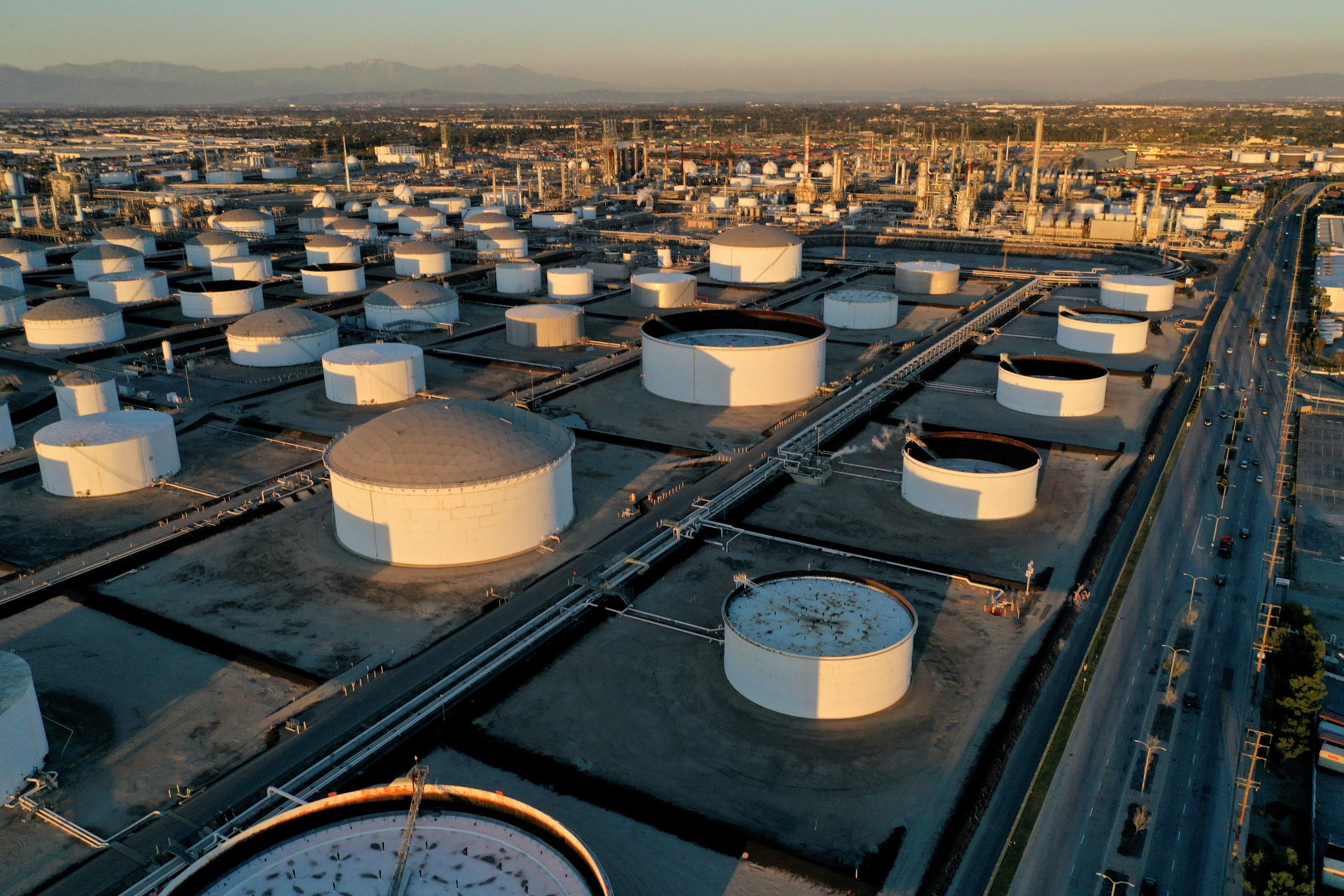
MUMBAI, June 24 (Reuters) - The Indian rupee closed stronger on Monday, aided by gains in most of its Asian peers and dollar sales from foreign banks, traders said. The rupee closed at 83.4600 against the U.S. dollar, higher than its close at 83.5325 in the previous session. Most Asian currencies gained as the dollar slipped from its near two-month high and was last quoted down 0.2% at 105.64. The Indonesian rupiah was up 0.3% and leading gains among major Asian currencies. Dollar sales from foreign banks aided the rupee in early trading but oil companies' bids eroded some of the gains, traders said. For the dollar-rupee pair, a fall below "83.40 should move it to 83.20, while a breach of resistance at 83.60 should push it towards 83.80," a foreign exchange trader at a large private bank said. "It (USD/INR) may decline this week before resuming its uptrend," the trader said. Expectations of dollar inflows as domestic bonds are to be included in a JPMorgan index are likely to push out potential weakness in the rupee, traders said. The inclusion is expected to spur passive inflows of about $2 billion around June 28. For USD/INR, "buy on dips around 83.20–83.10 and sell on upticks around 83.50-83.70 remains a viable strategy," Amit Pabari, managing director at FX advisory firm CR Forex said. Investors await remarks from Federal Reserve policymakers this week for further cues on when the central bank may begin to ease policy rates. Interest rate futures are currently pricing in a 67% chance of a rate cut in September, according to CME's FedWatch tool. Sign up here. https://www.reuters.com/markets/currencies/rupee-closes-higher-uptick-asian-fx-foreign-banks-dollar-sales-2024-06-24/

2024-06-24 10:35
WASHINGTON, June 24 (Reuters) - The U.S. Federal Reserve is due to release the results of its annual bank health checks on Wednesday at 4:30 p.m. ET (2030 GMT). Under the "stress test" exercise, the Fed tests big banks' balance sheets against a hypothetical scenario of a severe economic downturn, the elements of which change annually. The results dictate how much capital those banks need to be deemed healthy and how much they can return to shareholders via share buybacks and dividends. This year, big U.S. lenders are once again expected to show they have ample capital to weather any fresh turmoil in the banking sector. WHY DOES THE FED 'STRESS TEST' BANKS? The Fed established the tests following the 2007-2009 financial crisis as a tool to ensure banks could withstand a similar shock in future. The tests formally began in 2011, and large lenders initially struggled to earn passing grades. Citigroup (C.N) New Tab, opens new tab, Bank of America (BAC.N) New Tab, opens new tab, JPMorgan Chase & Co (JPM.N) New Tab, opens new tab, and Goldman Sachs Group (GS.N) New Tab, opens new tab, for example, had to adjust their capital plans to address the Fed's concerns. Deutsche Bank's U.S. subsidiary failed in 2015, 2016 and 2018. However, years of practice have made banks more adept at the tests and the Fed also has made the tests more transparent. It ended much of the drama of the tests by scrapping the "pass-fail" model in 2020 and introducing a more nuanced, bank-specific capital regime. HOW ARE BANKS ASSESSED NOW? The test assesses whether banks would stay above the required 4.5% minimum capital ratio - which represents the percentage of its capital relative to assets - during the hypothetical downturn. Banks that perform strongly typically stay well above that. The nation's largest global banks also must hold an additional "G-SIB surcharge" of at least 1%. How well a bank performs on the test also dictates the size of its "stress capital buffer," an additional layer of capital introduced in 2020 which sits on top of the 4.5% minimum. That extra cushion is determined by each bank's hypothetical losses. The larger the losses, the larger the buffer. THE ROLL OUT The Fed will release the results after markets close. It typically publishes aggregate industry losses, and individual bank losses including details on how specific portfolios - like credit cards or mortgages - fared. The central bank typically does not allow banks to announce their plans for dividends and buybacks until a few days after the results. It announces the size of each bank's stress capital buffer in the subsequent months. The performance of the country's largest lenders, particularly JPMorgan, Citigroup, Wells Fargo & Co (WFC.N) New Tab, opens new tab, Bank of America, Goldman Sachs, and Morgan Stanley (MS.N) New Tab, opens new tab, are closely watched by the markets. TEST IN LINE WITH 2023 The Fed changes the scenarios each year. They take months to devise and test a snapshot of banks' balance sheets at the end of the previous year. That means they risk becoming outdated. In 2020, for example, the real economic crash caused by the COVID-19 pandemic was by many measures more severe than the Fed's scenario that year. After the failures of mid-size lenders Silicon Valley Bank, Signature Bank and First Republic last year, the Fed was criticized for not having tested bank balance sheets against a rising interest rate environment, and instead assuming rates would fall amid a severe recession. This year's test is broadly in line with the 2023 test, with the hypothetical unemployment rate under a "severely adverse" scenario rising 6.3 percentage points compared with 6.4 last year. STRESSES IN COMMERCIAL REAL ESTATE The exam also envisages a 40% slump in the prices of commercial real estate, an area of concern over the past two years as lingering pandemic-era office vacancies and higher for longer interest rates stress borrowers. In addition, banks with large trading operations will be tested against a "global market shock," and some will also be tested against the failure of their largest counterparty. For the second time, the Fed is also conducting "exploratory" shocks to banks. This year's test also includes additional exploratory economic and market shocks which won't help set capital requirements, but will help the Fed gauge whether it should broaden the test in the future. The market shocks will apply to the largest banks, while all 32 will be tested on the economic shocks. Fed Vice Chair for Supervision Michael Barr has said multiple scenarios could make the tests better at detecting banks' weaknesses. WHICH BANKS ARE TESTED? In 2024, 32 banks will be tested. That's up from 23 last year, as the Fed decided in 2019 to allow banks with between $100 billion and $250 billion in assets to be tested every other year. These are the banks being tested in 2024: Ally Financial (ALLY.N) New Tab, opens new tab American Express (AXP.N) New Tab, opens new tab Bank of America Corporation The Bank of New York Mellon Corporation (BK.N) New Tab, opens new tab Barclays US LLC BMO Financial Corp. Capital One Financial Corporation (COF.N) New Tab, opens new tab The Charles Schwab Corporation (SCHW.N) New Tab, opens new tab Citigroup (C.N) New Tab, opens new tab Citizens Financial Group, Inc. (CFG.N) New Tab, opens new tab Credit Suisse Holdings (USA) DB USA Corporation Discover Financial Services (DFS.N) New Tab, opens new tab Fifth Third Bancorp (FITB.O) New Tab, opens new tab Goldman Sachs Group, Inc. (GS.N) New Tab, opens new tab HSBC North America Holdings Huntington Bancshares (HBAN.O) New Tab, opens new tab JPMorgan Chase & Co. (JPM.N) New Tab, opens new tab Keycorp (KEY.N) New Tab, opens new tab M&T Bank Corporation (MTB.N) New Tab, opens new tab Morgan Stanley (MS.N) New Tab, opens new tab Northern Trust Corporation (NTRS.O) New Tab, opens new tab The PNC Financial Services (PNC.N) New Tab, opens new tab RBC US Group Holdings LLC Regions Financial Corporation Santander Holdings USA State Street Corporation (STT.N) New Tab, opens new tab TD Group US Holdings LLC Truist Financial Corporation (TFC.N) New Tab, opens new tab UBS Americas Holding LLC U.S. Bancorp (USB.N) New Tab, opens new tab Wells Fargo & Company (WFC.N) New Tab, opens new tab Sign up here. https://www.reuters.com/business/finance/what-are-feds-bank-stress-tests-whats-new-this-year-2024-06-24/
2024-06-24 10:18
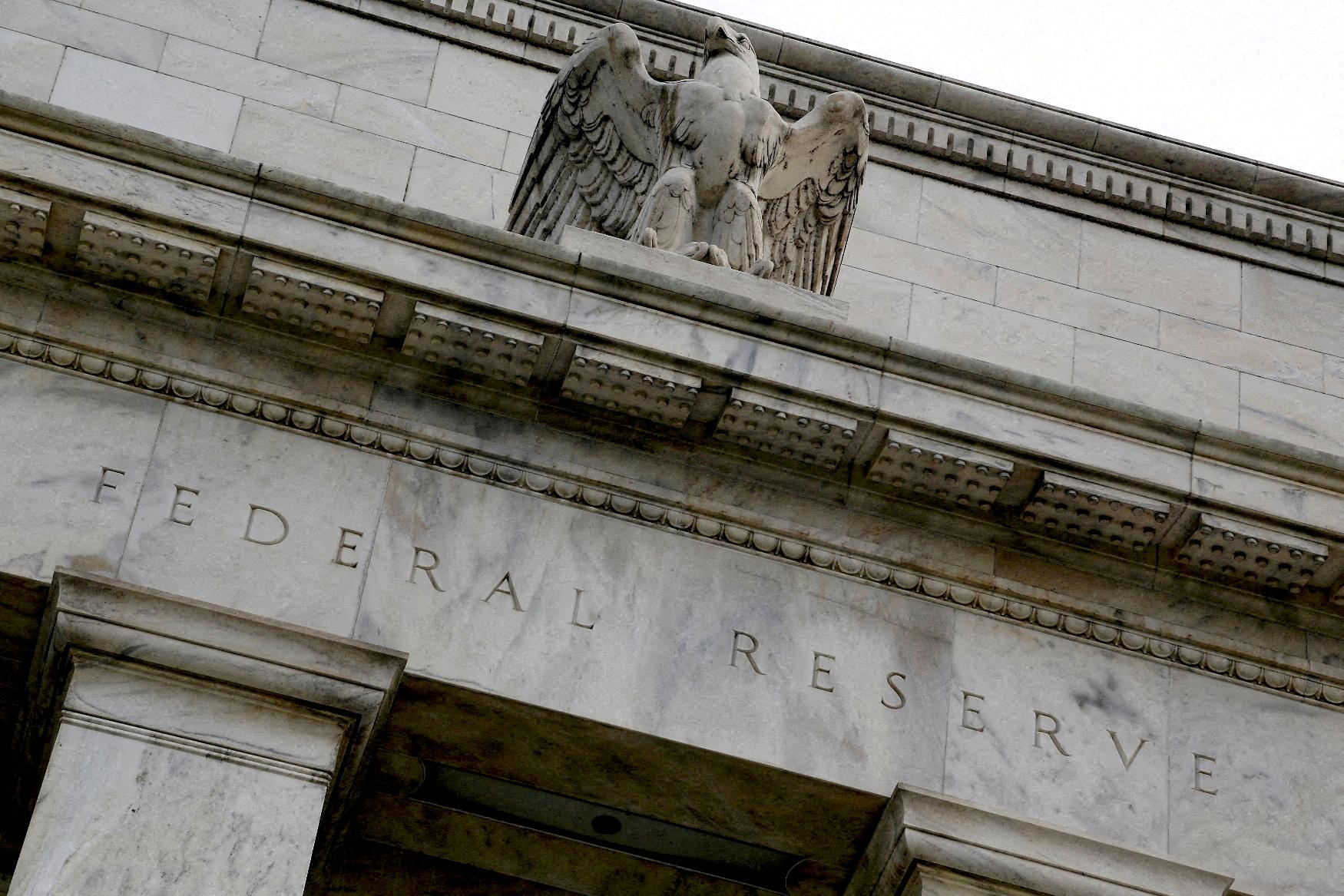
A look at the day ahead in U.S. and global markets from Mike Dolan Global investors head to the half-year point this week trying to get across numerous political narratives, a hiccup in tech and a reopening of the transatlantic gap in business activity. Throw in Friday's looming release of the Federal Reserve's favoured PCE inflation gauge and an ongoing slide in Japan's yen and China's yuan and it's a sparkier summer than the buoyant first-half world markets numbers might suggest. The shakeout in artificial intelligence torchbearer Nvidia (NVDA.O) New Tab, opens new tab last week, which saw its stocks recoil about 10% from new records by the end of the week, probably owes much to profit taking on its blistering rise - and perhaps also something to do with Friday's major futures and options expiries. But with the U.S. presidential TV debate this Thursday likely to sound the starting gun on speculation around November's election outcome, the final week of the first half potentially ushers in a change of tone. Politics dominates in Europe too, with the first round of France's parliamentary election this weekend and as Britain heads to the polls on July 4. So far on Monday at least, the electoral anxiety hasn't disturbed too much in markets. European stocks (.STOXXE) New Tab, opens new tab pushed higher, Britain's FTSE (.FTSE) New Tab, opens new tab was up and U.S. stock futures were marginally positive ahead of the bell. The VIX volatility gauge has crept to its highest of the month, however. That owes something to renewed interest rate cut hopes in Europe and in the United States - where the PCE release for May should re-emphasise that disinflation has resumed. But the latest sweep of economic and business health readings for June have showed a marked divergence again in fortunes either side of the Atlantic. Flash business surveys for the euro zone and Britain showed overall activity slowing much more than forecast this month - barely remaining in expansionary territory for June. But the equivalent U.S. soundings picked up a gear and show a much faster growth clip. ECONOMIC SURPRISE INDEX TURNS NEGATIVE Adding to the confusion, and perhaps the greater comfort that more interest rate cuts are coming in the second half, is the fact that the aggregate global economic surprise index has turned negative to the worst reading in almost a year. What's more, the hesitant business move in Europe was underlined on Monday as Germany's Ifo institute showed business morale falling unexpectedly. Ifo's business climate index sank to 88.6 in June from 89.3 in May, compared with a reading of 89.7 forecast. But the real market price action was in Japan's yen, which skidded again to within a whisker of the 160 per dollar - close to 34-year low of 160.245 it set in April before the Bank of Japan intervened to prop it up. Japan's top currency diplomat Masato Kanda said on Monday authorities would take appropriate steps if there was excessive foreign exchange movement, and that the addition of Japan to the U.S. Treasury's "monitoring list" would not restrict their actions. Treasury last week said no major trading partner appeared to have manipulated its currency last year, but it added Japan to a foreign exchange monitoring list alongside China, Vietnam, Taiwan, Malaysia, Singapore and Germany, which were on the previous list. A summary of opinions at the BOJ's June policy meeting, meantime, showed some policymakers called for raising interest rates in a timely fashion as they saw a risk of inflation overshooting expectations. Although Japan's Nikkei (.N225) New Tab, opens new tab lapped up the weak yen and climbed 0.5%, signs of renewed foreign capital flight and rising global trade tensions saw China's ailing markets underperform yet again. The mainland CSI300 (.CSI300) New Tab, opens new tab dropped 0.5% on Monday and the offshore yuan hit its weakest level of the year. In company news, Apple's (AAPL.O) New Tab, opens new tab App Store rules breach EU tech rules because they prevent app developers from steering consumers to alternative offers, EU antitrust regulators said on Monday, a charge that could result in a hefty fine for the iPhone maker. Other big movers included Eurofins Scientific (EUFI.PA) New Tab, opens new tab, which dropped as much as 19% after short seller Muddy Waters said it took a short position out on the French testing company. Britain's Prudential (PRU.L) New Tab, opens new tab added 6.3% after the insurance group launched a $2 billion share buyback programme. Key developments that should provide more direction to U.S. markets later on Monday: * Dallas Fed June manufacturing survey * Federal Reserve Board Governor Christopher Waller speaks in Rome, San Francisco President Federal Reserve President Mary Daly speaks; Bank of Canada governor Tiff Macklem speaks * US Treasury auctions 3-, 6-month bills * US corporate earnings: Beyond Air, MoneyHero Sign up here. https://www.reuters.com/markets/us/global-markets-view-usa-2024-06-24/
2024-06-24 10:09
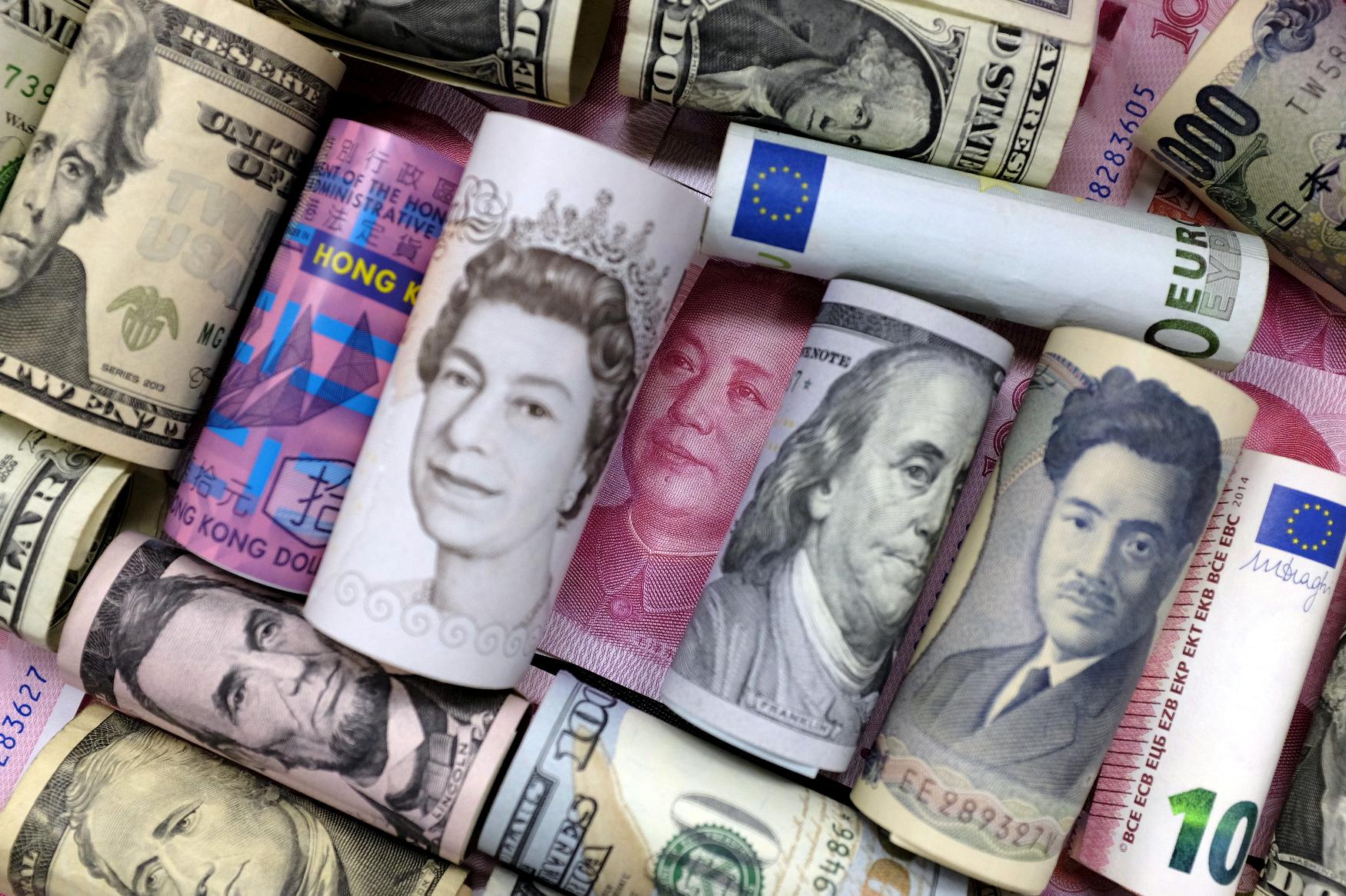
MEXICO CITY, June 24 (Reuters) - Mexican state energy company Pemex is unlikely to produce any commercially viable motor fuels at its new Olmeca refinery before the end of the year, five sources said, despite pressure that it should be ready before the outgoing president's term ends. President Andres Manuel Lopez Obrador, a resource nationalist, inaugurated the 340,000-barrel-per-day refinery in July 2022 in his home state Tabasco, billing it as crucial to energy self-sufficiency for Mexico. However, delays at the refinery in the port of Dos Bocas New Tab, opens new tab, whose cost has more than doubled to $16.8 billion, means it will be up to his successor Claudia Sheinbaum to try to make the dream a reality when she takes office on Oct. 1. As recently as last Thursday, Pemex CEO Octavio Romero insisted during an industry event the refinery would "work at full capacity next month." Now, five sources familiar with the operations told Reuters that it was impossible to meet these targets and that progress had been exaggerated ahead of the June presidential election. Neither Pemex nor the president's office responded to requests for comment. Two sources with detailed knowledge of the operations said engineers were still working on individual parts of the refinery and will then face the even bigger challenge of linking them. One of the sources, an engineer, described this last step as a hugely complex and "agonizing" process of trial and error that takes months. The other source, also an engineer, said that in the most optimistic scenario the first of two production lines of the refinery would be ready between October and November. "Technically and operationally, the refinery is fine so far but the problem is the expectations that have been created," the source said. He added that the information shared publicly by officials "doesn't take into consideration more technical criteria" around how a refinery works. Pemex officials had sought to demonstrate the refinery was operational by bringing a cargo of high-sulfur diesel to the Olmeca refinery to be turned into ultra-low-sulfur diesel but this was not produced from crude oil as is the plan. Parts that still need work include the fluid catalytic cracking plant, where heavy petroleum fractions are converted into lighter products, and the hydrodesulfurization plant where sulfur is removed under high pressure and high-temperature. Another challenge for engineers will be the coker plant that converts and processes residual fuel oil, the source said. NATIONAL PRIDE The refinery is by far the biggest of various energy projects running behind schedule and the two sources said Mexico would not follow through with hundreds of thousands of barrels of crude oil export cuts but continue importing diesel and gasoline instead. None of the sources said the construction of the refinery was inherently flawed and that it is too early to determine how the delay would affect public finances because refining margins are not known. Independent experts have long argued Pemex, a matter of national pride for most Mexicans, should instead have invested in much more profitable exploration and production instead of refining. There were also concerns over just how rushed the project was, sources said, and how its progress had been exaggerated for political reasons which has disrupted markets. In March, Pemex ordered its trading arm to cancel exports of 436,000 barrels of crude oil it said it needed for the domestic refineries. In April, it announced export cuts of another 330,000 barrels, only to backtrack shortly afterwards. Then, Pemex requested only 16,300 bpd of crude oil for the new Olmeca refinery as of mid-May - just about 1% of what the state company pumps and less than 5% of its capacity. One of the sources, a trader familiar with the export schedule, said the refinery was so delayed that it was now not even able to take in such a small load. Despite being a crude oil producer, Mexico imports most of its motor fuels. Last year, it exported crude oil worth more than $31 billion and imported various types hydrocarbon products - including gasoline and diesel - worth just under $31 billion. Lopez Obrador, who has staked his legacy on rescuing debt-laden Pemex and making Mexico self-sufficient in energy, had promised shortly after taking office in late 2018 that the refinery would be constructed in a record time of three years. Proposals from several private companies were deemed too expensive, with Lopez Obrador arguing that savings from his fight to root out corruption would make the refinery cheaper. The final price tag, however, will be much higher than those proposals. In another setback for his agenda, new coker plants aimed at boosting the efficiency of two older refineries, Tula and Salina Cruz, are also still not ready, two separate sources said. Pemex's other ailing refineries - including one that went online 118 years ago - struggle to efficiently process the heavy sour Maya crude Pemex pumps. They leave the country with volumes of highly polluting fuel oil that are so large, they exceed gasoline and diesel production. Sheinbaum plans to invest in Pemex' refineries to reduce output of low-value fuels and byproducts, including the fuel oil state utility CFE uses to generate power, and instead boost production of motor fuels, one of her advisors said. Sign up here. https://www.reuters.com/business/energy/mexicos-new-pemex-refinery-still-needs-important-work-is-far-ready-sources-say-2024-06-24/
2024-06-24 07:19
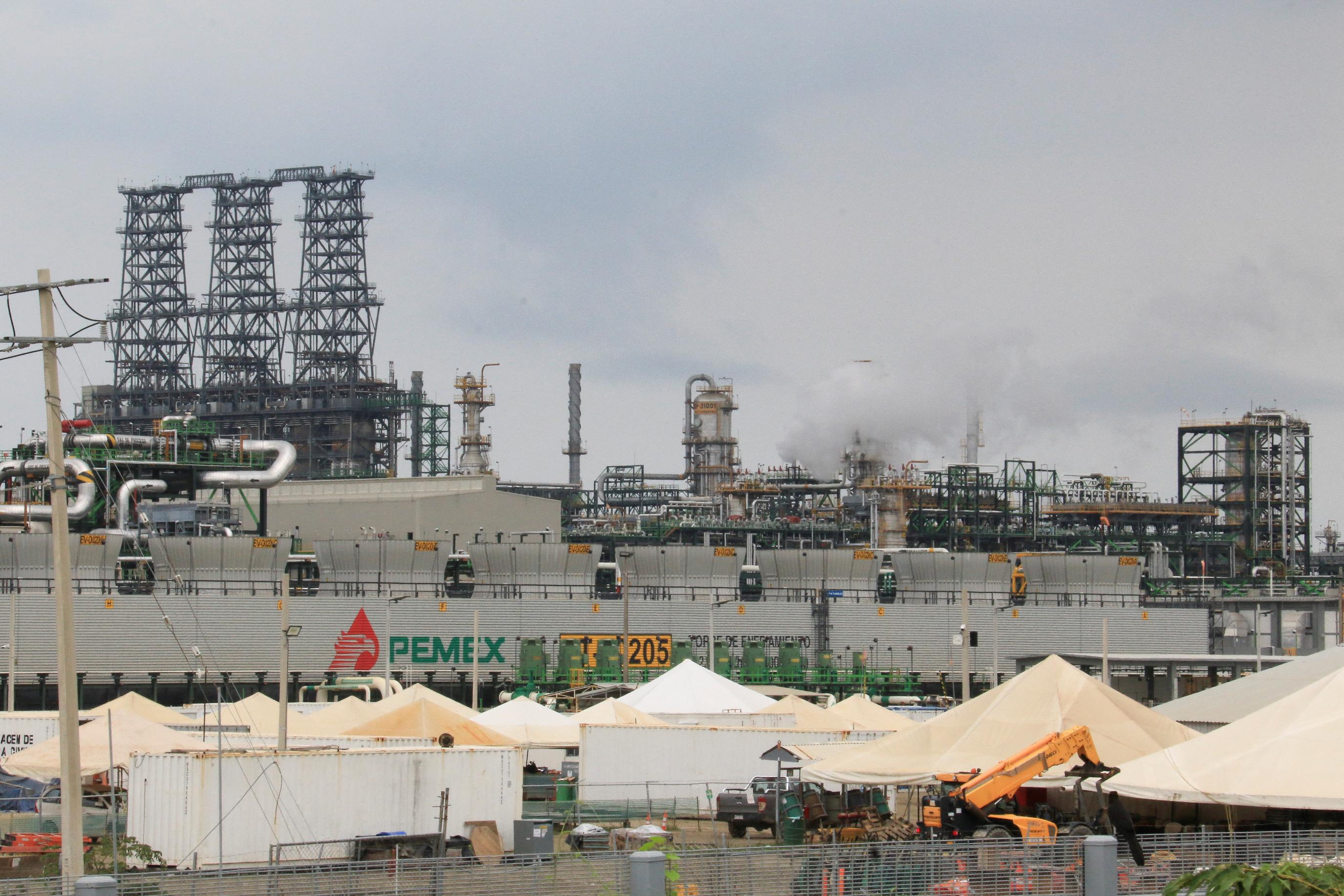
MUMBAI, June 24 (Reuters) - The Indian rupee was largely unchanged on Monday with expectations of dollar inflows related to domestic bonds being included in a JPMorgan index being countered by weakness in the Chinese yuan and Japanese yen. The rupee was at 83.5350 to the U.S. dollar at 11:12 a.m. IST, having risen to 83.4625 immediately after open. It closed at 83.5325 on Friday. "You will see this kind of choppy move all through the week. The bias (on dollar/rupee) is slightly lower," a currency trader at a bank said, noting that inflows will be taking place against the backdrop of a broadly higher dollar. India's inclusion in the widely tracked JPMorgan emerging market debt index is expected to spur passive inflows of about $2 billion around June 28. However, the impact of inflows into the rupee will be muted by a drop in major Asian currencies like the yuan and the yen. The yen is back to the near 160 handle versus the dollar, a level that previously prompted authorities to intervene. Japan is always ready to take action against excessive market moves, Tokyo's top currency diplomat said on Monday. The offshore yuan declined to 7.2950 to the U.S. dollar, the lowest since November. Expectations that the Federal Reserve will not be cutting rates in a hurry and data that indicated robust U.S. business activity boosted the dollar against the major Asian currencies. The U.S. business activity inched up to a 26-month high in June. This is "adding to the narrative of a still largely resilient US economy", MUFG Bank said in a note. Sign up here. https://www.reuters.com/markets/currencies/rupee-underpinned-by-expected-inflows-countered-by-weak-asian-peers-2024-06-24/

2024-06-24 07:00
LONDON, June 21 (Reuters) - U.S. manufacturing production has barely increased since before the pandemic, which explains why diesel consumption remains anaemic and has not rebounded in line with expectations at the start of the year. Production increased by a faster-than-expected 0.9% in May after seasonal adjustments, but that followed back-to-back declines of 0.4% in April and 0.1% in March, according to estimates compiled by the Federal Reserve. Output was essentially unchanged compared with a year ago and there had been no significant net growth since 2018. U.S. manufacturing has rebounded from the trade war with China in 2018 and the pandemic in 2020 but output is no higher than before those disruptions. The Federal Reserve measures production in volume terms but the same limited growth is also apparent in value-added measures prepared by the U.S. Bureau of Economic Analysis. Inflation-adjusted manufacturing value-added was worth $2.29 trillion in 2023 up from $2.21 trillion in 2018, an increase of just $77 billion over five years. Real manufacturing value-added has increased at a compound annual rate of only 0.7% since 2018, well below whole-economy growth of 2.1% and private sector growth of 2.3%. For all the talk about a manufacturing renaissance, the sector’s share of whole-economy value-added fell to 10.2% in 2023 from 11.0% in 2018. Chartbook: U.S. manufacturing production New Tab, opens new tab More than three-quarters of all diesel and other distillate fuel oils are consumed by road and rail freight hauliers as well as industrial users. Given flat-lining manufacturing activity, it is no surprise the volume of distillate fuel oil supplied to the domestic market has shown almost no growth since 2018. The total volume of distillates from both petroleum and renewable sources supplied to U.S. customers was up by just 42,000 barrels per day (b/d) or 1% in 2023 compared with 2018. Distillates supplied from petroleum sources actually fell by 213,000 b/d (5%) as more fuel was supplied by biodiesel and renewable diesel fuel. Distillate consumption is also being hit by gradual conversion of residential and commercial heating systems from heating oil to natural gas. On top of that, the exceptionally mild winter in 2023/24 took a further bite out of distillate consumption over the last 12 months. Since the start of 2024, the manufacturing sector finally appears to have been pulling out of a long but shallow downturn in 2022 and 2023, but the recovery has been too weak to give much of a boost to diesel use. U.S. manufacturing production is not growing fast enough to offset the loss of petroleum demand to biofuels and efficiency improvements. The U.S. Energy Information Administration is not forecasting any significant net growth in distillate consumption in 2024 or 2025 (“Short-term energy outlook New Tab, opens new tab”, EIA, June 11). The U.S. manufacturing sector’s torpor is one of the factors that have caused global petroleum consumption to undershoot predictions at the start of the year and led to the pull back in oil prices. Related columns: - U.S. refining margins slump as fuel stocks climb (June 13, 2024) - U.S. manufacturers in halting recovery but diesel use tepid (June 7, 2024) - Renewable fuels take bite out of U.S. diesel consumption (May 10, 2024) - U.S. manufacturers struggle to grow again without interest rate cuts (March 5, 2024) John Kemp is a Reuters market analyst. The views expressed are his own. Follow his commentary on X https://twitter.com/JKempEnergy New Tab, opens new tab Sign up here. https://www.reuters.com/markets/commodities/us-manufacturing-output-has-flat-lined-dampening-diesel-use-kemp-2024-06-21/