2024-06-21 11:59
FRANKFURT, June 21 (Reuters) - The European Commission has signed off on about 3 billion euros ($3.2 billion) of planned German state aid for building a system of hydrogen pipelines known as the Hydrogen Core Network (HCN). Berlin plans to give financial guarantees to allow companies that build and run the 20 billion euro network to obtain more favourable loans to cover initial losses during the ramp-up phase from 2025. Encouraging the uptake of hydrogen outweighs any distortion to EU competition and trade from the scheme, the Commission said on Friday. Germany's ruling coalition agreed in April on the financing mechanism and extended the construction deadline by five years to 2037, also offering protection for investors in case of bankruptcy. Many countries are looking to hydrogen, which can be generated from wind and solar power for a more storable form of green energy, to help them reach net-zero greenhouse gas emissions. Hydrogen is widely viewed as the only practicable carbon-free energy source for many processes in heavy industry, including the steel, chemicals, refining, glass and ceramics sectors. Germany is targeting more than 9,700 km (6,000 miles) of hydrogen pipelines, with existing natural gas transmission making up 60% of the network to power heavy industry sites that cannot switch to electricity. Green hydrogen is produced by splitting water molecules through electrolysis using renewable energy and the German pipeline network will need to connect windpower parks in the north to industrial centres in the south. Future private sector network operators will seek a return on their investment by charging user fees. ($1 = 0.9355 euros) Sign up here. https://www.reuters.com/business/energy/eu-approves-32-bln-german-hydrogen-pipeline-support-2024-06-21/
2024-06-21 11:57
PODGORICA, June 21 (Reuters) - A major power outage hit Montenegro, Bosnia, Albania and most of Croatia's coast on Friday, disrupting businesses, shutting down traffic lights and leaving people sweltering without air conditioning in the middle of a heatwave. Montenegro's energy minister said the shutdown was caused by a sudden increase in power consumption brought on by high temperatures, and by the heat itself overloading systems. Power distribution is linked across the Balkans for transfers and trading. "This was just waiting to happen in this heat," Gentiana, a 24-year-old student in Montenegro's capital Podgorica, told Reuters. Temperatures hit 40 degrees Celsius (104 degrees Fahrenheit) across the southeastern European region. Electricity and wifi networks went down from around 1 p.m. (1100 GMT), officials and social media users said. Suppliers in the four countries said they started restoring supply by mid-afternoon and power was largely back by the evening. At the start of the blackout, traffic light failures caused gridlock in Bosnia's capital Sarajevo and the cities of Banja Luka and Mostar, Reuters reporters said. Many lost water in Podgorica as pumps stopped working, locals reported. Air conditioners shut down and ice cream melted in tourist shops. Cars also ground to a halt in the Croatian coastal city of Split, state TV HRT reported. Ambulance sirens rang out across the city, it added. "The failure occurred as a result of a heavy load on the network, a sudden increase in power consumption due to high temperature and the high temperatures themselves," Montenegro's energy minister, Sasa Mujovic, said in a TV broadcast. Experts were still trying to identify where the malfunction originated, he added. RISK REMAINS Montenegro's Vijesti TV said a fire had been spotted in a 400KW transmission line in a rugged area along the border with Bosnia - though it was not immediately clear if this could have been the cause of outages or in some way related to them. The report cited unnamed sources from the electric transmission company CGES which, it said, would need helicopters to access the site. Albanian Energy Minister Belinda Balluku said there had been a breakdown in an interconnector between Albania and Greece and he had heard there had been similar circumstances in Montenegro and parts of Croatia and Bosnia. A full investigation would take time, but early analysis suggested that "big volumes of power in the transmission system at the moment and very high temperatures in record levels have created this technical problem,” Balluku added in a video address. Power in Albania was restored within half an hour, but the country remained at a high risk of further shutdowns as power usage and heat levels were still high, he said. Shifts in the region's energy supplies have put strains on its transmission systems, industry officials say. Western Balkan nations have seen a boom in solar energy investment, meant to ease a power crisis that had threatened a shift away from coal. But the infrastructure is not prepared for new energy feeds, the president of North Macedonia's Energy Regulatory Commission and other industry figures told Reuters in April last year. Sign up here. https://www.reuters.com/world/europe/power-blackout-hits-montenegro-bosnia-albania-croatias-adriatic-coast-2024-06-21/

2024-06-21 11:41
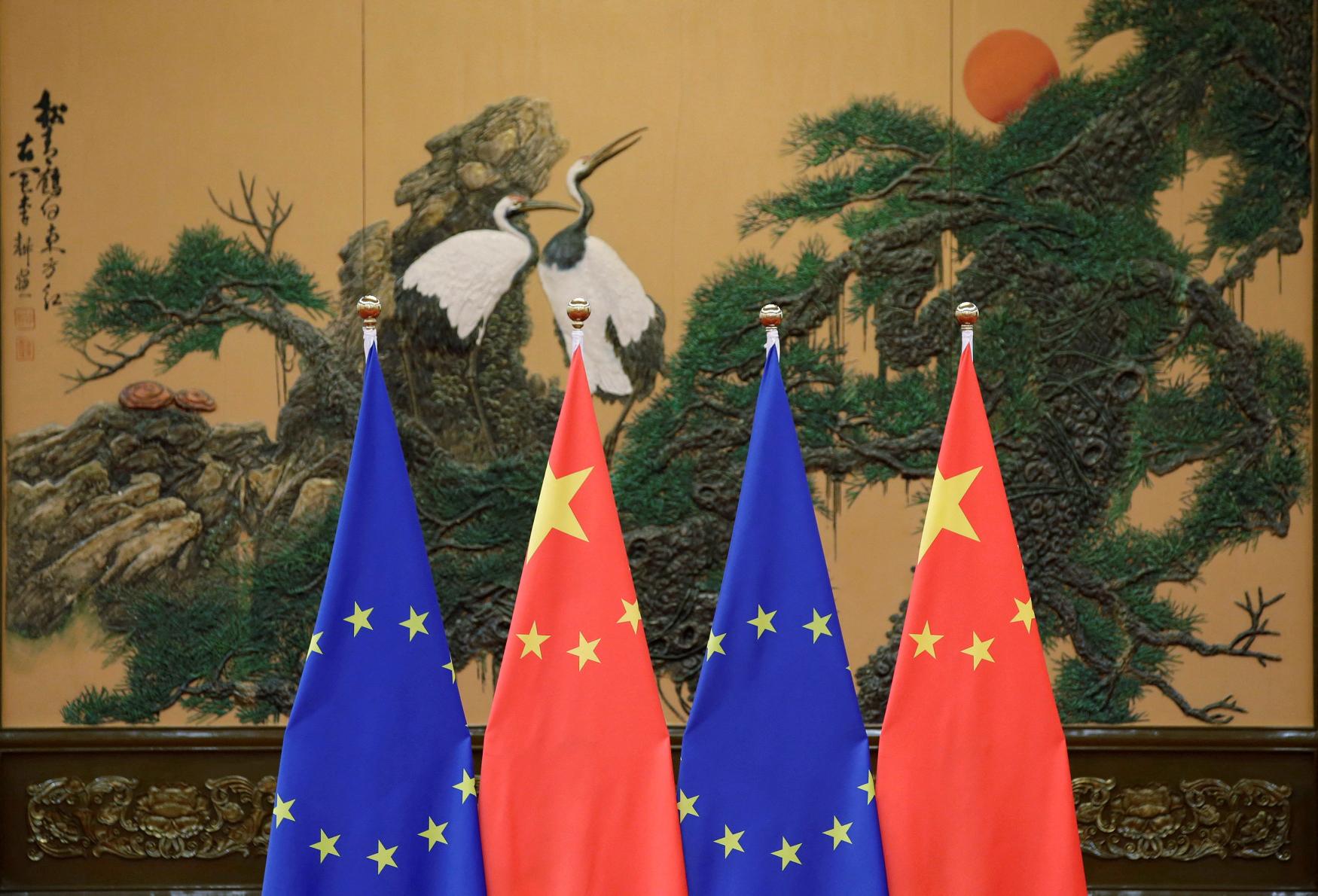
China warns EU over electric vehicle tariffs German economy minister Habeck arrives in China on 3-day visit Habeck criticises Berlin's China strategy as outdated German exports to China fell in May, as shipments to US rose BEIJING, June 21 (Reuters) - Beijing warned on Friday that escalating frictions with the European Union over electric vehicle imports could trigger a trade war, as Germany's economy minister arrived in the Chinese capital with the proposed tariffs high on his agenda. Robert Habeck's three-day trip to China is the first by a senior European official since Brussels proposed hefty duties on imports of Chinese-made electric vehicles to combat excessive subsidies. That has unleashed countermeasures by China and harsh criticism from Chinese leaders. In an unexpected twist, Habeck - from the ecologist Greens Party which is a junior partner in Germany's fractious three-way coalition - criticised Berlin's 11-month-old China strategy document as too short-termist and not in sync with the China strategies of other EU countries. This week alone, Chinese automakers urged Beijing to hike tariffs on imported European gasoline-powered cars and the government launched a dumping probe into EU pork imports in retaliation for the EU Commission's move. "The European side continues to escalate trade frictions and could trigger a 'trade war'," a statement attributed to the Chinese commerce ministry's spokesperson said. "The responsibility lies entirely with the European side." It said that with its dumping probe, the European side had "intimidated and coerced Chinese enterprises, threatened to apply punitive high tariff rates, and demanded overly broad information". OPPORTUNITY TO EXPLAIN Habeck's visit is seen as an opportunity for Germany, Europe's biggest economy, to explain to Chinese officials the recent tariff announcement while allaying the risk of retaliation from China that could harm German businesses. Germany's voice carries particular weight, and its leading car manufacturers have vociferously opposed the EU tariffs. Berlin has urged dialogue while expecting China to compromise. The country's carmakers would be the most exposed to any countermoves from China, as almost a third of their sales came from the $18.6 trillion economy last year. The EU's move on EV tariffs plunged trade ties with the world's second-largest economy to a new low. But Chinese state media portrayed his visit as a chance to defuse tensions. Germany should seek consensus, some experts said, according to state-controlled tabloid Global Times. NEW LOW On his arrival in Beijing on Friday, Habeck met ambassadors of several EU countries at the start of a trip what will include talks with Chinese officials and stops in Shanghai and Hangzhou. He had been expected to meet Premier Li Qiang, but sources from the German delegation said late on Friday it had not been possible to schedule that meeting before Habeck's departure from Beijing. At a reception at the German embassy in Beijing, Habeck expressed dissatisfaction with Berlin's current China strategy as outlined by a document released last July after months of coalition wrangling. The 64-page document accused Beijing of increasing assertiveness and "unfair practises" but was vague on policy measures to reduce critical dependencies. "A strategy means you have to look in the future and to describe at least a path to the future, even when it will never happen as it is described," he said. "This is a German government's China strategy, so what is missing is the European approach," he said, adding that an update would be required "sooner or later". He did not spell out in exact terms how he saw Germany's strategy evolving. The German government did not immediately reply to a request for comment on Habeck's statement, which adds to perceptions Berlin has yet to establish a clear path for the export-oriented German economic model in an era of rising protectionism. Earlier on Friday, Habeck had tempered expectations for what could be resolved during his visit, saying he did not expect to reach a solution on trade tensions. Germany is also seeking to broaden access for its companies to the vast Chinese market, while also trying to "de-risk" its economy from being too reliant on any one country. Trade experts say economic and political factors all increasingly favour the U.S.-German relationship. Germany's 60 billion euros ($64 billion) of trade with China in the first quarter of 2024 was less than the 63-billion-euro total volume of U.S.-German trade. That snapped a trend that has ranked China as Germany's top trading partner for eight years in a row. Official figures released on Friday underlined the shift: German exports to China fell 14% in May from a year ago while exports to the United States rose 4.1%. Sign up here. https://www.reuters.com/markets/china-says-eu-escalation-trade-friction-could-trigger-trade-war-2024-06-21/
2024-06-21 11:22
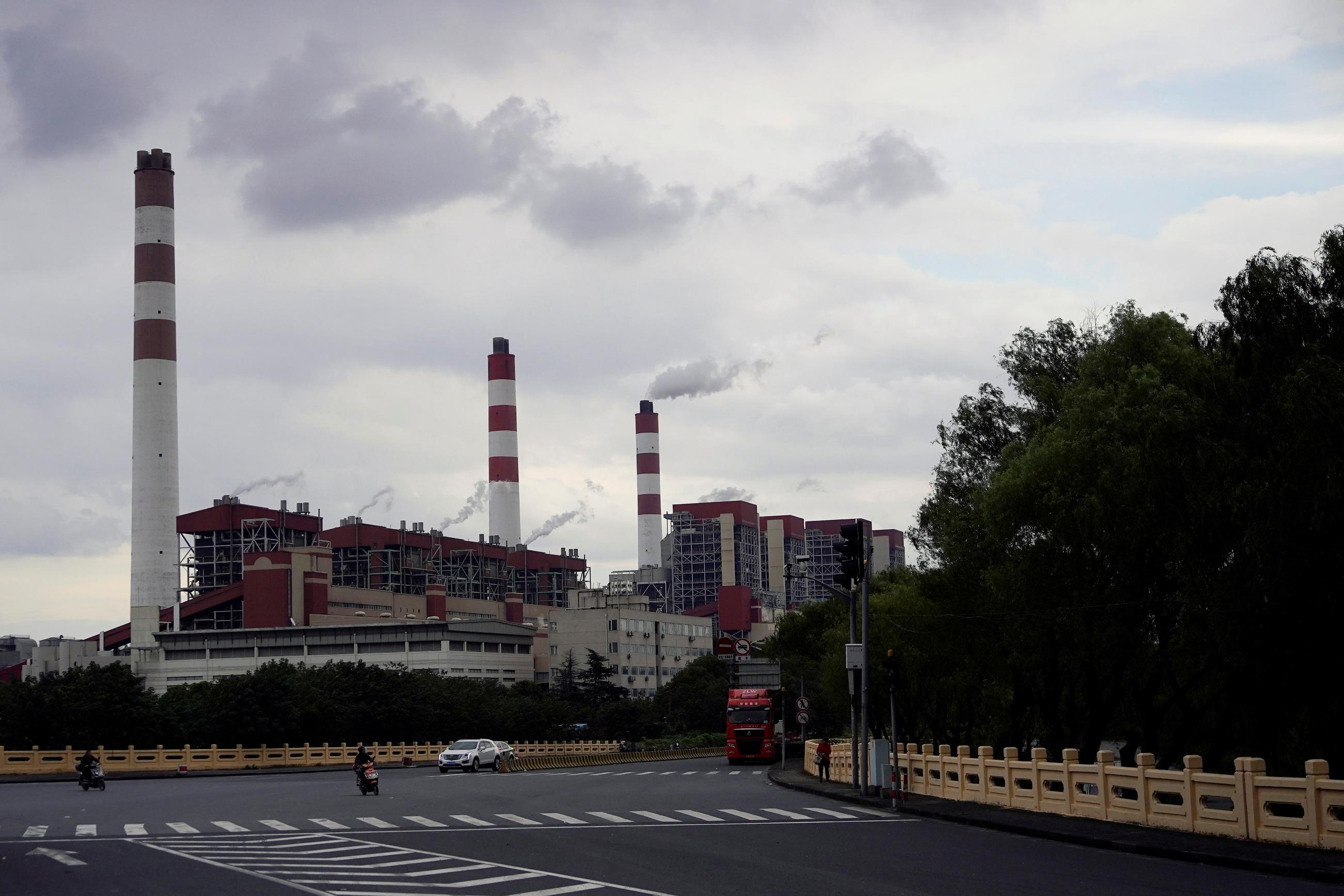
BEIJING, June 21 (Reuters) - Major Chinese asset managers have billions of dollars invested in fossil fuels with no plans for a phase out, a new Greenpeace report said. The environmental organisation's analysis of 16 major Chinese asset managers released on Thursday said that they have invested a combined 267.2 billion yuan ($36.79 billion) in high-carbon sectors and 74 billion yuan in fossil-fuel related areas. Five of the firms - E Fund, Fullgoal, GF, Southern, and China Universal - accounted for over half of the investment in high-carbon. E Fund, China's largest asset manager, alone invested 40.6 billion yuan in high-carbon sectors and 18.9 billion in fossil fuels. The firms could not be reached by phone and did not respond to faxed requests for comment on Friday. E Fund said in its Responsible Investment Statement on its website that it is "one of the first asset managers in China to embrace responsible investing". All the fund managers have said in corporate reports that they take climate risks into account in their investment decisions, in line with the recommendations of the G20's Task-force for Climate-Related Financial Disclosures. High-carbon sectors included ferrous and non-ferrous metals, chemicals, and high-carbon heat and electricity production, in addition to fossil fuel investments. By comparison, European banks such as Barclays, HSBC and BNP Paribas have vowed to curb fossil fuel financing. "Benchmarking against international standards will also become more necessary as international investors become more important for China's asset managers," Greenpeace East Asia's climate and energy campaigner Yuan Yuan said. Greenpeace also raised an alarm over "greenwashing" in the asset managers' investment products. The report said 16 out of 40 ESG-branded investment products offered by the firms invested in fossil fuel-related industries. Harvest Fund Management's so-called carbon neutral portfolio had an 80% investment ratio in industries deemed high-carbon, and some 60% of its investments were directed toward companies primarily involved in thermal power generation. However, the report said all the asset managers had been "notable progress" in their climate risk governance. Following the 2020 release of green finance regulations in Shenzhen, six asset managers in the southern city released environmental disclosures for the first time in 2023. Another seven managers also disclosed their carbon emissions for the first time in 2023. More improvements in disclosures could be on the way. On May 1, guidelines on sustainable development reporting took effect for China's major stock exchanges, requiring companies to disclose information including climate targets and risk management. Chinese asset managers' poor grades in ESG investing were despite China's push to brand itself as a global leader in the energy transition, particularly in manufacturing. Over 80% of the world's solar manufacturing supply chains are based in China, which is also home to the world's largest renewable generation capacity. However, energy consumption is still dominated by fossil fuels, with close to 60% of China's electricity coming from coal last year. Sign up here. https://www.reuters.com/business/environment/major-chinese-asset-managers-have-no-plans-phase-out-fossil-fuel-investments-2024-06-21/
2024-06-21 10:47
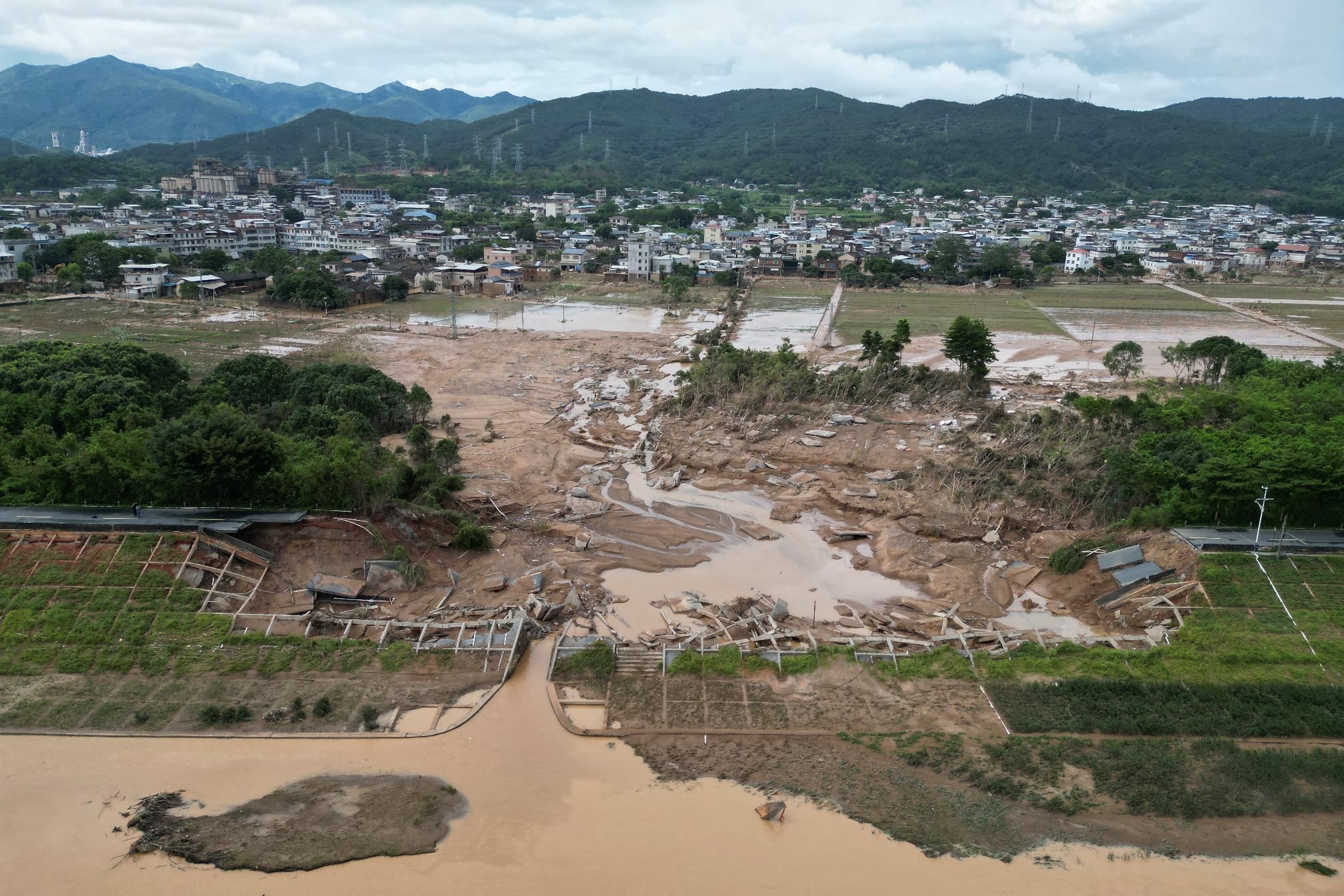
BEIJING, June 21 (Reuters) - The death toll from days of torrential rain in one of the worst-hit areas in southern China jumped to 38 from nine on Friday, Chinese state television CCTV reported. Downpours this week in Meizhou city in Guangdong province led to flash floods and mudslides that destroyed thousands of low-rise houses, damaged roads and crops, and disrupted communications and power supplies. Two people remain missing in Meizhou's Pingyuan county, CCTV said. Southern China has been battered by an unusual amount of rains in recent days following an earlier than normal start to the annual flooding season. Accumulated precipitation in Pingyuan has reached 1,221.6 millimetres (4 ft) since April 4, more than double the normal amount in the same period of previous years, CCTV said. Deaths during China's annual summer floods have fallen sharply from the thousands each year in the 1990s, as authorities beefed up flood control measures such as dams. Yet extreme weather in recent years, including record-breaking rainfall, has made China vulnerable to intense flooding and disasters such as sudden mudslides, often in its mountainous but populated areas. The task of controlling floods in China is becoming increasingly arduous, President Xi Jinping said on Tuesday, calling for all-out efforts to safeguard lives and property as powerful storms pounded China's southern provinces. China's National meteorological Center said on Friday a typhoon could form over the weekend and affect coastal areas in the country's south. Natural disasters, including floods, droughts, an earthquake and freezing weather in China caused direct economic losses of 23.76 billion yuan ($3.27 billion) in the first quarter. ($1 = 7.2606 Chinese yuan renminbi) Sign up here. https://www.reuters.com/world/china/death-toll-guangdong-floods-china-jumps-38-state-media-reports-2024-06-21/
2024-06-21 10:31
A look at the day ahead in U.S. and global markets from Mike Dolan Nvidia, the Nasdaq and the S&P500 got dizzy at record highs on Thursday as world markets start to take stock of a bumper 2024 as we near the half-year point next week - but with the dollar (.DXY) New Tab, opens new tab back on the march regardless. The latest U.S. economic readouts showing some cooling of activity through May and June, but the trigger for the megacap recoil was less than clear - not least with the Atlanta Federal Reserve's "GDPNow" real-time estimate still showing a brisk 3% growth for the quarter. The scale of recent tech gains may just have been too fast as midyear accounting prompts a breather - and perhaps investors are now bracing for a bumpier second half into November's U.S. election. Next Thursday's presidential TV debate may sound the klaxon for that. Either way, Nvidia's (NVDA.O) New Tab, opens new tab 3.5% drop on the day meant it surrendered its brief role as the most valued company to Microsoft (MSFT.O) New Tab, opens new tab again and the tech-heavy Nasdaq (.IXIC) New Tab, opens new tab ended a seven-day streak of record closing highs. The wider equity complex was more mixed, however, with the blue-chip Dow Jones (.DJI) New Tab, opens new tab gaining 0.7% and the small-cap Russell 2000 (.RUT) New Tab, opens new tab flat on the day. Despite another softening of Treasury yields after misses on housing starts and jobless claims, the dollar continued to build a head of steam. And greenback gains were pretty broad-based - against the European currencies where central bank rate cuts and easing bets are mounting, but also against Japan's yen and China's yuan in Asia. The DXY index touched its highest in almost two months. Foreign money is exiting China again - amid rising global trade tensions and little sign of an end to the deepening housing bust there, Chinese stocks (.CSI300) New Tab, opens new tab, (.HSI) New Tab, opens new tab and the yuan had another poor end to a dour week. About 33 billion yuan ($4.54 billion) left the mainland this month via the Northbound leg of the Stock Connect Scheme - following four months of net inflows. With one eye on the Chinese Communist Party's central committee plenum next month, G7 countries upping pressure on Chinese electric vehicle exports and Beijing considering retaliation, the yuan slipped to its weakest this year on Friday. China's commerce ministry said on Friday the European Union has continued to escalate trade friction, which "may trigger a trade war." Japan's yen is weakening rapidly again too - with doubts about the timing of Bank of Japan tightening reinforced by below-forecast inflation numbers that saw consumer price growth excluding energy and fresh food falling to just 2.1% last month. That has sent dollar/yen back above 159 for the first time since late April, when the BoJ last intervened to cap it, and elicited another series of warnings from Japanese officials. With the Swiss National Bank's second interest rate cut of the year on Thursday ringing in the background, the dollar climbed against European currencies too. Sterling fell to its lowest level in over a month even after the Bank of England left its policy rates steady ahead of the July 4 UK election, as bets on an August rate cut there rose when the BoE indicated that its 7-2 policy-maker split in favour of holding the line was "finely balanced". News of a rebound in British retail sales last month after a weather-related bust in April did little to shift the dial. And the euro sank back to the lows it hit last week on France's political upheaval, with June business surveys for the euro zone showing a sharper slowdown in activity there than forecast. The currency bloc's services industry showed signs of weakening while a downturn in manufacturing took a turn for the worse. Back on Wall Street, equivalent S&P Global surveys for the United States are due out later on Friday. S&P500 futures were marginally in the red ahead of the bell. Elsewhere, China imposed countermeasures on Lockheed Martin's (LMT.N) New Tab, opens new tab relevant entities and senior executives on Friday over the United States' arms sales to Taiwan. And Britain's financial technology firm Revolut could be valued at north of $40 billion in a share sale, even as it still awaits a UK banking licence, according to people familiar with the situation. Key developments that should provide more direction to U.S. markets later on Friday: * US Flash June business surveys from S&P Global, May existing home sales; Canada April retail sales * San Francisco President Federal Reserve President Mary Daly speaks * German Economy Minister Robert Habeck speaks in Beijing * ECOFIN meeting of European Union finance ministers in Luxembourg, with European Central Bank Vice President Luis de Guindos attending * US corporate earnings: Carmax, Factset Sign up here. https://www.reuters.com/markets/us/global-markets-view-usa-2024-06-21/