2024-06-18 20:16
NEW YORK CITY, June 18 (Reuters) - U.S. cities are breaking decades-old temperature records this week as a heat wave stretches from central to eastern portions of the country, the National Weather Service said on Tuesday, in what officials are warning could become a deadly weather event. As roughly 80 million people from Indiana to New England sweltered under a heat advisory or excessive heat warning, New York Governor Kathy Hochul activated the state's Emergency Operations Center in response to high temperatures expected to last until the weekend. "This is a deadly event," she said, one day after the city of Syracuse hit 94 degrees Fahrenheit (34.4 degrees Celsius), topping a record from 1994. "We have seen blizzards, we have seen flooding, we had hurricanes, we had tornadoes. But this heat event is most likely to cause more deaths." New York state will open its beaches and public pools early, in time for people to enjoy them over the Juneteenth holiday on Wednesday. Under its heat emergency plan, New York City is opening its cooling centers for the first time this year. Chicago registered 97 degrees F at Chicago O'Hare International Airport on Monday, which broke a record of 96 degrees F set in 1957. Temperatures hovered around 91 degrees F on Tuesday, with the heat index, which factors in temperature and humidity to measure how hot it feels, touching 95 degrees F. To cool off, Breanne Trammell, 43, and her poodle-mix dog Moe were planning to hit Montrose Dog Beach on Chicago's Lake Michigan. But with one stop first. "We're out at the store getting an air conditioner," she told Reuters by telephone. She's spending all her birthday money - $400 from her mother - for a new unit. "You don't know how hot my apartment is," said Trammell, who turned 44 on Wednesday. "It's dreadful, for me and Moe. You feel heavy even breathing. It's oppressive. Miserable." She and her friends have been going to movies and bowling alleys, anywhere to keep cool lately, but it's overwhelming when it doesn't cool off at night, she said. Teams of city workers scattered across Chicago to homeless camps, trying to coax people to escape the heat in shelters, said Brian Berg, a spokesperson for the city's Department of Family Services and Support. "We check all the sites," Berg said. "We provide them with not only water and food, but we'll take them to the shelters, which are also cooling stations." High temperatures can cause dehydration, heat exhaustion and heatstroke, and worsen pre-existing conditions like cardiovascular problems. Detroit and Philadelphia, as well as cities in New Hampshire, Connecticut and Maine are also due for record temperatures in the coming days, NWS meteorologist Marc Chenard said. Out west, firefighters battled high temperatures, low humidity and strong winds as they sought to contain a wildfire that started Saturday northwest of Los Angeles and has burned 12,000 acres. The blaze forced about 1,200 people to evacuate the Hungry Valley outdoor recreation area. In southern New Mexico, wildfires burned to the north and south of Ruidoso village, forcing the community of around 8,000 people to evacuate, local authorities said on Tuesday. While it is too soon to say if the heat is driven by climate change, this heat wave is occurring earlier in the year than the historical average. Central Maine is running 30 degrees above average, he added. "It's kind of early in the season to be getting this long of a duration of heat wave for the Ohio Valley and New England," Chenard said, adding that it was dangerous because people were not prepared. Sign up here. https://www.reuters.com/world/us/us-heat-wave-sets-records-central-northeast-states-2024-06-18/

2024-06-18 19:59
CHICAGO, June 18 (Reuters) - Bayer's Preceon variety of short stature corn has been shown to withstand up to 75 mph winds (120 kph) in some trials, the company said on Tuesday, but could not withstand winds over 100 mph. That means the corn could still be damaged by extreme weather such as the derecho storm that hit the heart of the Corn Belt in August 2020, causing $11 billion of damage, according to National Oceanic and Atmospheric Administration. Bayer said other short stature corn survives winds up to 50 mph. A derecho is a type of large, long-lived thunderstorm carrying damaging straight line winds. Scientists say extreme weather events are becoming more common due to global warming. "After 100 mph, nothing really stands," Bob Reiter, head of research and development, crop science, at Bayer, told Reuters. At an event in Chicago, the company said 390 farmers grew the Preceon variety on around 35,000 acres in the U.S. and Europe in a 2023 trial of the conventionally bred version of the corn. Bayer intends to make a genetically modified version of the corn available in 2027 and is at work on a gene-edited version "to appeal to various global markets." Bayer says the corn will reduce yield losses due to extreme weather because it has less height to catch wind. Events such as the derecho storm that hit the U.S. Midwest could become a bigger problem as warmer temperatures associated with climate change escalate, according to Nick Vita, a forecaster with Commodity Weather Group. "Very warm temperatures can not only help with the intensity but also the duration of these systems," Vita said. Sign up here. https://www.reuters.com/markets/commodities/new-bayer-short-corn-variety-stands-up-high-winds-not-over-100-mph-2024-06-18/

2024-06-18 19:56
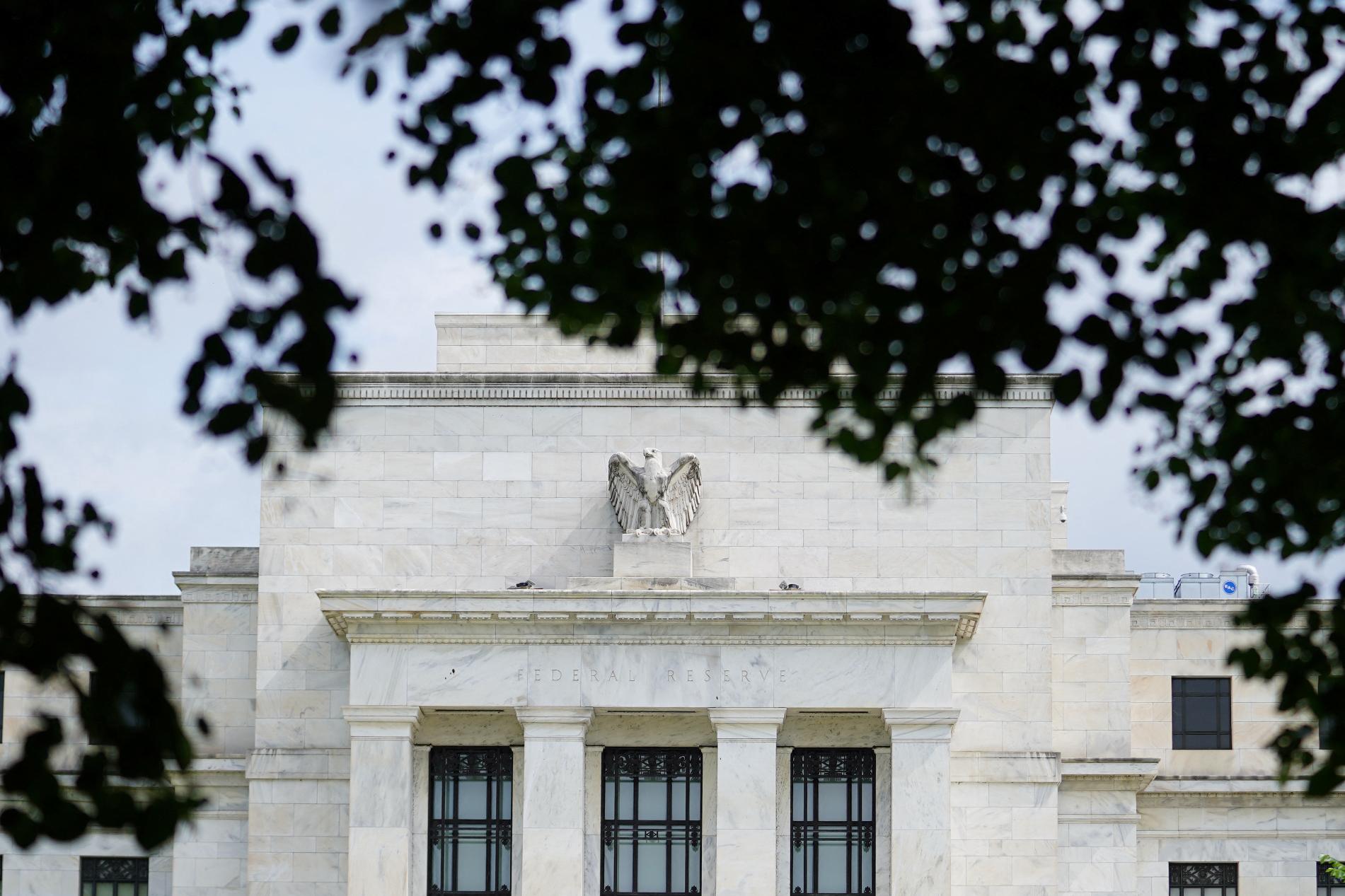
June 18 (Reuters) - Federal Reserve officials, heartened by recent data, are looking for further confirmation that inflation is cooling and for any warning signs from a still-strong labor market as they steer cautiously toward what most expect to be an interest rate cut or two by the end of this year. Outlining a litany of reasons for optimism that inflation is back on track to the U.S. central bank's 2% goal after stalling earlier this year, Fed Governor Adriana Kugler said on Tuesday she believes monetary policy is "sufficiently restrictive" to ease price pressures without causing a significant deterioration in the job market. "If the economy evolves as I am expecting, it will likely become appropriate to begin easing policy sometime later this year," she told the Peterson Institute for International Economics in Washington. The latest data, including a government report showing consumer prices did not rise at all from April to May, is "encouraging," she said. While more progress is required, Kugler said, "I believe economic conditions are moving in the right direction." The Fed last week kept its benchmark interest rate in the 5.25%-5.50% range and released updated economic projections that showed its officials had pared back their expectations for rate cuts this year, to one from the three seen in March, after stronger-than-expected inflation data in the first months of 2024. Most analysts equate fewer rate cuts with a later start to them, particularly after Fed Chair Jerome Powell said the first reduction in borrowing costs will be "consequential" because it could reset market expectations. Chicago Fed President Austan Goolsbee called the latest inflation data "excellent, after a few months of less-excellent numbers, so hopefully we'll see more like that." Last year a surge in the supply of both workers and goods allowed inflation to drop quickly without pushing up on unemployment, a "magic" combination that may still have room to run this year, Goolsbee said. Other Fed officials sounded a little more skeptical. "We're in a good position, we're in a flexible position to watch the data and to be patient," Dallas Fed President Lorie Logan said at an event in Austin, Texas. While recent data showing inflation is cooling is "welcome news," there must be "several more months of that data to really have confidence in our outlook that we're heading to 2%." St. Louis Fed President Alberto Musalem, in his first speech on monetary policy since taking up the reins at the regional Fed bank, signaled a potentially longer runway ahead. "I will need to observe a period of favorable inflation, moderating demand and expanding supply before becoming confident that a reduction in the target range for the federal funds rate is appropriate. These conditions could take months, and more likely quarters to play out," Musalem told the CFA Society St. Louis. TOO SOON TO KNOW All Fed officials speaking Tuesday stressed the Fed's commitment to making decisions based on incoming economic data. "I expect interest rates to come down gradually over the next couple of years, reflecting the fact that inflation is coming back to our 2% target and the economy is moving in a very strong sustainable path," New York Fed President John Williams said in an interview on the Fox Business television channel. He, like most Fed officials of late, declined to give any clear steer about when that could occur. Financial markets are currently pricing in a first rate cut in September, with a second one seen likely in December. "I'm not going to make a prediction" about the exact path of policy. What happens "depends on how the data evolves," he said. "I think that things are moving in the right direction" for an eventual easing. Boston Fed President Susan Collins cautioned against over-reacting to "promising" economic news. "It is too soon to determine whether inflation is durably on a path back to the 2% target," Collins told a group in Lawrence, Massachusetts. "The appropriate approach to monetary policy continues to require patience, providing time for a methodical and holistic assessment of the evolving constellation of available data." To Richmond Fed President Thomas Barkin, the key will be for price pressures to ease persistently in services as well as in goods. "We are clearly on the back side of inflation," Barkin told MNI in a webcast interview, adding that he found recent data showing consumer prices did not rise at all from April to May "encouraging." Still, he said, the choppiness in data since last year means the policy path ahead is not clear. "We will learn a lot more over the next several months and I think we are well positioned from a policy standpoint to react," he said. Economic crosscurrents that could push the Fed either to wait longer or move earlier were on display on Tuesday, with the U.S. Commerce Department reporting a smaller-than-expected increase in retail sales in May and the central bank reporting a jump in manufacturing output. For the Fed, "job number 1 is to make sure that we get inflation back to 2%," Williams said. Sign up here. https://www.reuters.com/markets/rates-bonds/feds-williams-expects-rates-come-down-inflation-pressures-ease-2024-06-18/
2024-06-18 19:35
Loonie trades in a range of 1.3710 to 1.3756 Price of U.S. oil settles 1.5% higher Canadian bond yields ease across the curve TORONTO, June 18 (Reuters) - The Canadian dollar was little changed against its U.S. counterpart on Tuesday as investors weighed softer-than-expected U.S. retail sales data and awaited potential clues on prospects of additional interest rate cuts from the Bank of Canada. The loonie was trading nearly unchanged at 1.3720 to the U.S. dollar, or 72.89 U.S. cents, after trading in a range of 1.3710 to 1.3756. The currency has been in a holding pattern since touching last Tuesday a near two-month low at 1.3791. "Slightly weaker (U.S.) retail sales (on Tuesday) is just making sure the U.S. dollar doesn't run away," said Rahim Madhavji, president at KnightsbridgeFX.com. The U.S. dollar (.DXY) New Tab, opens new tab edged lower against a basket of major currencies after retail sales data indicated signs of exhaustion among U.S. consumers, boosting the case for Federal Reserve rate cuts later this year. The BoC this month became the first G7 central bank to begin cutting interest rates. Minutes from the June 5 policy decision are due to be released on Wednesday. "We are going to see in the minutes what the Bank of Canada is thinking in terms of rate cuts and if they are even considering the weakness in the Canadian dollar as part of their rate cut decision," Madhavji said. Data on Friday showed that speculators have raised their bearish bets on the currency to a record high level. The price of oil , one of Canada's major exports, settled 1.5% higher at $81.57 a barrel, extending its recent gains. Canadian government bond yields moved lower across the curve, tracking moves in U.S. Treasuries. The 10-year was down 4.2 basis points at 3.274%. Sign up here. https://www.reuters.com/markets/currencies/canadian-dollar-steadies-ahead-bank-canada-minutes-2024-06-18/

2024-06-18 19:22
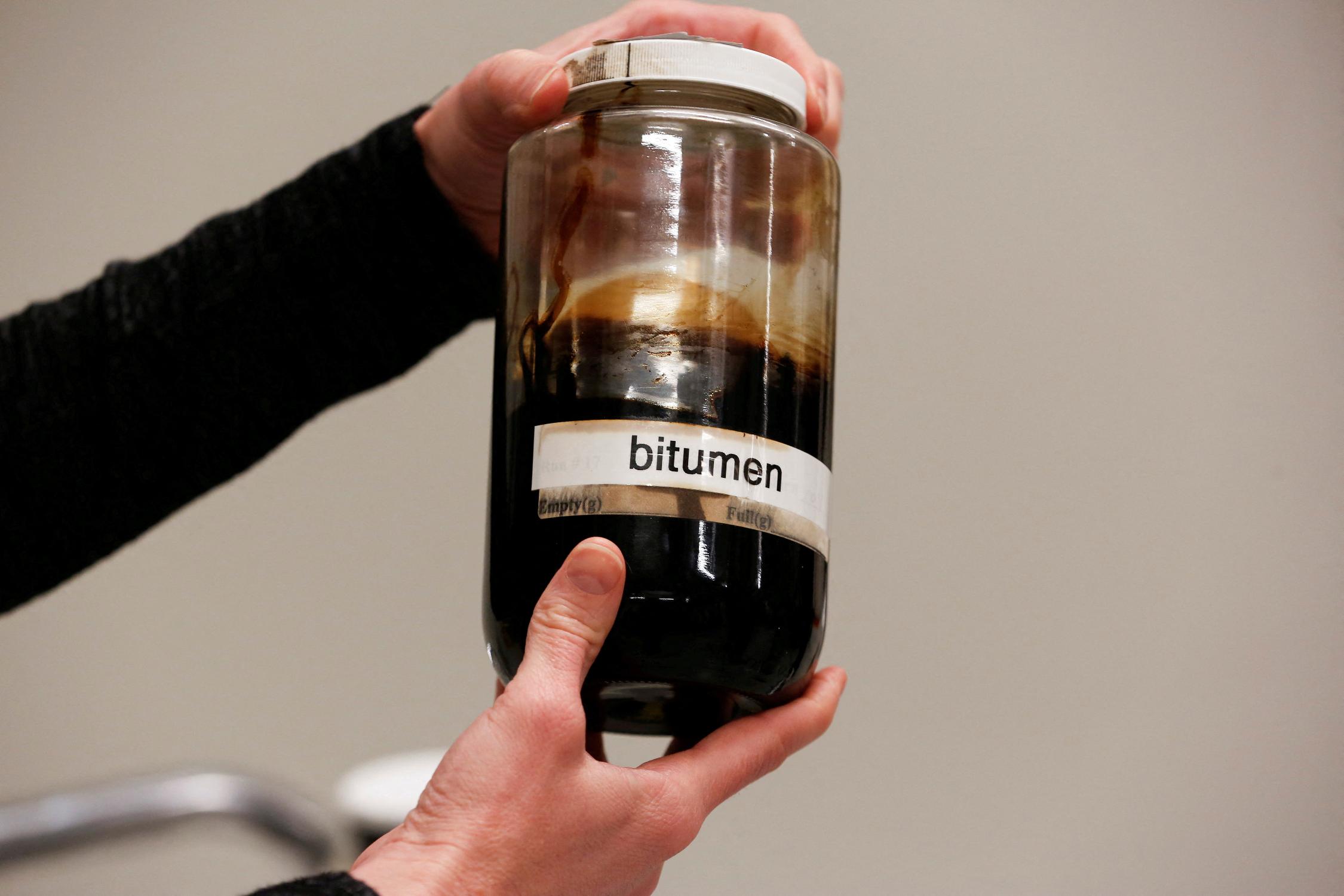
June 18 (Reuters) - Canada's proposed oil and gas emissions cap will prompt companies to cut production rather than invest in costly carbon capture and storage (CCS) technology, according to a report by consultancy Deloitte and released by the Alberta government on Tuesday. Prime Minister Justin Trudeau's Liberal government is developing regulations to force Canada's highest-polluting sector to cut emissions to 137 million metric tons, 37% below 2022 levels, by 2030. Alberta, Canada's main oil-producing province, and the industry oppose the plan, arguing it is a production cap. Canada's biggest oil producers are counting on CCS for most of their emissions cuts over the next decade. But Pathways Alliance, a group of six major oil sands firms, has not made a final investment decision on its C$16.5 billion ($12.03 billion) project and says it needs more government financial support. In a report commissioned by Alberta, Deloitte modelling showed that implementing CCS would render high-cost oil sands mines economically unviable. For lower-cost thermal oil sands assets, curtailing production would still be more cost-effective than investing in CCS. "We do not see any oil sands CCS investments being implemented," Deloitte said. Laura Cameron, an analyst at the International Institute for Sustainable Development climate think-tank, said the report raised questions about the cost of carbon-capture technology. Canada is the world's fourth-largest oil producer, turning out around 5 million barrels per day (bpd). Despite the industry's fears, production is actually setting record highs due to a new export pipeline and resilient oil prices. Trudeau proposed the cap in 2021 and his government is aiming to finalise it ahead of a likely election next year. The emissions cap would likely result in 2030 oil production of 5.6 million bpd, around 10% lower than it would be without a cap, Deloitte projected. Gas production at the end of the decade would be roughly 2.2 billion cubic feet a day with an emissions cap, 12% lower than without one. That would lead to Canada losing 90,000 jobs and C$282 billion in GDP between 2030 and 2040, the report said. "It's time to give up on this failed idea," Alberta finance minister Nate Horner said in a statement. Deloitte estimates oil and gas emissions would still exceed the proposed cap by 20 million tons by the end of the decade, even with increasing production efficiency and steps to curb methane emissions. Asked about the emissions cap on Tuesday, Federal Environment Minister Steven Guilbeault told reporters the government did not have jurisdiction to limit production. ($1 = 1.3719 Canadian dollars) Sign up here. https://www.reuters.com/sustainability/climate-energy/canada-oil-gas-emissions-cap-likely-curtail-production-report-says-2024-06-18/
2024-06-18 19:13
WASHINGTON, June 18 (Reuters) - The chair and top Democrat on the House select committee on China will announce Tuesday they are launching a bipartisan working group to reduce China's dominance of critical mineral supply chains. Representative John Moolenaar, the committee chair, and Raja Krishnamoorthi, the top Democrat, said the new working group will help propose policies to lower U.S. reliance on China for critical minerals used in a variety of products from semiconductors and wind turbines to electric vehicles. The group "will work to create transparency into U.S. supply-chain dependency for critical minerals and develop a package of investments, regulatory reforms, and tax incentives to reduce that dependency," the committee said in a statement to Reuters. The Critical Minerals Policy Working Group will be led by Republican Representative Rob Wittman and Democratic Representative Kathy Castor. "Critical minerals are the building blocks of everything from basic consumer goods to advanced military technology. America’s reliance on the Chinese Communist Party’s control of the critical mineral supply chain would quickly become an existential vulnerability in the event of a conflict," Moolenaar said in a statement. He noted China has already imposed export restrictions on rare earth elements such as gallium, germanium and graphite, as well as mineral-processing equipment. Last month, the U.S. Treasury Department gave automakers additional flexibility on battery-mineral requirements for electric-vehicle tax credits on some crucial trace minerals from China, such as graphite. Congress passed legislation in 2022 aimed at weaning the U.S. EV-battery chain away from China. New rules took effect on Jan. 1 restricting Chinese content in batteries eligible for EV tax credits of up to $7,500. The Biden administration last month announced it plans to impose new tariffs on $18 billion in Chinese goods including electric vehicles, batteries, semiconductors, aluminum, critical minerals, solar cells, ship-to-shore cranes, and medical products. Tariffs for certain critical minerals will increase from zero to 25% later this year. Sign up here. https://www.reuters.com/markets/commodities/us-lawmakers-seek-address-chinas-dominance-critical-mineral-supply-chains-2024-06-18/