2024-06-18 18:46
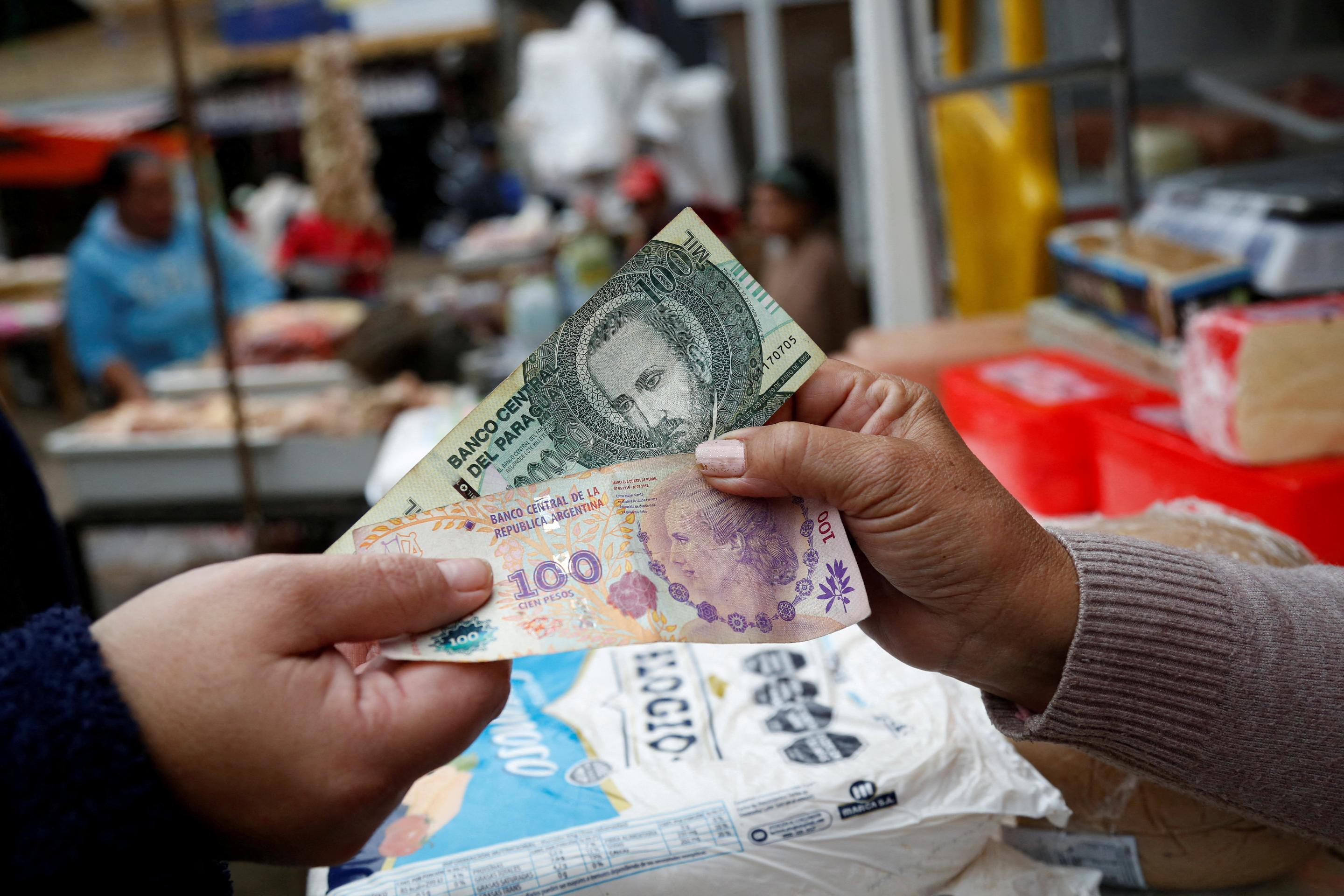
BUENOS AIRES, June 18 (Reuters) - Cash-strapped Argentina posted a fifth straight monthly primary fiscal surplus of 2.33 trillion pesos ($2.57 billion) in May, the largest yet under libertarian President Javier Milei who took office in December and ushered in tough austerity. The result, twinned with a monthly financial fiscal surplus of 1.18 trillion pesos, underscores how Milei's government is doubling down on a pledge to achieve a "zero deficit" this year to right the South American country's embattled economy. Milei blames years of over-spending and deep fiscal deficits for Argentina's triple digit inflation rate, long-standing capital controls that warp trade, regular debt defaults and poor reputation with global creditors and investors. "With income that greatly exceeded previous levels, the government's commitment to fiscal balance determined that the level of sustainable spending is maintained in the medium and long term, needed to get in order the national fiscal accounts," the Ministry of Economy said in a statement. It added that it was the first time the state had registered five straight months of financial fiscal surpluses since 2008. ($1 = 905.5000 Argentine pesos) Sign up here. https://www.reuters.com/world/americas/argentina-posts-largest-monthly-primary-surplus-yet-under-milei-2024-06-18/

2024-06-18 18:43
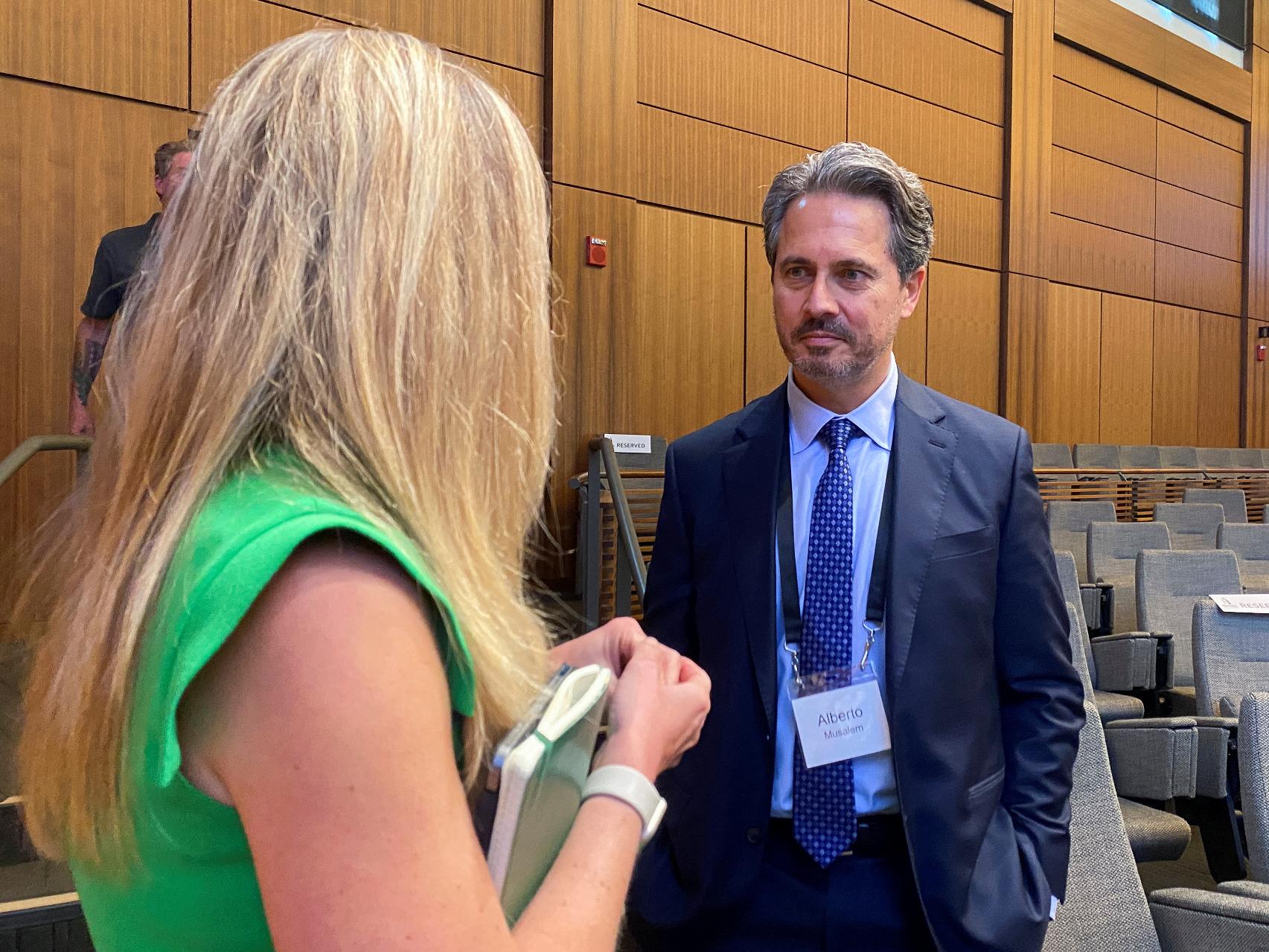
June 18 (Reuters) - The U.S. central bank should only start to cut interest rates after "months, and more likely quarters" of falling inflation, moderating demand and expanding supply, St. Louis Federal Reserve President Alberto Musalem said on Tuesday, in his first public comments on monetary policy since becoming head of the regional Fed bank. "I will need to observe a period of favorable inflation, moderating demand and expanding supply before becoming confident that a reduction in the target range for the federal funds rate is appropriate. These conditions could take months, and more likely quarters to play out," Musalem told the CFA Society St. Louis. The Fed held its benchmark lending rate in the 5.25-5.50% range, unchanged for the past 11 months, at its policy meeting last week as it seeks to keep pressure on the economy to bring inflation back down to its 2% target rate. Since that meeting, policymakers have so far lined up to consolidate the view they are content to keep rates steady until the economy sends a clearer signal - through either a sustained decline in the rate of price increases or a jump in the unemployment rate. In a wide-ranging speech in St. Louis, Musalem also did not rule out additional rate hikes should inflation become stuck "meaningfully" above 2% or if it reaccelerates, although he emphasized that was not his base case. Musalem, who has a PhD in economics with market, public policy and central bank experience, rotates into becoming a voting member on the central bank's rate-setting Federal Open Market Committee next year. He took up his post in April. The St. Louis Fed chief said he forecasts consumption to moderate in the coming quarters and that based on data released so far this month, he expects a "welcome downshift" in the personal consumption expenditures price index for May. Retail sales data earlier on Tuesday provided a further indication that consumers are pulling back on spending and prioritizing essentials. But Musalem indicated he remains uncertain if the current monetary policy stance is as restrictive as it needs to be. "I ... perceive some uncertainty about the degree of restrictiveness," he said, noting that financial conditions "feel accommodative for some parts of the economy while restrictive for others." Asked about whether he supported the Fed sticking to its 2% inflation target in the future, Musalem was resolute, however, in dismissing any idea of raising it. "It's going to muddy the waters and folks will not be able to form expectations about long-term inflation ... It's not a useful or timely idea to do that because we've just experienced the benefits of not doing so." Sign up here. https://www.reuters.com/markets/us/feds-musalem-signals-cautious-approach-cutting-rates-debut-speech-2024-06-18/
2024-06-18 17:45
June 18 (Reuters) - A spate of political reforms and economic cycles has elevated Argentinian dollar-denominated sovereign bonds and Latin American corporate bonds to rank among key "areas of interest," the chief investment officer of emerging markets Americas at UBS (UBSG.S) New Tab, opens new tab Global Wealth Management said. "It is a mistake to overlook LatAm," Alejo Czerwonko told the Reuters Global Markets Forum New Tab, opens new tab on Monday. "Strategically, an allocation to LatAm assets in portfolios is a must, not least as valuation across equities, some fixed-income segments, and a number of currencies, are quite depressed at the moment," Czerwonko said. Emerging markets in Latin America have been rocked by major policy shifts this year, leading to spikes in volatility and sell-offs across various asset classes, which in turn have created attractive entry points. Argentinian sovereign bonds have rallied this year on hopes of reforms by libertarian President Javier Milei and fiscal tightening, as the country's Senate passed a bill key to his plans, even renewing a currency swap loan agreement with China. Czerwonko said he still sees "opportunity" in Argentinian dollar-denominated sovereign bonds as he believes Argentina will avoid a debt restructuring due to progress on fiscal consolidation and reforms, along with rebuilding of foreign exchange reserves by Milei's government. "There is widespread recognition that addressing Argentina's structural economic imbalances necessitates of short-term pain for long-term gain," he said. Additionally, Czerwonko sees a wide range of opportunities in the Latin American corporate bond market as large corporations navigate different phases of the economic cycle with liquid balance sheets, comfortable debt maturity profiles, low leverage and financing risks. Mexico, in particular, "enjoys a number of secular tail winds, so we are tracking (the) peso and Mexico rates very closely," Czerwonko said, citing its proximity to the U.S., ample networks of free trade agreements and a young workforce. "U.S. remittances are flowing in to Mexico at a record $60 billion annually, and this process of economic integration has more room to run, in my view," he said. (Join GMF, a chat room hosted on LSEG Messenger, for live interviews: https://lseg.group/3TN7SHH New Tab, opens new tab) Sign up here. https://www.reuters.com/markets/rates-bonds/latam-allocation-must-portfolios-ubs-em-americas-cio-says-2024-06-18/
2024-06-18 13:43
SAO PAULO, June 18 (Reuters) - Brazilian President Luiz Inacio Lula da Silva criticized the central bank on Tuesday saying its chief, Roberto Campos Neto, was harming Latin America's largest economy, while signaling he will appoint a substitute who is not swayed by market jitters. "The central bank president shows no capacity for autonomy, has a political side and, in my opinion, works much more to harm the country than to help it," Lula said in an interview with local radio station CBN. The leftist leader, who's in his third non-consecutive term as Brazil's President, argued that the central bank's behavior is the only "thing out of place" in Brazil at the moment and the interest rate cannot be "prohibitive" for productive sectors. The central bank in its meetings on Tuesday and Wednesday is widely expected to pause its easing cycle amid increased volatility in domestic financial markets and unanchored inflation expectations. Policymakers cut the benchmark Selic interest rate in May by 25 basis points to 10.50%, following six cuts of twice that size since August last year. Campos Neto, appointed to lead the monetary authority in 2019 by the government of then-president Jair Bolsonaro, has been the target of Lula's criticism since he came to power last year. Campos Neto's term ends at the end of this year. Lula said he plans to appoint to the position "a mature, experienced, responsible person who respects the position they hold and does not give in to market pressure," adding that Brazil's need to control inflation and its commitment to growth will be key in deciding monetary policy. Sign up here. https://www.reuters.com/markets/rates-bonds/brazils-lula-criticizes-central-bank-ahead-rate-setting-meeting-2024-06-18/

2024-06-18 12:58
June 18 (Reuters) - President Joe Biden's administration on Tuesday unveiled final rules for new clean energy subsidies in an effort to make jobs and wages in green industries competitive with those in oil and gas. The guidelines for companies seeking to claim tax credits tied to job quality are aimed at delivering on Biden's vision that fighting climate change will create millions of jobs with good pay and benefits. Biden is seeking to tout his economic policies as he competes for votes ahead of his general election rematch in November with former President Donald Trump. The Inflation Reduction Act, signed into law in 2022, provides for an estimated $370 billion in solar, wind and electric vehicle subsidies. Under the Treasury Department rules, companies that pay prevailing wages to workers and hire apprentices for projects seeking IRA tax credits would receive five times the law's base credit of 6%. Developers have eagerly awaited the requirements for claiming the subsidies. The provision is meant to give companies a palpable incentive to boost pay in a sector that has lagged industries like nuclear energy, natural gas and coal. "In the fossil fuel industry our experience has been for the last 100 years that they pay top wages and fringe benefits. And in the renewable industries that have burgeoned over the last several decades that has not been the case," Sean McGarvey, president of the labor organization North America's Building Trades Unions (NABTU), said on a call with reporters. "With these new rules in place, there will be huge increases for many, many people that are existing in this industry right now and in the hundreds of thousands of people to join this industry with middle class, family-sustaining wages and with good health care and post-retirement benefits." The administration said it was encouraging companies to adopt project labor agreements, which set wage and employment terms between trade unions and contractors for specific projects, to help them comply with the rules. Unions are a key constituency for Biden. Treasury said its Internal Revenue Service would dedicate substantial resources to promoting and enforcing compliance with the new rules. Sign up here. https://www.reuters.com/sustainability/us-unveils-rules-subsidies-boost-clean-energy-wages-2024-06-18/

2024-06-18 12:57
WASHINGTON, June 18 (Reuters) - U.S. retail sales increased less than expected in May as lower prices for gasoline weighed on receipts at service stations. Retail sales rose 0.1% last month after a downwardly revised 0.2% drop in April, the Commerce Department's Census Bureau said on Tuesday. Retail sales were previously reported to have been unchanged in April. Economists polled by Reuters had forecast retail sales, which are mostly goods and are not adjusted for inflation, gaining 0.3% in May. Retail sales have in recent months been distorted by an early Easter. Nonetheless, the trend in sales growth has been slowing as higher prices and interest rates force households to prioritize essentials and cut back on discretionary spending. Banks are also tightening access to credit as lower income borrowers increasingly struggle to keep up with their loan payments. Though the labor market remains on a solid footing, it is becoming a bit difficult for people who lose their jobs to quickly find new work and wage increases are moderating. Savings have also been whittled down. Still, the pace of spending is likely sufficient to sustain the economic expansion. The Federal Reserve last week kept its benchmark overnight interest rate in the current 5.25%-5.50% range, where it has been since last July. U.S. central bank officials pushed out the start of rate cuts to perhaps as late as December, with policymakers projecting only a single quarter-percentage-point reduction for this year. They, however, maintained their gross domestic product growth estimates. Retail sales excluding automobiles, gasoline, building materials and food services rose 0.4% last month after a downwardly revised 0.5% drop in April. These so-called core retail sales were previously reported to have declined 0.3% in April. Core retail sales correspond most closely with the consumer spending component of GDP. Consumer spending increased at a 2.0% annualized rate in the first quarter, helping to restrain the economy to a 1.3% growth pace. Growth estimates for the second quarter are as high as a 3.1% rate. Sign up here. https://www.reuters.com/markets/us/us-retail-sales-miss-expectations-may-2024-06-18/