
2024-06-18 12:28
MOSCOW, Aug 28 (Reuters) - Ukraine has systematically targeted Russian energy infrastructure to try to disrupt Russia's economy and its ability to fund its military effort. Ukrainian officials say attacks have been carried out in retaliation for Russian strikes on the Ukrainian energy system. Following is a chronology of some of the drone strikes on Russian oil refineries and infrastructure as well as major outages at the refineries. Aug. 28 - A drone attacked an oil products reservoir in the town of Kotelnich in Russia's Kirov region, some 1,500 kilometres (932.06 miles) east of Ukraine. Aug. 28 - A Ukraine drone attack sparked a fire at an oil depot in the Kamensky district of Russia's southern region of Rostov. Aug. 26 - One man was killed, six more injured after a fire at Russia's Omsk oil refinery. Aug. 19 - A blast and fire on a fuel pipeline at the Sterlitamak petrochemical plant in Russia's Bashkiria region east of Moscow injured three people. Aug. 18 - Huge oil depot in the Proletarsk district of southern Rostov city was set on fire by drones. Aug. 3 - Tanks at a fuel storage depot in the Kamensky district of Russia's Rostov region caught fire as a result of a drone attack. Aug. 1 - A fire broke out at Russia's Gazprom Neft's (SIBN.MM) , opens new tab Omsk oil refinery in western Siberia and was later extinguished. July 28 - Three tanks at an oil storage depot in Russia's Kursk region caught fire as a result of a Ukraine-launched drone attack. July 22 - Russia's Tuapse oil refinery, its biggest on the Black Sea, was damaged in a major Ukrainian drone attack that caused a fire. July 13 - A fire broke out and was later extinguished at an oil depot in Tsimlyansky district of Russia's southern Rostov region. July 9 - One person was killed, while two power substations and an oil depot caught fire, after Ukraine launched drones in attacks on several regions. July 6 - Several oil depots were set on fire in the Krasnodar region in southern Russia after an overnight attack by Ukrainian drones. July 3 - Ukraine attempted a maritime drone attack on Russia's Black Sea port of Novorossiisk. June 21 - A drone crashed into the Ilsky oil refinery in Russia's southern Krasnodar region, injuring at least two people and causing a small fire. June 18 - A drone attack set ablaze oil storage sites in Russia's southern Rostov region. June 14 - Debris from a downed drone damaged an unused reservoir at a fuel depot in Russia's Voronezh region. June 6 - A fire was extinguished at the Novoshakhtinsk oil refinery in Russia's Rostov region that had been attacked by a drone. Sign up here. https://www.reuters.com/world/europe/ukrainian-drone-attacks-russian-oil-refineries-infrastructure-2024-06-18/

2024-06-18 12:28
BENGALURU, June 18 (Reuters) - Vedanta Resources, Indian miner Vedanta Ltd's (VDAN.NS) New Tab, opens new tab UK-based parent company, will seek to cut its debt by $3 billion over the next three years, its chairman said in an annual report on Tuesday. Vedanta Resources, whose debt stood at $6 billion as of March 2024, has been grappling with a host of rating downgrades since last year as analysts flagged liquidity issues and high default risk. "We seek to further deleverage Vedanta Resources by $3 billion over the next three years," chairman Anil Agarwal said in the oil-to-metals conglomerate's latest annual report. In the last two years, Vedanta Resources has cut its debt by $3.70 billion. Agarwal said the maturity of its outstanding bonds worth $3.20 billion, extended up to fiscal 2029, has provided it with "newfound liquidity". The group will use this liquidity to fund "important capex projects," he added. Vedanta Ltd, which is in the middle of a planned demerger, aims to operationalise coal blocks and expand capacities for its steel and aluminium business and has proposed to set aside $1.90 billion as capital expenditure for fiscal 2025. Sign up here. https://www.reuters.com/markets/commodities/parent-indias-vedanta-proposes-cut-debt-by-3-bln-over-next-three-years-2024-06-18/

2024-06-18 12:20
June 18 (Reuters) - The top U.S. oil and corn industry lobby groups said on Tuesday they were suing President Joe Biden's administration over its plans to slash planet-warming tailpipe emissions from cars and trucks, arguing the regulations will cause economic harm. The U.S. Environmental Protection Agency this spring finalized new rules for models of semi-trucks, buses and other heavy-duty vehicles released from 2027 to 2032 in a bid to cut 1 billion tons of greenhouse gas emissions through 2055. It also announced regulations to reduce emissions from cars and other light and medium duty vehicles in a separate set of standards the administration projects will mean up to 56% of all car sales will be electric between 2030 and 2032. The American Petroleum Institute (API), which is the top U.S. oil and gas lobby group and includes Exxon Mobil (XOM.N) New Tab, opens new tab as a member, said on Tuesday it was suing the EPA over its truck regulations, just days after having filed a separate federal lawsuit over the agency's light and medium duty vehicle rules. “The EPA is forcing a switch to technology that simply does not presently exist for these kinds of vehicles – and even if it were someday possible, it will almost certainly have consequences for your average American,” said Ryan Meyers, API's senior vice president and general counsel about Tuesday's lawsuit. The National Corn Growers Association, the American Farm Bureau Federation and the Owner-Operator Independent Drivers Association said they had joined Tuesday’s suit, arguing the administration was abandoning biofuels. “EPA has tried to impose a one-size-fits-all approach to addressing climate change by prioritizing electric vehicles over other climate remedies like corn ethanol,” said National Corn Growers Association President Harold Wolle. The EPA said it would not comment on pending litigation. Transportation is responsible for more than a quarter of national greenhouse gas emissions, and the regulations form a major part of Biden’s broader plan to decarbonize the United States by mid-century. The oil and ethanol industries often clash over U.S. biofuels mandates, but tend to join forces against electric vehicles to preserve continued use of internal combustion engines. The U.S. auto industry has largely endorsed the new tailpipe standards. The Renewable Fuels Association, a major ethanol lobby group, and National Farmers Union also joined the legal challenges to the tailpipe regulations by filing a lawsuit on Monday challenging EPA's light and medium duty vehicle rules. "EPA grossly exceeded its statutory authority by finalizing regulations that effectively mandate the production of EVs, while blatantly excluding the ability of flex fuel vehicles and low-carbon, high-octane renewable fuels like ethanol to achieve significant vehicle emissions reductions," said RFA President and CEO Geoff Cooper. Sign up here. https://www.reuters.com/markets/commodities/oil-corn-groups-team-up-lawsuit-halt-biden-truck-emissions-rules-2024-06-18/

2024-06-18 12:14
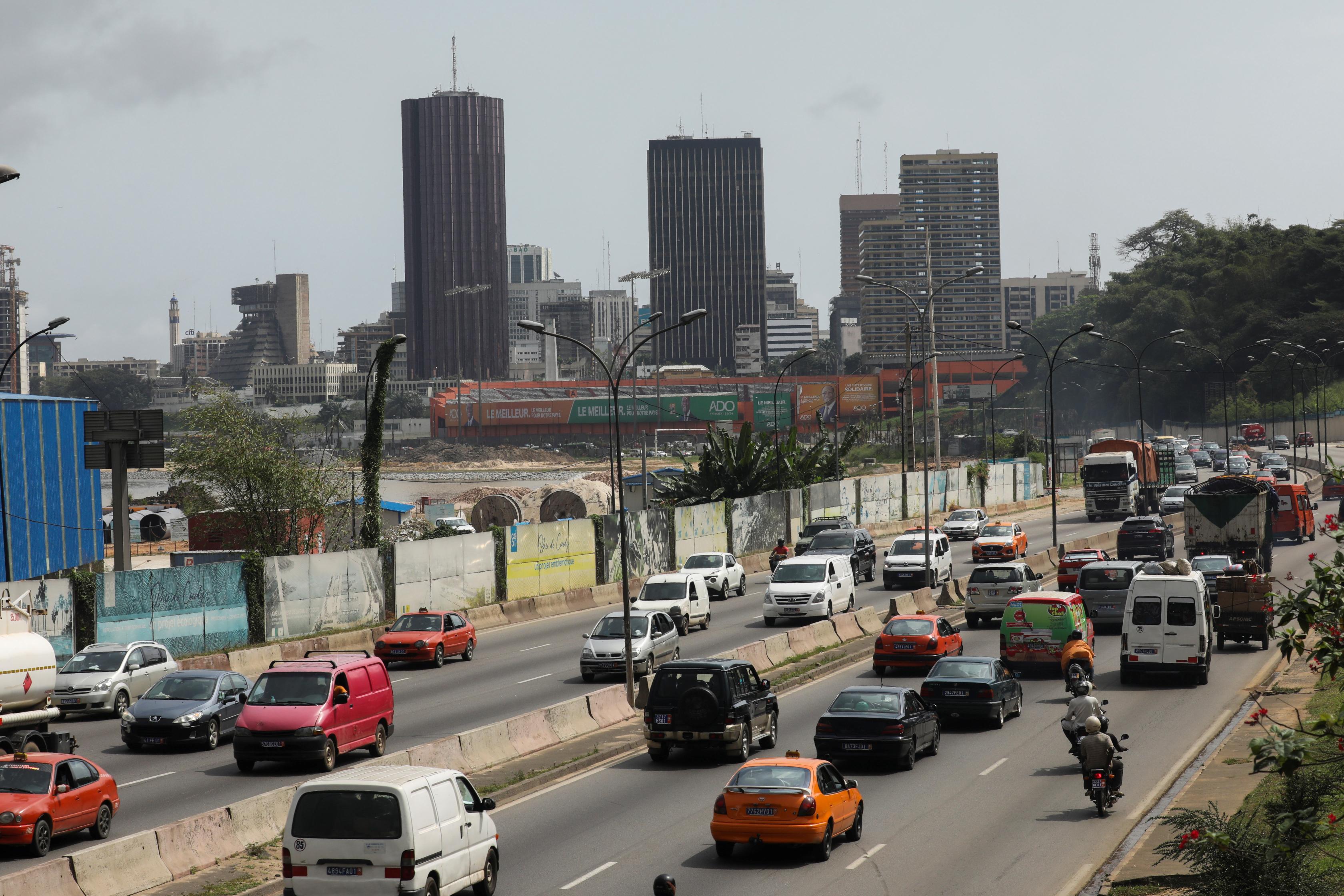
ABIDJAN, June 18 (Reuters) - Ivory Coast's GDP growth is seen at around 7% between 2024 and 2027, President Alassane Ouattara said on Tuesday. Ouattara told a joint session of parliament that around $15 billion is expected to be invested in the country's upstream oil sector, adding that the output would reach around 200,000 barrels per day (bpd) by 2027. The world's top cocoa producing nation is also hoping to become a major regional oil and gas producer. Last year, Italy's Eni (ENI.MI) New Tab, opens new tab said it would invest $10 billion in the development of the offshore Baleine field. In March, the group said it had made a major discovery with preliminary assessments indicating potential resources ranging between 1 billion and 1.5 billion barrels of oil. Sign up here. https://www.reuters.com/world/africa/ivory-coasts-gdp-growth-seen-around-7-between-2024-2027-president-says-2024-06-18/
2024-06-18 12:02
BEIJING, June 18 (Reuters) - The task of controlling floods in China is becoming increasingly arduous, President Xi Jinping said on Tuesday, calling for all-out efforts to safeguard lives and property as powerful storms pounded provinces from the interior to the eastern coast. About a dozen people have been reported killed in floods or rain-induced mudslides in recent days with the annual flooding season in southern Chinese provinces in full swing. In the city of Meizhou in Guangdong province, low-rise buildings tilted perilously on subsiding ground next to raging rivers, or lay half-submerged as flood-waters burst the banks, video on social media showed. In Guangdong province, at least five people have been killed and 13 trapped due to flash floods and mudslides, according to state media, with over 1,400 houses having collapsed and 8,000 hectares of crops damaged. Xinhua said Xi had called for all-out efforts to fight floods in the south, urging every possible attempt to rescue those lost and trapped. Deaths during China's annual summer floods have fallen sharply from the thousands each year in the 1990s, as authorities beefed up flood control measures, such as dam construction. Yet extreme weather in recent years, including record-breaking rainfall, has made China vulnerable to intense flooding and disasters such as sudden mudslides, often in its mountainous but populated areas. In Shanghang, a county in southeastern Fujian province, four people were killed after rainfall in 15 townships broke records over a 24-hour period, Xinhua reported. Communication and power infrastructure in disaster-stricken areas in Shanghang have not fully recovered, with the region facing the risk of more landslides. In the far western region of Xinjiang, flash floods engulfed a car on Tuesday, and four people remained missing, state media said. In the mountainous area of Changji in Xinjiang's northwest, emergency officials said heavy rainfall had brought flash floods and mudslides that blocked roads in one town. Also on Tuesday, officials in the southwestern region of Guangxi upgraded a flood warning advisory, adding that about 23,600 people were affected in 10 counties. Flash flood warnings were also issued in the provinces of Zhejiang and Jiangxi, state media said. Weather forecasters expect more heavy rain in Guangxi, and the provinces of Jiangxi, Fujian, Zhejiang and Anhui. The waters in many rivers have exceeded warning levels, official media said. Sign up here. https://www.reuters.com/world/china/four-missing-chinas-xinjiang-after-flash-floods-mudslides-2024-06-18/

2024-06-18 12:00
LAUNCESTON, Australia, June 18 (Reuters) - (The opinions expressed here are those of the author, a columnist for Reuters) It's a case of one step forward, two steps back for China's steel and iron ore sectors, with positive production data being countered by ongoing concerns over the struggling property sector. China, which produces just over half of the world's steel, saw output reach a 14-month high of 92.86 million metric tons in May, up 8.1% from April and 2.7% higher than May last year, according to official data released on Monday. The volume exceeded market expectations and was put down to an improvement in domestic demand and strong exports, with steel product shipments rising to 9.63 million tons in May, up 4.5% from April and 15.2% from the same month a year earlier. For the first five months of the year China produced 438.61 million tons of steel, down 1.4% from the same period last year. However, the pace of the decline in year-on-year steel output has lessened, given that in the first four months of the year production was down 3.0% on the same period in 2023. It's too early to say that China's steel output and demand has turned a corner, especially when the positive picture painted by the May data was immediately countered by weakness in the property and industrial sectors. Property investment in China slid 10.1% in the first five months of 2024 from the same period in 2023, accelerating from the 9.8% drop in the January-April period, statistics bureau data showed. Compounding the woes in the property sector, data also showed new home prices falling at the fastest pace in more than 9-1/2 years in May, dropping 0.7% from April and marking the 11th consecutive monthly decline. It's not just the property sector that is struggling, with industrial output rising 5.6% in May, slowing from the 6.7% pace in April and failing to meet expectations for a gain of 6.0% in a Reuters poll of analysts. The key manufacturing index also declined in May, dropping to 49.5 from 50.4 in April, below the 50-mark separating growth from contraction and missing analysts' forecast of 50.4. STIMULUS BOOST COMING? The weakness in property and manufacturing data comes despite Beijing's efforts to stimulate the sectors and rebuild confidence through measures such as easing mortgage rules. It's likely that these steps will take time to work their way through the system, and if they do bear fruit it will be more of a second half story. This means that improvements in the steel sector are currently being driven by expectations of an improvement, rather than the reality of strong demand growth. Iron ore, the key steel raw material, is also treading water as the market awaits convincing signs of better times ahead in China, which buys about 75% of global seaborne volumes. Iron ore futures on the Singapore Exchange ended at $106.55 a ton on Monday, down from $107.46 at the previous close, but still above the low from last week of $105.38 on June 11. Iron ore prices have trended downwards so far in 2024 after hitting a peak of $143.60 on Jan. 3, but even so, they have held above $100 a ton apart from a one-day foray to $98.36 on April 4. The price has been supported by robust iron ore imports, which are up 7.0% in the first five months of the year to 513.75 million tons. However, much of the gain in iron ore imports has gone into replenishing port stockpiles , which have risen from a seven-year low of 104.9 million tons in October to a 26-month high of 146.6 million in the week to June 14. The current dynamic of China buying more iron ore than it needs for steel production may have continued in June, with imports set to remain robust. China is on track to import at least 99.87 million tons of iron ore in June, according to data compiled by commodity analysts Kpler. This figure is expected to rise before the end of the month as more cargoes are assessed as likely to arrive and discharge. The opinions expressed here are those of the author, a columnist for Reuters. Sign up here. https://www.reuters.com/markets/commodities/chinas-steel-sector-looks-little-healthier-or-does-it-russell-2024-06-18/


