2024-06-17 11:24
LONDON, June 17 (Reuters) - China's copper scrap imports have soared due to shortages of concentrate that is processed into refined metal used in the power and construction industries, but record high prices mean U.S. shipments are likely to pause. Smelters in top copper consumer China have faced concentrate shortages since last year when First Quantum (FM.TO) New Tab, opens new tab lost the right to operate its Cobre mine in Panama, which accounted for 1% of global mined supply in 2022. China's copper waste and scrap imports overall climbed 25% to 783,004 tonnes in the first four months of this year compared to the same period in 2023, according to Trade Data Monitor (TDM). TDM data also shows China's scrap imports from the United States jumped 37% to 153,059 tonnes in January to April this year from the same period last year. Copper scrap from the U.S. is priced at a discount to the CME price , which hit a record $5.1985 a lb or $11,460 a tonne on May 20 due to parties which had sold futures being forced to buy them back or roll over positions. "Chinese buyers are deferring U.S. copper scrap shipments," a source at a Chinese trading firm said, adding that China's top scrap supplier was the United States. The source said some Chinese buyers were looking to price U.S. scrap against copper on the London Metal Exchange (LME), trading at a discount to CME prices. Deteriorating production at other mines, many in Latin America, has exacerbated concentrate shortages and Chinese smelters have imported more copper scrap to feed their furnaces and protect their margins. China is home to half of the world's copper smelters and the largest buyer of raw materials including concentrates and scrap. Scrap typically accounts for about 9 million tonnes or roughly 30% of global copper supplies annually. "Due to concentrate tightness copper smelters are processing more scrap and blister," said Macquarie analyst Alice Fox. "Given the cost of physical collection and processing - during periods of significant price movement, scrap tonnages on a contained copper basis can move by up to one million tonnes per annum, effectively rebalancing the market during periods of high or low prices." Macquarie expects the gap between copper supply and demand to widen to 1.6 million tonnes in 2030 from a deficit around 86,000 tonnes this year. Sign up here. https://www.reuters.com/markets/commodities/record-copper-prices-likely-pause-us-scrap-shipments-china-2024-06-17/

2024-06-17 11:13
BRUSSELS, June 17 (Reuters) - U.S. grains merchant Bunge and Glencore-backed (GLEN.L) New Tab, opens new tab Viterra's plan to create a $34 billion agricultural trading giant will be decided by EU antitrust regulators by July 18, a European Commission filing showed on Monday. The companies announced their merger a year ago to rival global giants Archer-Daniels-Midland (ADM.N) New Tab, opens new tab and Cargill (CARG.UL). The Commission, which acts as the EU competition enforcer, can either clear the deal with or without remedies after its preliminary review or it can open a four-month investigation if it has serious concerns. Bunge Chief Executive Greg Heckman has said the company may be able to avoid having to sell assets to win regulatory approval thanks to healthy competition in commodities market in Canada, the United States, Brazil, Argentina, China and parts of Europe. The Canadian competition watchdog, however, has cited major concerns while farm groups voiced similar worries. The deal also needs the regulatory green light in North America, South America and China. Sign up here. https://www.reuters.com/markets/deals/eu-regulators-decide-bunge-viterras-34-bln-deal-by-july-18-2024-06-17/

2024-06-17 11:06
SINGAPORE, June 17 (Reuters) - More than 800 coal-fired power plants in emerging countries could be decommissioned and profitably replaced by cleaner solar energy starting from the end of the decade, research on Monday showed. Though only a tenth of existing coal plants are scheduled to shut down by 2030, more could close if efforts are made to identify opportunities, the Institute for Energy Economics and Financial Analysis (IEEFA) said. "The key problem here is a lack of a pipeline of well defined, contracted, bankable coal-to-clean transactions," said Paul Jacobson, lead author of the report. Around 15.5 billion metric tons of carbon dioxide are generated every year by 2,000 gigawatts of coal power. The International Energy Agency says emissions need to reach zero by 2040 if temperature rises are to remain within the threshold of 1.5 degrees Celsius. But decommissioning is costly, especially if plants are still paying off debt or tied to power purchase agreements (PPAs) that commit them to supplying electricity over decades. Governments have been looking for solutions to pay for the transition - including the Asian Development Bank's Energy Transition Mechanism - but only a small number of projects have gone ahead. The 800 viable transition targets identified by IEEFA include around 600 built thirty years or more ago, many of which have repaid debts and are no longer tied down by lengthy PPAs. With profit margins for renewables now sufficient to cover the cost of replacing coal plants, decommissioning the remaining 200 plants built between 15 and 30 years ago could also be affordable, though obstacles remain, including fossil fuel subsidies that inflate an asset's value. Decommissioning newer plants will be a bigger financial challenge, particularly in countries still building fresh capacity, including Vietnam. Environmental groups have criticised transition financing for paying polluters not to pollute. Jacobson said "guardrails" were required to avoid creating perverse incentives. "Companies that continue to build new coal power plants while seeking concessions to build renewable energy should not be allowed to use that to benefit from this," he said. Sign up here. https://www.reuters.com/business/environment/more-than-800-coal-plants-worldwide-could-be-profitably-decommissioned-research-2024-06-17/
2024-06-17 11:03
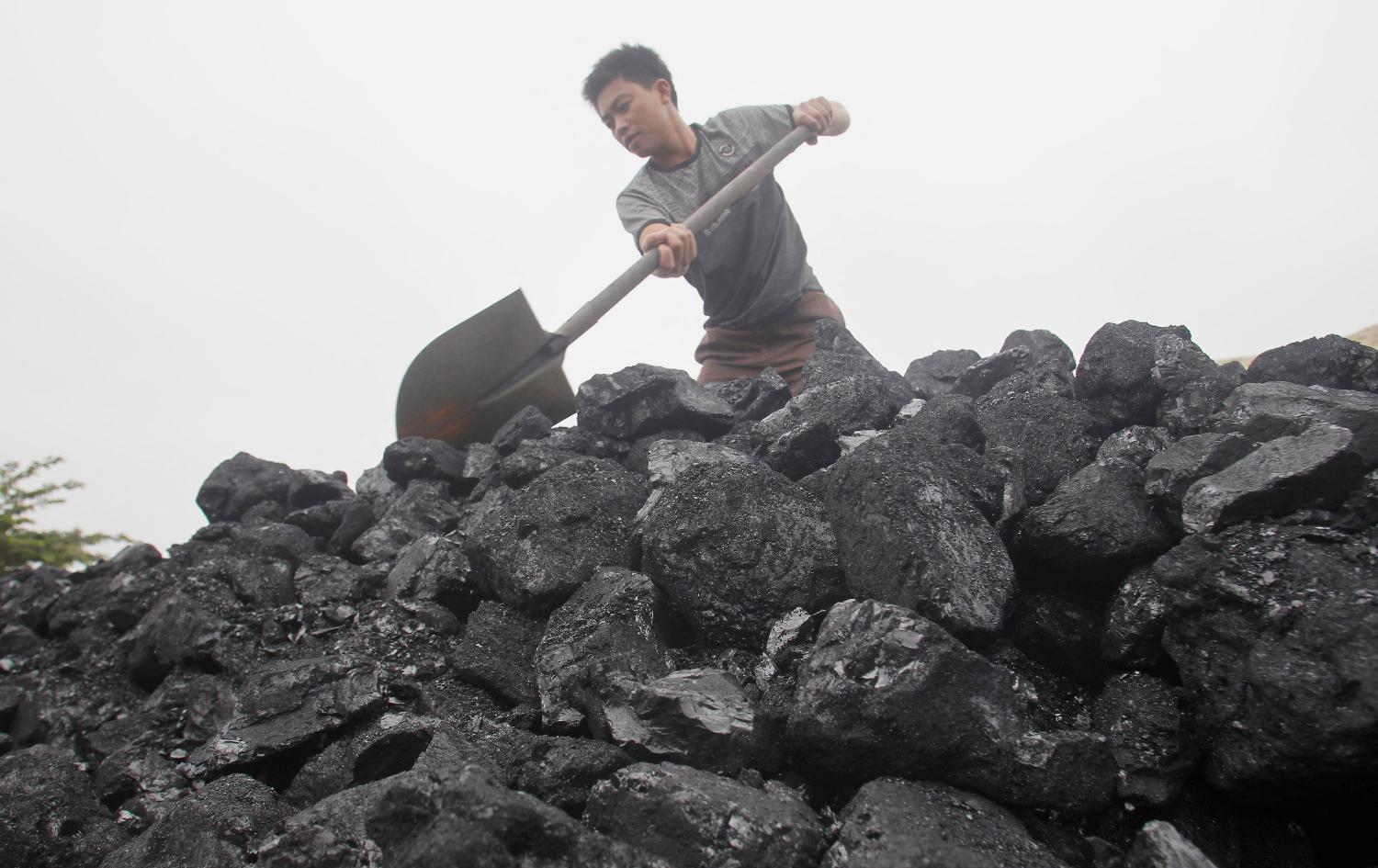
BEIJING, June 17 (Reuters) - China has opened an anti-dumping investigation into imported pork and its by-products from the European Union, a step that appears mainly aimed at Spain, the Netherlands and Denmark, in response to curbs on its electric vehicle exports. The investigation announced by China's commerce ministry on Monday will focus on pork intended for human consumption, such as fresh, cold and frozen whole cuts, as well as pig intestines, bladders and stomachs. The probe will begin on June 17. It was prompted by a complaint submitted by the China Animal Husbandry Association on June 6 on behalf of the domestic pork industry, the ministry said. Following the European Commission's June 12 announcement that it would impose anti-subsidy duties of up to 38.1% on imported Chinese cars from July, global food companies have been on high alert for retaliatory tariffs from China. The state-backed Global Times newspaper first reported late last month that Chinese firms planned to ask authorities to open an anti-dumping investigation into some European pork products, citing an unidentified "business insider". That was followed by a second report in the same outlet on June 8 requesting officials look into European dairy imports. Chinese authorities have previously hinted at possible retaliatory measures through state media commentaries and interviews with industry figures. A spokesperson for the European Commission said the bloc was not worried about China opening its investigation and told reporters the EU would intervene appropriately to ensure the investigation complied with all relevant World Trade Organisation rules. Spain, however, called for negotiations to avoid tariffs on its pork exports to China. The EU accounts for more than half the roughly $6 billion worth of pork China imported in 2023, according to customs data, around a quarter of which was from Spain alone. Second- and third-ranking, the Netherlands and Denmark last year exported to China pork products worth $620 million and $550 million respectively. China's commerce minister Wang Wentao earlier this month travelled to Spain to court officials ahead of the Commission announcing its decision on whether Chinese electric vehicle producers benefit from distortive state subsidies. "It will not be the first time that a probe announced in one jurisdiction is responded to in kind, so in view of the EU electric vehicles probe, this is not a surprise," Jens Eskelund, president of the European Union Chamber of Commerce in China, said. "Free and open markets rely on rules-based trade practices," he added. Growing alarm over Chinese industrial overcapacity flooding the EU with cheap products, including EVs, is opening a new front in the West's trade war with Beijing, which began with Washington's import tariffs in 2018. EU trade policy is turning increasingly protective against the global ramifications of China's production-focused, debt-driven development model. Governments typically place anti-dumping duties on imported goods when they suspect the item in question is being sold for less than it cost to produce in order to protect domestic firms. European pork producers should be able to keep exporting to China tariff-free while the investigation is underway, pending a decision and a tariff announcement by the Chinese side. The commerce ministry said that the investigation should be completed by June 17, 2025, but could be extended by another six months if required. Sign up here. https://www.reuters.com/markets/commodities/china-opens-anti-dumping-probe-into-imported-pork-by-products-eu-2024-06-17/

2024-06-17 10:26
Lane says bond selloff not 'disorderly' Adds all euro countries must comply with rules Confident inflation will hit 2% in 2025 Warns momentum in services must ease LONDON, June 17 (Reuters) - The European Central Bank's chief economist said on Monday there was no need for the ECB to come to France's rescue by buying bonds because recent market turmoil fuelled by political uncertainty was "not disorderly". In a Reuters NEXT Newsmaker interview, Philip Lane said he remained confident inflation will fall back to the ECB's 2% target in 2025 after four years of unusually brisk price growth following the COVID pandemic and Russia's invasion of Ukraine. French financial markets endured a brutal sell-off late last week as investors cut their positions ahead of a snap election that might hand power to the far right. That has led some analysts to speculate that the ECB might intervene. But Lane said the latest market moves did not fulfil one of the key conditions for ECB intervention - that a rise in risk premiums is disorderly and unwarranted. "What we are seeing in the markets is a repricing but it is not in the world of disorderly markets right now," Lane said in the interview at the London Stock Exchange. ECB President Christine Lagarde added later that the ECB would monitor markets because price and financial stability are closely linked. "Price stability goes hand in hand with financial stability," Lagarde told reporters in Paris. "We pay close attention to the smooth functioning of financial markets, and today we continue to do so." Neither Lane nor Lagarde directly addressed the situation in France. But Lane said all euro zone governments needed to comply with the European Union's fiscal framework and engage in dialogue with the European Commission. ECB sources told Reuters at the weekend they had no plan to discuss emergency purchases of French bonds, and that it was for politicians in Paris to reassure investors. The election, to be held on June 30 and July 7, has intensified worries about fiscal sustainability in the euro zone's second-largest economy, weeks after France's high deficit led to a credit rating cut. French Finance Minister Bruno Le Maire has warned that a far-right victory could risk a financial crisis. Marine Le Pen's National Rally (RN), which leads in opinion polls, has called for a lower retirement age, energy price cuts, more public spending and "France first" economic policies. A new leftist alliance meanwhile said on Friday it wanted to reduce the retirement age and tie salaries to inflation. Polls show the leftist parties coming second behind the RN. "All the possible scenarios are worrying for the French public finances," said Eric Dor, a professor at the IESEG school of management. The ECB's Transmission Protection Instrument (TPI) allows it to buy unlimited amounts of bonds from a euro zone country that finds itself under market pressure, but only if it is complying with parameters including the EU's fiscal rules. FAIRLY CONFIDENT At its June 6 policy meeting, the ECB raised its forecasts for inflation this year and next even as it cut interest rates, leaving some investors scratching their head about the central bank's intentions. Lane said the ECB still saw inflation falling back to 2% in late 2025, adding: "There's a lot, a fair amount of confidence about the destination in the second half of next year." Some market participants have started to doubt that prices in the 20 countries that share the euro will behave as the ECB expects, particularly after strong wage and inflation data in recent weeks. Lane said individual data points could be "noisy" but conceded that the ECB needed inflation across the domestically-driven services sector to ease this year. "I think this is an example where we need to see the momentum come down in the second half of the year," he said. As Lane was speaking, Eurostat data showed unit labour costs rose by a hefty 5.1% in the first quarter, accelerating from 3.4% in the last three months of 2023. Lane said the latest wage increases, while strong, were not in themselves a cause for concern because they implied lower pay rises in subsequent years. Investors are currently expecting the ECB to cut the rate it pays on bank deposits once or, more likely, twice between September and December, followed by one or two further reductions next year. Lane did not comment on how many more cuts were on the cards but said the ECB won't have all the information it needs at its July 18 meeting. He said that while the euro zone economy is growing, rates were still far from a level that no longer put the brakes on activity. In fact, he argued that the full impact of rate increases had yet to be felt. "We don't think the peak effect on inflation dynamics has happened," Lane said. "The ongoing impact of our monetary policy decisions will keep lowering inflation into next year." Sign up here. https://www.reuters.com/markets/europe/ecbs-lane-plays-down-need-french-bond-rescue-2024-06-17/

2024-06-17 10:09
A look at the day ahead in U.S. and global markets from Mike Dolan Wall Street stocks and bonds remained relatively buoyant after last week's action-packed macro week with world markets drawn more to French political uncertainty and the deepening Chinese home price bust. With trouble brewing overseas, Wall Street stock futures held the line close to last week's new records on Monday as Goldman Sachs raised its 2024 year-end S&P500 (.SPX) New Tab, opens new tab target to 5,600 from 5,200 earlier and Friday's 5,431 close. The investment bank cited strong earnings growth by the five mega-cap tech stocks and a higher fair value price-to-earnings ratio. Even though long-term U.S. Treasury yields swooned below 4.2% last week for the first time since April 1, as disinflation resumed alongside a hawkish policy tilt from Federal Reserve policymakers, the dollar (.DXY) New Tab, opens new tab surged anyway and recorded its best week in almost two months. That's largely down to investor fright at French President Emmanuel Macron's decision to call snap parliamentary elections for next month, with the French far right high in the polls at this month's European elections. With French sovereign credit ratings in the balance and nerves about the fiscal implications of a change in the parliamentary majority, the premium on French 10-year government debt yields over Germany soared last week to their highest since 2017 at more than 77 basis points. France's CAC40 (.FCHI) New Tab, opens new tab stock benchmark skidded 4.6% over the week, underperforming Wall Street and world indexes (.MIWD0000OPUS) New Tab, opens new tab by 6.8% and 5.5% respectively. Although both French stocks and bonds calmed a touch on Monday, potential ructions at the heart of the euro zone saw the euro slide to six-week lows against the dollar on Friday - recovering only modestly on Monday to regain a foothold above 1.07. Broader euro zone government debt spreads widened too, although euro zone stocks (.STOXXE) New Tab, opens new tab steadied on Monday. Wall Street bank Citi's global equity strategists cut European equities to neutral from overweight, citing increased political risks in France. European Central Bank Chief Economist Philip Lane said on Monday that the upheaval in euro zone bond markets, centred around France, was not disorderly so far, effectively playing down the need for the ECB to intervene. "What we are seeing in the markets is a repricing but it is not in the world of disorderly markets right now," Lane told a Reuters NEXT Newsmaker interview at the London Stock Exchange. The picture in Asia was no better after China's latest monthly economic data sweep and as the People's Bank of China left key interest rates unchanged. While China retail sales beat forecasts in May, industrial production missed expectations. But coming on the back of further deflationary signals from China last week, the property sector is still the main worry. Chinese new home prices slipped 0.7% in May, marking the 11th straight month-on-month decline and the steepest drop since October 2014. That as the central bank last month announced a relending programme for affordable housing to accelerate sales of unsold housing stock. Chinese stocks (.CSI300) New Tab, opens new tab and the offshore yuan edged lower. Japan's Nikkei (.N225) New Tab, opens new tab share index underperformed, dropping almost 2% to below the psychologically key 38,000 level for the first time this month as a risk-off mood prevailed amid concerns about economic growth both at home and abroad. Toyota Motor (7203.T) New Tab, opens new tab slid 2.6% amid continued fallout from a certification scandal, with car-related shares among the worst performing sectors. National broadcaster NHK reported that Toyota would extend a production halt for affected models by at least an extra month to the end of July. Japanese Prime Minister Fumio Kishida also said on Monday he has no plan to instruct, or request, the government's pension fund to buy the Bank of Japan's holdings of exchange-traded funds. Kishida also said the government and the Bank of Japan (BOJ) share the view that consumption lacked strength as wages have failed to rise enough to compensate for rising prices. With doubts about the timing of further BOJ tightening, the dollar rose against the yen too Key diary items that may provide direction to U.S. markets later on Monday: * New York Fed June manufacturing survey; Canada May housing starts * New York Fed President John Williams, Philadelphia Fed President Patrick Harker and Fed Board Governor Lisa Cook speak; European Central Bank Vice President Luis de Guindos speaks * US Treasury auctions 3-, 6-month bills * US corporate earnings: Lennar, Quantum Sign up here. https://www.reuters.com/markets/us/global-markets-view-usa-pix-graphics-2024-06-17/