2024-06-14 10:09
MUMBAI, June 14 (Reuters) - Foreign banks bought Indian government bonds worth 80.38 billion rupees ($962.2 million) on Thursday, the biggest single-session purchase since Feb. 1, data from Clearing Corp of India showed. These banks stepped up purchases after a softer-than-expected U.S. inflation print ramped up rate cut bets, with India's inclusion in JPMorgan's emerging market debt index also a factor, traders said. Other recent economic data has also pointed to cooling inflation in the U.S., bolstering rate cut expectations "that have driven the top four or five large foreign banks to add bonds," a trader with a foreign bank said. He requested anonymity as he is not authorised to speak to the media. Reuters could not ascertain which banks had bought bonds on Thursday. Traders said that the bulk of the buying took place in the 10-year and above maturity bonds, including the 10-year benchmark 7.10% 2034 and liquid 7.23% 2039 bond , along with others. The 2039 bond is so far not part of the group that will be included in the index. The buying activity follows a recent pick-up in government bond purchases by foreign investors in longer-duration securities. Brokerage DBS maintains its view that the Federal Reserve will cut rates by 50 basis points in 2024, with the futures markets also pricing in 50 bps of reductions before December-end. Locally, underlying sentiment continues to remain bullish as India is just weeks away index inclusion, starting June 28. Investors are eyeing around $20 billion-$25 billion of passive inflows after the inclusion of the bonds. India seems like a better bet compared to most other emerging markets, with the falling federal government fiscal deficit seen as a positive, said Adarsh Sinha, co-head, Asia FX & rates strategy at Bank of America. Sinha expects some outflows from Malaysia and Thailand, which are susceptible to lower weightage in the JPMorgan index, while inflows into India are expected to pick up further. Sign up here. https://www.reuters.com/markets/rates-bonds/foreign-banks-bought-nearly-1-bln-india-bonds-thursday-data-shows-2024-06-14/

2024-06-14 10:04
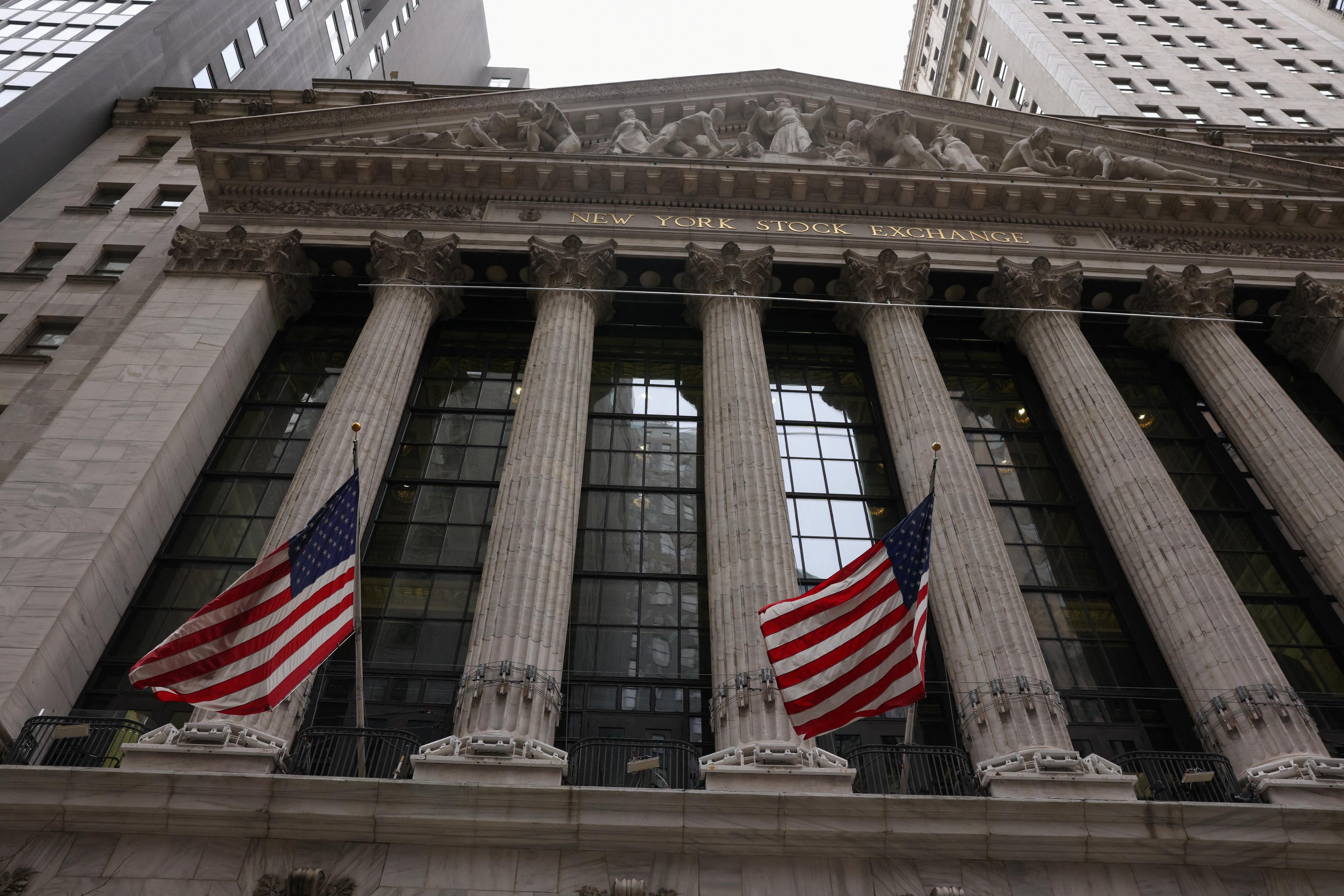
June 14 (Reuters) - A look at the day ahead in U.S. and global markets by Alun John. How U.S. consumers are feeling is the question for today, though it could be one of those relatively rare occasions when it's developments in Europe and Asia that are driving the macro picture. The University of Michigan's consumer sentiment survey is due and last month's reading was at a six-month low. It will be interesting to see whether last month's cooler inflation has had much of an effect, though it is likely to be too soon for people to have noticed, and the data is quite choppy anyway. Still, it'll be a helpful read on the state of the U.S. consumer - which has provided the non-AI leg of equities' recent strong performance - and could also come with a second-order effect for markets as people speculate about what it can tell us about the mood ahead of November's presidential election. The election that has got markets talking this week, however, is the one for the French legislature called by President Emmanuel Macron after a bruising loss in the weekend's European Parliament vote to Marine Le Pen's far-right National Rally. The RN is leading the polls for the first round of parliamentary voting on June 30, and, further complicating the picture, political parties representing the French left-wing said Thursday they had reached an agreement to form a 'Popular Front'. This has left Macron's camp struggling to make headway, and is spooking markets. French stocks are down 4.5% for the week, at the time of writing, on track for their biggest weekly drop since September 2022, with banks particularly hard hit.The spread between French and German bond yields - the extra yield investors want in exchange for taking on more risk - has widened by 27 basis points this week, and is at its widest since 2017. Not adding reassurance, Finance Minister Bruno Le Maire New Tab, opens new tab when asked on franceinfo radio on Friday whether the current political situation in the country could lead to a financial crisis, said 'yes'. Also on Friday, the Bank of Japan said it would start trimming its huge bond purchases, and announce a detailed plan next month on reducing its nearly $5 trillion balance sheet. While this is another step toward unwinding its massive monetary stimulus, markets had expected the central bank to move this month, and this surprise sent the yen weaker. The dollar reached as high as 158.25 yen, its highest since late April when Japanese authorities stepped into markets to prop up their currency. Also in Asia, investors are watching China's central bank, which faces a looming test of its resolve to curb the financial stability risks it sees in a rallying bond market. Key developments that should provide more direction to U.S. markets later on Friday: * Fed Reserve Bank of Chicago President Austan Goolsbee speaks * Uni of Michigan June survey * US import/export prices Sign up here. https://www.reuters.com/markets/us/global-markets-view-usa-2024-06-14/
2024-06-14 07:38
GUWAHATI, India, June 14 (Reuters) - At least six people have been killed this week and around 2,000 tourists stranded in India's Himalayan state of Sikkim in landslides and floods after incessant rainfall, officials said on Friday. Another four people have been killed in Nepal's Taplejung district, which borders Sikkim, after a landslide following rains swept away the house in which they were sleeping, officials there said. Heavy rains triggered landslides at several locations in Mangan district, which covers north Sikkim and lies about 100 km (60 miles) north of the state capital Gangtok, the local government of the northeastern Indian state said. "It's been raining continuously for 36 hours. The road to north Sikkim has been damaged in multiple locations, snapping connection to the district," said Hem Kumar Chettri, the district magistrate of Mangan. "The stranded tourists are all safe but we have not been able to evacuate them because of the damage," he said, adding that 11 of them were foreign nationals. The small Buddhist state of 650,000 people, wedged between Bhutan, China and Nepal, is a popular tourist destination but also faces natural disasters caused by extreme weather events in the Himalayas. At least 179 people died last year in Sikkim when a Himalayan glacial lake outburst triggered floods. Personnel and machinery have been deployed to fix the road, Chettri said, adding that the damage was "extensive" and repair will take some time. About 50 houses have been partly or fully damaged by the rains and people have been take to a relief camp. While eastern parts of Nepal have been lashed by heavy rains, the Himalayan country's western areas are facing one of the hottest seasons, weather officials said. Sign up here. https://www.reuters.com/world/india/heavy-rain-landslides-kill-6-indias-sikkim-2000-tourists-stranded-2024-06-14/

2024-06-14 07:34
Uniper is creating a new value chain around the port Pieces include ammonia landing terminal, electrolysis Gas storage facilities to be re-purposed, new ones to go up Has won key customer in nearby steelmaker Salzgitter ESSEN, Germany, June 13 (Reuters) - German utility Uniper will focus on talks with a big customer and early steps to develop hydrogen storage facilities this year after winning EU backing for two clean energy projects at the North Sea port of Wilhelmshaven, its operations head said. The state-owned company wants to turn the deep water port into a reception point for ammonia carrying imported hydrogen, and store and transport the hydrogen as part of its decarbonisation strategy. "This year, we want to make concrete progress with (steelmaker) Salzgitter (SZGG.DE) New Tab, opens new tab and ... intensively push forward our hydrogen storage projects," Chief Operating Officer Holger Kreetz said in an interview at a Handelsblatt conference published on Friday. Uniper's (UN0k.DE) New Tab, opens new tab ammonia terminal and a plan for a 1 gigawatt (GW) electrolysis plant to produce hydrogen from local renewable power were selected by the European Commission as Projects of Common Interest (PCI) last month. "Being on the PCI list brings advantages for planning and speed of our projects," Kreetz said. Uniper's long-term strategy includes turning all its natural gas activities to hydrogen to reach climate goals and supply customers. Its former focus, Russian gas, dried up in 2022 and the company had to be bailed out by the German government. Seeking to cut emissions from steelmaking, Salzgitter and Uniper in April said they would cooperate on delivering up to 20,000 metric tons of green hydrogen per year to Salzgitter's plant, for which a pipeline from Wilhelmshaven has yet to be built. Green hydrogen is produced using renewable energy. Salzgitter's hydrogen will come from Uniper's electrolysis plant, a 200 megawatt section of which should be commissioned in 2028, Kreetz said. Uniper's hydrogen storage strategy aims to offer 600 gigawatt hours (GWh) of capacity by the end of 2030, with the company re-purposing some of its gas storage caverns as well as building new sites. Sign up here. https://www.reuters.com/markets/commodities/uniper-maps-out-steps-boost-wilhelmshaven-hydrogen-port-2024-06-14/

2024-06-14 07:11
LONDON, June 14 (Reuters) - Investors dumped U.S. value stocks and bought growth stocks in the week to Wednesday, according to BofA Global Research, a period marked by cooler than expected inflation data that sent bond yields lower. There were $1.8 billion of inflows to U.S. growth stock funds in the week, and $2.6 billion of outflows from U.S. value stocks in the week, Bofa said in its weekly round up of flows in and out of world markets, citing data from EPFR. The U.S. consumer price index was unexpectedly unchanged in May, according to Wednesday data, causing markets to increase bets that the U.S. Federal Reserve could cut interest rates twice this year. Traditionally, growth stocks perform well in a low rate environment. There were also $40 billion of inflows to cash in the week, and investors bought $1.8 bln of U.S. treasuries, and $7.7 billion of investment grade bonds. The Federal Reserve itself on Wednesday forecast just one rate cut this year, down from a projection in March for three cuts. Sign up here. https://www.reuters.com/markets/us/investors-bought-us-growth-stocks-dumped-value-this-week-2024-06-14/

2024-06-14 07:00
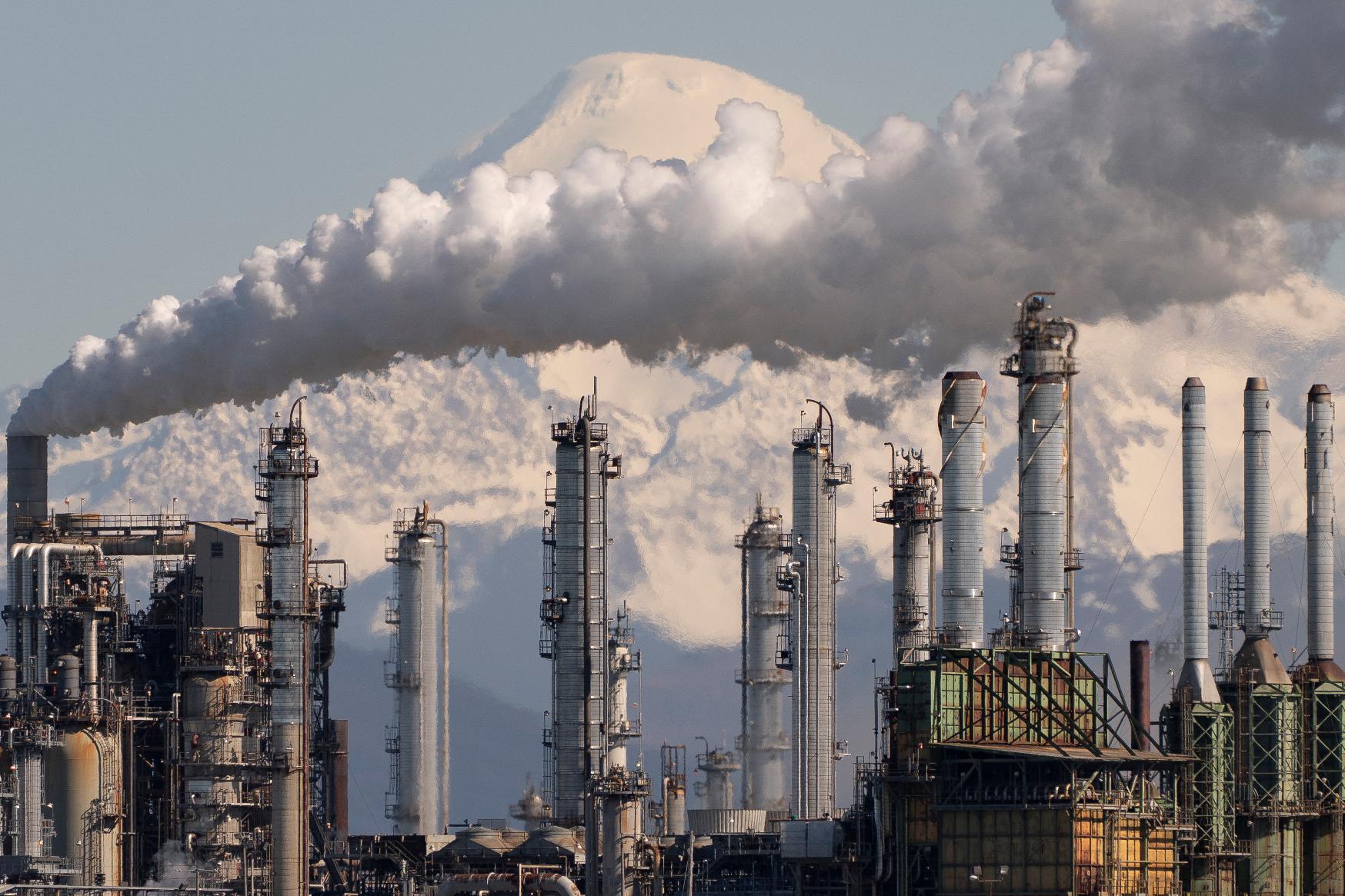
LONDON, June 13 (Reuters) - U.S. oil refineries have been processing petroleum at the fastest rate for the time of year since before the pandemic, but rising fuel inventories have begun to weigh on crack spreads and likely signal a slowdown ahead. Refineries processed 17.5 million barrels per day (b/d) of crude and other feedstocks over the week ending on June 7, the fastest seasonal rate since 2018, according to data from the U.S. Energy Information Administration (EIA). Refineries were employing 95% of their operable capacity, up 94% last year, and the highest percentage since 2019, weekly data from the EIA show. But intensive processing is producing more gasoline and diesel than is being used domestically and exported – resulting in a persistent accumulation of stocks. Gasoline inventories had climbed to 234 million barrels on June 7 compared with 221 million barrels in 2023 and 218 million in 2022. Stocks were 1 million barrels (+1% or +0.10 standard deviations) above the prior 10-year seasonal average, erasing a deficit of 6 million barrels (-3% or -0.87 standard deviations) two months earlier. Chartbook: U.S. fuel inventories and cracks New Tab, opens new tab Distillate inventories had climbed to 123 million barrels compared with 114 million in 2023 and just 110 million in 2022. Distillate stocks were still 10 million barrels (-8% or -0.50 standard deviations) below the 10-year average but the deficit had narrowed from 18 million barrels (-13% or -1.09 standard deviations) at the start of March. Refineries have been responding to relatively high refining margins but the accumulation of stocks has now undermined them and likely indicates less frenetic processing in the weeks ahead. The gross margin from turning 3 barrels of crude into 2 barrels of gasoline and 1 barrel of diesel, known as the 3-2-1 crack spread, has averaged $24 per barrel so far in June down from $31 in March. The inflation-adjusted 3-2-1 crack spread is now exactly in line with the average for the 10 years before the pandemic, indicating the fuel market is comfortably supplied. HURRICANE PREPARATIONS The Atlantic hurricane season which runs from June to November is expected to be more active than normal in 2024 as result of conditions across the Atlantic and Pacific oceans. In the Atlantic, sea surface temperatures are already warmer than normal for the time of year, creating conditions for a greater number of more intense tropical storms, including severe hurricanes. In the Pacific, El Nino has already faded and forecasters expect La Nina conditions to form over the second half of the year, which will also promote a more active Atlantic hurricane season. Even so, the risk of major disruption to the major refineries on the coast of Texas and Louisiana, where almost half of the country's processing capacity is located, remains low in absolute terms. But the forecast of an active hurricane seasons means it will be relatively higher than usual, especially around the most intense part of the storm season in August and September. Other things being equal, the market needs to carry slightly higher inventories to offset the increased risk of refinery disruptions. But inventories cannot continue building at the recent rate without putting further downward pressure on margins and prices. TAPPING THE REFINERY BRAKES Hedge funds and other money managers have already anticipated fuel markets will be oversupplied, selling futures and options equivalent to 52 million barrels of gasoline and 13 million barrels of diesel over the last eight weeks. In gasoline, the net position was cut to just 33 million barrels (24th percentile for all weeks since 2013) on June 4 from 85 million barrels (88th percentile) on April 9. In diesel, the fund position had been transformed into a net short of 4 million barrels (24th percentile) from a long of 9 million (41st percentile). Fund sales have likely anticipated, accelerated and amplified the downward pressure on refinery margins over the last two months. Weaker margins will likely cause refineries to pull back slightly over the early part of the summer limiting the eventual inventory build. Fuel consumption in the United States and the rest of the world has so far increased by much less than expected in the second quarter which has contributed to the pull back in petroleum prices. OPEC⁺ is forecasting much stronger growth in the third quarter to draw down oil inventories, boost prices and enable producers to increase output starting from the fourth quarter. But there are no indications of a big increase in fuel consumption yet, which is contributing to the downward slide in prices and spreads. Related columns: - Investors abandon bullish case for U.S. gasoline(May 15, 2024) - Renewable fuels take bite out of U.S. diesel consumption(May 10, 2024) John Kemp is a Reuters market analyst. The views expressed are his own. Follow his commentary on X https://twitter.com/JKempEnergy New Tab, opens new tab Sign up here. https://www.reuters.com/markets/commodities/us-refining-margins-slump-fuel-stocks-climb-2024-06-13/