2024-06-14 06:59
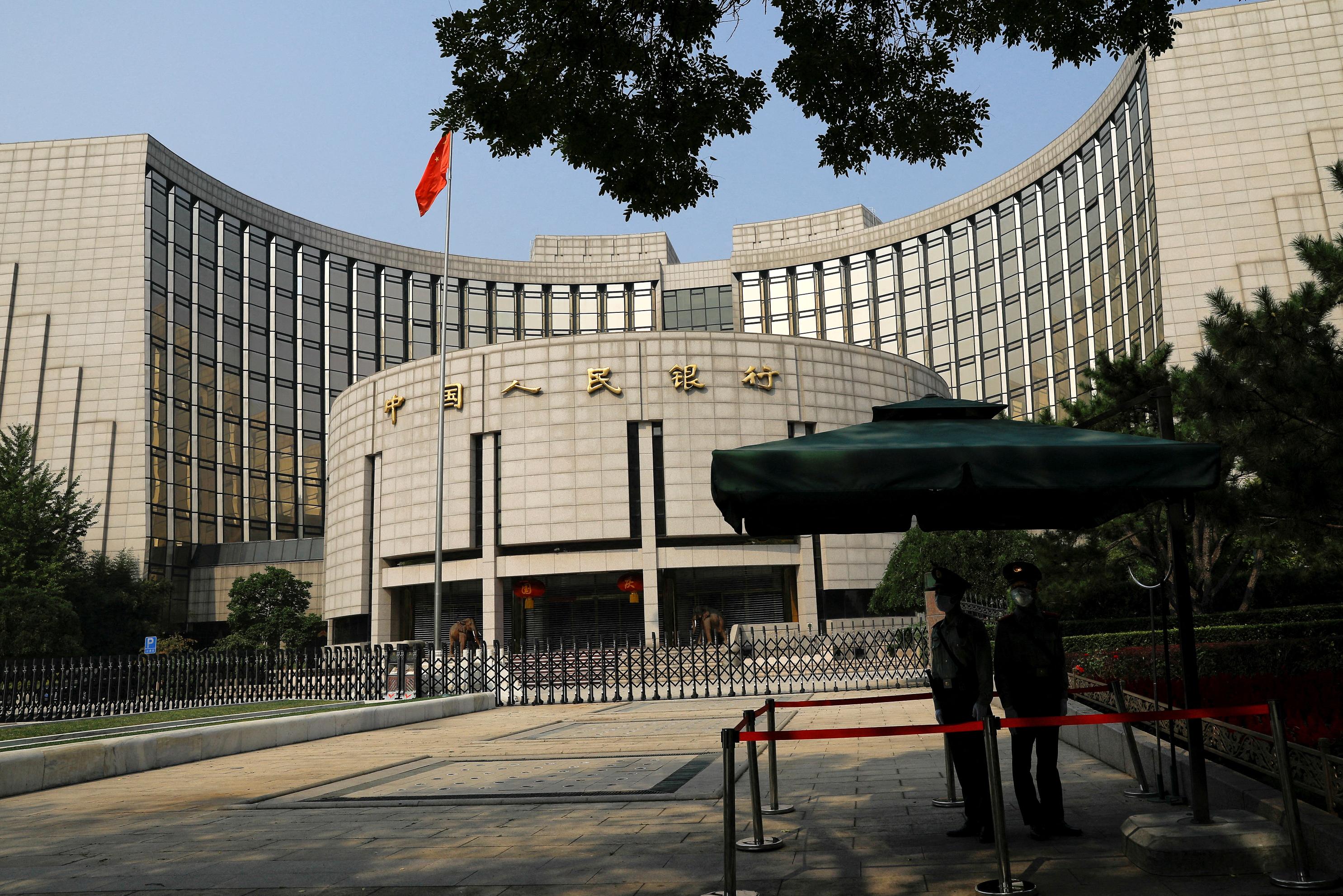
SHANGHAI/SINGAPORE, June 14 (Reuters) - China's central bank is widely expected to leave a key policy rate unchanged when rolling over maturing medium-term loans next Monday, a Reuters survey showed. Worsening interest margins and a weakening Chinese yuan continued to hobble authorities' monetary easing efforts to support the world's second-largest economy. In a Reuters poll of 31 market watchers conducted this week, 30, or 97%, of all respondents expected the People's Bank of China (PBOC) to keep the interest rate on the one-year medium-term lending facility (MLF) loan unchanged at 2.50% from the previous operation. The lone outlier in the poll projected a marginal interest rate reduction of 5 basis points. Among all respondents, a vast majority of 20, or 65%, predicted that the central bank would fully roll over the maturing loan of 237 billion yuan ($32.67 billion) due this month. "In terms of policy support, we see an ongoing shift in government policy from monetary easing towards fiscal stimulus to bolster domestic demand," said Serena Zhou, senior China economist at Mizuho Securities. "Consequently, we do not anticipate the PBOC to cut its MLF rate or for banks to lower their loan prime rates (LPRs) in the coming weeks, despite ongoing weakness in the property market." China's finance ministry has started selling 1 trillion yuan in long-awaited, long-term special treasury bonds since May to raise funds it will use to stimulate key sectors of the flagging economy. The MLF rate serves as a guide to the LPRs and markets mostly use it as a precursor to any changes to the lending benchmarks. For the PBOC, another issue with implications for policy is the commercial banks' continued fall in profits and the narrowing in net interest margin, a key gauge that measures the health of lenders, to 1.54% in the first quarter of this year. "It could be now very close to an unsustainable territory at an all-time low of 1.54% in the first quarter of 2024," Yu Xiangrong, chief China economist at Citi, said in a note. "Such a domestic constraint could be increasingly binding for financial stability concerns, not prompting an imminent rate cut." Separately, the persistent weakness in the Chinese yuan against the backdrop of widening yield differentials between China and other major economies continued to limit Beijing's monetary easing efforts. China's central bank is "walking this fine line, given some of the external situations, especially a strong dollar and depreciation pressure" on the broader Asian currencies, said David Chao, global market strategist for Asia Pacific at Invesco. ($1 = 7.2549 Chinese yuan) Sign up here. https://www.reuters.com/markets/rates-bonds/china-set-hold-key-rate-margin-pressure-weaker-yuan-hamper-policy-easing-2024-06-14/
2024-06-14 06:55
Brent, WTI post highest weekly increase since April U.S. consumer sentiment deteriorated to seven-month low in June EIA upgraded oil demand growth estimates for 2024 slightly U.S. oil rig count hits the lowest since January 2022 NEW YORK, June 14 (Reuters) - Oil futures prices settled slightly lower on Friday after a survey showed deteriorating U.S. consumer sentiment, but prices rose 4% for the week as investors weighed forecasts for solid demand for crude oil and fuel in 2024. Brent crude futures settled down 13 cents at $82.62 a barrel, while West Texas Intermediate (WTI) U.S. crude futures were down 17 cents at $78.54. Brent and the U.S. benchmark gained nearly 4% over the week, highest weekly rise in percentage terms since April. Both benchmarks slipped after a survey showed U.S. consumer sentiment weakened in June to a seven-month low. "The data came in way lower than expected," said Bob Yawger, director of energy futures at Mizuho. "That implies the average consumers don't have confidence the economic situation is improving." Losses were limited by forecasts for strong demand. The U.S. Energy Information Administration (EIA) upgraded its oil demand growth estimate for 2024 slightly, and the Organization of the Petroleum Exporting Countries (OPEC) stuck to a forecast for relatively strong growth of 2.2 million barrels a day (bpd). The International Energy Agency (IEA) meanwhile cut its demand growth forecast to under 1 million bpd. However, all three forecasters predicted a supply deficit at least until the beginning of winter, Commerzbank analysts highlighted. Also this week, the U.S. Federal Reserve kept interest rates on hold, and investors believe rate cuts are unlikely before December. "In view of the still uncertain economic outlook for the major economic regions, a further price increase is not to be expected for the time being," said Commerzbank analyst Barbara Lambrecht. The U.S. active oil rig count, an early indicator of future output, fell by four to 488 this week to its lowest since January 2022, energy services firm Baker Hughes (BKR.O) New Tab, opens new tab said. Elsewhere, Russia pledged to meet its output obligations under the OPEC+ pact after saying it exceeded its quota in May. Prices dipped last week after OPEC and its allies said they would phase out output cuts starting from October. "No matter how many times it promises to make up for poor compliance at a future date, the market just sees more oil and an agreement that might just possibly unravel," said PVM analyst John Evans. Market focus is also on Gaza ceasefire talks, which could alleviate concerns about potential disruption to oil supply from the region. Money managers raised their net long U.S. crude futures and options positions in the week to June 11, the U.S. Commodity Futures Trading Commission (CFTC) said on Friday. Sign up here. https://www.reuters.com/markets/commodities/oil-prices-track-weekly-gain-solid-demand-outlook-2024-06-14/

2024-06-14 06:15
NEW YORK, June 14 (Reuters) - U.S. stocks dipped, gold surged and European stocks suffered their biggest weekly loss of the year on Friday amid cooling economic data, a hawkish Federal Reserve and unfolding political crises in Europe. The dollar gained ground against a basket of world currencies, while the euro saw its largest Friday-to-Friday drop against the dollar in two months. "(Regarding) the political turmoil over in Europe, we're finally starting to see some signs of contagion," said Michael Green, chief strategist at Simplify Asset Management in Philadelphia. "You're seeing risk metrics getting amped up and people are moving into risk-off assets," Green added. "And you're not just seeing it in the stock market." The S&P 500 and the Dow ended the session moderately lower while the tech-heavy Nasdaq eked out a nominal gain to reach its fifth consecutive all-time closing high. The S&P 500 and the Nasdaq advanced on the week, with the latter nabbing its largest weekly percentage gain since late April. The Dow looks to be headed to end the week lower than last Friday's close. The Fed capped its two-day monetary policy meeting with no change to its key interest rate, as expected. But in its Summary of Economic Projections, the central bank reduced the number of its projected rate cuts this year from three to one, striking a more hawkish than expected tone. The sting was soothed by a series of economic indicators that showed inflation is cooling more quickly than analysts projected, which could convince the data-dependent Fed to reconsider the timing and number of cuts this year. "(The Fed is) saying, 'We plan on cutting one time,' right? That was relatively disappointing to investors," Green said. "At the same time, they acknowledged that the inflation progress is encouraging, and the economy is weakening. Investors are dealing with that exact same issue." Cleveland Fed President Loretta Mester called the recent cooling inflation data "welcome," in the wake of the week's CPI and PPI reports, which came in below analyst expectations, while Chicago Fed President Austan Goolsbee called the data a relief, but added that more progress is needed. The Dow Jones Industrial Average (.DJI) New Tab, opens new tab fell 57.94 points, or 0.15%, to 38,589.16, the S&P 500 (.SPX) New Tab, opens new tab lost 2.14 points, or 0.04%, to 5,431.6 and the Nasdaq Composite (.IXIC) New Tab, opens new tab added 21.32 points, or 0.12%, to 17,688.88. European stocks extended their broad sell-off as risk appetite was dampened by political uncertainties in France. The pan-European STOXX 600 fell 2.4% on the week, its largest single-week percentage drop of 2024. The pan-European STOXX 600 index (.STOXX) New Tab, opens new tab lost 0.97% and MSCI's gauge of stocks across the globe (.MIWD00000PUS) New Tab, opens new tab shed 0.28%. Emerging market stocks rose 0.05%. MSCI's broadest index of Asia-Pacific shares outside Japan (.MIAPJ0000PUS) New Tab, opens new tab closed 0.16% lower, while Japan's Nikkei (.N225) New Tab, opens new tab rose 0.24%. The dollar advanced while the euro set a course for its largest weekly drop against the dollar in two months, dragged lower by political uncertainties in France. The yen recovered after the Bank of Japan issued a surprisingly dovish policy update. The dollar index (.DXY) New Tab, opens new tab rose 0.31%, with the euro down 0.31% to $1.0702. The Japanese yen weakened 0.16% versus the greenback at 157.31 per dollar, while Sterling was last trading at $1.2685, down 0.58% on the day. U.S. Treasury yields extended their decline, edging down to their lowest level since early April as economic data provided the latest evidence of cooling inflation. Benchmark 10-year notes last rose 8/32 in price to yield 4.2112%, from 4.24% late on Thursday. The 30-year bond last rose 31/32 in price to yield 4.3442%, from 4.401% late on Thursday. Oil prices inched lower but notched their best week in four months due to solid demand projections. U.S. crude dropped 0.22% to settle at $78.45 per barrel, while Brent settled at $82.62 per barrel, down 0.16% on the day. Gold prices surged and clocked their first weekly gain in four. "There's a lot of geopolitical uncertainty. Gold is the stable money, and a lot of central banks have been stocking up," said Thomas Martin, senior portfolio manager at GLOBALT in Atlanta. Spot gold added 1.3% to $2,332.00 an ounce. Sign up here. https://www.reuters.com/markets/global-markets-wrapup-1-2024-06-14/
2024-06-14 05:30
June 14 (Reuters) - The euro was on track for its biggest weekly fall against the dollar in two months on Friday on concerns that a new government will worsen France's fiscal situation as a snap parliamentary election approaches. The yen hit a six-week low against the dollar, before rebounding, after the Bank of Japan (BOJ) surprised markets with a dovish monetary policy update. French markets saw the biggest weekly jump since 2011 in the premium that investors demand to hold French government debt and bank stocks tumbled on Friday. The concern is "the instability combined with the already existing pressure on the budget," said Brad Bechtel, global head of FX at Jefferies in New York, adding that "any time spreads widen in Europe, the euro suffers." French Finance Minister Bruno Le Maire said on Friday that the euro zone's second-biggest economy was at risk of a financial crisis if either the far right or left won because of their heavy spending plans. Marine Le Pen's eurosceptic National Rally (RN) is leading in opinion polls. “On both ends of the French political spectrum, the parties that are campaigning are fiscally expansionist parties,” said Karl Schamotta, chief market strategist at Corpay in Toronto. “Markets are mostly responding to additional fiscal stress.” The euro is on track for a 0.95% weekly fall - its biggest since April - and was last down 0.34% on the day at $1.0699. It got as low as $1.06678, the lowest since May 1. The euro's weakness has helped drive the dollar higher. The dollar index - which tracks the currency against six peers - was up 0.3% at 105.55 and reached 105.80, the highest since May 2. “We're seeing flows into the U.S. on both ends of the spectrum - from the safe-haven side as well as on the yield-seeking side - given that U.S. yields remain well above those available elsewhere,” said Schamotta. The European Central Bank and Bank of Canada have begun cutting rates while the Federal Reserve holds steady. The U.S. central bank adopted a more hawkish than expected tone at this week’s meeting when Fed officials projected only one rate cut this year and pushed out the start of rate cuts to perhaps as late as December. But for now, "the Fed is sort of taking a backseat when it comes to the dollar," Bechtel said. Elections in emerging markets and Europe are instead driving moves, he said. A survey on Friday showed that U.S. consumer sentiment deteriorated in June as households worried about inflation and incomes. Other data showed that U.S. import prices unexpectedly fell in May amid lower prices for energy products, providing another boost to the domestic inflation outlook. Softer than expected consumer and producer price inflation for May this week has helped bolster hopes that inflation will continue to ease closer to the Fed's 2% annual target and make an interest rate cut possible as soon as September. Chicago Fed President Austan Goolsbee on Friday said he felt "relief" after the consumer inflation data, but added there needs to be more progress. The yen fell after the BOJ's decision to hold interest rates and restart bond buying. In a surprise for markets, the BOJ said it would continue to buy government bonds at the current pace for now and lay out details of its tapering plan at its July policy meeting. BOJ governor Kazuo Ueda said the central bank was "paying close attention" to the impact of the weak yen on inflation, and added that a rate hike in July was a possibility, depending on economic data. The dollar was last up 0.17% at 157.29 , after earlier reaching 158.26, the highest since April 29. The yen's decline to a 34-year low of 160.245 per dollar at the end of April triggered several rounds of official Japanese intervention totaling 9.79 trillion yen ($62 billion). In cryptocurrencies, bitcoin fell 1.84% to $65,453. Sign up here. https://www.reuters.com/markets/currencies/yen-guard-ahead-boj-euro-stutters-with-weekly-loss-sight-2024-06-14/
2024-06-14 05:15
DUBAI, June 13 (Reuters) - OPEC does not see a peak in oil demand in its long-term forecast and expects demand to grow to 116 million barrels a day by 2045, and may be higher, the secretary general said on Thursday. The International Energy Agency said in a report on Wednesday it sees oil demand peaking by 2029, levelling off at around 106 million barrels per day (bpd) towards the end of the decade. Hathaim Al Ghais, writing in Energy Aspects, called the IEA report "dangerous commentary, especially for consumers, and will only lead to energy volatility on a potentially unprecedented scale". OPEC+, which groups de facto Saudi-led OPEC, the Organization of the Petroleum Exporting Countries, and allies including Russia, has made a series of deep output cuts since late 2022 to support the market. OPEC+ members are cutting output by a total of 5.86 million bpd, or about 5.7% of global demand. That includes cuts of 3.66 million bpd, which the group on June 2 agreed to extend by a year until the end of 2025, and cuts of 2.2 million bpd, which OPEC+ will gradually phase out over the course of a year from October. The Paris-based IEA, which advises industrialised countries, moved forward the date for peak oil demand after having said in October that it would occur by 2030. It said oil demand would begin to contract in 2030 while the U.S. and other non-OPEC countries add to supply. Al Ghais said similar narratives had been proven wrong previously, such as the IEA suggesting gasoline demand had peaked in 2019 or that coal demand had peaked in 2014. "At OPEC, we see oil demand growth of 4 mb/d over the two years of 2024 and 2025, with other forecasters also seeing an expansion of over 3 mb/d. Even the IEA sees growth of 2 mb/d over this period, followed by growth of 0.8 mb/d in 2026. It then dramatically drops off a cliff to almost no growth in the next four years through 2030," he said. "This is an unrealistic scenario, one that would negatively impact economies across the world. It is simply a continuation of the IEA's anti-oil narrative." Sign up here. https://www.reuters.com/markets/commodities/opec-sees-no-peak-oil-demand-long-term-secretary-general-says-2024-06-13/
2024-06-14 05:13
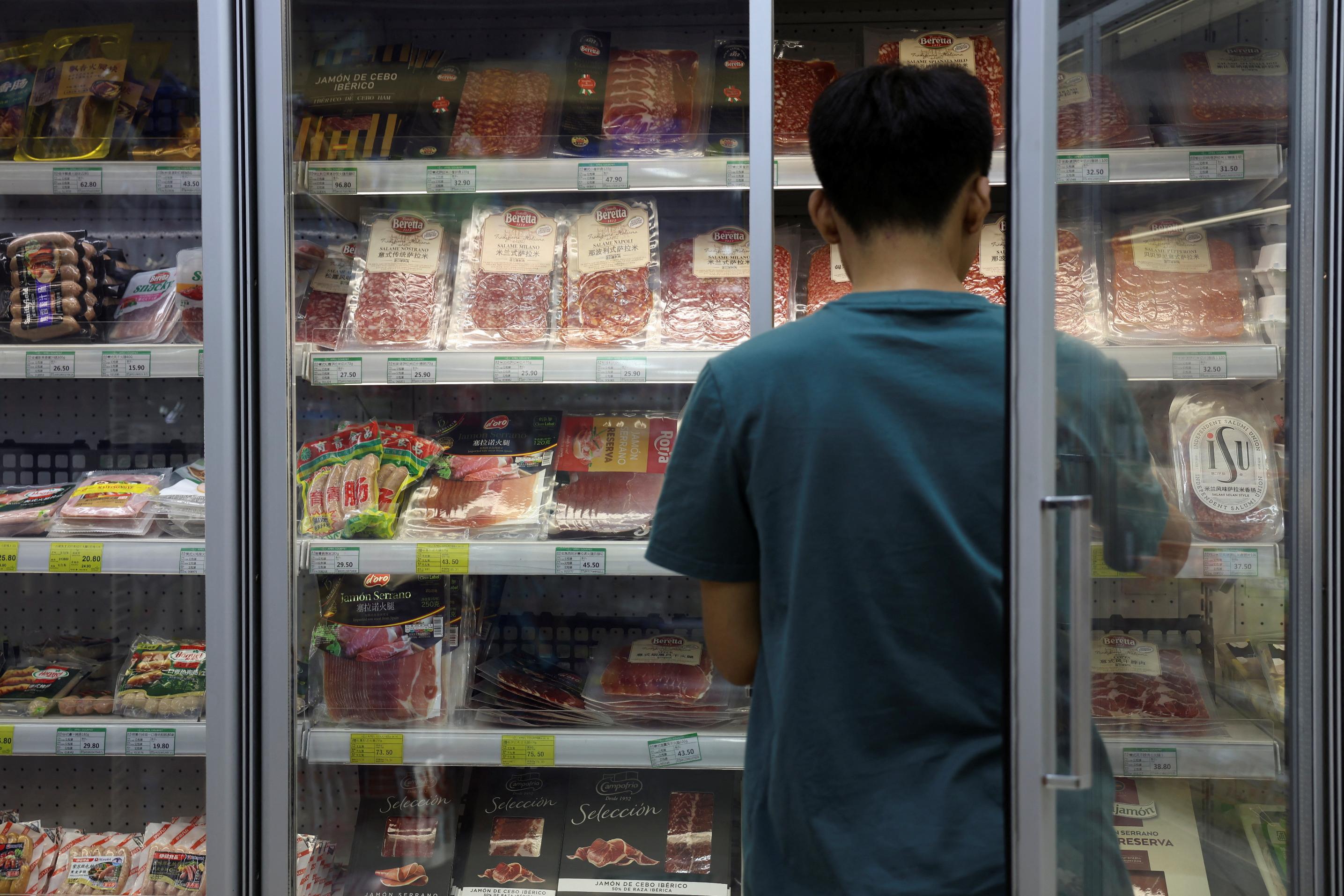
BEIJING, June 14 (Reuters) - Chinese firms have formally applied for an anti-dumping probe into pork imports from the European Union, the state-backed Global Times reported, escalating tensions after the bloc imposed anti-subsidy duties on Chinese-made electric vehicles. The move opens a new front in bilateral strains in one of the world's key trading relationships after Brussels slapped tariffs of up to 38.1% on EVs made in China to shield its auto industry from competition. China imported $6 billion worth of pork in 2023, including offal, with the EU accounting for more than half, customs data showed. The Global Times report, posted on X, gave no details of the requested anti-dumping probe, and did not make clear which pork products would be targeted. The report did not name any companies and cited a "business insider" as the source of its information. Pig parts such as feet, ears and offal that are largely not favoured in Europe are popular among Chinese consumers, providing a valuable and important market for Europe. "Much of the imports from Europe are not muscle meat," said a livestock analyst who declined to be identified due to the sensitivity of the matter. If offal is targeted, China would need to import more offal from other countries where it is not consumed in the local market, the analyst added. Global food companies are on tenterhooks for possible retaliatory measures after the EU said this week it would impose tariffs on Chinese-made EVs. China has been known to target food products in trade spats with other countries. The logic for Beijing is "because farmers losing out on China's giant market has immediate repercussions for elected officials," said Even Pay, agriculture analyst at Beijing-based consultancy Trivium China. Spain was China's top supplier of pork last year, followed by Brazil and the United States. Other major suppliers are France, Denmark and the Netherlands. Spain's pork producers association Interporc said its position as the leading supplier to China was based on quality and food safety, as well as "the trust that our companies have earned among Chinese operators as serious, loyal and rigorous partners". In France, industry association Inaporc was waiting to see if a probe would be launched, its vice president Thierry Meyer said, adding: "it's very hard to do without the Chinese market." Loss of trade to China could depress the European market, as when Germany was shut out of export markets including China in 2020 due to outbreaks of African swine fever, creating a supply glut in Europe. Beijing already targeted brandy in a probe in January, a move perceived as retaliation for France's support of the EU investigation into Chinese-made EVs. Pork may also be a way of sparing Germany, which is reluctant to hit Chinese EVs, while pressuring other EU countries, Chim Lee, senior China analyst at the Economist Intelligence Unit. "Spain and France, which are major pork suppliers, were pro-tariffs," he said. Chinese firms reserve the right to submit applications to prompt anti-subsidy and anti-dumping inquiries into European dairy and pork imports, China's commerce ministry said on Thursday. Chinese companies also plan to request anti-subsidy investigations into EU dairy imports, the Global Times newspaper reported last week, which may hurt major suppliers the Netherlands, France and Germany. The European Commission, in an email response to Reuters about potential investigations by China into EU pork and dairy imports, said: "The Chinese government can request a dispute settlement at the World Trade Organisation without needing to resort to retaliation." On Friday, Chinese Premier Li Qiang, on a visit to New Zealand, told businesses he sees increasing demand for high-quality goods such as dairy, health products, beef and lamb. Li has pledged on the trip to further expand market access and create a market-oriented business environment, state media Xinhua reported. On Thursday, China said it would take "all necessary measures" to safeguard its interests in the wake of the EU tariff decision, which is due to take effect from July. The EV tariffs drew a strong rebuke from China as well as European and Chinese automakers, with industry insiders saying both sides have reasons to strike a deal in the months ahead, as the EU process allows for review. Sign up here. https://www.reuters.com/markets/commodities/china-firms-apply-anti-dumping-probe-eu-pork-imports-global-times-says-2024-06-14/