2024-06-14 05:06
TOKYO, June 14 (Reuters) - Japan, a major coal and liquefied natural gas (LNG) buyer, could be energy-independent by 2060 thanks to expansion of solar and wind power together with storage batteries, said Jarand Rystad, chief executive of the Rystad Energy consultancy. Japan imports most of its energy resources, with the Middle East, Australia and the United States being its top suppliers. The government's strategy calls for a reduction in LNG and coal to under 40% of the power generation mix by 2030 from more than 60% now. But analysts say Japan is moving slower it needs to. "Japan's mindset is that we have to import energy because we have no energy ourselves. But with the development in renewable energy technologies, I think that statement doesn't need to be true," Rystad told Reuters. According to Rystad, Japan could be energy-sufficient by having 45% of solar power, 30% of wind generation led by offshore farms, 5% of hydropower, another 5% of biomass and e-fuel with nuclear power providing the remaining 15%, by 2060. "All Japan needs is to continue installing as much solar as it did in the years before 2020. From 2014, you installed between 10 and 12 gigawatts on the peak," Rystad said. Japan installed about 4 GW of new solar capacity last year, with its total outstanding solar capacity reaching 87 GW, the world's third biggest behind China and the United States. Rystad said mixing agriculture with solar panels - which also provide the shade preferred by some types of crops - as well as solar rooftops above roads, among other solutions, could help to expand the use of such power. "The combination of offshore and onshore wind and solar, geothermal and biomass with solid backup from both battery and pumped hydro, should actually enable Japan to see self-dependency in energy in 40 years, or by 2060 even," he said. Sign up here. https://www.reuters.com/business/energy/japan-could-be-energy-independent-by-2060-thanks-renewables-rystad-energy-ceo-2024-06-14/

2024-06-14 04:42
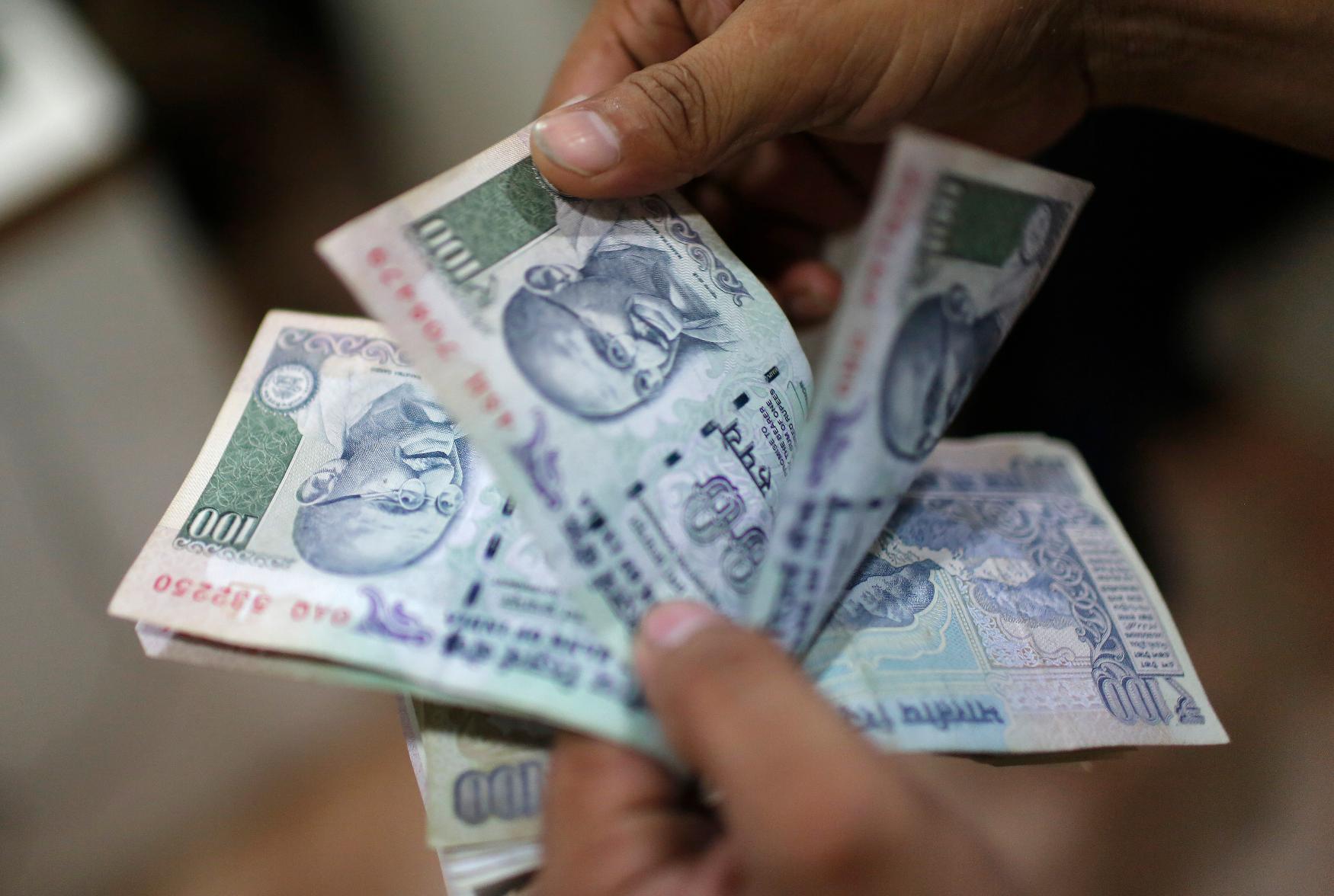
MUMBAI, June 14 (Reuters) - The Indian rupee was nearly unchanged on Friday as expectations that the central bank would guard against a fall to the currency's all-time low countered weakness in most Asian currencies. The rupee was at 83.53 against the U.S. dollar as of 10:00 a.m. IST, little changed compared to its close at 83.5425 in the previous session. While local dollar demand and global cues have kept up the pressure on the currency, routine interventions by the Reserve Bank of India (RBI) have prevented a fall to the currency's record low of 83.5750 hit in April. The dollar index was at 105.3 after climbing 0.5% on Thursday. Most Asian currencies edged lower on Friday, with the Indonesian rupiah down 0.6% and leading the losses. Meanwhile, the Bank of Japan kept interest rates unchanged on Friday but said it would trim bond buying in the future to allow long-term interest rates to move more. The Japanese yen was last quoted lower by 0.5% at 157.86. "The broad dollar strength was mainly attributed to weak sentiment on the euro, with limited negative spillovers to Asian currencies," MUFG Bank stated in a note. The greenback rose even as U.S. yields declined on Thursday after more economic data signalled a cooling of the labour market and price pressures. The 10-year Treasury yield was up slightly in Asian hours after falling to a more than two-month low of 4.22%. U.S. initial jobless claims rose to a 10-month high last week, while producer prices unexpectedly fell in May, the data showed. "Think it (USD/INR) will stay near current levels unless a large inflow pushes it lower," a foreign exchange trader at a private bank said. Sign up here. https://www.reuters.com/markets/currencies/rupee-little-changed-cenbank-intervention-expectations-blunt-drop-asia-fx-2024-06-14/
2024-06-14 04:32
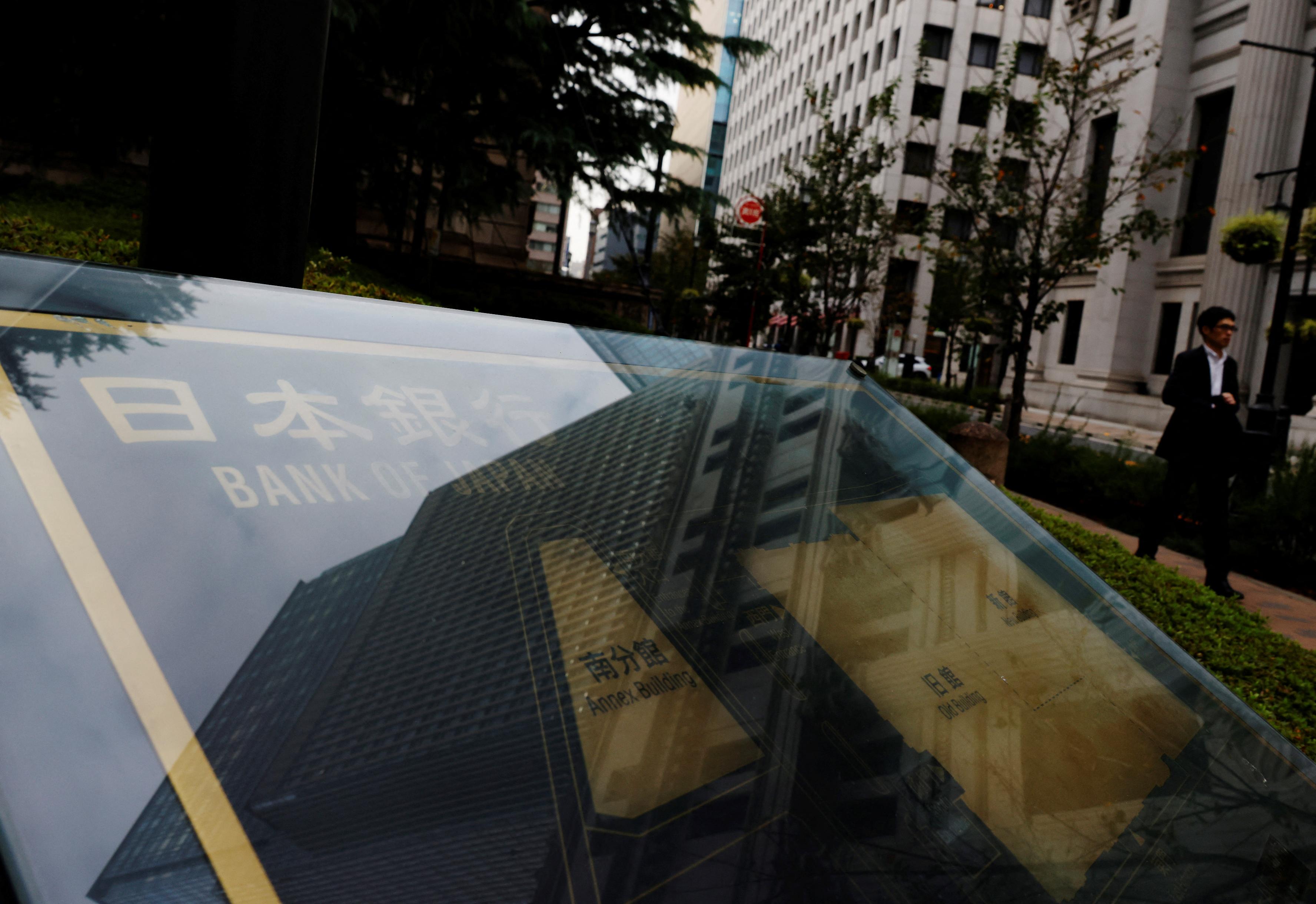
A look at the day ahead in European and global markets from Ankur Banerjee The Bank of Japan provided a dovish surprise to the market after the central bank said it would trim bond buying in the future but will come up with a specific plan regarding the reduction only at its next meeting in July. While it will continue to buy government bonds at the current pace of roughly 6 trillion yen ($38 billion) per month, the central bank decided to lay out details of its tapering plan for the next one to two years at the July meeting. The move led the yen to weaken to nearly 158 per dollar and the Nikkei (.N225) New Tab, opens new tab to push 0.7% higher as expectations had set in the market of an immediate move by the BOJ. As my markets colleague in Tokyo Kevin Buckland puts it: "This is the most dovish outcome that could have been reasonably expected." That capped an action-packed week that has seen markets price in at least two rate cuts from the Federal Reserve as inflation shows signs of easing even as the U.S. central bank remains cautious. The final day of talks for the Group of Seven (G7) leaders will be held on Friday, with China topping the agenda before Pope Francis puts in a historic appearance, perhaps not in a puffer jacket, to discuss artificial intelligence. The focus will also be on European automakers (.SXAP) New Tab, opens new tab in the wake of the European Commission's decision to slap tariffs on imported Chinese EVs, a move that Beijing has labelled as protectionist behaviour but still lags behind a tougher U.S. position that leans towards an outright decoupling from China. Futures point to higher open for European bourses with the continent-wide STOXX 600 (.STOXX) New Tab, opens new tab poised for its weakest weekly performance since mid-January. The political uncertainty in Europe in the wake of French President Emmanuel Macron calling for a snap election in France has kept the euro under pressure. Meanwhile, Tesla (TSLA.O) New Tab, opens new tab shareholders approved CEO Elon Musk's $56 billion pay package, highlighting the support that Musk enjoys from Tesla's retail investor base, many of whom are vocal fans of the mercurial billionaire. The proposal passed despite opposition from some large institutional investors and proxy firms. Key developments that could influence markets on Friday: Economic events: France inflation report for May, euro zone trade balance for April. Sign up here. https://www.reuters.com/markets/global-markets-view-europe-2024-06-14/
2024-06-14 03:17
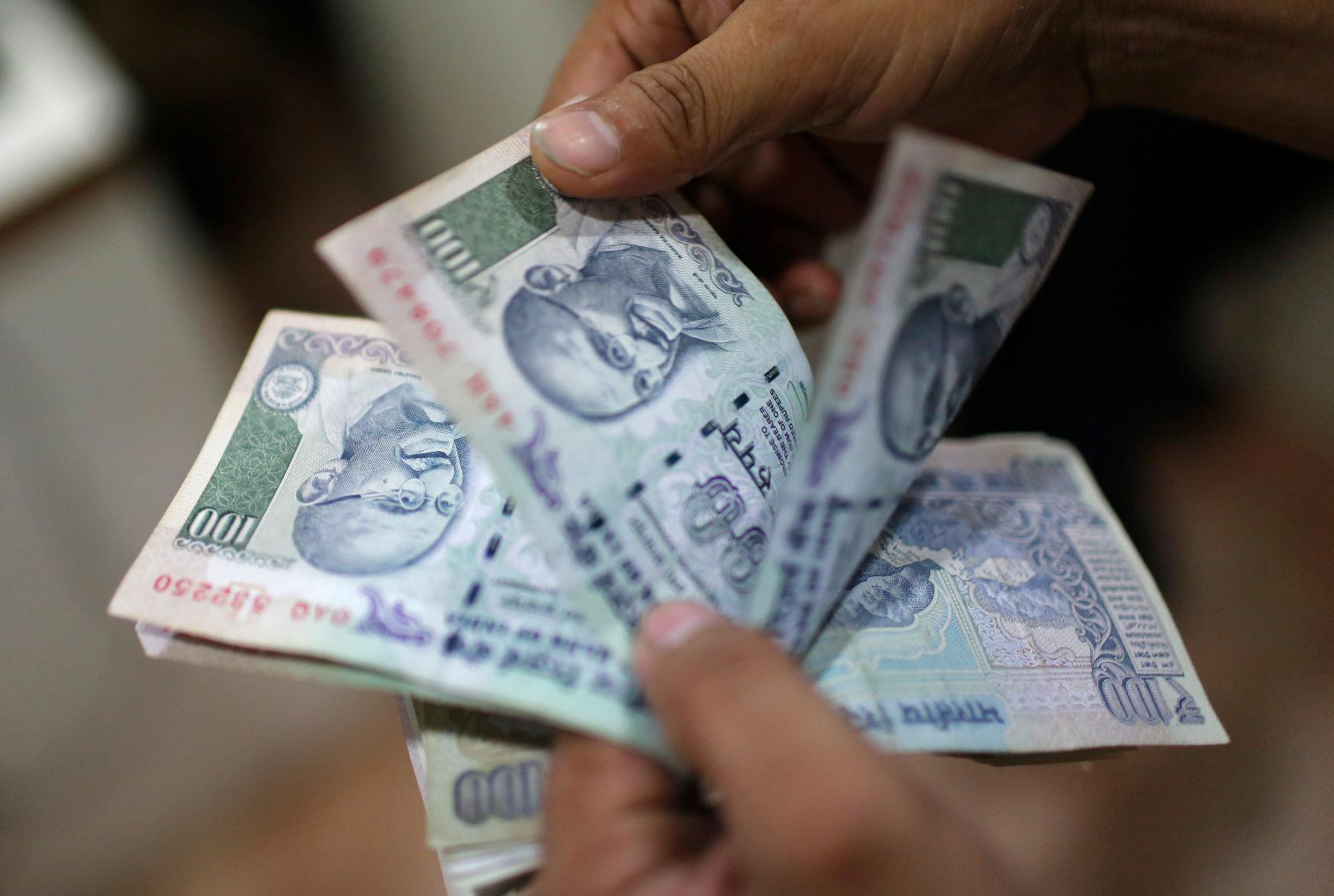
MUMBAI, June 14 (Reuters) - The Indian rupee is expected to broadly struggle on Friday in the wake of an uptick in the dollar amid hawkish Federal Reserve interest rate projections. Non-deliverable forwards indicate the rupee will open at 83.55-56 to the U.S. dollar, compared with 83.5425 in the previous session. The rupee was within sight of the all-time low of 83.5750 that was largely avoided on the intervention by the Reserve Bank of India, both in non-deliverable forward (NDF) and spot markets. "Will the RBI allow a new higher range (for the dollar/rupee) is what is it about right now," a currency trader at a bank said. "It is irrelevant at this point to discuss the merit or otherwise (of allowing the rupee to weaken in the backdrop of the overall dollar strength). You just play the price action." The dollar index was back to the 105 handle, despite a soft U.S. producer price index (PPI) print and a rise in jobless claims. U.S. producer prices unexpectedly fell in May, signalling that price pressures were abating. This came after data showed that U.S. consumer prices rose at a lesser pace than expected. Both the PPI and CPI inflation measures have elements that are used to calculate monthly PCE inflation, ANZ Bank said in a note. "Our back-of-the-envelope calculations estimate May core PCE rose in the region of 0.1% month-on-month. A 0.1% m/m would leave the annual measure of May core PCE inflation at 2.56% year-on-year, down from 2.75% in April." Core PCE inflation is the Fed's preferred gauge of measure. Fed members are still indicating a cautious stance on rate cuts that supported the dollar. The median of the Fed dot plot pointed to just one rate cut this year against two expected by economists. KEY INDICATORS: ** One-month non-deliverable rupee forward at 83.62; onshore one-month forward premium at 7 paise ** Dollar index at 105.18 ** Brent crude futures down 0.4% at $82.4 per barrel ** Ten-year U.S. note yield at 4.27% ** As per NSDL data, foreign investors bought a net $81.3 mln worth of Indian shares on June 12 ** NSDL data shows foreign investors bought a net $250.3 mln worth of Indian bonds on June 12 Sign up here. https://www.reuters.com/markets/currencies/rupee-squeezed-by-dollar-uptick-fed-outlook-counts-rbi-help-2024-06-14/
2024-06-14 02:51
WASHINGTON, June 13 (Reuters) - The U.S. military said on Thursday it destroyed two Houthi patrol boats, one uncrewed surface vessel and one drone over the Red Sea in its latest effort to degrade the capabilities of the Iran-backed group. The Houthis, who control the most populous areas of Yemen, targeted the Verbena in the Arabian Sea as well as the Seaguardian and Athina in the Red Sea, the Iran-aligned group's military spokesman Yahya Saree said in a televised speech earlier on Thursday. The attack on the Palau-flagged Verbena cargo ship sparked a fire and severely injured one of her crew, U.S. Central Command said. The rebels launched two anti-ship ballistic missiles from a Houthi controlled area of Yemen into the Red Sea, the U.S. Central Command said, adding there was no damage or injuries from those missiles. The Houthi militia has staged attacks on ships in the waters off the country since November in solidarity with Palestinians under Israeli assault in Gaza where nearly the entire 2.3 million population of the narrow coastal enclave is displaced and there is widespread hunger and destruction. The U.S. Central Command said it "will continue to act with partners to hold the Houthis accountable and degrade their military capabilities." The Houthi campaign has disrupted global shipping, forcing firms to re-route to longer and more expensive journeys around southern Africa. It has also stoked fears that the Gaza war - in which the local health ministry says over 37,000 have been killed - could spread and destabilize the wider Middle East. The United States and Britain have carried out strikes against Houthi targets in response to the attacks on shipping. Israel's assault on Gaza, which has also led to genocide allegations that Israel denies, followed an attack on Israel by Palestinian Hamas militants on Oct. 7 that killed 1,200, according to Israeli tallies. Sign up here. https://www.reuters.com/world/middle-east/us-military-says-it-destroyed-houthi-patrol-boats-uncrewed-surface-vessel-drone-2024-06-14/

2024-06-14 00:18
CANBERRA, June 14 (Reuters) - Highly pathogenic avian influenza has been found on a duck farm near Melbourne close to five poultry farms where the virus had already spread, the government of Australia's Victoria state said. The duck farm was within a quarantine zone set up around other affected facilities and the government said its infection was not a surprise. Authorities are trying to contain outbreaks of two strains of bird flu near Melbourne, an H7N3 strain on four poultry farms and the duck farm and an H7N9 type on a poultry farm about 130 kms (80 miles) to the southwest. Neither strain is the H5N1 type that has infected billions of wild and farmed animals globally, upsetting food supply chains and raising fears of human transmission. "Tests have confirmed the high pathogenicity H7N3 strain at a commercial duck farm," Victoria's agriculture department said in a statement on Thursday. "All ducks at the property will be humanely disposed of under veterinary supervision, consistent with national policies and the site will be cleaned and cleared of the infection." Around a million of Australia's 21-22 million egg-laying chickens have been or will be killed at affected farms to contain the virus, Federal Agriculture Minister Murray Watt said this week. The country's second-biggest supermarket chain, Coles (COL.AX) New Tab, opens new tab, imposed a two carton per customer limit on egg purchases at most stores this week but other retailers have not followed suit. Industry body Eggs Australia said the outbreaks were causing disruption to supply but there was no overall shortage of eggs. "People can be confident that we've got this in hand," Watt said. Before the latest cases, Australia saw nine outbreaks of highly pathogenic avian influenza since 1976, all of which were contained and eradicated, according to the government. Authorities say duck and chicken eggs and meat remain safe to eat. Sign up here. https://www.reuters.com/business/environment/bird-flu-hits-australian-duck-farm-2024-06-14/