2024-06-13 23:38
WASHINGTON, June 13 (Reuters) - The International Monetary Fund (IMF) board on Thursday cleared the way New Tab, opens new tab for Argentina to draw $800 million to help drive its economic recovery, saying the lending program was "firmly on track". Argentina has a $44 billion program with the IMF, which includes economic targets on growth, inflation and reserves. The IMF said in a statement its executive board had completed the eighth review of that extended fund facility arrangement. "In completing the review, the Executive Board assessed the program to be firmly on track, with all quantitative performance criteria through end-March 2024 met with margins," the IMF said. Sustaining the progress will require improving the quality of fiscal adjustment, taking steps towards enhanced monetary and foreign exchange policy framework, and implementing reforms for growth, it said. Argentina's government has said it will open talks with the IMF over a new program. The IMF's approval comes after President Javier Milei, who took office in December, put in place sweeping fiscal reforms and sharply tightened government spending to tackle triple-digit inflation, a shrinking economy and reserves in the red. The changes under him have helped Argentina rebuild depleted foreign currency reserves, post fiscal surpluses at the start of the year and stabilize the peso currency. Argentina's monthly inflation rate in May was the lowest since 2022, official data showed on Thursday, cooling for the fifth straight month to 4.2% amid the austerity drive by libertarian Milei. Still, the government faces a challenge with the economy stalling and poverty levels rising. Continued efforts to support the vulnerable, broaden political support and ensure "agile" policymaking will be necessary in Argentina going forward, the IMF said. Sign up here. https://www.reuters.com/markets/imf-board-approves-review-argentina-unlock-800-million-2024-06-13/
2024-06-13 23:00
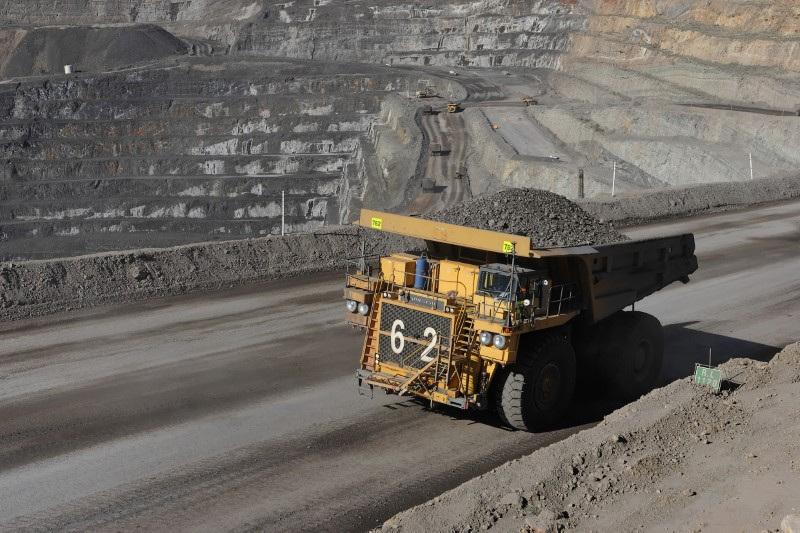
LONDON, June 13 (Reuters) - China's imports of zinc concentrates fell sharply over the first four months of this year in response to a tightening raw materials market. Spot treatment terms for imported mine concentrates are currently trading at levels that are uneconomic for many Chinese smelters, forcing them to rely more on domestic mine supply. It's probably no coincidence that flows of refined zinc into the country have been much stronger than this time last year. Such is the current dynamic of the global zinc market. There is plenty of metal around but an ongoing squeeze on raw materials due to weak global mine production. TIGHT CONCENTRATES MARKET China imported 1.18 million metric tons of zinc concentrates in the first four months of this year, down 24% on last year's equivalent tally of 1.54 million tons. This is a pronounced change of trend after raw materials imports increased by 13% and 14% in 2022 and 2023 respectively. The cause is the collapse in treatment and refining charges, which are paid by miners to smelters for processing raw materials into refined metal. Chinese smelters looking to buy on the international market are facing rock-bottom terms of $30-50 per ton, according to price reporting agency Fastmarkets. This year's annual benchmark terms, set by Canadian miner Teck Resources (TECKb.TO) New Tab, opens new tab and Korea Zinc (010130.KS) New Tab, opens new tab in the first quarter, came in at $165 per ton. That marked a hefty discount from the 2023 benchmark of $274 but is already looking very generous to smelters in light of the bombed-out spot market. The underlying problem is weak global mine output. The world's zinc mines saw production fall by 2% in 2022 and another 1% in 2023. There has been no recovery so far this year, output sliding another 3% year-on-year in the first quarter, according to the latest assessment New Tab, opens new tab by the International Lead and Zinc Study Group (ILZSG). The squeeze on raw materials has been accentuated by restarts of idled smelter capacity in Europe, reducing the amount of concentrates available on the spot market. PLENTIFUL METAL SUPPLY While Chinese smelters are struggling to source concentrates at economically viable prices, the country's imports of refined zinc are trending higher. Inbound volumes totalled 143,000 tons in the first four months of this year, compared with just 35,000 tons in the same period of 2023. China turned a net exporter of zinc in 2022, a rare phenomenon caused by multiple smelter outages in Europe due to super-high energy prices. Trade patterns reverted to historical norms around the middle of last year with the export tap largely turned off ever since and imports accelerating. There is no shortage of refined metal. London Metal Exchange (LME) stocks rebuilt from a depleted 30,475 tons to 223,225 tons over the course of 2023 and at a current 255,900, they are up another 15% since the start of January. There has been a lot of churn in registered inventory this year as stocks financiers play the warehouse arbitrage game but the headline figure has largely held in a 250,000-260,000-ton range since the start of April. A wide contango across the LME zinc forward curve underlines the abundance of metal right now. The LME's benchmark cash-to-three-months time-spread flexed out to a multi-year high of $62 per ton at the end of May and again earlier this month. It was still close to those levels at $57 as of the Wednesday close. The ILZSG estimates the global market generated a supply surplus of almost 300,000 tons last year, which explains why there's so much metal around. SHRINKING SURPLUS The global zinc market remains in surplus, according to the ILZSG, which estimates production exceeded usage by a significant 144,000 tons in the first three months of 2024. The Group's most recent forecast in April was for a diminished 56,000-ton supply surplus over the year as a whole. Key to that market balance assessment was a forecast that mined supply will again under-perform, acting as a restraint on refined metal production, particularly in China. The country's zinc concentrates trade shows that dynamic is starting to play out with a knock-on impact on smelter run rates. China's refined zinc output surge by 8% last year, according to ILZSG. Production growth in the first quarter of this year braked sharply to 1.6%, according to local data provider Shanghai Metal Market. However, the combination of China's increased refined metal imports and still high LME inventories suggests there is a way to go yet before the current concentrates squeeze turns into a metal squeeze. The opinions expressed here are those of the author, a columnist for Reuters Sign up here. https://www.reuters.com/markets/commodities/chinas-zinc-imports-reflect-shifting-market-dynamics-2024-06-13/
2024-06-13 22:46
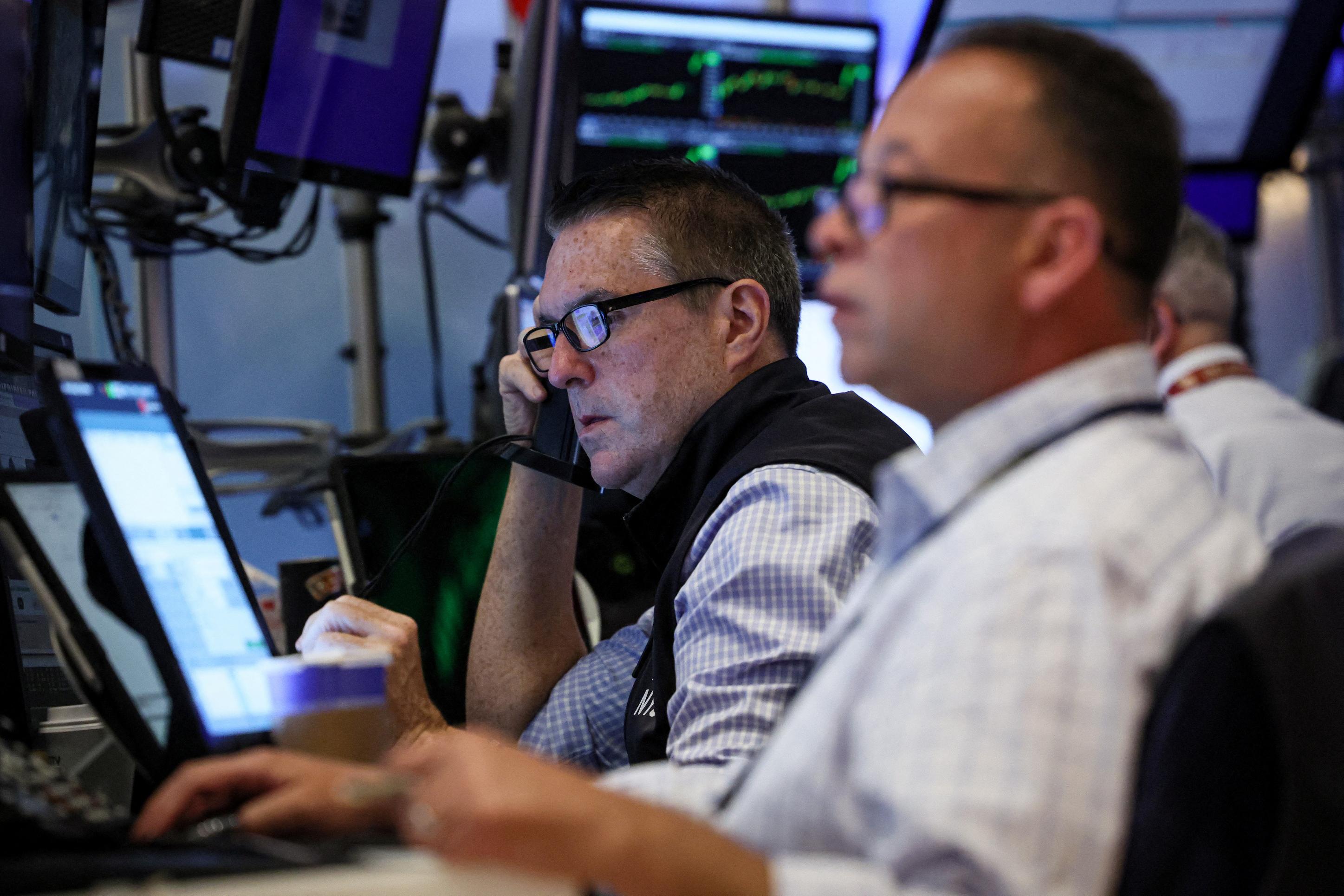
May PPI falls unexpectedly, weekly jobless claims at 10-month high Broadcom soars after FY forecast raise on AI chips strength Indexes: Dow down 0.2%, S&P 500 up 0.2%, Nasdaq up 0.3% NEW YORK, June 13 (Reuters) - The S&P 500 and Nasdaq registered record closing highs for a fourth session in a row on Thursday as technology shares extended their recent rally. The number of Americans filing new claims for unemployment benefits increased last week and another report showed producer prices unexpectedly fell in May, helping to keep alive hopes that an interest rate cut by the Federal Reserve may be on the horizon. The Fed on Wednesday projected only one rate cut this year, while its outlook in March included three quarter-percentage-point reductions. The S&P 500 technology sector (.SPLRCT) New Tab, opens new tab jumped 1.4% and an index of semiconductors (.SOX) New Tab, opens new tab rose 1.5%, both reaching all-time closing highs. Shares of Broadcom (AVGO.O) New Tab, opens new tab jumped 12.3% after the chipmaker raised its forecast for revenue from semiconductors used in artificial intelligence technology. It also announced a 10-for-1 forward stock split. Shares of Nvidia (NVDA.O) New Tab, opens new tab rallied 3.5%, and Apple (AAPL.O) New Tab, opens new tab ended up 0.5%. "It's still very much a tech story" in stocks, said Paul Nolte, senior wealth advisor and market strategist for Murphy & Sylvest in Elmhurst, Illinois. "When you look at the broader market, you're not seeing the participation you would like to see from a healthier market." The Dow Jones Industrial Average (.DJI) New Tab, opens new tab fell 65.11 points, or 0.17%, to 38,647.1, the S&P 500 (.SPX) New Tab, opens new tab gained 12.71 points, or 0.23%, at 5,433.74 and the Nasdaq Composite (.IXIC) New Tab, opens new tab rose 59.12 points, or 0.34%, to 17,667.56. After the closing bell, shares of Adobe (ADBE.O) New Tab, opens new tab jumped more than 14% after the Photoshop maker beat Wall Street expectations for second-quarter revenue. The stock ended the regular session down 0.2%. On Wednesday, new data showed a gauge of consumer prices was unchanged in May for the first time in almost two years. Some investors are wondering whether the economy may be slowing too quickly. The economically sensitive industrials sector (.SPLRCI) New Tab, opens new tab fell 0.6% and the small-cap Russell 2000 index (.RUT) New Tab, opens new tab dropped 0.9%. Tesla shares (TSLA.O) New Tab, opens new tab gained 2.9%. Tesla shareholders were set to approve Elon Musk's $56 billion pay package. Volume on U.S. exchanges was 10.14 billion shares, compared with the 12.49 billion average for the full session over the last 20 trading days. Declining issues outnumbered advancers on the NYSE by a 1.58-to-1 ratio; on Nasdaq, a 1.91-to-1 ratio favored decliners. The S&P 500 posted 15 new 52-week highs and 10 new lows; the Nasdaq Composite recorded 53 new highs and 129 new lows. Sign up here. https://www.reuters.com/markets/us/nasdaq-futures-surge-tech-gains-offset-fed-caution-2024-06-13/
2024-06-13 22:24
TORONTO, June 13 (Reuters) - The CEOs of Canada's big five banks on Thursday reassured members of parliament about their commitment to fighting climate change, but said reducing funding for fossil fuel extraction would take time and more works need to be done to reach net zero emissions. In a rare meeting, MPs grilled the heads of Royal Bank of Canada (RY.TO) New Tab, opens new tab, TD Bank (TD.TO) New Tab, opens new tab Bank of Montreal (BMO.TO) New Tab, opens new tab, Bank of Nova Scotia (BNS.TO) New Tab, opens new tab and CIBC (CM.TO) New Tab, opens new tab appeared via videolink before a House of Commons committee to answer questions about any steps their banks are taking to help reduce greenhouse gas emissions and steer away from fossil fuel funding. Canadian banks, among the biggest oil and gas financiers in the world, have come under pressure over recent years with demands to change their lending practices that contribute to climate change. The five banks financed about $104 billion to fossil fuels last year, 13% of the value of the deals covered from global banks, according to a recent report. The banking and oil and gas industries contribute roughly about 3% to 5% to Canada's gross domestic product. "Energy is still a big part of the Canadian economy. And therefore, we have to continue to support the economy as we make the transition, you have to do both, can't just do one," RBC CEO Dave McKay said in response to a member of parliament's questions. The banks have all set climate goals but members questioned the lack of commitment to only finance companies if the projects are verified to have an impact that will reduce the greenhouse gas emissions significantly. "I think that's part of the problem- is that the commitments are vague. We're talking about sustainable investments. There's no real definition around it. There's not a lot of transparency around it," MP Leah Taylor Roy said. The banks' short and long-term emissions reduction targets includes net-zero in operations and financed emissions by 2050, while helping clients to make the transition. Canada, the world's fourth-largest oil producer, has pledged to cut greenhouse gas emissions 40% to 45% below 2005 levels by 2030. TD's CEO Bharat Masrani said it would follow an "orderly transition" and support responsible oil and gas industry responsible while making sure the bank provides capital and investment to move to a net-zero world. Meanwhile, environment activists criticised the lack of a commensurate plan of action. "The investments they make are holding the country back from climate progress and, until now, there had been no signs they would be held to account," said Julie Segal, senior manager of climate finance at Environmental Defence Canada said. Sign up here. https://www.reuters.com/sustainability/sustainable-finance-reporting/canadas-parliament-grills-bank-ceos-climate-policy-rare-meeting-2024-06-13/
2024-06-13 21:47
June 14 (Reuters) - A look at the day ahead in Asian markets. Asia's market spotlight on Friday shines brightly and almost exclusively on the Bank of Japan, notably the degree and pace at which it intends to continue normalizing monetary policy in the world's third largest economy. The BOJ follows the European Central Bank last week and the U.S. Federal Reserve on Wednesday to complete the G3 central bank set, with investors keen to gauge policymakers' appetite for accelerating the exit from decades of ultra-easy policy. All Japanese assets will be sensitive to the decision and guidance, but the broader ripple effects could be felt most in global currency markets if the yen moves significantly. Wholesale price inflation from India and New Zealand's latest manufacturing purchasing managers index are released on Friday. Investors across the region are mostly in buoyant spirits following the surge in risk appetite after the Fed and perhaps more significantly, the latest U.S. inflation figures. But all eyes are on the BOJ. Sources have told Reuters the BOJ will discuss whether to taper its bond purchases, but that the decision would depend on market developments leading up to the meeting. There was a slight 'risk off' response to the Fed's revised economic projections and Chair Powell's press conference. But any caution was washed away by a huge wave of 'risk on' activity following the soft producer and consumer inflation data. Emerging market and Asia-ex Japan stock indexes are up, world stocks hit a new high on Wednesday, the S&P 500 and Nasdaq on Thursday posted their fourth consecutive daily closing highs, cross-asset volatility is lower and credit spreads are tighter. If BOJ policymakers are looking for a benign set of global conditions in which to begin tapering their bond purchases, this could be it. The domestic scenario may be a little murkier with bond yields elevated and the yen still anchored at historically weak levels. But yields are off their highs and stocks have flat-lined for two months, so why not start the taper now? Investors in China, meanwhile, will be looking forward to closing out a bruising week. Stocks are on for a fourth straight weekly loss, their worst run this year, while the yuan is anchored near its lows for the year and on Thursday registered its biggest fall on the spot market in three months. Trade war fears are growing, and this week it was Europe-China tariffs that grabbed the headlines after the European Union slapped new tariffs on electric vehicles imported from China. Auto stocks dragged European shares lower on Thursday, the pan-European STOXX 600 index sliding 1.3% for its biggest fall in two months. Beijing's response, whenever it comes, could send negative shocks through Chinese stocks. Here are key developments that could provide more direction to markets on Friday: - Japan interest rate decision - India wholesale inflation (May) - New Zealand manufacturing PMI (May) Sign up here. https://www.reuters.com/markets/asia/global-markets-view-asia-graphic-pix-2024-06-13/
2024-06-13 21:38
June 13 (Reuters) - Ground freight and logistics firm FTAI Infrastructure (FIP.O) New Tab, opens new tab said on Thursday that one of its subsidiaries has executed a multi-year terminal services agreement with the energy trading unit of Saudi Aramco (2222.SE) New Tab, opens new tab, which includes the future receipt of new crude oil volumes at its Main Terminal in Texas. FTAI said the subsidiary, Jefferson Energy, would receive additional supply of crude oil at its terminal in Beaumont by incorporating bi-directional flow capability into its Southern Star Pipeline, which currently moves crude oil from the Main Terminal to the Motiva Port Neches Terminal. The bi-directional pipeline would open up the Main Terminal to crude volumes from TC Energy Marketlink Pipeline System, a 750,000 barrels per day crude oil pipeline from Cushing, Oklahoma, to the U.S. Gulf Coast, the company said. Last year, after acquiring Motiva Trading, Aramco launched the U.S. unit Aramco Trading Americas. The world's largest oil firm has been expanding its trading activity. In February, it started trading a U.S. crude oil grade that helps set Brent oil benchmark. The shale revolution of the past 15 years has made the U.S. the world's top oil producer and also transformed the country from a top importer to a major exporter after Washington ended a 40-year ban on foreign shipments. Sign up here. https://www.reuters.com/markets/commodities/ftai-infrastructure-inks-deal-with-aramco-trading-boost-oil-supply-texas-2024-06-13/