2024-06-13 07:00
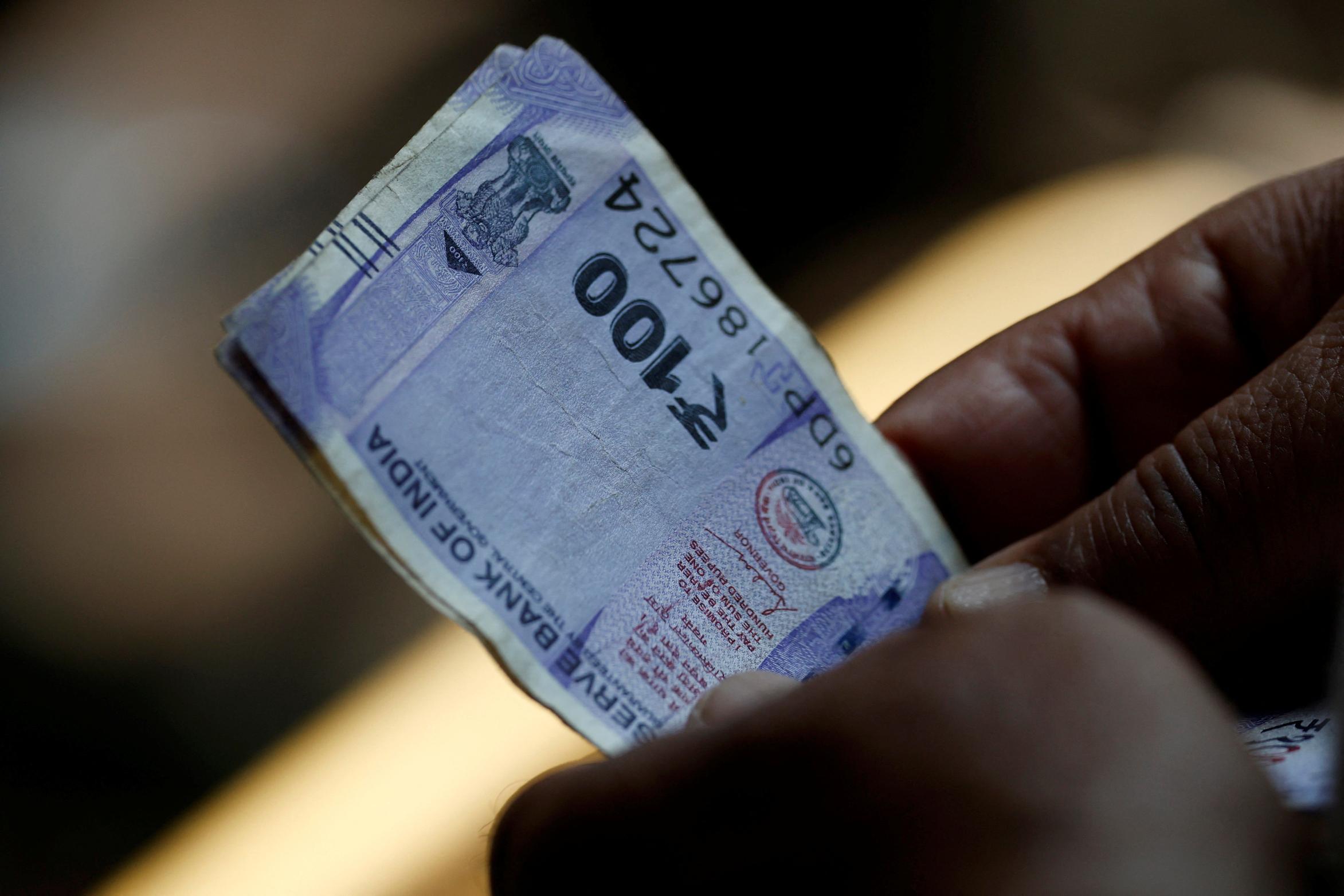
MUMBAI, June 13 (Reuters) - The Indian rupee was nearly flat on Thursday, as dollar demand from local corporates offset the impact of gains in Asian currencies after a softer-than-expected U.S. inflation print pushed Treasury yields lower. The rupee was at 83.53 against the U.S. dollar as of 10:30 a.m. IST, barely changed from its close at 83.5450 in the previous session. The dollar index fell 0.5% on Thursday after data showed that U.S. consumer prices were unexpectedly unchanged in May. The greenback and U.S. bond yields trimmed declines as the Fed's updated interest rate dot plot projected only one rate cut in 2024, down from three signalled in March. Despite the hawkish shift in policymaker's expectations, the odds of a September rate cut rose to about 57%, up from 47% a day earlier, according to CME's FedWatch tool. "We think by the time the September policy meeting takes place, there will be plenty of data available for FOMC members to see that inflation worries have abated largely," DBS Bank said in a note. Asian currencies were mostly higher, with the Malaysian ringgit, up 0.2%, leading gains. The dollar-rupee pair is "a buy on dips" currently and might not fall below 83.40 in the near-term, a foreign exchange trader at a large private bank said. Analysts have solidified their bearish positions on most Asian currencies as higher-for-longer U.S. interest rates weigh on currencies, including the rupee, a Reuters poll showed. Meanwhile, the benchmark Indian equity indexes Nifty 50 (.NSEI) New Tab, opens new tab and BSE Sensex (.BSESN) New Tab, opens new tab, rose to record highs in early trading, tracking global stocks. Sign up here. https://www.reuters.com/markets/currencies/rupee-little-changed-importer-dollar-bids-counter-fall-us-bond-yields-2024-06-13/
2024-06-13 06:53
SINGAPORE/LONDON, June 13 (Reuters) - Singapore's Temasek Holdings is finalising the sale of some assets from liquefied natural gas (LNG) trading firm Pavilion Energy to Shell with a deal set to be completed in the coming days, two sources with knowledge of the matter said. The deal will provide Shell, already the world's top LNG trader, with access to gas markets in Europe and Singapore as it aggressively expands its LNG footprint after raking in billions of profits last year. The deal's value will be in the hundreds of millions of U.S. dollars, one of the sources said. That would be below what Temasek had originally sought from the sale. Reuters reported in April that Shell and Saudi Aramco (2222.SE) New Tab, opens new tab had been in advanced talks to buy the assets from Temasek which had sought to fetch more than $2 billion from the deal. The sources declined to be identified as they were not authorised to speak with media. Temasek, Pavilion Energy and Shell declined to comment. The deal comes months after Temasek put the Singapore-based trader up for sale after Pavilion Energy turned in a profit in the year to March 2023 on robust LNG prices in the wake of the Ukraine war. Shell has been supplying a quarter of Singapore's natural gas needs and the deal will make it the biggest supplier to the city state. However, the Pavilion Energy asset sale will exclude Gas Supply Pte Ltd, which has a licence to import natural gas by pipeline from Indonesia, the sources said, due to energy security concerns. Temasek set up Pavilion Energy a decade ago to focus on LNG-related investments. Pavilion Energy invested about $1.3 billion in three gas blocks in Tanzania in 2013 and gained access to Europe with its 2019 purchase of Iberdrola's LNG assets, including regasification capacity in the UK and Spain. In Europe, Pavilion Energy imports about a tenth of LNG volumes in Spain, which has become a significant gas supplier in Europe by re-exporting LNG to countries such as Italy, as Russia's invasion of Ukraine prompted countries to reduce their reliance on Russian gas. In Singapore, Pavilion Energy is one of four firms appointed by Energy Market Authority to import LNG. It supplies one-third of the city state's power and industrial gas demand with LNG and piped natural gas, according to its website. It also supplies LNG to ships in Singapore, the world's top bunkering port. "Pavilion's positions in both the Atlantic and Pacific, alongside LNG bunkering, fit nicely within Shell's existing portfolio and LNG market growth ambitions," said Saul Kavonic, an energy analyst at MST Marquee. The unlisted company posted profit after tax of $438 million for the year to March 2023, reversing a year earlier loss of $666 million, while revenue rose 38% to $9.09 billion, according to Temasek's website. It carried shareholder equity value of $3.63 billion as of March 2023, Temasek's website showed. Sign up here. https://www.reuters.com/markets/deals/temasek-finalise-deal-with-shell-pavilion-energy-lng-asset-sale-sources-say-2024-06-13/

2024-06-13 06:21
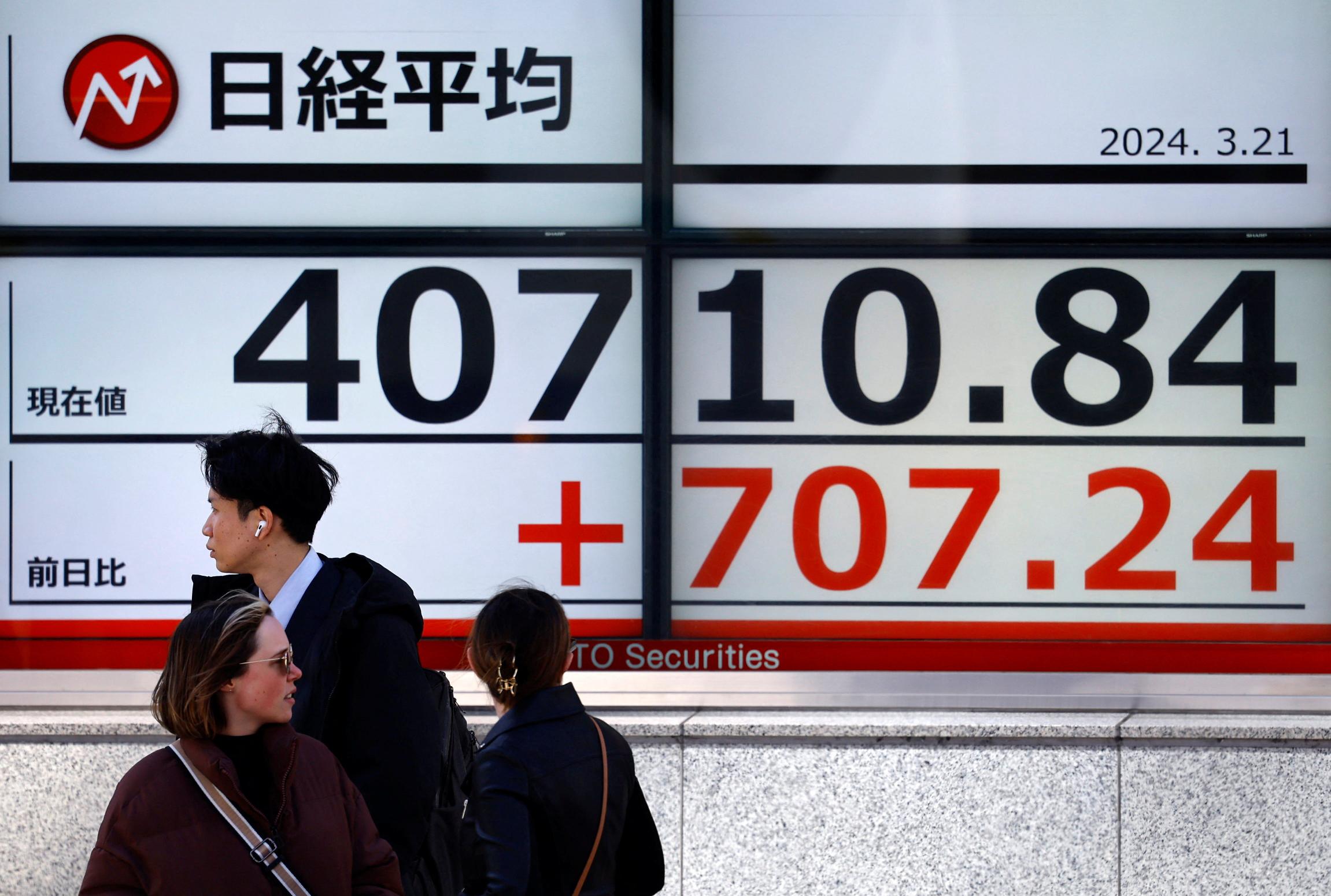
Nasdaq, S&P 500 hit record closing highs for fourth session US Treasury yields drop, dollar strengthens on Fed's rate stance Producer prices fall, jobless claims at 10-month high NEW YORK, June 13 (Reuters) - The Nasdaq and the S&P 500 recorded their fourth consecutive record closing highs on Thursday and U.S. Treasury yields touched their lowest levels since early April as investors reconciled cooler-than-expected inflation data with tempered rate-cut expectations from the Federal Reserve. The dollar gained ground against a basket of world currencies as the Fed's hawkishness and possibility of a Europe-China tariff war sent European stocks sharply lower. The blue-chip Dow was modestly lower at the closing bell. The Labor Department's data showed producer prices came in significantly lower than analysts had expected, dipping 0.2% in May on a monthly basis, while rising 2.2% year-on-year, or 20 basis points above the Fed's 2% annual inflation target. In another report, initial jobless claims touched a 10-month high. The data followed Wednesday's cooler-than-expected CPI report and the Fed's revised dot plot, which lowered rate-cut expectations this year from three to one. "After solid gains, markets are kind of taking a pause after the big news day yesterday and that's not a bad thing," said Ryan Detrick, chief market strategist at Carson Group in Omaha, Nebraska. "We call this the calm after the storm - we’re consolidating some of the really big gains we've seen in the first half of June. Despite the Fed's hawkish dot plot revision, expectations that the U.S. central bank could implement its first rate cut as soon as September are on the rise. Financial markets now see a 60.5% likelihood of a 25-basis-point reduction to the Fed funds target rate in September, according to CME's FedWatch tool. "The Fed might talk a little hawkish, but they’re also data dependent," Detrick added. "And with today's PPI data also showing improvement, the market is taking the opinion that the Fed might change their mildly hawkish tune fairly soon with continued improvement on inflation data." The Dow Jones Industrial Average (.DJI) New Tab, opens new tab fell 65.17 points, or 0.17%, to 38,647.04, the S&P 500 (.SPX) New Tab, opens new tab gained 12.71 points, or 0.23%, to 5,433.74 and the Nasdaq Composite (.IXIC) New Tab, opens new tab added 59.12 points, or 0.34%, at 17,667.56. European shares closed sharply lower, weighed by auto stocks as investors fretted over Beijing's response to the European Union's new tariffs on electric vehicles imported from China. The pan-European STOXX 600 index (.STOXX) New Tab, opens new tab lost 1.31% and MSCI's gauge of stocks across the globe (.MIWD00000PUS) New Tab, opens new tab shed 0.27%. Emerging market stocks rose 0.64%. MSCI's broadest index of Asia-Pacific shares outside Japan (.MIAPJ0000PUS) New Tab, opens new tab closed 0.67% higher, while Japan's Nikkei (.N225) New Tab, opens new tab lost 0.40%. U.S. 10-year Treasury yields dipped after the soft economic data. Benchmark 10-year notes last rose 13/32 in price to yield 4.2442%, from 4.295% late on Wednesday. The 30-year bond last rose 27/32 in price to yield 4.4%, from 4.45% late on Wednesday. The dollar index (.DXY) New Tab, opens new tab rose 0.53%, with the euro down 0.64% to $1.0738. The Japanese yen weakened 0.22% versus the greenback at 157.09 per dollar, while Sterling was last trading at $1.2761, down 0.27% on the day. Oil prices settled slightly higher in a day of up-and-down trade, as rising supply and the delayed rate cuts from the Fed were offset by the economic data. U.S. crude rose 0.15% to settle at $78.62 per barrel, while Brent settled at $82.75 per barrel, up 0.18% on the day. Gold prices moved lower in opposition to the dollar in following the weaker-than-expected PPI report. Spot gold dropped 0.8% to $2,303.15 an ounce. text_section_type="notes">https://www.reuters.com/markets/ For Reuters Live Markets blog on European and UK stock markets, please click on: Sign up here. https://www.reuters.com/markets/global-markets-wrapup-1-2024-06-13/
2024-06-13 05:44
MUMBAI, June 13 (Reuters) - Investors are likely to await clarity on India's fiscal consolidation path in the forthcoming government budget before propelling the next leg of a bond market rally, a top Citi India executive said. The benchmark bond yield was at 6.99%, down 19 basis points so far in 2024 on lower supply and strong foreign inflows. "Once the market has clarity that fiscal consolidation will continue, we think the 10-year benchmark can easily go down to 6.80-6.85%," Aditya Bagree, head of markets at Citi India said, adding that beyond that, traders will look for signs from the Reserve Bank of India, as well as the Federal Reserve for potential rate cuts. The Fed kept policy rates unchanged with the interest rate dot plot projecting only one rate cut in 2024, down from three signaled in March. While India's recently concluded national elections delivered an unanticipated outcome, Citi expects global investors to maintain their positive outlook. "Structurally India is a great macro story... Investors may take a pause and see how the final budget comes in July, but we do not think structural story changes," Bagree said. The RBI's record surplus transfer also gives the government a buffer and the question is if the government uses that space for fiscal consolidation or for increased spending, Bagree said. "Our view is, there is enough fiscal buffer to not put the 5.1% fiscal deficit target at risk." The new government has no plans to increase its fiscal deficit target, Reuters reported earlier this week. Foreign inflows into Indian bonds, and their inclusion in JPMorgan's index are also likely to help, said Bagree. Citi anticipates another $20 billion of inflows into bonds this financial year, in addition to around $10 billion that has already come in after the inclusion announcement in September. While inflows are expected to help drive India's balance of payments surplus to over $50 billion this fiscal year, gains for the rupee are not certain as the RBI may use the flows to further build its foreign exchange reserves, Bagree said. But the central bank's growing FX pile that stands at a record $651.51 billion also gives it significant firepower to limit volatility, ensuring that the risk of any significant depreciation is limited, he added. "When we talk to clients today, India is on everyone's radar," Bagree said. Sign up here. https://www.reuters.com/world/india/india-bond-market-wait-fiscal-roadmap-clarity-before-next-rally-says-citi-2024-06-13/

2024-06-13 05:43
BONN, June 13 (Reuters) - Nearly 200 countries will try to agree a new global goal for funding to fight climate change at this year's U.N. COP29 climate summit in November in Baku, Azerbaijan. Preparatory talks among countries' climate negotiators, due to finish on Thursday in Bonn, Germany, have laid bare the rifts between governments over who should pay, and how much. Here's where things stand. WHAT IS BEING DISCUSSED? Climate finance is money that large economies provide to help poorer countries invest in projects to curb greenhouse gas emissions, and cope with the worsening extreme weather unleashed by climate change. In 2009, developed countries agreed that from 2020 to 2025 they would transfer $100 billion a year in such funds. The task for negotiators in this year's U.N. climate talks is to set a new goal to replace the $100 billion from 2025. HOW MUCH IS NEEDED? Worsening climate change and lagging clean energy investments in developing nations mean estimates for the funds needed have ballooned in size since countries agreed the first climate finance goal. The U.N. points to an independent report from 2023 which estimated $2.4 trillion of investments per year are needed by 2030 in developing countries - excluding China - to meet climate goals and protect their societies from extreme weather. That would be a four-fold increase from current levels. It includes public finance, as well as private finance and funding from sources including development banks. Ahead of COP29, some countries have proposed numbers for the new goal. The Arab group of countries, which includes Saudi Arabia, the UAE and Egypt, suggest a U.N. target of $1.1 trillion per year, with $441 billion coming directly from developed country governments in grants. India, African countries and small island nations have also said more than $1 trillion should be raised per year, but with mixed views on how much of this should come from government coffers. Discussions are circling around the idea of a two-layer goal: combining a bigger outer goal that includes all global climate finance - from development bank loans, to private funding - and a smaller, core target for public money from wealthy countries' governments. The developed countries expected to take the lead in providing the funding have yet to suggest a number they would accept, although the U.S. and EU each say the new goal must exceed the previous $100 billion target. WHO PAYS? Currently, only a few dozen wealthy countries are obliged to provide climate finance. That list of financing nations was decided during U.N. climate talks in 1992, and hasn't been changed since. The EU and U.S. say that list is outdated, and want to add a new donors including China, the world's second-biggest economy, and countries with high GDP per capita, such as Qatar, Singapore and the United Arab Emirates. Beijing has firmly opposed this. The question of which countries must pay is expected to be a core issue at COP29. U.N. climate talks take decisions by consensus, meaning none of the nearly 200 countries involved can oppose a deal. WHAT IS CLIMATE FINANCE? Today, most public climate finance is loans, with a smaller share of grants, OECD data show. Other types of funding counted include private finance mobilised by governments, export credits, and support from development banks. Some countries suggest defining what climate finance is not. Loans provided at market rates, export credits - neither of these should count, negotiators from small island countries have argued in Bonn this week, citing concerns that climate funding offered as loans is pushing poorer nations further into debt. Countries in Bonn also discussed whether commitments to cut fossil fuel subsidies could be reflected in the climate finance goal - a proposal resisted by oil and gas producers including Oman. With public budgets stretched, countries are hunting for new sources of funding. Ideas set to be discussed at COP29 include taxes on the fossil fuel and defence sectors, and debt swaps where part of a country's debt is forgiven, in exchange for the country investing more in addressing climate change. Sign up here. https://www.reuters.com/sustainability/climate-energy/global-fight-over-climate-change-funding-2024-06-13/
2024-06-13 05:41
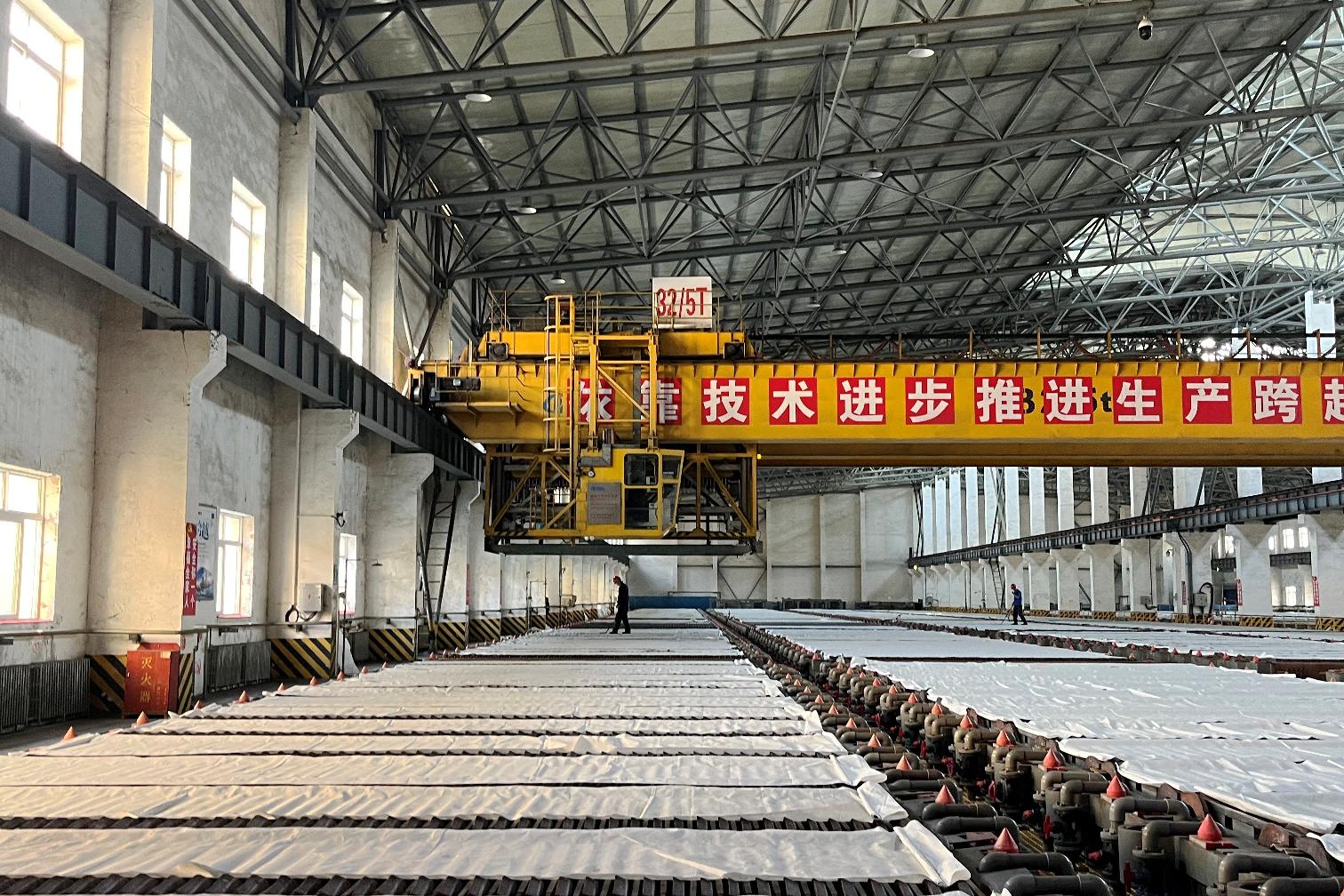
LAUNCESTON, Australia, June 13 (Reuters) - The massive overhang of copper in China is starting to work its way through the global market dynamics for the industrial metal, with prices easing and trade flows likely to adjust. Stockpiles have surged this year in China, which imports about 60% of global traded copper, carrying inventories registered with the Shanghai Futures Exchange (ShFE) to a 51-month high of 339,964 metric tons in the week to June 7. Stockpiles in China usually follow a distinct seasonal patter, with strong builds at the start of the year, followed by equally rapid drawdowns from about March onwards. However, this year is different, with ShFE warehouses continuing to see huge inflows at a time when they are normally shipping metal out. There are several dynamics at work in this unusual build of copper stockpiles in China, including the struggles of key sectors that consume the metal, such as housing construction and manufacturing. Despite Beijing's stimulus efforts, the property sector has yet to stage a meaningful turnaround, and manufacturing is also uncertain, with the key Purchasing Managers' Index unexpectedly dropping in May to 49.5, below the level of 50 that separates expansion from contraction. Despite the cloudy outlook for domestic demand in China, imports of unwrought copper have remained robust, with 514,000 tons arriving in May, up 17.4% from April and 15.8% from the same month in 2023. For the first five months of the year, China's refined copper imports were 2.327 million tons, a gain of 8.8% from the corresponding period a year earlier. Some of the import strength is probably due to increased imports from Russia, most probably at a discount, as Russian copper can no longer go to its previous major buyers in Europe, because of Western sanctions imposed after its invasion of Ukraine. At the same time that China was importing more copper, it was also buying more ore and concentrate and boosting domestic production of refined metal. Refined copper output was 1.14 million tons in April, up 9.2% from the corresponding month in 2023, official data showed. The increase came despite a pact by top smelters to cut production in order to curb losses, amid fears of a shortage of raw material following the closure of the Cobre mine in Panama. Imports of copper ores and concentrates did slip in May, dropping 3.6% to 2.264 million tons from April's 2.348 million, but are still up 2.7% in the first five months, suggesting the squeeze on raw materials may not be as bad as feared. ADJUSTING FLOWS At the same time that China was amassing its stockpile, the rest of the world was engulfed in what now appears to have been a bit of irrational exuberance, as the London benchmark contract hit a record high of $11, 104.50 a ton on May 20. Part of the price surge related to a short squeeze in the United States, with traders scrambling to find enough copper to cover positions. But now the physical market is likely to catch up to what has happened in the paper market. While Chinese and Russian copper will not go to the United States, it is likely that copper from other producers will, and China will pare back imports of refined metal. Chinese exports are also likely to increase after a modest start to the year, which saw exports of copper cathodes coming in at 283,978 tons in April, down 14.8% from the corresponding month in 2023. That followed a reduction of 14.9% in March exports, although cathode shipments in the first two months were up 20.6% on the year. Overall, it is likely that China's imports of refined copper may ease in coming months, although what may be more marked is a shift in where the metal is coming from, with arrivals from Russia expected to remain elevated. It is also likely that China's surplus metal will find its way to global markets over time, which in turn should result in the London copper price continuing to stabilise at levels closer to around $10,000 a ton, with the contract having ended at $9,944.50 on Wednesday. The opinions expressed here are those of the author, a columnist for Reuters. Sign up here. https://www.reuters.com/markets/commodities/chinas-vast-copper-overhang-will-clear-one-way-or-another-russell-2024-06-13/