2024-06-12 22:04
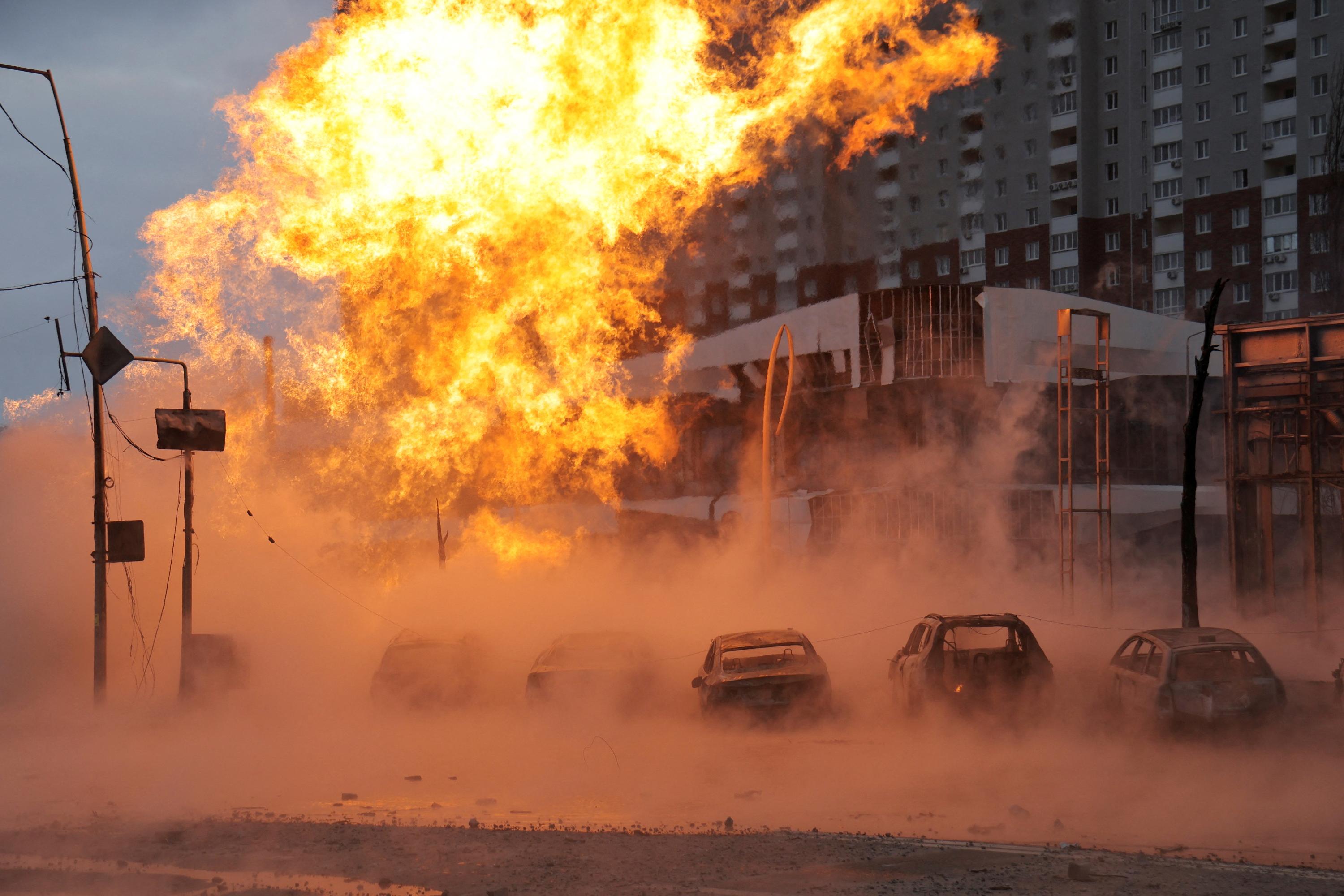
KYIV, June 13 (Reuters) - Russia's invasion of Ukraine has directly caused or paved the way to the emission of 175 million tonnes of carbon dioxide (CO2) into the atmosphere, a joint report said on Thursday. The report, published by Ukraine's environment ministry and climate NGOs, said their estimate included both emissions that had been released and those that would be produced during repair work following the destruction caused by the February 2022 invasion. It laid out some of the main carbon-emitting activities caused by fighting. "Billions of litres of fuel used by military vehicles, nearly a million hectares of fields and forests set ablaze, hundreds of oil and gas structures blown up and vast amounts of steel and cement used to fortify hundreds of miles of front lines," it said. The 175 million tonnes estimate was the equivalent to the annual emissions produced by 90 million cars, or the whole of the Netherlands in a year, it said. The war launched by Moscow has killed tens of thousands and displaced millions, but it has also caused vast environmental damage as two armies engage in the biggest European land war in 80 years. The report, which seeks to quantify the war's carbon footprint, was put together in cooperation by Ukraine's environment ministry and climate researchers from Ukraine and other countries. The report used a measure called the Social Cost of Carbon to calculate the approximate financial cost of the additional emissions. "The total climate damage that the Russian Federation has caused after 24 months of the war amounts to more than USD 32 billion," it said. The report said that the war emissions could be divided approximately into three thirds: military activity, the steel and concrete needed to rebuild damaged infrastructure, and the final third being made up of several disparate factors including fires and movement of people. "In the early months of the war, the majority of the emissions were caused by the large scale destruction of civilian infrastructure requiring a large post-war reconstruction effort," the report said. "Now, after two years of war, the largest share of emis- sions originate from a combination of warfare, landscape fires and the damage to energy infrastructure." Military activity was responsible for 51.6 million tons of CO2 equivalent emmmisions, the report said. The majority of that number, 35.2 million tons of CO2 equivalent, was caused by the Russian military's fuel consumption, with a further 9.4 million tons from the Ukrainian military's use of fuel. Among the world's biggest consumers of fuel, militaries worldwide account for 5.5% of global greenhouse gas emissions, according to a 2022 estimate, opens new tab by international experts. According to the report, the war has significantly increased the frequency of landscape fires in the affected areas. It said a million hectares of land had been scorched by 27,000 war-related fires, causing the equivalent atmospheric damage of 23 million tons of CO2. The report also calculated that the closure of airspace over Ukraine and some parts of Russia, as well as the restrictions on certain carriers' use of Russia's airspace, have created just over 24 million tons of CO2 of additional emissions. "Restrictions or caution has largely cleared the skies above some 18 million km2 of Ukraine and Russia, adding hours to journeys between Europe and Asia that consume additional fuel," it said. (This story has been corrected to change the invasion year to 2022, from 2020, in paragraph 2 and to fix the spelling of 'million tons' in paragraph 15) Sign up here. https://www.reuters.com/world/europe/study-details-huge-emissions-resulting-russias-invasion-ukraine-2024-06-12/
2024-06-12 21:51
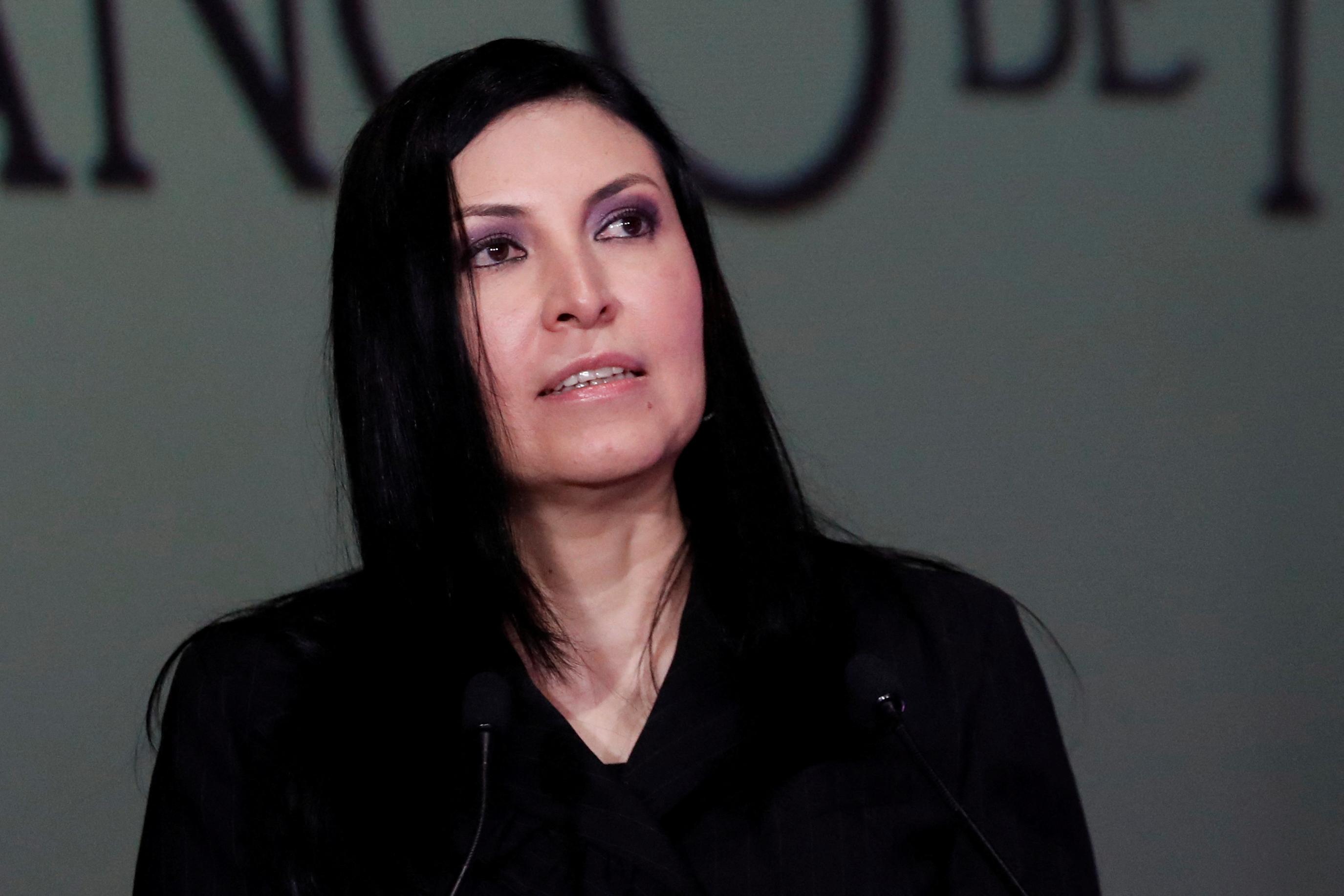
MEXICO CITY, June 12 (Reuters) - The Bank of Mexico is monitoring recent volatility in domestic financial markets, including foreign exchange markets, and could act to restore order in the event of "atypical" or "extreme" behavior, the bank's governor Victoria Rodriguez said on Wednesday. Mexico's central bank "will be very attentive to the development of our markets, and if they show atypical behavior or extreme volatility, and if warranted, it could take the necessary measures to restore their orderly behavior," Rodriguez said during a presentation of the bank's biannual financial stability report. Banxico, as the Mexican central bank is known, could act on its own or with Mexico's foreign exchange commission, comprised of officials from the finance ministry and the Banxico board members, Rodriguez said. Mexico's peso, one of the world's best performing emerging market currencies in recent years, has weakened over 10% since the Morena ruling party coalition dominated the June 2 general elections, emboldening politicians to pursue controversial reforms to the constitution. That has shaken investor confidence. "It is normal for financial markets to present adjustments by incorporating scenarios that had not been anticipated, as is happening in the recent episode," Rodriguez said of the peso's sharp depreciation. Rodriguez underscored that Banxico does not have a fixed goal for the exchange rate, like it does for the inflation rate, but that the board is monitoring the peso's impact on inflation and that it could be some time before the exchange rate volatility reflects on inflation. Wednesday's report found that the Mexican financial system is solid and resilient, with the banking system showing resilience in stress tests probing its solvency and liquidity. While market volatility is one of four main risks to Mexico's macro-financial stability, according to the report, directors on Wednesday urged calm amid the turbulence of recent days. "Mexico's solid economic fundamentals that led to the good performance of our markets prior to the aforementioned episode remain in force," Rodriguez said. Mexico's President-elect Claudia Sheinbaum has sought to reassure nervous investors after her landslide victory this month, in which Morena secured a super-majority required to pass the constitutional reforms unopposed in the lower house of Congress, while coming just shy of the super-majority in the Senate. Sheinbaum has, at the same time, defended as a top priority a judicial overhaul championed by outgoing President Andres Manuel Lopez Obrador, which critics argue will fundamentally alter its independence from politics as well as chip away at democratic checks and balances. Lopez Obrador argues the judicial reform, along with a slew of other proposed constitutional reforms, is necessary to eliminate corruption and empower voters. Sign up here. https://www.reuters.com/markets/bank-mexico-says-it-could-act-restore-order-markets-2024-06-12/
2024-06-12 21:47
June 13 (Reuters) - A look at the day ahead in Asian markets. Softer-than-expected U.S. inflation lit a fuse under investor risk appetite and asset prices on Wednesday which should fire up animal spirits across Asia on Thursday, although a hawkish tilt in the Fed's new economic projections could put a lid on things. The Fed's revised outlook - fewer rate cuts this year, slightly higher unemployment, a higher long-term policy rate - cooled equity, FX and fixed income markets late in the U.S. session on Wednesday. Quite significantly, in the end. But it was not enough to puncture the U.S. 'soft landing' narrative and the market impact was clear - record highs for the S&P 500, Nasdaq and world stocks, and declines in U.S. bond yields, the dollar, and cross-asset volatility. That is a friendly mix of market conditions and sentiment for investors in Asia and across emerging markets on Thursday. Not for the first time recently, however, the dark cloud in an otherwise blue sky appears to be China. Cooling price pressures may be welcome in the U.S. economy and most economies around the world, but not in China, which remains blighted by the threat of deflation, tepid consumer demand, an imploding property sector, and fragile growth. Figures on Wednesday showed that disinflationary pressures in China and even outright deflation persist, intensifying the pressure on Beijing to come in with heavy fiscal or monetary stimulus. Or both. The cumulative effect on Chinese assets recently is notable - stocks and the yuan have tumbled, prompting state-owned banks to sell dollars to shore up the currency and reviving doubts about China as an investment destination. Chinese stocks have lost 5% in the last three weeks, twice as much as the MSCI Asia ex-Japan index, and significantly under-performing Japan's Nikkei, which has basically flatlined, and U.S. and global stocks, which have risen to new peaks. The yuan hit as seven-month low on Tuesday but rallied strongly on Wednesday. Perhaps it - and other currencies in Asia - will take advantage of the dollar's weakness on Thursday. On the other hand, the European Commission's decision to impose extra duties of up to 38.1% on imported Chinese electric cars from July, will escalate investors' concerns over trade wars between China and the West. Beijing will likely retaliate, but how? The Asia & Pacific economic calendar on Thursday is light, with a central bank policy decision in Taiwan and Australian unemployment figures the main releases. Taiwan's central bank is expected to hold its benchmark discount rate at 2.00% on Thursday and keep it there until late next year as it deals with persistent concerns over inflation. Australia's unemployment rate, meanwhile, is seen easing back to 4.1% from 4.0% and job growth is seen slowing to 30,000 from 38,500. Here are key developments that could provide more direction to markets on Thursday: - Taiwan interest rate decision - Australia unemployment (May) - Thailand consumer confidence (May) Sign up here. https://www.reuters.com/markets/asia/global-markets-view-asia-graphic-pix-2024-06-12/

2024-06-12 21:45
BUENOS AIRES, June 12 (Reuters) - Argentina and China have renewed the activated part of a major currency swap line for the equivalent of $5 billion through July 2026, Argentina's central bank said on Wednesday, defusing fears it may have to make major repayments over the coming month. The South American country's central bank said in a statement it would renew the active tranche of a larger and long-standing $18 billion swap line, for a 12-month period, and then gradually ramp it down to zero by the middle of 2026. The embattled country had faced the prospect of billions of dollars worth of repayments on the swap this month and next if it did not agree an extension with China, a potential headache for libertarian President Javier Milei with reserves depleted. The swap line's extension would allow the Argentine central bank (BCRA) to manage payment flows "at critical times for the domestic economy," the bank said in the statement. "It reinforces the commitment assumed by the current management of the BCRA to overcome the external payment crisis, fully respecting the contractual commitments previously agreed with all its counterparts," it added. A currency swap line is a loan agreement between central banks that gives the receiving country access to an agreed amount of funds in foreign currency such as dollars, Chinese yuan or euros. Argentina also has a $44 billion program with the International Monetary Fund (IMF), which includes economic targets on growth, inflation and reserves. The government has said it will open talks with the IMF over a new program. Sign up here. https://www.reuters.com/business/argentina-china-renew-5-billion-swap-line-through-july-2026-2024-06-12/

2024-06-12 21:42
MEXICO CITY, June 12 (Reuters) - Mexico's finance ministry launched debt management operations in New York on Wednesday that will reduce all the country's external debt payments for 2025, as well as local peso-denominated debt for 2025, according to a senior official. "We will monitor the markets to keep doing financial operations that benefit liquidity," Deputy Finance Minister Gabriel Yorio wrote on X, without giving more details on the refinancing process. In a separate statement, the finance ministry said it was launching early maturity proceedings for a $894 million bond due in April of next year. Mexico's central bank earlier no Wednesday released a biannual financial stability report which said that Latin America's No. 2 economy remained solid, with credit stress tests showing a resilient banking system. But in the fallout of market volatility following the June 2 elections that saw a landslide ruling party win, the finance ministry has sought to reassure investors, saying the incoming government will be financially disciplined and work to reduce public debt. The ministry has said it will seek to cut annual debt to levels compatible to a debt / GDP ratio of around 3%. Sign up here. https://www.reuters.com/world/americas/mexico-kicks-off-debt-management-operation-external-local-debt-due-next-year-2024-06-12/

2024-06-12 20:41
VIENNA/PARIS, June 12 (Reuters) - Iran is responding to last week's U.N. nuclear watchdog board resolution against it by expanding its uranium-enrichment capacity at two underground sites, but the escalation is not as big as many had feared, diplomats said on Wednesday. Iran bristles at such resolutions by the International Atomic Energy Agency's 35-nation Board of Governors, and it reacted to the previous one 18 months earlier by enriching to up to 60% purity, close to weapons grade, at a second site and announcing a large expansion of its enrichment programme. This time it plans to install more cascades, or clusters, of centrifuges, the machines that enrich uranium, at both its underground enrichment sites, five diplomats said. IAEA inspectors observing Iran's progress plan to issue a report to member states on Thursday, three of the diplomats said. "It's not as much as I would expect," one Vienna-based diplomat said, referring to the scale of Iran's escalation. "Why? I don't know. Maybe they're waiting for the new government," they said, referring to the death in a helicopter crash last month of Iranian President Ebrahim Raisi and Foreign Minister Hossein Amirabdollahian, and the presidential election due to be held on June 28. The IAEA Board passed a resolution a week ago calling on Iran to step up cooperation with the IAEA and reverse its recent barring of inspectors despite earlier U.S. concerns Tehran would respond with atomic escalation. Only Russia and China opposed. Diplomats did not go into specifics on the number or type of centrifuges being added or what level they would enrich to, though one diplomat said they would not be used to quickly expand Iran's production of uranium enriched to up to 60%, close to the 90% of weapons grade. The diplomats said they would wait to see what the IAEA said Iran had actually done but they were aware of Iran's plans. The move is "at the lower end of expectations and something we're pretty sure they were going to do anyway", one diplomat said, meaning it would have happened even without the resolution. Iran did not fully follow through on its November 2022 announcement after the previous resolution. While it installed all the centrifuges it said it would at its underground enrichment plant at Natanz, 12 cascades of one advanced model, the IR-2m, are not yet in operation. Iran is only enriching to up to 60% at an above-ground pilot plant at Natanz and its Fordow site, which is dug into a mountain. In November 2022 it started enriching to up to 60% at Fordow but it has yet to install all the additional cascades it said it would. Sign up here. https://www.reuters.com/world/middle-east/iran-expanding-enrichment-capacity-after-iaea-resolution-diplomats-say-2024-06-12/