2024-06-12 17:59
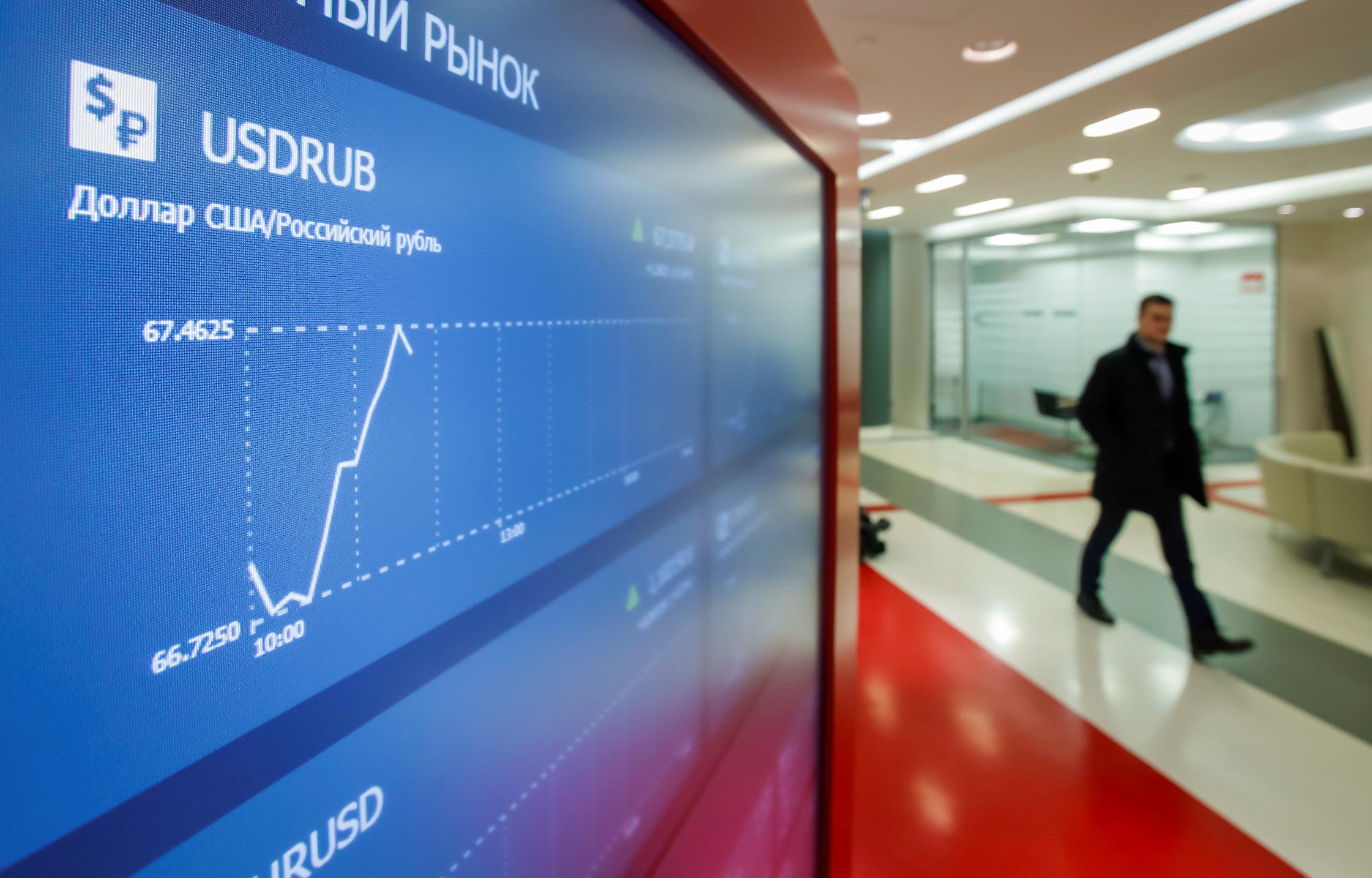
Sanctions end dollar and euro trade on biggest bourse US says it's targeting financing of war economy Some banks immediately jack up price of buying dollars June 12 (Reuters) - New U.S. sanctions against Russia have forced an immediate suspension of trading in dollars and euros on its leading financial marketplace, the Moscow Exchange (MOEX.MM) New Tab, opens new tab. The exchange and the central bank rushed out statements on Wednesday - a public holiday in Russia - within an hour of Washington announcing a new round of sanctions aimed at cutting the flow of money and goods to sustain Russia's war in Ukraine. "Due to the introduction of restrictive measures by the United States against the Moscow Exchange Group, exchange trading and settlements of deliverable instruments in U.S. dollars and euros are suspended," the central bank said. The move means banks, companies and investors will no longer be able to trade either currency via a central exchange, which offers advantages in terms of liquidity, clearing and oversight. Instead, they will have to trade over-the-counter (OTC), where deals are conducted directly between two parties. The central bank said it would use OTC data to set official exchange rates. Many Russians hold part of their savings in dollars or euros, mindful of periodic crises in recent decades when the rouble has crashed in value. The central bank reassured people that these deposits were secure. "Companies and individuals can continue to buy and sell U.S. dollars and euros through Russian banks. All funds in U.S. dollars and euros in the accounts and deposits of citizens and companies remain safe," it said. One person at a large, non-sanctioned Russian commodities exporter told Reuters: "We don't care, we have yuan. Getting dollars and euros in Russia is practically impossible." With Moscow pursuing closer trade and political ties with Beijing, China's yuan has ousted the dollar to become MOEX's most traded currency, accounting for 53.6% of all foreign currency traded in May. Dollar-rouble trading volume on MOEX tends to be around 1 billion roubles ($11 million) a day, according to LSEG data, while euro-rouble trading hovers at around 300 million roubles daily. For yuan-rouble trading, daily volumes now regularly top 8 billion roubles. WIDE SPREADS On the eve of the national holiday, the rouble closed at 89.10 to the dollar and at 95.62 against the euro . But following the sanctions news, some banks immediately jacked up their dollar rates. Norvik Bank said it was offering to buy dollars for just 50 roubles but sell for 200 roubles, though it later adjusted the rates to 88.20/97.80. Tsifra Bank was buying dollars at 89 roubles and selling at 120. Other major banks were quoting narrower spreads of 6-7 roubles between their buy and sell rates. The U.S. Treasury said it was "targeting the architecture of Russia’s financial system, which has been reoriented to facilitate investment into its defence industry and acquisition of goods needed to further its aggression against Ukraine". Russia's central bank has been bracing for such sanctions for around two years. In July 2022, the bank said it was modelling various sanctions scenarios with forex market participants and infrastructure organisations. "This is bad, but expected news," Russian broker T-Investments said on Telegram. Forbes Russia had reported in 2022 that the central bank was discussing a mechanism for managing the rouble-dollar exchange rate should exchange trading be halted in the event of sanctions against MOEX and its National Clearing Centre, which was also hit by the new sanctions. NERVY TRADING AHEAD MOEX said share trading and money market trades settled in dollars and euros would also cease. The sanctions will hit the exchange's profits by slashing trading volumes. In May, total volume on MOEX was 126.7 trillion roubles ($1.43 trillion), up more than a third on the same month of the previous year. In 2023, MOEX recorded net profit of 60.8 billion roubles, a year-on-year increase of 67.5%. Yevegeny Kogan, an investment banker and professor at Russia's Higher School of Economics, urged people against panicking. "You know, it’s genetic for us - if we’re scared, we run to buy currency. And it doesn’t matter whether it’s 100, 120 or 150. You mustn't rush," he warned people on Telegram, saying things could get very serious if people ignored that advice. "Friends, it looks like tomorrow will be a very nervy day." ($1 = 88.9955 roubles) Sign up here. https://www.reuters.com/markets/europe/moscow-exchange-stop-trading-dollars-after-latest-us-sanctions-2024-06-12/
2024-06-12 17:52
TORONTO, June 12 (Reuters) - Canadian utility and real estate stocks are likely to be among the biggest beneficiaries of the Bank of Canada's move to begin cutting interest rates, while the prospect of increased loan demand could help bank shares, investors say. The BoC last Wednesday became the first G7 central bank to ease monetary policy, lowering its benchmark rate by 25 basis points to 4.75%. Roughly 150 basis points of additional cuts are priced into the bond market over the next couple of years. Interest rate-sensitive sectors such as utilities, real estate investment trusts, or REITs, and financials account for 35% of the weighting on Canada's main stock index, the S&P/TSX Composite (.GSPTSE) New Tab, opens new tab. "They've started cutting rates, there's more to come," said Joseph Abramson, co-chief investment officer at Northland Wealth Management. "The two big sector plays on that are REITs and utilities ... they're both income plays and they also have a lot of debt." REITs own income-producing real estate, while utilities include high-dividend paying pipeline companies such as Enbridge Inc (ENB.TO) New Tab, opens new tab and TC Energy Corp (TRP.TO) New Tab, opens new tab. "The defensive parts of the market - think REITs, utilities and telecom - those areas have been hit particularly hard as rates have gone up," said Mike Archibald, a portfolio manager at AGF Investments. "If rates go as consensus is thinking ... those sectors I think would start to play a little bit of catch up." Canada's economy is particularly sensitive to the level of borrowing costs. The mortgage cycle is shorter than in the United States, while household debt as a share of disposable income, at 174%, is much higher than the U.S. share of about 100%, OECD data shows. The six major Canadian banks set aside loan loss provisions in their second-quarter results that were up 26% from the year before. Still, most lenders beat earnings expectations. A move to lower rates "should spur demand for credit, which is clearly what drives the banks," Archibald said. "We should in theory see an environment where banks start to attract a little bit more capital." The TSX has climbed 4.4% since the start of the year, helped by gains for energy and metal mining shares. But those sectors tend to be dependent on the global economic outlook, which has become more uncertain as the Federal Reserve delays the start of its rate-cutting campaign. "Within Canada, I think you want those domestic interest rate plays. Utilities and pipelines, they're not global. Those pipelines are right here and they're very tied to rates." Abramson said. Sign up here. https://www.reuters.com/markets/rates-bonds/canadian-investors-eye-utilities-real-estate-stocks-boc-cuts-rates-2024-06-12/

2024-06-12 17:48
June 12 (Reuters) - Federal Reserve policymakers have reason to feel more confident that inflation is cooling after a U.S. government report on Wednesday showed consumer prices did not rise at all in May, potentially clearing the way for a start to interest-rate cuts before summer's end. The unexpectedly benign inflation report, which also showed underlying price pressures cooled to a level more consistent with the Fed's 2% inflation goal, has triggered a jump in market-based expectations for a rate cut as soon as September, and another one in December. “After three months of veering off-track, the disinflation bus is back on the road to 2%,” said Brian Jacobsen, chief economist at Annex Wealth Management. U.S. central bankers wind up a two-day policy meeting on Wednesday and are universally expected to hold the policy rate in its current 5.25%-5.5% range, where it has been since last July. But short-term interest-rate futures are now pricing in more than a 70% chance of a rate cut by September, up from only slightly better than a coin toss earlier in the day. Traders also added to bets on a second Fed rate cut by December, with rate-futures pricing reflecting a rising but still less-than-50% chance of three cuts by the end of the year. What's unclear is how much weight Fed policymakers themselves will give the fresh data, published less than a hour before they began a second day of policy deliberations that will conclude before 2 p.m. ET. Fed officials could respond by making smaller adjustments to their individual rate-path forecasts than they otherwise might have - with more perhaps sticking to two rate cuts this year, rather than penciling in just one or none as many analysts expected before the latest data. They could also send a stronger signal by tweaking their consensus statement, which at the close of their last policy meeting noted a "lack of further progress" toward the Fed's 2% inflation goal. To Tim Duy, chief U.S. economist with SGH Macro Advisors, a change to that part of the statement is unlikely "unless they are very confident they are cutting in September." With uncertainty over what the next couple months of data will show, they may prefer to keep their options open, he suggested. Jefferies Senior Economist Thomas Simons said the data was unlikely to influence the Fed's decision or forecasts on Wednesday. "Their past experience in mischaracterizing inflation as 'transitory' is going to lead to extreme caution in trusting signs of good news," he said. To EverCore ISI Vice Chairman Krishna Guha, the fresh data is enough to lead the Fed to note "modest" progress on inflation in its post-meeting statement, but agrees that Fed Chair Jerome Powell will try to avoid fanning rate-cut hopes. "The Fed chair does not always find it easy to hold back his inner dovish optimism," Guha wrote. "But we think he will make a point this time of trying to strike a very careful tone at the press conference." Sign up here. https://www.reuters.com/markets/rates-bonds/fed-seen-track-sept-rate-cut-after-inflation-data-2024-06-12/

2024-06-12 13:59
SINGAPORE, June 12 (Reuters) - DBS Group (DBSM.SI) New Tab, opens new tab plans to boost assets under management for its wealth business to S$500 billion ($369.7 billion) by the end of 2026, said the unit's head, as the top Singaporean bank bets on robust inflows into the city state. Wealth assets at DBS grew 23% to a record S$365 billion last year, as Singapore benefitted from strong inflows of wealth into Asia due to its relative political stability, low taxes, and policies favourable for setting up family offices and trusts. DBS, Southeast Asia's largest lender by assets, banks more than a third of Singapore's family offices. "I'm still growing ... the market is actually kind of at the cusp of a recovery because rates are peaking so as rates come down, markets pick up," said DBS' Group Executive and Group Head of Consumer Banking Group and Wealth Management Shee Tse Koon. Referring to the plan for growing the bank's wealth assets, Shee, who has worked at DBS for nearly eight years, told Reuters he was fairly confident about meeting the target, barring any "black swan" event. DBS is also aiming to double the number of wealthy clients with assets worth at least S$1 million and above by end 2026, he said, adding the bank grew its affluent and high-net-worth clients by more than 50% over the last two years. Global high-net-worth-individual wealth and population rose by 4.7% and 5.1%, respectively, in 2023, reversing from 2022's decline, the Capgemini Research Institute's World Wealth Report 2024 published on June 7 showed New Tab, opens new tab. Risk appetite among the wealthy had also improved with cash holdings declining to 25% of portfolio totals in January 2024 from multi-decade highs of 34% the same month a year ago, the report showed. With rising asset inflows, wealth management has become one of the main revenue drivers for banks in Singapore including for DBS, which last month posted record-beating quarterly results and said it expected net profit to exceed last year's record. A S$3 billion money laundering scandal, which became public last year and which led authorities in the city-state to further sharpen their policing of the inflows of wealth and wealthy individuals into the country, has failed to upend the trend. The number of family offices or one-stop firms that manage the portfolios of the wealthy in the city-state has continued to grow. They rose to around 1,400 last year from some 1,100 a year ago, according to statements New Tab, opens new tab from government. Referring to the money laundering scandal, Shee said that Singapore's anti-money laundering regime has always been robust. "However, criminals will adapt their behavior, so we have to evolve with the new typologies of these criminals in order to be one step ahead of them," added Shee, who was CEO of Indonesia at Standard Chartered prior to joining DBS in 2016. ($1 = 1.3523 Singapore dollars) Sign up here. https://www.reuters.com/business/finance/singapores-top-bank-dbs-eyes-370-bln-wealth-assets-by-2026-top-exec-says-2024-06-12/
2024-06-12 12:00
LITTLETON, Colorado, June 12 (Reuters) - The BRICS group of major emerging economies - Brazil, Russia, India, China and South Africa - emitted a record 1.98 billion metric tons of carbon dioxide from power generation during the first quarter of 2024, data from energy think tank Ember shows. That emissions toll was roughly 500 million tons greater than the entire emissions load generated by the rest of the world combined and highlights the diverging pollution trends between key fast-growing economies and most developed countries. A compounding concern for emissions trackers is a potential deterioration in trade relations between BRICS members and the United States and its allies, and the possibility that BRICS members prioritize economic growth over decarbonization efforts. Together, the BRICS countries account for more than 40% of the world's population and around a quarter of the global economy, and so hold significant clout when banded together. The bloc was founded as an informal club in 2009 to challenge a world order dominated by western economies, and over 40 other countries including Indonesia, Saudi Arabia, Egypt and Kazakhstan have expressed interest in joining the forum. If the current BRICS group opts to incorporate aspiring members, the new club could have the means to largely ignore western economic pressure to reduce pollution, as growing trade and investment within the new BRICS bloc could provide a shield against blowback by western-affiliated trade partners. HEAVY HITTERS China and India alone accounted for over 90% of the BRICS emissions total during the first quarter, highlighting how concentrated power pollution is within the BRICS bloc due to high coal use by Asian nations. China and India are also arguably the most influential members of the BRICS, with the power to deliver on trade pacts and to undertake significant foreign investment campaigns that could lure new members. As the world's largest power producer and renewable energy developer, China is also a key player on the global stage in terms of current fossil fuel emissions as well as renewable energy generation potential. The country discharged roughly 5.4 billion tons of CO2 from fossil fuel power generation in 2023, or roughly 40% of the global total, which has made China a key target for international pressure to reduce global pollution. China is also by far the world's top clean energy developer and exporter, and aims to dominate the production and export of clean energy products over the coming decades. However, Beijing has faced accusations of unfair trade practices involving the dumping solar panels, electric vehicles and other products onto world markets at prices that undercut rival producers. This has led to trade spats with the United States and Europe in recent years and protracted disputes at the World Trade Organisation (WTO). Over the same period, China has emerged as the top destination for exports from nations that face western sanctions, including Russia and Iran, providing those countries with critical earnings that further strain China's relations with western powers. India, the world's second largest coal user behind China, has also frustrated western sanctions efforts by emerging as a key buyer of Russian commodity exports, including crude oil, coal and natural gas. India is also under growing international pressure to cut power emissions, but like China is struggling to balance the energy needs of its fast-growing economy with pledges to rein in pollution. India also faces the challenge of generating sufficient jobs for its 1.4 billion population - the world's largest - which entails a rapid and sustained expansion to its cost-sensitive manufacturing sector. Power firms have committed to sharply increasing energy supplies from clean sources but still rely on low-cost coal to produce over 75% of the country's electricity. India has pledged to reach net zero carbon emissions by 2070 but is deemed highly unlikely to reach that target, given the enduring reliance on coal and planned further expansions in use of the fuel, according to Climate Action Tracker. EXPANSION DRIVE In addition to China and India, Russia also recorded sharp growth in power emissions during the first quarter, while Brazil and South Africa kept emissions largely flat. These emissions trends put BRICS members at odds with many western nations. But the fact that each BRICS nation is a key producer of several critical items that aid economic growth makes BRICS membership attractive to other emerging economies. In addition to surging volumes of low-cost manufactured and semi-finished goods, BRICS nations produce and export coal, gas, crude oil, soybeans, corn, rice, metals and rare earth minerals. Many BRICS nations are also committed to consuming growing volumes of most fossil fuels for the coming decades, which makes the bloc an attractive trade partner for the likes of Saudi Arabia and Indonesia which have abundant fuel supplies but face diminishing demand for them in western markets. At present, the still-limited degree of BRICS forum engagement with other countries means that western policymakers still play a key role in major decisions by most emerging market governments. And that means that western values about the environment may still prevail and spark a power sector clean-up in some countries. But if BRICS nations opt to find new club members that seek economic growth above all else, the reduction of emissions may take a back seat to further emissions-laden industrial expansion. Sign up here. https://www.reuters.com/markets/commodities/brics-nations-lift-power-emissions-new-highs-over-rest-world-2024-06-12/

2024-06-12 11:50
HOUSTON, June 12 (Reuters) - U.S. crude has dominated global benchmark oil pricing in the year since booming shale exports joined the mix of European crude used to calculate how much a barrel of the world's most traded commodity costs. The shale revolution of the past 15 years has made the U.S. the world's top oil producer and also transformed the country from a top importer to a major exporter after Washington ended a 40-year ban on foreign shipments. Last May, price reporting service S&P Global's Platts added U.S. WTI Midland crude from the Texas shale fields to the global Dated Brent benchmark, reflecting U.S. oil's rise in importance in global markets. Previously, the benchmark had only included North Sea crude, whose supply has declined while U.S. crude exports to Europe surged as refiners sought alternatives to Russian imports, which the European Union banned in response to Moscow's invasion of Ukraine. Platts uses the cheapest among WTI Midland and five grades of North Sea oil to set the benchmark, a price gauge for roughly 80% of the world's crude, according to the Intercontinental Exchange. Brent is viewed as a bellwether for the health of the oil market. Since its inclusion, WTI Midland has set the price of Dated Brent more than half the time. WTI Midland is similar in quality to the North Sea crude used in Dated Brent. INCREASED LIQUIDITY, LESS VOLATILITY Volumes of WTI Midland crude headed across the Atlantic have climbed since its inclusion in the Dated Brent index. WTI Midland exports hit a record at 2.94 million bpd in December, according to data from ship tracker Kpler, up by around 550,000 bpd on the year. About 1.71 million bpd, or more than half of the December volumes, were headed to Europe, noted Matt Smith, lead oil analyst at Kpler. Surging U.S. crude exports have more than compensated for dwindling North Sea output. The supply of the five grades of North Sea crude that can be delivered into Dated Brent fell to about 537,000 bpd in June from about 607,000 bpd a year earlier, according to loading programs. North Sea crude output has been falling for decades as producers have already pumped most recoverable oil from the fields. That had left Dated Brent - and the related Brent futures market - vulnerable to relatively small North Sea supply problems. "The market has really embraced Midland as a deliverable into the Dated Brent contract," said Dave Ernsberger, global head of pricing and market insight at S&P Global Platts. "Liquidity in the spot market has doubled with more companies involved." Higher liquidity has helped ease the volatility of the benchmark, making the market more stable despite conflict in the Middle East, attacks on shipping in the Red Sea and continuing disruption to oil trade caused by sanctions on Moscow. Volatility as measured by the daily percentage change in Dated Brent prices fell to 0.05% in the one year since WTI Midland's inclusion last May. In the previous four years, it was a range of -0.4% to 0.6%. Since WTI Midland's inclusion a growing number of companies have participated in Dated Brent trading, said S&P Global Platts' Ernsberger. A record 35 cargoes traded in the Platts Market on Close in April 2024, more than four times the number that traded the same month a year ago. Among those who have traded Dated Brent since the change are Saudi Aramco, top Indian refiner Reliance, U.S. shale producer Occidental Petroleum and U.S. refiner Phillips 66, according to S&P Global and market participants. "People who previously had no interest in Brent now see opportunity for their business," said Adi Imsirovic, a trading veteran who has published books and papers on Brent and runs consultancy Surrey Clean Energy. The trading arm of Australian investment bank Macquarie Group has become a top supplier of WTI Midland to Asia after its inclusion in the contract, Imsirovic said. Aramco declined to comment, while Reliance, Occidental, Phillips 66 and Macquarie did not respond. HEDGING U.S. producers can sell WTI Midland many months forward into the Brent market, locking in future revenues and eliminating some pricing risk, said Ilia Bouchouev, managing partner at Pentathlon Investments and former president of Koch Global Partners, a multinational conglomerate with exposure to refining and global commodities trading. Trade in the related contracts used to hedge output and the cost of shipping has also risen, analysts said. This has helped drive up activity in U.S. crude futures markets. Combined WTI Houston and WTI Midland average daily volumes of futures lots traded as differentials to WTI futures soared to 19,188 in May, nearly triple the 7,068 in May 2023. "The overall global trading pie is getting larger", Bouchouev said, as traders explore new spread and arbitrage opportunities. Investors with exposure to Brent contracts are now also exposed to U.S. crude prices. "We are certainly seeing that reflected in hedging activity" across the WTI complex, said Peter Keavey, global head of energy at the CME. Traders are using forward freight agreements (FFAs) to hedge the price risk for the cost of shipping the oil across the Atlantic. Sign up here. https://www.reuters.com/markets/commodities/us-crude-dominates-dated-brent-benchmark-shale-exports-boom-2024-06-12/