
2024-06-11 23:10
BRASILIA, June 11 (Reuters) - The Brazilian government will not insist on a highly contested measure tightening rules for tax credits after the Senate sent it back, but there is still no decision on a replacement measure, two sources close to the presidential palace told Reuters on Tuesday. The Finance Ministry had included the measure last week in an executive order outlining tighter rules for the use of tax credits by companies. The measure triggered a strong backlash from the most affected industries, including the powerful agribusiness sector. An executive order takes immediate effect but needs to be voted on by lawmakers within four months to remain valid. By sending it back to the government, in effect the order is canceled. The measure had aimed to raise as much as 29.2 billion reais ($5.52 billion) to offset a revenue loss of 26.3 billion reais from tax benefits passed by Congress for the payrolls of some economic sectors and small cities. The government needs to find alternatives to compensate for the lost revenue, because the Supreme Court has ruled that Congress must approve compensation for maintaining payroll benefits. No alternative has been decided so far, the sources said. It will be up to President Luiz Inacio Lula da Silva's economic team to rework a proposal that is more palatable to Congress and the industries. As of Monday, Finance Minister Fernando Haddad was still betting that he would be able to negotiate the tighter tax credit rules with Congress, one of the sources said. But after a conversation with Senate President Rodrigo Pacheco on Monday, Lula was convinced the measure would have no chance of succeeding, the source said. Later on Tuesday, Haddad told reporters that his ministry has no plan B for the measure and that the Senate has assumed part of the responsibility for finding a solution. Sign up here. https://www.reuters.com/world/americas/brazil-government-will-not-insist-tighter-tax-credit-rules-sources-say-2024-06-11/

2024-06-11 23:00
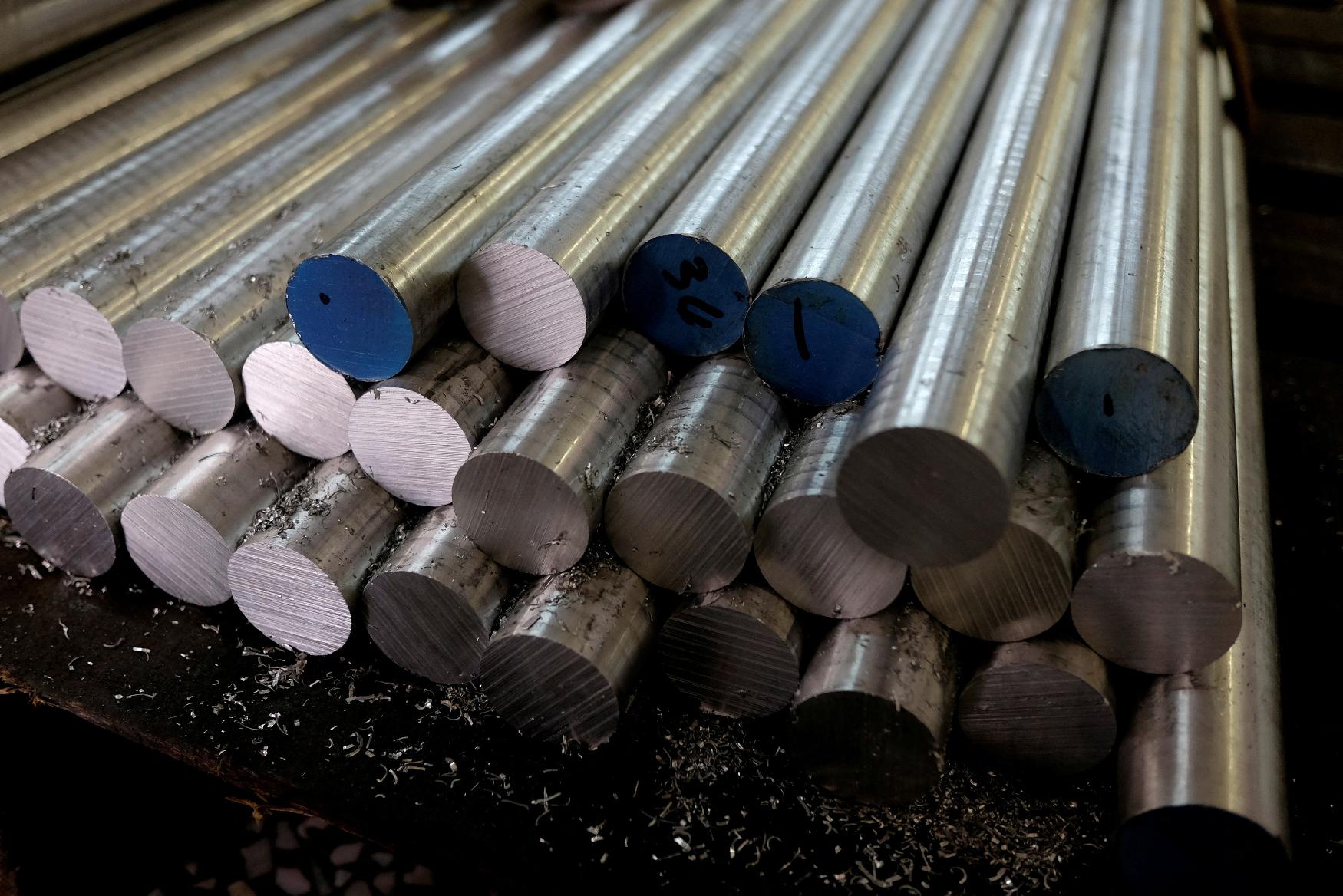
LONDON, June 11 (Reuters) - The London Metal Exchange's (LME) aluminium stocks saga took an unexpected turn last month. In April it was all about Russian metal. The latest U.S. sanctions package prohibited exchanges from accepting Russian aluminium produced after April 12. The LME had to tweak its rules to prevent traders sending existing stocks of Russian brand metal on a creative run-around. The threat of more Russian metal produced before the cut-off date being delivered to the LME loomed large. Sure enough, there was a massive stocks dump on May 9. The single-day warranting of 425,575 metric tons was huge even by the standards of the LME aluminium market. The reverse cancellation of 137,050 tons of stocks on the same day made it even bigger. But just about all of the metal was Indian New Tab, opens new tab not Russian and the action took place at Malaysia's Port Klang and not the South Korean port of Gwangyang, the favoured LME delivery point for Russian brand aluminium. Another 226,950 tons followed over the ensuing two weeks. Buyers have been quick to snap up what was delivered. Those looking to move their metal, however, may be facing a load-out queue of up to 159 days. Which of course was the intention of the stocks dump. Storage dynamics were behind April's Russian play and they're at the heart of the current stocks churn. They always are when there's too much aluminium around. A PROFITABLE QUEUE Last month's massive deliveries went to one warehouse operator in Port Klang. ISTIM UK Ltd's sheds received a total 652,525 tons of aluminium in May, according to the LME's latest monthly warehouse report. Around 250,000 tons were cancelled by the end of the month, lifting ISTIM's total cancelled tonnage to 458,375 tons. The mass transfer of metal has created the longest load-out queue since June 2021. Why is so much recently-delivered metal on its way out again? Because the new owners find themselves locked into a storage deal that will see their rent split between ISTIM and the entity that delivered the metal, widely reported to be New Tab, opens new tab trade house Trafigura. The only way to break that deal is to cancel the warrants and physically move the metal to another warehouse operator. Many are doing just that, evidently calculating that the cost of sitting in the queue is worth it. The revenue to be generated from a load-out queue is not what it was in the 2010s, when months-long waits to get aluminium out of Detroit distorted the relationship between LME and physical market pricing. The exchange has tightened its rules to include faster load-out rates and a cap on revenue that can be charged for metal caught in a queue. But a queue is still a profitable business for the warehouse operator, who can use the expected revenue to entice metal with a rent-sharing deal in the knowledge that the new owners will rush for the exit door just as soon as possible. ISTIM has used the model for many years, turning Port Klang into a hub of LME aluminium stocks liquidity. There were only 10 months over the 2019-2023 period when there wasn't a load-out queue at ISTIM. Most of the time it was a log-jam of aluminium. Last month's action fits into a historical pattern of surplus aluminium flowing to ISTIM's Malaysian warehouses only to be cancelled and loaded out again. RUSSIAN RIDDLE Last month's warranting action at Port Klang should have largely exhausted shadow stocks at the Malaysian port. There were almost 687,500 tons of what the LME terms "off-warrant" stocks at Port Klang at the end of April. That's metal being stored under a warehouse deal with the option of full LME delivery, an option that was clearly called last month. Still hovering over the aluminium market, though, is the question of whether unsold Russian metal produced before April 12 makes it way to LME warehouses. The amount of Russian metal in LME sheds increased from 116,325 to 246,950 tons over the course of May. The LME only counts warranted inventory in its monthly origins report and the increase was largely down to re-warranting not fresh warranting activity. When the LME reworked its Russian warranting rules to stop traders gaming the sanctions, almost 89,000 tons of previously cancelled Russian metal were re-warranted at Gwangyang, serving to boost the on-warrant total. The port has seen no deliveries onto warrant since the middle of April. Only 1,875 tons of Russian metal produced before April 12 but not previously in the LME system have so far shown up across the exchange's storage network. TOO MUCH ALUMINIUM? Aluminium is a big market. With annual primary production of 70 million tons it is more than twice the size of the global copper market. It is also a sector prone to over-production, high inventory and a resulting need for stocks financiers. Storage costs are the key variable in the stocks financing trade, meaning warehouse arbitrage can at times be more important than physical arbitrage to LME pricing. That's particularly true if there is a lot of inventory hanging around, as seems to be the case right now. Whoever dumped so much aluminium onto the LME was expressing a view there is more money to be made out of the stuff in a warehouse deal than in the physical market. Others may disagree but it's worth noting that even with 47% of LME warehouse stocks now cancelled and waiting physical load-out, the nearby spreads have ballooned wider into super-contango territory. The benchmark LME cash-to-three-months period closed Monday valued at a contango of $63 per ton, the widest it's been since at least 15 years. That suggests there is still a lot of metal hanging over the market with the implication there may be more LME stocks surprises to come. The opinions expressed here are those of the author, a columnist for Reuters Sign up here. https://www.reuters.com/markets/commodities/huge-aluminium-stocks-transfer-causes-lme-load-out-queue-2024-06-11/
2024-06-11 21:48
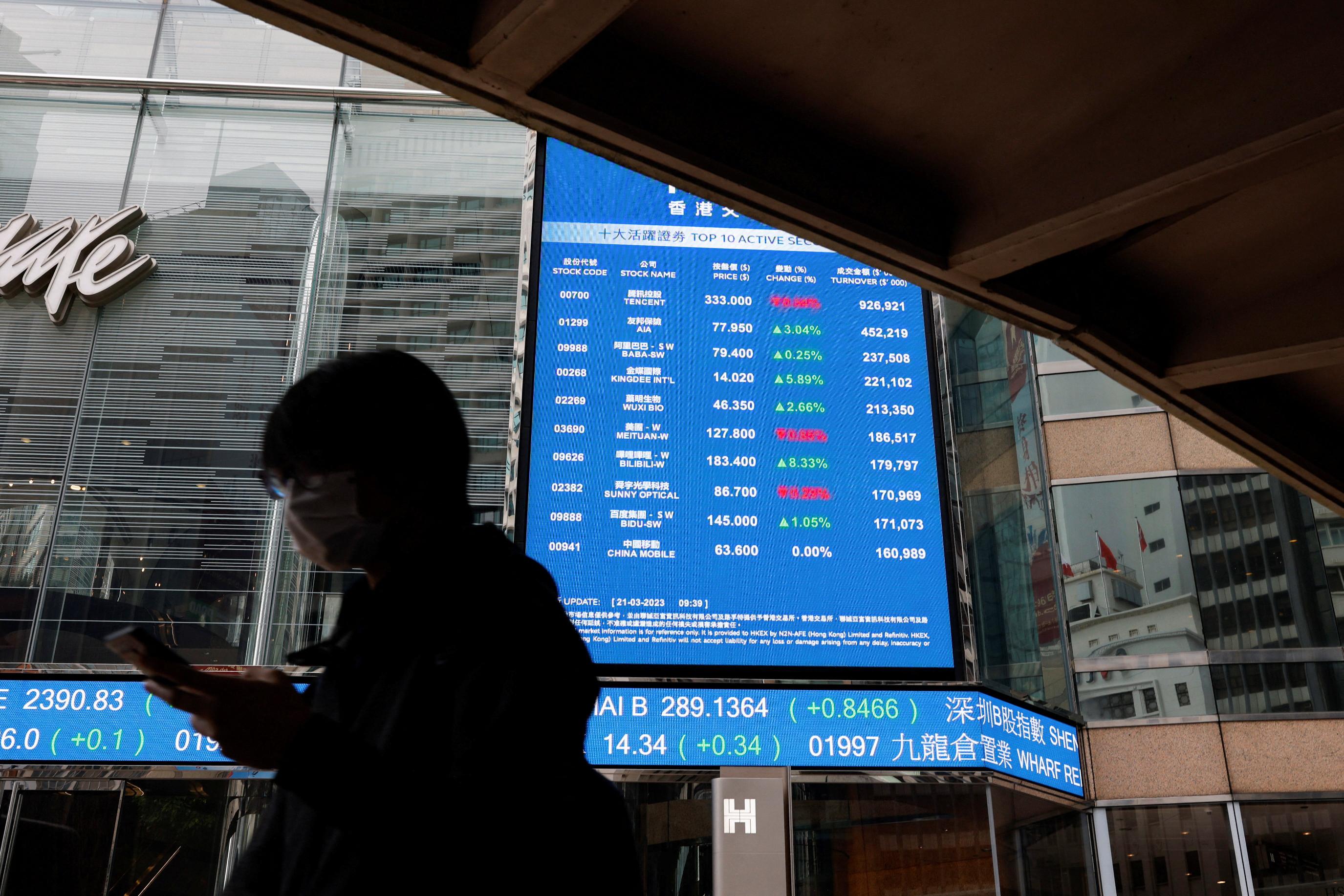
June 12 (Reuters) - A look at the day ahead in Asian markets. As buoyant investors brace for potentially one of the most significant days of the year on Wednesday with U.S. inflation and the Federal Reserve's policy decision, Asian markets have their own obstacles to hurdle beforehand. Thailand's central bank New Tab, opens new tab sets interest rates, against a backdrop of deteriorating investor confidence and stocks sliding to their lowest since late 2020, while China releases its latest producer and consumer price inflation figures. To be sure, global market sentiment seems to be bullish. At least it is on Wall Street - a 7% surge in Apple shares to new highs on Tuesday lifted the S&P 500 and Nasdaq to new highs also. Treasury yields fell back ahead of the Fed's decision too. But risk appetite in Asia is more patchy, and uncertainty around China's outlook is big reason why. Is Beijing winning the fight against deflation? Domestic asset markets suggest investors are far from convinced - bond yields are languishing at historic lows, stocks on Monday hit a six-week low, and the yuan fell to its weakest level against the dollar since November. Economists expect annual consumer inflation in May to inch up to 0.4% from 0.3%, but the month-on-month rate to slip to zero from 0.1%. That hardly smacks of a rapidly reflating economy, but it would be the first time in a year with four positive readings in a row. On the other hand, annual factory gate inflation is expected to remain deeply negative at -1.5%. Year-on-year producer prices have been falling every month since October 2022. The Bank of Thailand, meanwhile, is expected to leave its key interest rate unchanged at 2.50% for a fourth straight meeting on Wednesday, and not cut it until the final three months of the year. That's later than previously forecast. Although inflation has remained well below the central bank's upper tolerance limit of 3% for more than a year, the Thai baht has lost around 6% this year. The BoT delivers its decision a day after the country's benchmark stock index fell as much as 1.5% to its lowest since November 2020. It is down this year, easily underperforming the MSCI Asia ex-Japan index, which is up 5.5%. Three court cases in Thailand, including one that has ensnared the prime minister, have heightened political uncertainty in Southeast Asia's second largest economy and sent investors fleeing its stock market. Elsewhere in Asia on Wednesday unemployment numbers from South Korea, industrial production figures from India and Japan's latest wholesale inflation data will keep investors on their toes. Japan's annual wholesale inflation is expected to more than double in May to 2.0%, which would be the highest since September. Another currency to watch in Asia is Indonesia's rupiah, which hit a four-year low on Tuesday. Here are key developments that could provide more direction to markets on Wednesday: - China producer & consumer inflation (May) - Thailand interest rate decision - India industrial production (April) Sign up here. https://www.reuters.com/markets/asia/global-markets-view-asia-graphic-pix-2024-06-11/
2024-06-11 20:37
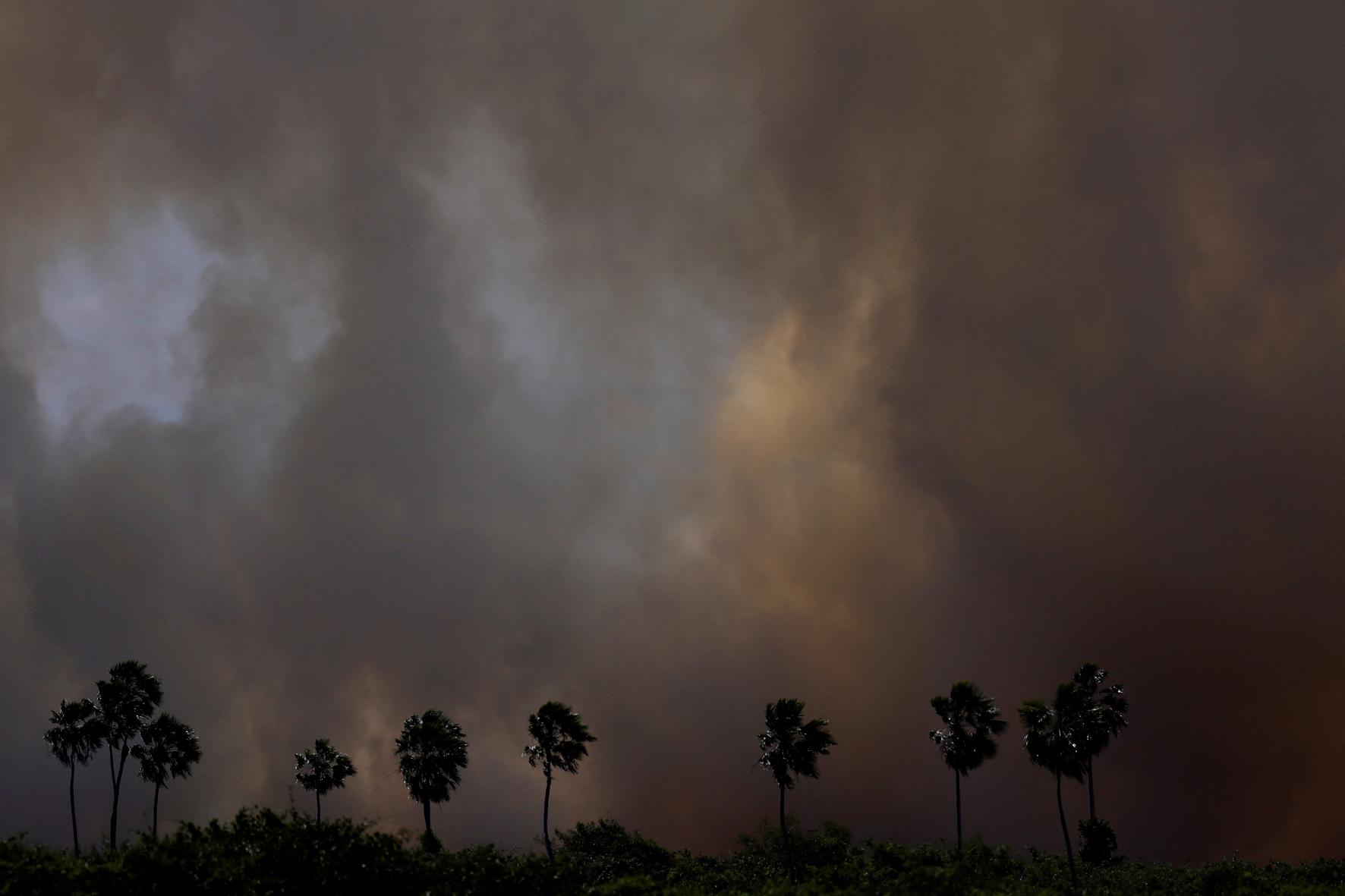
CORUMBA, Brazil, June 11 (Reuters) - As Jose Cleiton and Brandao Amilton ride their horses into the vastness of the Pantanal grassy wetlands of Brazil, a wall of smoke towers from the horizon far into the sky above. The worst of the dry season is still far off, but already these Brazilian wetlands are so dry that wildfires are surging. The number of Pantanal fires so far this year has jumped tenfold from the same period last year according to Brazil's National Institute of Space Research (INPE). "It's hard to breathe. It's hard for newborn children. The heat gets stronger and stronger," said Amilton, a local fishing guide. "The Pantanal is already hot and it gets hotter, drier, with smoke, the weather gets very bad." The men guide cattle across the flood plain, hoping for a better chance of survival. "The way the fire is coming, it could surround them and burn them to death," said Cleiton, a farmer. The Pantanal wetlands, roughly 10 times the size of the Florida everglades, are home to jaguars, tapirs, caimans and giant anteaters. Weak rains since late last year have disrupted the usual seasonal flooding, leaving more of the region vulnerable to fires. As the region approaches the riskiest season for wildfires, which usually peak in September, experts are warning that the blazes so far this year are worse than the start of a record 2020, when a third of the Pantanal burned. More than 3,400 square km (1,315 sq miles) of the Pantanal have burned from Jan. 1 to June 9, the highest level on record, according to the Federal University of Rio de Janeiro's satellite monitoring program, with data going back to 2012. The contrast with record flooding in Rio Grande do Sul, three states to the south, may be jarring, but scientists say they are part of the same phenomenon — an unusually strong El Nino pattern, worsened by climate change. "Climate change has supercharged El Nino," said Michael Coe, a climate scientist at the Woodwell Climate Research Center. "Now we are in a different realm." Sign up here. https://www.reuters.com/world/americas/fires-brazil-wetlands-surge-record-start-2024-2024-06-11/
2024-06-11 20:22
June 11 (Reuters) - The Canada Growth Fund, a federal clean-tech financing agency, on Tuesday signed its second deal to backstop carbon prices with a proposed Alberta facility that would convert landfill waste to electricity and sequester the resulting carbon emissions. CONTEXT The proposed waste-to-energy facility, located near Edmonton and the first of its kind in Canada, would be a partnership between Calgary-based Gibson Energy (GEI.TO) New Tab, opens new tab, the CGF and Varme Energy Inc. It would have capacity to incinerate 200,000 tonnes a year of municipal solid waste and produce electricity. A final investment decision is expected in early 2025 and commissioning would start in 2027. BY THE NUMBERS If the facility goes ahead the CGF will provide carbon price certainty through an agreement, known as a Carbon Credit Offtake, to buy up to 200,000 tonnes a year of carbon credits generated by the project at an initial price of C$85 ($61.80) per tonne for a term of 15 years. WHY IT'S IMPORTANT Canada has been working on ways to provide carbon price certainty to firms looking to invest in carbon capture and storage (CCS) technology to reduce their emissions. Carbon credit offtake agreements guarantee the price companies receive for sequestered carbon, which they say helps them reduce the risk of investing in new projects. The energy sector has been waiting on the federal government to announce more carbon credit offtake agreements after it signed an initial deal with Calgary-based Entropy in December. KEY QUOTES "Integrated waste-to-energy and Carbon Capture and Storage has significant potential to be replicated in municipalities across Canada and to put Canada in a position to export this expertise globally," the project's partners said in a news release. ($1 = 1.3753 Canadian dollars) Sign up here. https://www.reuters.com/sustainability/climate-energy/canada-signs-second-deal-guarantee-price-captured-carbon-2024-06-11/

2024-06-11 19:55
June 11 (Reuters) - The Republican majority in a U.S. congressional committee published a report on Tuesday accusing Wall Street firms of colluding with advocacy groups to force companies to shrink their greenhouse gas emissions. The committee's report, which was reported earlier by Reuters, is the first since it launched an investigation in 2022 into whether corporate efforts to tackle climate change violate antitrust laws. Several Republican-controlled states have been targeting Wall Street firms for entering into climate coalitions and marketing environmental, social and corporate governance (ESG)-focused investment products, fretting that these initiatives will harm jobs in the fossil fuel industry. This is despite the world failing to live up to an intergovernmental agreement reached in Paris in 2015 to keep global warming to 1.5 degrees Celsius (2.7 degrees Fahrenheit) so it can avoid the most catastrophic effects of climate change. In the report, Republican lawmakers accuse President Joe Biden's administration of failing to "meaningfully investigate the climate cartel's collusion, let alone bring enforcement actions against its apparent violations of longstanding U.S. antitrust law." A White House spokesperson did not immediately respond to a request for comment. Congressman Jerrold Nadler, a Democrat who sits on the judiciary committee of the House of Representatives that produced the report, dismissed its findings in a document seen by Reuters. "There is no theory of antitrust law that prevents private investors from working together to capture the risks associated with climate change," Nadler wrote in the preface to a document prepared by Democrats in response. While anti-ESG legislation is unlikely as long as Democrats control the White House and the Senate, any recommendation the committee comes up with may shed light on what a new administration led by Republican Donald Trump could try to implement if he prevails in November's U.S. election. "The goal of any investigation is to inform legislative reforms," a spokesperson for Judiciary Committee chair Jim Jordan said. No antitrust lawsuit has been brought against any climate coalition of companies. The spokesperson for Jordan declined to comment on any interactions with U.S. antitrust regulators regarding the report. The U.S. Department of Justice and the Federal Trade Commission, which oversee antitrust reviews, did not immediately respond to requests for comment. The committee's report said it provided interim findings and that the investigation is continuing. The Democrats argued in their rebuttal that co-ordination on climate efforts advances competition by creating a common emissions disclosure framework for asset managers to operate with fewer compliance costs, and for their clients to better compare their performance. The committee has issued subpoenas for documents and interviewed former regulators. The Republicans focused much of the committee's report on Climate Action 100+, a grouping of more than 700 investors focused on getting companies to curb emissions. They credited their investigation for several asset managers ending their membership this year for fear of an antitrust crackdown. The committee's report said Climate Action 100+ "bullies asset managers to join" and presses them to use their shareholder votes in support of climate proposals, seeking to reduce fossil fuel extraction and raising energy prices for U.S. consumers. A spokesperson for Climate Action 100+ said its aims to undertake investor stewardship on climate change were misunderstood in the political discourse, and that its investors were "independent fiduciaries, responsible for their individual investment and voting decisions." "As the world's largest investor-led engagement initiative, Climate Action 100+ will be scrutinized ... But any scrutiny must be fair, accurate, and based on facts," the spokesperson said. CALPERS, CERES Also in the Republicans' cross-hairs were Climate Action 100+ co-founders, the California Public Employees Retirement System (CalPERS) and climate-focused investor group Ceres for their key support of Climate Action 100+. It says activist investor Arjuna Capital, a member, "seeks to destroy fossil fuel companies." The committee has called witnesses including Ceres president Mindy Lubber to appear at a public hearing on June 12. Ceres said in a statement that the hearing is part of a larger political campaign to ban investors from considering climate-related financial risk. A CalPERS spokesperson said it was proud to participate in initiatives like Climate Action 100+. "This is not collusion; it is collaboration," the spokesperson said. Arjuna did not immediately respond to a request for comment. The committee's report cited work plans, meeting minutes and other documents the committee obtained, including an internal email referring to a Climate Action 100+ plan to replace board members at oil and gas firm Exxon Mobil (XOM.N) New Tab, opens new tab, which said this effort would "show (Climate Action 100+) has teeth." The Republicans described the world's three biggest asset managers, BlackRock (BLK.N) New Tab, opens new tab, Vanguard and State Street (STT.N) New Tab, opens new tab, as members of a climate cartel. Representatives for BlackRock and State Street did not immediately provide comment. A Vanguard spokesperson said the firm's "mission is to help individual investors achieve their financial goals" and it remained committed to cooperating with the committee's requests. Sign up here. https://www.reuters.com/sustainability/us-house-committee-report-finds-wall-street-colluded-curb-emissions-2024-06-11/


