2024-06-11 13:55
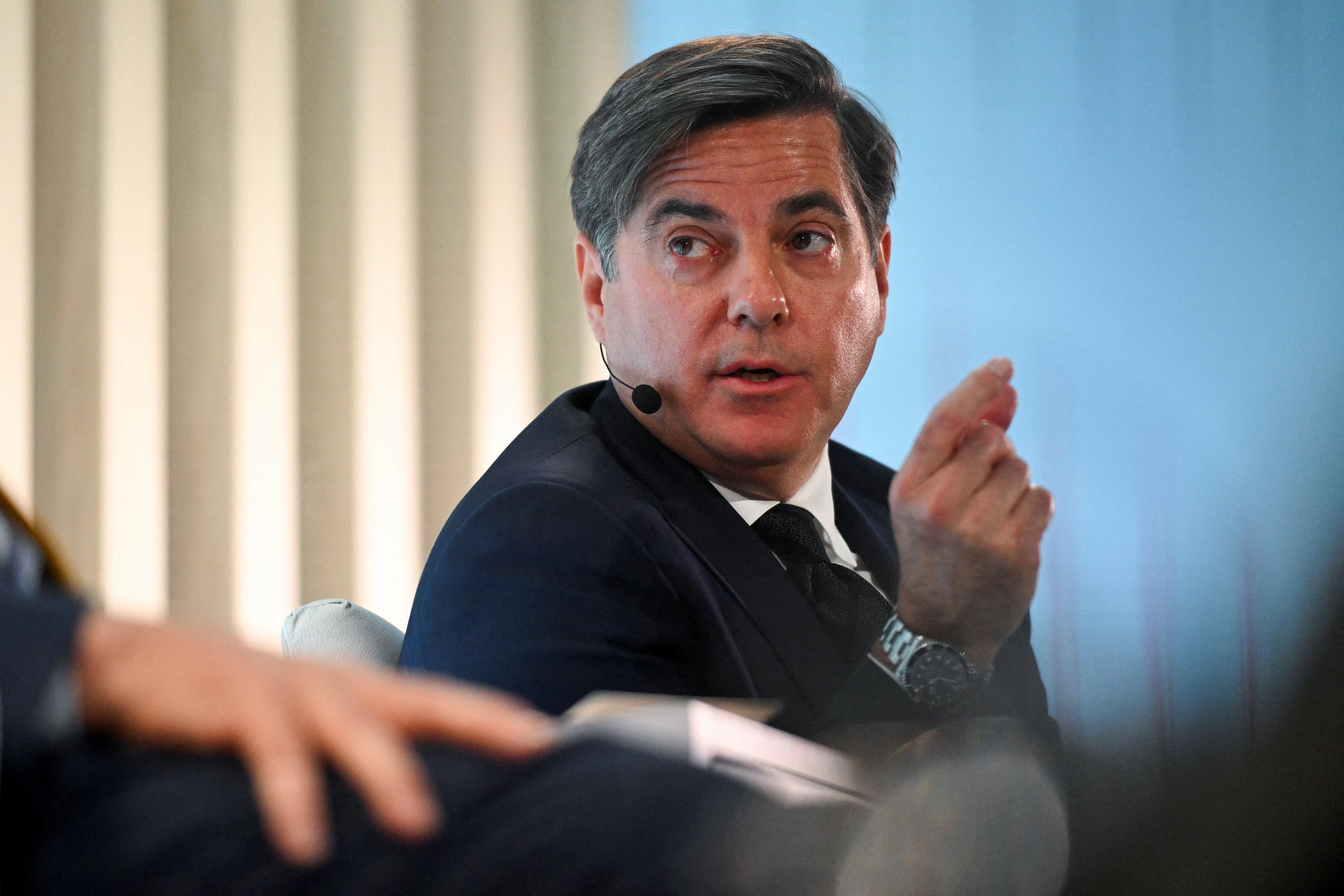
BENGALURU, June 11 (Reuters) - U.S. Treasury yields will plateau over the coming three months and then only fall modestly by year-end amid receding expectations of Federal Reserve interest rate cuts, according to a Reuters poll of bond strategists. After peaking at 5.02% in October, the benchmark U.S. 10-year Treasury note yield plummeted over 120 basis points (bps) as traders priced in as much as 150 bps of Fed rate cuts this year. Mostly-strong U.S. economic data and inflation still higher than the Fed's target have pushed financial markets to limit those expectations to only two 25-bp rate reductions this year, starting September. Economists in a separate Reuters survey shared that view, saying there was a considerable risk of only one or even no rate cuts in 2024. That repricing in interest rate futures has caused the yield to bounce back up to 4.44% currently, though the path has been volatile - traversing a near-40 bps range in just the last two weeks. The U.S. 10-year note yield , seen roughly steady at 4.35% at end-August, is then forecast to decline to 4.23% and 4.13% in six and 12 months respectively, according to median forecasts from 55 fixed-income strategists and analysts in a June 6-11 Reuters poll. "For yields, we think it's more choppy sideways and then lower towards the end of the year. We're still in the camp of inflation pressures easing and eventual Fed rate cuts - one or two - by year-end," said Kathy Jones, chief fixed income strategist for the Schwab Center for Financial Research. "But there's going to be continued volatility because the market's reaction to every data release will remain amplified and if they don't meet expectations, we'll get a big reaction. We have to acknowledge the economy over the last couple of years has been a lot more resilient than most people expected." Robust economic data has also driven strategists to push up median forecasts for the interest-rate sensitive 2-year Treasury note yield - now seen falling only 22 bps to 4.62% by end-August and about 40 bps to 4.45% in six months from 4.84% currently. "Most of the soft data - the surveys and so on - have come in weaker than expected so far, leading forecasters to believe a weakening in the economy is just around the corner; whereas hard data has continued to be strong," Jabaz Mathai, head of G10 rates and FX at Citi, said. "So the question in people's minds - the timing of when the economy actually goes into a recession - has been extremely difficult to answer, causing the postponement of rate cut pricing. It's a mixed environment, so rates are likely to stay in a range in the near-term," Mathai added. Much of the direction of yields over coming months will depend on messaging from the central bank's policy-setting meeting on Wednesday, with updated economic projections expected to show fewer rate cuts than anticipated in March. Asked what was more likely for the U.S. yield curve over the coming month, 70% of respondents, 14 of 20, said it would steepen, nine of whom said it would be led by short-term bond yields declining more than long-term ones, or 'bull steepening'. Five said 'bear steepening' was more likely, four said 'bull flattening', while two chose 'bear flattening'. Sign up here. https://www.reuters.com/markets/rates-bonds/shrinking-fed-rate-cut-expectations-keep-us-treasury-yields-elevated-2024-06-11/

2024-06-11 11:39
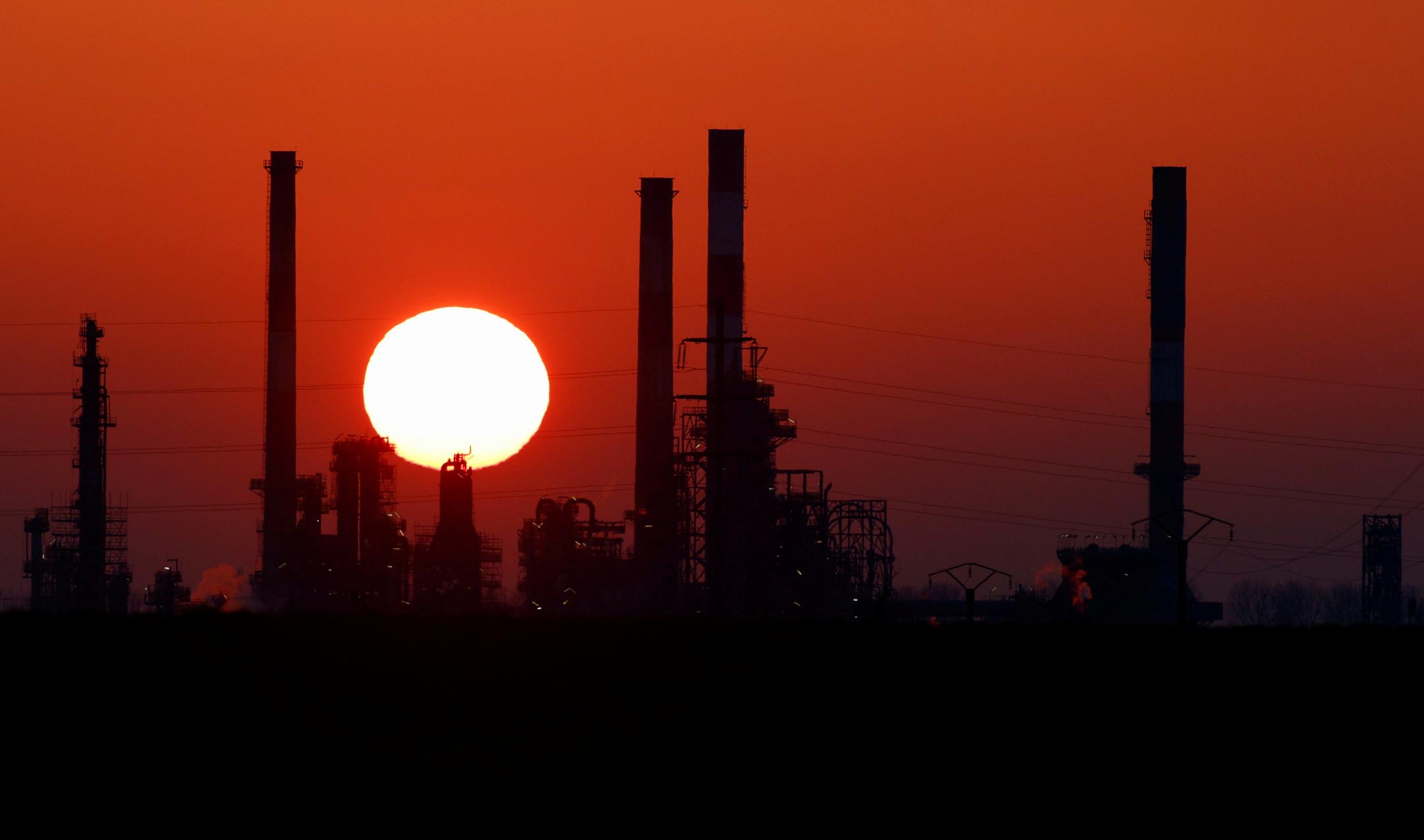
Sticks to 2024 oil demand growth forecast of 2.25 mbpd Report points to Q3 supply deficit if OPEC+ output kept steady IEA to publish updated forecasts on Wednesday LONDON, June 11 (Reuters) - OPEC on Tuesday stuck to its forecast for relatively strong growth in global oil demand in 2024, despite lower-than-expected use in the first quarter, saying travel and tourism would support consumption in the second half of the year. The Organization of the Petroleum Exporting Countries, in a monthly report, said world oil demand will rise by 2.25 million barrels per day (bpd) in 2024 and by 1.85 million bpd in 2025. Both forecasts were unchanged from last month. OPEC's report is the latest to flag robust oil market conditions heading into the second half of the year. Oil rose 3% on Monday after Goldman Sachs said transport demand would push the market into a third-quarter deficit. OPEC said steady global economic growth has continued in the first half of 2024 and forecast that world oil demand would rise by 2.3 million bpd in the second half. "Globally, the services sector maintains a stable momentum," OPEC said. "It is projected to be the main contributor to the economic growth dynamic in the second half of 2024, particularly supported by travel and tourism, with a consequent positive impact on oil demand." OPEC+, which groups OPEC and allies such as Russia, has implemented a series of output cuts since late 2022 to support the market. The group agreed on June 2 to extend the latest cut of 2.2 million bpd until the end of September and gradually phase it out from October. Oil was steady after the OPEC report was released with Brent crude edging down towards $81 a barrel. DEMAND VIEW SPLIT There is a wider than usual split between forecasters on the strength of oil demand growth in 2024, partly due to differences over the pace of the world's transition to cleaner fuels. The report showed that OPEC, at the high end of forecasts, is sticking to its guns. Although OPEC lowered its estimate of total demand in the first quarter of this year by 50,000 bpd to 103.51 million bpd, it increased its second-quarter forecast by the same increment and made no change to its full-year figure. The International Energy Agency, which represents industrialised countries, expects much lower demand growth than OPEC of 1.1 million bpd and is scheduled to provide an update on its view on Wednesday. Goldman Sachs said on Monday solid summer transport demand will push the oil market into a third-quarter deficit of 1.3 million bpd. Figures in OPEC's report imply an even larger gap between supply and demand. OPEC projects demand for OPEC+ crude, or crude from OPEC plus the allied countries working with it, at 43.6 million bpd in the third quarter, much more than the group is currently pumping, according to the report. The OPEC+ group pumped 40.92 million bpd in May, the report said, citing figures from secondary sources. That marked a drop of 123,000 bpd from April with declines in Russia and Kazakhstan offsetting increases in Nigeria and smaller African producers. Sign up here. https://www.reuters.com/markets/commodities/opec-sticks-2024-oil-demand-growth-forecast-trims-q1-view-2024-06-11/
2024-06-11 11:34
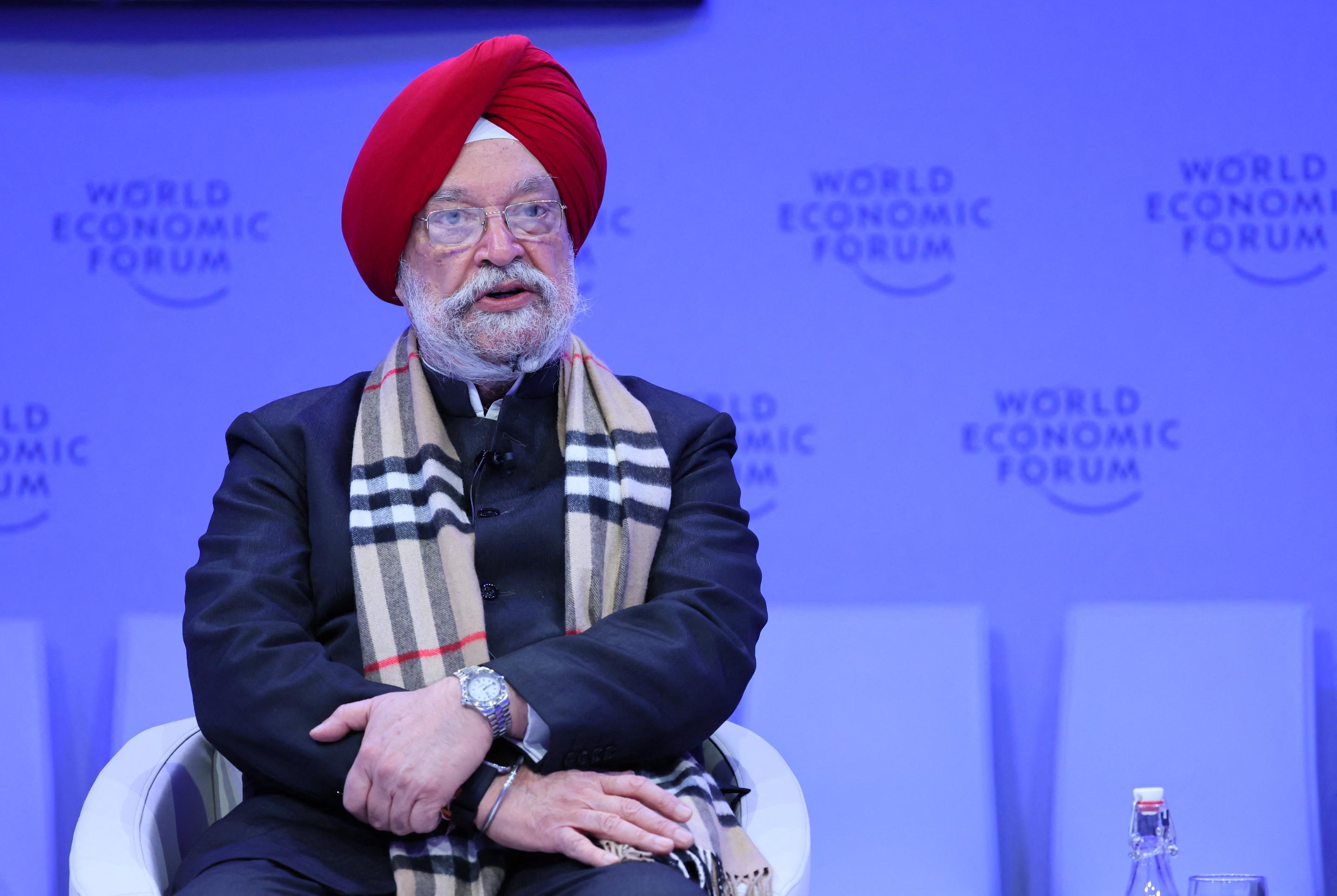
NEW DELHI, June 11 (Reuters) - Indian Oil Minister Hardeep Singh Puri on Tuesday announced that state-run Bharat Petroleum Corp (BPCL.NS) New Tab, opens new tab plans to build a new refinery and the nation is looking at signing more oil import deals with countries including Russia at discounted rates. Puri, who took charge of the ministry for a second time on Tuesday, said Prime Minister Narendra Modi wants to provide energy at affordable rates to customers to cushion them from the volatile oil markets. India, the world's third biggest oil importer and consumer, emerged as the biggest buyer of Russian sea-borne oil, snapping up barrels sold at a discount as Western companies halted purchases after Moscow's invasion of Ukraine in 2022. "We are a longstanding partner of Russian federation. We have had discussion with the Russians on long-term deals," Puri said. "I am confident that both our private and public sector players will sign long-term deals with countries where they see benefit in doing so," he said, when asked if Indian state-run companies are looking at signing such deals with Russia. While private refiners Reliance Industries (RELI.NS) New Tab, opens new tab and Nayara Energy have signed an annual import deal with Russia, state refiner Indian Oil Corp (IOC.NS) New Tab, opens new tab has not yet renewed its deal. Nayara Energy, majority owned by Russian entities, has also signed an annual crude supply deal with a trader to buy about 8-10 million barrels each month at a discount of $3-3.50 per barrel linked to the Dubai marker in 2024. Indian state refiners BPCL and Hindustan Petroleum Corp (HPCL.NS) New Tab, opens new tab are also looking at signing term deals with Russia. Puri said the location and capacity of a new refinery planned by BPCL have not yet been finalised. He said India wants to raise its oil output which has been stagnant for years. State-run Oil and Natural Gas Corp (ONGC.NS) New Tab, opens new tab has floated a tender seeking technical tie-ups with global oil majors to boost output its western offshore Mumbai High Field, he said. Output from the Mumbai High Field has been declining since 2018. Having hit a peak of 471,000 barrels per day (bpd) in 1984-85, it produced an average 134,000 bpd in the fiscal year to March 2024. Sign up here. https://www.reuters.com/business/energy/india-eyes-oil-deals-with-nations-including-russia-minister-says-2024-06-11/
2024-06-11 11:30
NAPERVILLE, Illinois, June 10 (Reuters) - The U.S. corn and soybean crops are in great shape early in the growing season, and although there is plenty of time for fortune to turn, this year’s harvest is already in good company. The U.S. Department of Agriculture on Monday pegged 72% of U.S. soybeans as being in good or excellent health, in the agency’s first assessment of the season. That was in line with trade expectations and is above the 10-year average for initial soy ratings of 68%. That came a week after initial U.S. corn conditions landed at 75% good-to-excellent (GE), well above the trade guess of 70% and the 10-year average of 71%. Only two other years in the last two decades featured a better combination of initial corn and soy health. Corn was 76% GE and soybeans were 74% to start in 2014, and 2018 began with corn at 79% GE and soybeans at 75%. Since 2005, initial corn and soybean conditions were both above average levels in seven years. Final corn and soybean yields both came in above USDA’s baselines in all but one year, 2022. The 2022 harvest was marred by severe drought in the Plains with Nebraska, South Dakota and Kansas notching their worst corn and soybean yields since 2012. However, production was respectable as top growers Iowa, Illinois and surrounding states achieved strong results. The good health of this year’s crops may not guarantee a yield above USDA’s trendline since that mark has been unbeatable for corn since 2018. USDA’s corn trend yield has been particularly debatable in the latest two years with trend set several bushels above the previous record. The 2023 U.S. corn harvest notched a record 177.3 bushels per acre (bpa), though that was 2.3% below USDA’s trendline, the biggest such shortfall since 2020. U.S. soybean yield fell below trend in the last two seasons but landed above in the two prior seasons, and both USDA’s 2023 and 2024 soybean trend yields of 52 bpa are extremely close to 2016’s record of 51.9. Aside from the trendline controversy, USDA’s condition scores suggest that both crops are poised for success barring any extreme weather events, including prolonged heat, dryness or a prominent derecho as was seen in 2020. Linear regression modeling is common in yield forecasting since it directly evaluates how much a dependent variable like yield may be explained by one or more independent variables - in this case, conditions. Using corn conditions for week 23 to predict final yield deviation from trend results in an R-square of 0.11, meaning only 11% of the yield variation can be explained by this week’s conditions. R-square tops out at 0.73 in weeks 29 and 30 (late July), suggesting corn conditions have max correlation with actual yield deviations in late July, though including other factors like July or August weather would enhance model reliability. The same analysis for soybean yield deviations from trend results in a much worse R-square, which stays below 0.5 until the end of August. It is not uncommon for strong soybean yields to be associated with mid-season conditions close to 60% GE. Karen Braun is a market analyst for Reuters. Views expressed above are her own. Sign up here. https://www.reuters.com/markets/commodities/us-corn-soybean-crop-best-shape-since-2018-2024-06-11/

2024-06-11 11:12
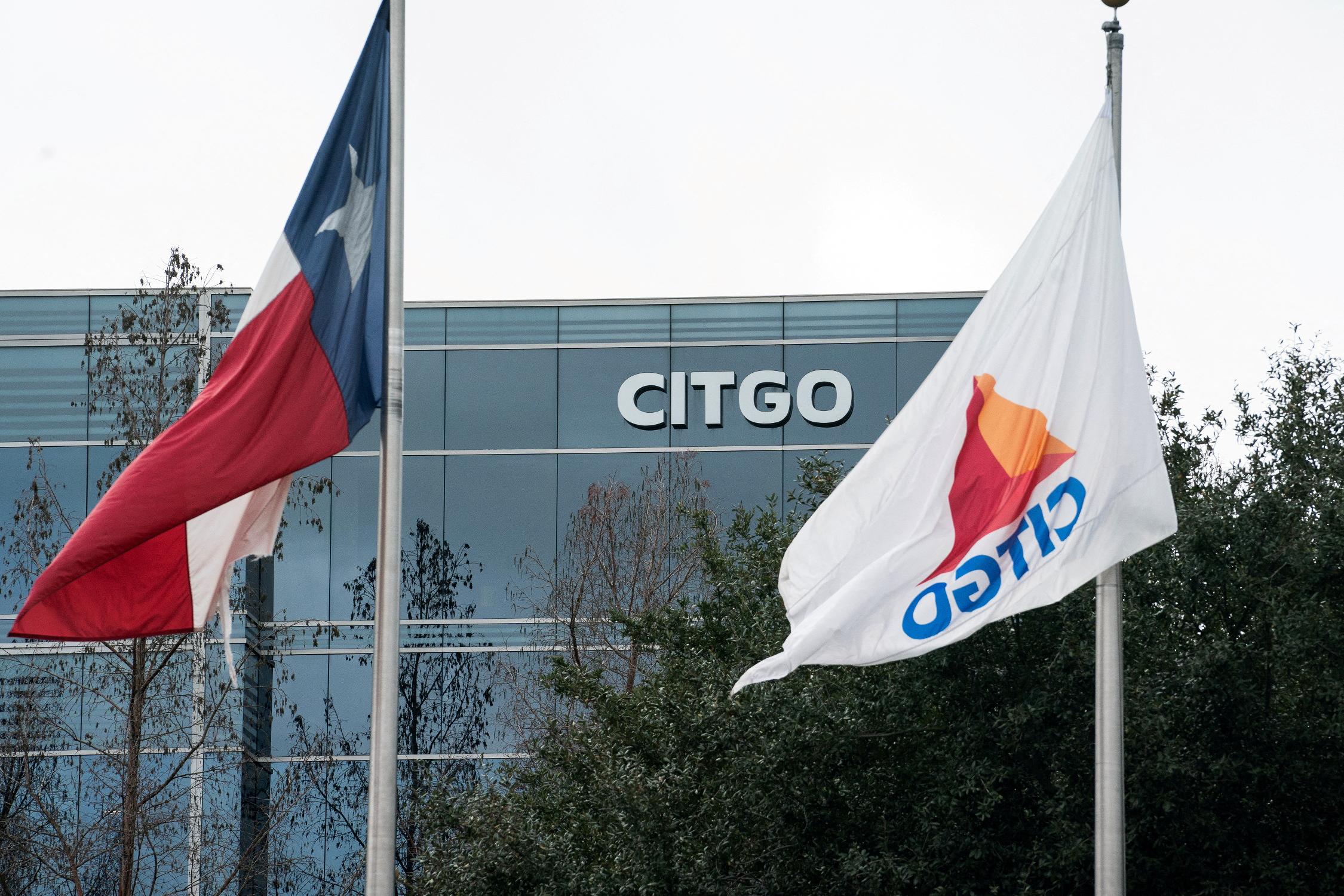
HOUSTON, June 11 (Reuters) - A U.S. federal court accepted binding offers through Tuesday for shares in the parent of Venezuela-owned refiner Citgo Petroleum, a crucial step in a long-running case where 18 creditors are seeking up to $21.3 billion for past expropriations and debt defaults. The share auction, organized in Delaware to pay creditors including oil producer ConocoPhillips (COP.N) New Tab, opens new tab and several industrial and mining companies, has attracted investors and firms with substantial resources, boosting the chances of an ownership change for the seventh-largest U.S. refiner. At least one credit bid was submitted to the court. Gold Reserve (GRZ.V) New Tab, opens new tab said it presented an offer with FJ Management, a Utah-based private holding company that manages a portfolio of oil and travel-related assets, including an oil refinery. A spokesperson for Canada-incorporated Gold Reserve was unavailable for immediate comment on the offer's details. The company has a $1 billion claim against Venezuela it can use as part of its bid. Credit bids are accepted in some auctions to allow creditors lining up for the proceeds to acquire the assets or shares up for auction in exchange for the debt owed. In this case, credit bids must be combined with cash offers, the court has said. Another miner that is a creditor in the case, Rusoro Mining (RML.V) New Tab, opens new tab, presented a non-binding offer in January, and in April retained Rothschild & Co as financial advisor and Kirkland & Ellis as counsel in the case. The company has not said if it decided to submit a binding bid in the second round. Hedge fund Elliott Investment Management has been weighing a bid, while a group of creditors represented by Centerview Partners aimed to lure ConocoPhillips to join another offer for Citgo parent PDV Holding, sources told Reuters in April. ConocoPhillips declined to comment on whether it submitted a bid. Citgo is the largest asset targeted by creditors trying to get compensation for late President Hugo Chavez' nationalizations two decades ago and President Nicolas Maduro's failed debt payments. Maduro has rejected the auction and said Washington is trying to steal Venezuela's foreign assets. But his government has made little effort to honor the country's debts. A court officer appointed for the case and investment bank Evercore Group are in charge of receiving and analyzing the bids. The deadline to complete the sales process, including awarding the round's winners, is July 15. Citgo Petroleum, controlled by supervising boards since it severed ties in 2019 with its ultimate parent, Caracas-based state oil company PDVSA, is the crown jewel of Venezuela's foreign assets, processing up to 807,000 barrels of oil per day. In the last two years, the company has generated $4.8 billion in combined net earnings. Parties representing Venezuela in Delaware are hopeful that offers in this second bidding round will be higher than non-binding bids in the first round in January, which only reached $7.3 billion, compared with Citgo's valuation of $11 billion to $13 billion. Venezuela might press the court for a third bidding round if offers do not approach $10 billion, two sources said on Monday. As the bidding deadline approached, politicians and envoys representing Venezuela began doubling down on efforts to halt the auction. This month, they asked the White House and U.S. Congress to pause the court process until a presidential election is completed in Venezuela in July. The boards supervising Citgo also continue trying to reach payment agreements with some creditors, including Conoco and the holders of PDVSA's 2020 bonds, which are collateralized with another Citgo parent's equity. Among the highest-ranked creditors that stand to collect proceeds from the auction are shipbuilder Huntington Ingalls Industries (HII.N) New Tab, opens new tab, marine services firm Tidewater (TDW.N) New Tab, opens new tab, conglomerate Koch Industries and glass container manufacturer O-I Glass (OI.N) New Tab, opens new tab. Sign up here. https://www.reuters.com/markets/commodities/us-court-receives-binding-bids-citgos-parent-sale-approaches-2024-06-11/
2024-06-11 11:05
The two industry outsiders upending LNG markets Venture Global LNG has shot up the ranks of gas exporters Customers BP, Shell say the pair flout industry norms HOUSTON, June 11 (Reuters) - U.S. liquefied natural gas (LNG) exporter Venture Global LNG this year became one of the country's largest producers of the superchilled gas and the industry's most contentious supplier, facing contract claims by six customers. The duo who founded the company, co-chairs Michael Sabel and Robert Pender, have turned the booming business upside down through strong contracts, good timing and a business plan to rapidly build three giant plants. Sabel, a former investment banker, and financial lawyer Pender, have successfully fended off accusations of self-dealing by BP (BP.L) New Tab, opens new tab, Shell (SHEL.L) New Tab, opens new tab, Repsol SA (REP.MC) New Tab, opens new tab, Orlen(PKN.WA) New Tab, opens new tab, Galp Energia (GALP.LS) New Tab, opens new tab and Edison SpA (EDNn.MI) New Tab, opens new tab. They oversee a business aiming to produce over 100 million metric tons of LNG. On Monday, a U.S. energy regulator sided with customers of its first plant, ordering the pair to turn over documents showing why their initial Calcasieu Pass plant remains in a commissioning phase more than two years after startup. At issue is the company's insistence it does not have to supply the six because their contracts allow it to decide when the Louisiana plant is ready. Venture Global contends it is not, even though they have been selling spot cargoes since early 2022. Shell, BP and others say the project is producing LNG above its 10 MTPA capacity and has profited to the tune of billions of dollars that belong to them. They and two others have contract arbitration claims against Venture Global. SEIZING ON SMALL SCALE Neither of Venture Global's owners had any experience in LNG before starting the company. Sabel and Pender had tried unsuccessfully in 2009 to develop a coal plant in Sri Lanka, before getting the LNG bug. They seized on LNG when considering how Haiti could import small amounts of gas for its needs. Sabel felt it could work if there were small-scale gas plants built from modular components. "The scale had become so gigantic, risky and too expensive. So our Eureka moment was let's bring the scale down, small enough so you can build it (processing equipment) in factories," Sabel said in an interview last year. They signed on with LNG equipment maker Baker Hughes (BKR.O) New Tab, opens new tab, which was developing modular trains, or chillers that turn gas into a liquid, and are built in factories and snapped together like Legos to more quickly start exports. "What they did was a modular design which enabled them, from an execution timeline, to deliver," said Lorenzo Simonelli, CEO of Baker Hughes. Sabel and Pender are "very driven professionals" who have succeeded with their LNG dream, he said. To bring their vision to life, however, they needed customers willing to sign long-term contracts to convince financiers to back their plan. That led to processing deals at about $1.75 per million British thermal units, about 60% of the going rate at the time. They struck deals with BP, Edison, Galp, Repsol, Shell, and Orlen (PKN.WA) New Tab, opens new tab. In a March letter to U.S. regulators, Shell said Venture Global has flouted "LNG industry norms" by turning a routine months-long startup process into years to keep cargoes for its own use. It "has abused, and is continuing to abuse, the regulatory process to achieve its commercial objectives," Shell wrote, pointing to the pair's sale of 257 cargoes from a plant they claim is not ready for commercial sales. BILLIONS IN PROFIT The company sold that LNG on the spot market for what Shell estimated was $48.8 million per cargo, or $29 million more than if those cargoes were delivered under its contracts. Calcasieu Pass collected $7.6 billion in sales through the end of 2023, "$4.5 billion more than if sold at average prices," it told regulators. Venture Global CEO Sabel acknowledged its contract prices were significantly lower than others, but he said had it been able to sign deals at higher prices, it "would have helped us a lot more." He rejects Shell's contention that Calcasieu Pass was built on the backs of its long-term contract holders and believes when it delivers gas to those buyers by early next year, "the issue as it relates to CP1 (Calcasieu Pass) goes away." Sign up here. https://www.reuters.com/business/energy/duo-atop-biggest-most-contentious-us-lng-exporter-2024-06-11/