
2024-06-11 03:20
SHANGHAI/BEIJING, June 11 (Reuters) - China's major state-owned banks were seen selling dollars for yuan in the onshore spot foreign exchange market on Tuesday to prevent the local currency from falling too rapidly, four people with knowledge of the matter said. China's state banks usually act on behalf of the central bank in the country's foreign exchange market, but they could also trade on their own behalf. The state banks' actions came as the onshore yuan fell to a near seven-month low against a strengthening dollar in early deals on Tuesday. The yuan last traded at 7.2529 per dollar as of 0310 GMT. Sign up here. https://www.reuters.com/markets/currencies/china-state-owned-banks-sold-dollars-yuan-fell-near-seven-month-low-sources-say-2024-06-11/

2024-06-11 02:48
MUMBAI, June 11 (Reuters) - The Indian rupee is expected to open flat on Tuesday amidst weakness in Asian peers on one hand and a central bank that does not want the currency to fall to an all-time low on the other. Non-deliverable forwards indicate the rupee will be mostly unchanged from the 83.5050 of the previous session. The dollar was largely bid, following through on robust U.S. jobs data that decreased the odds of the Federal Reserve cutting interest rates later this year. Asian currencies were down 0.1% to 0.3%. The Fed's two-day policy meeting begins later in the day, following which it is widely expected to make no changes to the policy rate. The Fed's dot plot is expected to shift higher, with policymakers predicting less rate cuts this year than before. The Fed's decision is due on Wednesday during U.S. trading hours, preceded by May U.S. consumer inflation numbers. "You have two big things tomorrow from the dollar's near-term direction point of view," a currency trader at a bank said. The rupee "till then should basically see narrow intraday moves with 83.50 acting a centre point", he said. The rupee is not far away from the 83.5750 all-time low hit in April. The Reserve Bank of India has been regularly selling dollars at near 83.50 to defend the local currency, according to traders. Ahead of the May U.S. inflation data, the New York 1-year surveyed consumer inflation expectations fell to 3.17% in May from 3.26% in April. This will be "some relief" considering other inflation expectations measures have been showing signs of increase recently, ING Bank said in a note. KEY INDICATORS: ** One-month non-deliverable rupee forward at 83.56; onshore one-month forward premium at 6.25 paise ** Dollar index at 105.14 ** Brent crude futures down 0.3% at $81.4 per barrel ** Ten-year U.S. note yield at 4.45% ** As per NSDL data, foreign investors bought a net $642mln worth of Indian shares on Jun 7 ** NSDL data shows foreign investors bought a net $154.7mln worth of Indian bonds on Jun 7 Sign up here. https://www.reuters.com/markets/currencies/rupee-caught-between-dollar-uptick-central-bank-intervention-2024-06-11/

2024-06-11 00:17
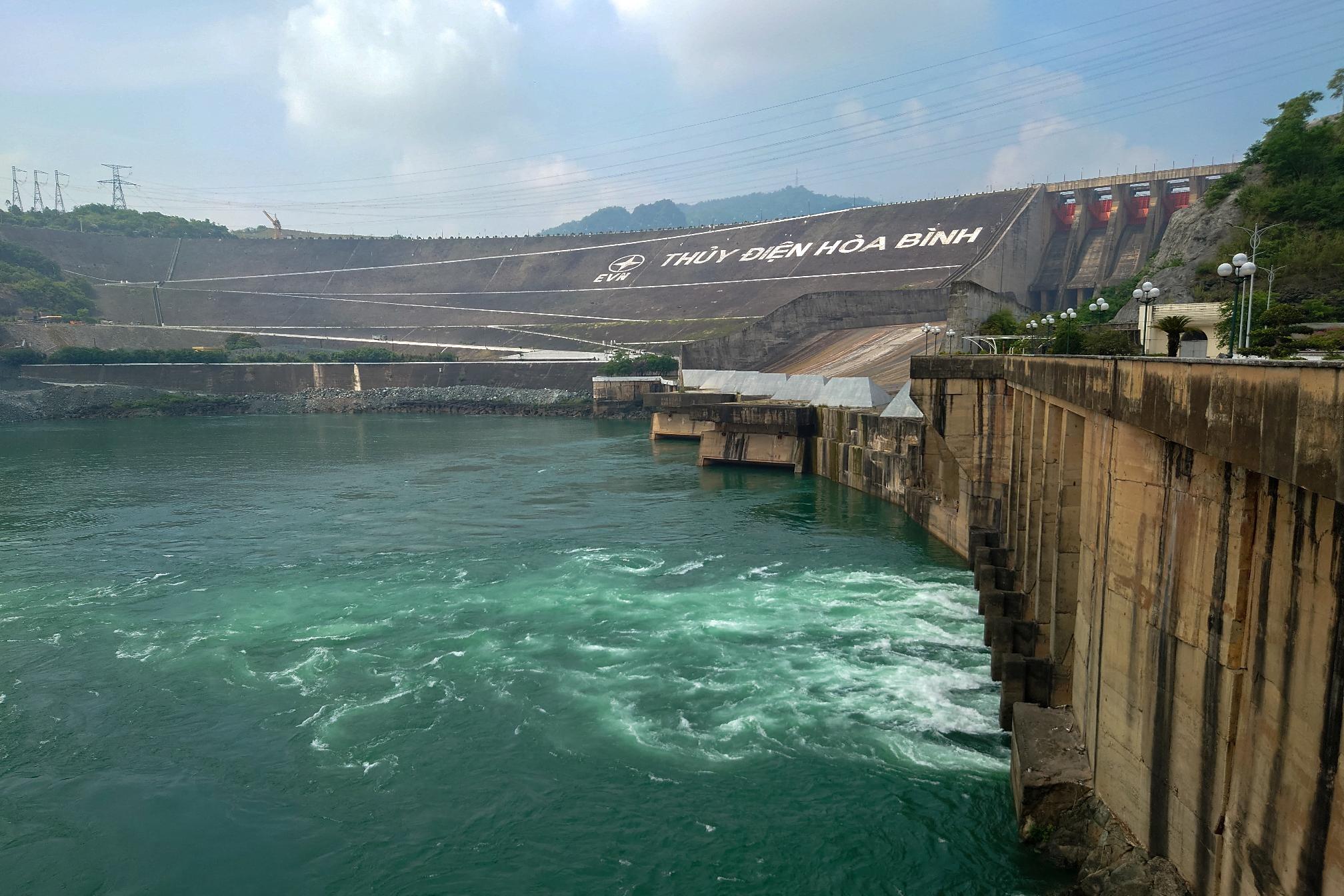
59% of Vietnam's power output came from coal in Jan-May period Country expands coal plants capacity, seeks energy savings It has plans to widen grid, reform energy rules HANOI/HOA BINH, Vietnam, June 11 (Reuters) - Lights are off and air conditioning is down at the headquarters of Vietnam's state-run electricity provider EVN as the country's top power utility tries to "lead by example" to avoid a repeat of last year's crippling blackouts, an official tells visitors. But many businesses around Vietnam's capital Hanoi appear to be ignoring the call to conserve power, keeping decorative but otherwise purposeless neon lights on the outside of high-rise buildings on all night. The difficulties in curtailing consumption illustrate the challenges facing Vietnam a year after sudden outages caused losses of hundreds of millions of dollars to multinational manufacturers with investments in the Southeast Asian country. Vietnam is pursuing a patchwork agenda of energy-saving measures, grid upgrades, regulatory reforms and a massive increase of coal power as it seeks to avert electricity shortfalls, according to government data and interviews with officials and experts. But Trinh Mai Phuong, EVN's communications director, explains during a media visit that even the biggest infrastructure upgrade underway, a new $1 billion transmission line connecting the centre of the country to the highly industrialised north that was hard hit by blackouts last year, may not be enough. "I would not say it is a game changer," he said of the line that could be completed as early as this month, noting power consumption is expected to hit record highs in the coming weeks as the country braces for more heatwaves. The soaring power demand is making it increasingly difficult for Vietnam to meet climate change commitments while providing enough power to satisfy large investors such as Samsung Electronics (005930.KS) New Tab, opens new tab, Foxconn (2354.TW) New Tab, opens new tab and Canon (7751.T) New Tab, opens new tab. Broader sector-wide reforms are needed over the longer term, foreign investors and analysts said. EMERGENCY MEASURES In the short term, Vietnam is banking mostly on coal to provide enough reliable electricity. It may be just enough - or not - but either way it may signal a blow to the country's commitments to reduce reliance on fossil fuels. Coal use rose massively in the first five months of 2024, with coal-fired power plants accounting on average for 59% of electricity output, exceeding 70% some days, according to EVN data. That was up from nearly 45% in the same period last year and 41% in 2021, when Vietnam began drafting plans to cut coal that persuaded international donors to commit $15.5 billion to help phase out the fuel. Thanks to a new coal-fired power plant that came online in 2023, coal accounted for 33% of total installed capacity last year, up from 30.8% in 2020, taking Vietnam further away from the goal of lowering that to 20% by 2030. Energy conservation is another key pillar of the plan. EVN and its local units have encouraged energy-hungry clients, including foreign manufacturers, to save power with tailored measures, especially in peak hours. But that risks Vietnam's reputation as a reliable place for investment and could affect future manufacturing expansion plans, according to foreign investors who declined to be named because they were not authorised to talk to media. The matter should be addressed by solving generation and distribution issues, and not from the consumption side, two foreign investors said. Vietnam's industry ministry did not reply to a request for comment. CLEANER OPTIONS Vietnam is using only a fraction of its installed solar and onshore wind capacity due largely to administrative hurdles. It has not approved regulations to kick-start offshore wind projects and delays dog projects to build power plants fuelled by imported liquefied natural gas, which is cleaner than coal. The four energy sources together should account for more than 40% of installed capacity by 2030, according to the government's plans, though analysts are sceptical. Hydropower is projected to fall to less than 20% of installed power generation by the end of decade from more than 30% in 2020. But some capacity is being added in the north where needs are higher. One of Vietnam's largest hydropower plants at Hoa Binh is adding two General Electric (GE.N) New Tab, opens new tab turbines to its existing eight, which will boost its total capacity to 2.4 gigawatts from less than 2 GW now by the second half of 2025, said Dao Trong Sang, EVN's manager of the expansion project, during a visit to the dam. The Hoa Binh plant, combined with the new transmission line that brings electricity to the north from separate plants, may add 8% capacity to the power-hungry north. REFORMS NEEDED The power crisis cannot be solved without long-awaited reforms, experts say, though progress to date has been slow. In April, the industry ministry issued an updated methodology for determining electricity prices, a step towards possibly reviving projects stuck for years because of a lack of clarity about tariffs. However, the methodology could force developers to shoulder excessive risk, complicating their access to finance, said a Vietnam-based official who declined to be named because they were not authorised to talk to media. A separate draft decree enabling manufacturers to buy electricity directly from producers is seen as close to approval after years of internal debate, according to several analysts. The use of direct power purchase agreements (DPPAs) could make it easier for multinational companies to avoid higher tariffs on exports and boost the use of renewables to help them meet environmental, social and governance requirements. But the DPPA rules need to be combined with other reforms, such as clearer provisions to directly connect factories to power-generation projects, the official said. Sign up here. https://www.reuters.com/sustainability/boards-policy-regulation/vietnam-eyes-greener-power-banks-coal-avert-blackouts-2024-06-11/
2024-06-11 00:11
WELLINGTON, June 11 (Reuters) - New Zealand on Tuesday ended a plan to put a price on agricultural emissions including methane produced by belching sheep and cattle, relenting to farmer pressure that the plan would make their business unprofitable. The conservative government said in a statement it would establish a Pastoral Sector Group with representatives from the agricultural sector to find other ways to reduce biogenic methane. Terms of reference for the group need to be developed and agreed upon. The previous government had introduced a plan to charge farmers for their gas emissions from the end of 2025, in what was hailed as a world first. New Zealand, home to 5 million people, has about 10 million cattle and 26 million sheep. Nearly half its total greenhouse gas emissions come from agriculture, mainly methane. New Zealand had been planning on including agriculture in the emissions trading scheme as part of its commitment to stop global warming. However, the plan was unpopular in many parts of the rural sector and the current government promised to end it if elected. "It's time for a fresh start on how we engage with farmers and processors to work on biogenic methane," said New Zealand's Minister of Agriculture Todd McClay. He added the government was committed to meeting its climate change obligations. The government has committed NZ$400 million ($245.08 million) over the next four years to accelerate the commercialisation of tools and technology to reduce on-farm emissions and will increase funding for New Zealand Agricultural Greenhouse Gas Research Centre by NZ$50.5 million over the next five years, the statement said. ($1 = 1.6321 New Zealand dollars) Sign up here. https://www.reuters.com/business/environment/new-zealand-ends-plans-price-agricultural-emissions-2024-06-11/

2024-06-10 23:34
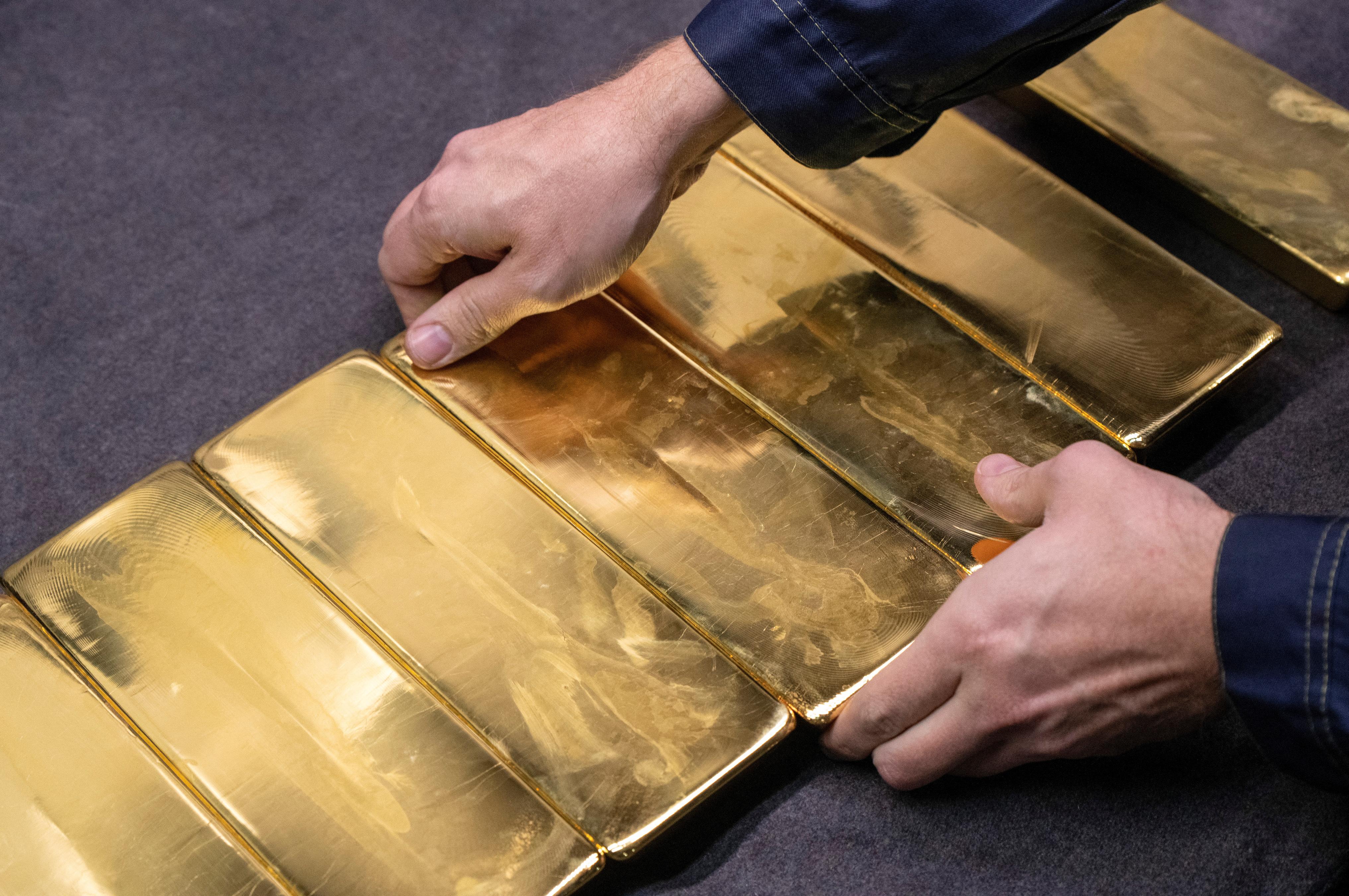
Official hopes imports can be allowed as early as next month Retail investment seen leading Vietnam's 2024 gold demand SINGAPORE, June 11 (Reuters) - (This June 10 story has been officially corrected to fix the source's quote to remove reference to the timeline from the government on imports in paragraph 4, and also to change the figure to 33 tonnes, from 33 million tonnes, in paragraph 9) Vietnam could allow companies to import gold for the first time in over a decade, as it aims to bridge the widening gap between local prices and international benchmarks, an industry official told Reuters. The Vietnam Gold Traders Association (VGTA) has been in protracted talks with the government over measures to correct the imbalance in supply and demand of gold, Huynh Trung Khanh, the association's vice chair said. Vietnam's government virtually took full control of imports and local bullion sales in 2012, with certain large companies allowed to import the precious metal provided they repurposed it as jewellery for export. "We hope that by July they will allow gold companies to import directly," Khanh said on the sidelines of the Asia Pacific Precious Metals conference, referring to the raw material for jewellery manufacturing. He added that this will be subjected to State Bank of Vietnam's decision on a petition submitted by the association regarding future changes in gold management policy. It would mark a significant departure from the current policy, under which the central bank tightly controls imports. The State Bank of Vietnam did not respond to a request seeking comment. Attempts to narrow the gap with international benchmarks by holding auctions and allowing four local banks to sell gold in a bid to increase liquidity have largely failed to have a sustained impact, with domestic prices still trading at stubbornly high premiums to global prices. Immediately reducing premiums on domestic prices is crucial, as VGTA estimates Vietnam's gold demand will surge this year. The southeast nation is among the top 10 consumers of gold. Gold purchases are set to rise 10% on a yearly basis to 33 tonnes during the first six months of this year, Khanh said in his presentation at the conference. Retail buyers, who view gold as a wealth preservation tool to guard against economic uncertainty, account for a lion's share of the purchases in the south east Asian economy, home to about 100 million people. "The key reasons for this strong retail investment demand were the sharp decrease in saving interest rates, the frozen real estate and the constant devaluation of the national currency versus the U.S. dollar," Khanh said. "We have had people queuing in the streets, in the sun and rain to buy more gold." A sharp surge in demand for gold has also lead to increased smuggling, especially from neighbouring Cambodia, Khanh said, adding that it made immediate policy action critical. "It is a very big underground system network. With such a big price hike, the rate of smuggling is still high." The VGTA and the World Gold Council, a global industry body, are currently working with the Vietnamese central bank and other government agencies to set-up a national gold exchange, a move it believes would provide more market stability. Sign up here. https://www.reuters.com/markets/commodities/vietnam-let-companies-import-gold-first-time-years-industry-official-says-2024-06-10/
2024-06-10 23:33
June 11 (Reuters) - Mining giant Rio Tinto (RIO.AX) New Tab, opens new tab said on Tuesday it will buy Mitsubishi Corp's (8058.T) New Tab, opens new tab 11.65% stake in Boyne Smelters (BSL) for an undisclosed sum. Boyne, which owns and operates the Boyne Island aluminium smelter in Gladstone, Australia, is a joint venture between Rio Tinto, YKK Aluminium and others. In late May, Rio signed a deal to buy Sumitomo Chemical's (4005.T) New Tab, opens new tab 2.46% interest in the venture. The purchase from Sumitomo Chemical and the completion of the deal with Mitsubishi will see Rio's interest in Boyne increase to 73.5%, the Australian miner said. "Rio Tinto looks forward to continuing to work with its remaining BSL joint venture partners and other stakeholders on securing a competitive low-carbon future for its Gladstone operations," Rio Tinto said. The acquisition is set to be finalised in the second half of 2024. For Mitsubishi, the sale is part of a reshuffle of its aluminium portfolio, and the financial impact - to be booked in the July-September quarter - on its annual earnings forecast will be limited, a company spokesperson said. The Japanese trading house will no longer hold stakes in any aluminium smelter but will remain active in the aluminium business, including trading and investment in bauxite assets, the spokesperson said. The metal's growth potential is in light-weight automobiles to achieve greater efficiency, they said. In 2021, Mitsubishi agreed to buy 30% of the Aurukun bauxite project in Australia from Glencore (GLEN.L) New Tab, opens new tab. Sign up here. https://www.reuters.com/markets/deals/australias-rio-tinto-buy-mitsubishis-nearly-12-stake-boyne-smelters-2024-06-10/


