2024-06-10 12:39
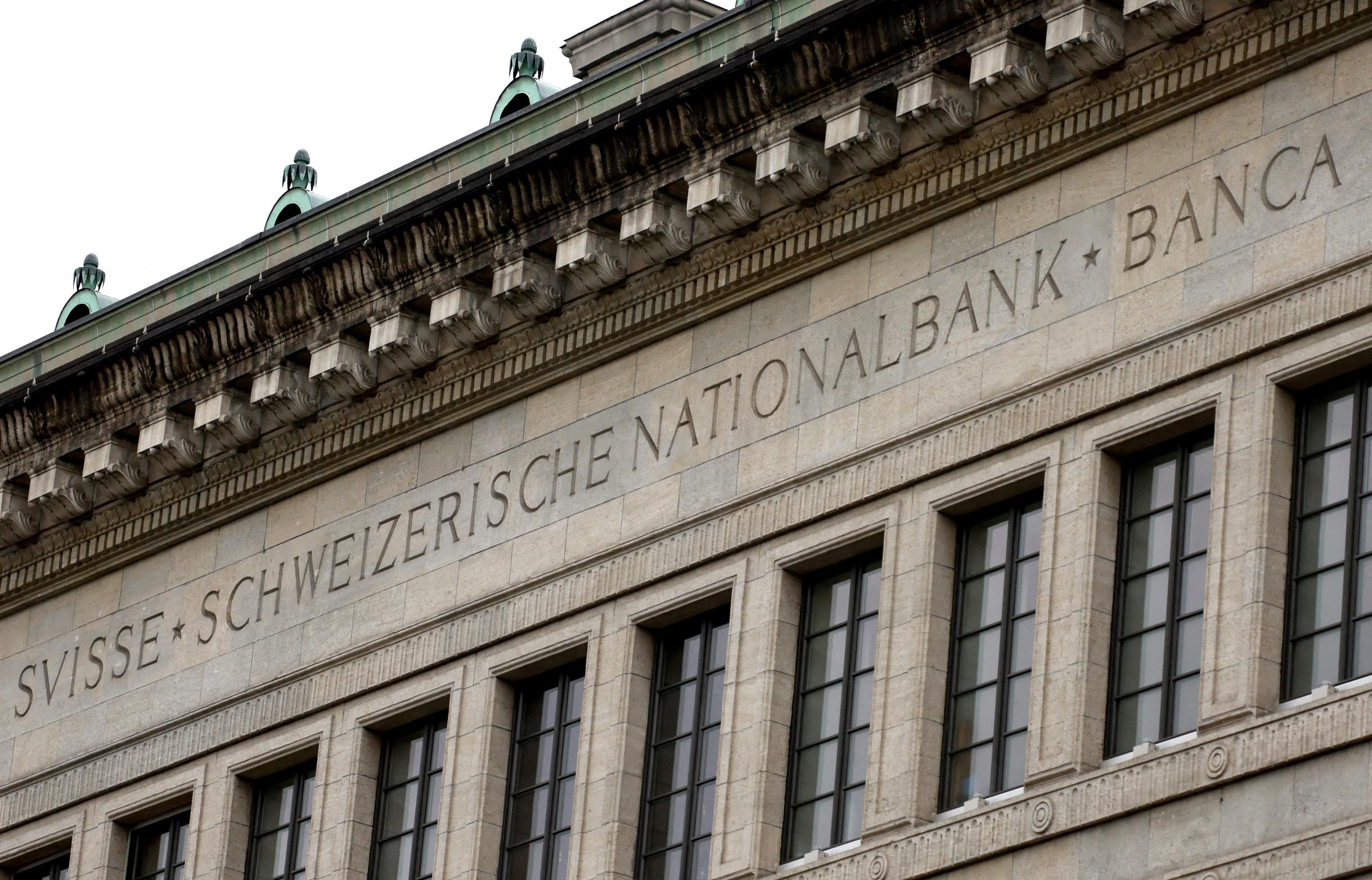
ZURICH, June 10 (Reuters) - The Swiss National Bank's supervisory board is in the final stages of deciding its candidate to replace outgoing Chairman Thomas Jordan, people familiar with the matter have told Reuters. The Bank Council is expected soon to nominate the successor to Jordan, who steps down in September after 12 years leading the central bank through major challenges including the fall of bank Credit Suisse and a sharp appreciation in the Swiss franc. Two sources who asked not to be named said the process to fill one of the best-paid jobs in central banking - with a 1.3 million Swiss francs ($1.5 million) compensation package last year - was almost complete, with interviews already finished. The Bank Council, which must present its candidate to the Swiss cabinet for approval, said it did not comment on the search process or on rumours. SNB Vice Chairman Martin Schlegel is seen as the most likely successor, with 16 out of 18 economists polled by Reuters expecting the 47-year-old to get the job. "Schlegel is seen as the leading candidate. Having deep knowledge of the SNB and Swiss financial markets is clearly an advantage," said Stefan Gerlach, chief economist at EFG Bank and a former deputy governor of the Central Bank of Ireland. Schlegel started his SNB career in 2003 and worked in the research department, which was then headed by Jordan, who under the rules has no role in choosing his successor. "I was Thomas Jordan's intern," Schlegel told the Neue Zuercher Zeitung newspaper in 2019. "And somehow I still am." Schlegel has consistently declined to comment on speculation linking him to the job. Analysts expect no change to the SNB's monetary policy, which targets inflation at 0-2%, and preventing large fluctuations in the franc's value. But the newcomer will not have an easy time, having to reduce the big payments the SNB is making to commercial banks - 7.4 billion francs last year - after interest rates turned positive. They will also have to decide what to do with the SNB's huge balance sheet, which caused a 133 billion franc loss in 2022. "A central bank cannot go bankrupt but big losses could have a negative effect on the SNB's credibility, which is the most important asset for a central bank," said Sarah Lein, an economist at the University of Basel. "It is going to be a challenging legacy for whoever takes over." The debate between government and regulators over new banking regulations, following questions whether the SNB could have done more in the run-up to the Credit Suisse crash, will also have to be negotiated by the new chairman. If Schlegel is promoted, it would leave a vacancy on the SNB's three-member rate-setting governing council, alongside former Federal Reserve Bank of New York executive Antoine Martin, who joined in January. The SNB is under pressure to pick a woman, especially after Andrea Maechler, the only previous female member, left in 2023. Celine Widmer, a federal lawmaker for the left-leaning Social Democrats, said it was time for a female leader of the SNB, with Beatrice Weder di Mauro - a former economic adviser to the German government’s panel of economic advisers – seen as a suitable candidate. Weder di Mauro declined to comment to Reuters. "Our national bank is one of the most powerful institutions in Switzerland. From a gender equality perspective, it's absolutely crucial that women are represented," said Widmer. According to the SNB, candidates must have an "impeccable reputation", expertise in "monetary, banking and financial issues," Swiss citizenship and live in the country. "I don't have great hope that a woman will be elected as chairwoman," said Widmer. "However, it would be completely unacceptable if there were no women on the governing board." ($1 = 0.8953 Swiss francs) Sign up here. https://www.reuters.com/markets/europe/race-appoint-new-swiss-central-bank-chief-nears-completion-2024-06-10/
2024-06-10 11:47
BRUSSELS, June 10 (Reuters) - The EU will sign a contract on Tuesday to secure over 40 million doses of a preventative avian flu vaccine for 15 countries with the first shipments heading to Finland, EU officials said on Monday. The deal secures up to 665,000 doses from vaccine manufacturer CSL Seqirus and includes an option for a further 40 million vaccines for a maximum of four years. The vaccines will be jointly procured by the Commission's emergency health arm HERA and 15 countries in the EU and the European Economic Area. The doses are intended for those most exposed to the virus, such as poultry farm workers and veterinarians. The United States, Canada and Britain are also in the process of securing preventative vaccine doses. "When it comes to avian influenza we are continuously and actively monitoring the situation...and tomorrow, with our Member States, we are ensuring access to over 40 million doses of avian influenza vaccine to protect those most exposed. Deliveries to countries that have immediate needs are already on their way," EU health commissioner Stella Kyriakides told Reuters. The H5N1 virus has spread across most of the U.S. states affecting primarily poultry and in recent months over 80 dairy farms. So far, there have been no confirmed human-to-human transfers though three people in the U.S. were infected after exposure to infected cattle since April 1. There are no active cases in humans or in cattle in the EU, as of early June according to the European Centre for Disease Prevention and Control (ECDC). "Transmission to humans remains a rare event and no sustained transmission between humans has been observed so far," the ECDC said in a weekly report for June 1-7. "The risk of zoonotic influenza transmission to the general public in EU/EEA countries is considered to be low." The Commission, through HERA, has already secured 111 million doses from GSK and Seqirus of pandemic influenza vaccines, which can be adapted to any prevailing flu strain. Sign up here. https://www.reuters.com/business/healthcare-pharmaceuticals/eu-secure-40-million-avian-flu-vaccines-15-countries-officials-2024-06-10/

2024-06-10 11:30
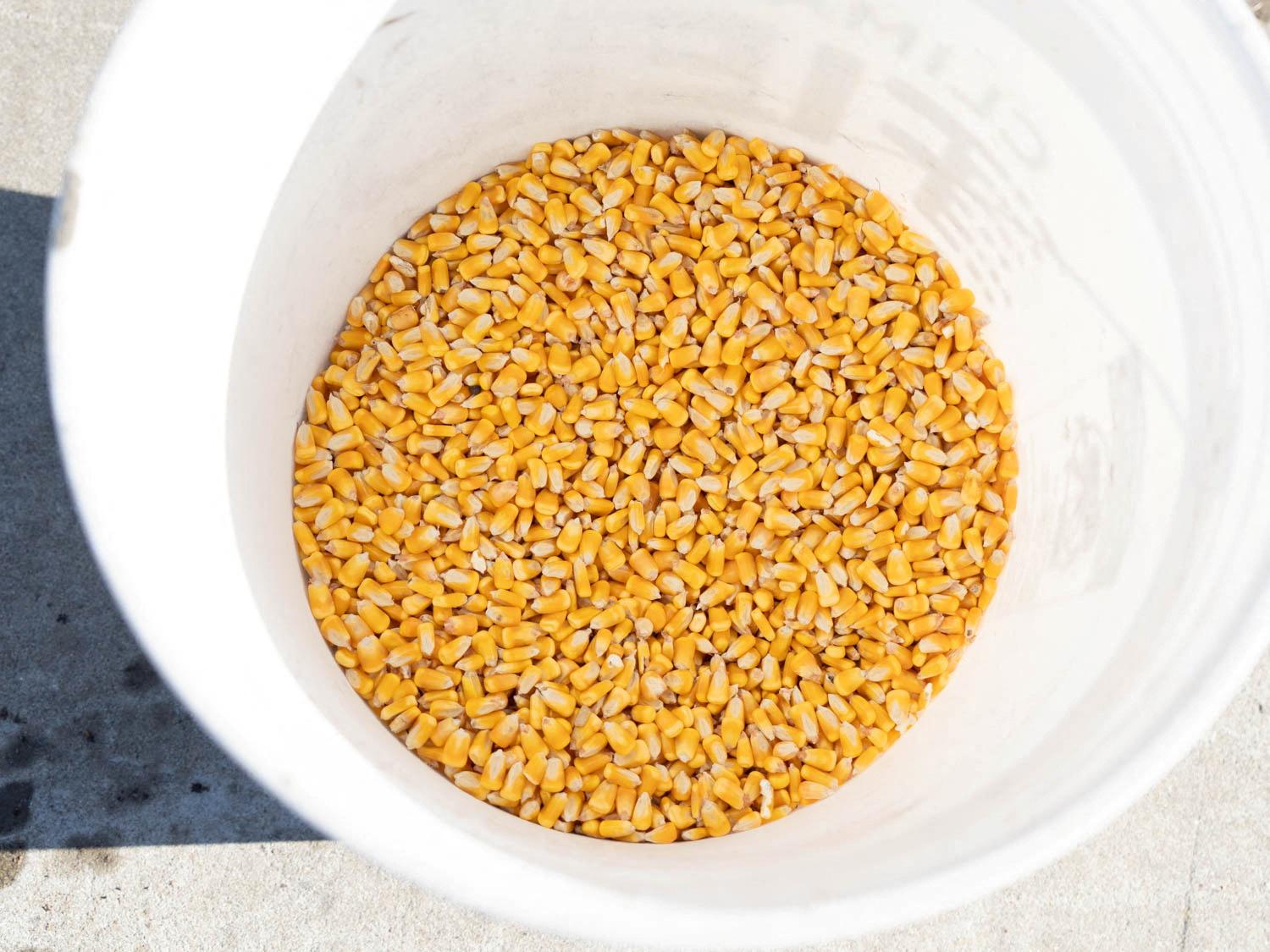
NAPERVILLE, Illinois, June 9 (Reuters) - Chicago grain and oilseed futures declined sharply after the U.S. Memorial Day holiday with speculators rejuvenating bearish sentiment, an about-face from last month’s short-covering streak. Most-active CBOT corn , soybeans and soybean oil all fell more than 4% in the week ended June 4, and both CBOT wheat and soybean meal tumbled 6%. Much of that week’s bearish tone was tied to favorable U.S. crop outlooks, including a near-normal planting pace. Initial U.S. corn conditions last Monday came in at 75% good-to-excellent, above average and 5 percentage points better than the trade predicted. In the week ended June 4, money managers boosted their net short position in CBOT corn futures and options to a five-week high of 212,706 contracts from 133,477 a week earlier. That included nearly 70,000 new gross short positions, the most for any week since August 2019. In CBOT soybean futures and options, money managers increased their net short to 59,741 contracts from the previous week’s 21-week low of 14,218. More than 37,000 new gross shorts were added, the most for any week since December 2019. Funds had covered gross soybean shorts in the previous four weeks, though they had already been adding new corn shorts in the prior two weeks. Open interest in soybean futures and options jumped 7% in the latest week to a seven-week high, and for corn it rose 5% to a two-year high. The week ended June 4 featured one of CBOT wheat’s biggest downturns of the year, but money managers were relatively light sellers, extending their net short to 31,684 futures and options contracts from 25,431 a week earlier. That ended a six-week streak of short-covering. Money managers through June 4 ended an eight-week streak of net buying in CBOT soybean meal futures and options, reducing their net long to 100,699 contracts from 118,282 a week earlier, mostly on the exit of longs. The resulting position ties 2018 for the date’s most bullish. The managed money net short in CBOT soybean oil futures and options reached a three-week high on June 4 of 57,690 contracts, up nearly 16,000 from the previous week. That ties 2018 and 2019 for the date’s most bearish soyoil view. Funds were net sellers of Kansas City wheat futures and options through June 4, snapping a six-week buying streak. Minneapolis wheat was the only U.S. grain or oilseed of which funds were net buyers last week, as they extended their net long to 7,732 futures and options contracts from 5,740 a week earlier, marking their ninth consecutive week as net buyers. Soybeans and soybean oil were unchanged over the last three sessions and corn and soybean meal both popped around 1.5%. But wheat fell nearly 5% during that period, hitting one-month lows on Friday and notching its eighth consecutive losing session. Wheat’s weakness came despite Russia declaring a federal emergency on Friday in 10 regions over weather-related crop damage. Analyst’s Russian wheat crop estimates fell further last week, now up to 14% off original ideas with threats of additional cuts. Soybeans sold off on Friday despite the first substantial U.S. soybean sale to China since January. The U.S. Department of Agriculture will issue its first health assessment for U.S. soybeans on Monday, and the initial rating averaged 68% good-to-excellent over the last decade. Traders will also be watching on Wednesday for USDA’s monthly supply and demand report, which analysts expect to show the contraction of global corn, wheat and soybean supplies. Karen Braun is a market analyst for Reuters. Views expressed above are her own. Sign up here. https://www.reuters.com/markets/europe/funds-place-fresh-short-bets-cbot-corn-soy-supply-fears-ease-2024-06-10/
2024-06-10 11:19
Harder to pass new green laws, but most existing ones to stay New EU parliament may try to weaken certain green measures EU's core climate change targets won't be undone Political focus seen shifting to security, industry BRUSSELS, June 10 (Reuters) - A more rightward-leaning European Parliament will make it harder to pass ambitious EU climate policies, but the majority of Europe's current world-leading green policies are likely to stay put, lawmakers, officials and analysts said. Provisional results in the European Parliament election on Sunday night showed centrist parties holding a majority, but gains for right-wing and far-right parties sceptical of the EU's "Green Deal" package of environmental policies, and heavy losses for Green parties. "I don't think that we'll be rolling back on (climate) policies. But I do think that it will be more complicated to get new policies off the ground," Bas Eickhout, head of the European Parliament's Greens lawmaker group, told Reuters. EU climate measures over the next five years will depend on the incoming European Commission, which is responsible for proposing EU laws. But the newly-elected European Parliament will get a say on every new green policy. Sunday's election result signals tougher maths to approve new EU climate measures. "All new policies will be harder to pass. But backsliding is very unlikely," Krzysztof Bolesta, Poland's secretary of state for climate, told Reuters. "It is possible that new ambition will be delayed, mostly for populistic reasons," agreed Julian Popov, who until April was EU member Bulgaria's environment minister. That could have consequences for an upcoming 2040 EU climate target, needed to steer the EU towards its 2050 net zero emissions target. The EU Commission has suggested the 2040 goal should be an ambitious 90% emissions cut, but it needs approval from both EU countries and the Parliament. The upcoming European Commission and Parliament will also face tough decisions on whether to introduce new policies to push industries towards that 2040 target. That includes farming, a sector whose emissions have barely fallen since 2005. But after months of protests across Europe by angry farmers, there is little political appetite to target the sector with new rules, especially if the cost of complying with them would drive up food prices for citizens already dealing with the biggest jump in living costs in a generation. Shares in renewable energy companies were knocked lower by concerns the election results could slow the green energy transition. Wind turbine makers, Vestas (VWS.CO) New Tab, opens new tab and Nordex (NDXG.DE) New Tab, opens new tab, were down more than 3% on Monday. Orsted (ORSTED.CO) New Tab, opens new tab was down 0.5%. NO BIG U-TURN While new climate measures might face a tougher ride, a full-scale reversal of the dozens of EU climate policies passed in the last five years would be legally difficult. Those policies - which include renewable energy targets and a strengthened carbon pricing regime on power and industry - are fixed into EU law and already being rolled-out across the bloc's 27 member states. Many are already working. EU emissions are down by nearly a third from 1990 levels, and Europe is installing wind and solar energy capacity at record speed. Still, the election campaign saw mounting calls from the right to scrap some Green Deal policies - with a prime target the EU's 2035 ban on new petrol and diesel cars. That policy has a 2026 review clause, on which the Parliament will get a say. "It was an ideological folly, which absolutely must be corrected," Italian Prime Minister Giorgia Meloni told online magazine Open last week. Three EU diplomats singled out the 2035 car policy as one that European Commission President Ursula von der Leyen will face significant pressure to weaken, including from some lawmakers in her centre-right European People's Party who want it scrapped. Von der Leyen needs support from a majority of lawmakers in the new European Parliament to win a second term. But broad climate policy rollbacks are unlikely, officials and analysts said. That's partly because the EU's existing climate measures add up to deliver its 2030 climate target - to cut net greenhouse gas emissions 55% from 1990 levels - which national governments and lawmakers both approved into EU law. "There might well be changes in individual pieces of legislation, but what will be important to watch is how this adds up," said Mats Engström, senior fellow at the European Council on Foreign Relations think-tank. DON'T CALL IT A 'GREEN' DEAL Contrary to the last EU election in 2019, when millions of young climate protesters took to Europe's streets, this year's campaign saw climate change usurped by issues including immigration, economic woes and struggling European industries. Meeting the EU's 2030 climate target will require investments of 1 trillion euros per year, a jump of around 356 billion per year compared with 2010-2020, according to the European Investment Bank. Investing in local industries was a campaign pledge across the political spectrum, as competition sharpens with the U.S. and China to produce green tech like low-carbon steel and electric cars. Some analysts said this focus would see the EU pass more funds and policies to support climate-friendly projects - but with the focus on helping industry, rather than being "green" and "clean". "If it's about scaling up manufacturing of green technologies here in Europe, then that may be done in the name of 'industrial competitiveness' and not for the climate," said Linda Kalcher, Executive Director at think-tank Strategic Perspectives. "It might be that we see the rhetoric shifting, but the action on the ground being the same," Kalcher said. Sign up here. https://www.reuters.com/world/europe/uphill-road-europes-climate-plan-after-eu-election-2024-06-10/

2024-06-10 11:17
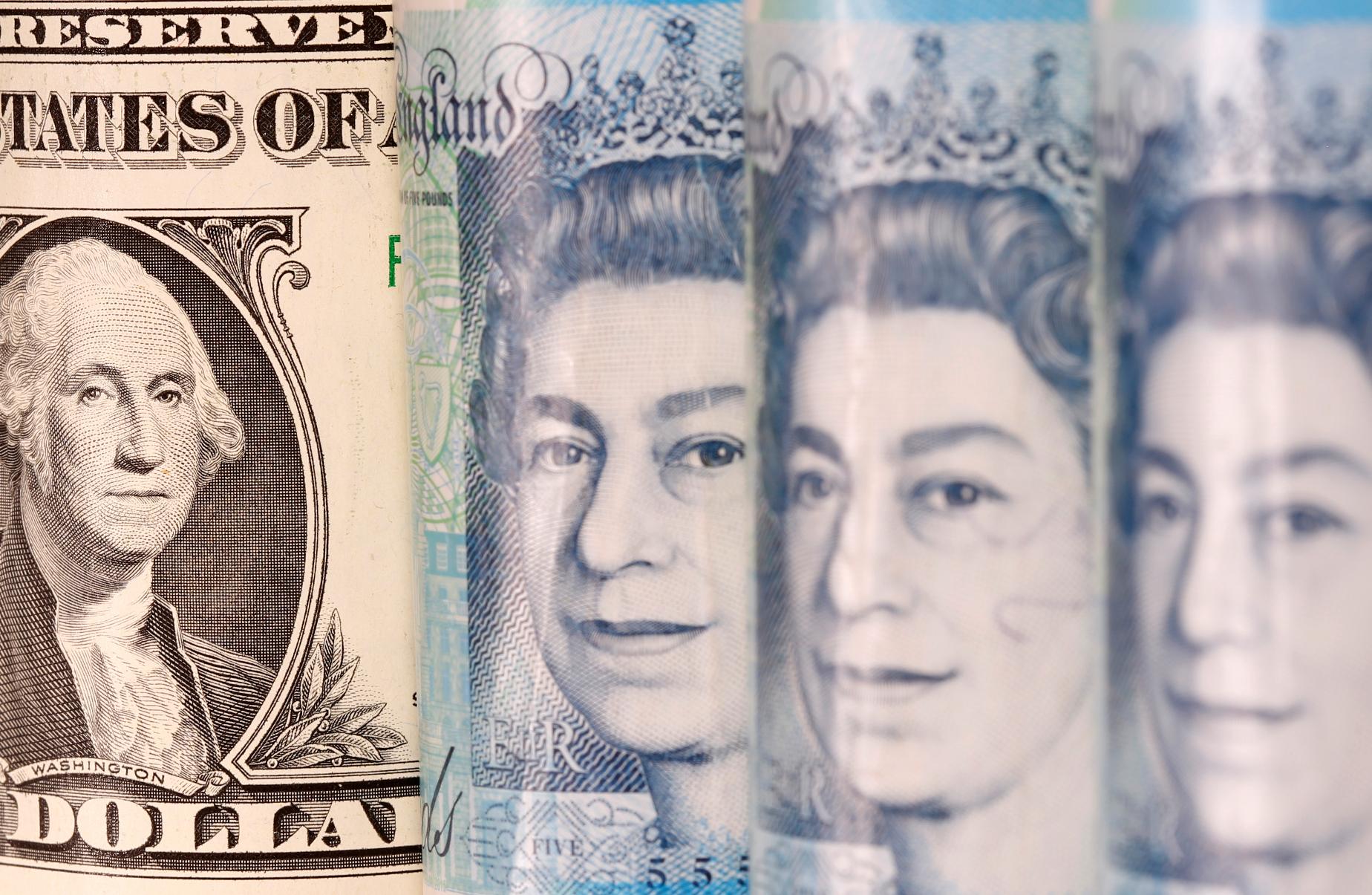
LONDON, June 10 (Reuters) - The pound hit its highest in nearly two years against the euro on Monday, though it dropped against the dollar, as the common currency tumbled after French President Emmanuel Macron called a snap election after being trounced in an EU vote by the far right. The euro dropped to as low as 84.53 pence, its lowest since August 2022, breaking out of its recent range against the pound, and also falling against the dollar along with declines in other French and euro zone assets. It was last down 0.37% at 84.59 pence. Centre, liberal and Socialist parties were set to retain a majority after the European Parliament elections, but eurosceptic nationalists made the biggest gains, raising questions about the ability of major powers to drive policy in the bloc. Making a risky gamble to reestablish authority, Macron called a parliamentary election with a first round on June 30. "Expect to hear much made of the diverging political scenes, where the forthcoming UK general election is expected to present the UK with a very large Labour majority, whereas the French election promises to deliver a parliament diametrically opposed to the presidency," said Chris Turner, ING's global head of markets in a note. "We probably cannot rule out EUR/GBP edging a little lower this week - perhaps to 0.8400 ... But we think this sterling rally does not last and probably reverses next week when we hear from the Bank of England next Thursday - likely preparing the market for an August rate cut," Turner added. British wage data for April, due Tuesday, is the main data point of this week, heading into that BoE meeting. Markets have seen a change in policy at that meeting as very unlikely since April's sticky services inflation. Also in the mix, an industry survey, published Monday, indicated Britain's recruitment market is poised for a recovery. But the pound dropped 0.2% against the dollar on Monday, to $1.2698, continuing to fall after a 0.5% drop Friday as hotter than expected U.S. jobs data caused markets to push back bets on the first Federal Reserve interest rate cut late into 2024. Sign up here. https://www.reuters.com/world/uk/sterling-hits-22-month-high-against-bruised-euro-2024-06-10/
2024-06-10 11:07
KAMPALA, June 10 (Reuters) - An employee of a environmental group campaigning to stop construction of a $5 billion crude oil pipeline in east Africa who the organisation said had been detained by the Ugandan military last week has been released. Stephen Kwikiriza, from the Ugandan environmental pressure group Environment Governance Institute (EGI), has campaigned to stop the 1,445-km East African Crude Oil Pipeline (EACOP) which will carry crude from oilfields in western Uganda to a port on Tanzania's coast. In a statement on Monday, EGI said the activist was dumped on a highway in western Uganda about five hours' drive from the capital Kampala on Sunday night around 8:30 p.m.. "According to an account from him, he was beaten and is visibly in bad shape," the statement said, adding Kwikiriza had been taken to a hospital where he was receiving treatment. EGI had said that Kwikiriza was detained last Tuesday by the Uganda military but Deo Akiiki, deputy spokesperson of the military, denied they were holding him and police spokesperson Fred Enanga also told Reuters they had not arrested him. "During his captivity he was asked about why he and others are frustrating the oil project," Samuel Okulony, Director of EGI told Reuters, adding that Kwikiriza was put in a car trunk while being driven to the location where he was dropped. Akiiki and Enanga could not immediately be reached for comment on Monday. The pipeline is majority-owned by France's TotalEnergies (TTEF.PA) New Tab, opens new tab, with China's CNOOC and the Ugandan and Tanzanian governments holding minority stakes. "TotalEnergies E&P Uganda does not tolerate any threat or attack against those who peacefully defend and promote human rights," TotalEnergies said in a statement to Reuters on Monday. The pipeline's opponents say the project will displace tens of thousands of people and destroy fragile ecosystems. TotalEnergies denies the accusations and says the project will only displace about 5000 people. Sign up here. https://www.reuters.com/world/africa/detained-anti-crude-pipeline-activist-uganda-released-pressure-group-says-2024-06-10/